
Spring is a magical time when gardens finally wake up and show their true colors to the world. One of the best ways to celebrate this season is by incorporating climbing plants like clematis into your outdoor space. These beautiful vines are famous for their stunning blooms and ability to grow vertically with ease. Using a trellis helps you make the most of small areas while adding a layer of sophisticated charm to your home. Whether you have a massive backyard or a tiny balcony, there is always a way to feature these vibrant flowers. Let's look at several ways you can use different structures to help your spring clematis thrive beautifully this year.
1. Wooden Garden Obelisk
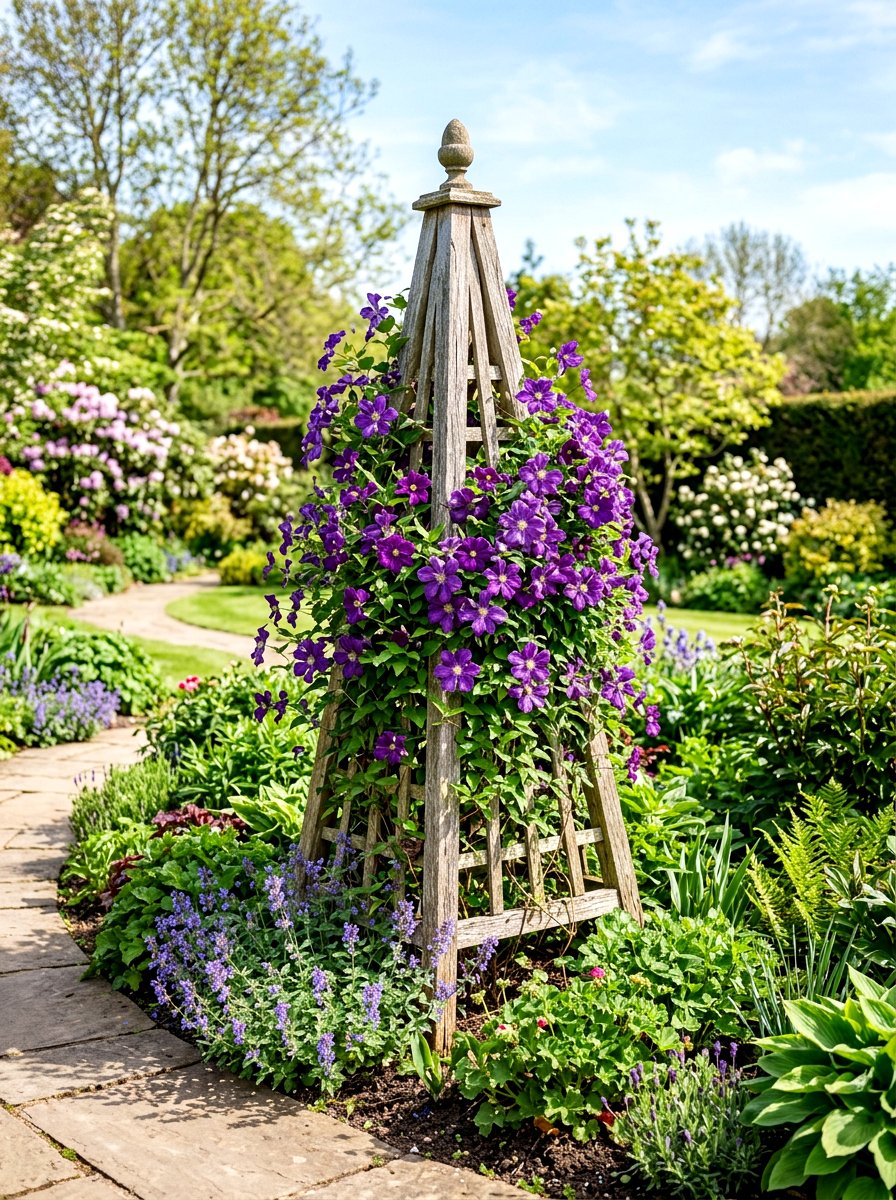
A wooden garden obelisk provides a classic and structured way to support your climbing vines in any backyard setting. These tall, four-sided structures offer plenty of room for clematis tendrils to wrap around as they reach toward the sun. You can place an obelisk in the middle of a flower bed to create a stunning focal point that draws the eye upward. The natural wood finish often blends seamlessly with the surrounding greenery and earthy tones of the garden. Over time, the clematis will completely cover the wood, creating a lush pillar of colorful blooms and soft leaves. It is a simple yet effective way to add height and elegance to your outdoor landscape this spring.
2. Metal Garden Archway
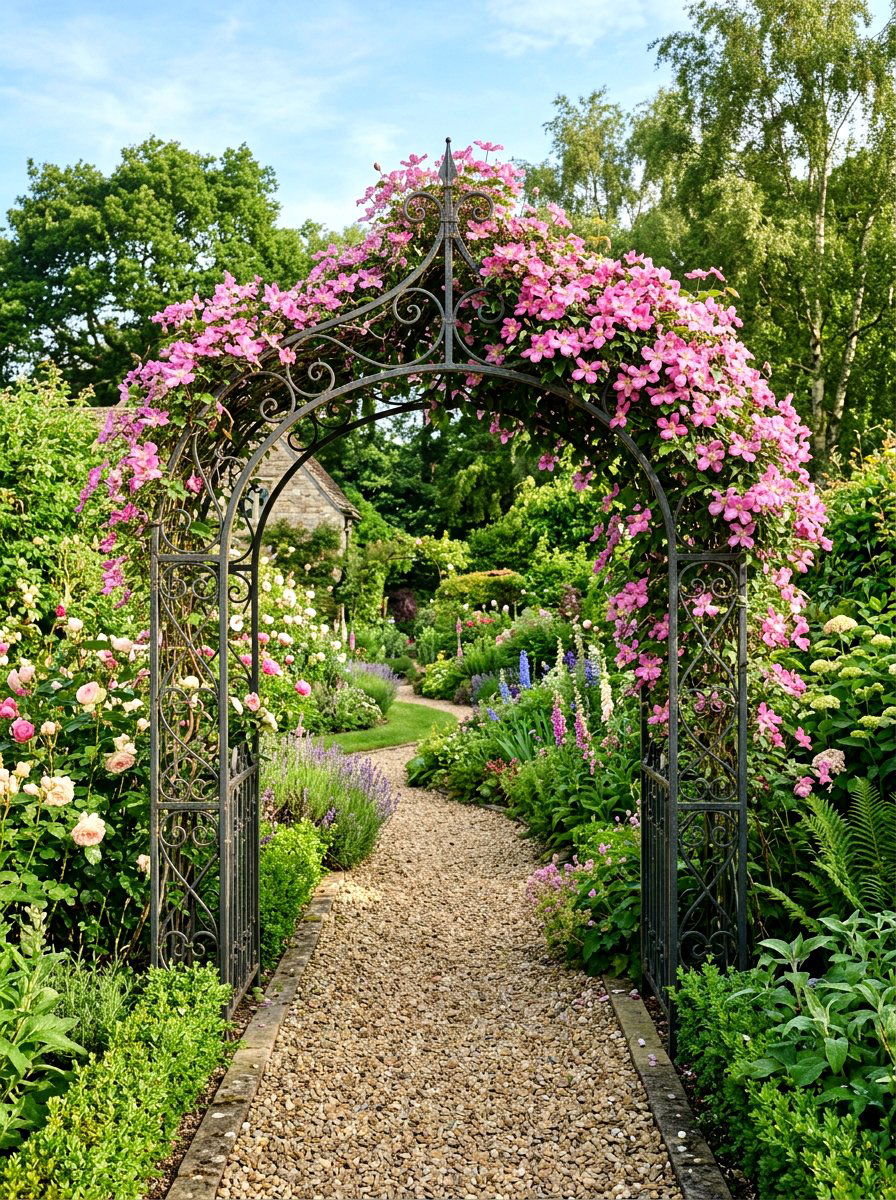
Installing a metal garden archway creates a romantic entrance that feels like a doorway into a secret forest. This structure is perfect for framing a walkway or highlighting the transition between different areas of your yard. As the clematis grows over the top of the metal frame, it creates a living canopy of flowers overhead. You should choose a sturdy metal arch that can handle the weight of the mature vines as they expand each season. The contrast between the dark metal and the bright spring flowers provides a timeless aesthetic. It is an inviting feature that makes every walk through your garden feel like a very special and serene experience.
3. Wall Mounted Wire Trellis
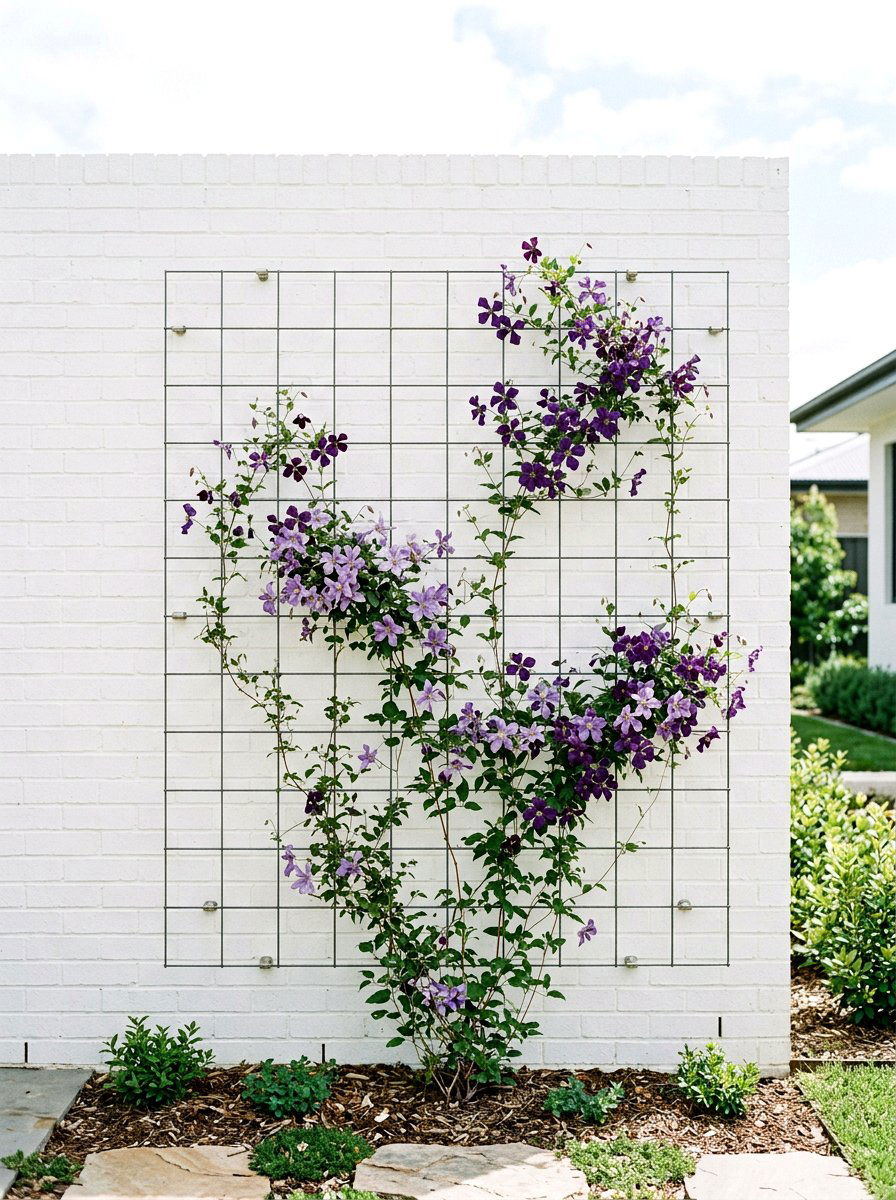
A wall mounted wire trellis is a modern and minimalist solution for gardeners who want their plants to take center stage. This system uses thin steel cables attached to a brick or siding wall in a custom pattern. Because the wire is nearly invisible from a distance, the clematis looks like it is floating across the surface of your home. This setup is excellent for modern architecture where bulky wooden structures might feel out of place. It allows the vibrant purple or pink flowers to pop against the neutral background of your house. This design also provides great airflow, which helps keep your climbing plants healthy and free from common diseases.
4. Cedar Privacy Screen
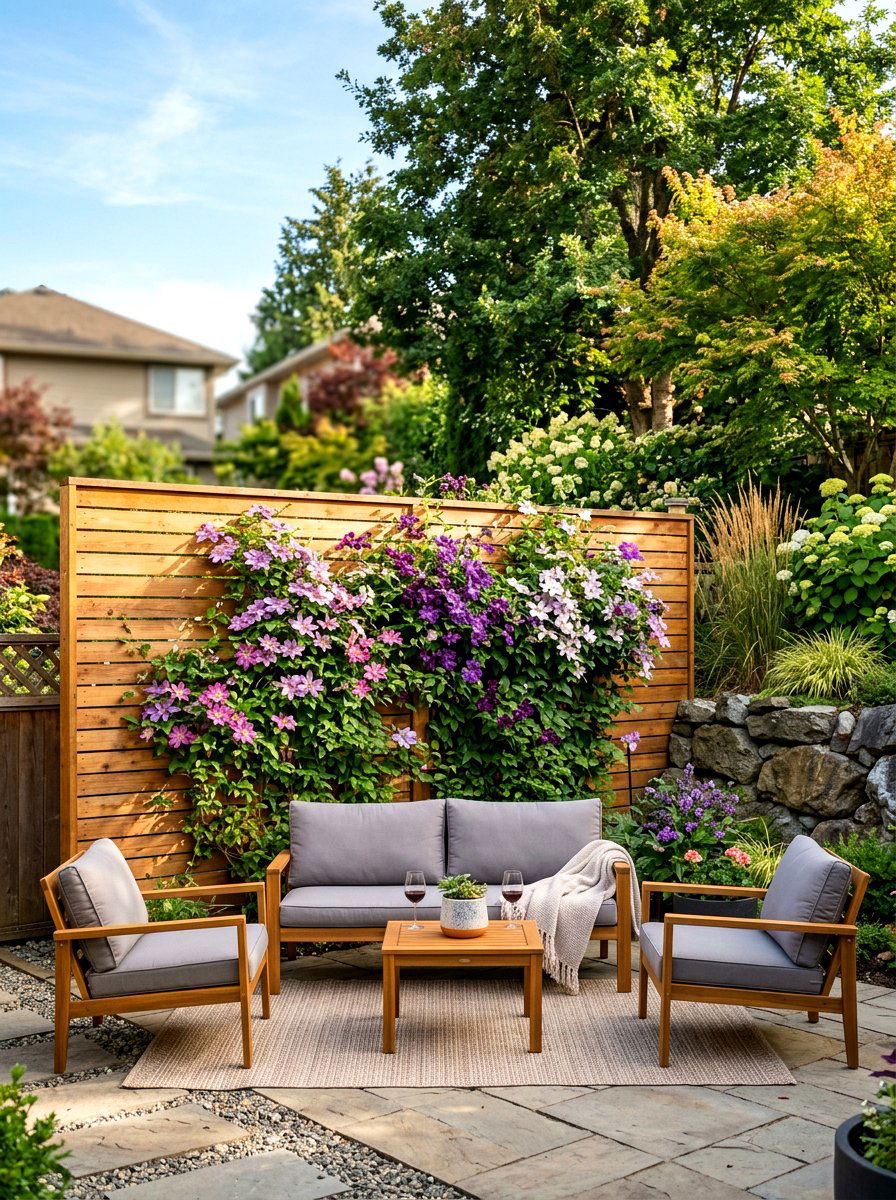
A cedar privacy screen serves two important purposes by blocking unwanted views while providing a sturdy home for your spring clematis. These screens are often made of horizontal or vertical slats that give the vines many places to grab onto. Cedar is a fantastic choice for outdoor use because it naturally resists rot and insects without needing harsh chemicals. As the clematis fills in the gaps between the slats, you gain a beautiful living wall that smells wonderful and looks incredible. It transforms a functional boundary into a lush piece of vertical art. This idea works perfectly for patios or decks where you want to create a private, cozy atmosphere.
5. Wrought Iron Wall Grid
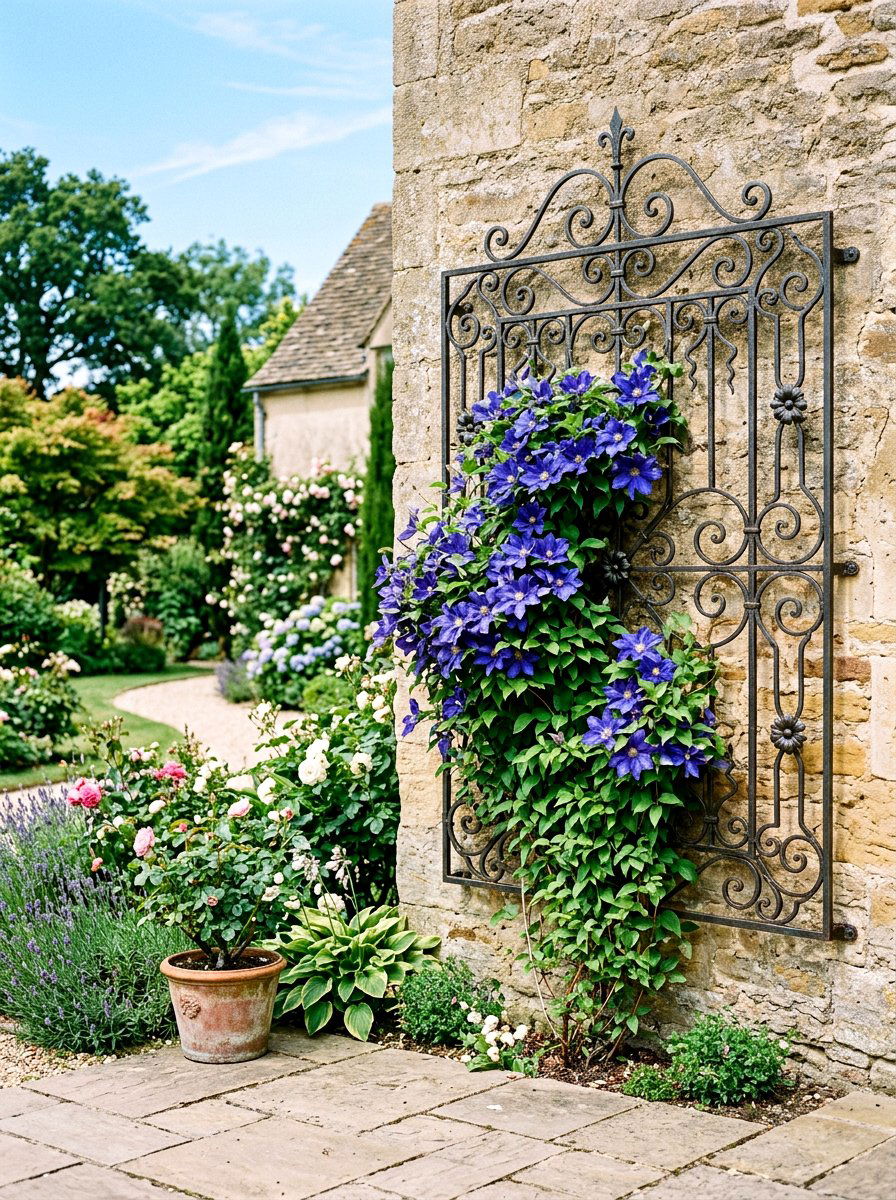
Choosing a wrought iron wall grid adds a touch of traditional European style to your exterior garden walls or sturdy fences. These grids often feature intricate scrolls or geometric shapes that look beautiful even during the winter months when plants are dormant. When spring arrives, the clematis weaves through the ironwork to create a rich tapestry of texture and color. Wrought iron is extremely durable and can support the heaviest of climbing varieties without bending or breaking. The dark finish of the metal makes the bright green foliage and delicate flower petals stand out. It is a sophisticated way to turn a plain wall into a very stunning masterpiece.
6. Bamboo Teepee Support
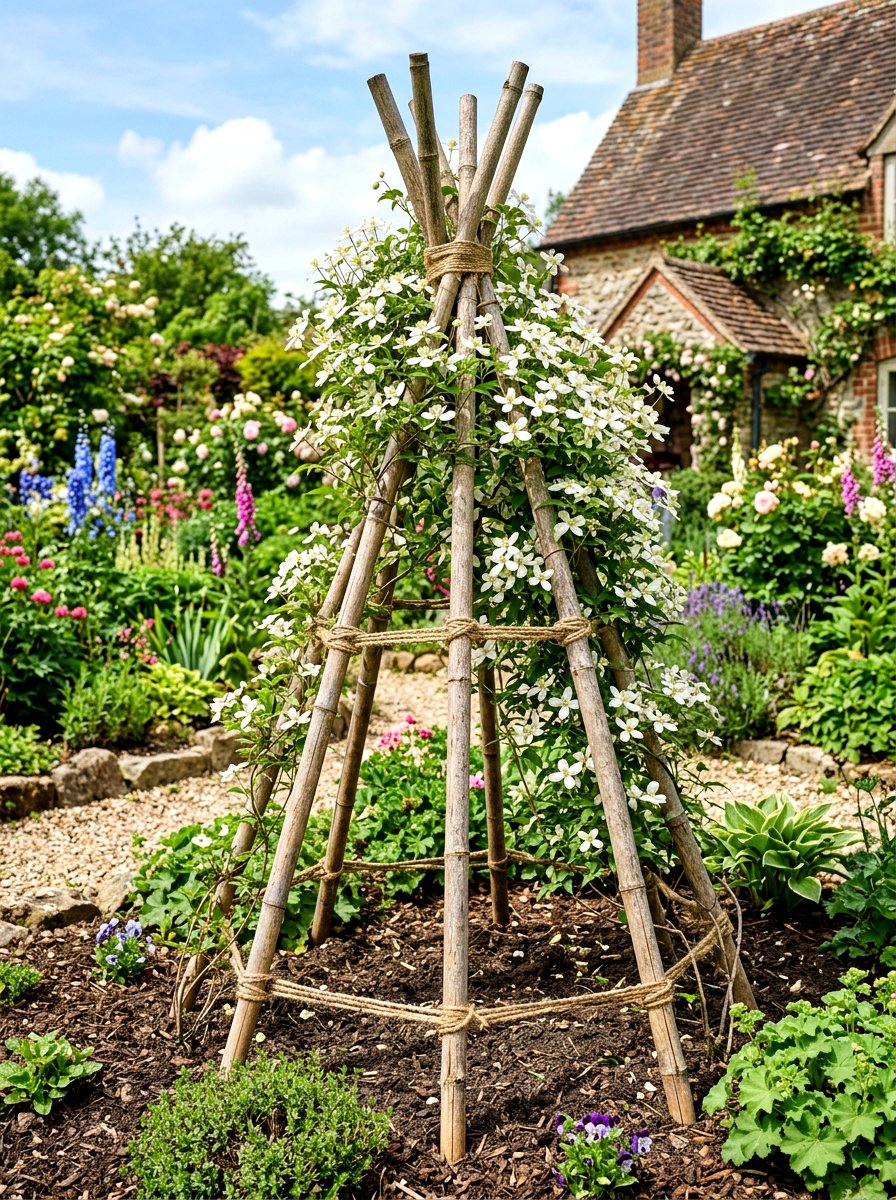
A bamboo teepee support is an eco-friendly and rustic option that is very easy to assemble in just a few minutes. You simply gather several long bamboo poles and tie them together at the top with natural twine or garden wire. This structure is perfect for a cottage-style garden where you want things to look organic and a bit more relaxed. Clematis loves the rough texture of the bamboo, which makes it very easy for the delicate vines to climb high. Because bamboo is lightweight, you can move these supports around your garden each year. It is a budget-friendly way to add vertical interest and support your favorite spring-blooming varieties.
7. Copper Pipe Trellis
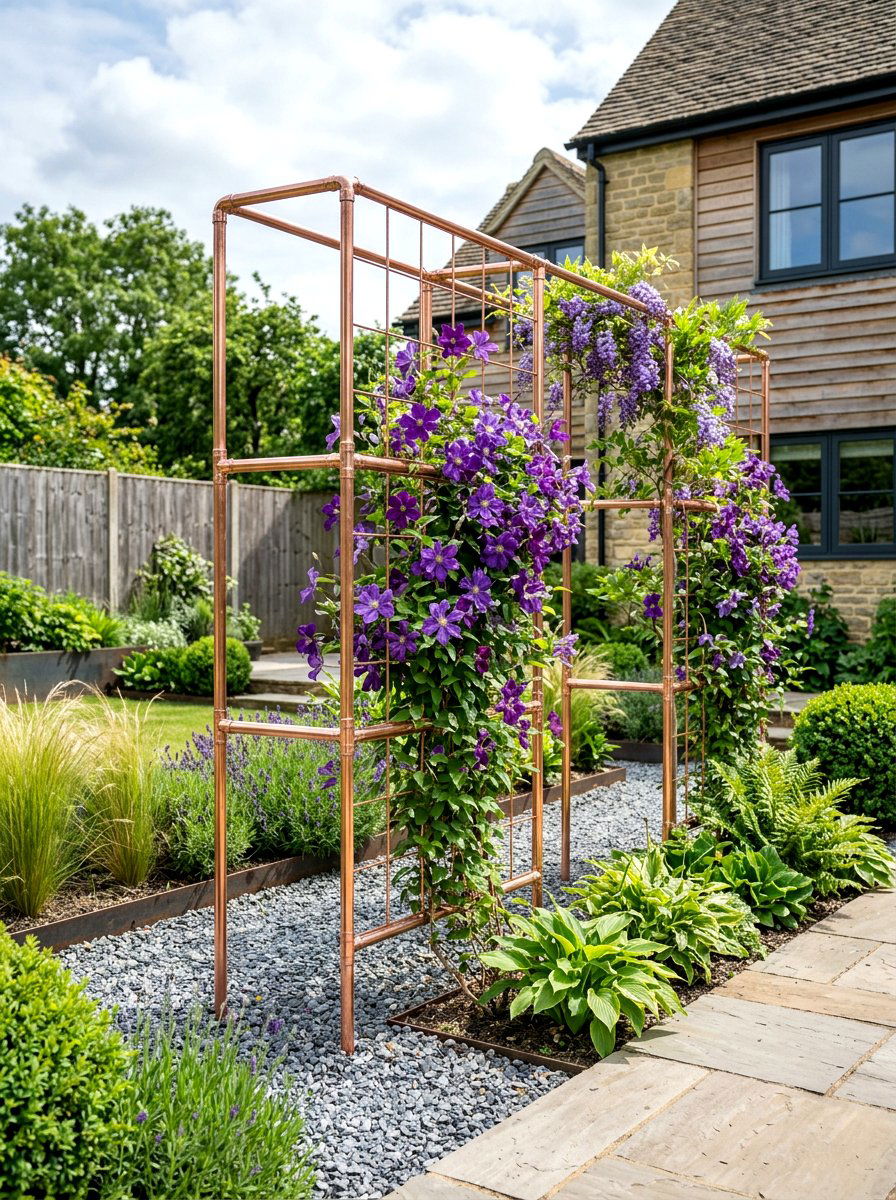
A copper pipe trellis is a unique and stylish choice for those who enjoy a bit of industrial flair in their gardens. As the copper ages, it develops a beautiful green patina that looks stunning next to the purple or blue flowers of the clematis. You can build these in various shapes, from simple rectangles to more complex geometric grids, depending on your skill level. The shiny metal reflects the spring sunlight, adding a bit of sparkle to your outdoor space during the daytime. It is a durable material that stands up well to the elements while providing a very modern and clean look for your climbing plants.
8. Garden Gate Arbor
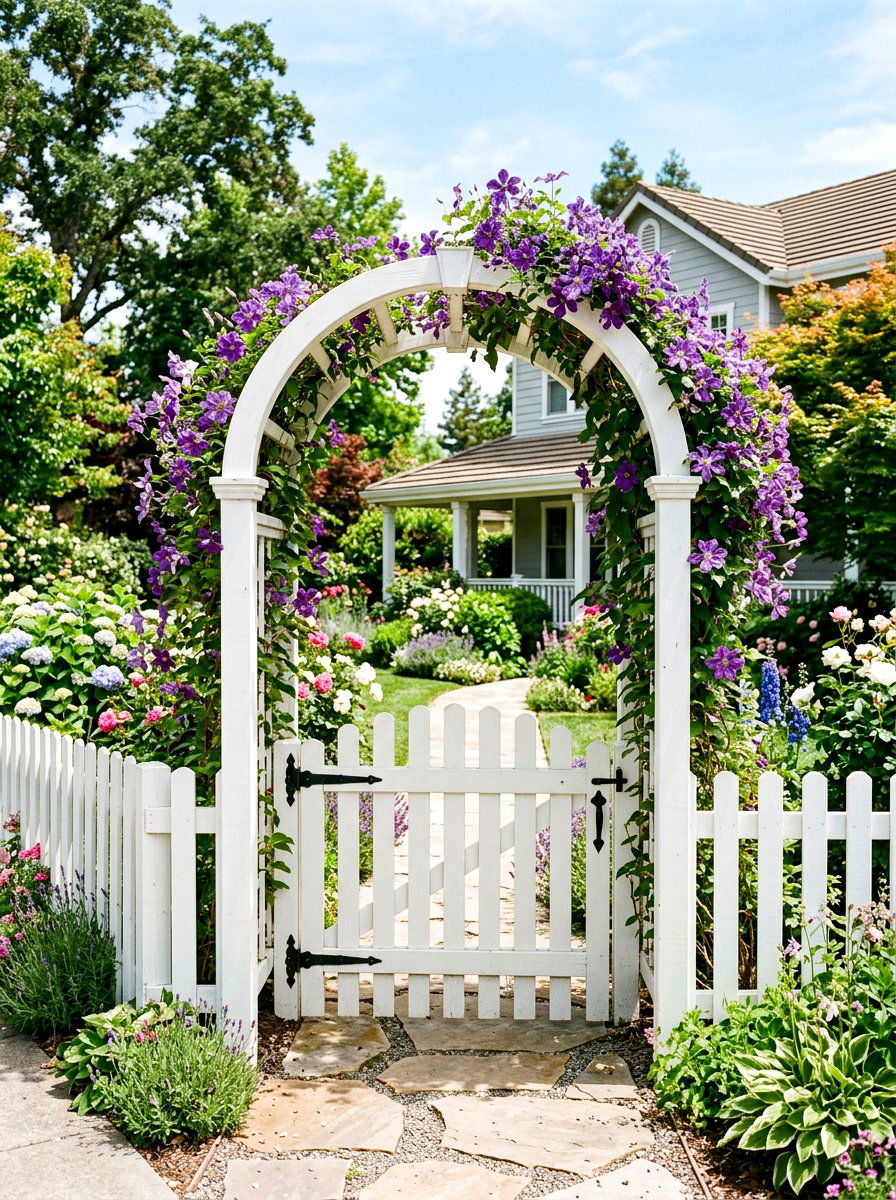
A garden gate arbor combines functionality with beauty by creating a stunning frame for the main entrance to your property. Training clematis to grow over the gate ensures that every guest is greeted by a burst of spring color as they enter. This structure provides a sense of enclosure and makes the garden feel more like a private sanctuary. You can choose a wooden arbor for a traditional look or a metal one for something more contemporary and sleek. The key is to prune the clematis regularly so it does not interfere with the movement of the gate. It is a classic design choice that never goes out of style.
9. Lattice Fence Panel
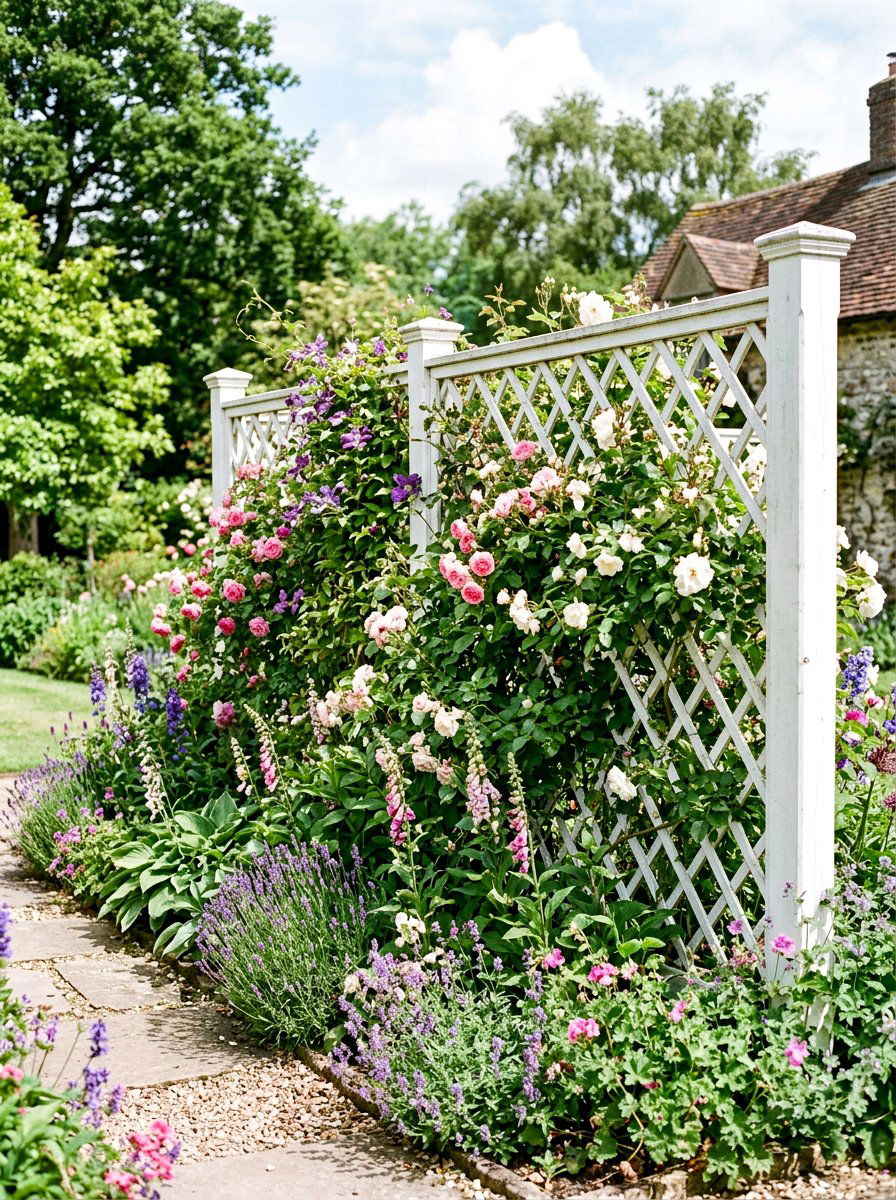
Using a lattice fence panel is one of the most common and effective ways to support climbing plants across a large area. These panels feature a diamond or square pattern that provides endless points for the clematis to attach itself as it grows. You can attach these panels to an existing fence to hide old wood or add visual interest to a flat surface. The dense network of the lattice allows the plant to spread out horizontally as well as vertically for full coverage. This results in a thick wall of flowers that can provide extra shade and wind protection for your other garden plants.
10. Freestanding Ladder Trellis
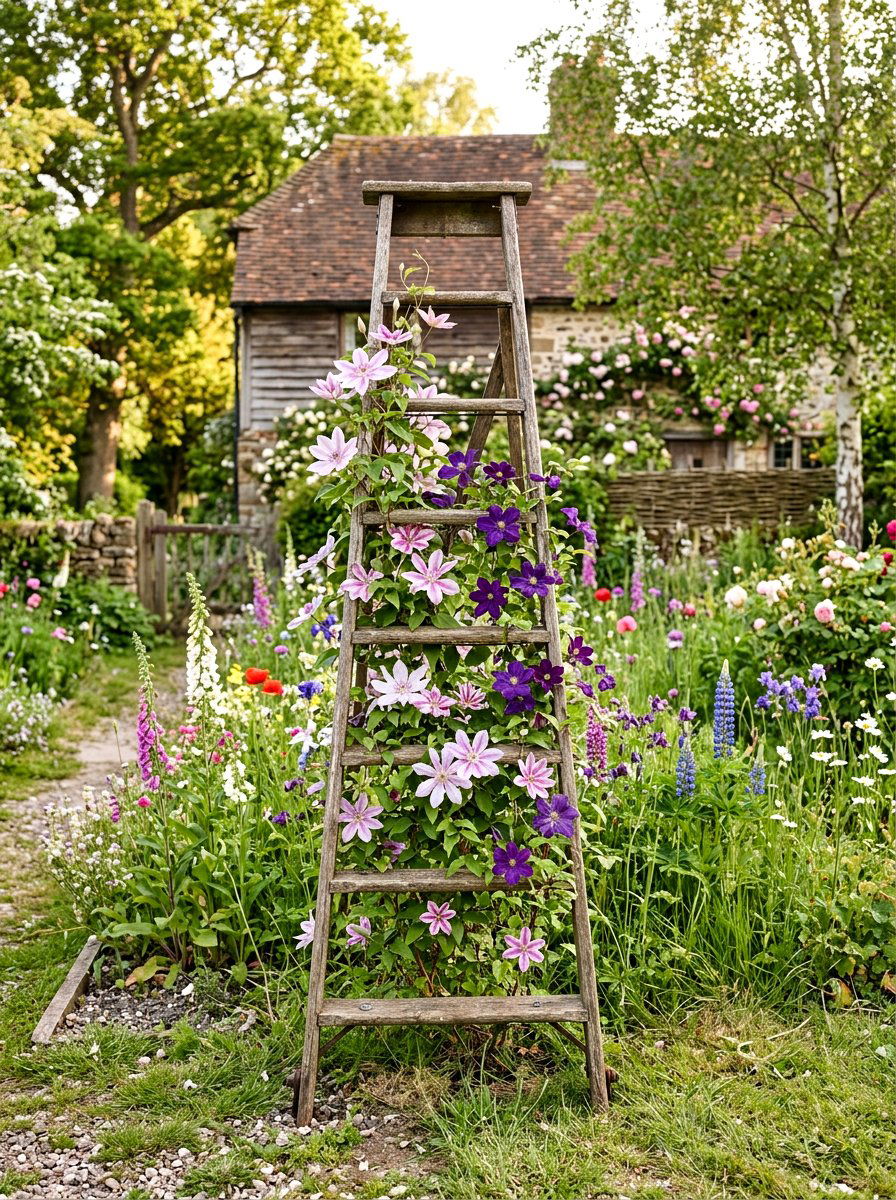
A freestanding ladder trellis offers a whimsical and charming look that works perfectly in a country or farmhouse garden setting. You can use an old wooden ladder or buy a purpose-built garden ladder to lean against a wall or stand alone. This tiered structure allows you to see the flowers at different heights, creating a very dynamic visual display this spring. It is a great way to repurpose old items and give them a brand-new life in your backyard. The steps of the ladder provide wide areas for the vines to sprawl out and show off their large, colorful blooms. It adds a touch of personality and creativity.
11. Pergola Post Wrap
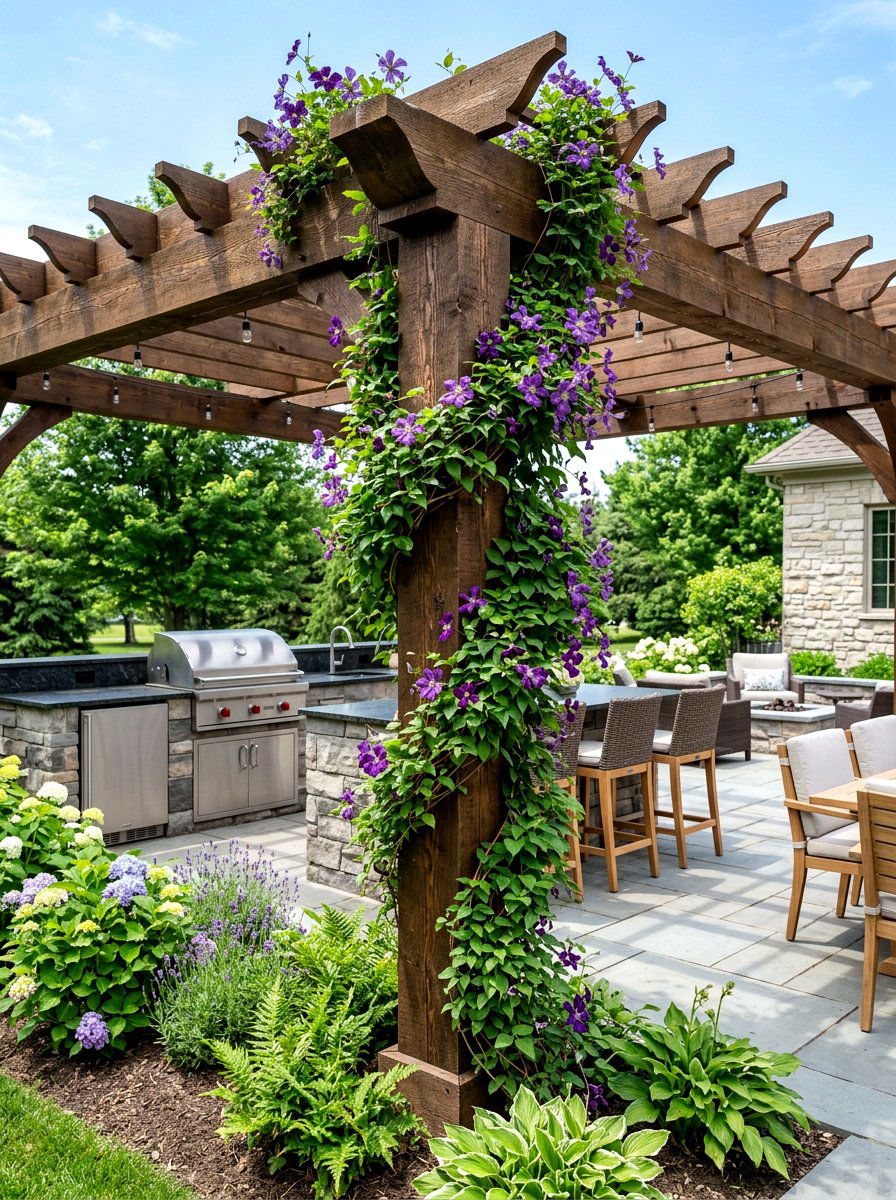
Training your clematis as a pergola post wrap is a brilliant way to soften the hard lines of a large outdoor structure. Instead of leaving the heavy wooden or stone posts bare, you can encourage the vines to spiral upward toward the roof. Once the clematis reaches the top, it can begin to spread across the overhead beams for even more coverage. This creates a more integrated and natural look for your patio or seating area. The flowers hanging down from the beams provide a sense of luxury and elegance while you relax outside. It is an excellent way to make a large pergola feel more intimate and much warmer.
12. Window Box Trellis
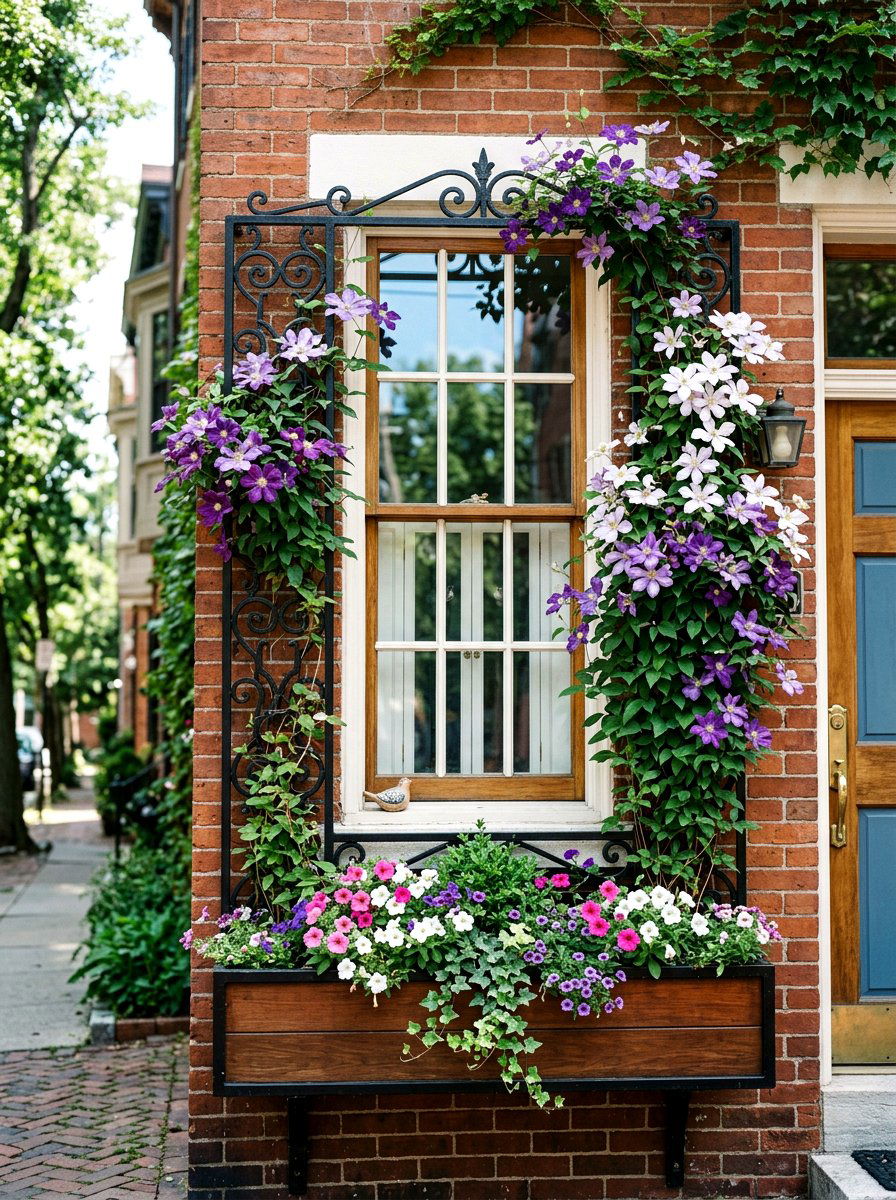
A window box trellis is the perfect solution for homeowners who want to enjoy the beauty of clematis from inside their house. By attaching a small trellis to the back of a window box, you allow the vines to climb up and frame your view. This adds a layer of greenery and color to the exterior of your home without requiring a large garden bed. As the spring breeze blows through the open window, you might even catch the light scent of the blooming flowers. It is a fantastic way to maximize vertical space in small urban environments or on apartment balconies. This setup brings nature much closer to your daily life.
13. Fan Shaped Trellis
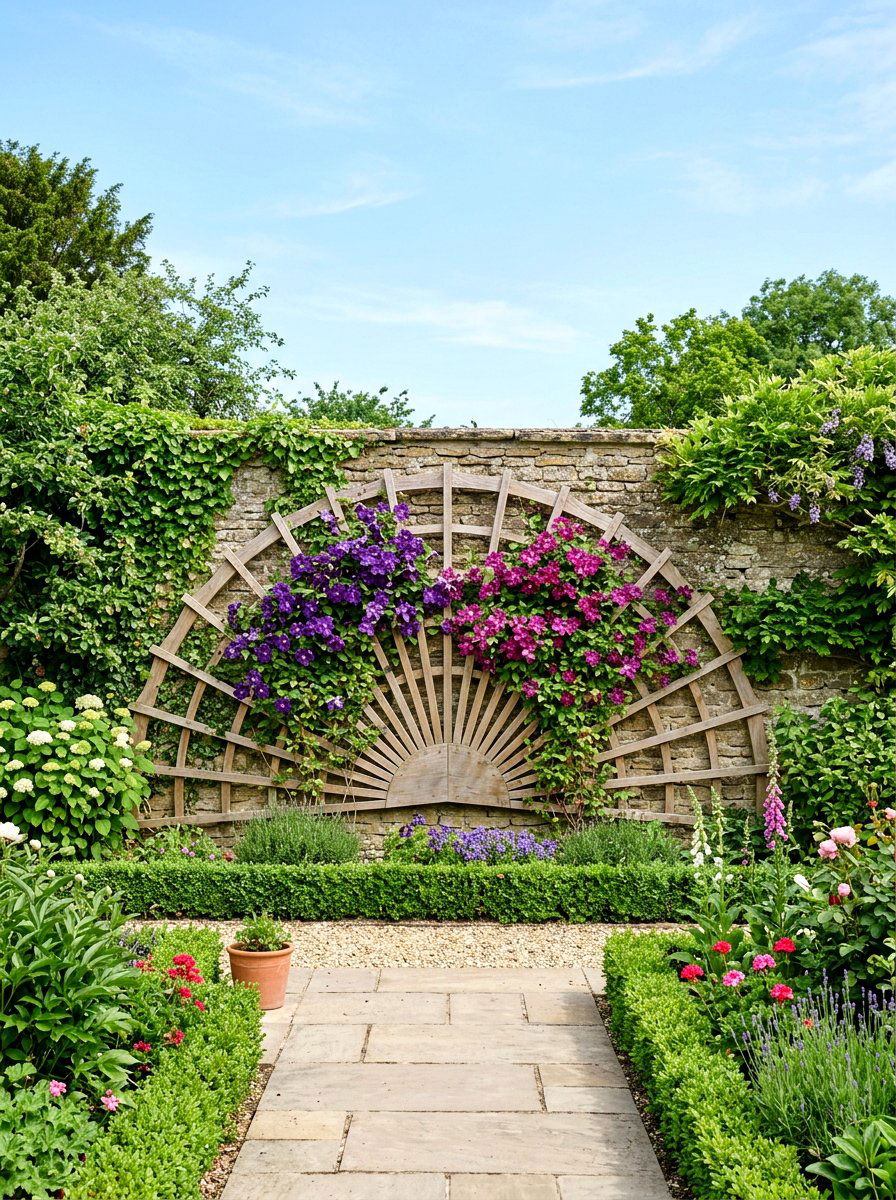
A fan shaped trellis is a traditional garden accessory that is specifically designed to spread climbing plants out in a wide, elegant display. The narrow base fits easily into small pots or tight garden spots, while the top widens to show off the flowers. This shape is particularly good for clematis because it allows plenty of sunlight to reach the inner parts of the plant. You can mount these directly to a wall or stake them into the ground behind a group of lower-growing shrubs. The symmetrical design provides a sense of order and balance to your landscape. It is a very versatile tool for any spring garden enthusiast.
14. Tree Trunk Wrap
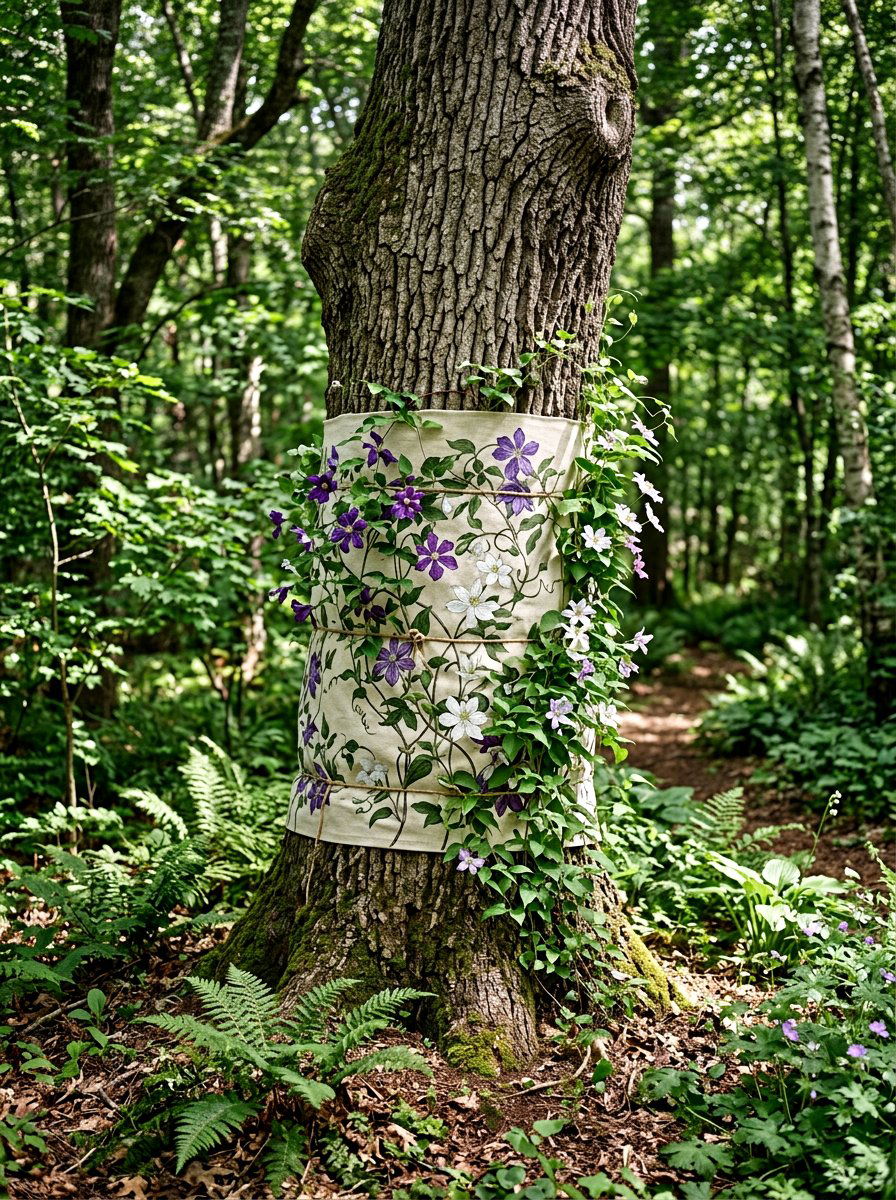
The tree trunk wrap method involves using a living or dead tree as a natural support for your climbing clematis vines. You can wrap a bit of clear fishing line or plastic netting around the trunk to give the plant something to grip. This creates a vertical garden that looks completely natural and blends perfectly with the existing environment. It is a great way to add color to a shady corner where a tree might be the dominant feature. Seeing vibrant flowers growing up the bark of a large tree is always a delightful and unexpected surprise for visitors. It makes your garden feel more established and deeply connected to the local nature.
15. Chevron Pattern Trellis
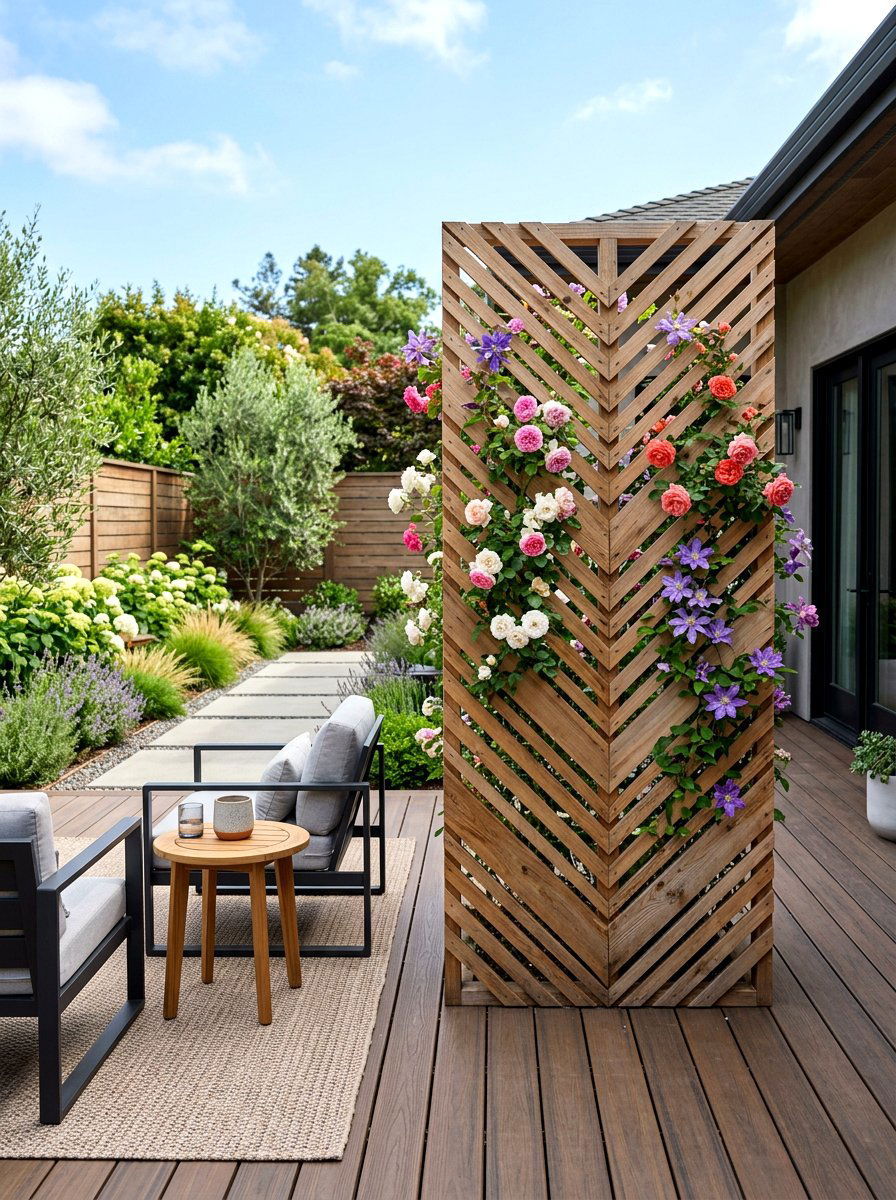
Creating a chevron pattern trellis is a fantastic project for anyone who loves modern design and interesting geometric shapes in their backyard. You can build this using thin wooden lath strips or metal rods arranged in a repeating V-shape on a wall. This pattern provides a very striking visual backdrop even before the clematis has fully grown to cover the entire structure. The angled lines guide the vines in a specific direction, creating a very organized and intentional look for your climbing plants. It is a contemporary take on the traditional garden trellis that adds a lot of style and flair to any outdoor living area.
16. Recycled Door Frame
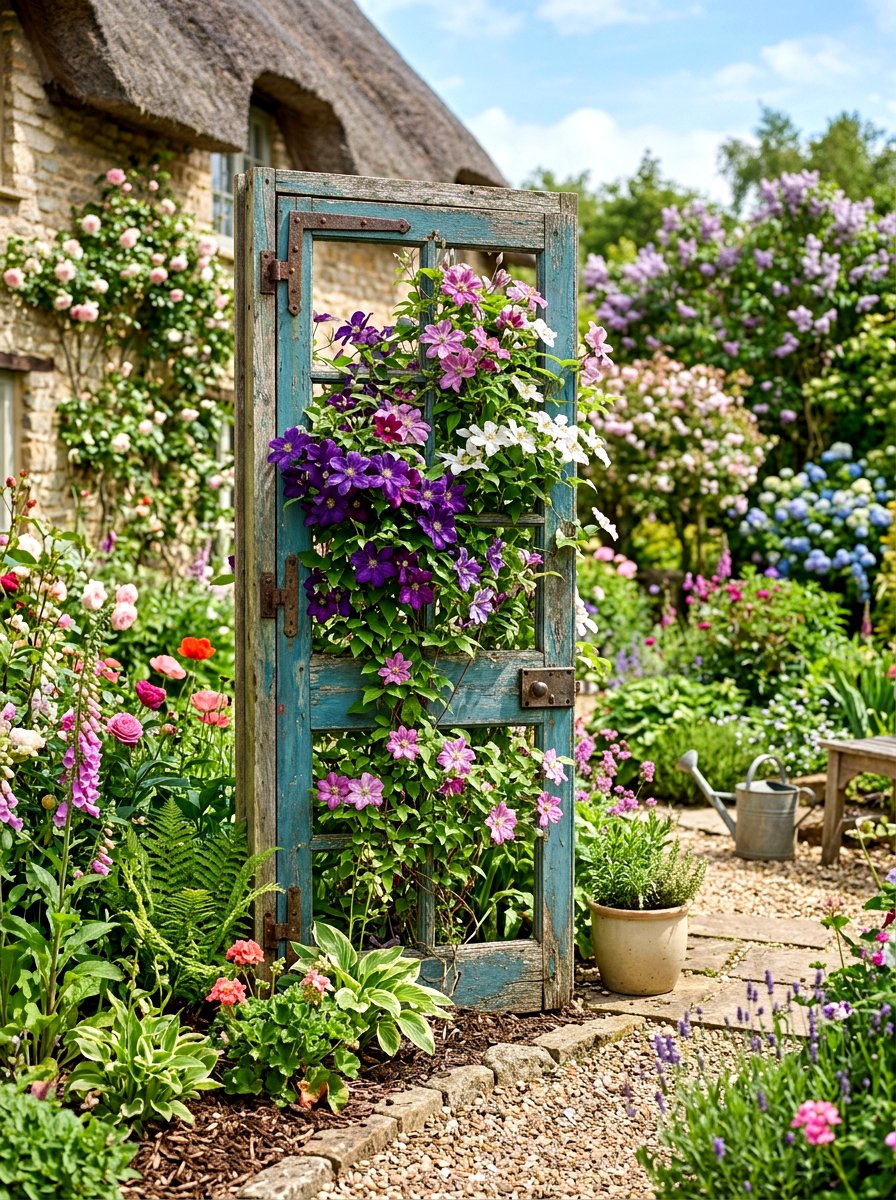
A recycled door frame can be transformed into a unique garden feature that acts as a standalone trellis for your clematis. By removing the solid panels and replacing them with wire mesh or thin wooden slats, you create a perfect climbing surface. This repurposed item adds a sense of history and character to your garden that you cannot get from store-bought items. You can paint the frame a bright color to contrast with the flowers or leave it weathered for a more rustic look. Placing it in the middle of a flower bed makes it look like a portal into a magical and blooming spring world.
17. Balcony Railing Support
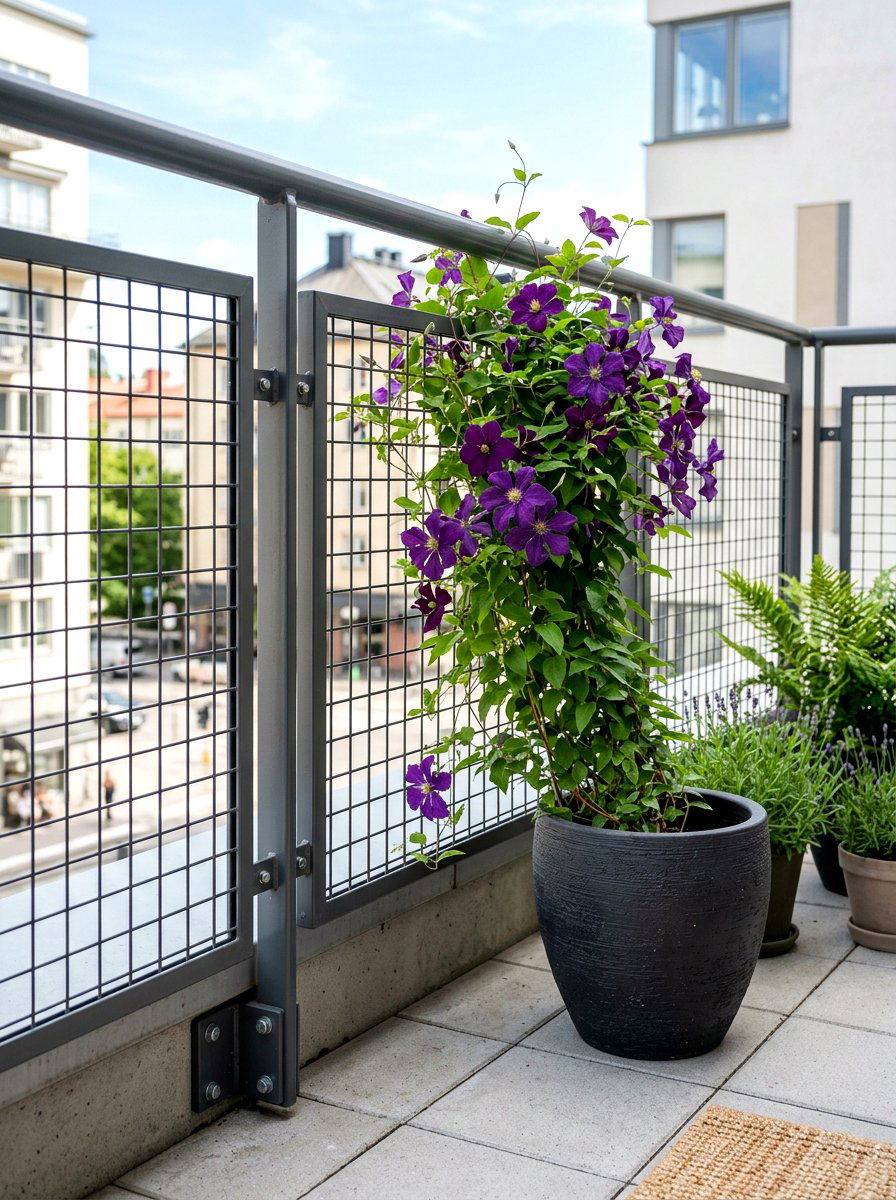
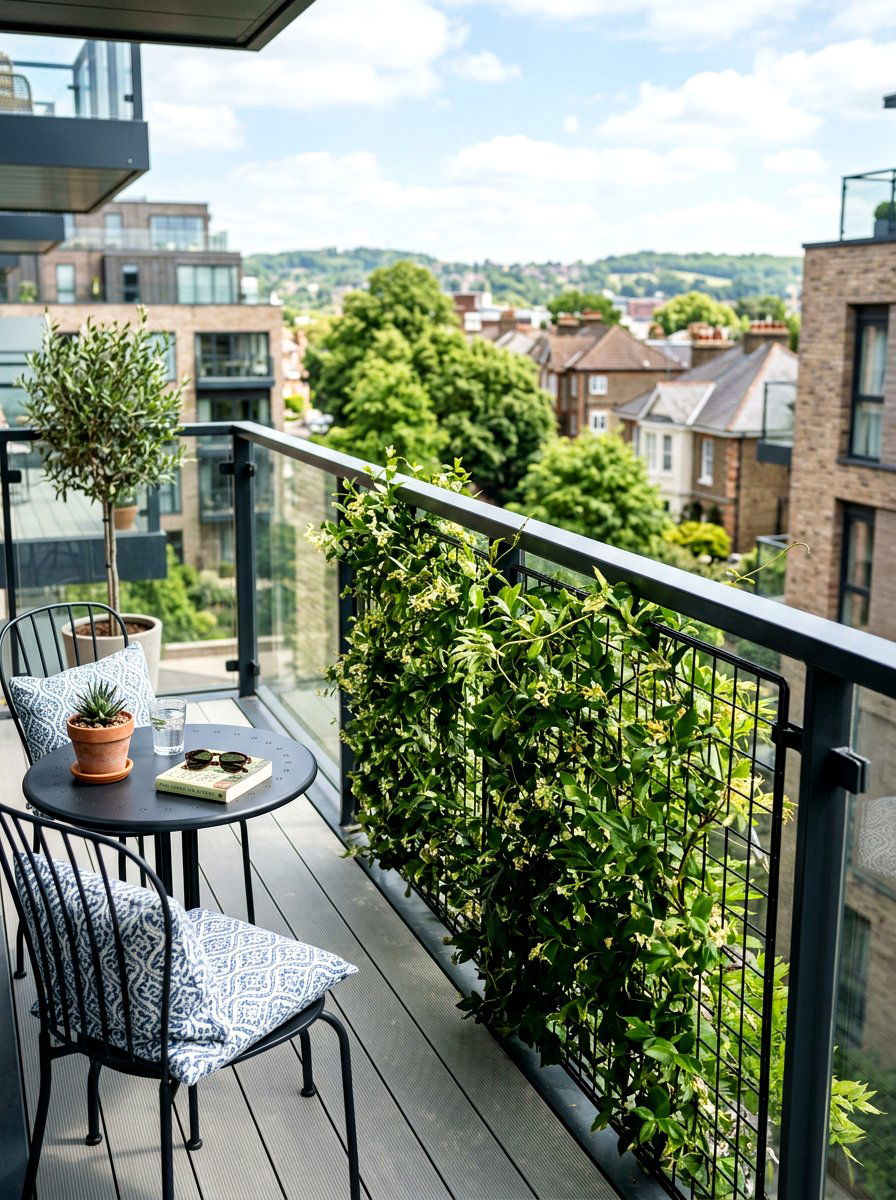
For those living in apartments, a balcony railing support allows you to grow clematis even without a traditional yard or garden space. You can use zip ties or soft garden twine to secure a small mesh trellis directly to the metal railing. The clematis will happily climb along the top of the rail, creating a living green border for your outdoor seating area. This provides a bit of extra privacy from neighbors while adding much-needed color to a concrete environment. It is a simple way to bring the joy of spring gardening to an urban setting. Watching the vines grow daily is a very rewarding experience for city dwellers.
18. Mailbox Post Trellis
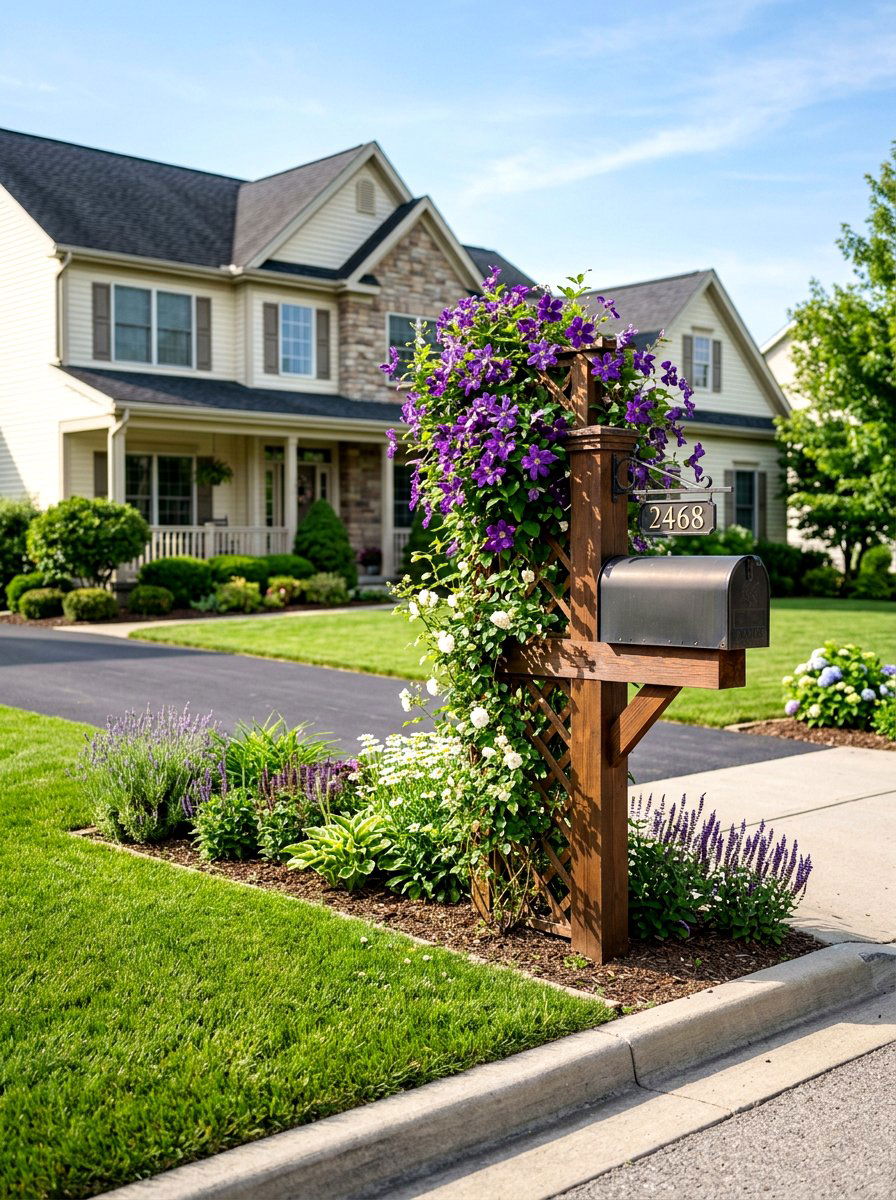
Enhancing your mailbox post with a small trellis is a wonderful way to improve the curb appeal of your home this season. Since mailboxes are often located at the front of the property, they are the first thing people see when they arrive. Wrapping a simple wire or wooden trellis around the post allows a clematis vine to turn a functional item into a beautiful focal point. Choose a variety that stays somewhat compact so it does not overwhelm the mailbox or hide your house number. It is a small detail that makes a big impact on the overall look of your neighborhood and your front yard.
19. Diamond Grid Trellis
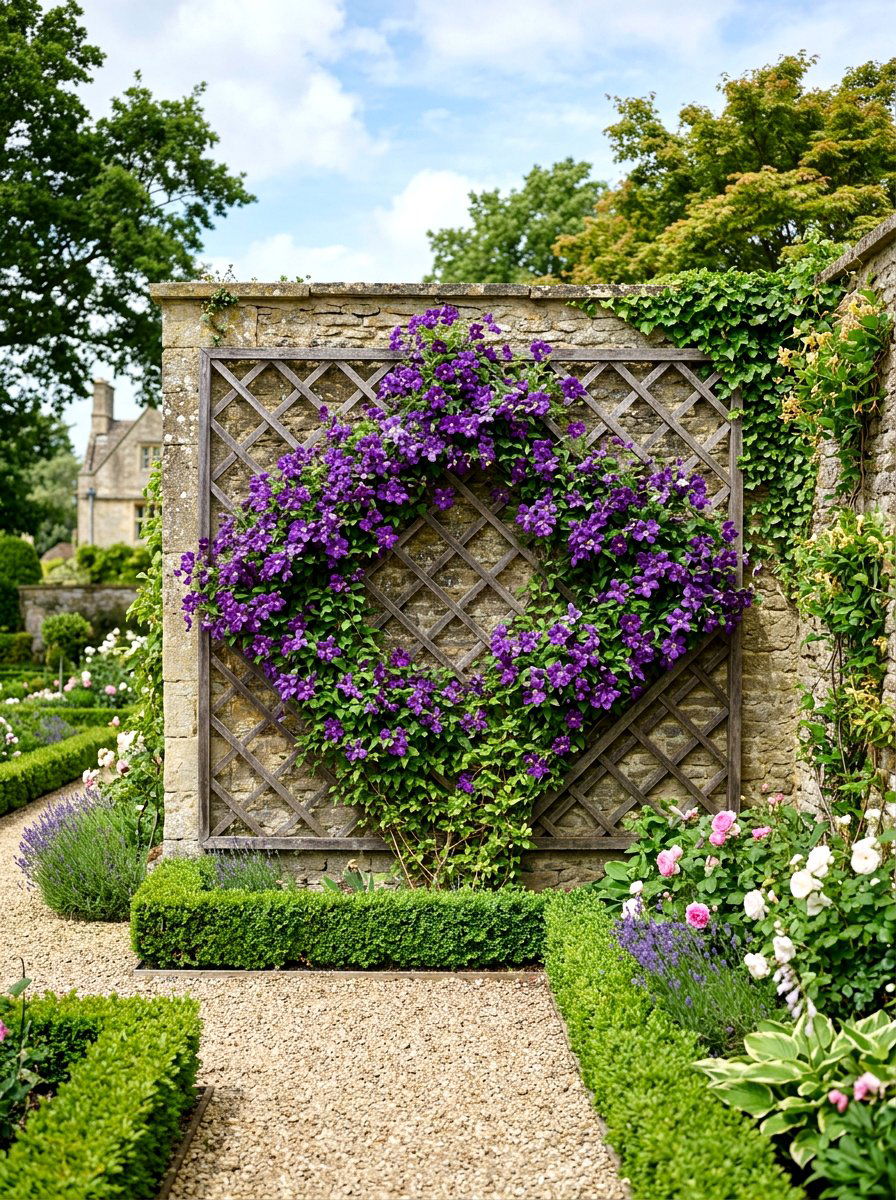
A diamond grid trellis is a timeless choice that offers a very symmetrical and clean look for your spring garden display. This pattern is exceptionally strong and can support a large amount of plant material as the clematis matures over the years. The repeating diamond shapes create a sense of rhythm that is very pleasing to the eye and complements most architectural styles. You can install these panels in a series along a long wall to create a cohesive and professional-looking garden design. The gaps in the grid provide perfect spots for the large flowers to poke through and face the sun. It is a very reliable garden structure.
20. Stone Wall Wire System
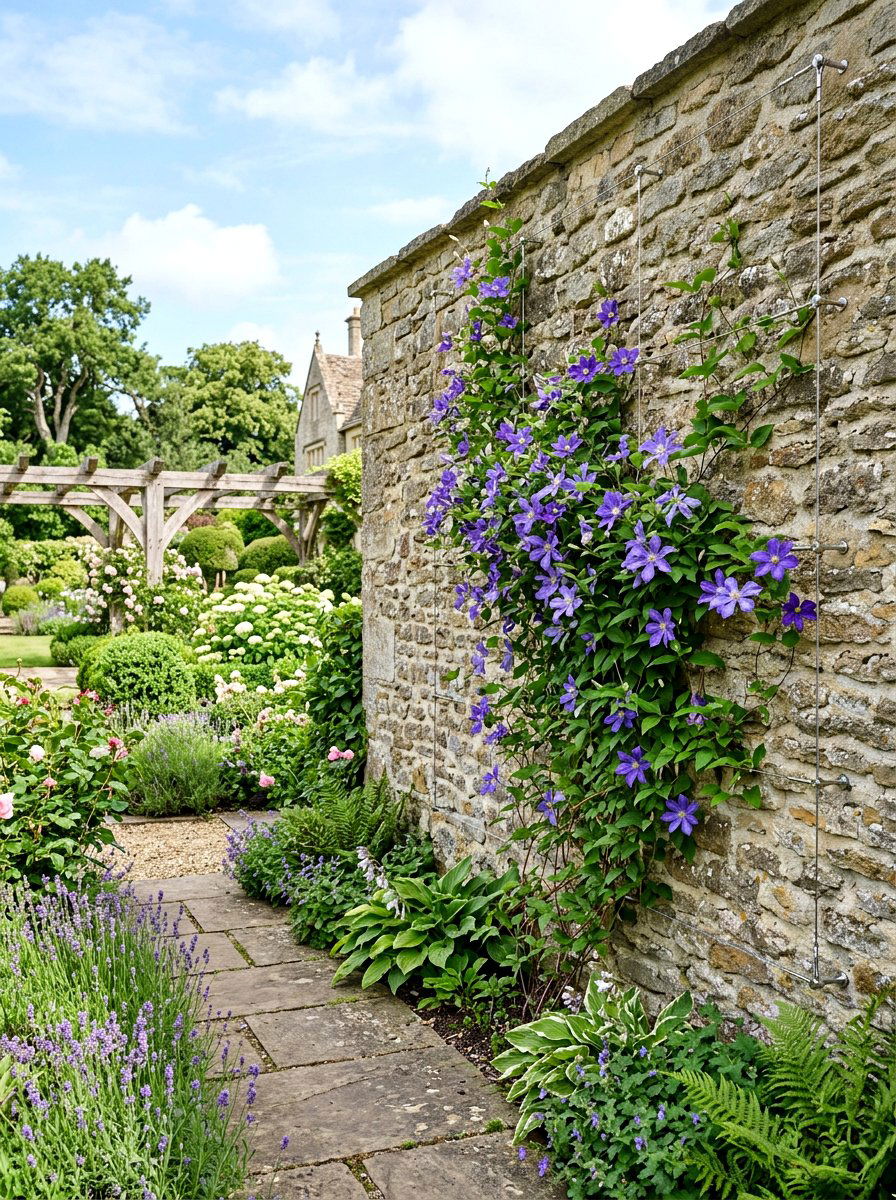
A stone wall wire system is an excellent way to grow clematis against a masonry surface without hiding the beautiful natural stone underneath. By using small anchors and thin stainless steel wires, you can create a support system that is nearly invisible to the naked eye. This allows the clematis to appear as if it is growing directly on the stone, much like wild ivy would. It provides a very elegant and high-end look that is often seen in large estate gardens or historic properties. The wires keep the plant held securely against the wall even during the heavy winds of a spring rainstorm.
21. Potted Plant Obelisk
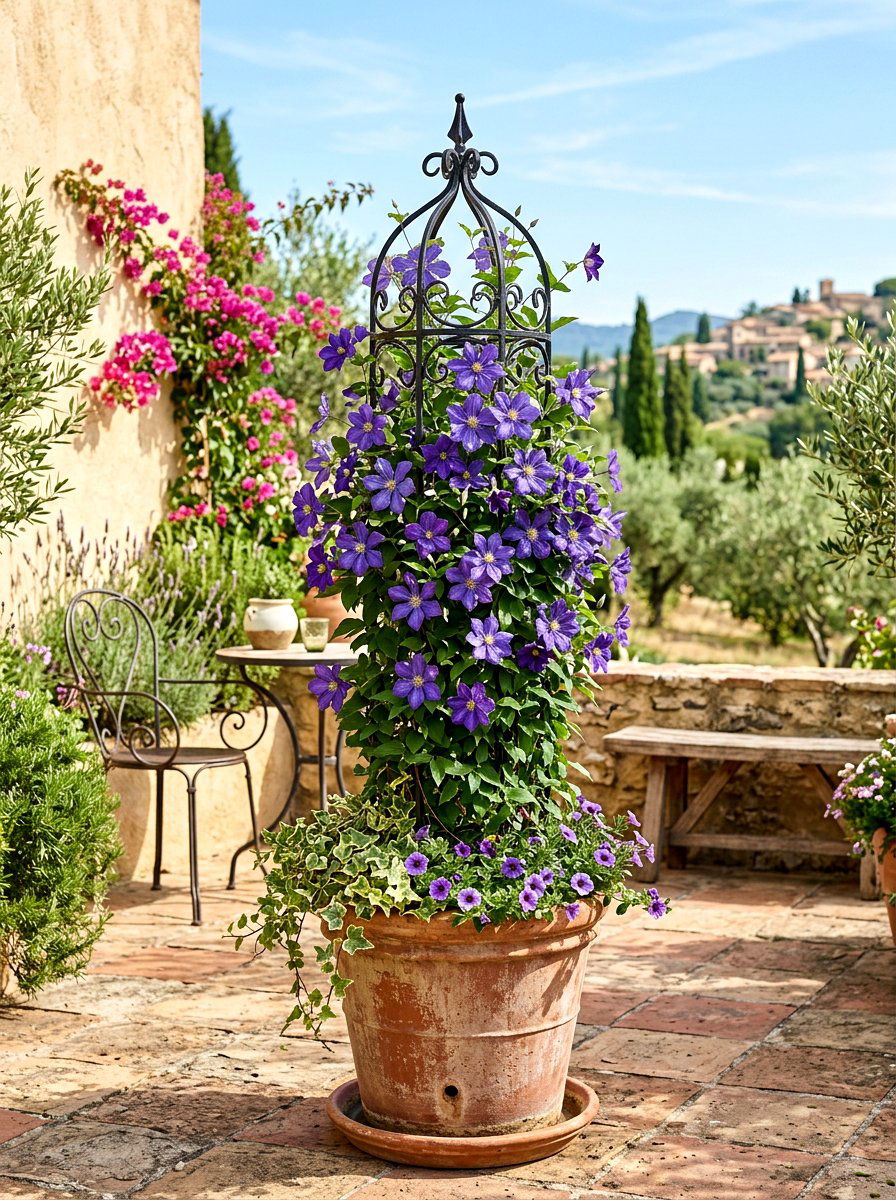
A potted plant obelisk is the perfect solution for people who want to grow clematis on their patio, deck, or small porch. You can place a small metal or wooden obelisk directly into a large container filled with high-quality potting soil. This allows the vine to grow tall and lush even if you do not have any open ground for planting. It is a great way to add height to a collection of potted plants and create a more layered look. Because the container is mobile, you can move the clematis to different areas to find the perfect amount of spring sunlight for best blooming.
22. Corner Garden Trellis
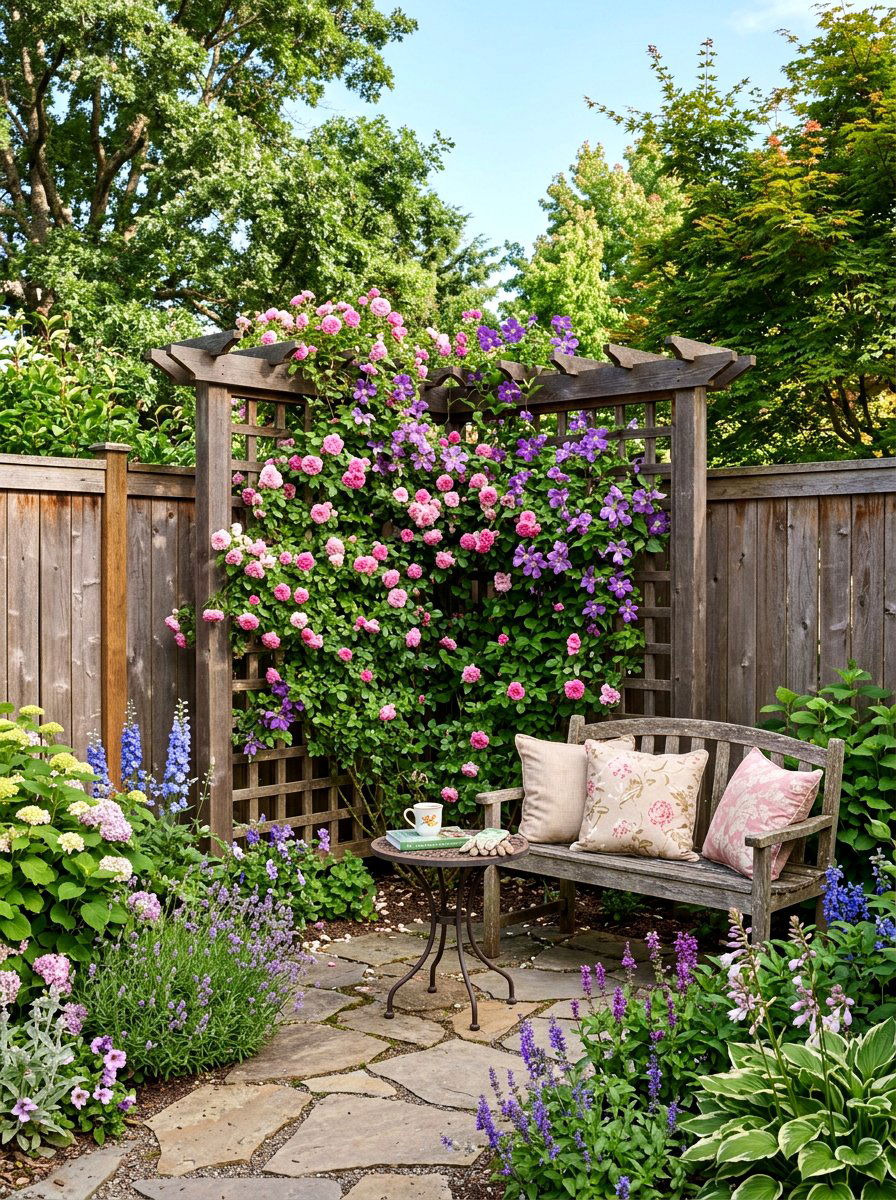
A corner garden trellis is designed to fit perfectly into the 90-degree angles of your home or garden walls where space is limited. These structures are great for filling in awkward gaps that might otherwise be left empty and unused in your backyard. By growing clematis in these corners, you soften the sharp edges of your house and create a more inviting atmosphere. The two-sided design provides a large surface area for the vines to climb while taking up very little ground space. It is a smart way to maximize every inch of your outdoor area. This creates a cozy, surrounded feeling for your garden seating.
23. Contemporary Slat Trellis
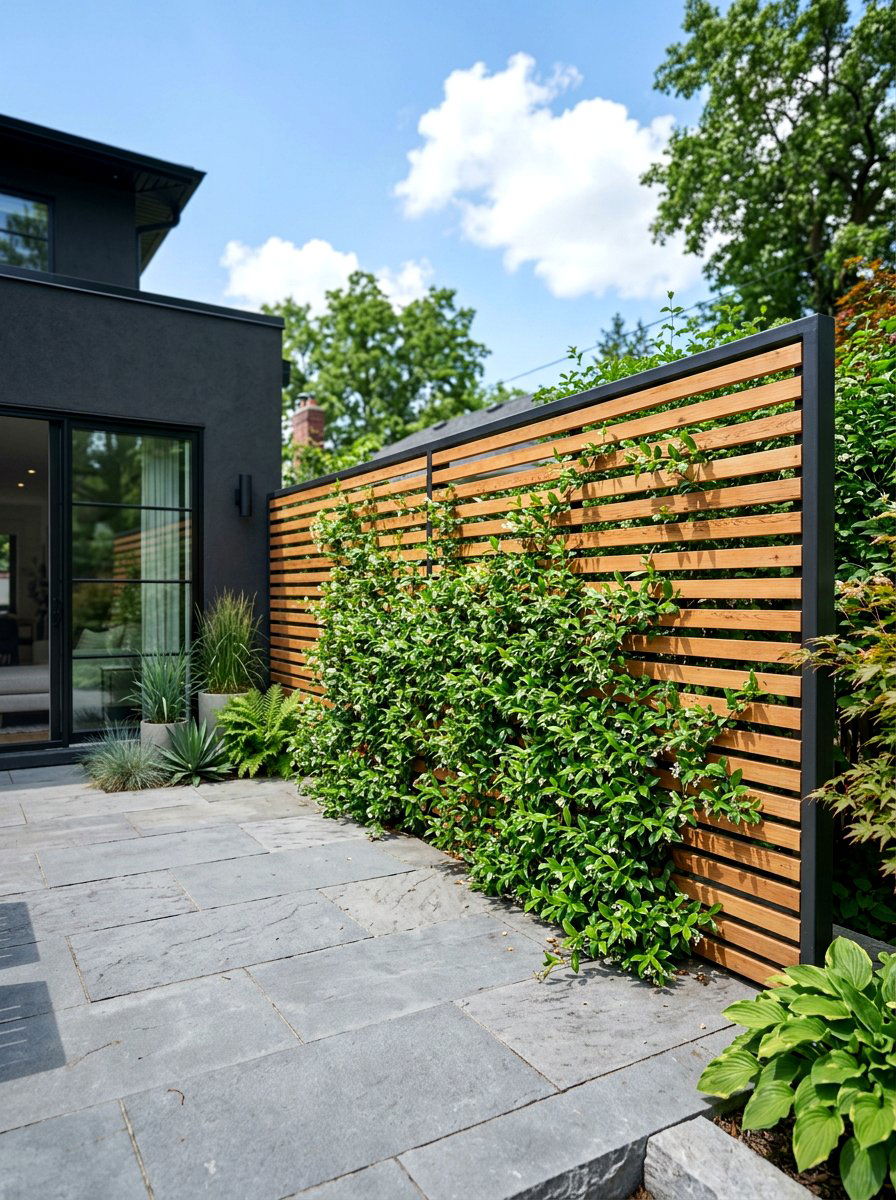
A contemporary slat trellis uses horizontal wooden boards spaced slightly apart to create a very sleek and modern look for your backyard. This style is very popular in new landscape designs because it provides a clean backdrop for vibrant spring greenery. The wide slats offer a different kind of support that allows the clematis to weave in and out of the openings. It creates a very interesting play of light and shadow throughout the day as the sun moves across the sky. This type of trellis is also very effective at providing shade and privacy while still allowing a cool breeze to pass through.
24. Crisscross Wire Pattern
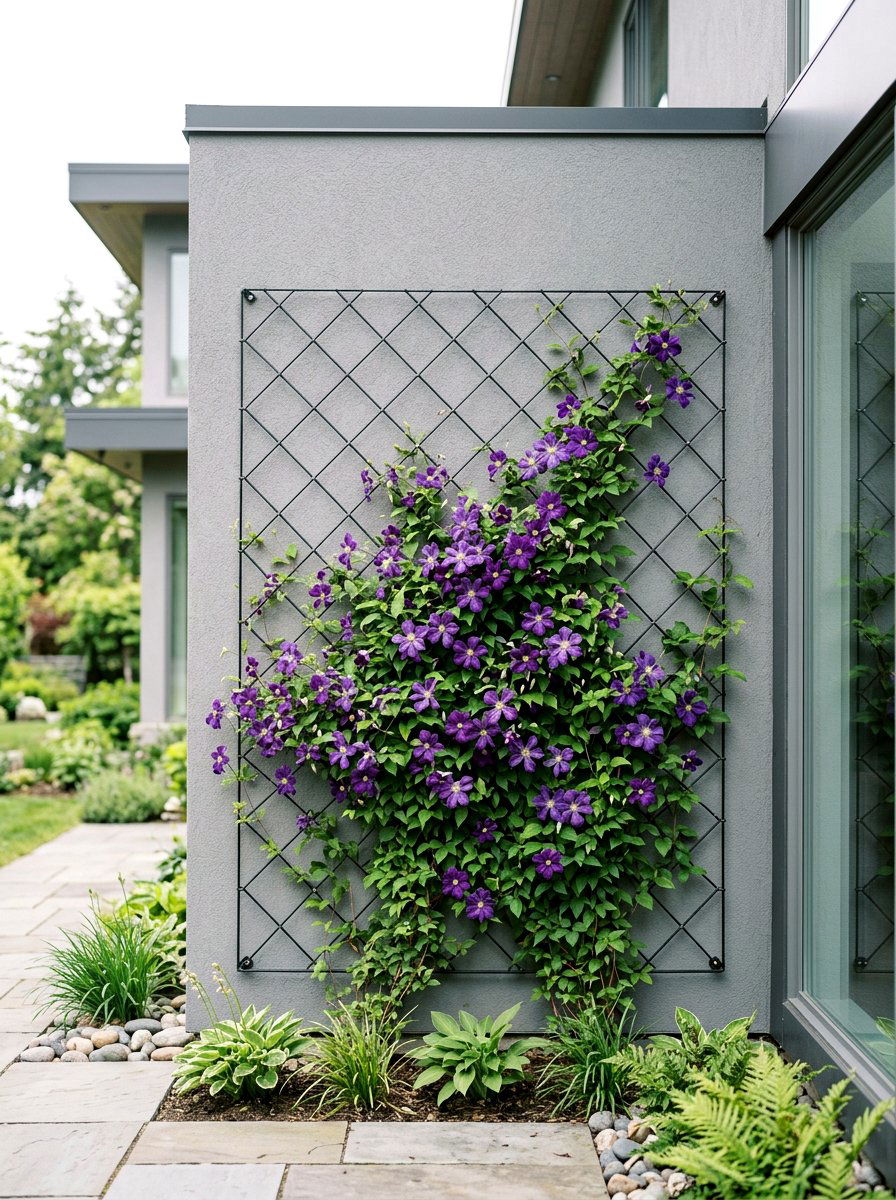
Designing a crisscross wire pattern on a large exterior wall gives you the freedom to create a custom piece of living art. You can decide how wide or narrow the diamonds should be based on the specific variety of clematis you are planting. This DIY approach is often more affordable than buying large pre-made panels and allows for a more tailored fit for your home. The wires are strong enough to support the heavy growth of spring vines while remaining subtle and unobtrusive. It is a great project for anyone who wants a unique and professional-looking result in their garden this year without spending a lot.
25. Rustic Branch Trellis
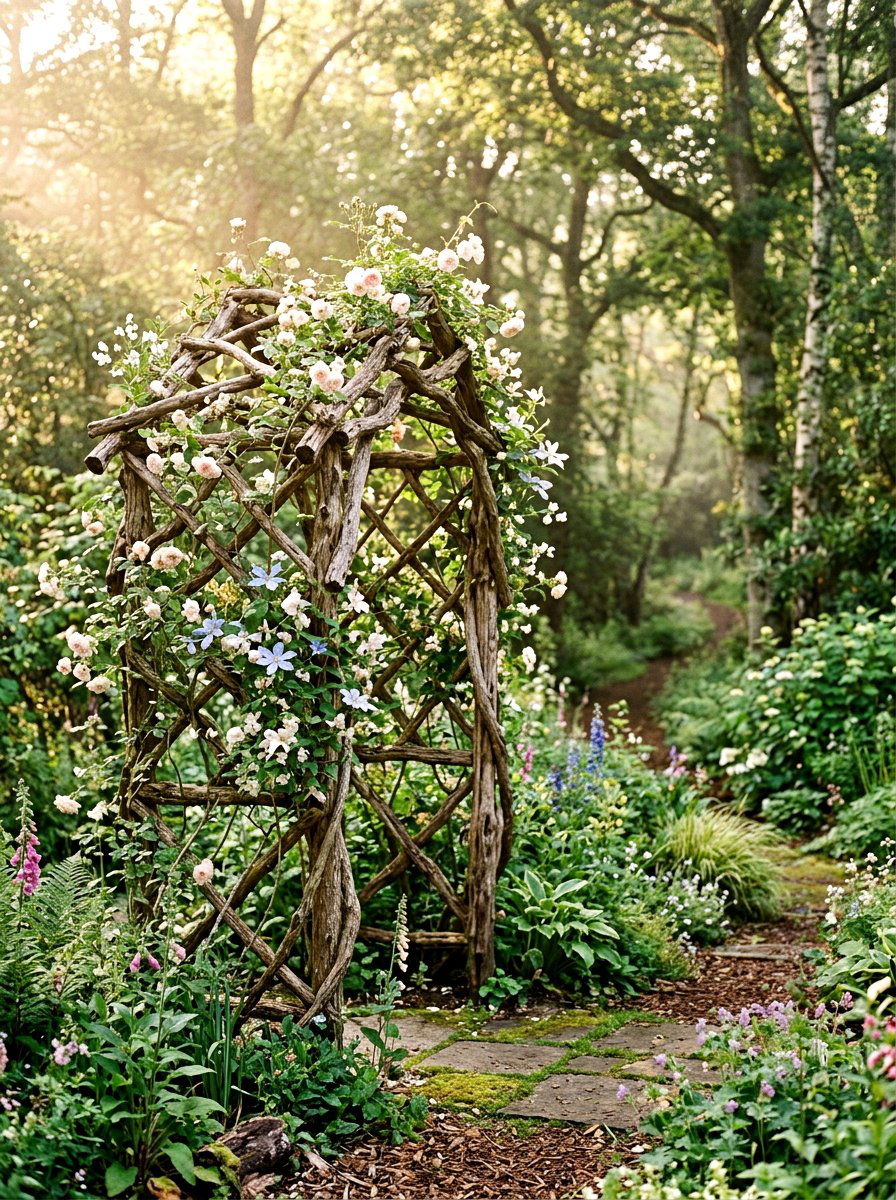
A rustic branch trellis is made from fallen limbs or pruned branches, giving your garden a very natural and enchanted forest aesthetic. You can lash the branches together using twine to create a structure that looks like it grew right out of the earth. This is a zero-cost option that is perfect for woodland gardens or those who prefer a more organic and less formal look. Clematis looks particularly beautiful on this type of support as the delicate flowers contrast with the rough, dark bark of the wood. It is a wonderful way to recycle yard waste and create something truly beautiful and functional for spring.
Conclusion:
Adding a trellis to your spring garden is one of the most effective ways to showcase the breathtaking beauty of clematis vines. Whether you prefer the structure of a wooden obelisk or the modern look of a wire system, these supports provide the necessary foundation for growth. Vertical gardening not only saves space but also brings your favorite flowers up to eye level for better enjoyment. As you have seen, there are endless ways to incorporate these designs into your unique outdoor environment. We hope these ideas inspire you to get outside and start building a beautiful home for your climbing plants this season. Happy gardening to everyone!
Related posts:
Leave a Reply