
Spring is finally here, and there is no better way to celebrate the season than by bringing fresh, fragrant greenery into your home. Adding herbs to your living space does more than just provide fresh ingredients for your favorite meals; it transforms your interior design into a living, breathing sanctuary. Whether you live in a sprawling farmhouse or a compact city apartment, integrating herbs into your decor adds texture, color, and a wonderful aroma to every room. This guide explores creative ways to display your favorite plants while keeping your home looking stylish and organized for the warmer months ahead. From rustic wooden crates to sleek modern hydroponics, you will find inspiration to make your home feel like a lush spring garden.
1. Kitchen Herb Garden
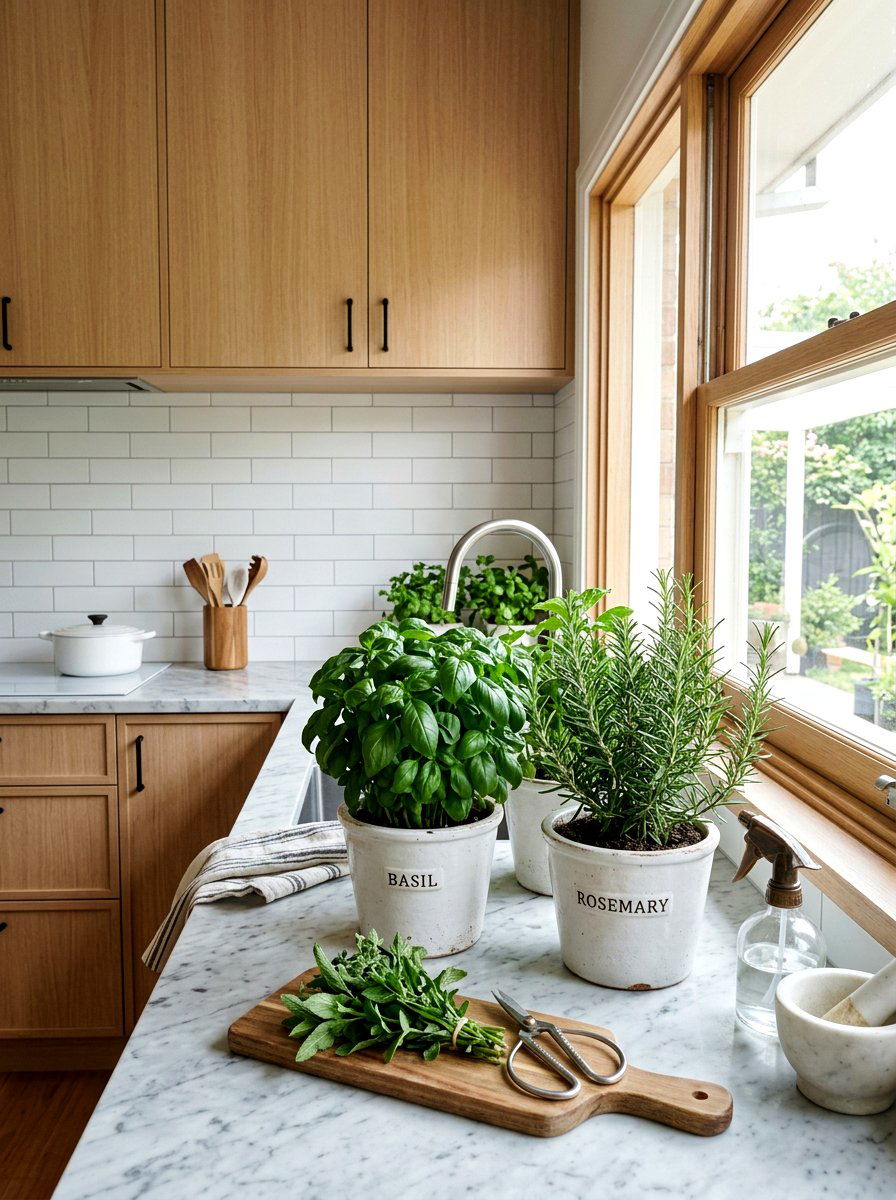
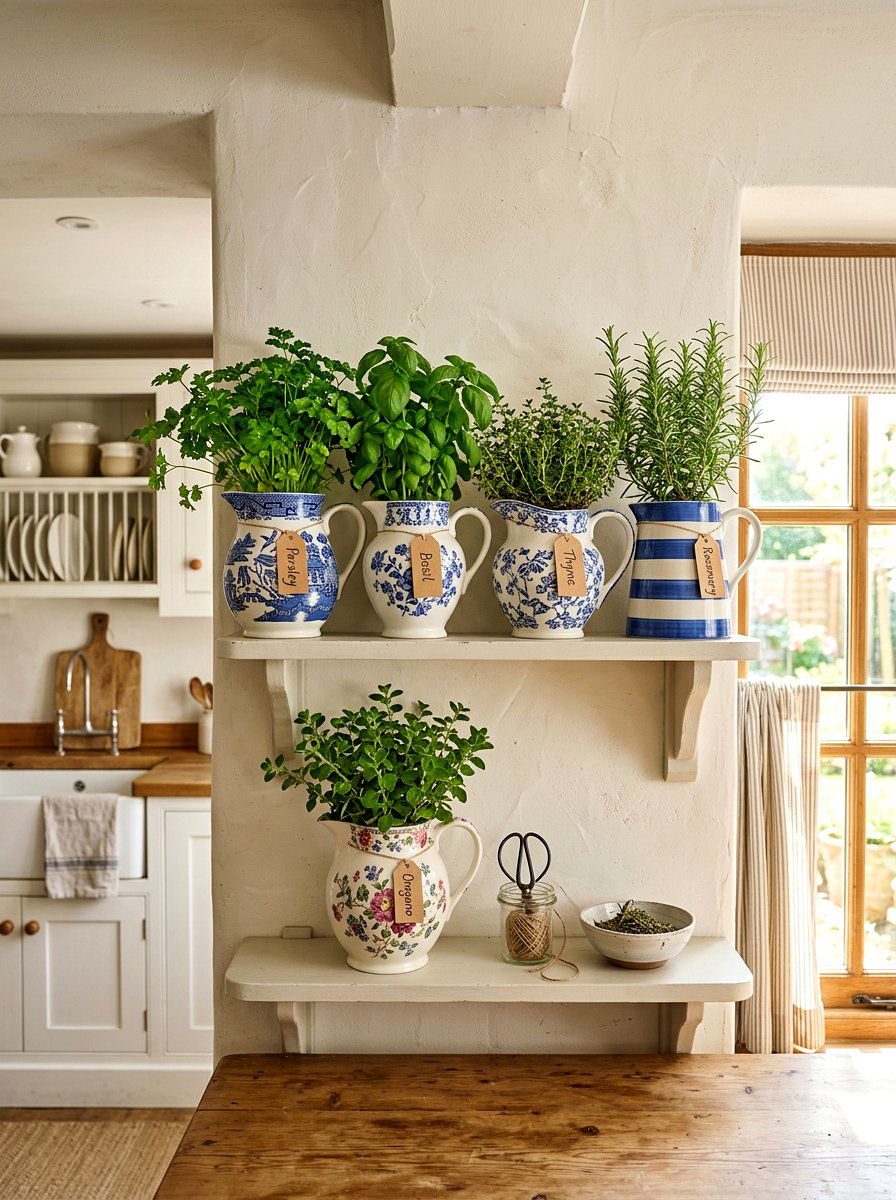
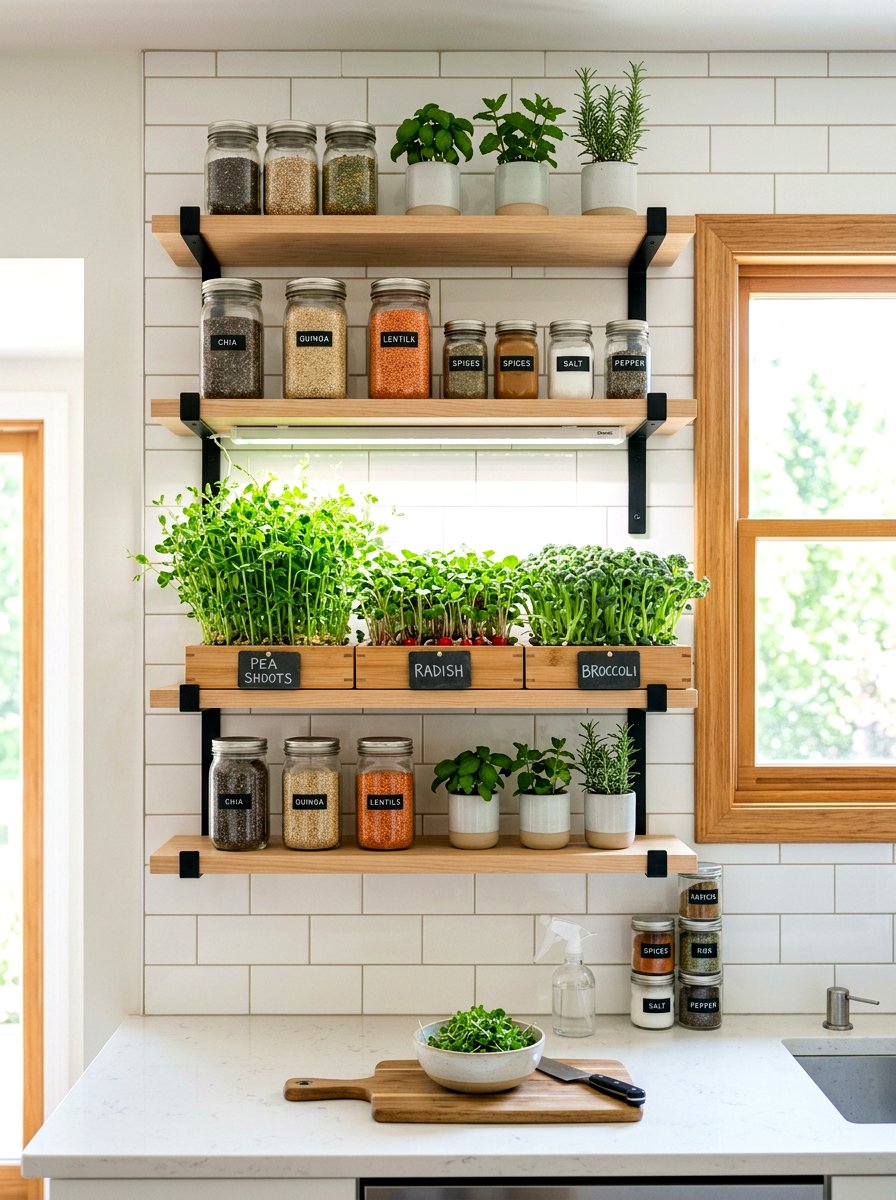
Creating a dedicated space for herbs in your kitchen changes the entire atmosphere of the room. A well-designed kitchen herb garden often features built-in shelving or a designated corner on a bright countertop where pots of basil, parsley, and rosemary thrive. Think about using matching ceramic pots that complement your backsplash tiles or cabinetry for a cohesive look. Good lighting is essential, so many homeowners install under-cabinet LED strips to keep the plants vibrant and healthy. This setup not only makes cooking more convenient but also introduces a pop of natural green against hard surfaces like stone or stainless steel. It feels fresh, functional, and deeply inviting for family gatherings.
2. Hanging Herb Planter
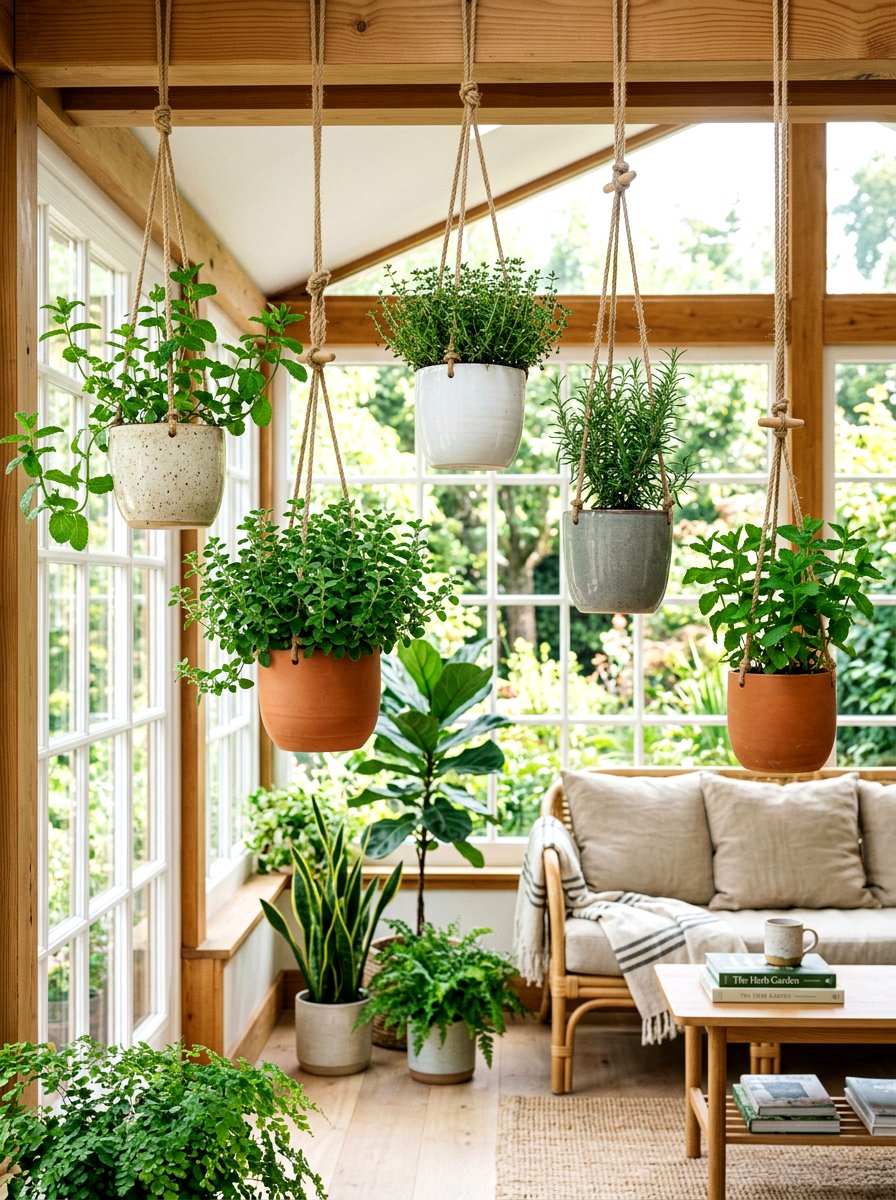
A hanging herb planter is a fantastic way to utilize vertical space while adding a whimsical touch to your sunroom or kitchen window. Imagine a set of three or four matching ceramic or metal vessels suspended at different heights by sturdy jute rope or sleek wire. This arrangement creates a visual focal point that draws the eye upward, making the room feel larger and more dynamic. The greenery cascades gently over the edges of the pots, offering a soft contrast to the straight lines of window frames. It is a practical solution for small homes where floor or counter space is limited, ensuring your herbs receive plenty of natural sunlight daily.
3. Windowsill Herb Box
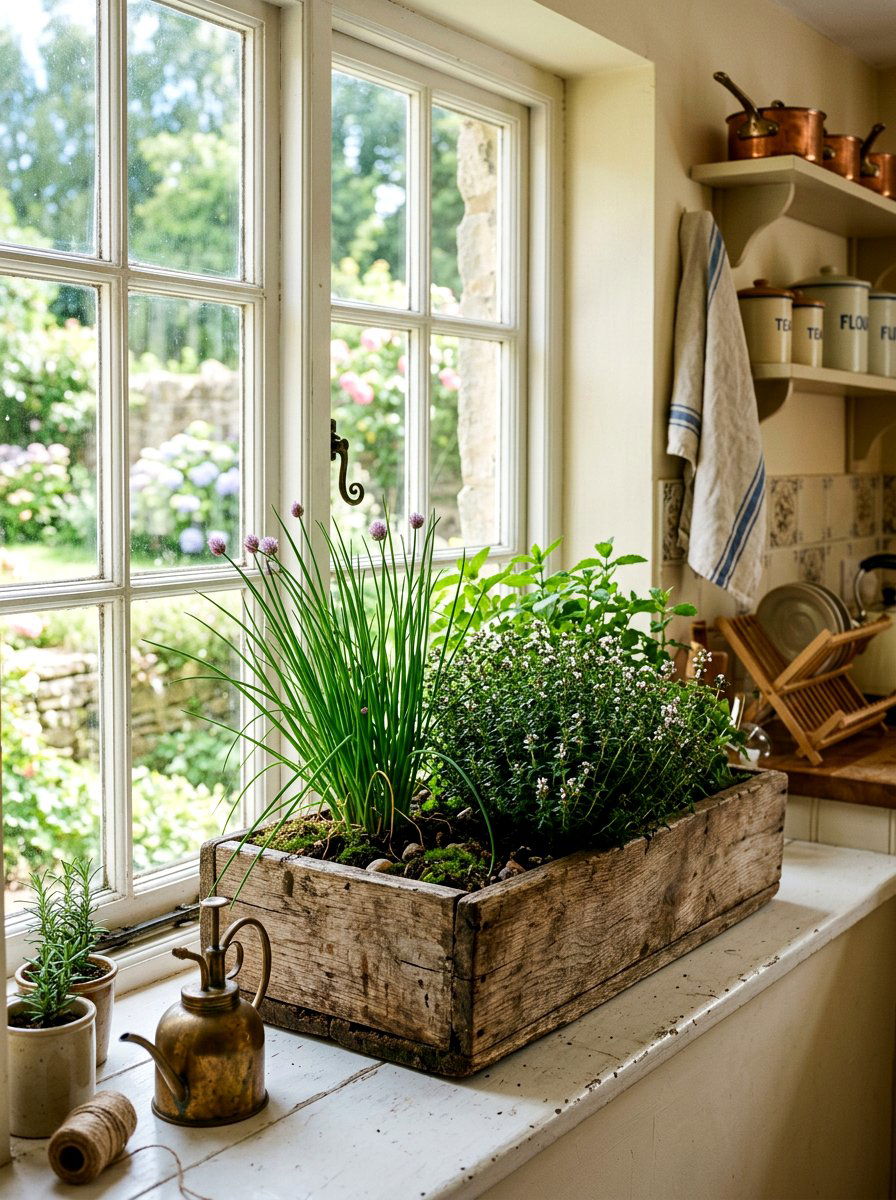
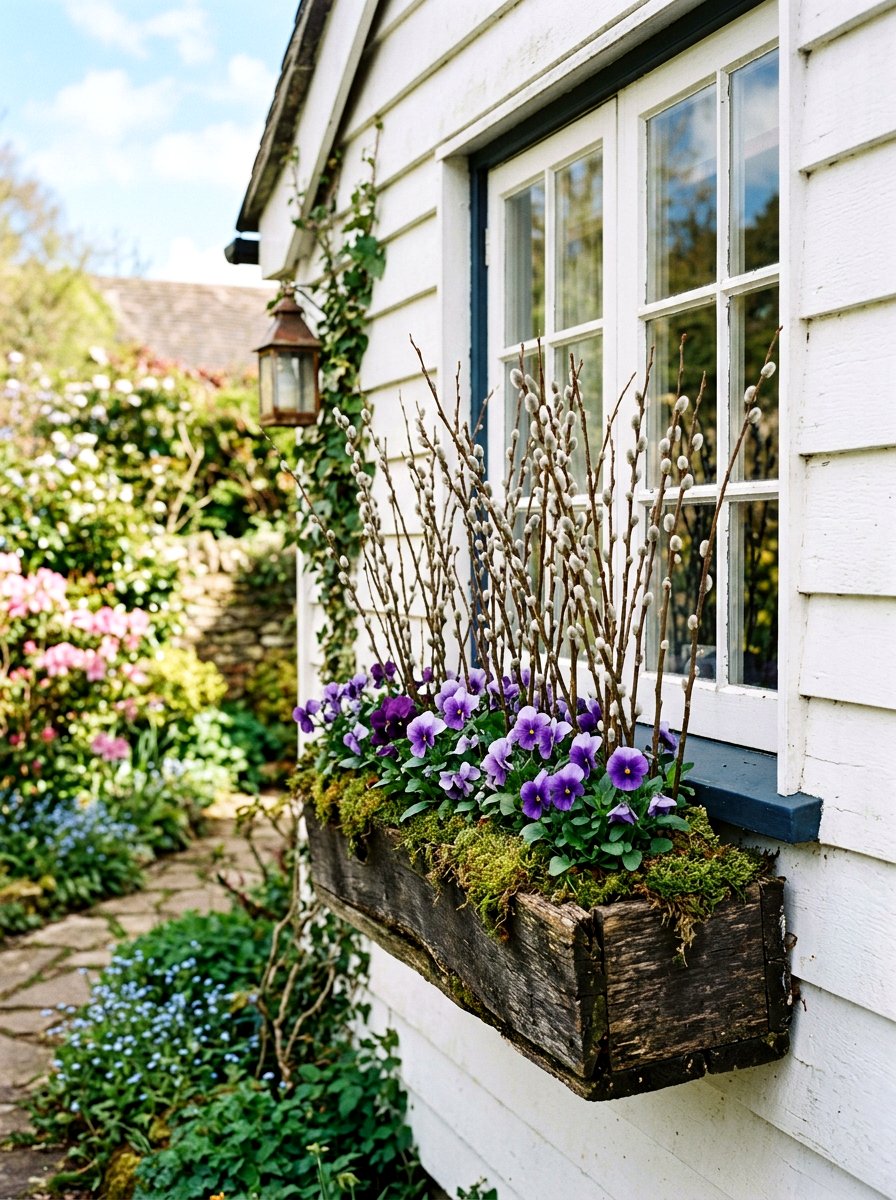
The classic windowsill herb box is a timeless addition to any home looking for a touch of cottagecore charm. Typically crafted from weathered wood or sleek white porcelain, these long rectangular containers fit perfectly on the ledge of a large kitchen window. You can plant a variety of herbs like thyme, mint, and chives together to create a miniature indoor garden bed. This setup benefits from the most consistent light in the house, promoting rapid growth and lush foliage. The view from both inside and outside the home is instantly improved by the sight of thriving greenery against the glass, making your windows feel like a natural extension of the outdoors.
4. Vertical Herb Wall
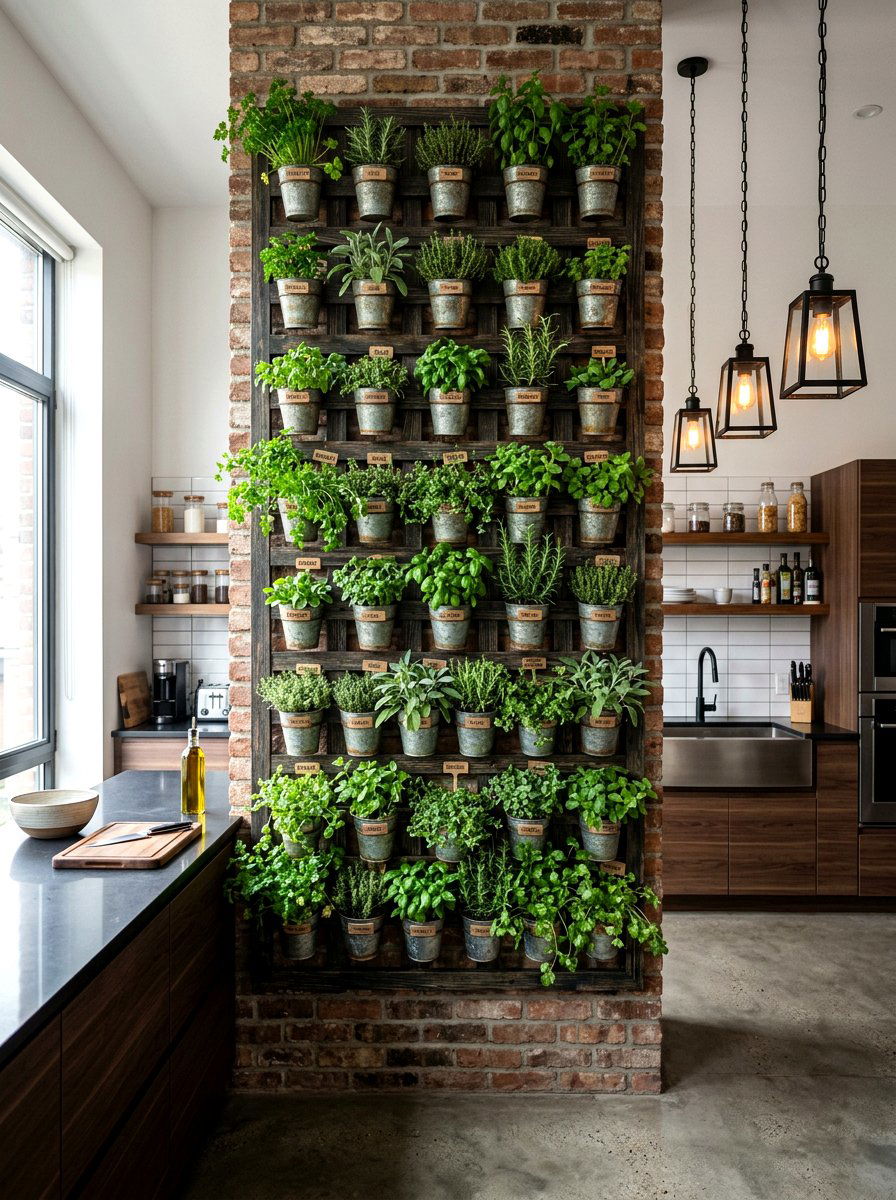
A vertical herb wall is a bold design choice that turns your kitchen or patio into a living piece of art. This setup involves mounting several rows of planters onto a wooden trellis or a metal grid fixed to the wall. It is an excellent way to grow a large volume of herbs without taking up any precious floor space. When the plants are fully grown, they create a lush curtain of green that adds texture and life to an otherwise blank wall. This design works particularly well in modern or industrial-themed homes, providing a soft, organic contrast to hard materials like brick, concrete, or dark-painted metal finishes.
5. Mason Jar Herb Garden
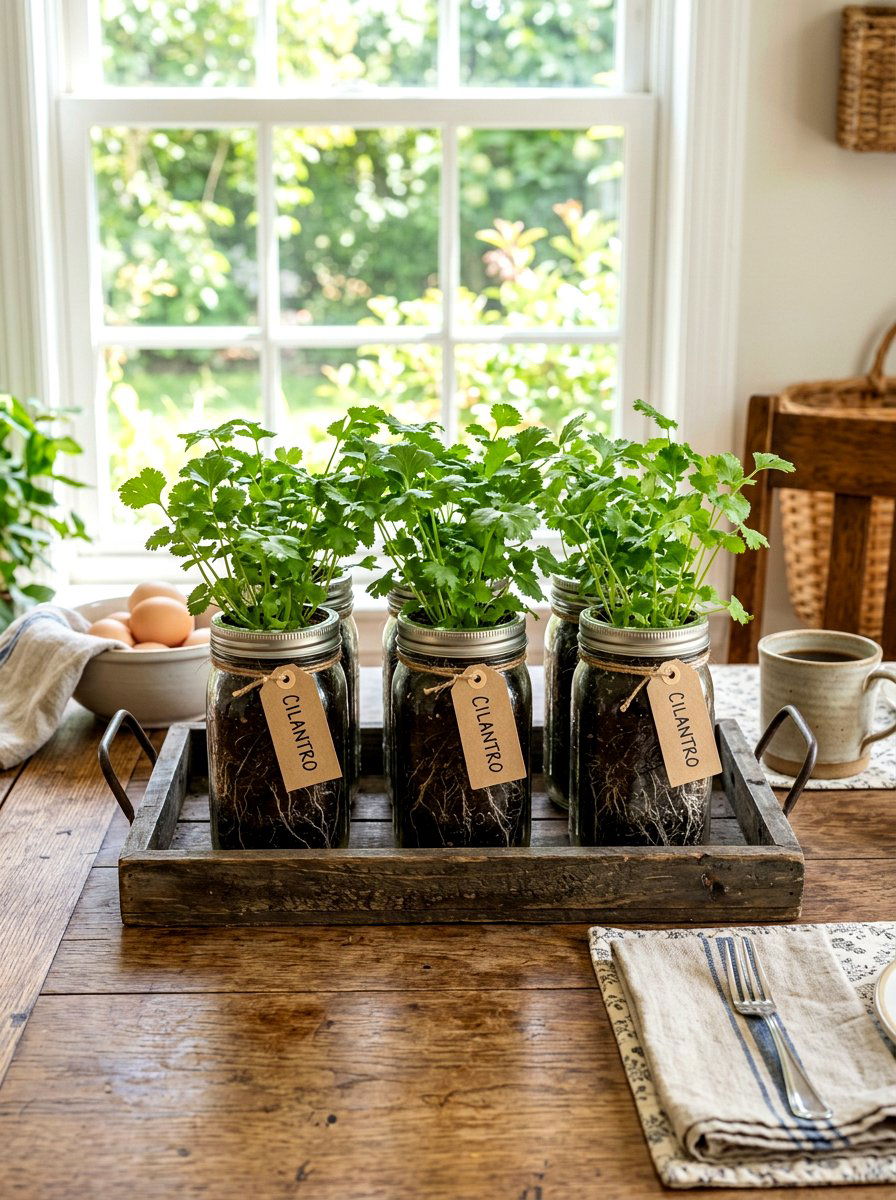
The mason jar herb garden is a favorite for those who love a rustic or farmhouse aesthetic. By using clear glass jars filled with a layer of pebbles for drainage and nutrient-rich soil, you can create a charming and organized display. These jars can be grouped together on a tray or mounted to a piece of reclaimed wood for a more permanent wall fixture. The transparency of the jars allows you to see the roots and soil, adding an educational and organic element to your decor. This style is perfect for smaller herbs like cilantro or dill and looks beautiful when placed near a sun-drenched breakfast nook.
6. Tiered Herb Stand
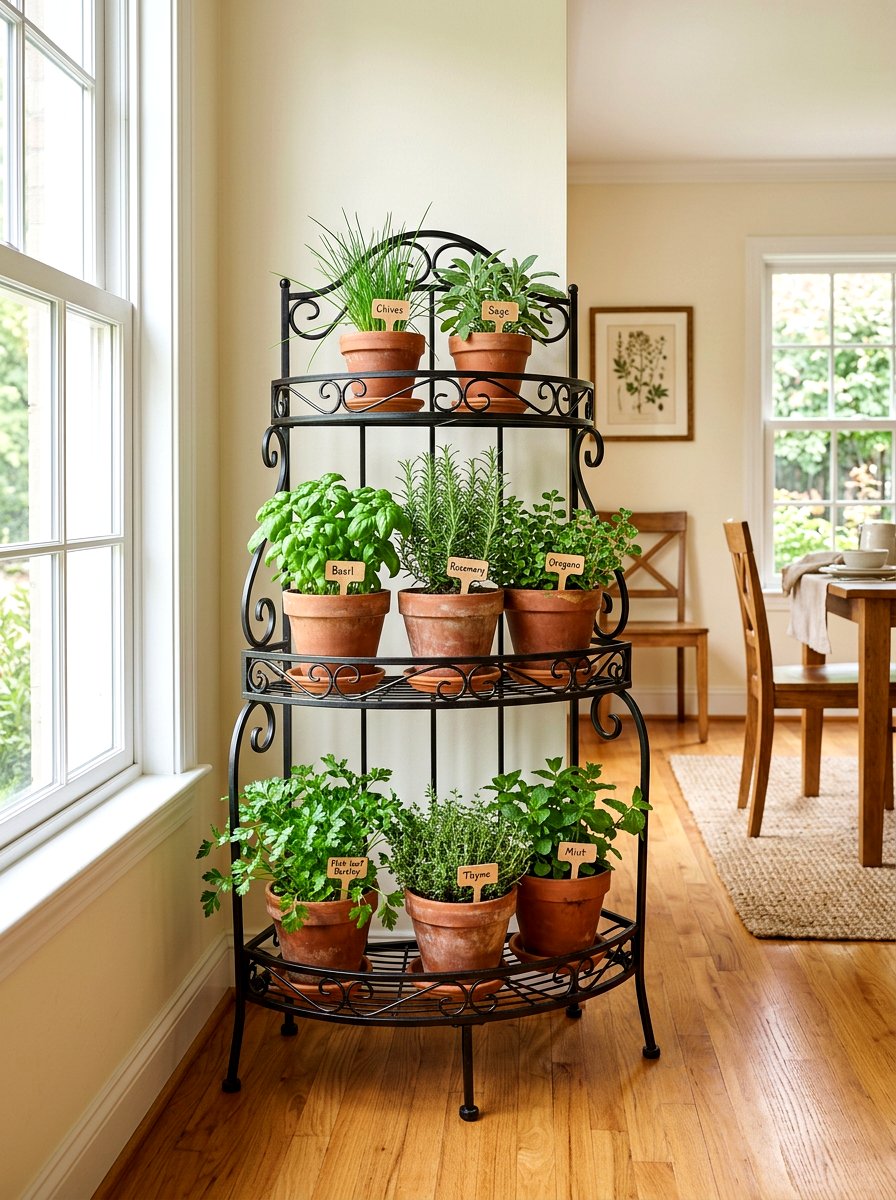
A tiered herb stand provides a structured and elegant way to display multiple plants in a compact area. These stands often feature three or four levels, allowing you to organize your herbs by type or sunlight requirements. Whether made of wrought iron for a vintage feel or light-colored wood for a Scandinavian look, a tiered stand creates a sense of height and drama. It works beautifully in a corner of the dining room or out on a balcony. By elevating the plants, you make them more accessible for harvesting and create a cascading effect of greenery that feels lush, abundant, and carefully curated.
7. Rustic Wooden Herb Crate
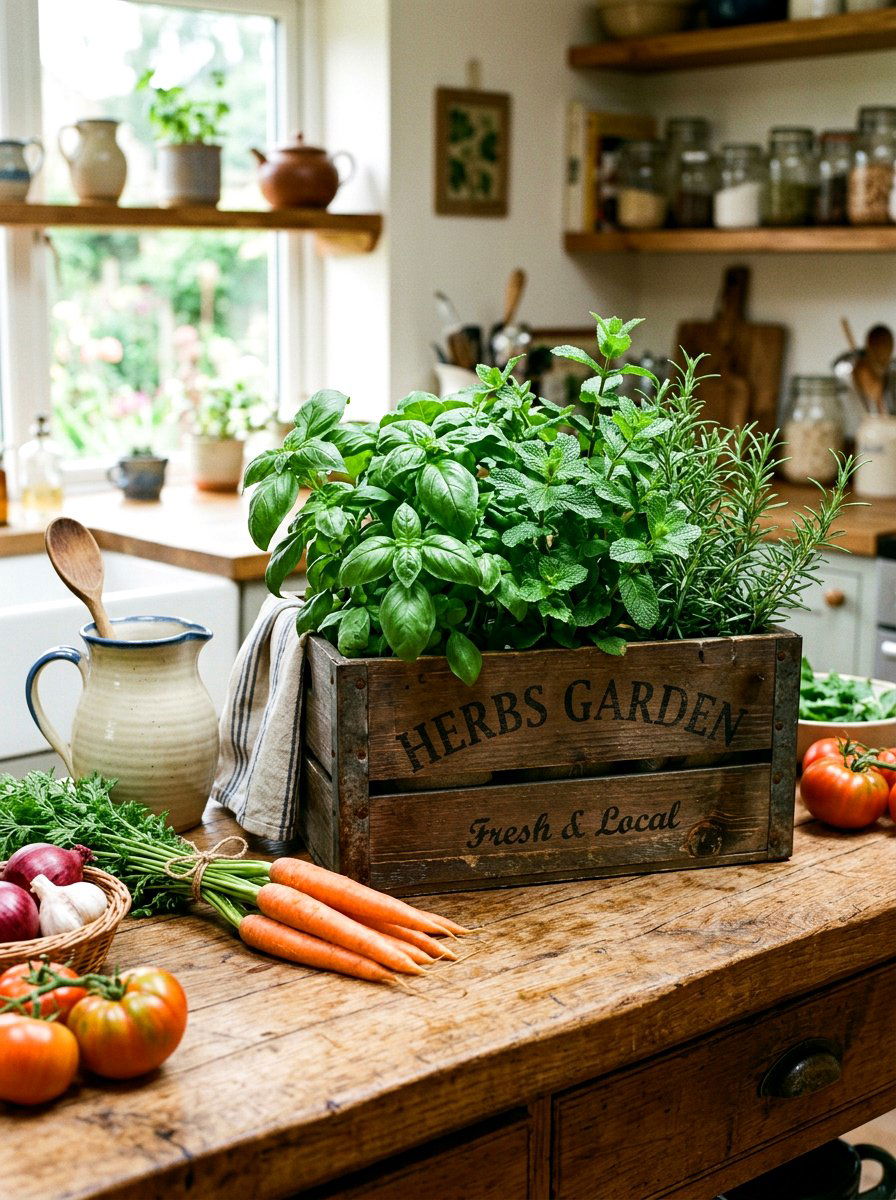
A rustic wooden herb crate brings a cozy, gathered-from-the-garden feel to your kitchen island or side table. Using a vintage-style crate or a DIY reclaimed wood box, you can nestle several small herb pots inside to create a unified look. Adding a layer of dried moss around the pots hides the plastic containers and adds an extra layer of natural texture. This design idea is perfect for those who want a portable garden that can be moved easily from the kitchen to the outdoor dining area. It evokes a sense of history and warmth, making your home feel lived-in and connected to the earth.
8. Modern Indoor Herb Kit
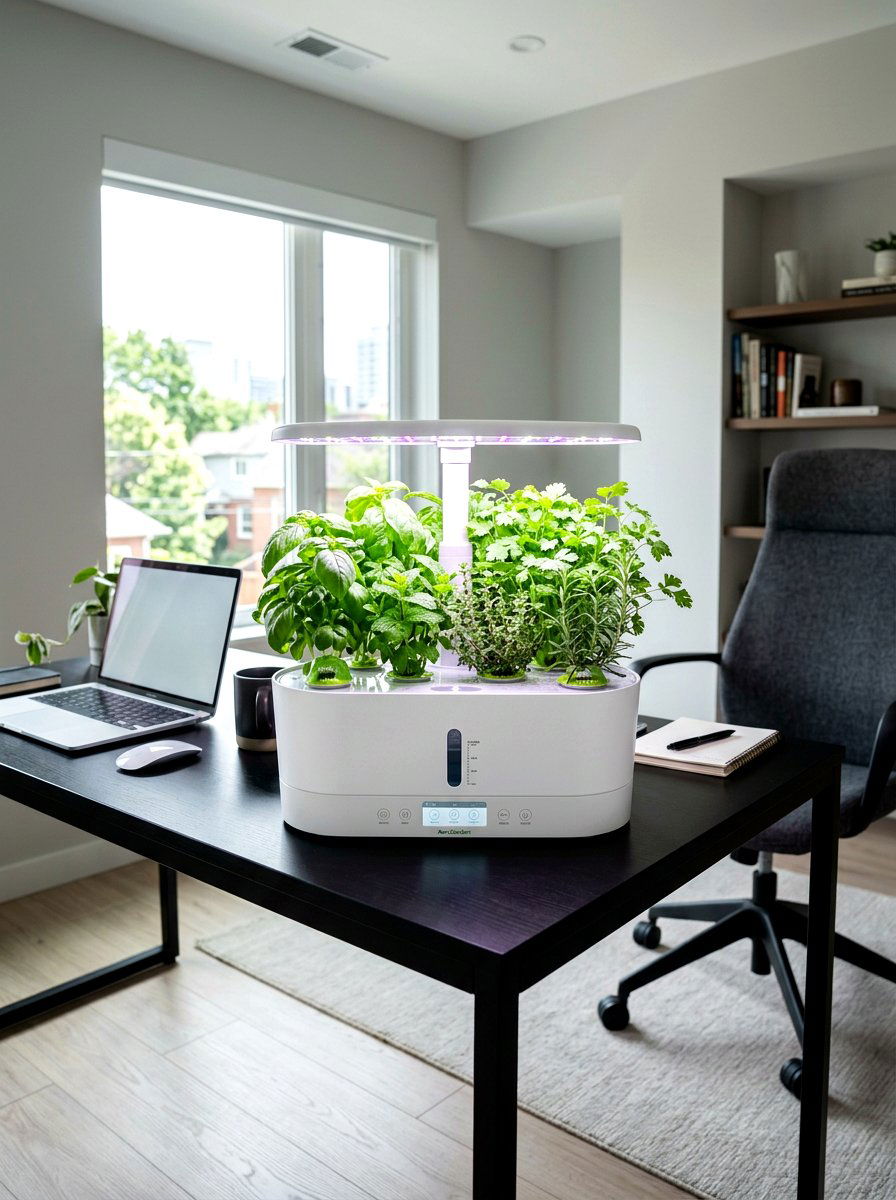
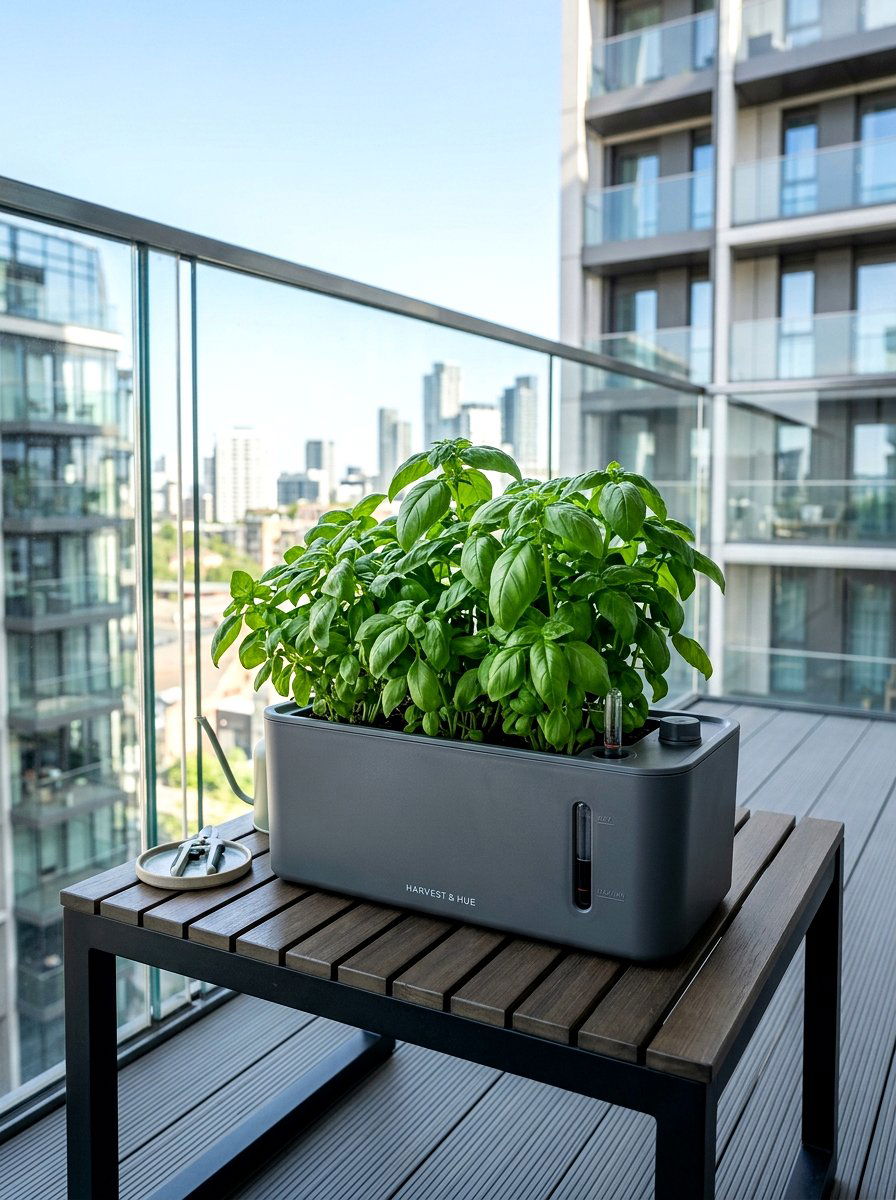
For the tech-savvy home decorator, a modern indoor herb kit offers a sleek and minimalist way to grow greens. These systems often come with integrated grow lights and self-watering features, ensuring your herbs stay vibrant even in rooms with limited natural light. The clean lines and neutral colors of these kits fit perfectly into a contemporary kitchen or home office. They act as a piece of living furniture, providing a bright spot of color in a high-tech environment. Because they are so self-contained, they keep your surfaces clean and clutter-free while providing a constant supply of fresh mint or basil for your drinks.
9. Herb Centerpiece Dining Table
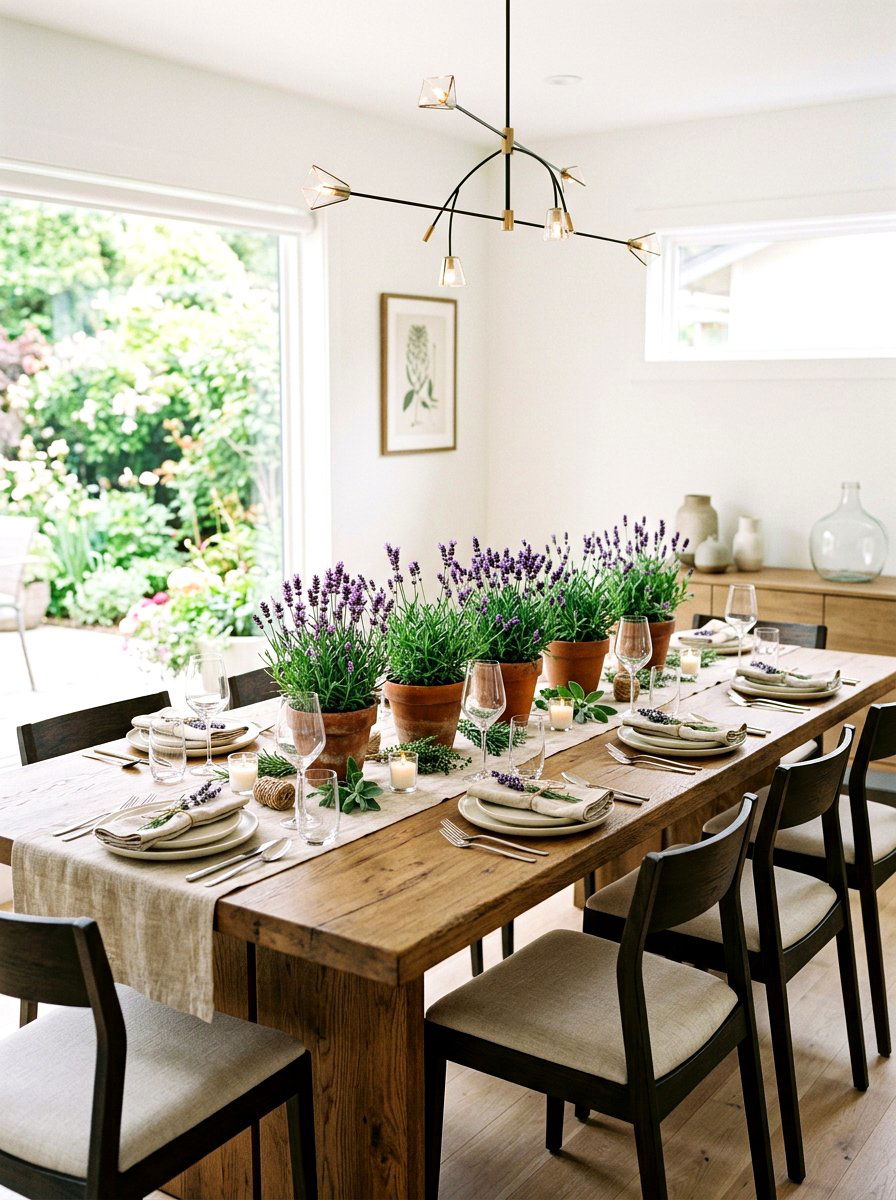
Using herbs as a centerpiece for your dining table is a refreshing alternative to traditional floral arrangements. You can line up several small terracotta pots of lavender or sage along a linen table runner to create a fragrant and beautiful display. This setup encourages guests to interact with the decor, as the subtle scent of fresh herbs enhances the dining experience. To add more visual interest, mix in some white candles or small decorative stones between the pots. This design approach is perfect for spring brunches or casual dinner parties, making the table feel organic, approachable, and thoughtfully decorated for the season.
10. Farmhouse Herb Bucket
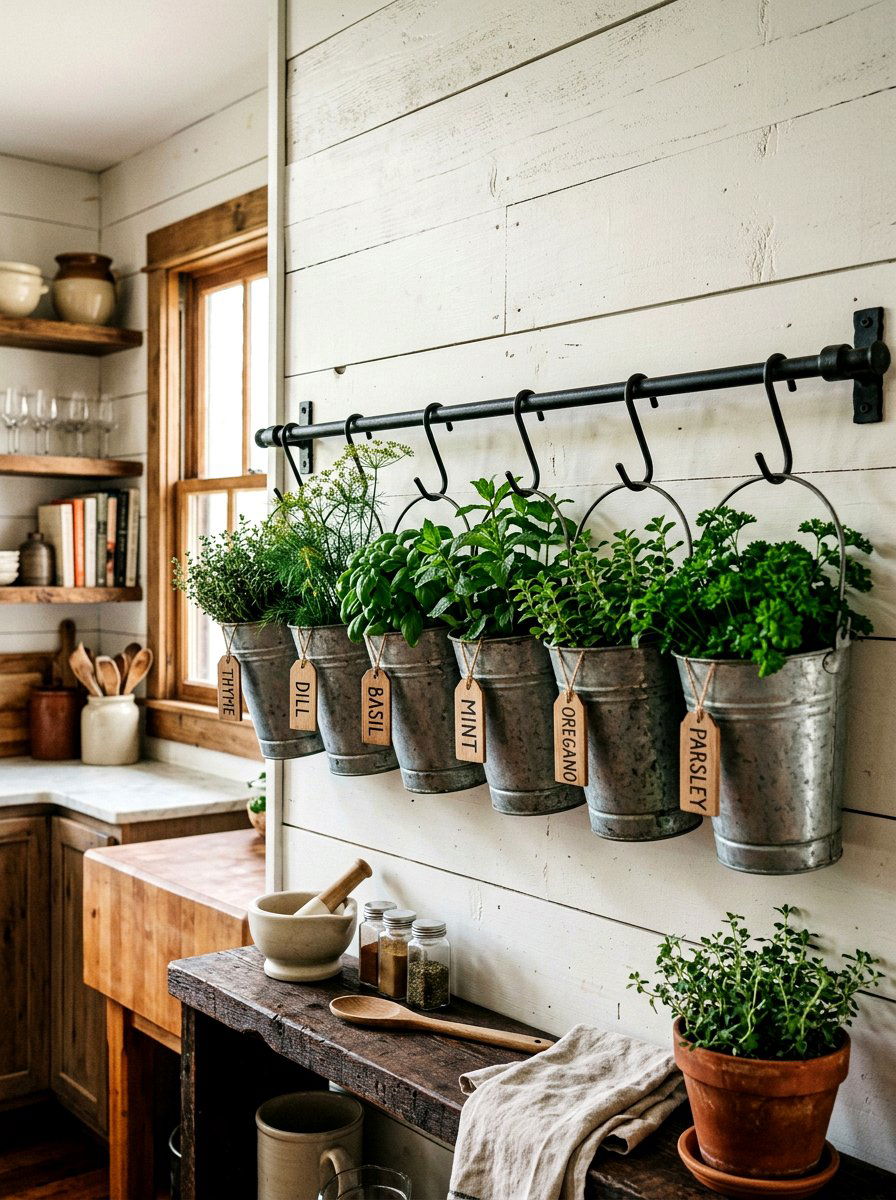
The farmhouse herb bucket idea uses galvanized metal pails to house your favorite spring plants. These buckets can be hung from a rack or placed in a cluster on a porch or kitchen counter. The silvery tone of the metal provides a cool, neutral backdrop that makes the green leaves look especially vibrant. To complete the look, you might add hand-painted labels or tied twine bows around the handles. This style is durable and weather-resistant, making it a great choice for both indoor and outdoor spaces. It adds a touch of country charm that feels both hardworking and aesthetically pleasing in any home.
11. Terracotta Pot Herb Display
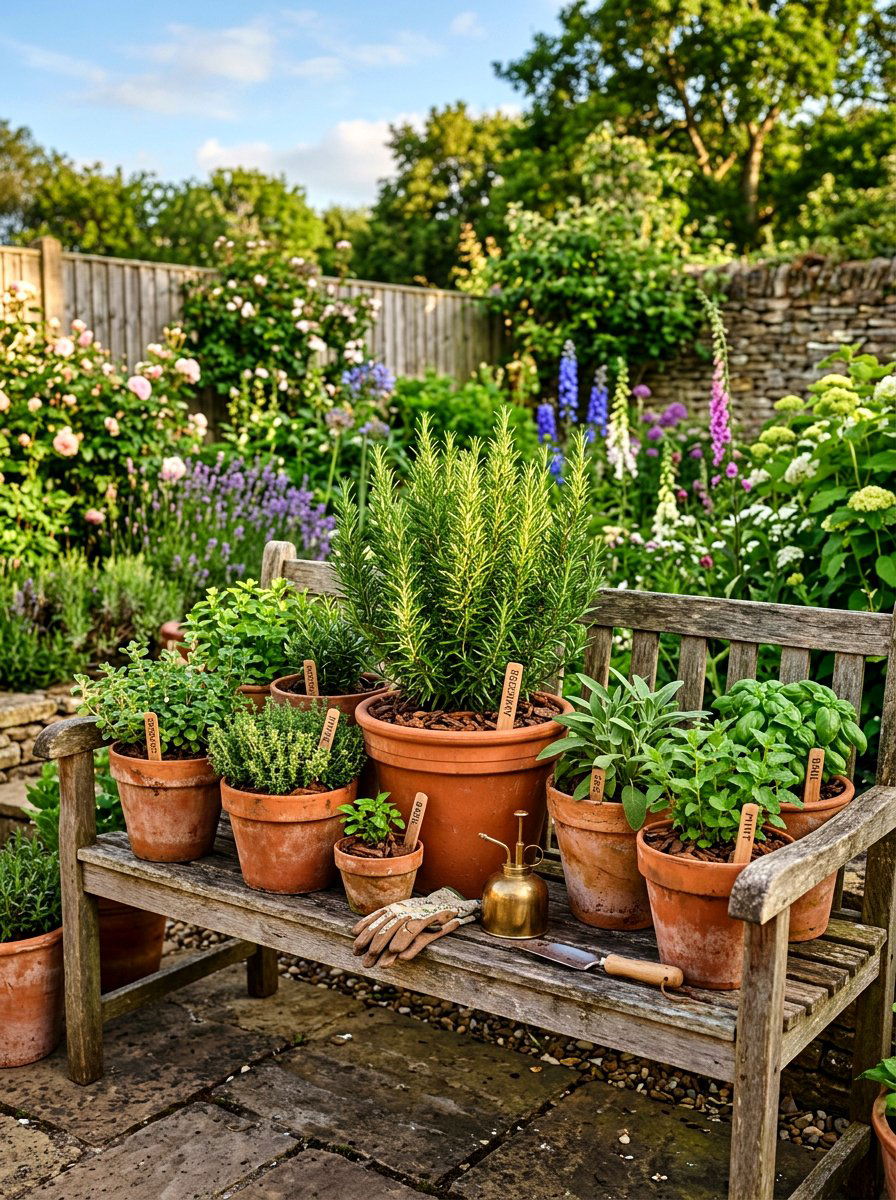
Terracotta pots are a staple of garden design, and using them for an indoor herb display brings a warm, earthy vibe to your decor. The classic orange-brown hue of the clay pairs beautifully with the deep greens of rosemary and the silvery foliage of thyme. Arranging a collection of pots in various sizes on a wooden shelf or a sunny bench creates a relaxed and Mediterranean-inspired look. Over time, the pots may develop a light patina, which only adds to their character. This setup is perfect for a sunroom or a kitchen with a lot of natural wood elements and light-colored walls.
12. Floating Shelf Herb Garden
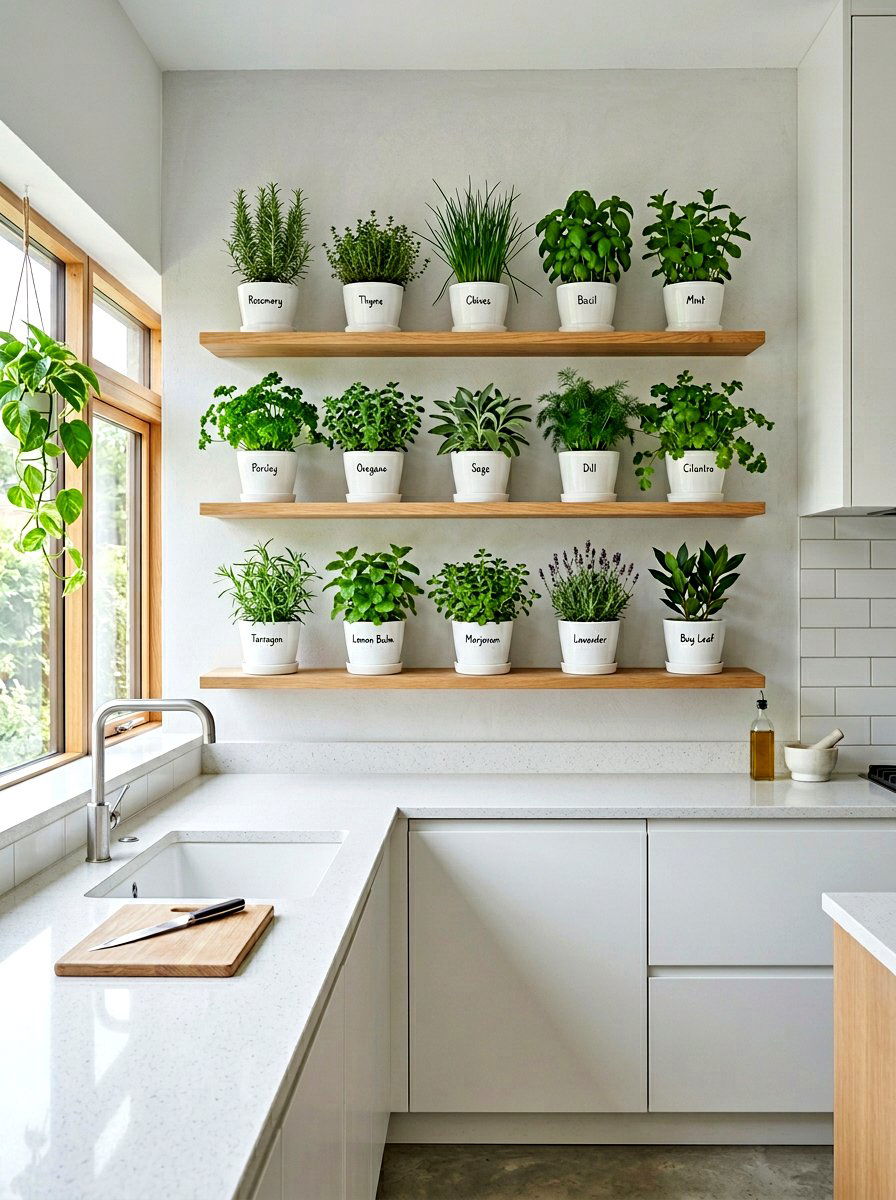
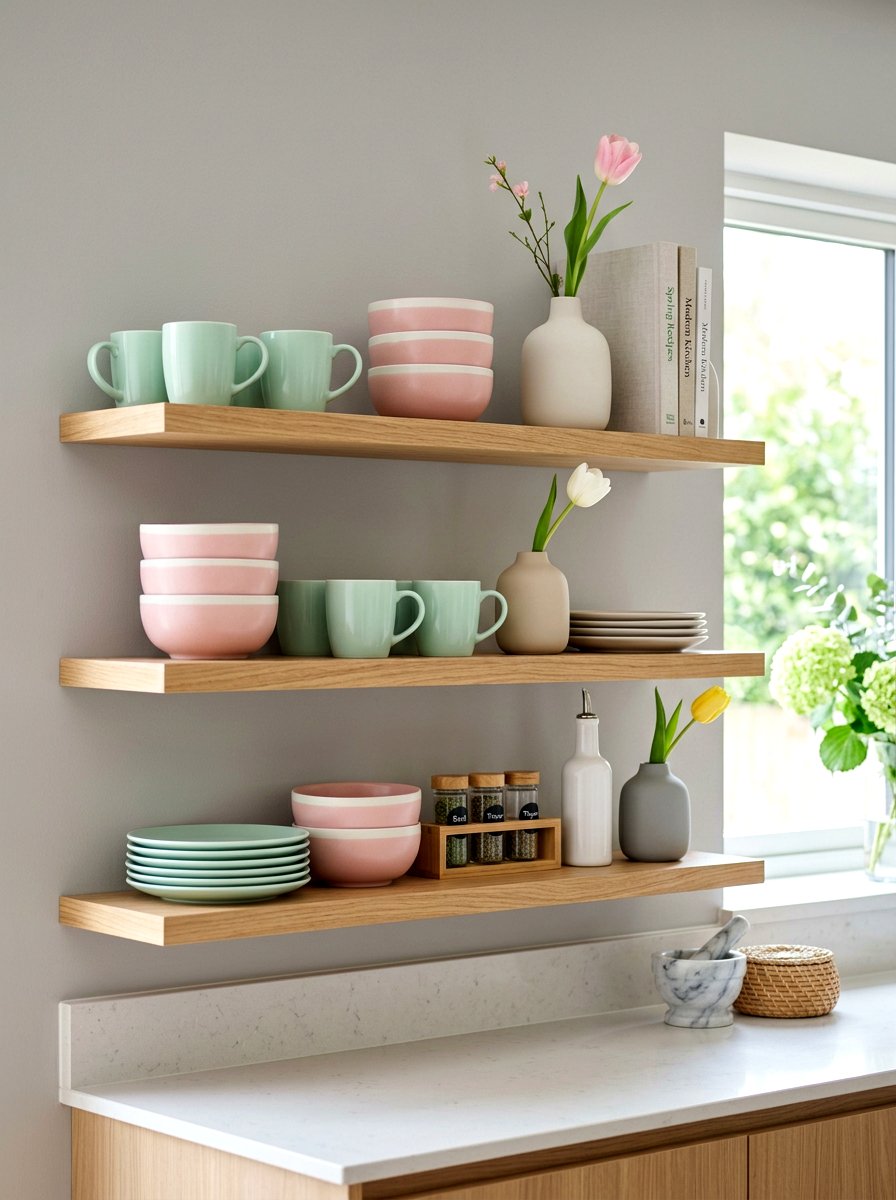
A floating shelf herb garden is a smart way to add greenery to your walls without the bulk of traditional brackets. By installing thin wooden or glass shelves directly onto your kitchen or dining room wall, you create a minimalist platform for your herbs. Placing identical pots along the shelf creates a sense of rhythm and order that is very pleasing to the eye. This design keeps the countertops clear for food preparation while ensuring your herbs are always within arm's reach. It is a sophisticated way to integrate nature into a modern apartment where every square inch of space is highly valued.
13. Magnetic Herb Tins Fridge
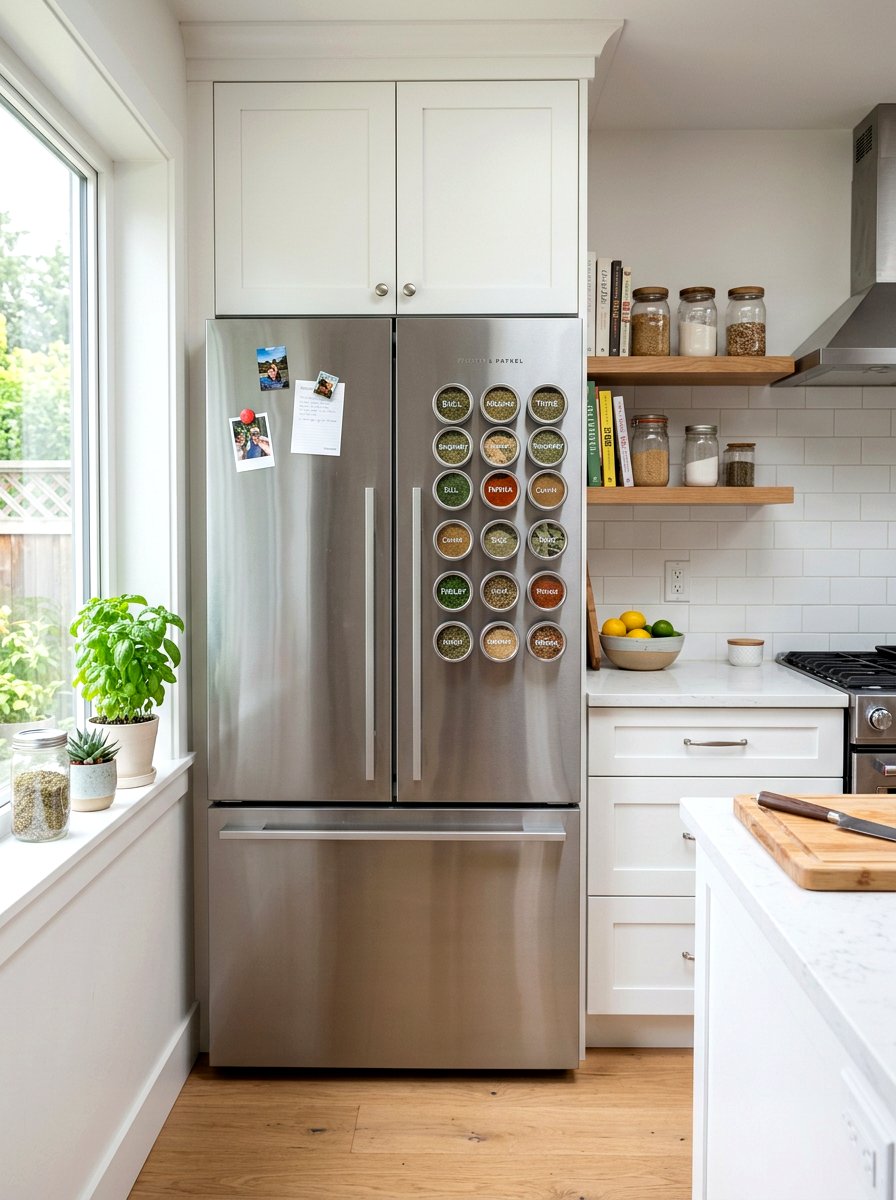
Magnetic herb tins are a clever and space-saving solution for people with very small kitchens. These small metal containers with clear lids can be attached directly to the side of a refrigerator or a magnetic backsplash. While they are often used for dried spices, using them for small, hardy herbs or air plants creates a unique living wall effect. The grid pattern formed by the tins adds a geometric and organized look to the room. This design is highly functional, keeping your most-used herbs visible and accessible while adding a pop of unexpected greenery to a typically plain kitchen appliance.
14. Herb Ladder Planter
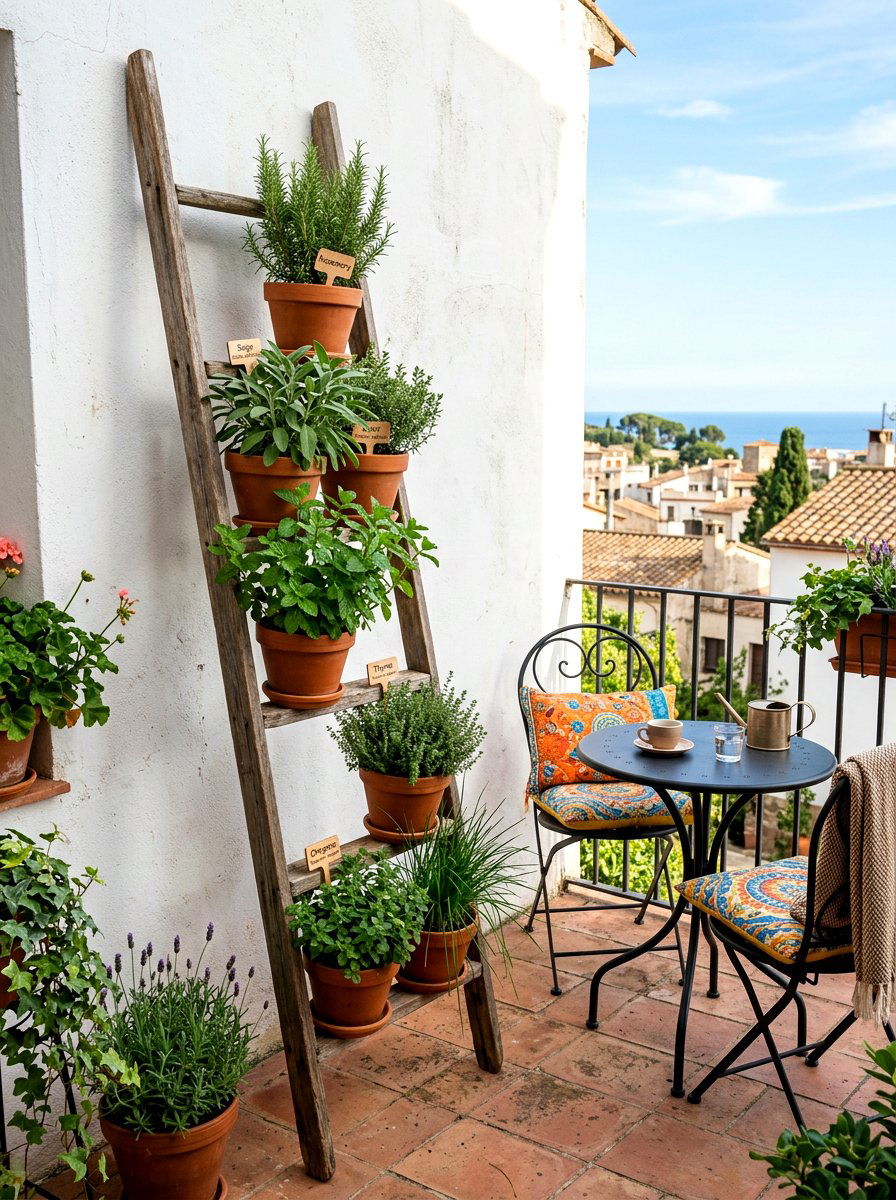
A herb ladder planter is a wonderful DIY project that adds a vertical, rustic element to your patio or kitchen. By leaning a small wooden ladder against a wall and attaching pots to each rung, you create a tiered garden that is easy to maintain. This setup allows for excellent air circulation and light exposure for every plant. The ladder itself becomes a decorative feature, especially when crafted from weathered or painted wood. It is an ideal way to fill an empty corner with something beautiful and productive, giving your home a touch of garden-inspired character that feels both creative and organized.
15. Hanging Macrame Herb Pots
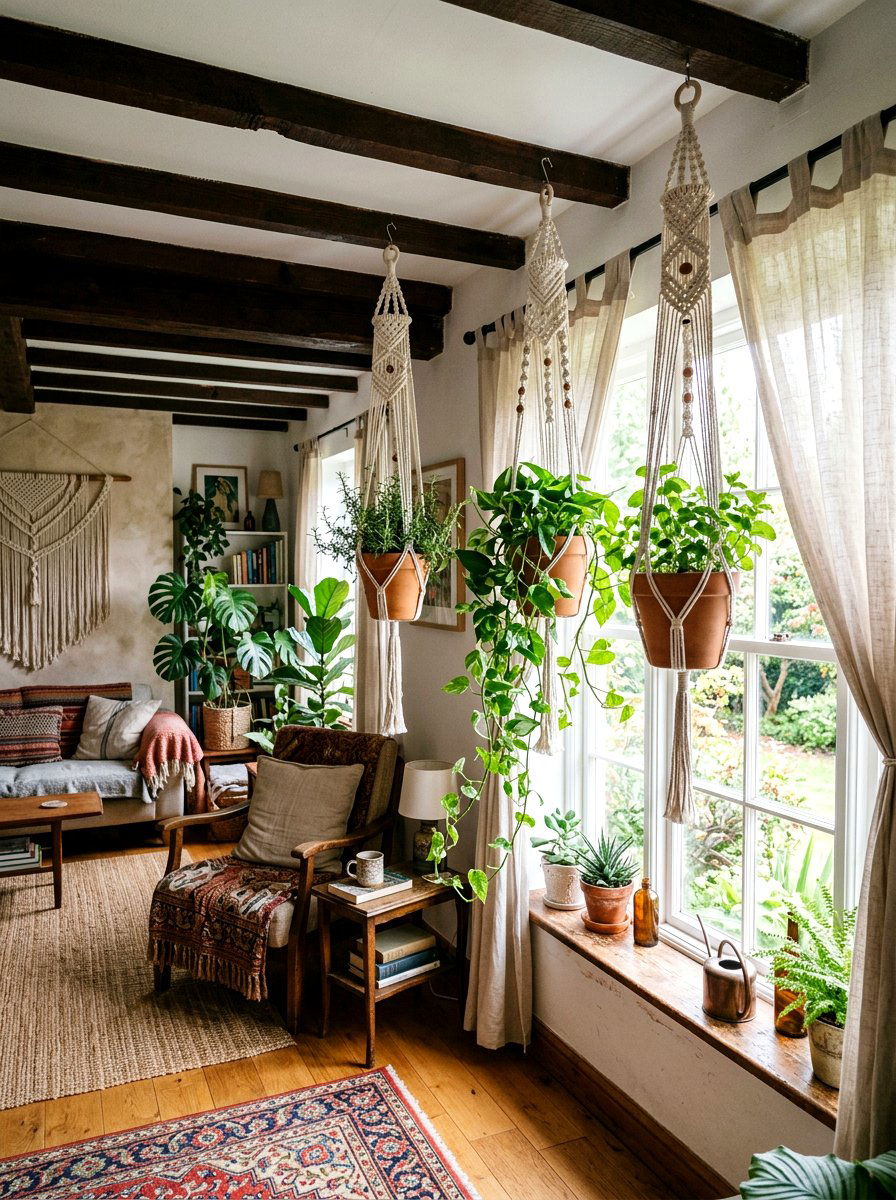
Hanging macrame herb pots are the perfect addition to a boho-chic or eclectic home. These hand-knotted cord hangers bring a soft, artisanal texture to your decor while supporting ceramic or glass herb containers. Suspended from the ceiling or a curtain rod, they allow your herbs to catch the sunlight while staying out of the way of pets or children. The flowing lines of the macrame pair beautifully with the organic shapes of growing mint or trailing oregano. This design idea creates a relaxed and cozy atmosphere, making any room feel more like a peaceful retreat filled with natural light and fresh scents.
16. Countertop Herb Station
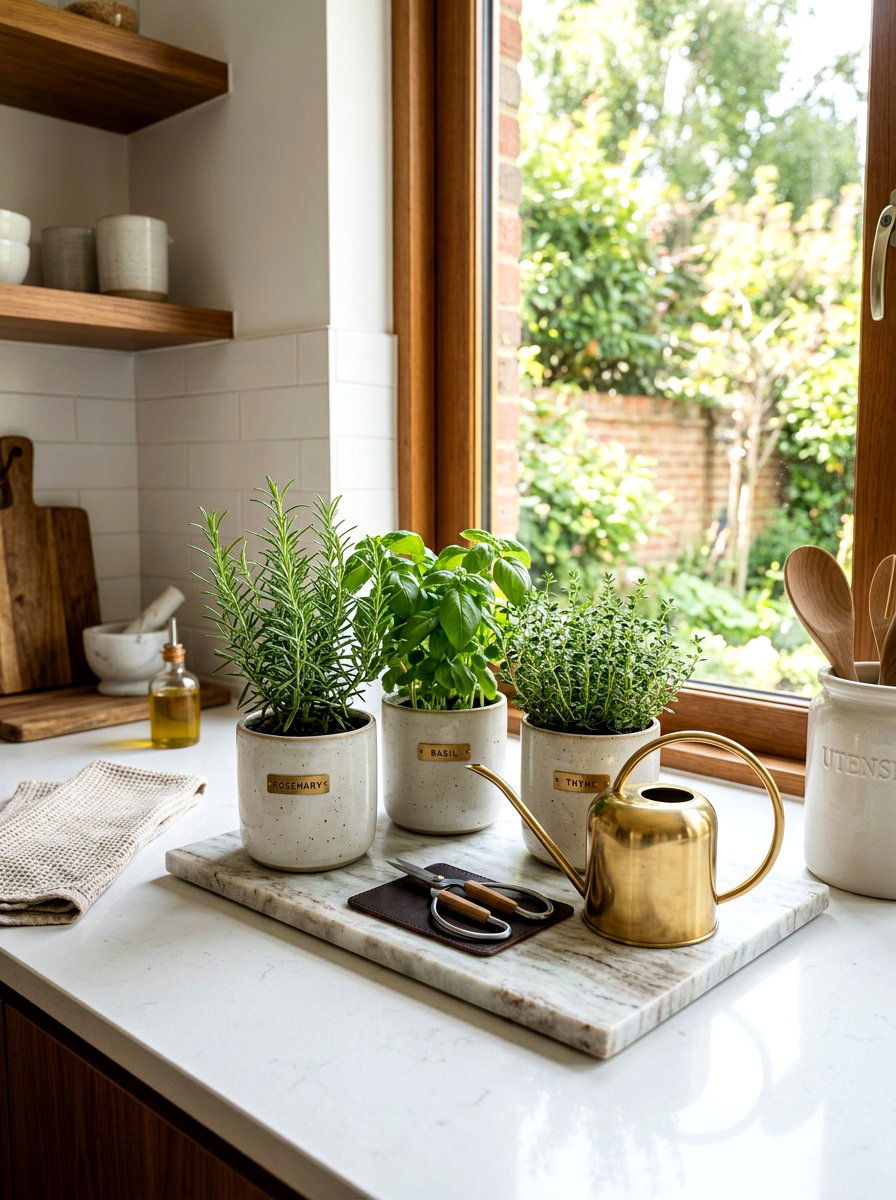
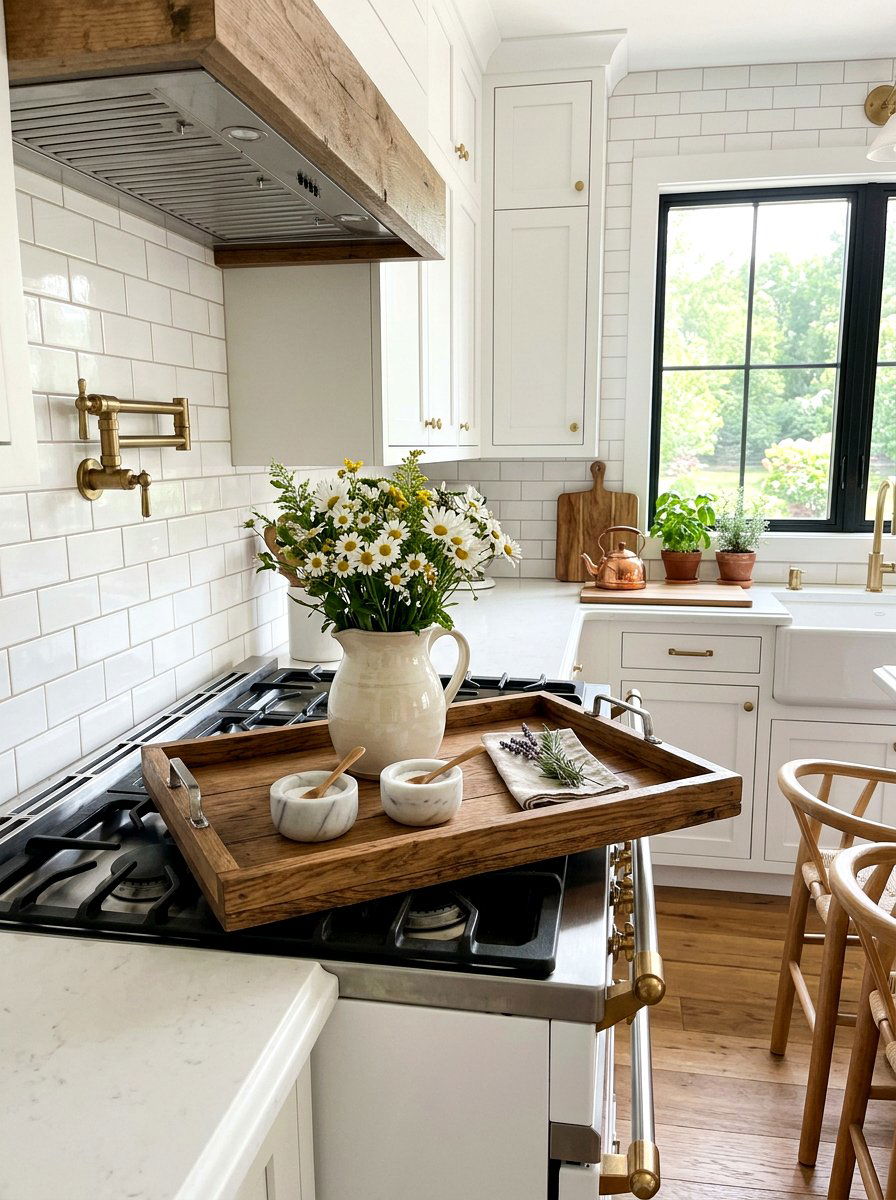
A dedicated countertop herb station keeps all your gardening essentials and plants in one organized place. This setup often includes a beautiful tray that holds several pots, a small watering can, and a pair of herb snips. By grouping these items together, you create a styled "moment" in your kitchen that looks intentional rather than cluttered. Choose a tray made of marble, wood, or brass to match your kitchen’s hardware and finishes. This approach makes herb care a part of your daily routine and ensures that the plants are always healthy and ready to be used in your next culinary masterpiece.
17. Industrial Pipe Herb Rack
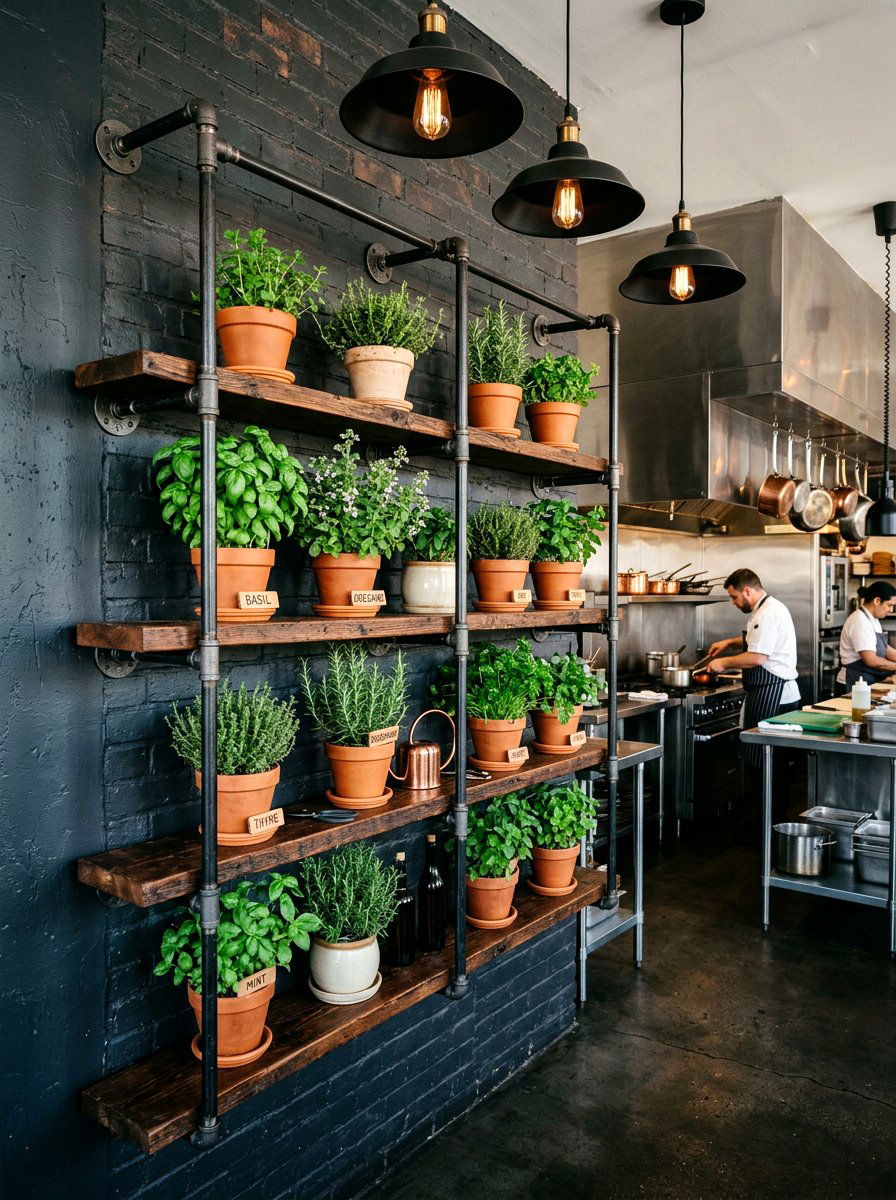
An industrial pipe herb rack uses black iron pipes and wooden planks to create a sturdy and stylish wall-mounted garden. This design is perfect for lofts or homes with a modern industrial aesthetic. The dark, heavy lines of the pipes provide a striking contrast to the delicate green leaves of the herbs. You can hang S-hooks from the pipes to hold small pots or mount wooden shelves between them. It is a durable and unique way to display your plants, turning a functional garden into a piece of architectural interest that adds a lot of personality to a kitchen or dining area.
18. Copper Herb Pot Set
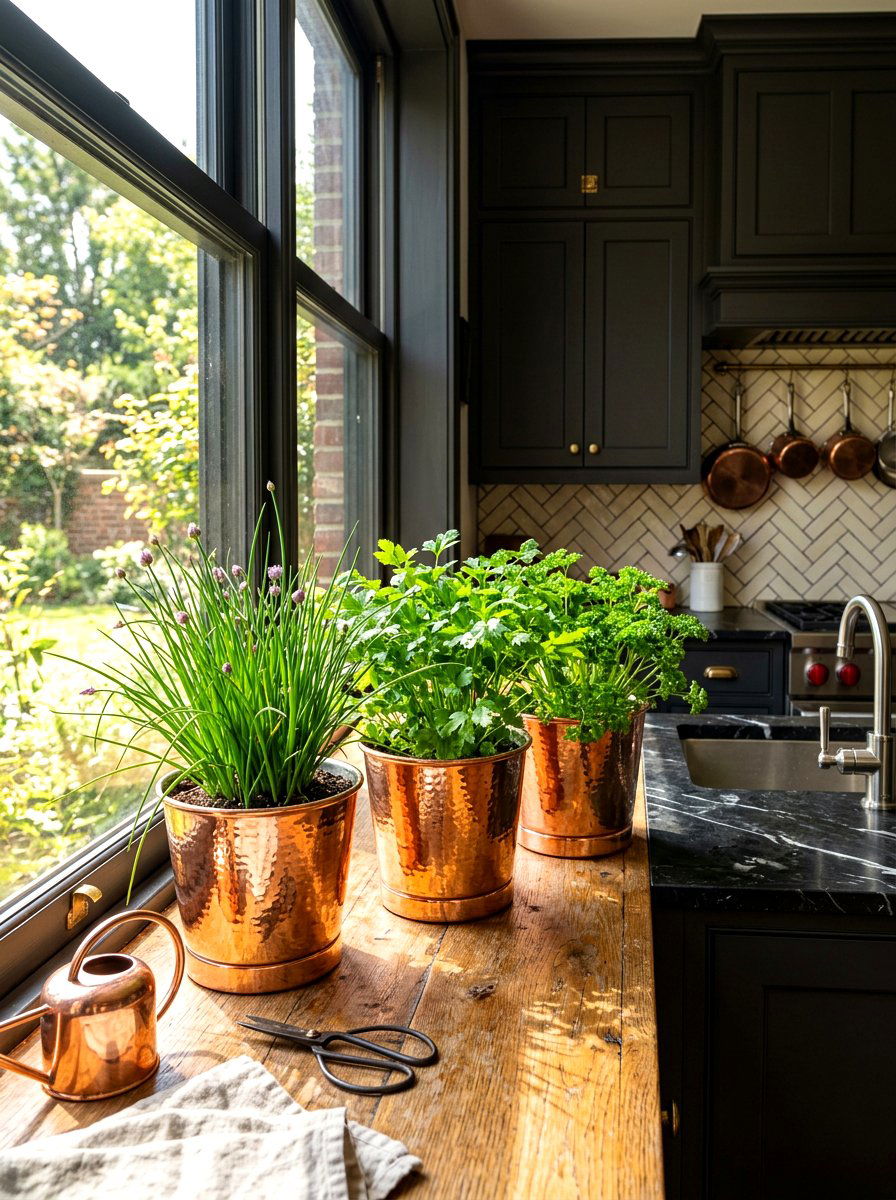
Copper herb pots add a touch of luxury and warmth to any spring decor scheme. The metallic shimmer of copper looks stunning when hit by the afternoon sun, making your windowsill or countertop glow. These pots work exceptionally well in kitchens with copper cookware or hardware, creating a high-end, coordinated look. Over time, the copper may develop a beautiful aged finish, or you can keep it polished for a bright, modern feel. This style of herb decor is elegant and timeless, providing a sophisticated way to display simple greens like chives, parsley, or basil in a formal kitchen setting.
19. Woven Basket Herb Display
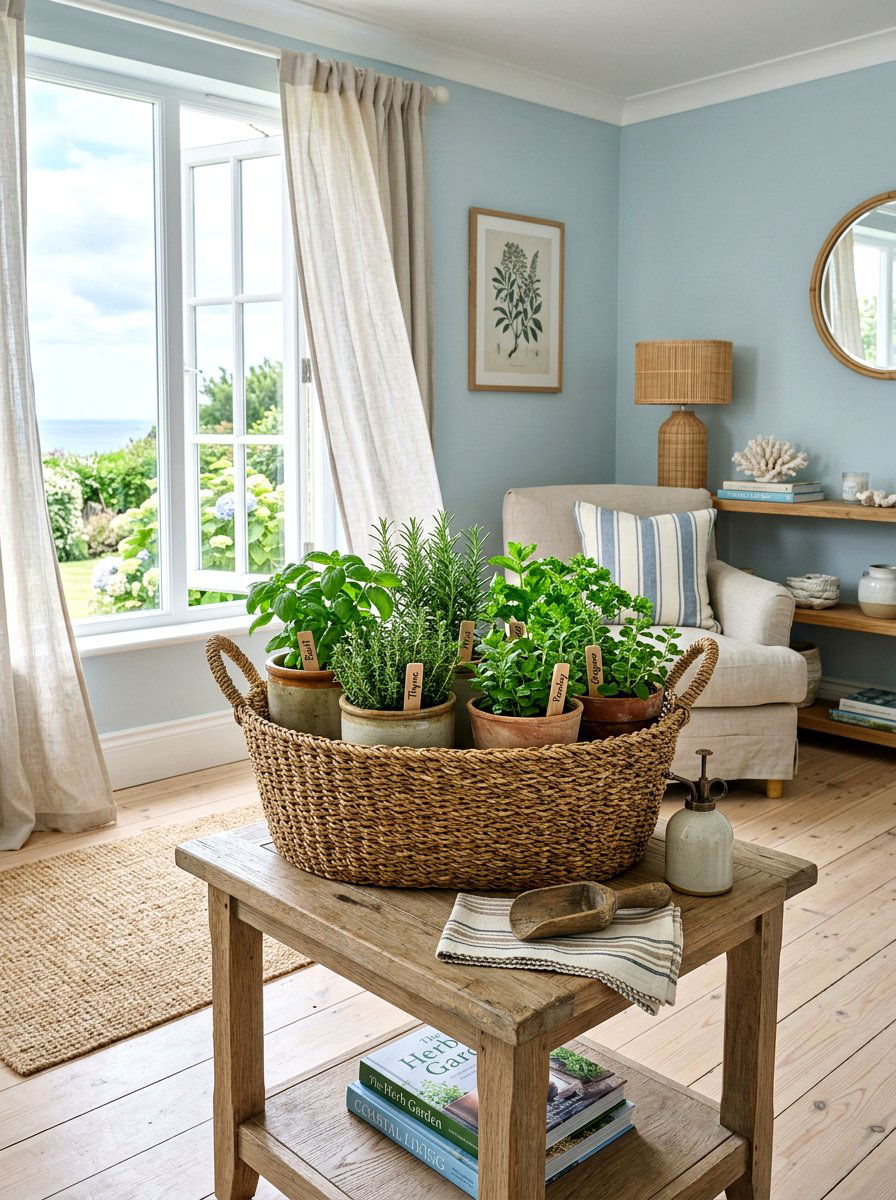
Woven baskets provide a soft, natural texture that is perfect for a spring herb display. You can place several herb pots inside a large wicker or seagrass basket to create a lush, gathered look. This design idea is great for adding a touch of warmth to a minimalist room or complementing a farmhouse style. To prevent water damage, simply line the basket with plastic or use a hidden drip tray. The organic feel of the weaving pairs perfectly with the varied leaf shapes of a mixed herb garden, making the entire arrangement feel effortless, relaxed, and deeply connected to the natural world.
20. Scandi Style Herb Garden
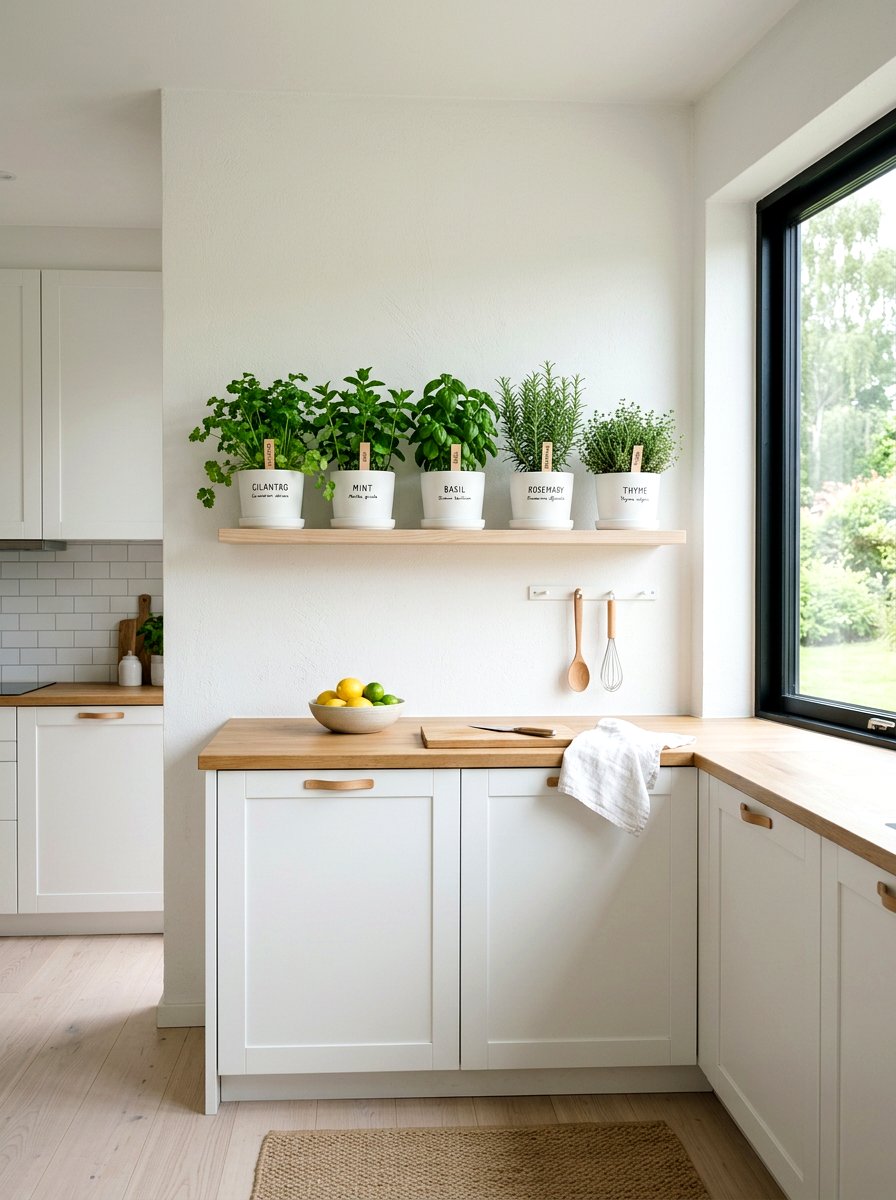
A Scandinavian style herb garden focuses on simplicity, functionality, and light. This look typically features white or light gray ceramic pots with clean, geometric shapes placed on a light wood surface. The emphasis is on the vibrant green of the herbs and the abundance of natural light. This minimalist approach creates a sense of calm and order, making the kitchen feel more spacious and airy. By keeping the color palette neutral and the lines simple, the herbs themselves become the focal point. This design is perfect for those who want a fresh, modern look that feels both timeless and very easy to maintain.
21. Chalkboard Labeled Herb Pots
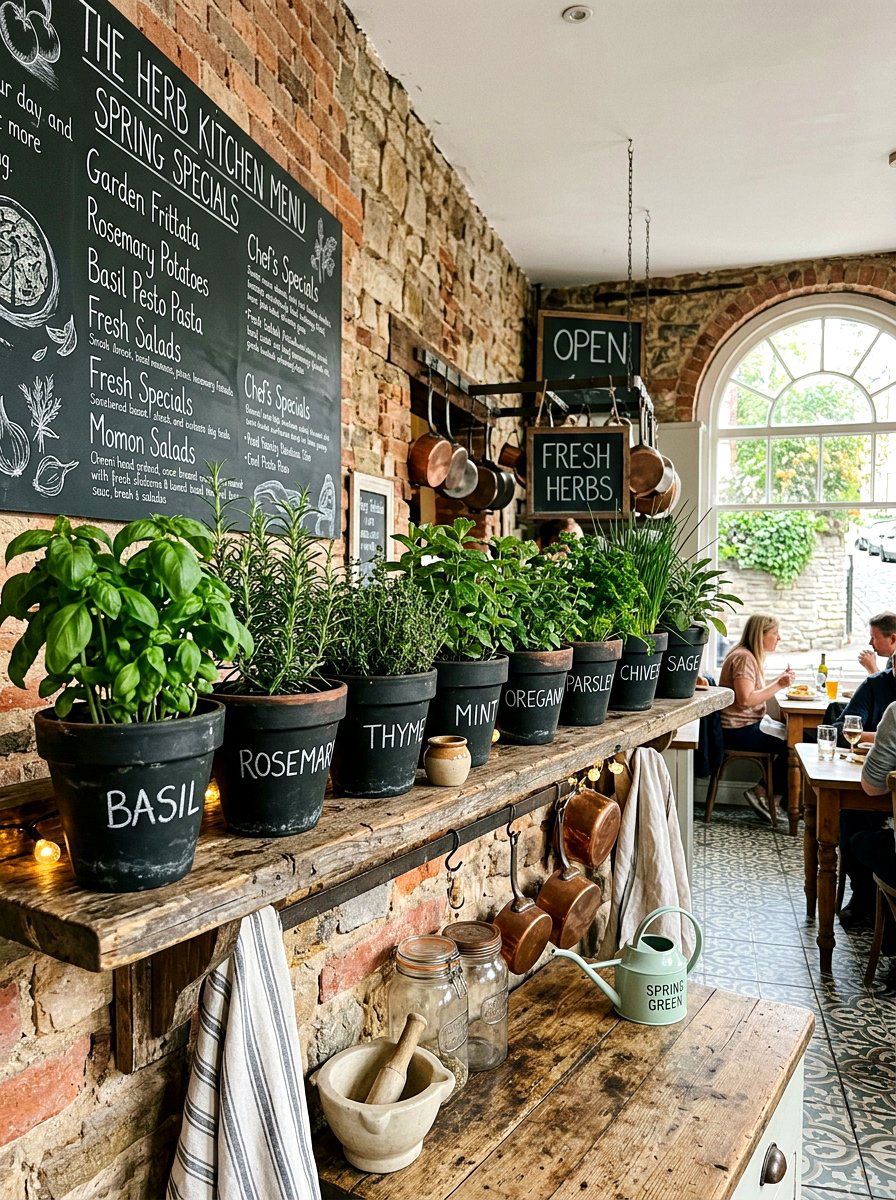
Chalkboard labeled herb pots are both practical and incredibly charming for a family kitchen. You can use pots that are either painted with chalkboard paint or have small slate labels attached to them. This allows you to easily identify your plants and adds a playful, creative element to your decor. The black background of the labels makes the white chalk writing pop, creating a look that is reminiscent of a traditional French bistro or an old-fashioned apothecary. It is a great way to involve children in gardening and adds a personalized, handmade touch to your collection of spring herbs and greenery.
22. Vintage Tea Tin Herb Garden
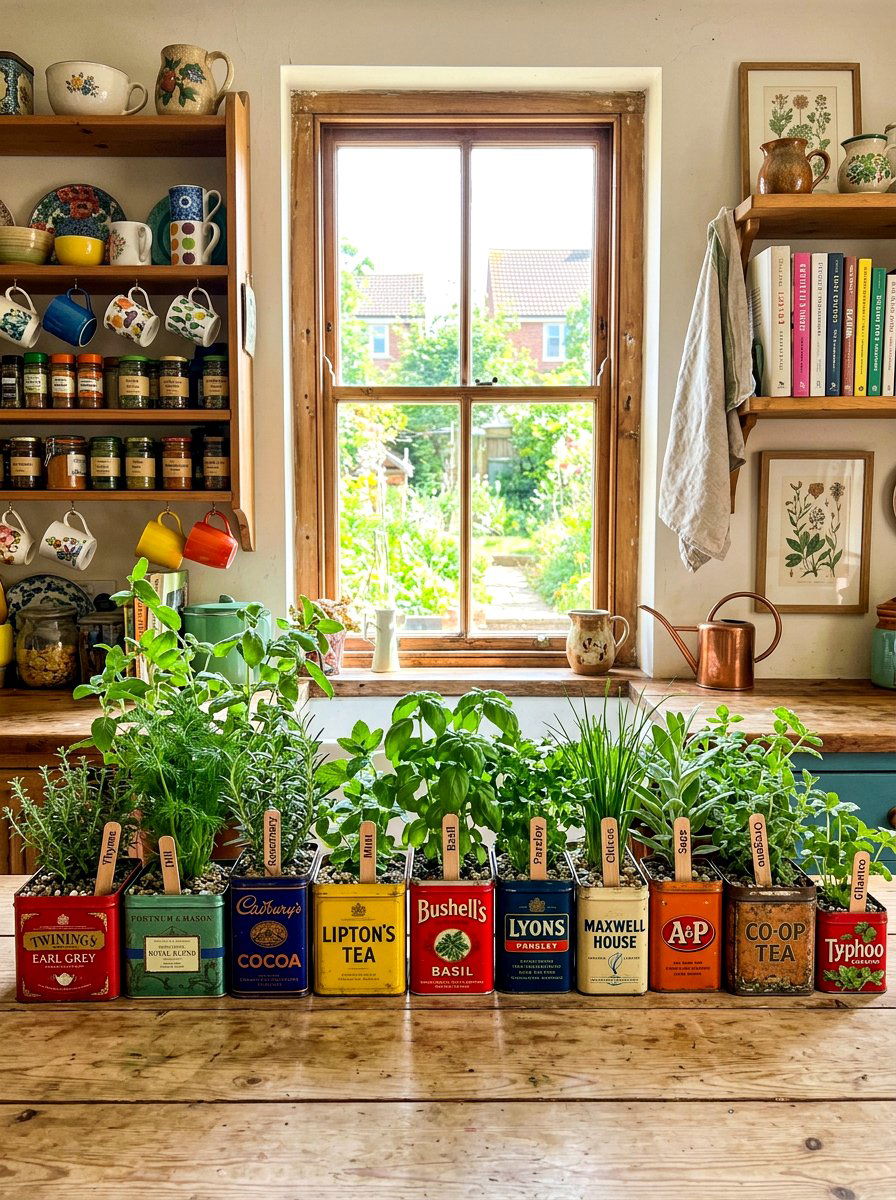
Repurposing vintage tea tins as herb planters is a wonderful way to add a bit of history and color to your home. These tins often feature beautiful typography and vibrant illustrations that provide an instant decorative boost. Because they are usually small, they are perfect for starting seeds or growing smaller herbs like thyme. Line them up on a shelf or a windowsill to create a colorful and eclectic display. This design idea is perfect for anyone who loves vintage shopping and wants to give old items a new, green life. It feels unique, storied, and full of personality in a kitchen.
23. Hydroponic Herb System
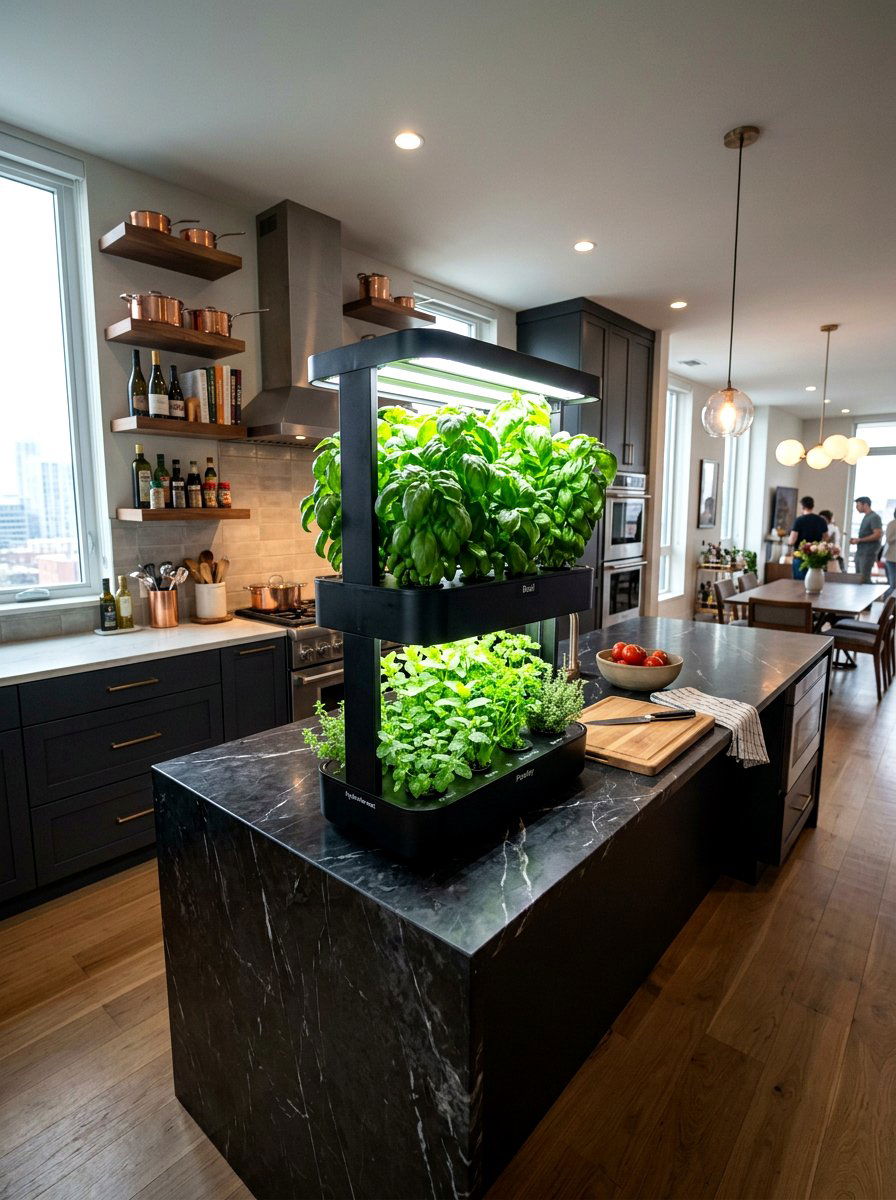
A hydroponic herb system is the ultimate solution for year-round indoor gardening without the mess of soil. These systems use water and liquid nutrients to grow plants rapidly in a controlled environment. Often featuring a sleek, futuristic design with built-in LED lights, they look great in a modern kitchen or even a living room. This setup ensures your herbs are always perfectly hydrated and fed, resulting in incredibly lush and healthy foliage. It is a conversation piece that combines technology with nature, providing a constant source of fresh ingredients and a bright, glowing light source that enhances the overall ambiance of your home.
24. Ceiling Mounted Herb Garden
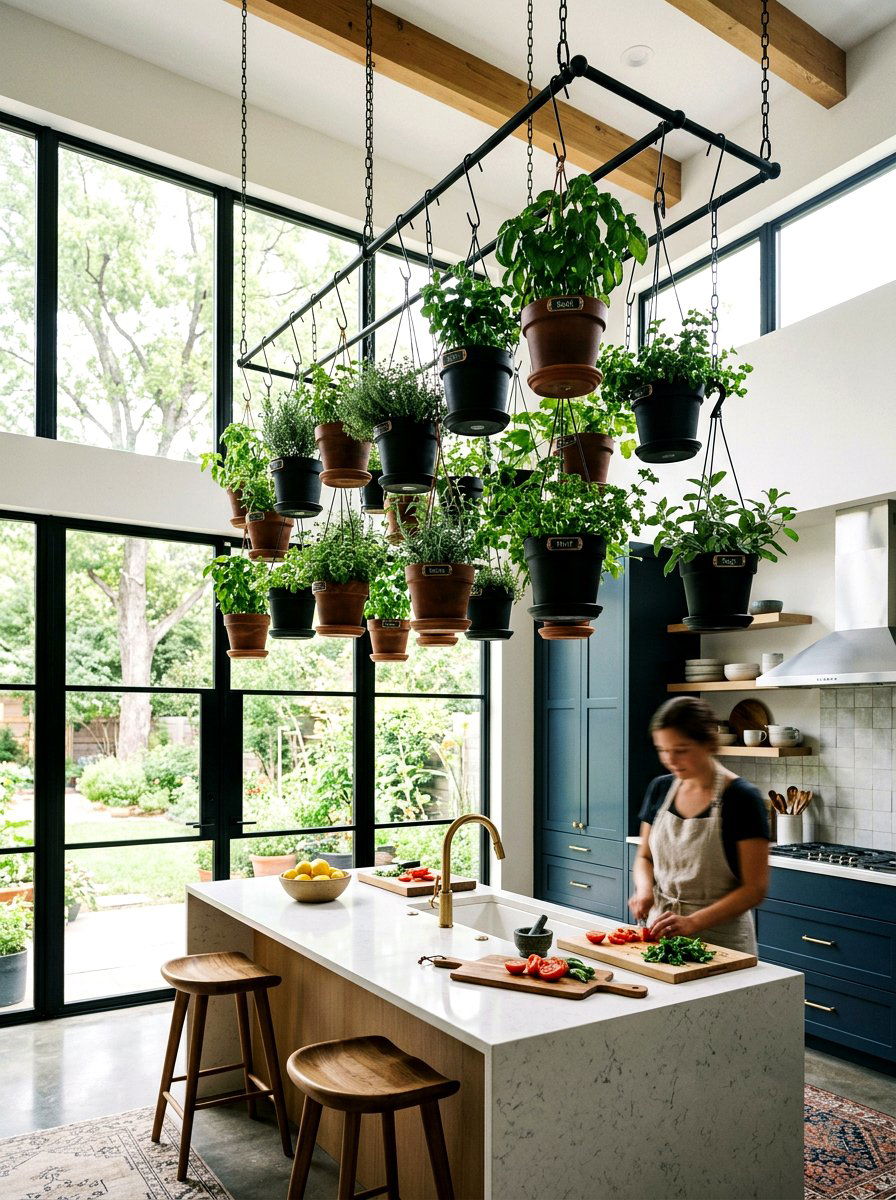
A ceiling mounted herb garden is a dramatic way to display your plants while keeping your floor and counter space completely clear. This design uses a sturdy rod or a series of hooks attached to the ceiling, from which pots are suspended at various levels. It creates a "floating" garden effect that is visually stunning and unique. This approach works best in rooms with high ceilings and plenty of light. By placing the herbs overhead, you create a lush canopy of green that adds a sense of depth and luxury to the space, making your home feel like a sophisticated indoor conservatory.
25. Concrete Herb Planter
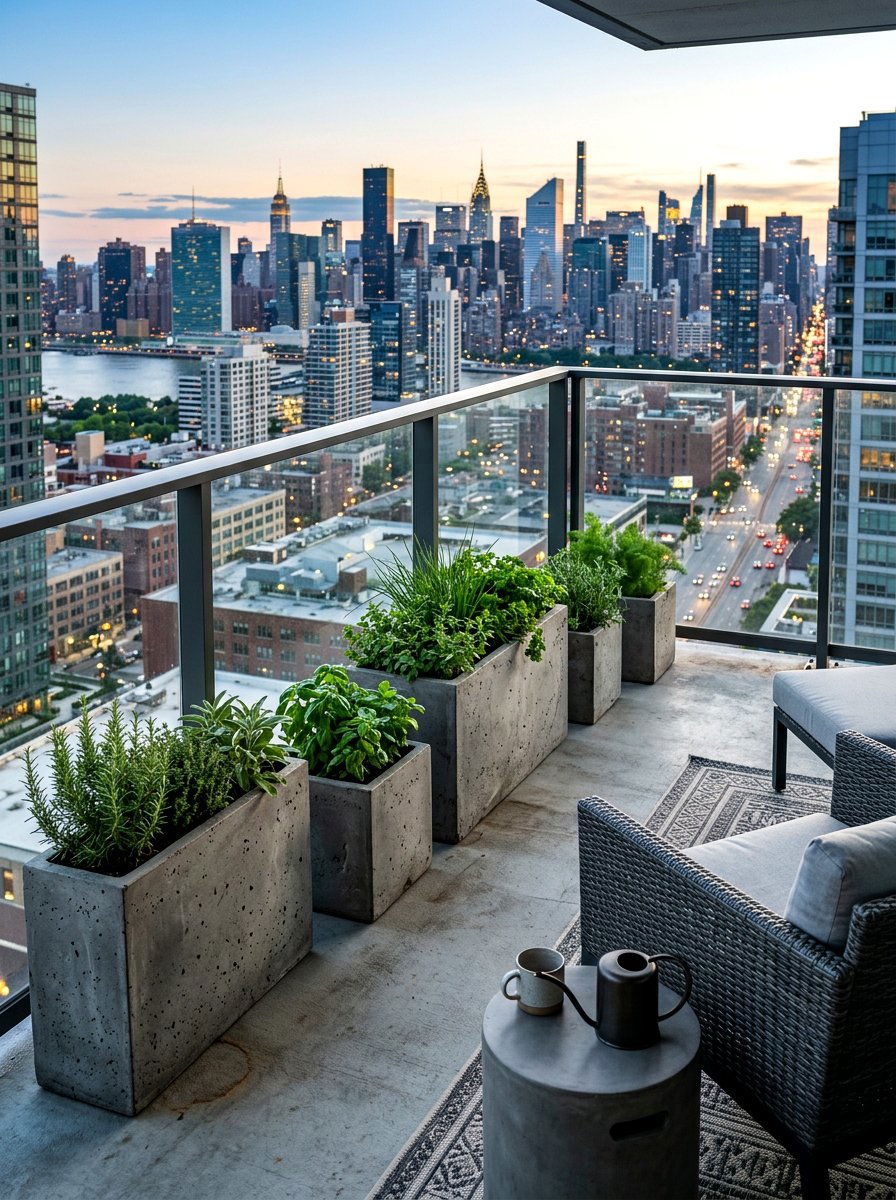
Concrete herb planters bring a sophisticated, industrial edge to modern home decor. These heavy, durable vessels look stunning when placed on a minimalist balcony or a sleek kitchen island. The cool gray tones of the concrete provide a neutral backdrop that makes the vibrant green of herbs like basil or cilantro truly pop. To complete the look, pair these planters with other natural materials like wood or glass for a balanced aesthetic. Their sturdy nature makes them ideal for high-traffic areas where lighter pots might get knocked over. A set of varying sizes arranged together creates a structured, architectural display that feels both contemporary and grounded in nature.
Conclusion:
Incorporating fresh herbs into your home decor is a wonderful way to welcome the energy of spring into your living space. These ideas show that you do not need a massive outdoor garden to enjoy the beauty and utility of fresh plants. By choosing the right containers, lighting, and placement, you can create a stunning interior that feels connected to the natural world. Whether you prefer the rustic look of wooden crates or the clean lines of modern hydroponics, herbs provide an easy and affordable way to refresh your style. We hope these suggestions inspire you to start your own indoor herb garden and enjoy the fragrance and flavor all season long.
Related posts:
Leave a Reply