
Spring is a magical time for children to explore the changing world outside as the earth wakes up from its long winter sleep. Setting up a dedicated space in your home allows little ones to observe new life and vibrant colors up close. A nature table serves as a rotating seasonal display where kids can touch, feel, and learn about the environment through foraged items and curated decor. These displays foster a deep connection to the natural rhythm of the year while encouraging creative play and scientific curiosity. You can use simple materials like moss, stones, and fresh flowers to create a captivating scene that evolves throughout the entire season.
1. Waldorf Spring Nature Table
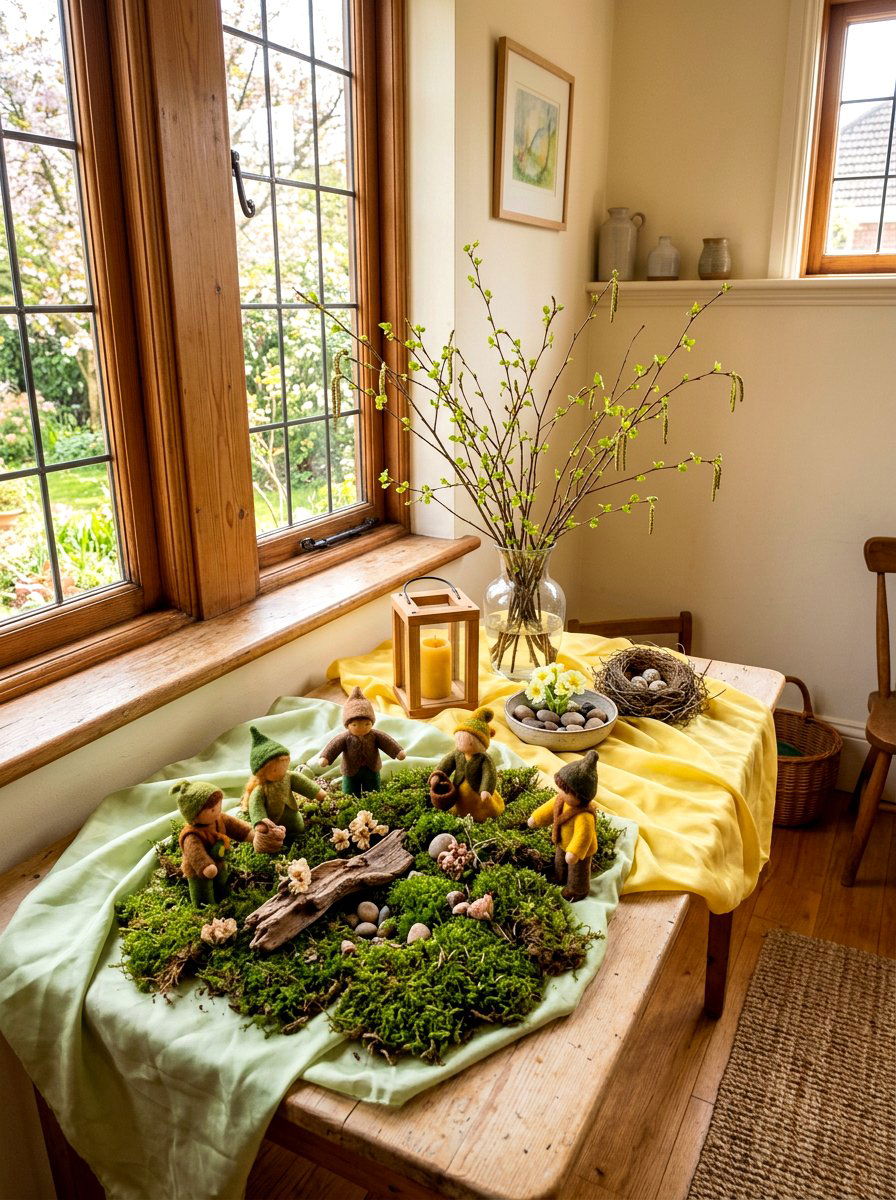
A traditional Waldorf spring nature table often uses soft colors and natural materials to represent the awakening earth. You can start by draping light green or yellow silk cloths over a small wooden table to signify new growth and sunshine. Place a few wooden figures, like Mother Earth or small root children, among some real moss and budding twigs. It is important to keep the display simple and uncluttered so the focus remains on the changing season. Children will enjoy adding small treasures they find on their walks, like a pretty stone or a fallen feather. This type of setup creates a peaceful corner in your home for reflection and quiet seasonal appreciation.
2. Spring Garden Sensory Table
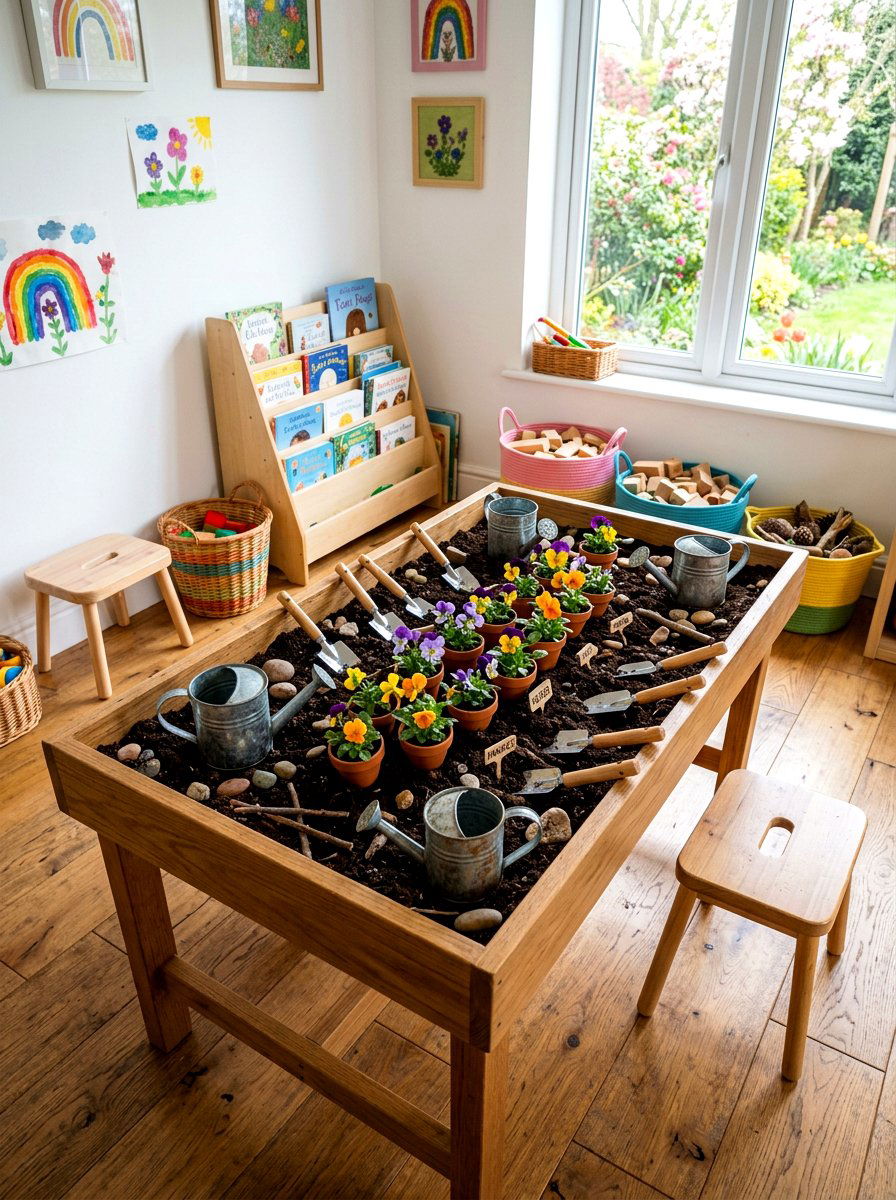
Creating a spring garden sensory table provides an interactive way for kids to explore the textures of the season. You can fill a shallow wooden tray with clean potting soil or dried black beans to mimic the look of earth. Provide small metal watering cans, miniature shovels, and tiny terracotta pots so children can practice the motions of gardening. Add some silk flowers or sturdy real blooms like pansies for a pop of bright color. This setup invites children to engage in tactile play while learning about how plants grow in the spring. It is a wonderful way to bring the joy of the outdoor garden inside for hours of creative fun.
3. Bird Nest Discovery Table
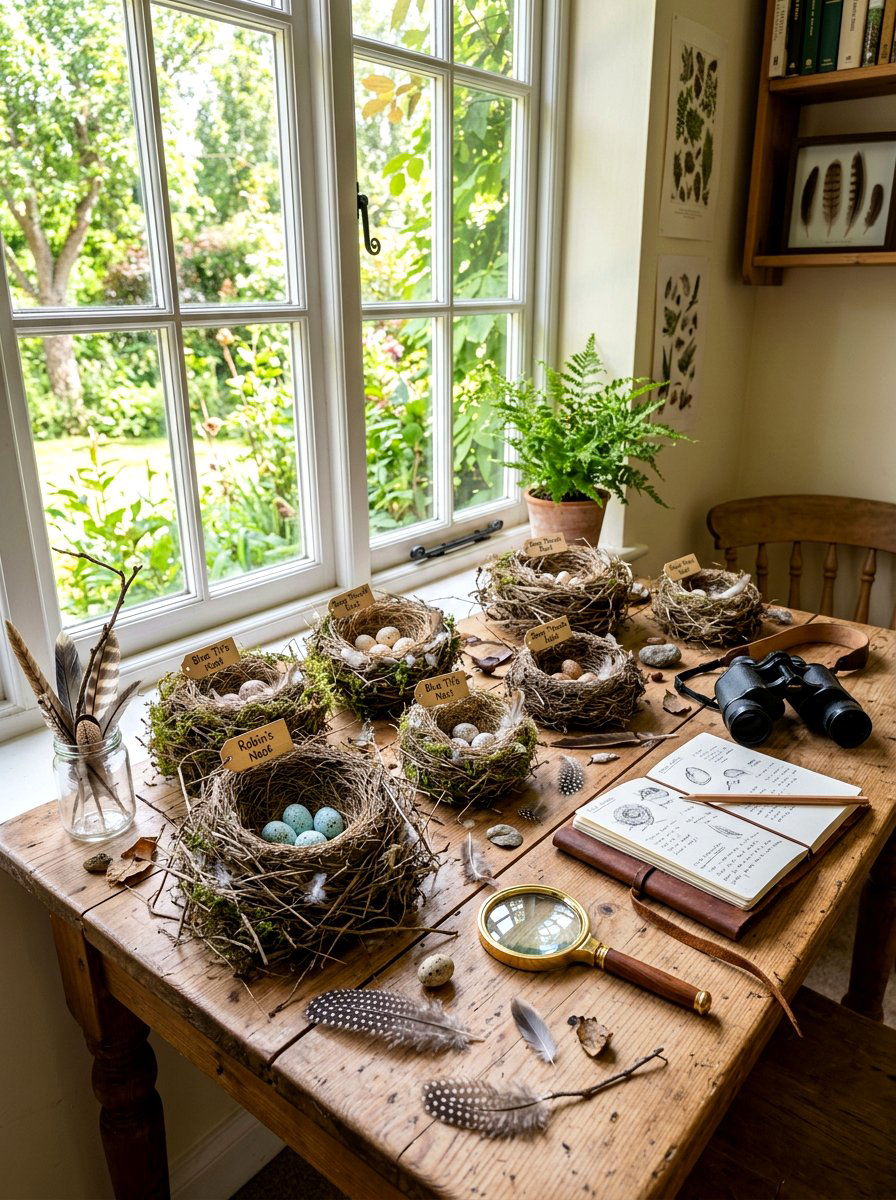
Focusing on the return of birds makes for a fascinating bird nest discovery table during the early spring months. You can display various abandoned nests found in the wild or create DIY versions using dried grass and twigs. Add some decorative wooden eggs or speckled stones to represent the new life waiting to hatch. Books about local bird species can be placed nearby to encourage children to identify the feathered friends they see in the backyard. Using binoculars and small feathers adds an element of scientific exploration to the scene. This theme helps children understand the cycle of life and the hard work birds put into building their cozy homes.
4. Butterfly Lifecycle Table
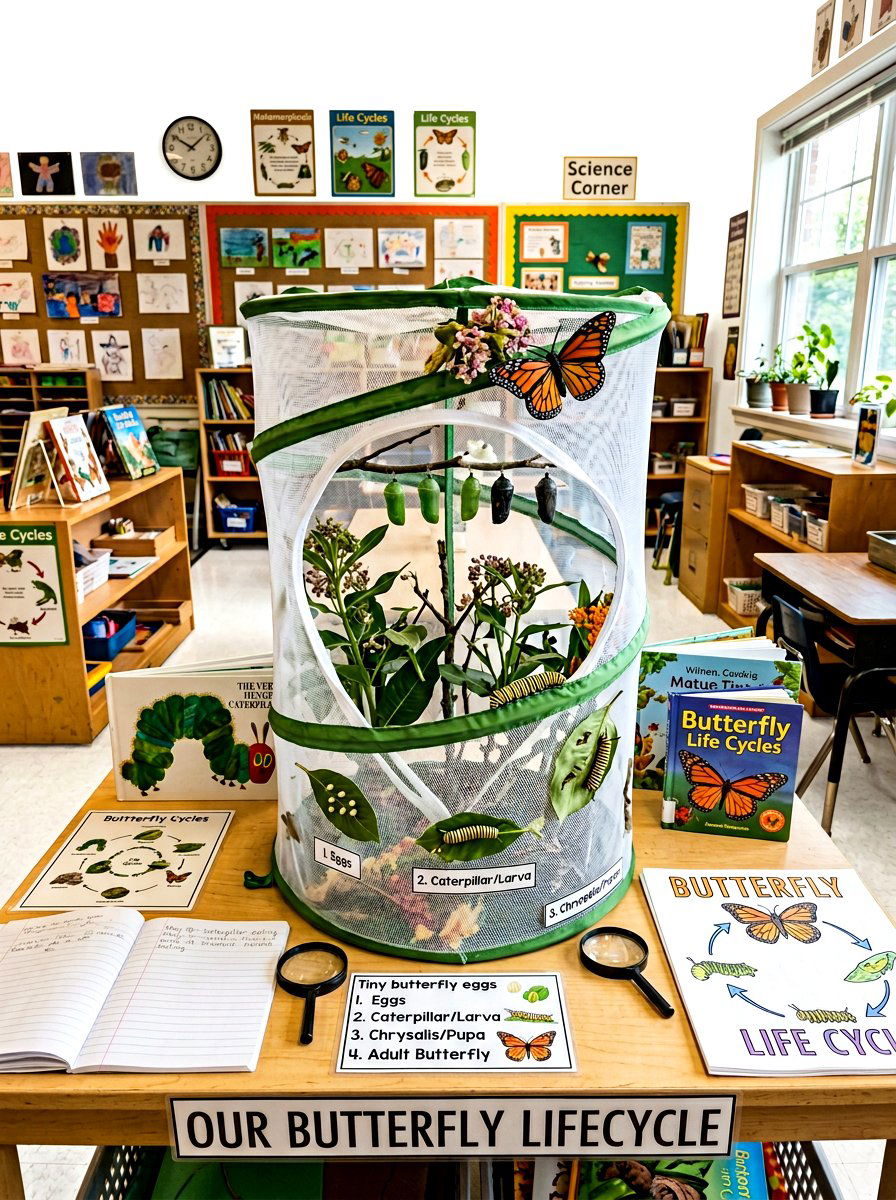
A butterfly lifecycle table is a brilliant educational tool that captures the beauty of metamorphosis during the spring season. You can use small figurines to represent the four stages: egg, caterpillar, chrysalis, and butterfly. Place these on large green leaves or inside a small mesh enclosure to make the display feel authentic. Adding a few sprigs of milkweed or other pollinator-friendly plants will help children understand what these insects need to survive. This setup is visually stunning with its bright colors and interesting shapes. It provides a perfect opportunity for kids to learn about biology and the delicate balance of our natural ecosystem through hands-on observation.
5. Flower Sprouting Table
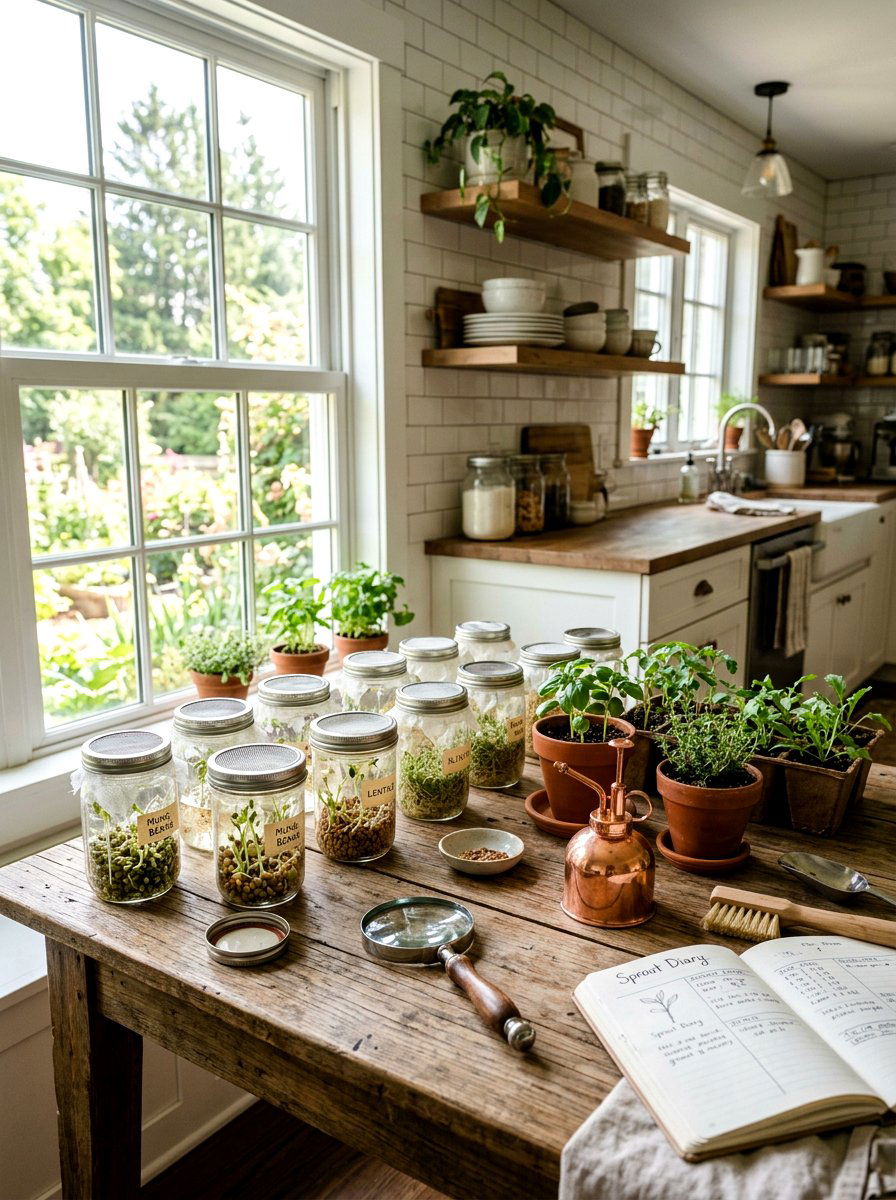
Watching seeds turn into vibrant plants is a classic spring activity that works perfectly on a flower sprouting table. You can use clear glass jars filled with damp paper towels to show how beans or sunflower seeds begin to root. Arrange several small pots with different types of seedlings at various stages of growth across the table surface. A small mister bottle allows children to take responsibility for watering the plants every day. You might also include a magnifying glass so they can inspect the tiny leaves emerging from the soil. This living display changes daily, keeping children engaged and excited about the wonders of plant biology and gardening.
6. Easter Egg Nature Table
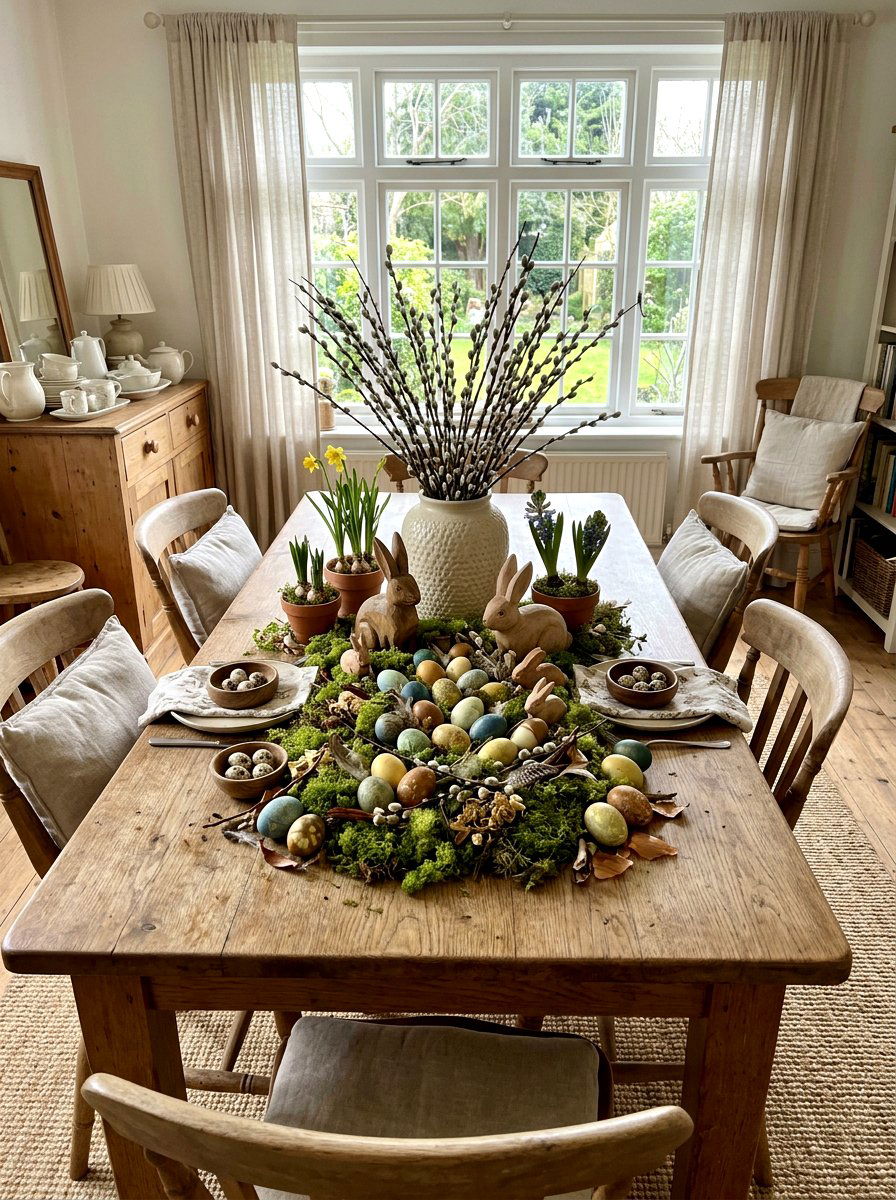
An Easter egg nature table blends seasonal traditions with the natural beauty of the spring landscape in a lovely way. You can use naturally dyed eggs in soft pastel tones and nestle them into beds of real green moss. Add some wooden rabbits or small chick figurines to bring a sense of whimsy and play to the scene. Woven baskets and ceramic bowls can hold foraged items like pussy willow branches or early blooming crocuses. This setup is bright and cheerful, making it a perfect centerpiece for a playroom or living area. It celebrates the holiday while keeping the primary focus on the renewal of life found in nature.
7. Frog Pond Nature Table
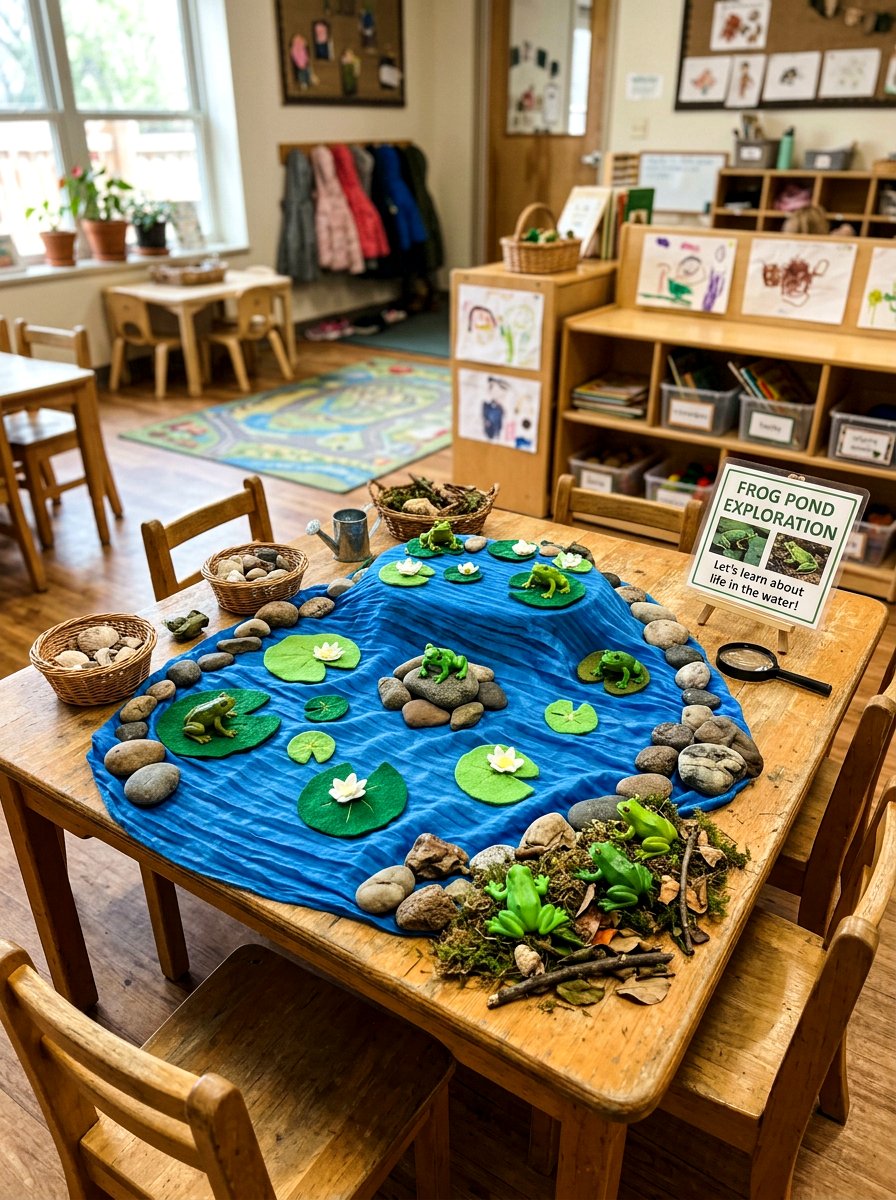
Bringing the magic of the wetlands inside is easy with a frog pond nature table focused on spring amphibians. You can use a blue silk scarf or a shallow bowl of water to represent a shimmering pond. Place smooth river stones, lily pads made of felt, and small toy frogs around the water source. Adding some faux dragonflies or reeds can help create a more immersive and realistic environment for play. This theme is great for teaching kids about the lifecycle of tadpoles and the importance of clean water. It invites imaginative storytelling as children pretend the frogs are jumping and splashing through the cool pond water.
8. Spring Flower Shop Table
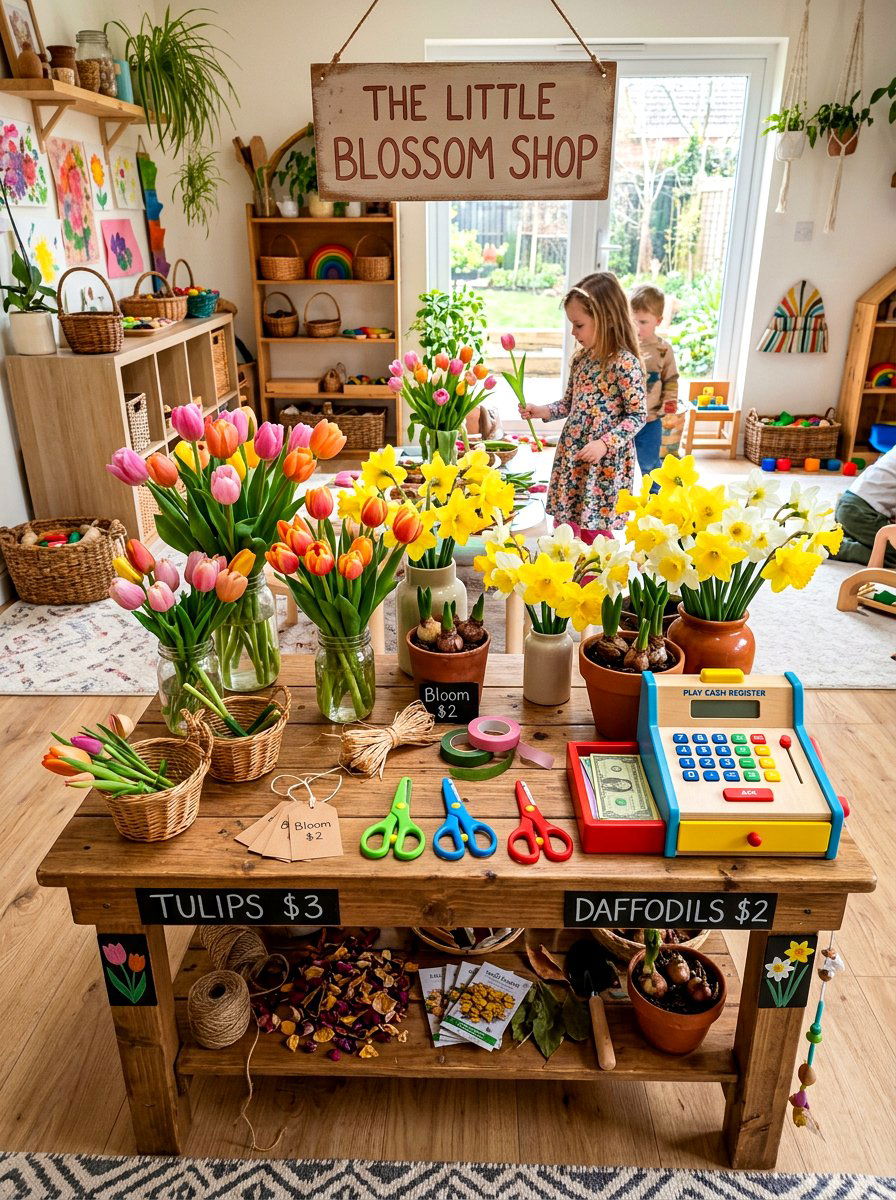
Transforming a corner into a spring flower shop table encourages creative role-play and an appreciation for floral variety. You can provide various vases, child-safe scissors, and a selection of fresh or high-quality silk flowers. Let the children arrange the blooms into colorful bouquets and talk about the different scents and petal shapes they notice. Including small price tags and a play cash register can turn the nature table into a fun math lesson. This setup is visually beautiful and fills the room with the wonderful fragrance of the season. It allows kids to express their artistic side while interacting with the gifts of the spring garden.
9. Fairy Garden Nature Table
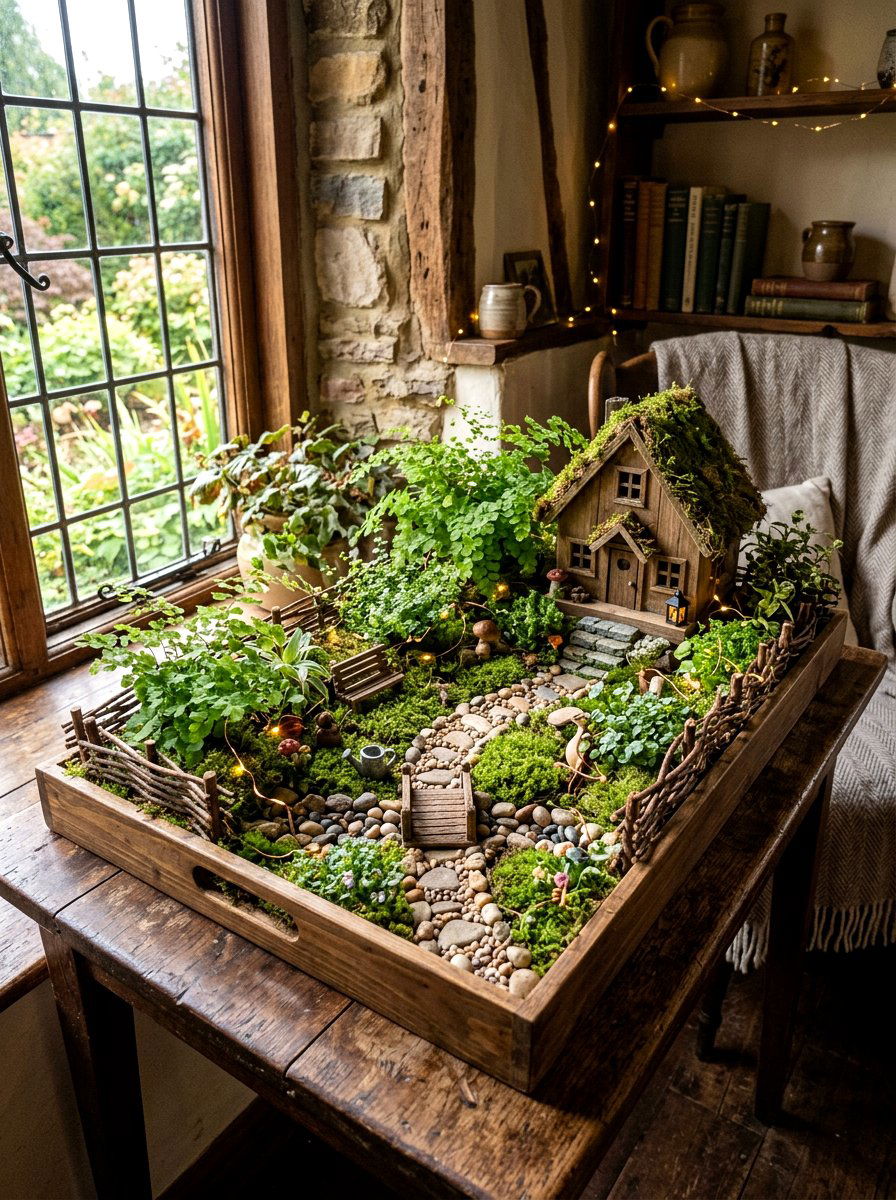
A fairy garden nature table adds a touch of enchantment and magic to your spring home decor. You can use a large wooden bowl or a low tray as the base for a miniature magical landscape. Incorporate small accessories like tiny stone paths, twig fences, and a little wooden house hidden among some ferns. Children can use their imagination to create stories about the fairies who live in the garden during the spring. Use natural items like acorn caps for bowls and rose petals for blankets to keep the look organic. This setup fosters deep creative play and a sense of wonder for the hidden parts of nature.
10. Spring Equinox Table
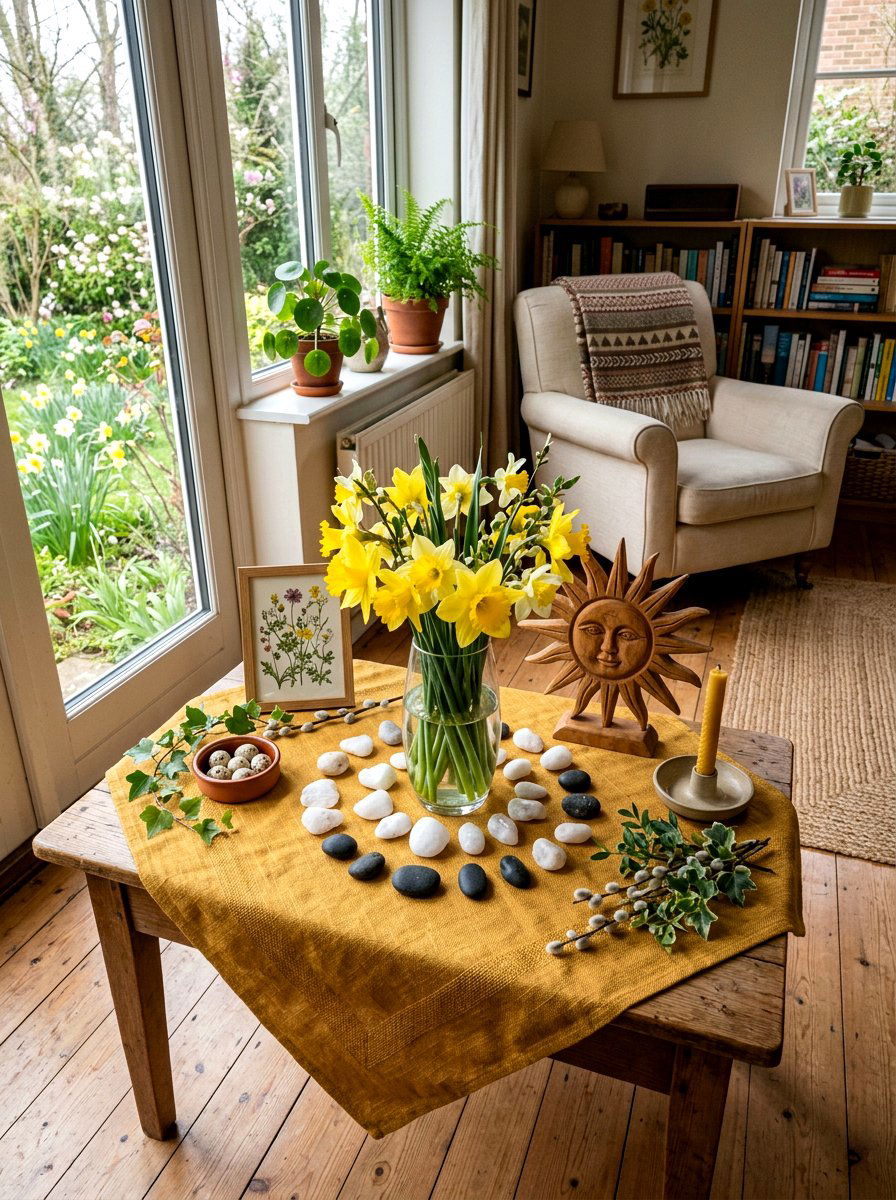
Celebrating the arrival of the spring equinox can be done with a balanced and thoughtful nature table display. You can use symbols of equal day and night, such as a white and black candle or stones of contrasting colors. Decorate the space with yellow flowers like daffodils to represent the returning sun and green leaves for the growing earth. This is a great time to talk to children about the change in seasons and the tilting of the earth. Use a simple wooden sun or a golden cloth as the focal point of the arrangement. It creates a meaningful space for families to pause and acknowledge the turning of the year together.
11. Rainbow Color Nature Table
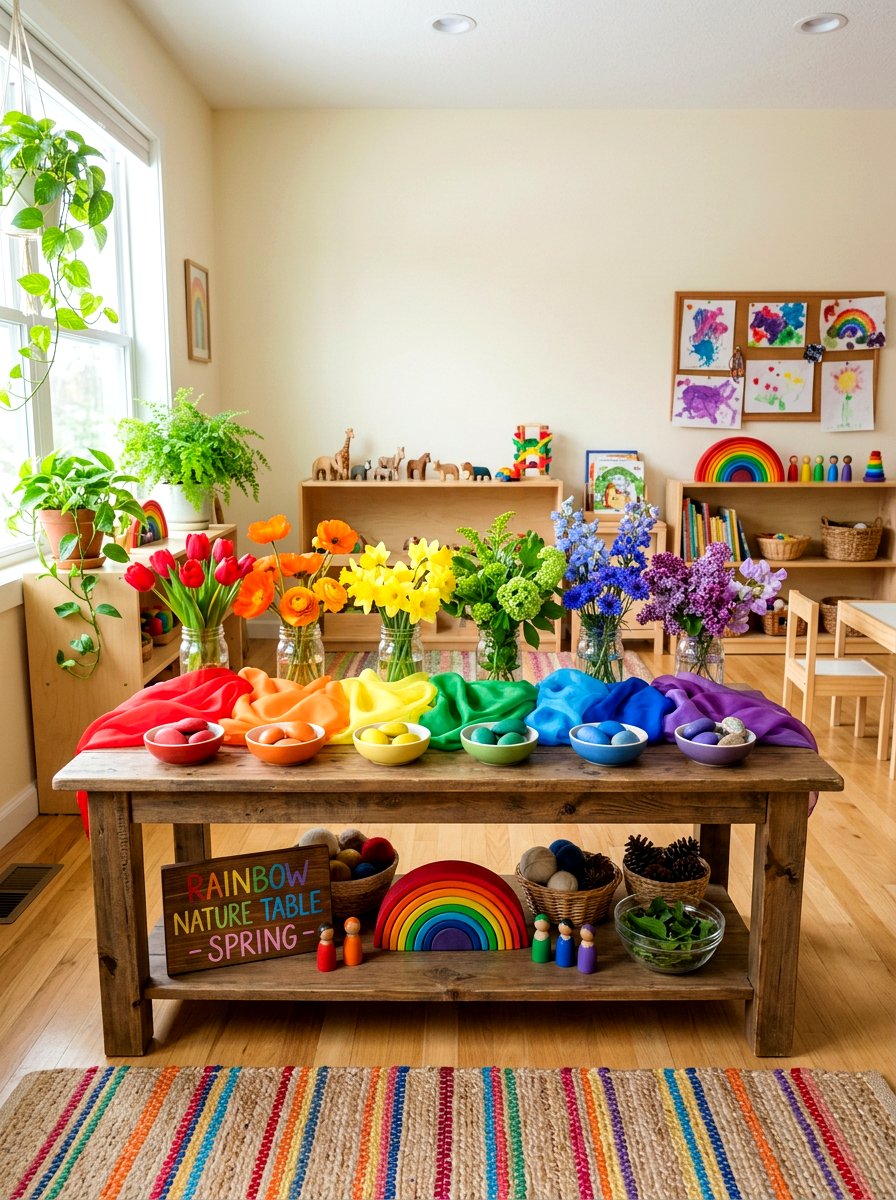
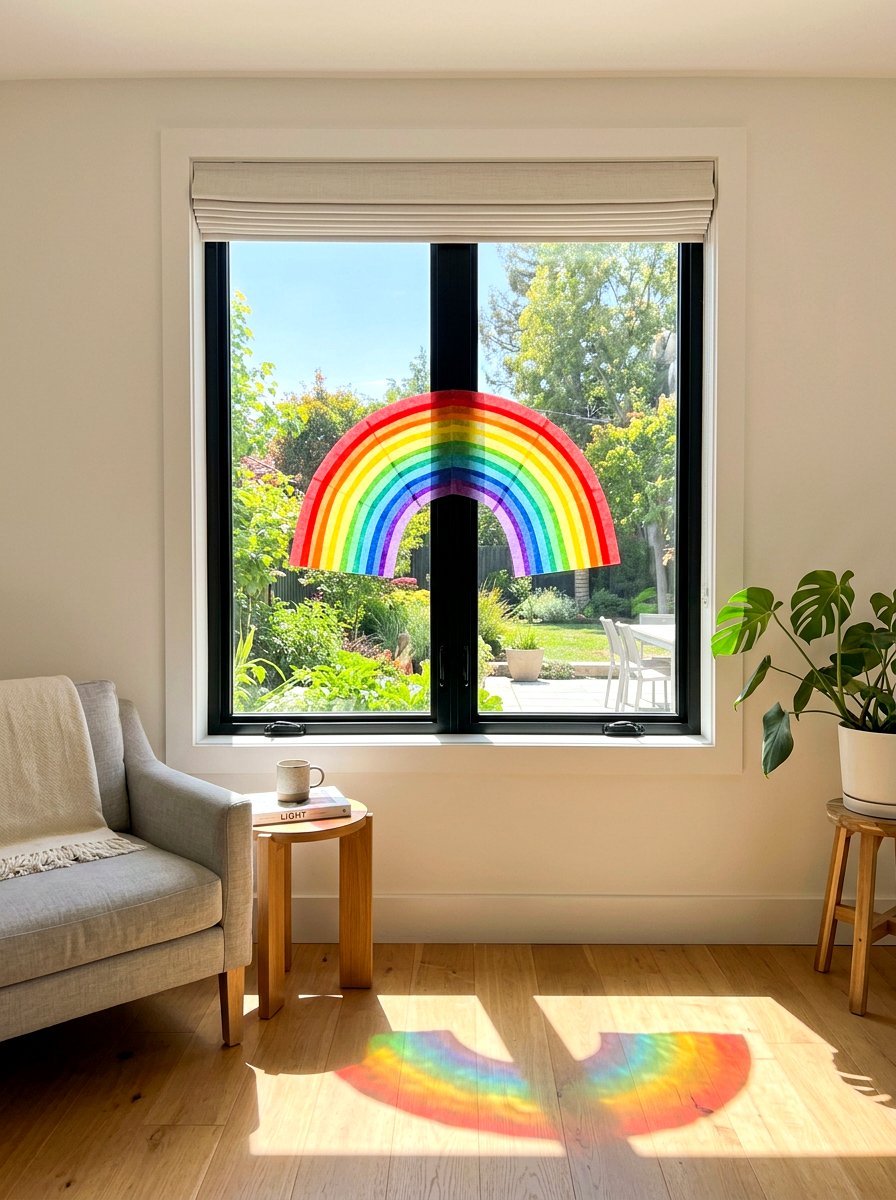
A rainbow color nature table is a vibrant way to celebrate the frequent showers and sunshine of the spring season. You can organize the display by color, starting with red tulips and moving through the spectrum to violet hyacinths. Use colorful silks or painted wooden blocks to define the different sections of the rainbow across the table. This setup is excellent for toddlers who are learning their colors and enjoy sorting various objects. You can add colorful stones, ribbons, and even a small prism to catch the light from a nearby window. It makes for a very cheerful and eye-catching display that brightens up any room in the house.
12. Kitchen Garden Nature Table
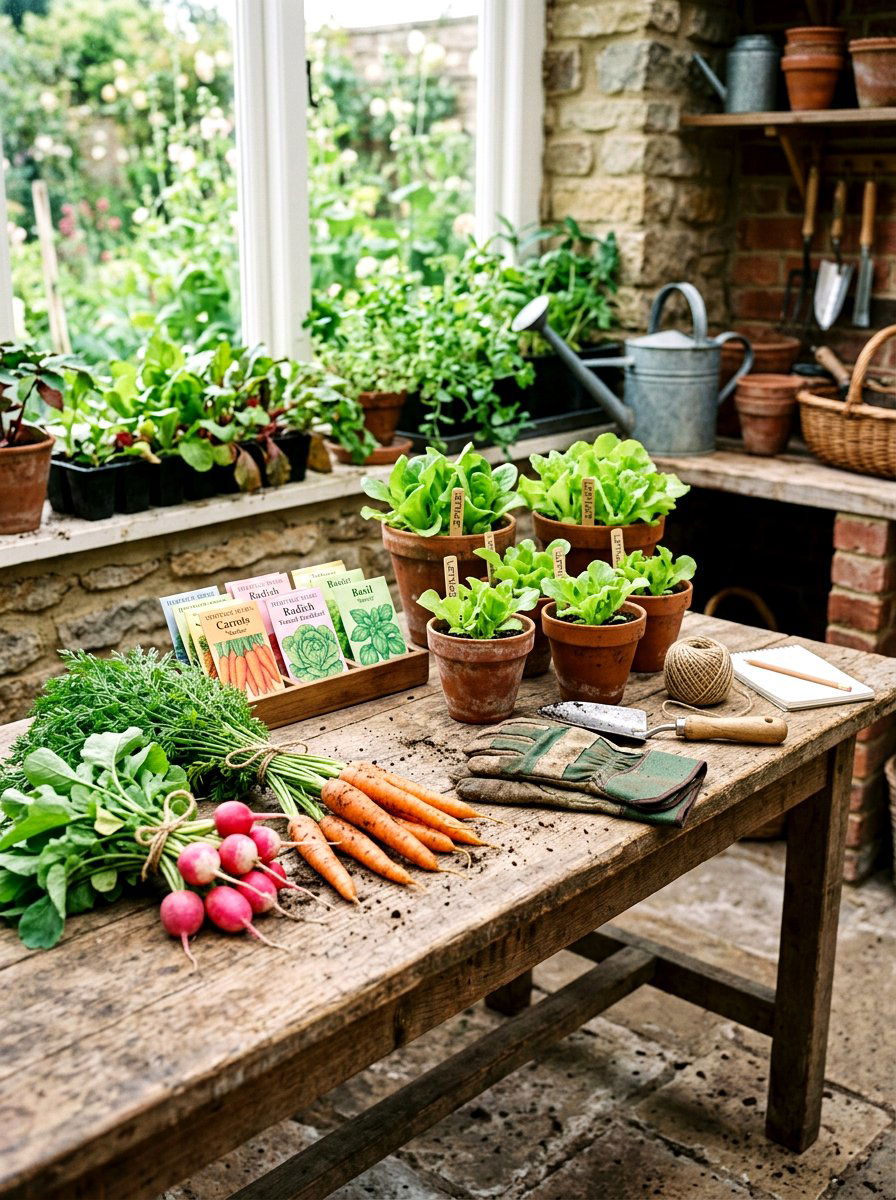
Focusing on the edible parts of spring makes a kitchen garden nature table both educational and very fun. You can display different types of vegetable seeds, small heads of lettuce, and bunches of fresh radishes or carrots. Include some child-sized gardening gloves and small hand forks to make the scene look like a working vegetable patch. This is a perfect opportunity to talk about where our food comes from and how farmers work in the spring. You might even include some herbs like mint or chives for a sensory experience of smell and taste. It encourages healthy eating habits and a respect for the hard work involved in growing food.
13. Forest Moss Nature Table
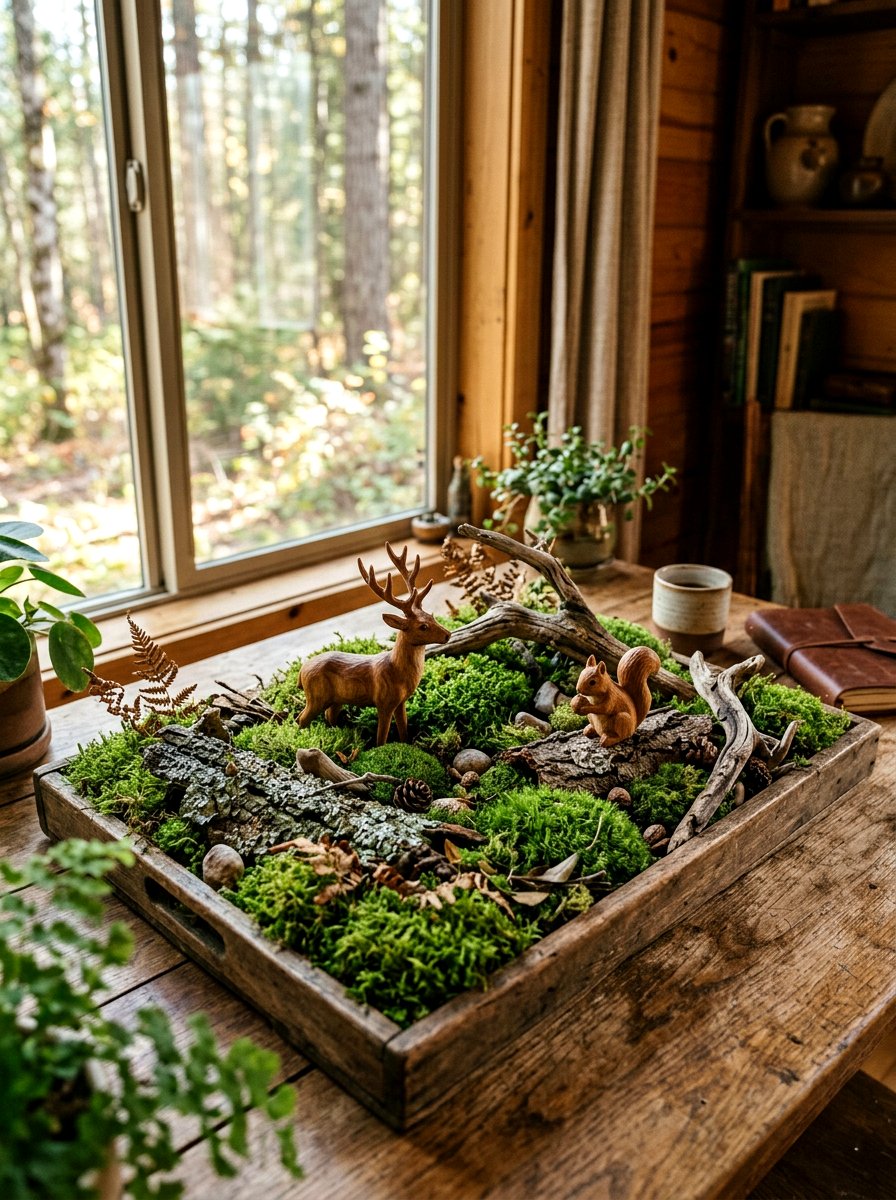
Capturing the lush greenery of the woods is easy with a dedicated forest moss nature table setup. You can gather different types of moss, lichen, and bark to create a textured and earthy landscape on a tray. Add small woodland creatures like squirrels, foxes, or deer figurines to inhabit the miniature mossy forest. Pieces of driftwood or large pinecones can serve as fallen logs or mountains for the animals to climb on. This type of nature table is very calming and brings a piece of the deep woods into your home. It teaches children to appreciate the smaller, often overlooked plants that thrive in damp and shaded spring areas.
14. Honey Bee Nature Table
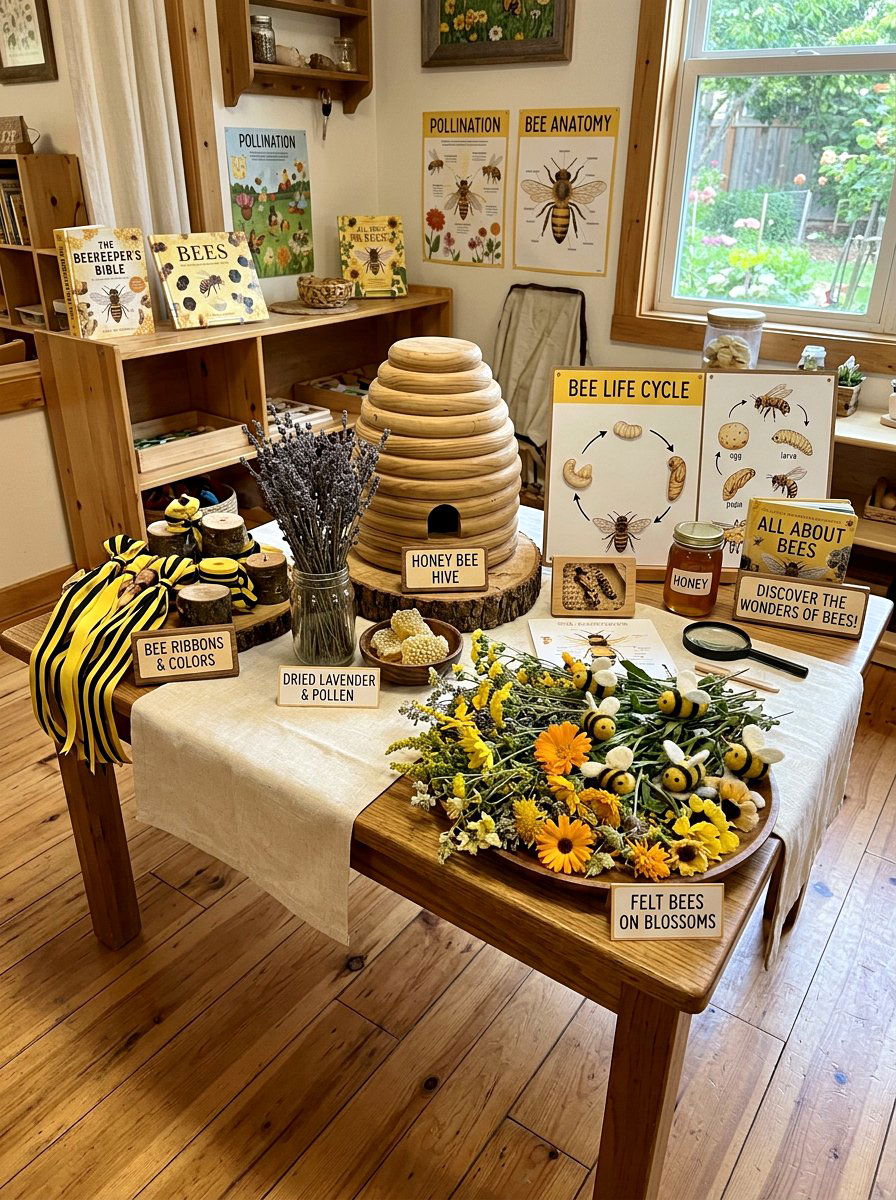
Teaching kids about pollinators is vital, and a honey bee nature table is a great way to start. You can use yellow and black accents, such as striped ribbons or painted stones, to represent the busy bees. Display some dried lavender or jars of local honey to show the wonderful products these insects help create. Include some information about how bees move pollen from flower to flower to help plants grow. This setup can feature a wooden beehive model or small felt bees resting on bright yellow blossoms. It is a fantastic way to build environmental awareness and reduce any fears children might have about these helpful insects.
15. Rain And Clouds Table
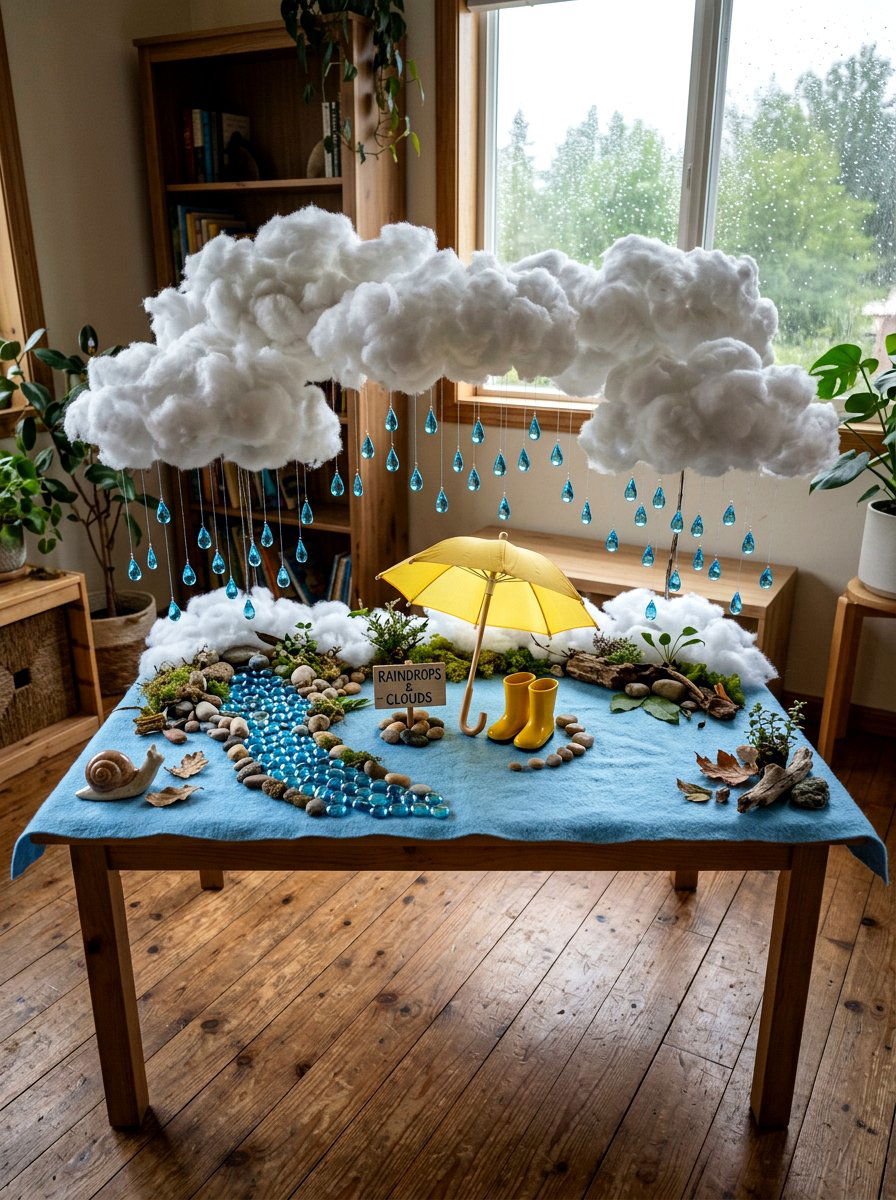
Spring is known for its weather changes, making a rain and clouds table a very relevant theme. You can use fluffy white cotton batting to create soft clouds and blue glass gems to represent falling raindrops. A small umbrella or a pair of tiny yellow rain boots adds a cute and relatable touch to the display. This table can be used to track the daily weather by adding sun symbols or gray clouds depending on the sky. It helps children understand the water cycle and why rain is so important for the flowers to bloom. The cool blue and white color palette is very refreshing and modern for a spring display.

16. Spring Farm Nature Table
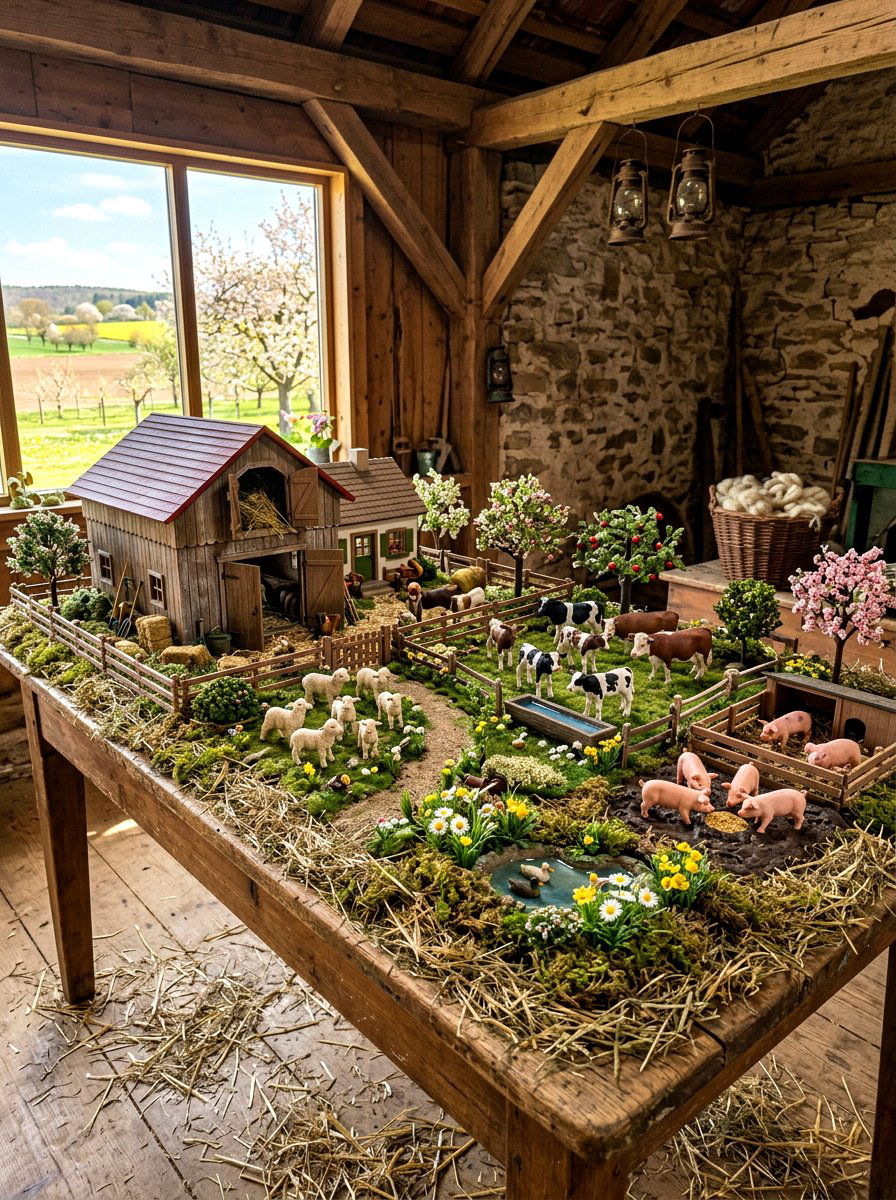
The arrival of baby animals is a highlight of the season, which you can celebrate with a spring farm nature table. Use a base of dried hay or green felt to represent the farm fields and pastures. Arrange high-quality animal figurines like lambs, calves, and piglets around a small wooden barn or fence. You can add a tiny pond for the ducks and a small garden patch for the farm family. This setup encourages hours of imaginative play as children pretend to care for the young animals. It is a wonderful way to discuss the cycles of life and the importance of agriculture in our daily lives.
17. Rock And Mineral Table
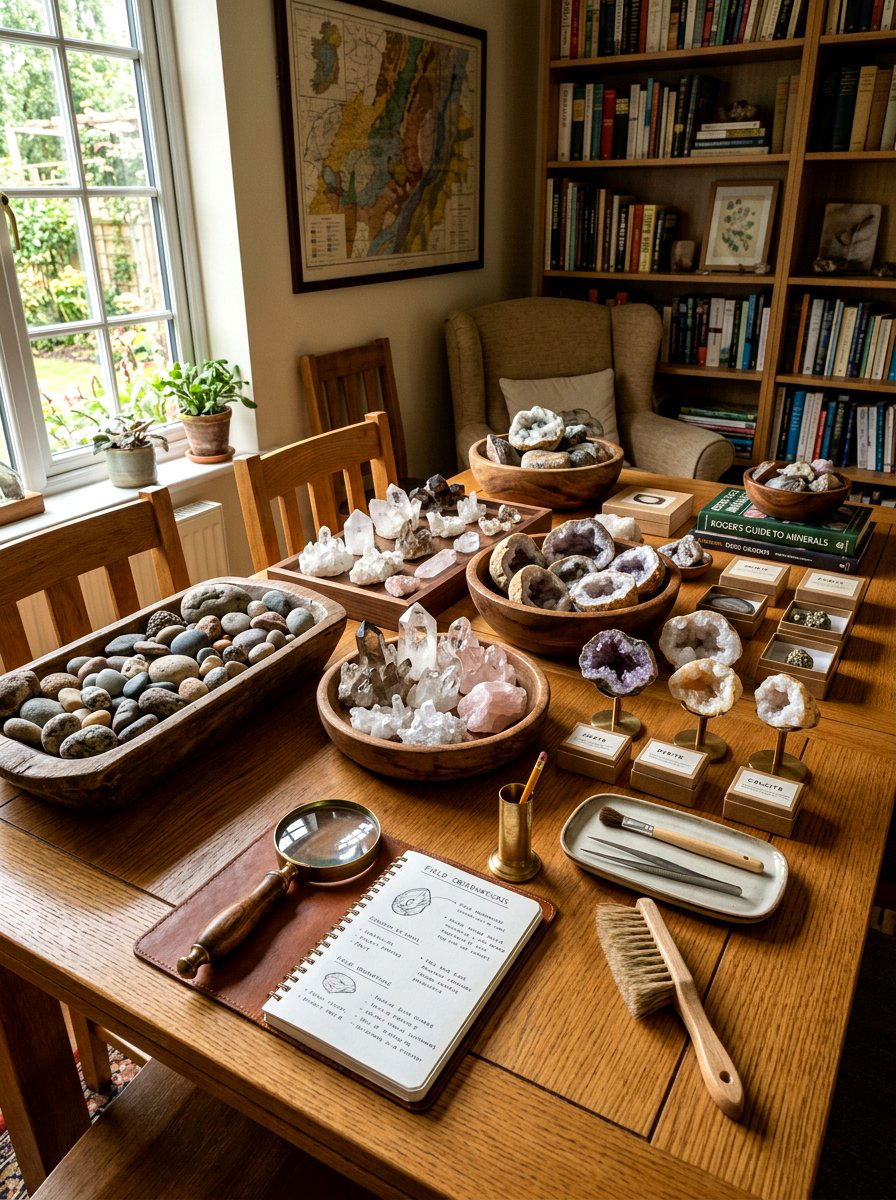
A rock and mineral table offers a different perspective on nature by focusing on the solid elements of the earth. During the spring, many interesting stones are uncovered by melting snow and heavy rains in the garden. You can display a variety of quartz, geodes, and smooth river rocks for children to examine with a magnifying glass. Provide a small bowl of water and a soft brush so they can clean and polish their found treasures. This tactile experience is very grounding and teaches kids about geology and the different layers of the earth. It is a sturdy and low-maintenance option that still feels very connected to the environment.
18. Tree Blossom Nature Table
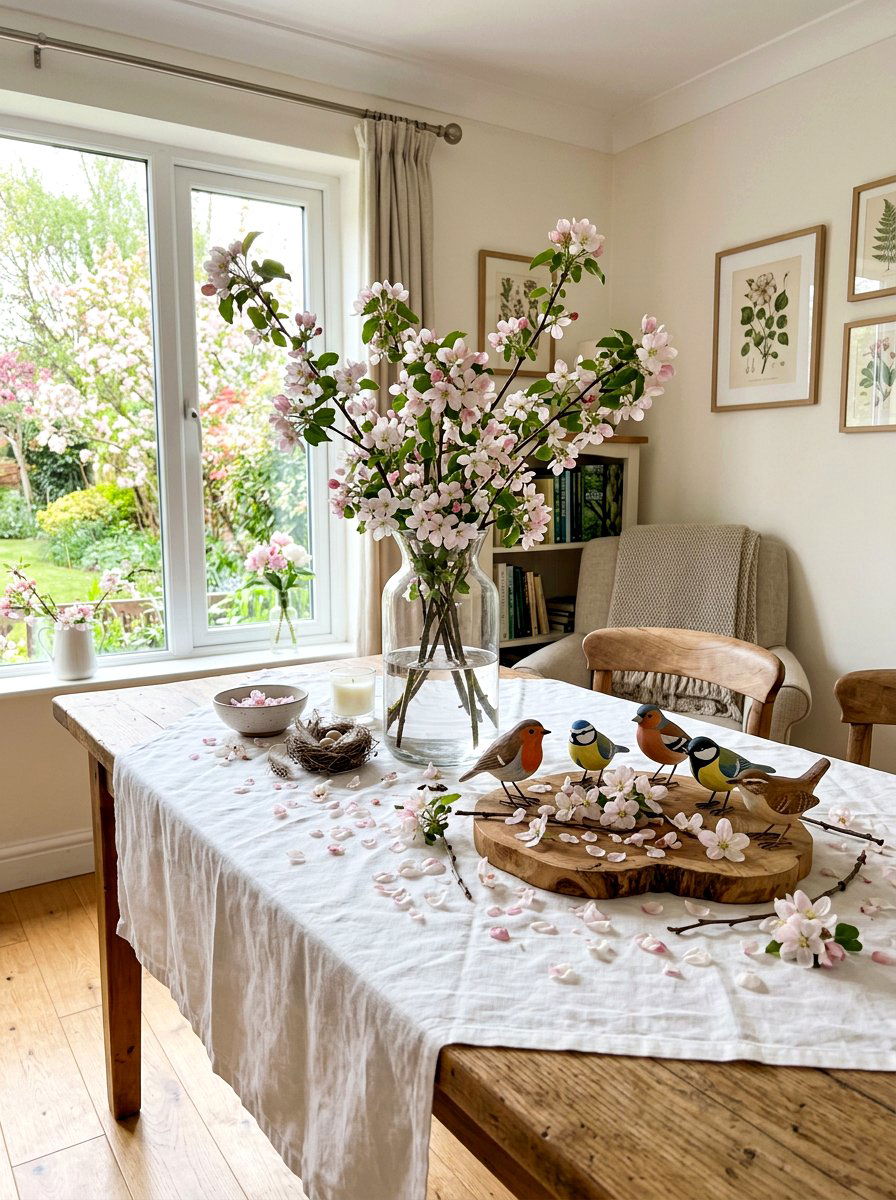
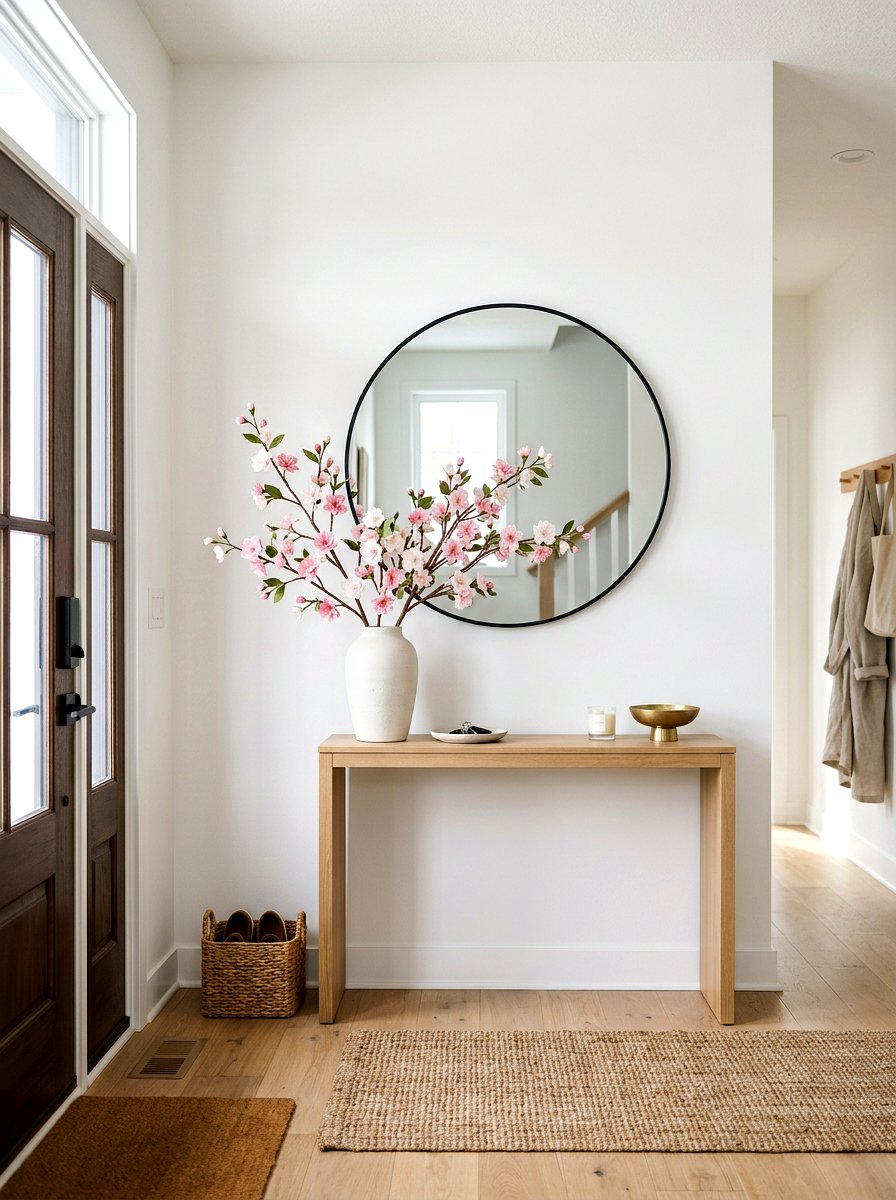
Spring is famous for its beautiful flowering trees, and a tree blossom nature table captures this fleeting beauty. You can place a few branches of cherry, apple, or magnolia blossoms in a heavy vase as the main focal point. Surround the base with fallen petals and small wooden birds that might live in the branches of the trees. This display is very elegant and brings a sense of the outdoor orchard or park inside your living space. Children can observe how the buds open into flowers and eventually drop their petals to make room for leaves. It is a great way to discuss the changing lifecycle of trees during the spring.
19. Outdoor Mud Nature Table
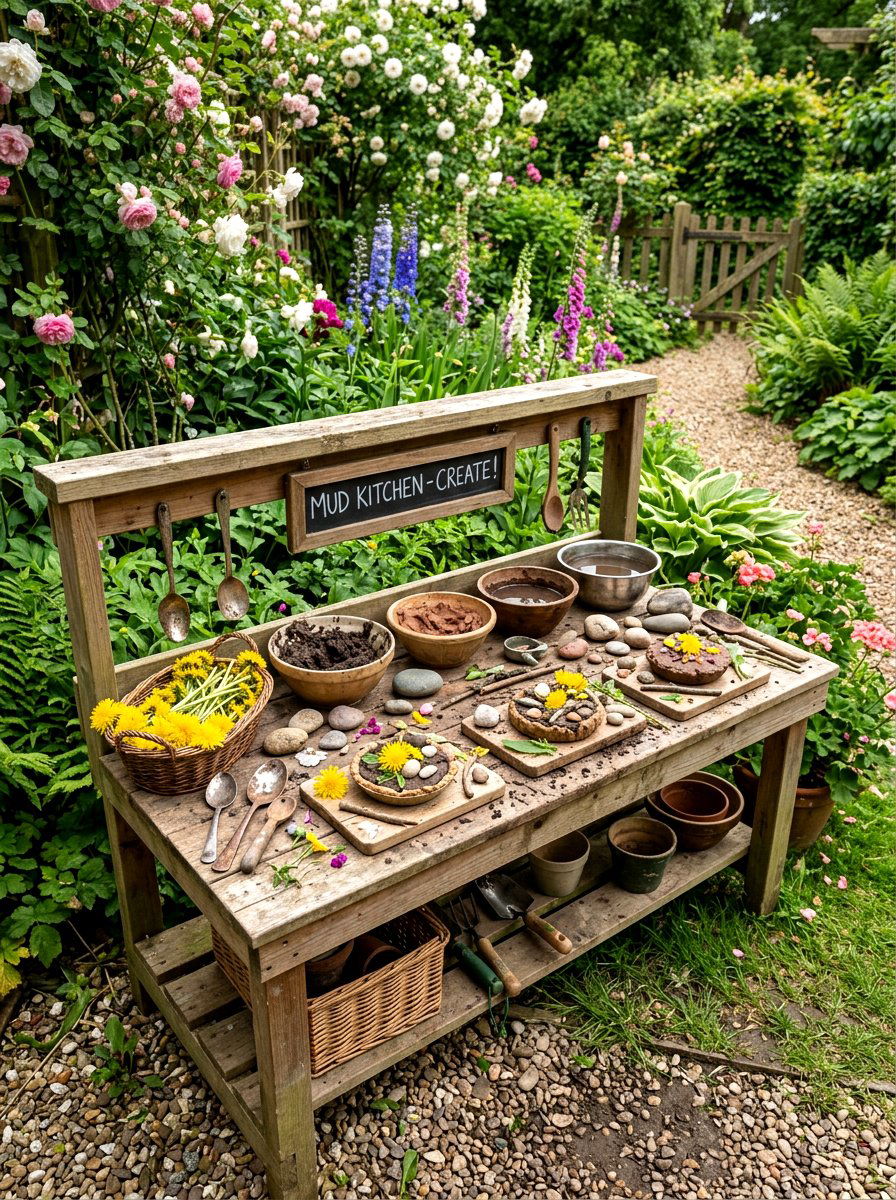
Setting up an outdoor mud nature table allows kids to get messy and fully engage with the spring earth. You can use a sturdy potting bench or a low wooden crate as the work surface in your backyard. Provide plenty of dirt, water, and old kitchen utensils like whisks and spoons for making mud pies and soups. Add some natural decorations like dandelion yellow heads, stones, and sticks for garnishing the mud creations. This type of play is essential for sensory development and gives children the freedom to explore without worrying about making a mess inside. It celebrates the raw and earthy side of the spring season perfectly.
20. Herbal Sensory Nature Table
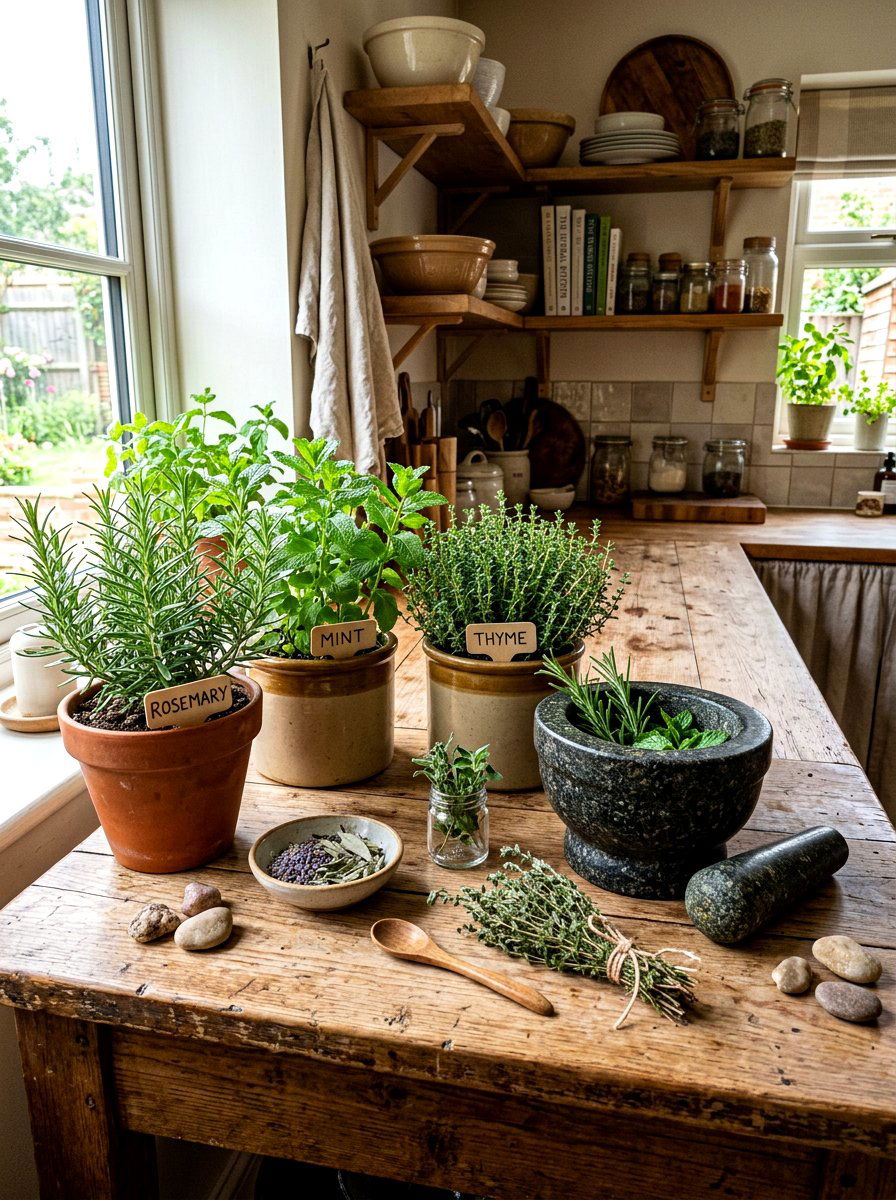
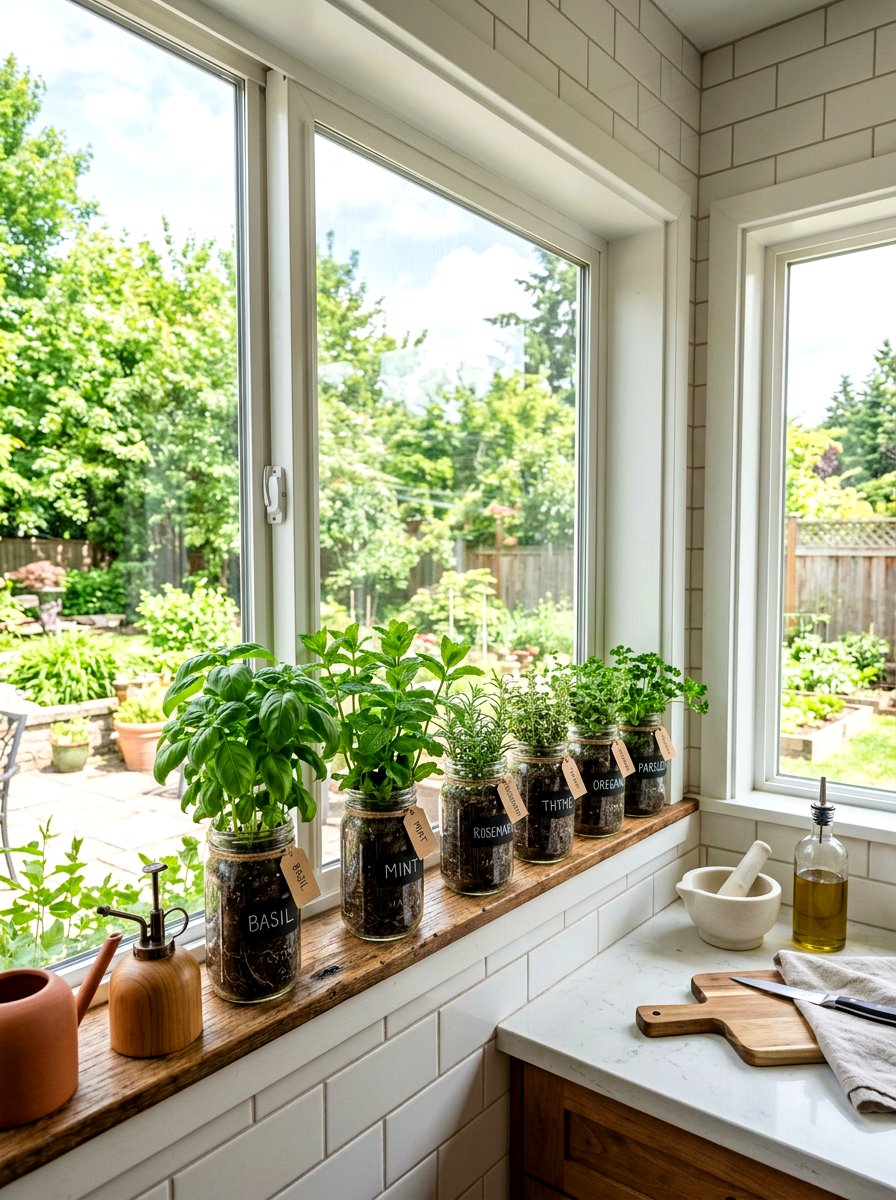
Engaging the sense of smell is the goal of a fragrant herbal sensory nature table for kids. You can arrange small pots of fresh herbs like rosemary, thyme, lemon balm, and mint for children to touch and sniff. Provide a small mortar and pestle so they can crush a few leaves to release the essential oils and scents. This setup is very calming and can help children learn to identify different plants by their unique fragrances. You can also include some dried herbs in small jars for comparison between fresh and preserved nature. It is a sophisticated and very pleasant addition to any kitchen or classroom area during the spring.
21. Snail Habitat Nature Table
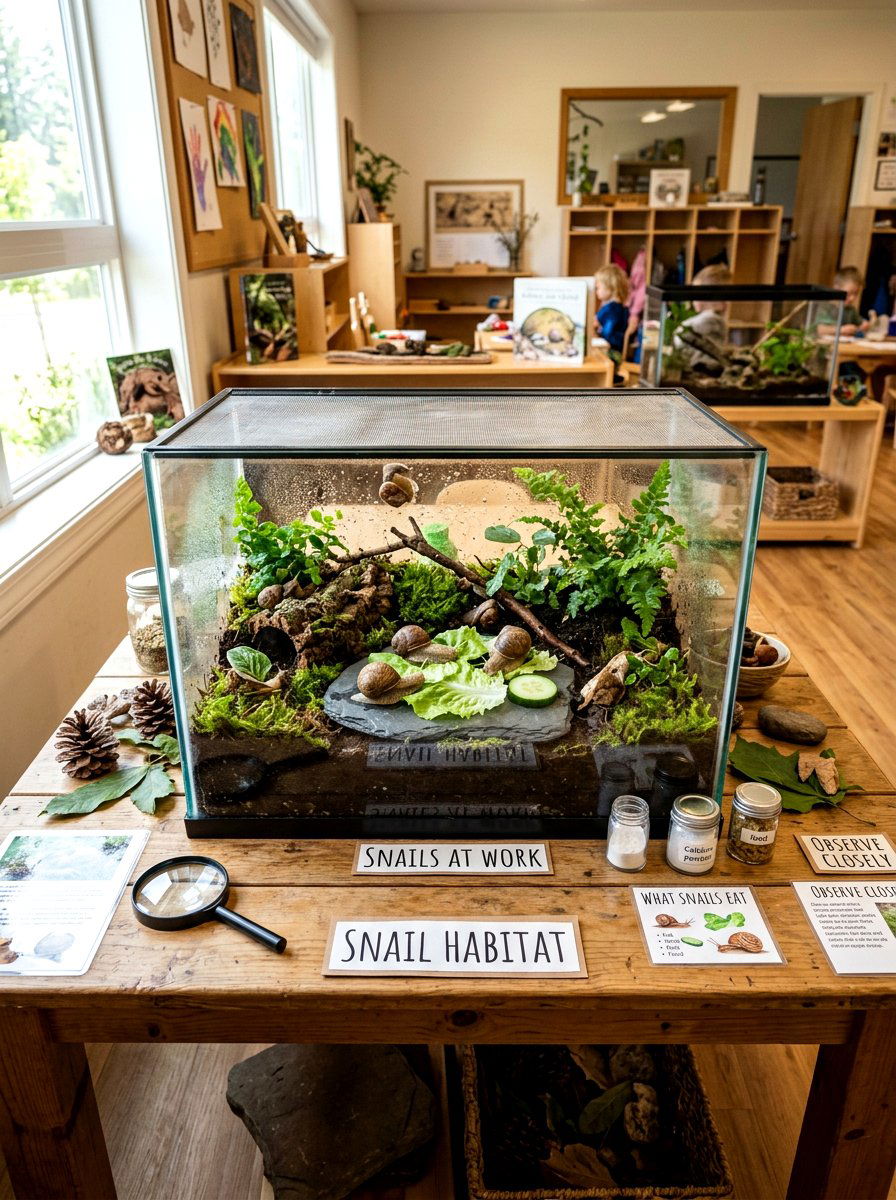
A snail habitat nature table is a slow-paced and fascinating way to observe one of nature’s most interesting creatures. You can use a large glass jar or a small terrarium filled with damp soil, moss, and some flat stones. Add a few live snails found in the garden and provide them with fresh lettuce or cucumber slices to eat. Children will love watching the snails move slowly across the glass and leave shiny trails behind them. This setup teaches kids to be gentle and patient with small living things while observing their unique behaviors. Just remember to release the snails back into the garden after a few days of observation.
22. Pastel Silk Nature Table
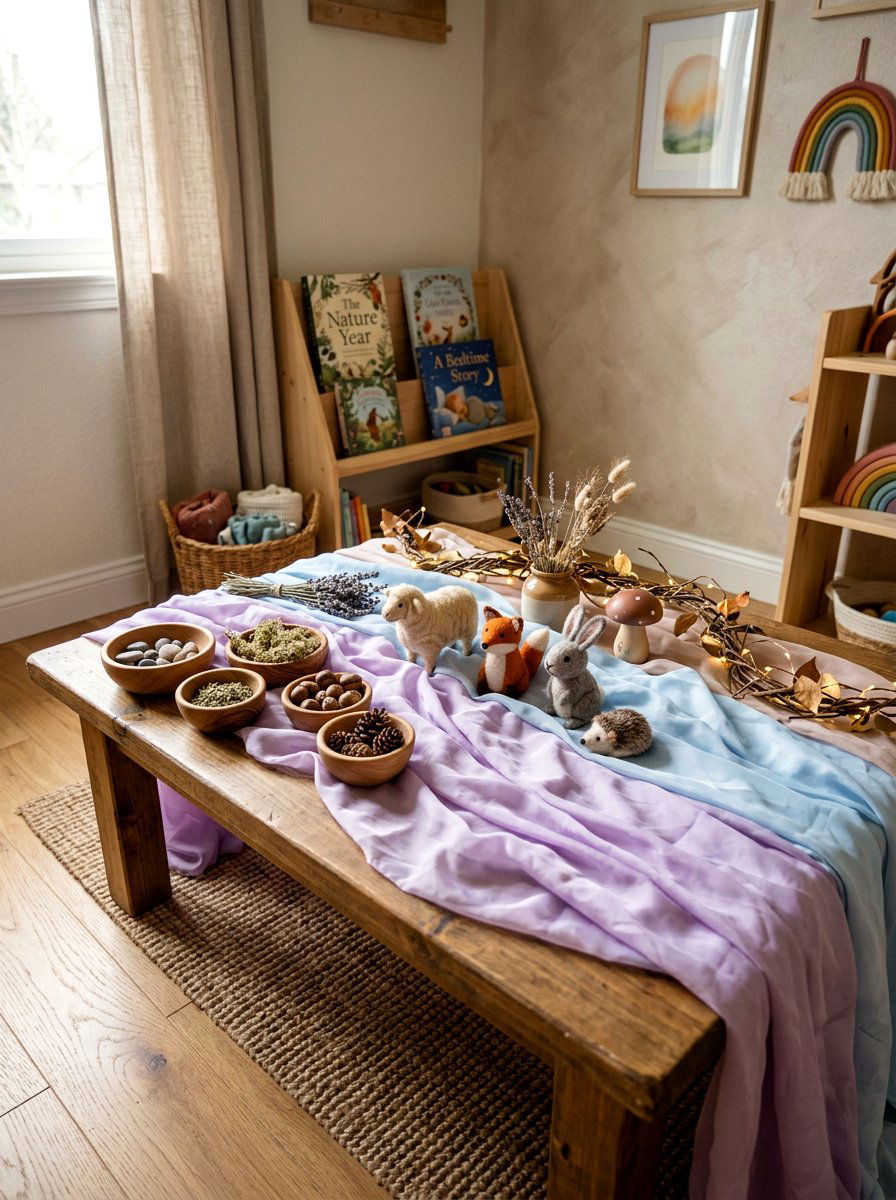
Using soft textiles like a pastel silk nature table creates a very gentle and inviting aesthetic for younger children. You can layer silks in shades of lavender, soft pink, and pale blue to represent the delicate colors of spring flowers. Place a few smooth wooden bowls and some soft wool felt animals on top of the flowing fabric. This setup is focused more on the mood and color of the season than on specific scientific facts. It provides a beautiful and safe space for toddlers to play and explore the textures of the silk and wool. The overall look is very dreamy and fits perfectly in a nursery or a quiet playroom corner.
23. Foraged Treasures Nature Table
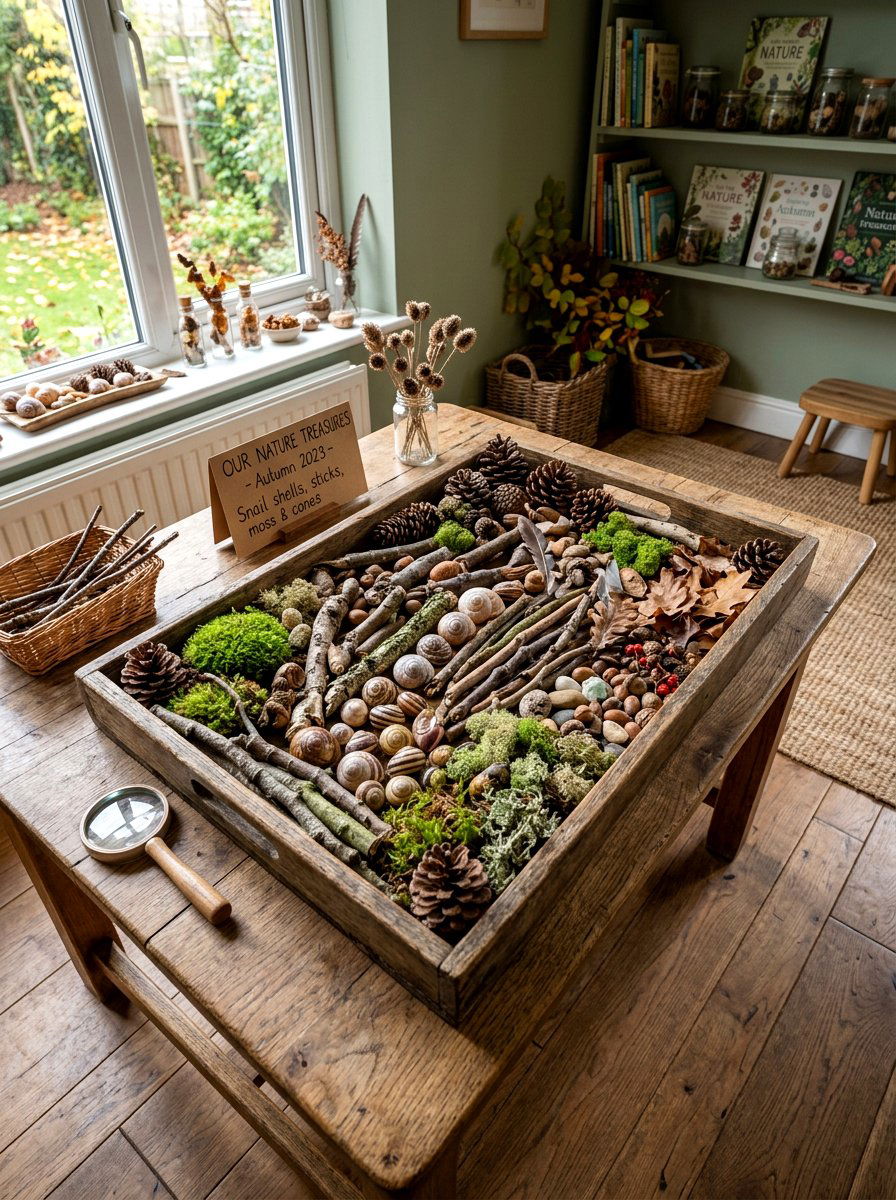
A foraged treasures nature table is a collaborative project that grows as you and your children explore the outdoors. Start with an empty wooden tray and let the kids fill it with anything they find interesting on their daily walks. This might include empty snail shells, unusually shaped sticks, bits of moss, or interesting seed pods from last year. You can provide a few small baskets or dividers to help them organize their findings by type or color. This type of table is ever-changing and reflects the specific environment where you live. It encourages kids to keep their eyes open and appreciate the small wonders they find under their feet.
24. Ladybug Discovery Nature Table
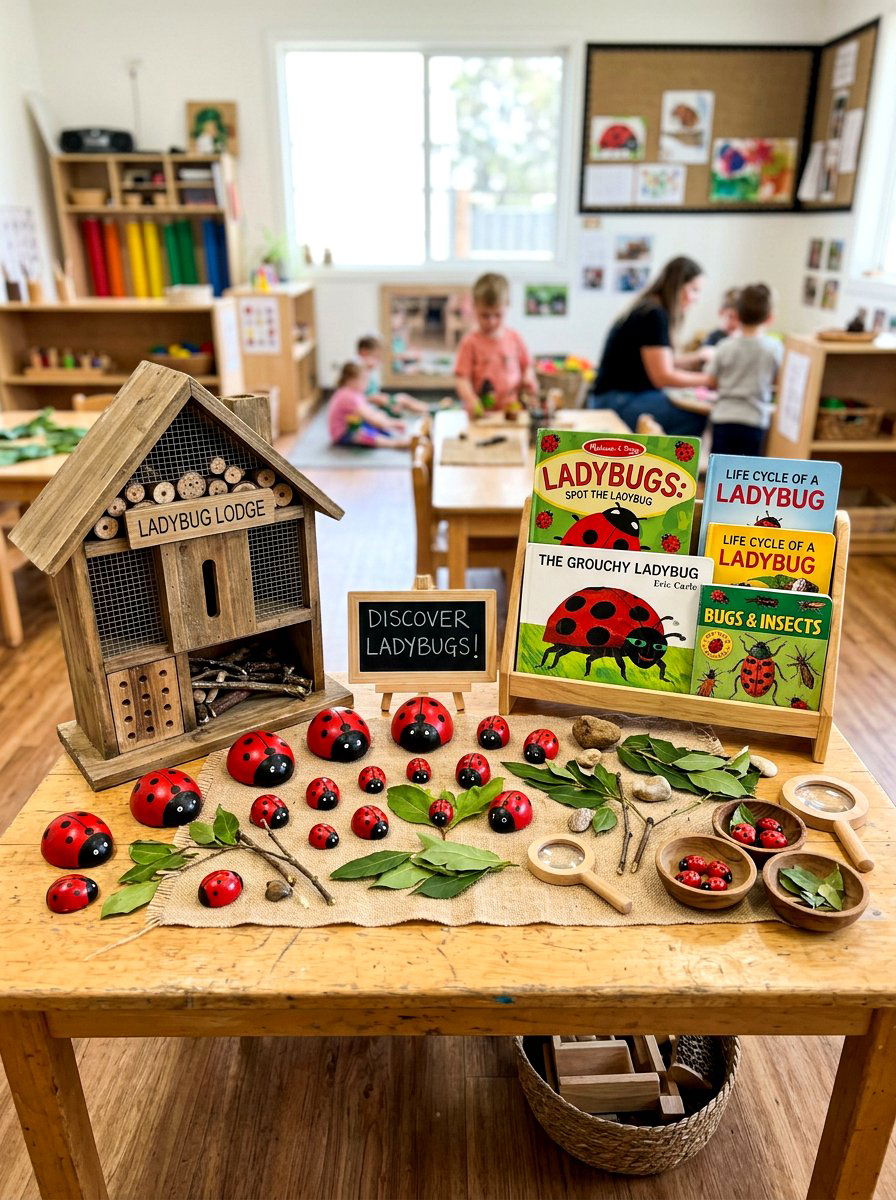
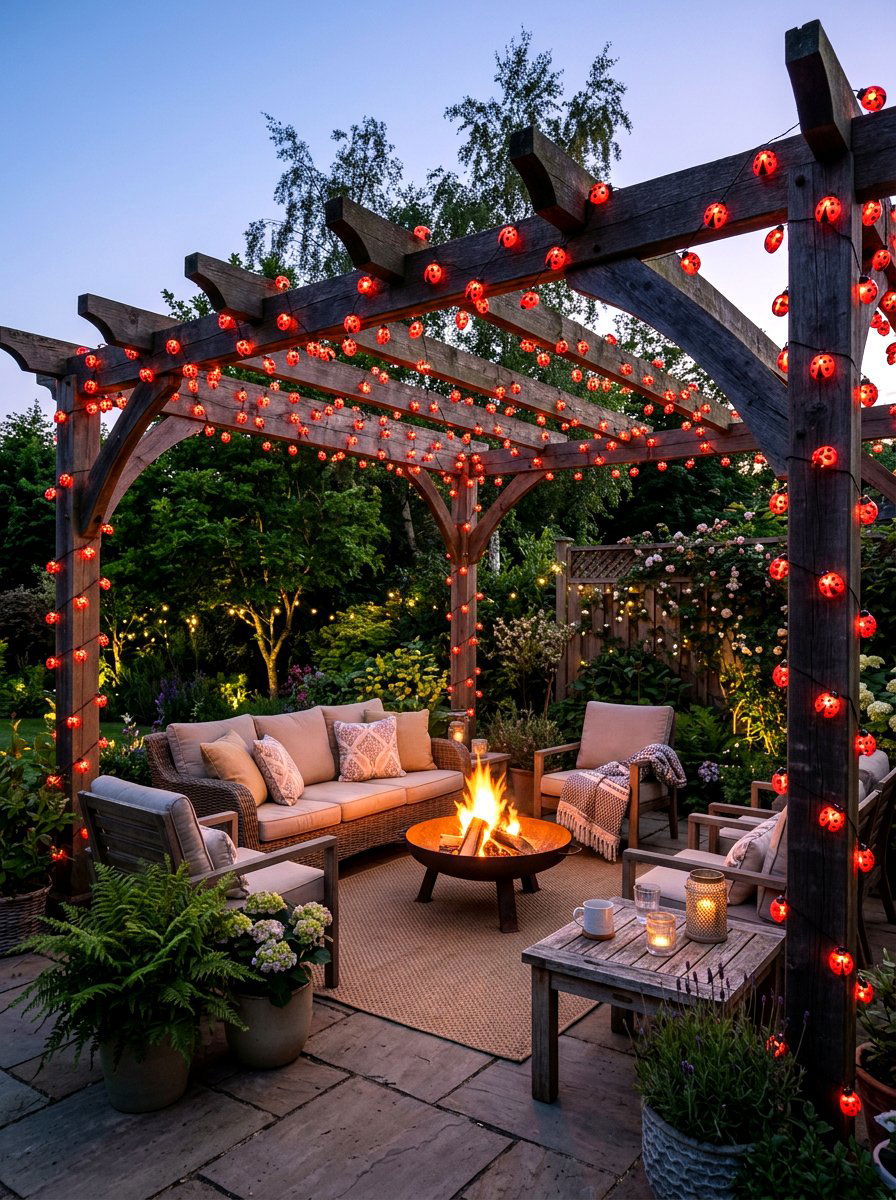
Ladybugs are a favorite spring insect for many children, making a ladybug discovery nature table a big hit. You can use red and black decor, like small painted wood rounds or felt ladybugs, to fill the display. Include some green leaves and perhaps a small wooden house to show where these beetles might like to hide. This is a great time to talk about how ladybugs help gardeners by eating pests that can hurt the plants. You might also find books about ladybugs to keep nearby for reading together during the day. It is a cheerful and educational setup that celebrates one of the most helpful creatures in the garden.
25. Wildflower Meadow Nature Table
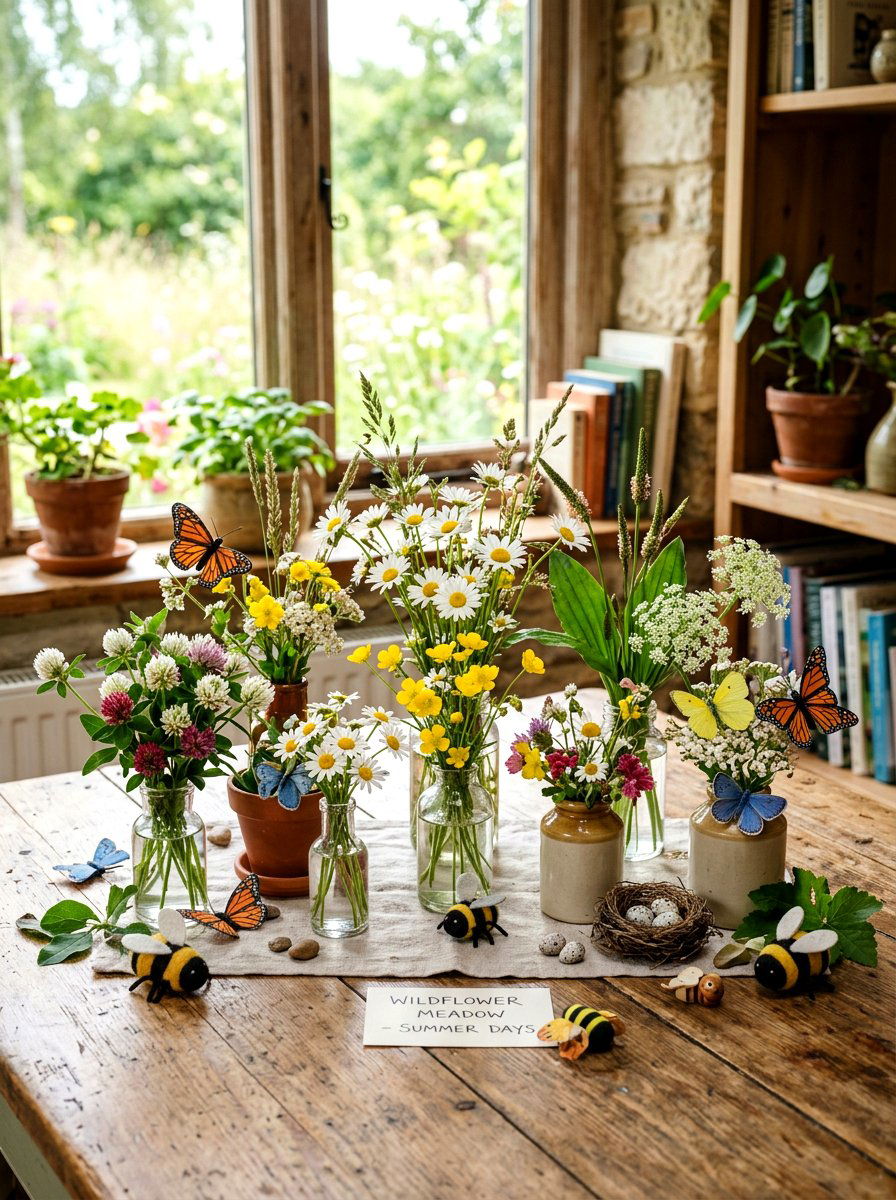
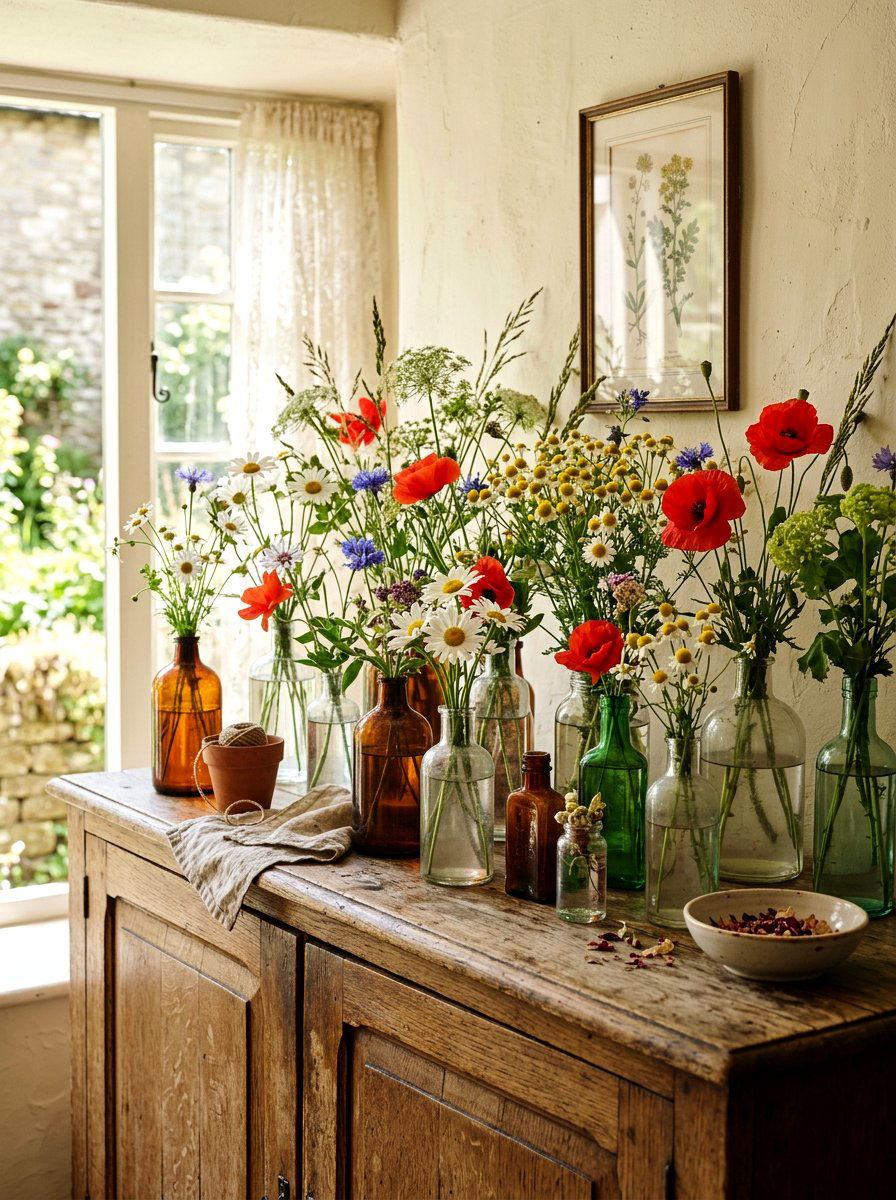
Creating a wildflower meadow nature table brings the untamed beauty of the spring fields into your home. You can use a variety of small vases to hold different types of wild blooms like clover, daisies, and buttercups. Arrange them in a cluster to look like a thick patch of flowers growing in a sunny meadow. Add some toy butterflies, bees, and grasshoppers to show the life that thrives among the tall grasses. This setup is very colorful and has a relaxed, natural feel that children will find very appealing. It teaches them about biodiversity and the beauty of plants that grow all on their own in the wild.
Conclusion:
Spring nature tables for kids are a wonderful way to bring the outdoor world into your home during this vibrant season. By creating these dedicated spaces, you provide children with an ever-changing landscape for discovery, learning, and creative play. Whether you focus on the lifecycle of a butterfly or the simple beauty of foraged rocks, these displays foster a lifelong love for the environment. You do not need expensive materials to make a beautiful display; most of the best items can be found right in your backyard. We hope these twenty-five ideas inspire you to start a new seasonal tradition that your family will cherish for years.
Related posts:
Leave a Reply