
Spring brings a magical transformation to any outdoor space when roses begin to unfurl their delicate petals and release their intoxicating scents. Planning a rose garden requires a thoughtful approach to color, structure, and timing to ensure your yard looks breathtaking throughout the entire season. Whether you have a sprawling estate or a tiny urban balcony, there is always a way to incorporate these iconic flowers into your landscape. From climbing varieties that scale tall walls to compact shrubs that line tidy walkways, the possibilities for creating a floral sanctuary are endless. You can experiment with different color palettes, such as soft pastels for a romantic feel or bold reds for a dramatic statement. By combining roses with complementary perennials and architectural features, you can build a garden that feels both timeless and fresh every single spring.
1. Climbing Roses Over Garden Arch
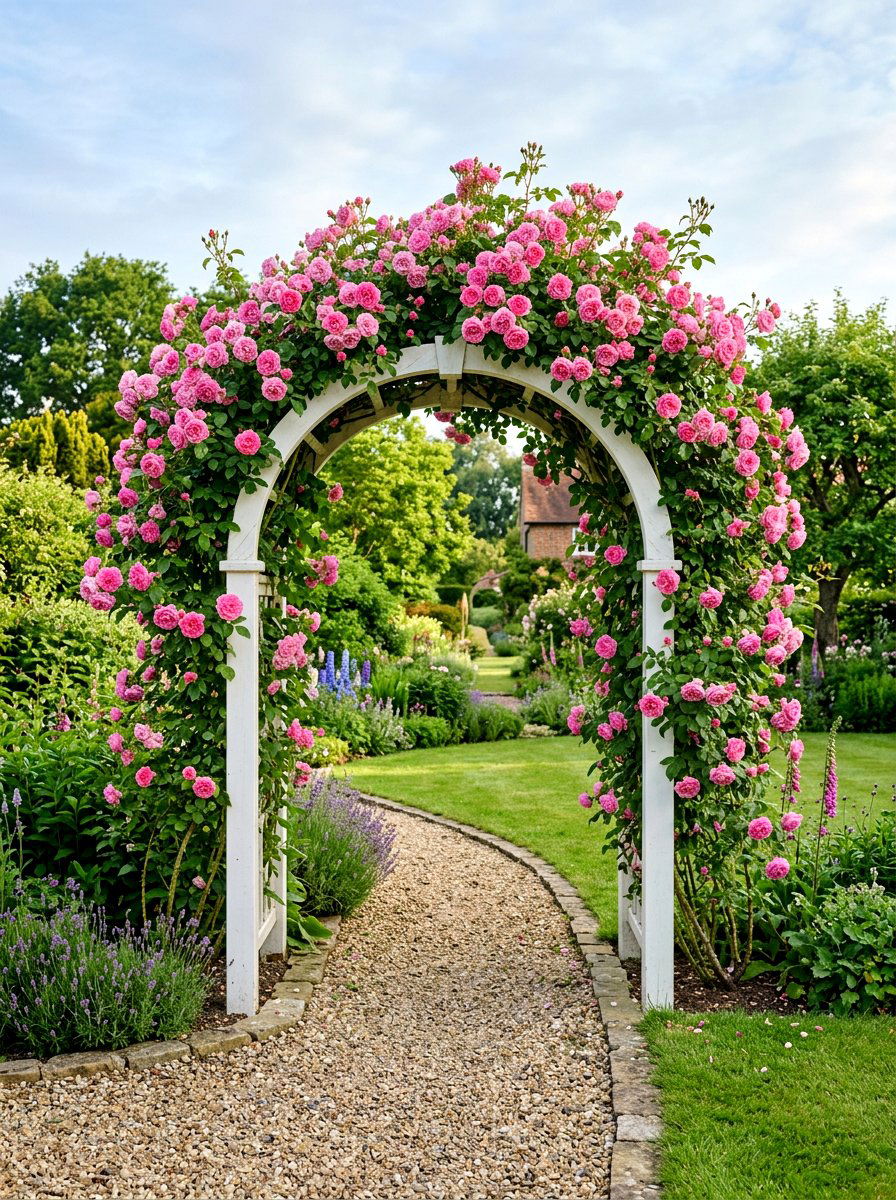
Have you ever dreamed of walking through a living tunnel of fragrant blooms every time you enter your backyard? A garden arch covered in climbing roses creates a stunning focal point that defines transitions between different areas of your landscape. Choosing vigorous varieties like 'Eden' or 'New Dawn' allows the canes to wrap gracefully around the structure, providing height and vertical interest. To achieve a full look, you should prune and tie the stems horizontally along the arch to encourage more flower production from the base to the top. This setup works beautifully as an entrance to a hidden patio or a vegetable patch. The sight of heavy clusters of flowers hanging overhead provides a sense of enclosure and old-world charm that is hard to replicate with other plants.
2. English Cottage Rose Garden
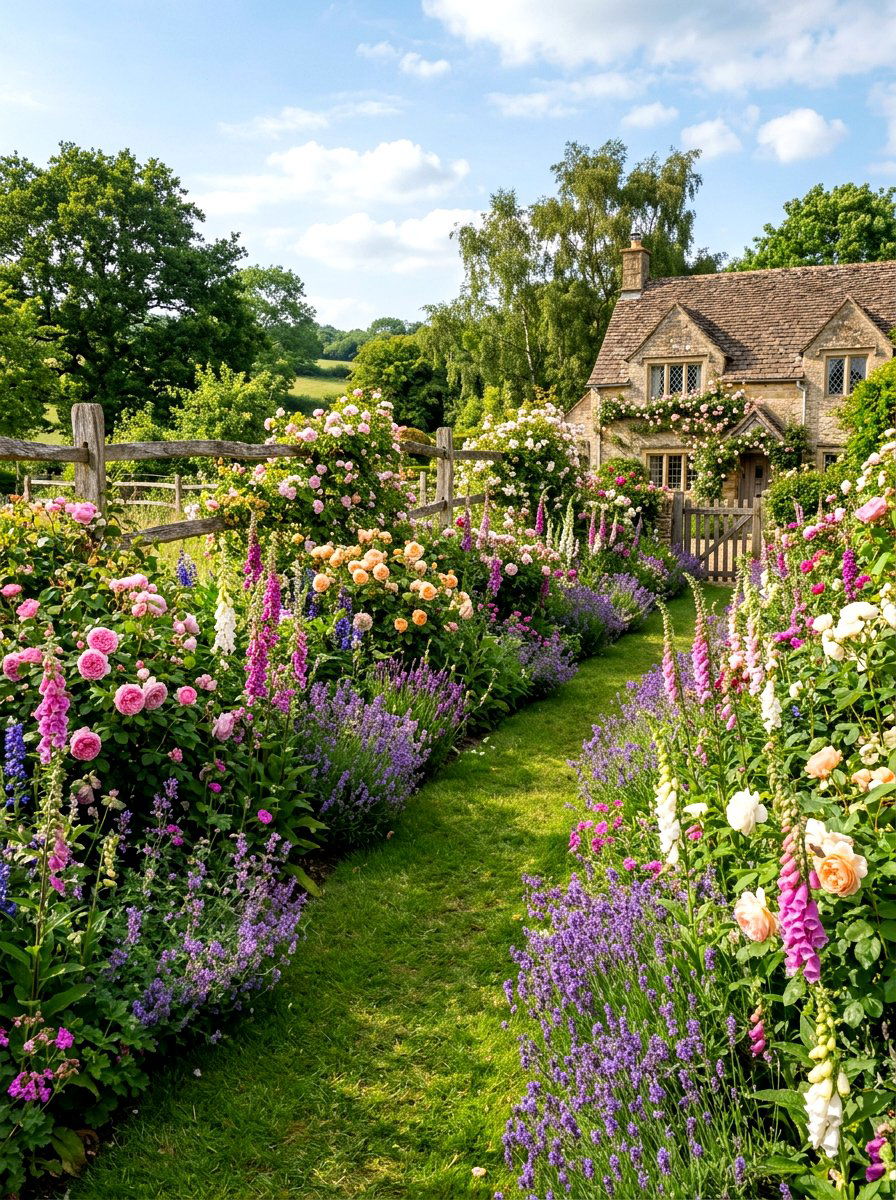
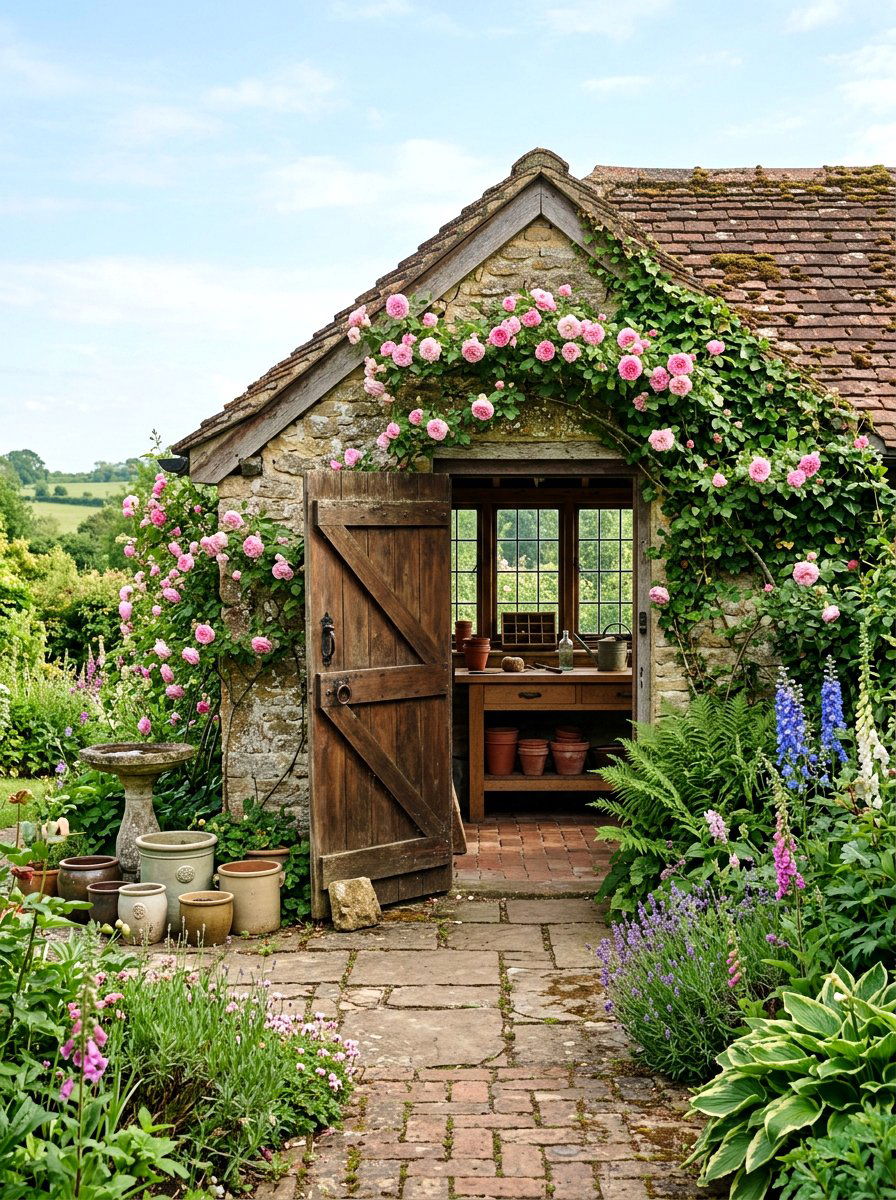
Can you imagine a garden that feels effortlessly lush, overflowing with a mix of soft colors and varying heights? The English cottage style focuses on a dense planting scheme where roses are the undisputed stars of the show. Instead of rigid rows, you should place different rose varieties close together, allowing them to mingle with foxgloves, delphiniums, and hardy geraniums. This approach hides bare stems and creates a tapestry of texture that looks natural and inviting throughout the spring months. Using David Austin roses is a popular choice for this look because they offer the cabbage-like bloom shape and heavy fragrance of old roses. It is a wonderful way to turn a standard suburban lawn into a romantic retreat that feels like it belongs in a fairytale.
3. All White Rose Garden Bed
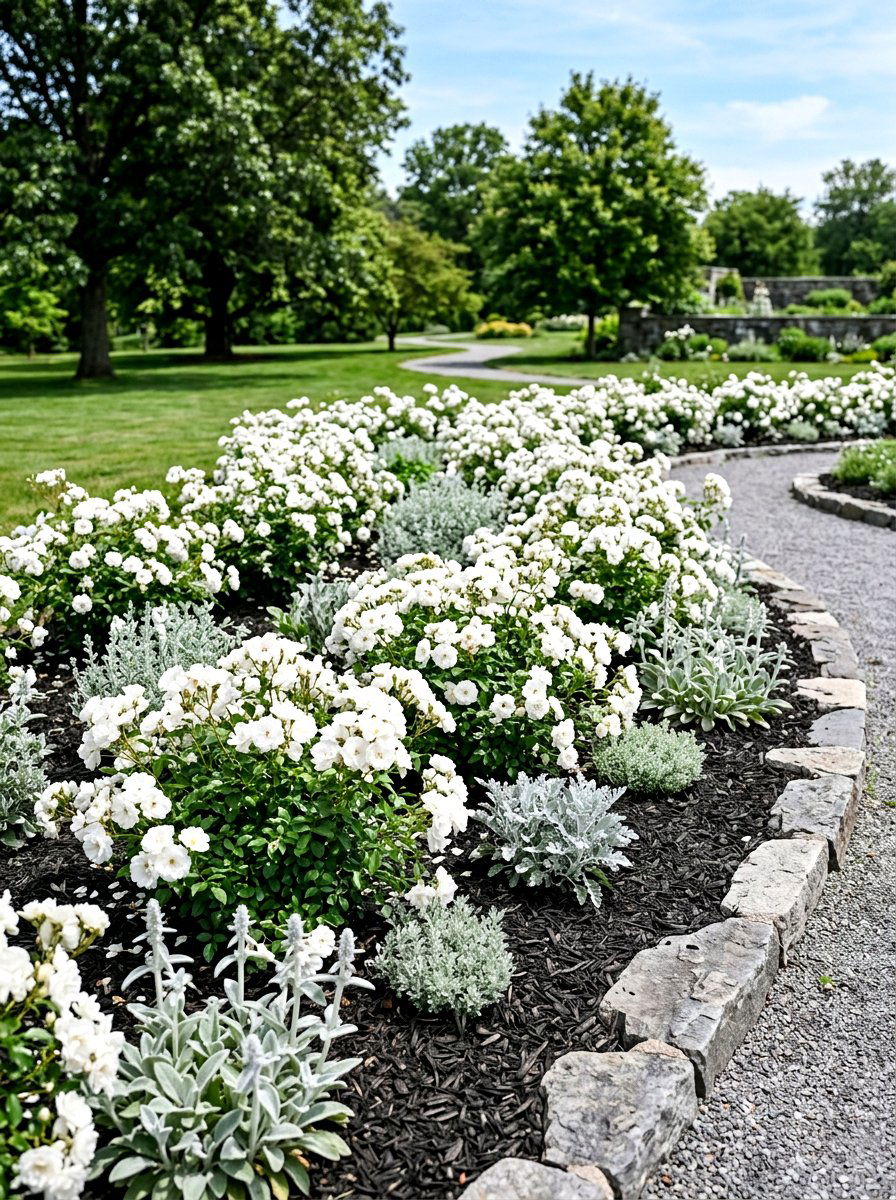
What if you could create a space in your yard that glows under the soft light of the moon? An all-white rose garden offers a clean, sophisticated aesthetic that feels incredibly peaceful and organized. By sticking to a single color, you can focus on the different shapes and sizes of the blooms, such as the tiny clusters of 'Iceberg' roses paired with larger 'Winchester Cathedral' flowers. Incorporating silver-foliage plants like dusty miller or lamb’s ear helps to highlight the purity of the white petals while adding a soft texture to the borders. This type of monochromatic layout is perfect for formal settings or modern homes where simplicity is the key design principle. It creates a bright and airy atmosphere that makes even the smallest garden feel much larger.
4. Pink Climbing Roses On Brick Wall
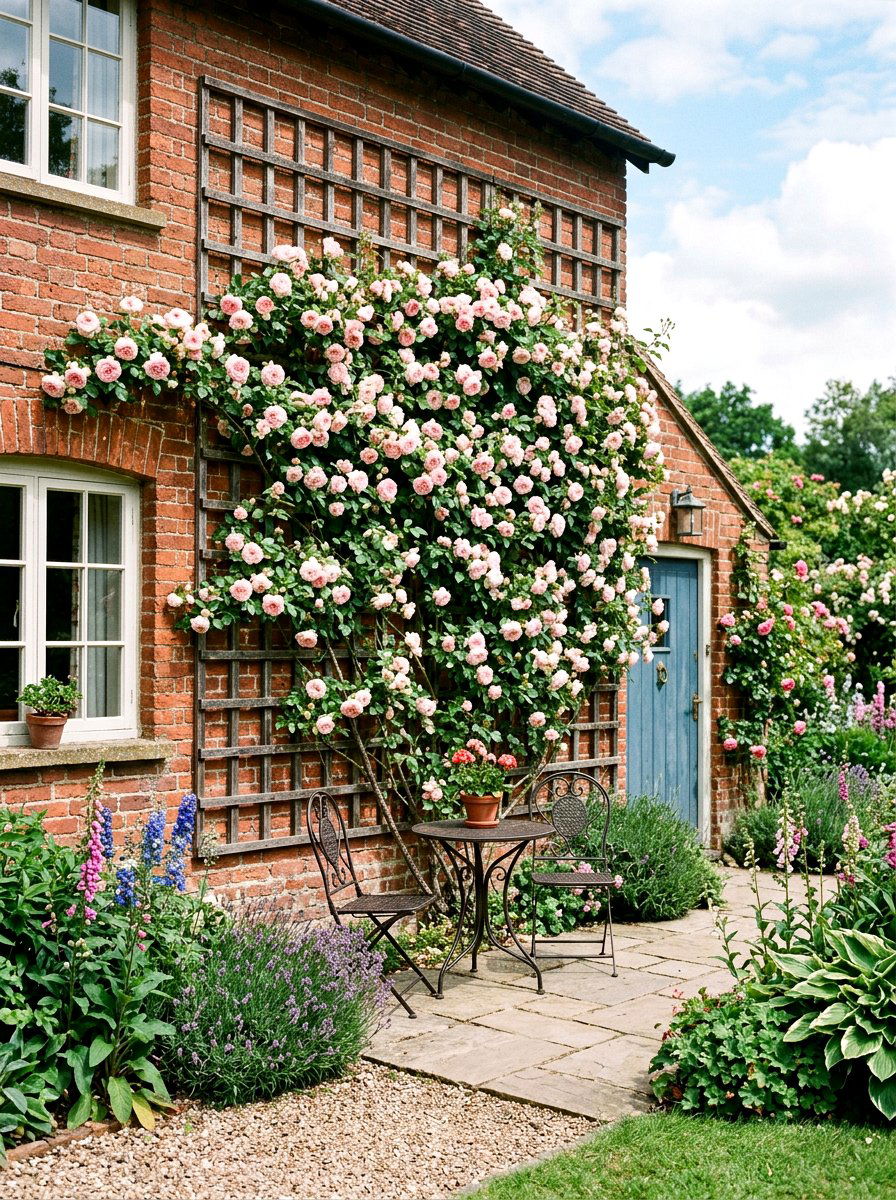
Does your home have a plain exterior wall that feels a bit cold or uninspiring during the spring? Adding pink climbing roses against a red or brown brick backdrop creates a classic contrast that instantly boosts your property 's curb appeal. You will need to install a sturdy trellis or a wire system to support the weight of the heavy canes as they grow upward. Varieties like ' Zephirine Drouhin' are excellent for this because they are nearly thornless and tolerate a bit of shade. The soft pink hues soften the hard lines of the masonry, making your house look more integrated into the surrounding landscape. As the roses bloom, they provide a vertical splash of color that can be seen from across the street, making your home feel warm and welcoming.
5. Rose Garden Stone Walkway
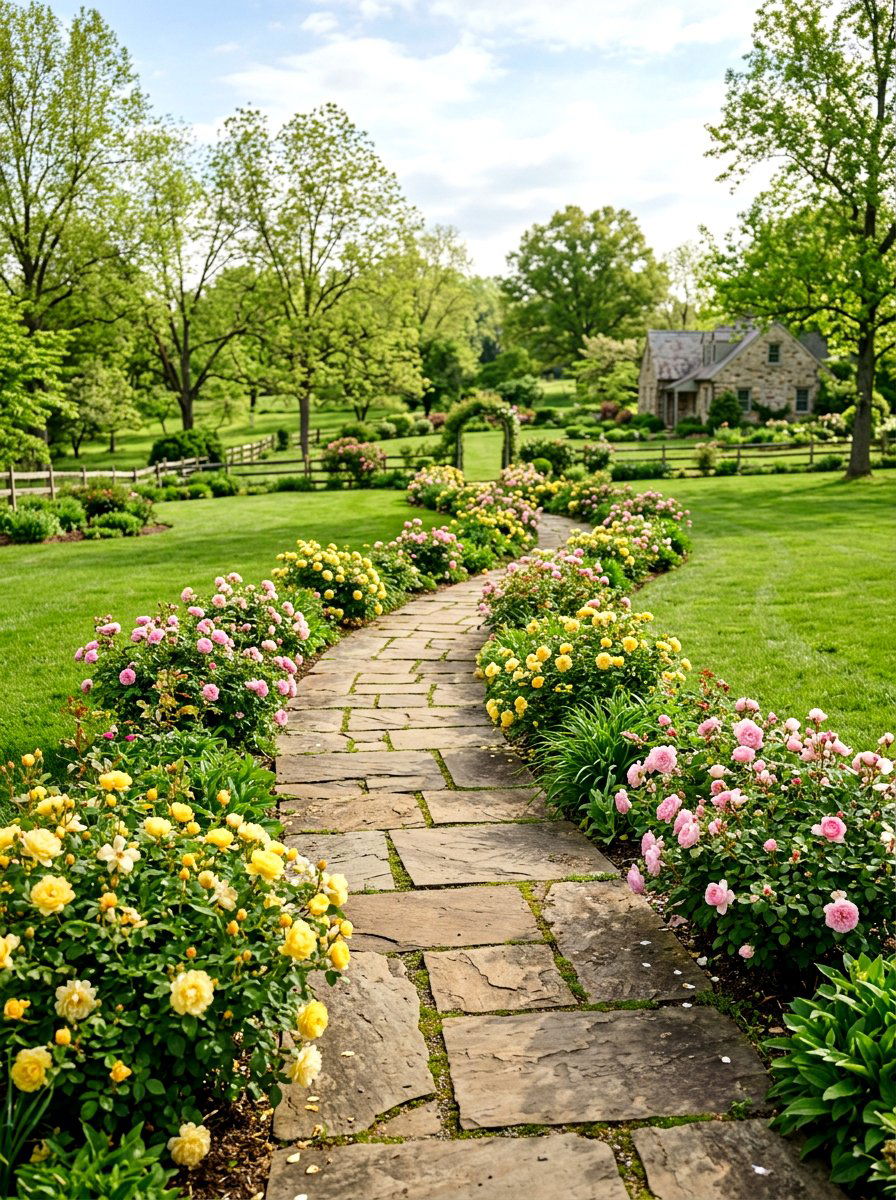
Walking through a garden should be a sensory experience that encourages you to slow down and enjoy the view. By lining a natural stone path with low-growing shrub roses, you create an interactive journey through your landscape. You should choose varieties that have a compact growth habit to ensure they don't overgrow the walkway and trip up visitors. As you walk, the gentle movement of the air releases the scent of the roses, creating a fragrant corridor. Using irregular flagstones or gravel for the path adds a rustic touch that complements the soft, romantic nature of the flowers. This layout is practical for navigating larger gardens while ensuring that every corner of the yard is accessible and filled with floral beauty during the peak of spring.
6. Small Backyard Rose Garden
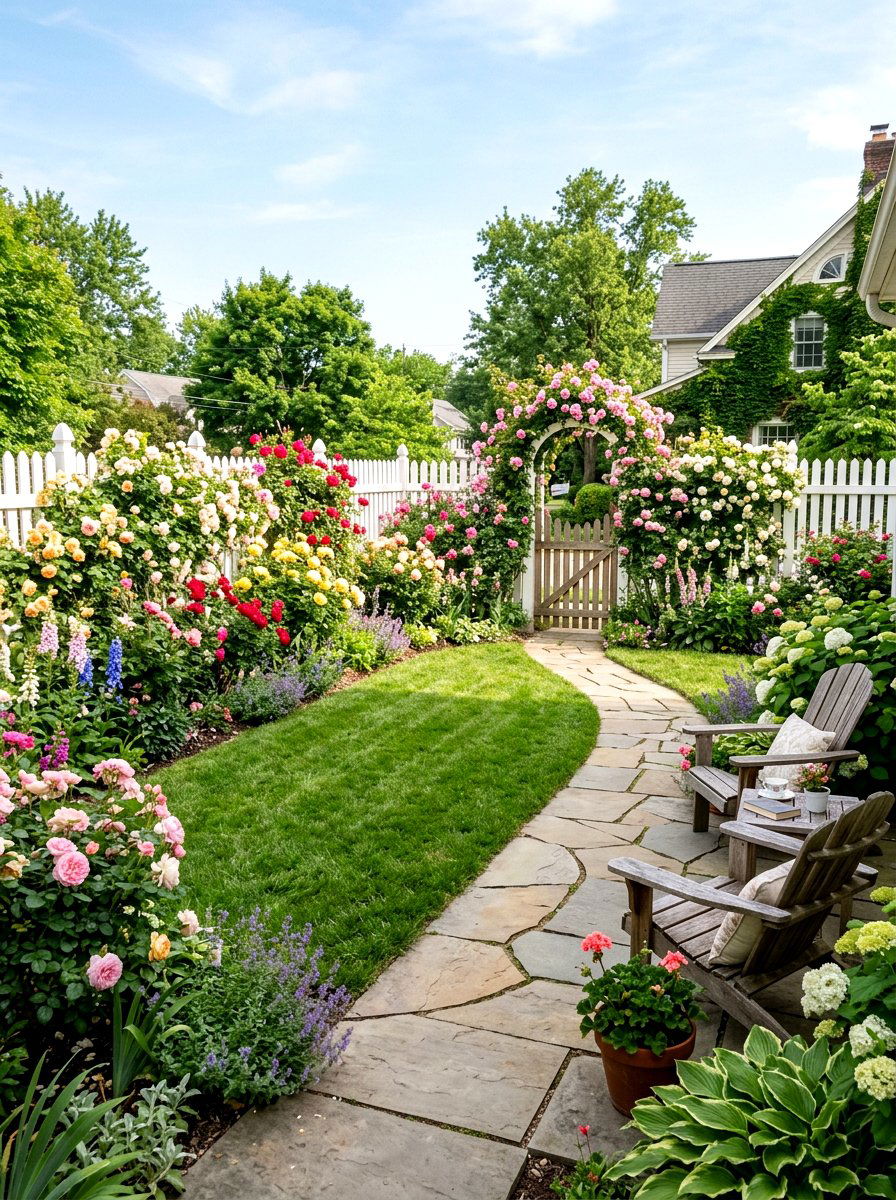
If you think your yard is too small for a rose garden, you might be surprised by how much you can achieve with clever spacing. A small backyard can be transformed into a cozy floral sanctuary by utilizing the perimeter for planting and keeping the center open for a small seating area. Using pillar roses or small trellises allows you to grow your flowers vertically, saving valuable ground space for other features. You can mix in compact patio roses that stay neat and tidy throughout the season without becoming invasive. Adding a simple wooden fence or a small gate helps define the space and gives the roses something to lean against. This design proves that you don't need a massive estate to enjoy the elegance and fragrance of a well-curated rose collection.
7. Roses And Lavender Garden Border
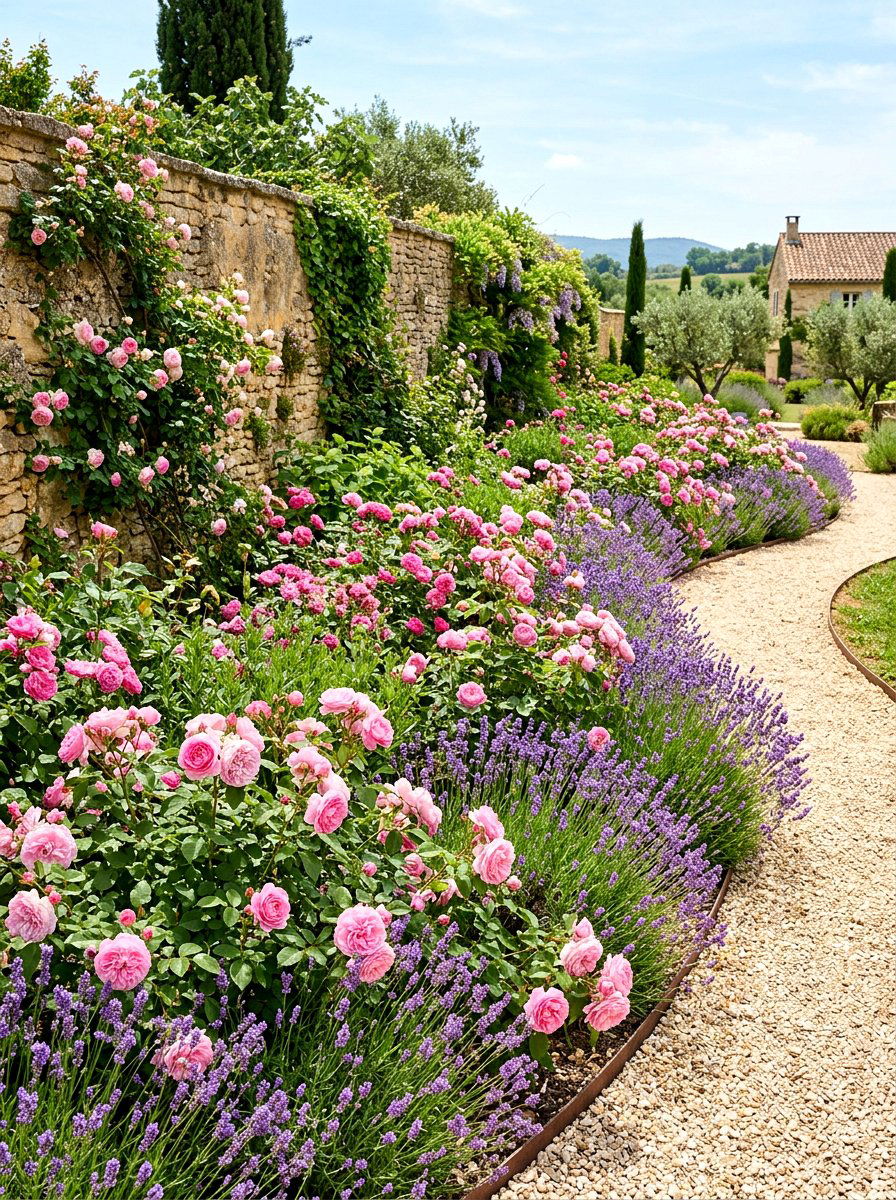
Have you ever noticed how the cool purple tones of lavender perfectly complement the warm hues of various rose varieties? Planting a border that combines these two classic garden staples creates a Mediterranean feel that is both visually stunning and incredibly fragrant. The silver-green foliage of the lavender provides a beautiful base that hides the often-leggy bottom stems of the rose bushes. This combination is not just about looks; lavender also helps to repel certain pests that can bother your roses. You should plant them in a sunny spot with well-draining soil to ensure both species thrive side-by-side. The result is a layered garden bed that attracts pollinators like bees and butterflies, bringing your outdoor space to life with movement and color during the spring.
8. Modern Minimalist Rose Garden
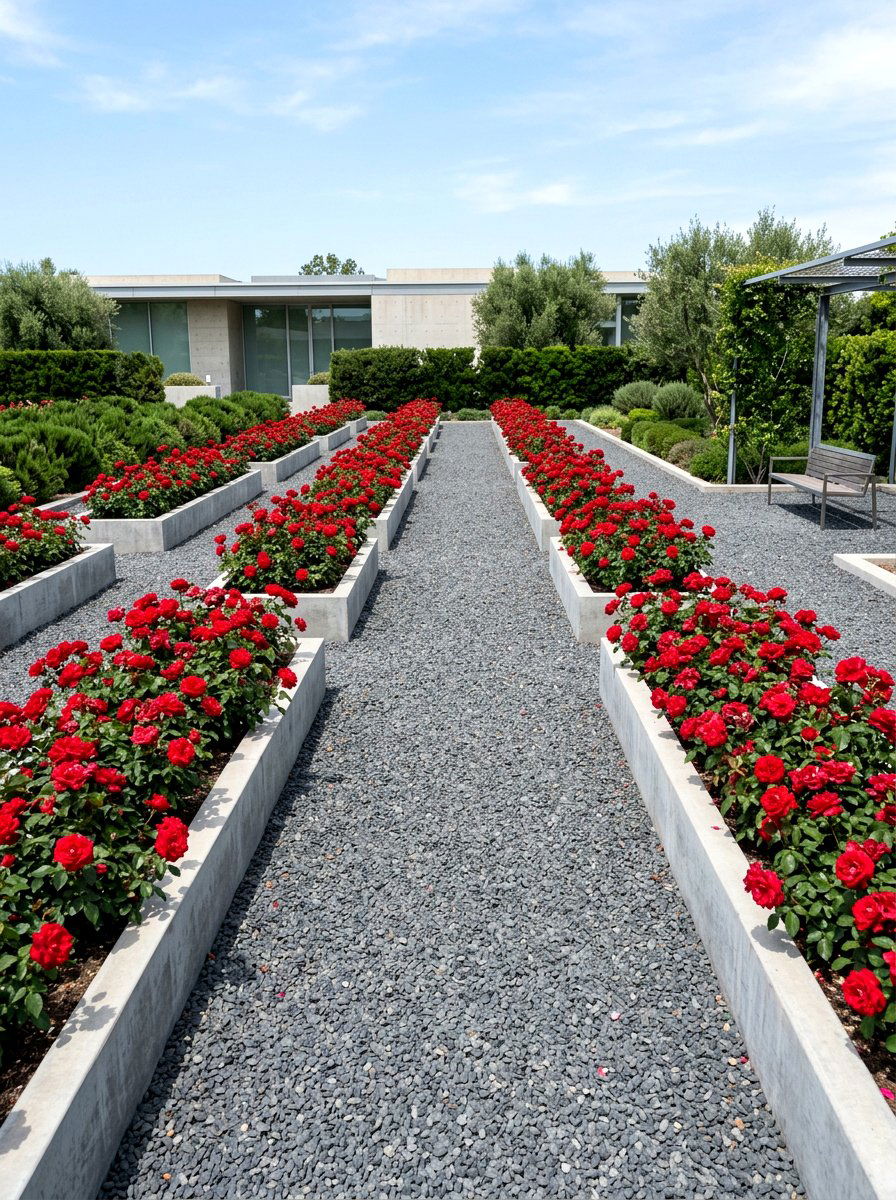
Can a rose garden fit into a sleek, contemporary home design without looking too cluttered or traditional? A modern minimalist approach uses clean lines, structural plants, and a limited color palette to create a high-impact look. Instead of a wild mix, you might choose one specific type of rose and plant it in perfectly spaced rows within a rectangular bed. Using dark mulch or decorative stones around the base of the plants emphasizes their form and keeps the area looking tidy. Simple concrete or metal edging can be used to define the borders, creating a sharp contrast with the soft organic shapes of the flowers. This style is ideal for homeowners who want the beauty of roses but prefer a landscape that feels structured, calm, and very easy to maintain.
9. Rose Garden Bench Seating Area
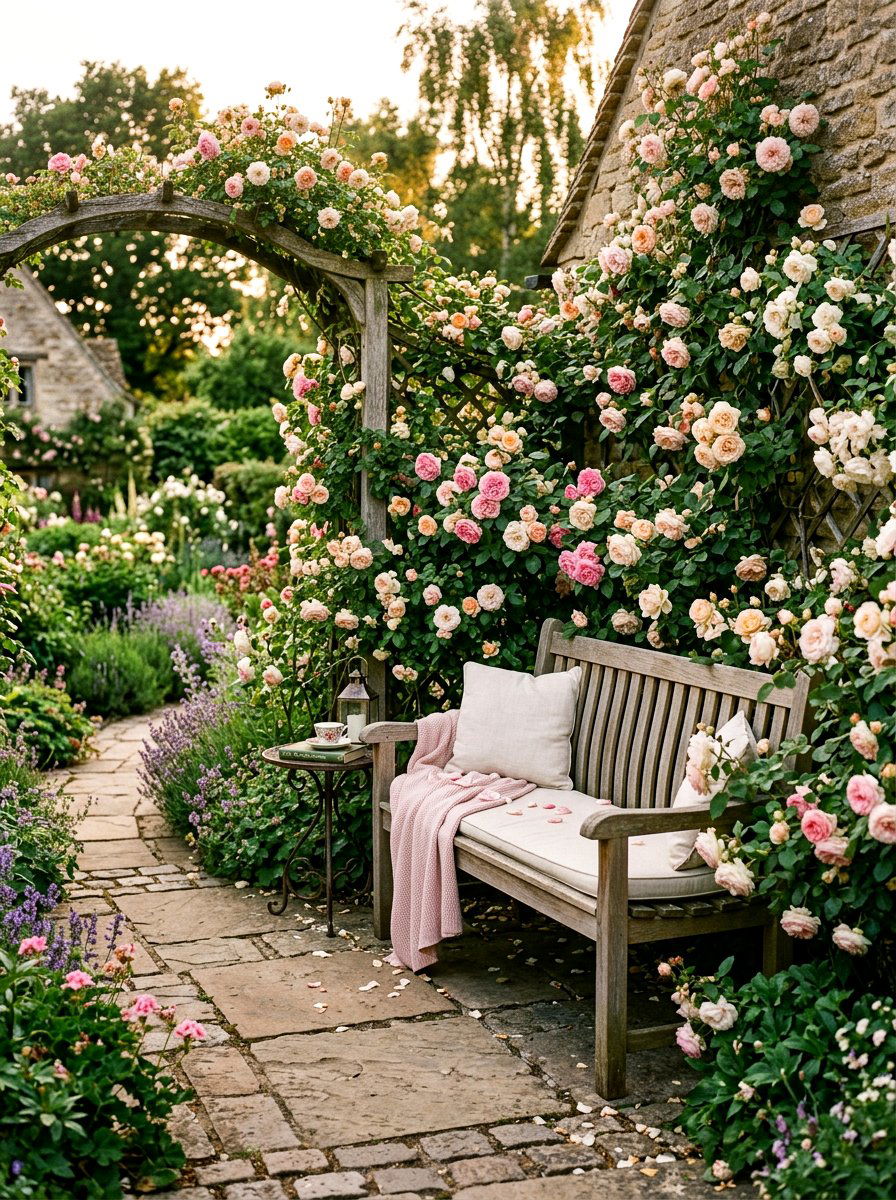
Imagine having a quiet corner in your yard where you can sit and read while surrounded by hundreds of blooming roses. Creating a dedicated seating area within your rose garden turns a simple flower bed into a functional living space. You can place a classic wrought iron or wooden bench at the end of a path, framed by tall rose bushes on either side for privacy. Adding a few potted roses around the feet of the bench brings the fragrance even closer to you. It provides a perfect spot for morning coffee or evening reflection, away from the noise of the world. This design element encourages people to actually spend time in the garden rather than just looking at it from a window, making the space feel more personal.
10. Raised Bed Rose Garden
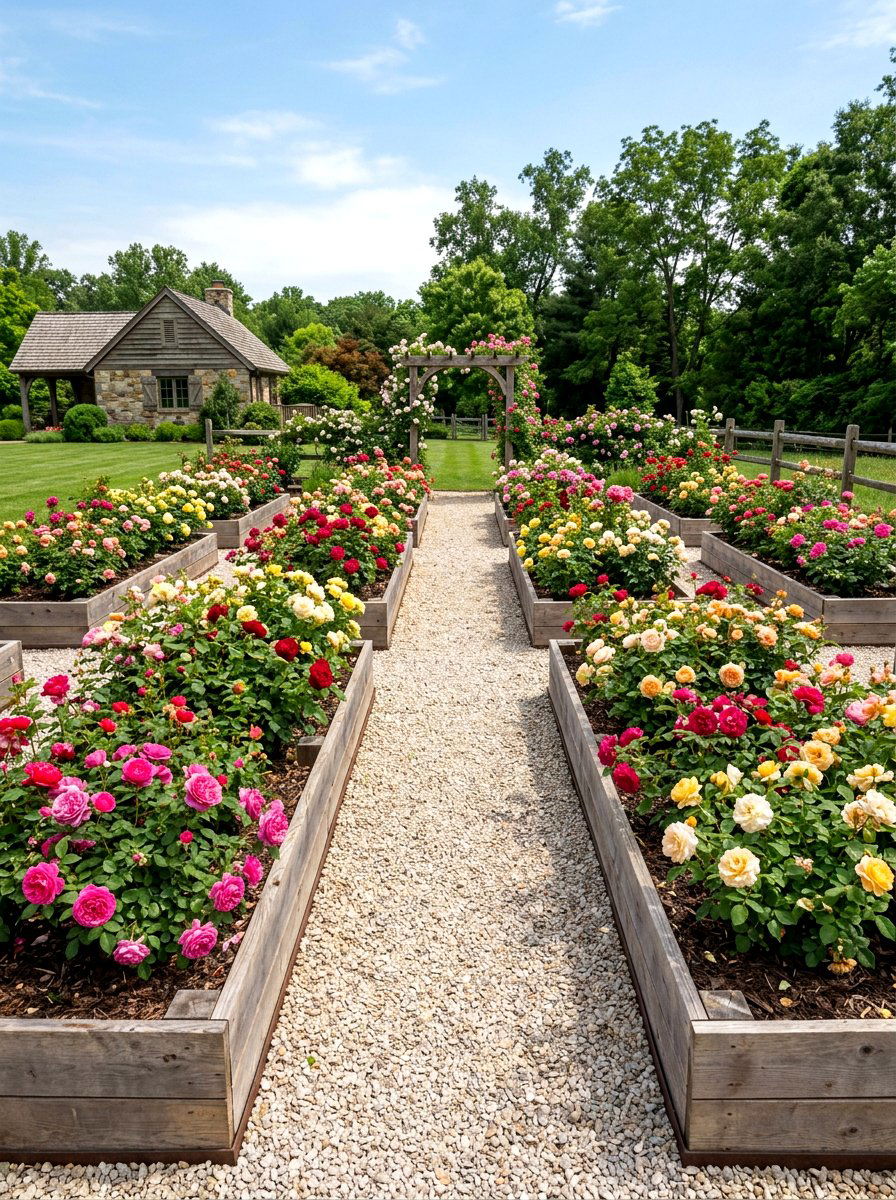
Are you looking for a way to grow roses that is easier on your back and offers better soil control? Raised beds are a fantastic solution for rose enthusiasts because they provide excellent drainage and allow you to tailor the soil mix specifically for roses. You can build these beds using cedar wood, stone, or even corten steel to match the style of your home. Lifting the roses off the ground level makes pruning and deadheading much more comfortable. Additionally, the elevated position brings the blooms closer to eye level, allowing you to appreciate their intricate details and scent more easily. This setup is particularly useful if your natural backyard soil is heavy clay or very rocky, as it bypasses those growing challenges entirely.
11. Red Rose Garden Privacy Hedge
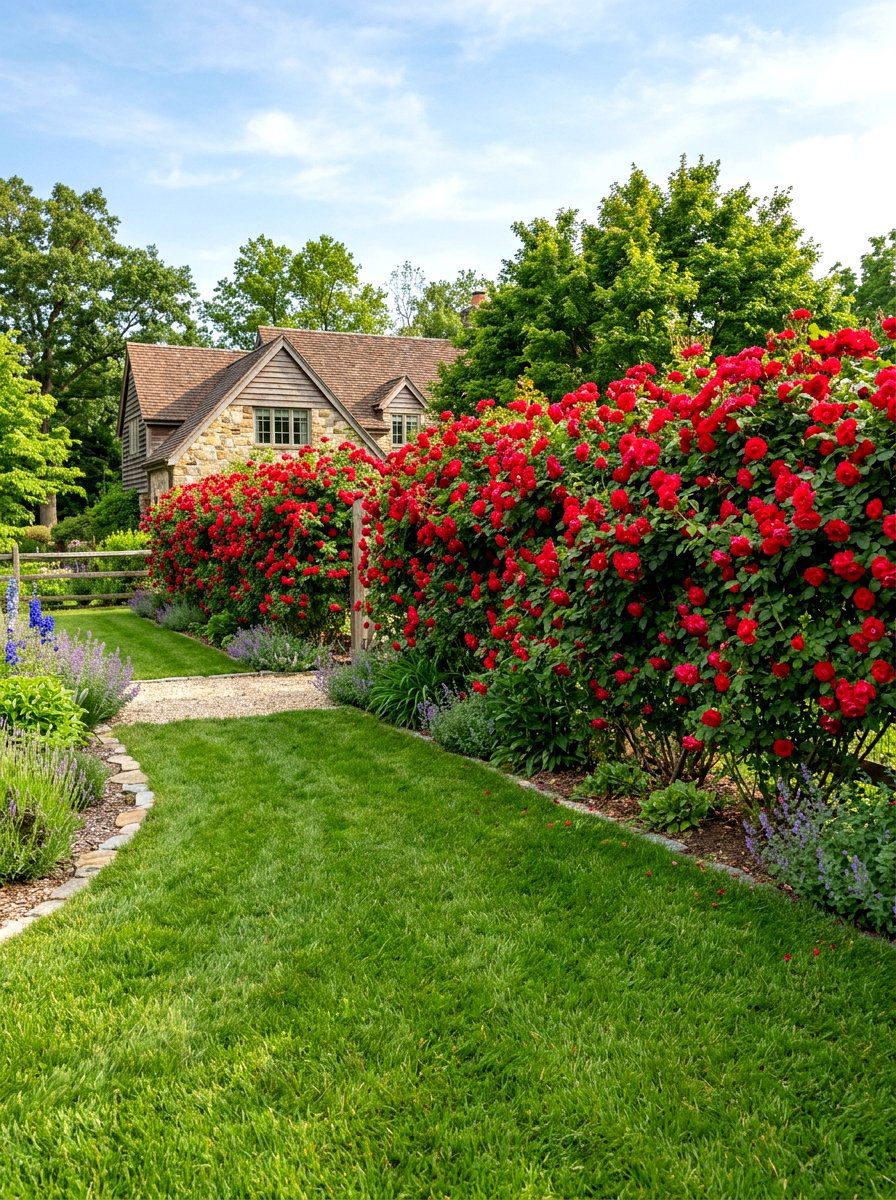
Would you like to replace a boring wooden fence with a vibrant, living wall that provides both beauty and security? A rose hedge made from tall, dense varieties like 'Knock Out' or 'Rugosa' roses creates a thick barrier that keeps out unwanted eyes while looking spectacular. These roses are known for their hardiness and ability to grow thick enough to form a solid screen. During the spring, the entire hedge will be covered in bright red blooms, creating a dramatic boundary for your property. The thorns on many of these varieties also act as a natural deterrent, making it a functional choice for perimeter planting. This is a brilliant way to add privacy to your front or back yard while significantly increasing the floral density of your entire landscape.
12. Container Rose Garden For Patios
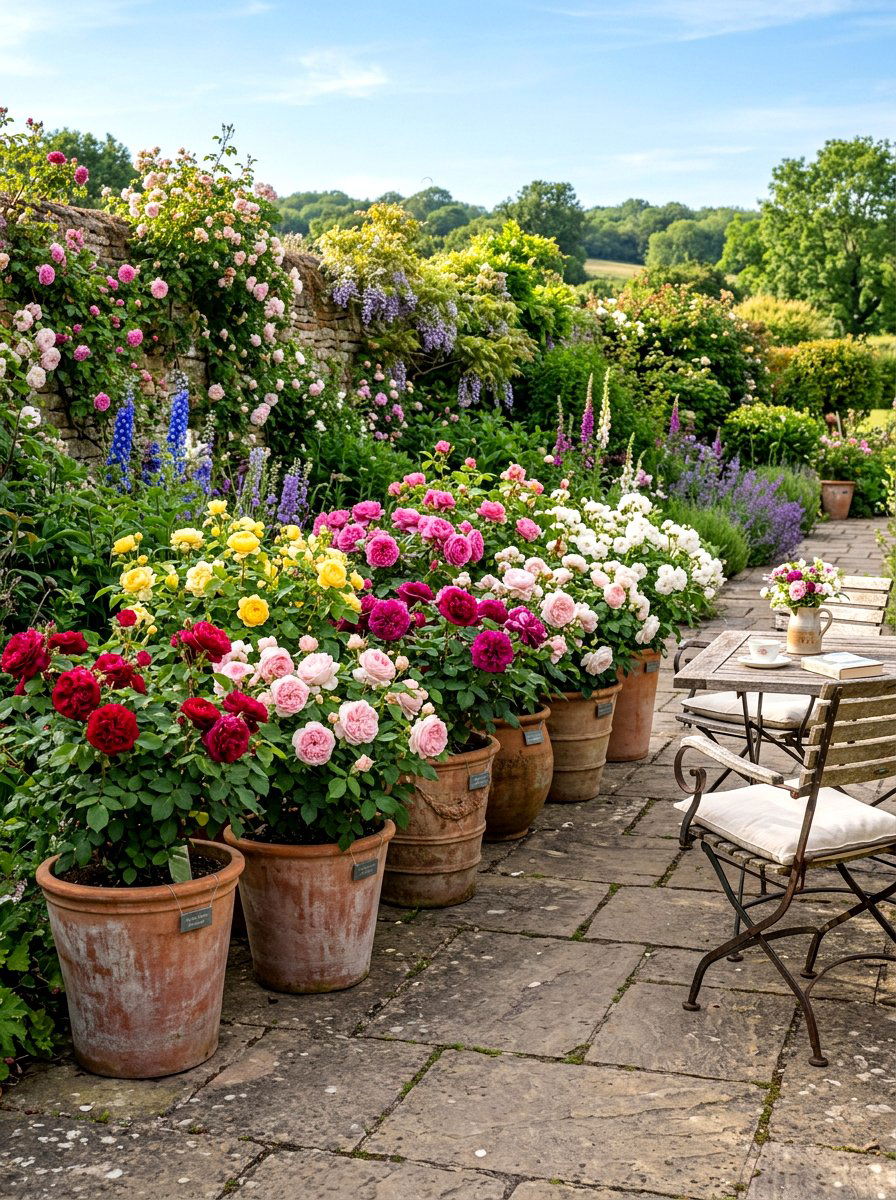
If you live in an apartment or a house with more concrete than soil, you can still enjoy a lush rose garden by using pots. Container gardening allows you to move your roses around to catch the best sunlight or to decorate different areas of your patio as needed. You should choose large, high-quality pots with good drainage and use a potting mix specifically designed for roses. Miniature roses or smaller floribunda varieties are perfect for this setup as they don't require as much root space as larger climbers. You can group pots of varying heights together to create a tiered effect that mimics a traditional garden bed. This approach makes rose gardening accessible to everyone, regardless of the size of their outdoor living space or the quality of their ground soil.
13. Rose Garden Gazebo Landscape
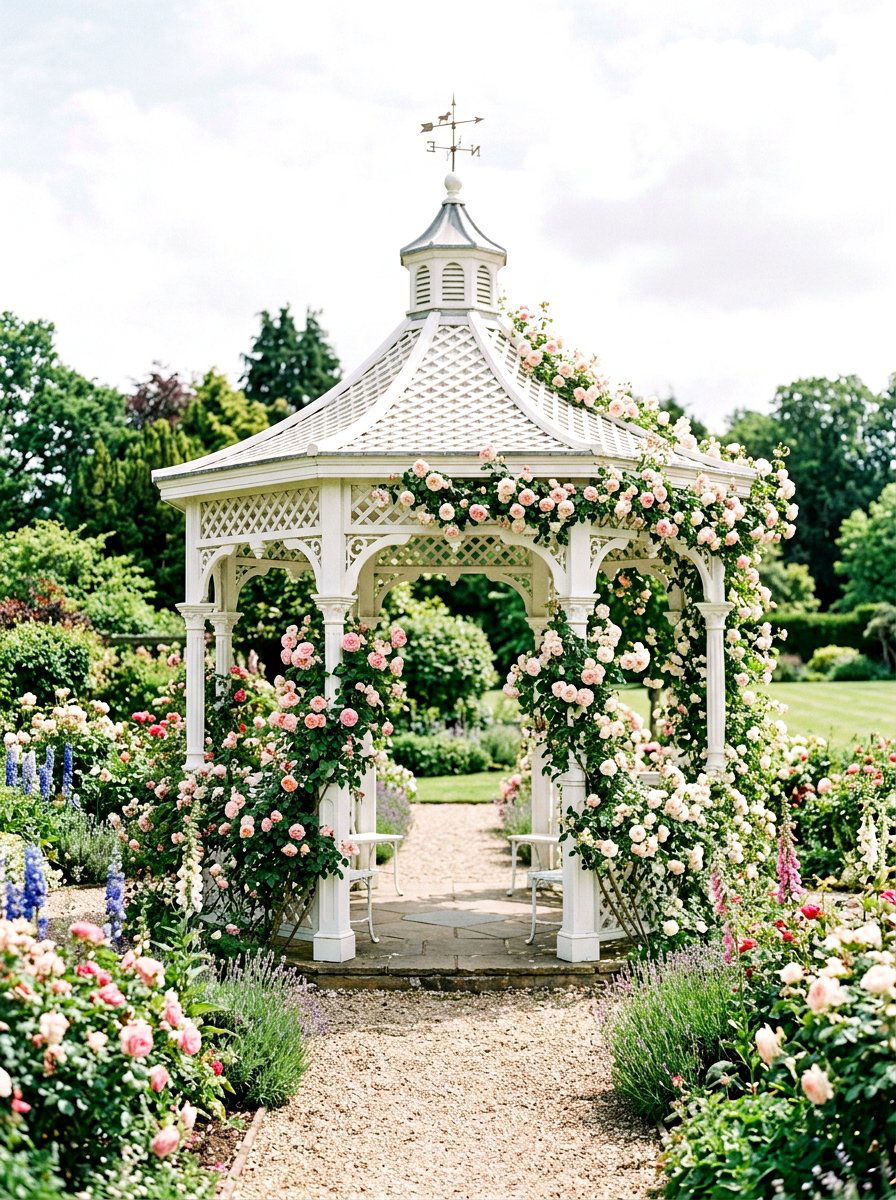
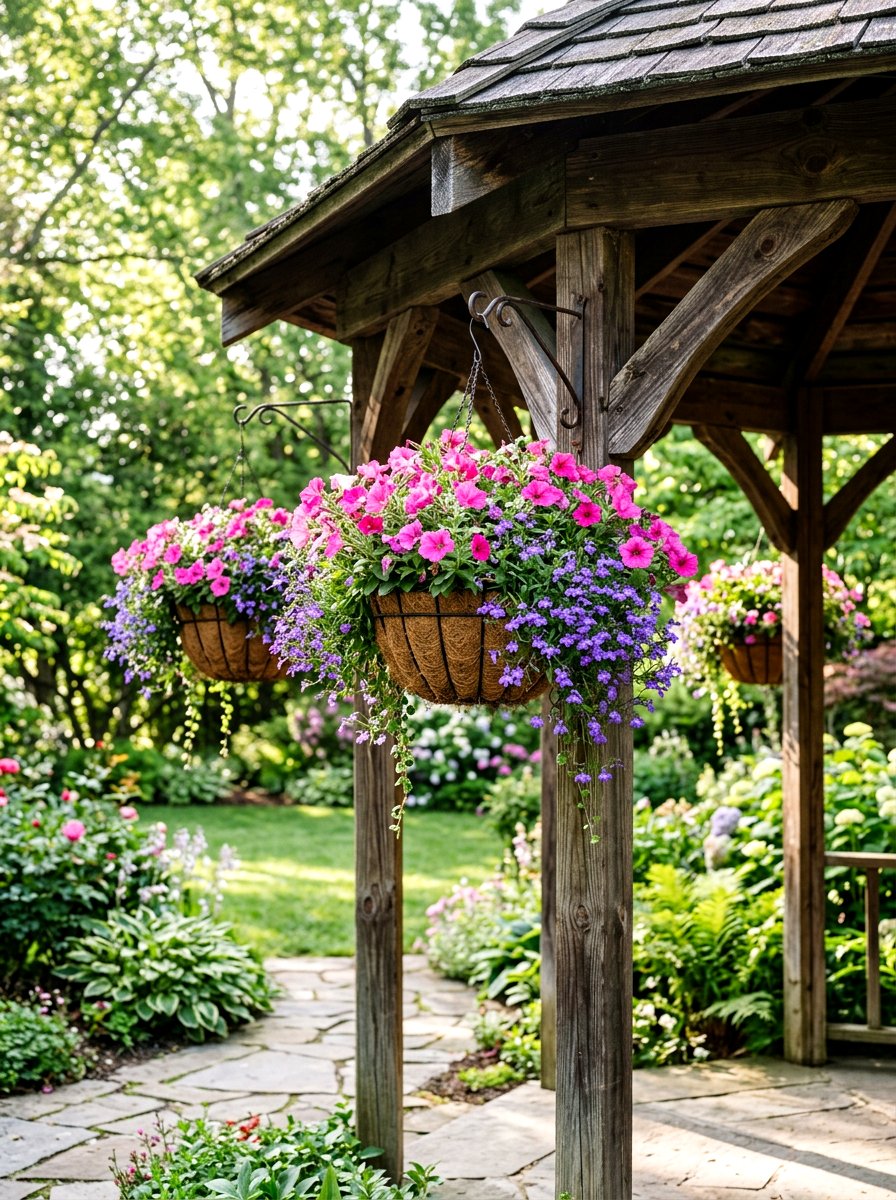
A gazebo serves as a romantic focal point in any large yard, and surrounding it with roses only enhances its timeless appeal. You can plant climbing roses at the base of each pillar, training them to grow up and over the roofline of the structure. Inside the gazebo, the air becomes trapped and filled with the scent of the roses, creating an incredibly atmospheric space for outdoor dining or entertaining. To complete the look, you might plant lower shrub roses around the exterior base of the gazebo to ground it in the landscape. This creates a multi-layered effect where flowers are visible from both the inside and the outside. It is a classic design choice that turns a simple outdoor structure into the crown jewel of your entire spring garden.
14. Rose Garden With Water Feature
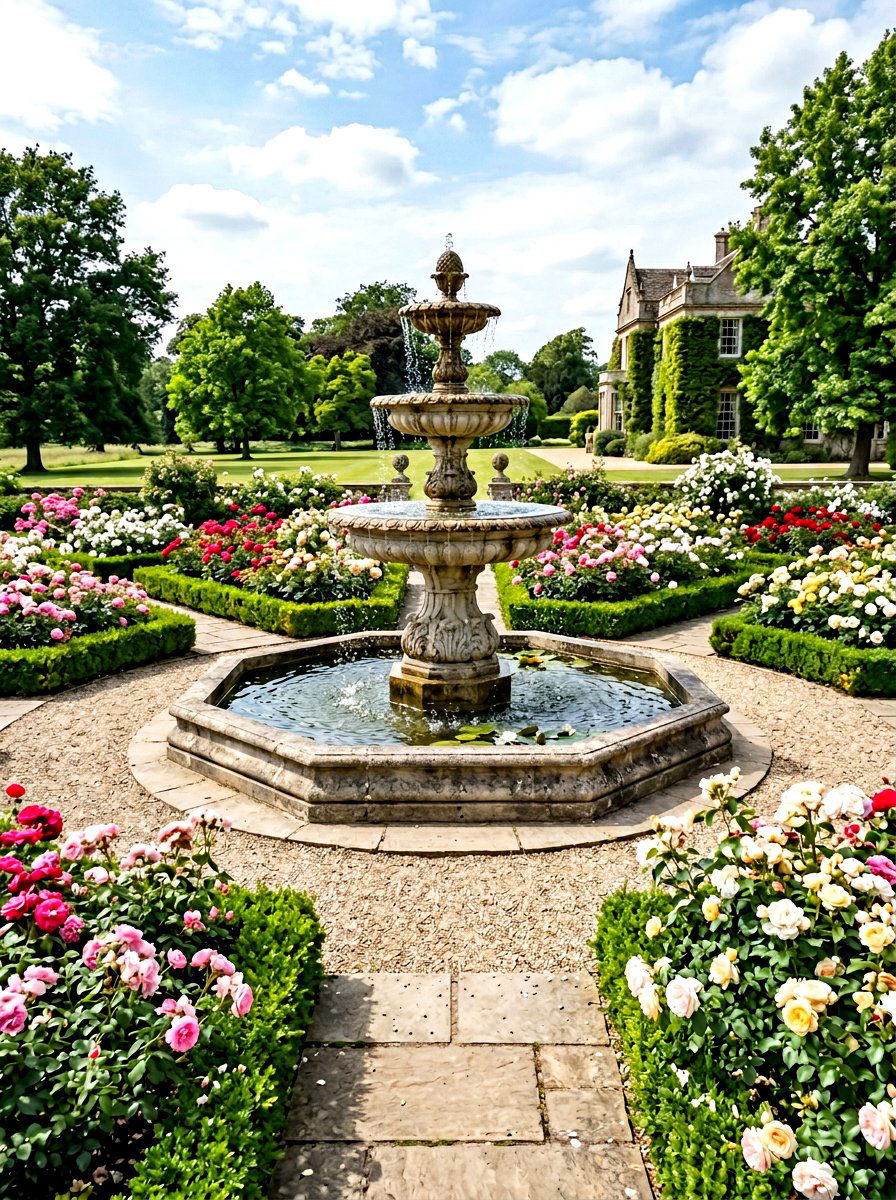
What could be more relaxing than the sound of trickling water combined with the sight of blooming roses? Incorporating a fountain or a small pond into your rose garden adds a sense of movement and sound that elevates the entire environment. You can place a central stone fountain in the middle of a circular rose bed to create a formal, balanced look. The humidity from the water can actually benefit the roses during dry spring days, while the feature itself attracts birds and beneficial insects. Using roses with soft colors like peach or pale yellow around the water creates a serene and cooling effect. This combination of elements appeals to all the senses, making your garden a true sanctuary for relaxation and connection with nature's beauty.
15. Yellow Rose Garden Front Yard
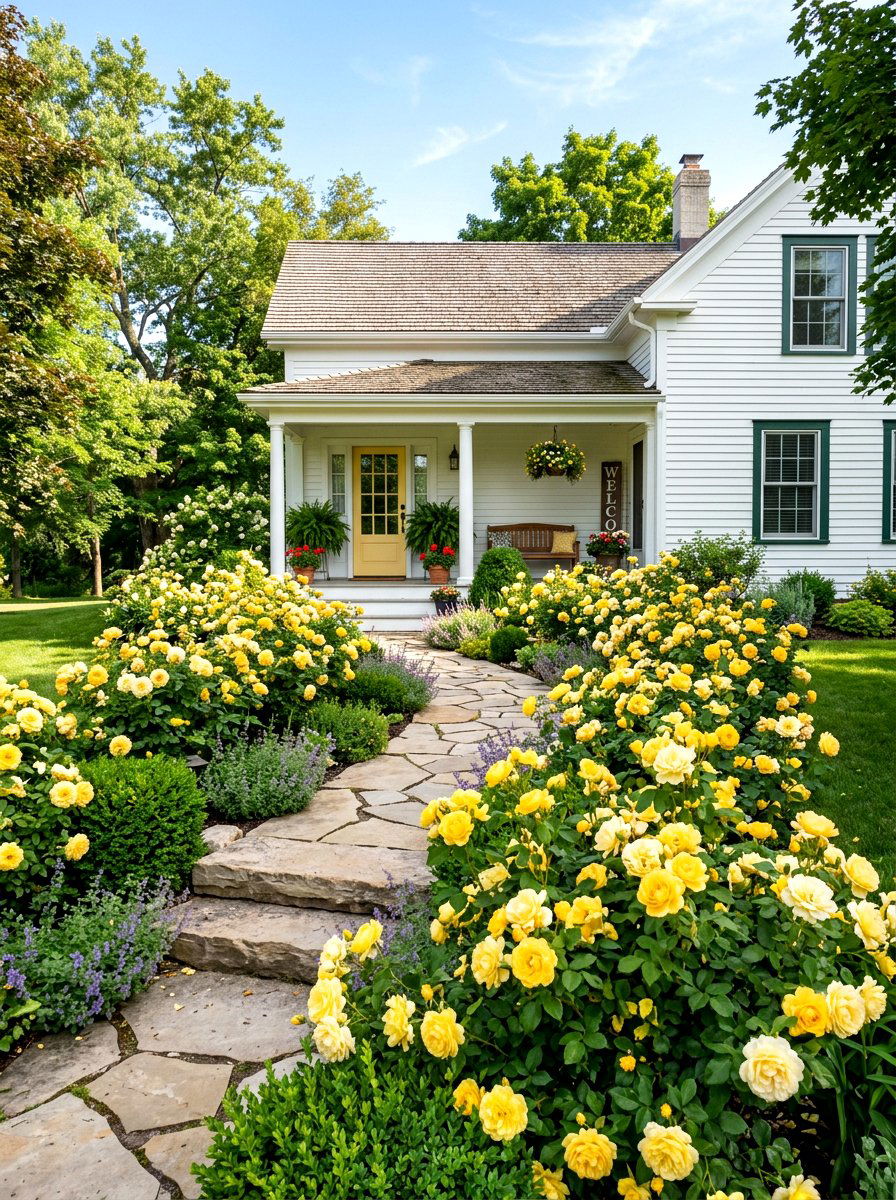
Brighten up your neighborhood by dedicating your front yard to a cheerful yellow rose garden that radiates warmth and happiness. Yellow roses, such as 'Graham Thomas' or 'Sun Flare' , are known for their vibrant presence and often have a wonderful citrus-like fragrance. By planting them in the front yard, you create a sunny welcome for guests and passersby. You can combine them with dark purple perennials or blue salvia to create a striking color contrast that makes the yellow petals pop even more. This design choice is perfect for adding energy to your home's exterior and can make a house with gray or white siding look incredibly lively. It is a bold way to express your personality through your landscaping while enjoying the classic beauty of roses.
16. Vertical Rose Garden Wall Trellis
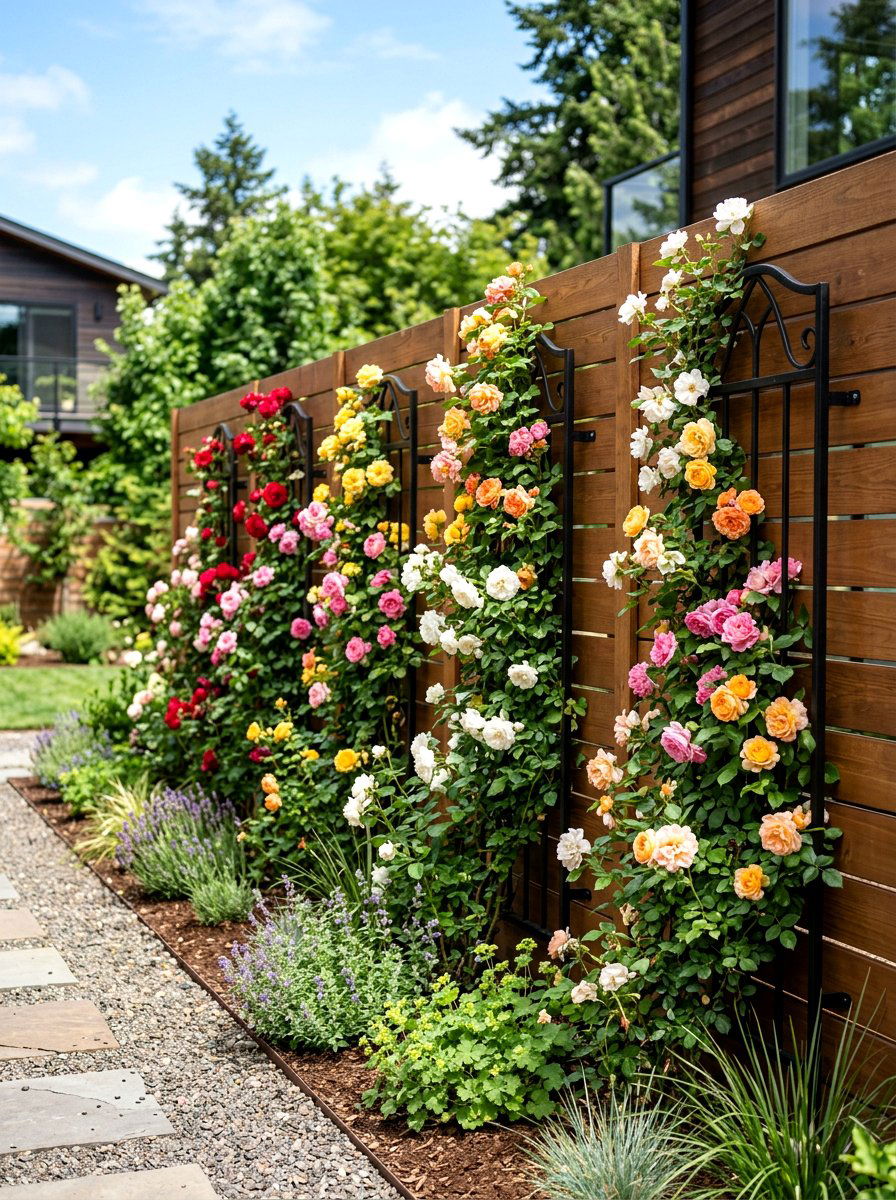
When you have limited ground space, the only way to go is up, and a vertical rose garden is the perfect solution for narrow side yards. By mounting a series of trellises against a wall or fence, you can create a literal wall of flowers that takes up very little floor area. This method is excellent for hiding an ugly fence or adding interest to a blank garage wall. You can mix different colors of climbing roses on the same trellis for a vibrant, multi-colored effect. As the roses grow, they provide a lush green backdrop that stays beautiful even when they are not in full bloom. This vertical approach maximizes your planting potential and allows you to grow a large number of roses in a space that would otherwise be wasted.
17. Formal French Rose Garden STYLE
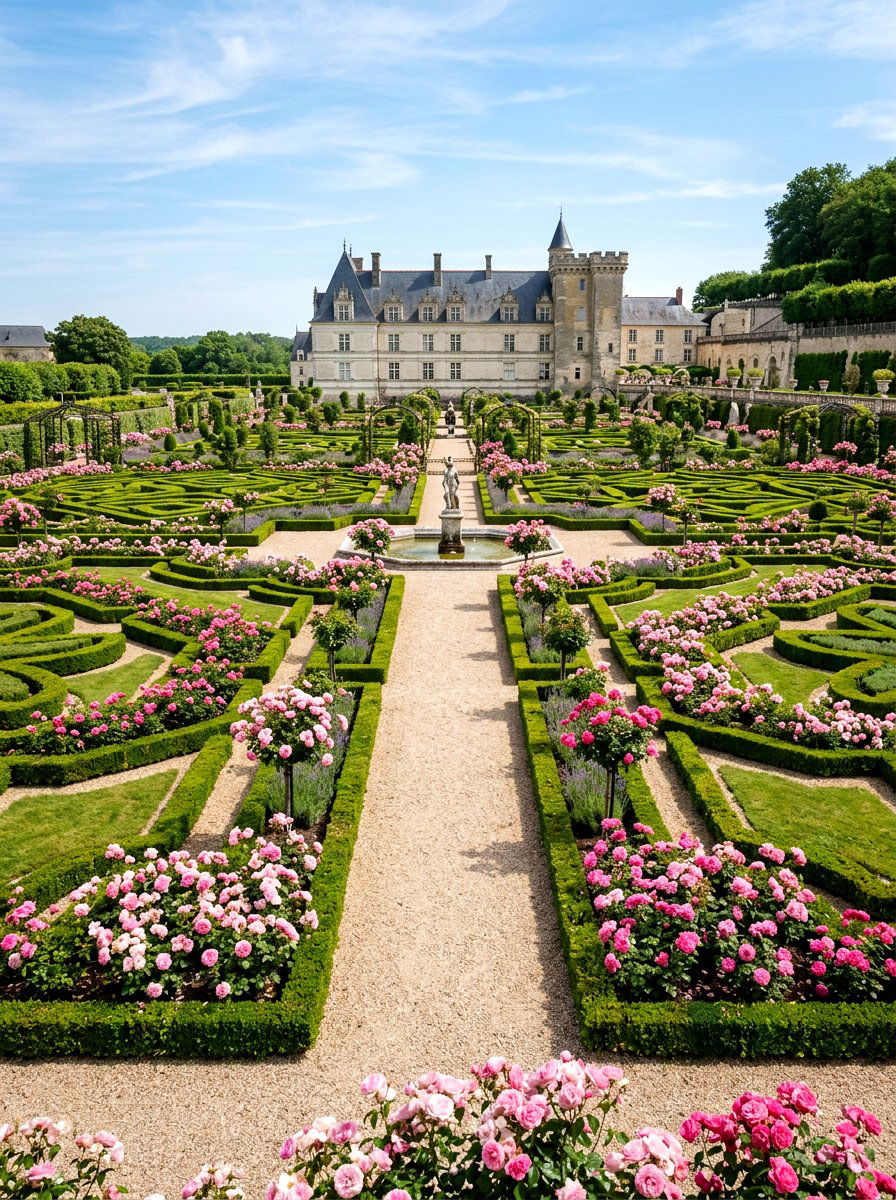
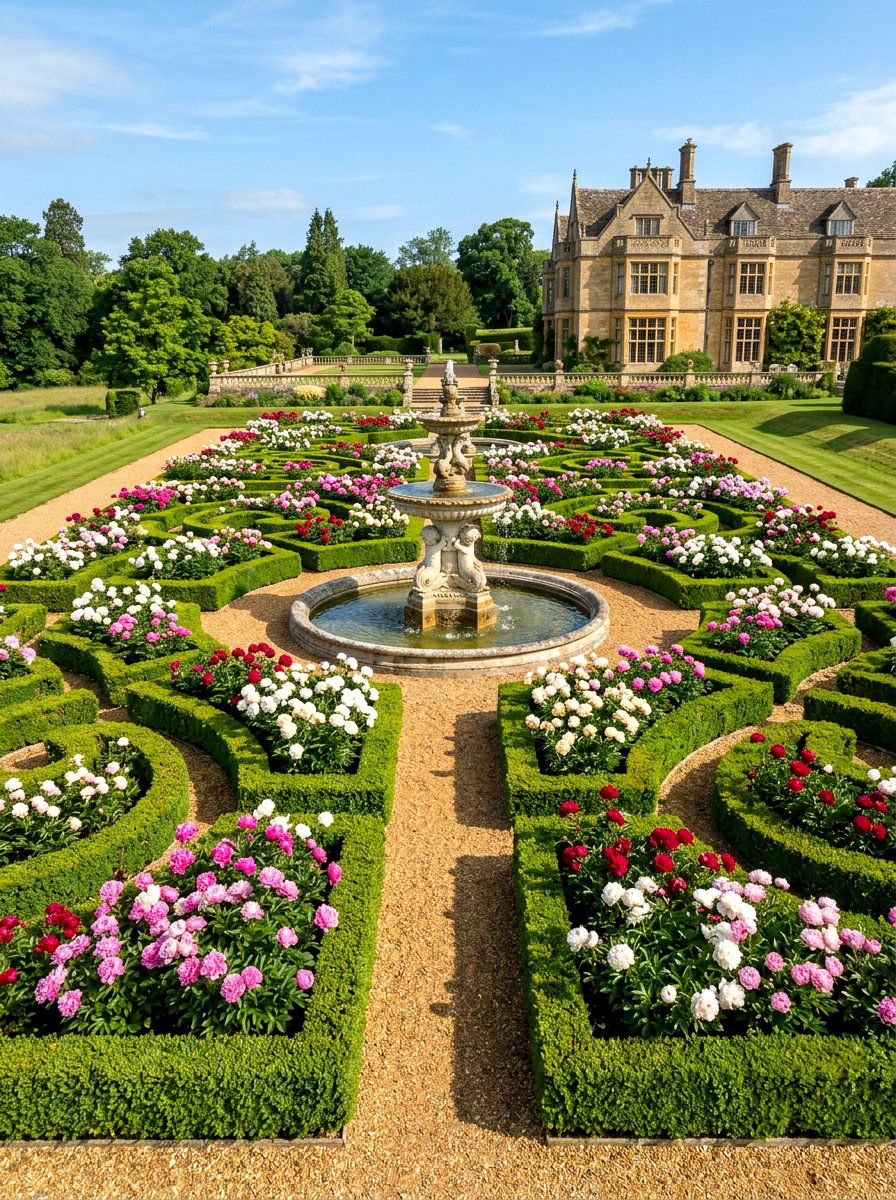
Do you appreciate symmetry, order, and classic elegance in your outdoor spaces? A formal French-style rose garden uses geometric shapes and defined pathways to create a highly structured and sophisticated landscape. You might design a central circular bed with four radiating paths, each lined with perfectly manicured rose bushes. Using a limited color palette, such as all pink or all white, maintains the clean and organized feel of the design. Low stone walls or gravel paths help to define the different sections and provide a clear framework for the plants. This style of garden requires a bit more maintenance to keep everything looking sharp, but the result is a breathtakingly beautiful space that feels like it belongs at a historic European chateau.
18. Rose Garden With Boxwood Edging
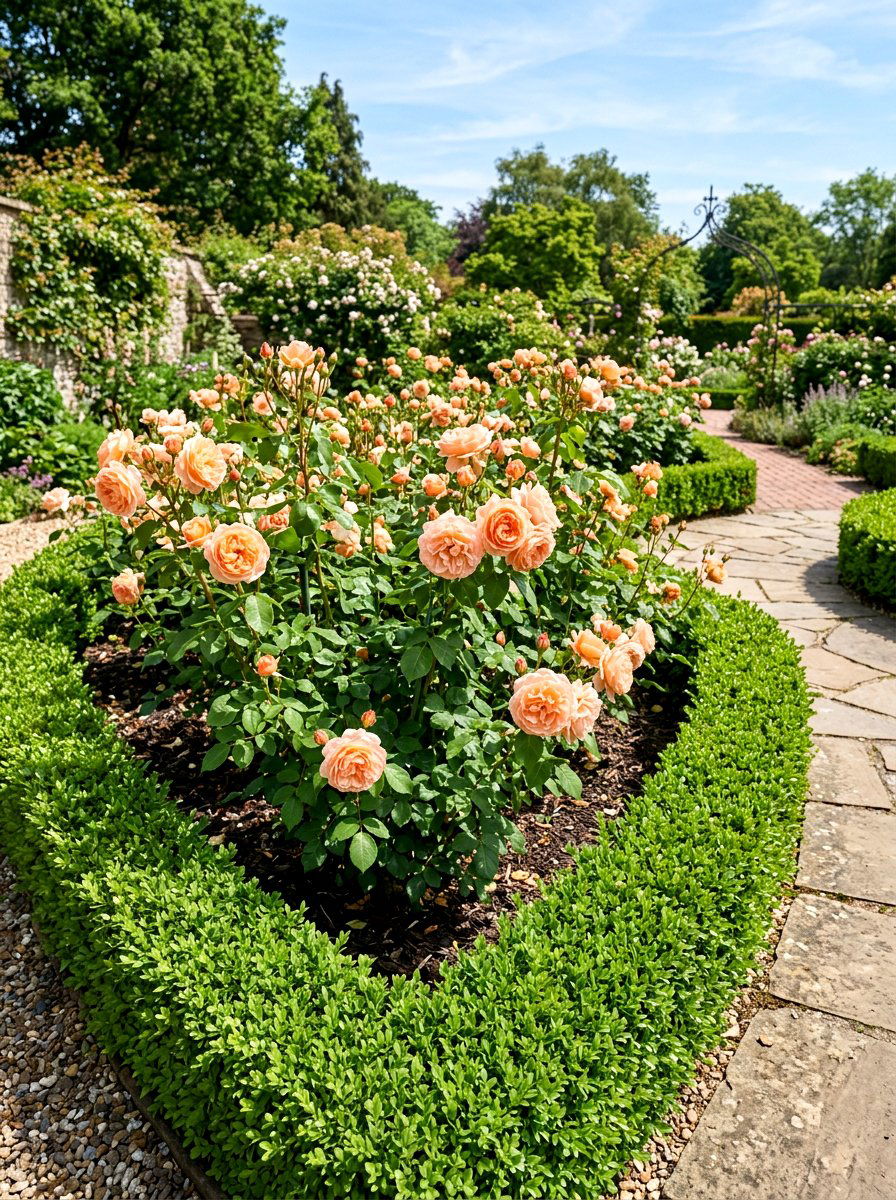
One of the best ways to give your rose garden a polished and finished look is by adding a low hedge of boxwood around the borders. The evergreen boxwood provides a consistent green frame that keeps the garden looking structured even during the winter months. In the spring, the vibrant colors of the roses stand out beautifully against the dark, dense foliage of the boxwood. This technique is often used in traditional manor gardens to keep the rose beds from looking too wild or messy. It also helps to prevent mulch from spilling onto your walkways and keeps the soil neatly contained. The combination of the soft, romantic roses and the rigid, structural boxwood creates a perfect balance that works in both modern and traditional landscape designs.
19. Mixed Wildflower And Rose Garden
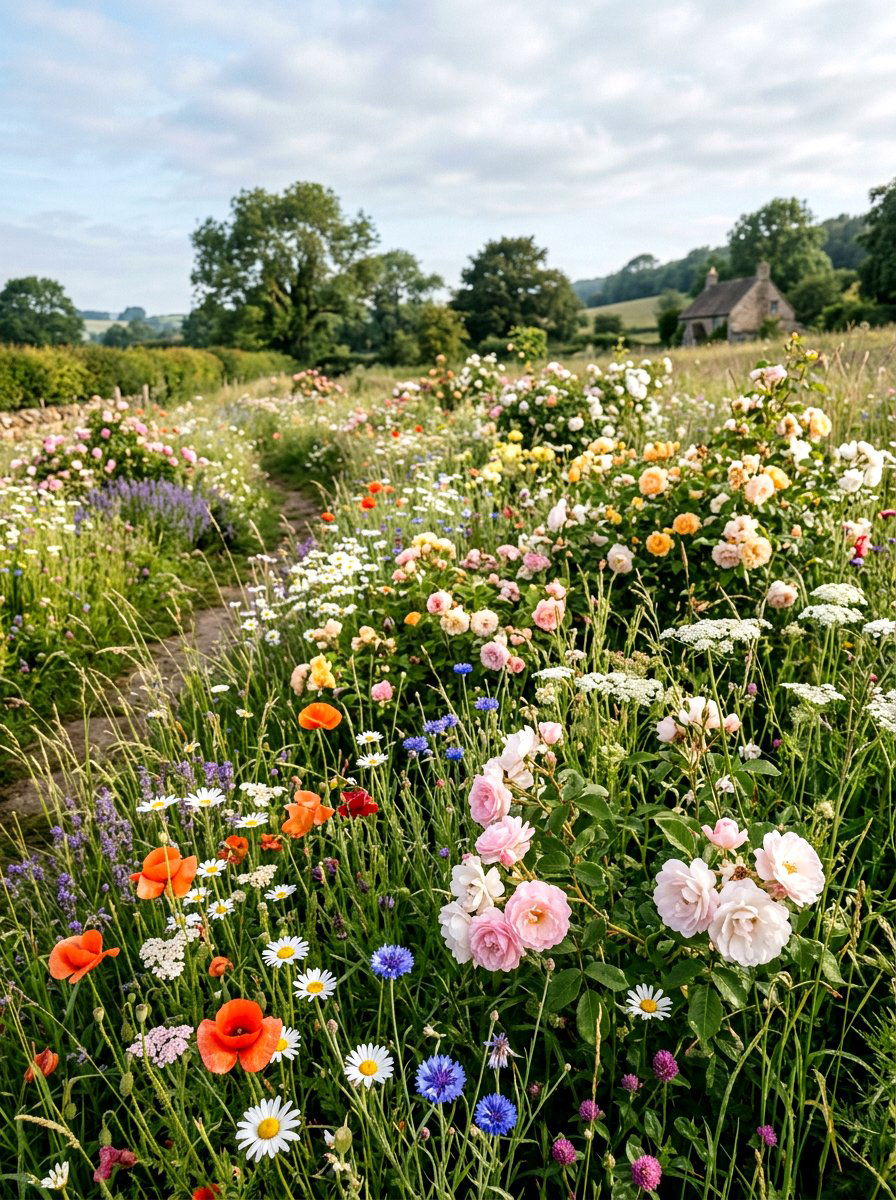
For a more relaxed and eco-friendly approach, you can integrate roses into a mixed wildflower meadow. This style is perfect for the back corners of a large property where you want a low-maintenance look that supports local wildlife. You should choose hardy shrub roses or species roses that can handle a bit of competition from other plants. The mix of unstructured wildflowers with the more formal shape of the roses creates a charming, "secret garden" vibe. This type of garden is excellent for pollinators, as it provides a wide variety of nectar sources throughout the spring and summer. It is a beautiful way to embrace a more naturalistic aesthetic while still enjoying the refined beauty and fragrance that only roses can provide to a landscape.
20. Rose Garden Mailbox Landscaping
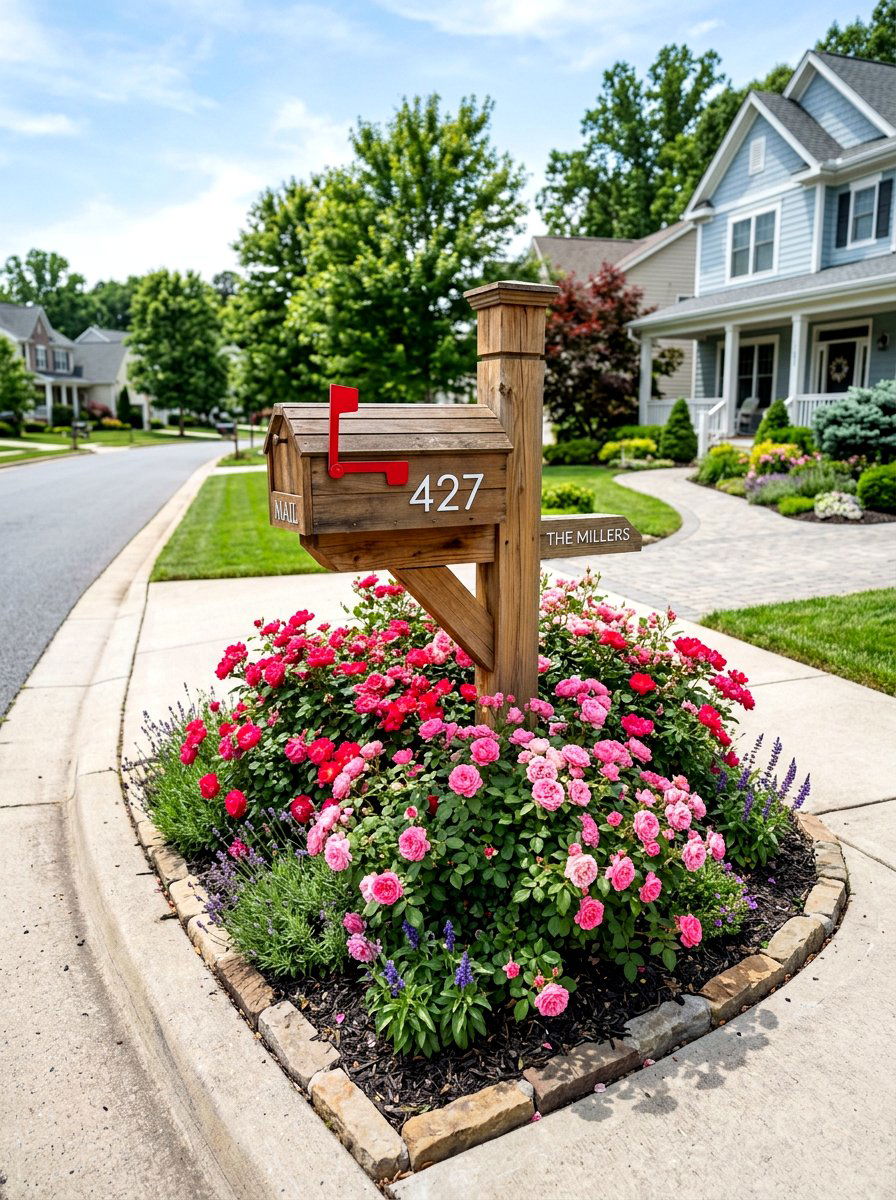
Why should your mailbox be a boring utility when it can be a beautiful floral display that enhances your home 's entrance? Planting a few climbing or shrub roses around the base of your mailbox post is an easy way to add instant charm to the front of your property. You can wrap a small trellis around the post to help a climbing rose reach the top. This small project makes a huge impact on your home' s curb appeal and gives you a pleasant view every time you check the mail. Choosing a variety with a long bloom time ensures that your mailbox stays colorful for as long as possible. It is a simple yet effective way to show that you care about the small details in your garden and home design.
21. Colorful Mixed Rose Garden Bed
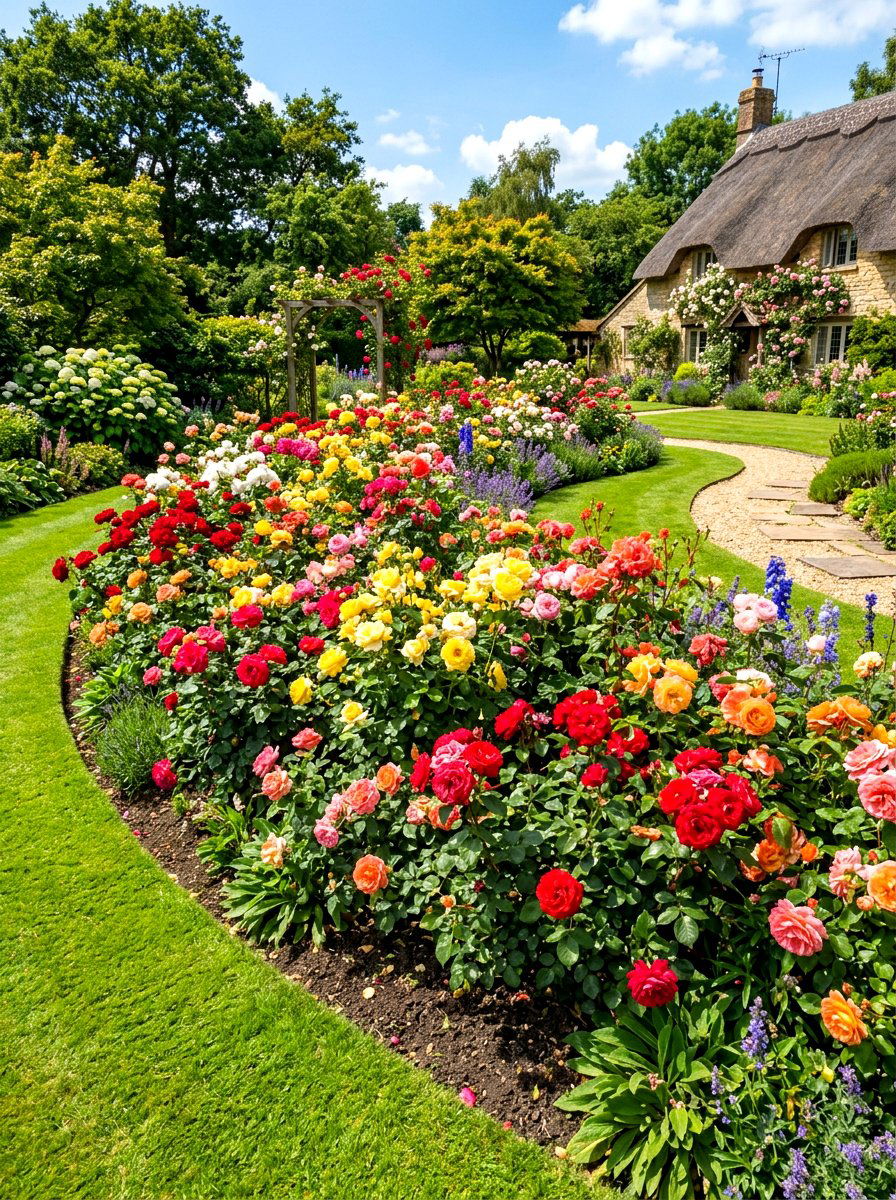
If you find it impossible to choose just one color of rose, why not plant a vibrant mix of every shade imaginable? A multi-colored rose bed can be a joyful explosion of reds, yellows, pinks, and oranges that brings a sense of energy to your yard. To keep it from looking too chaotic, you can group roses by their growth habit or height, placing taller varieties in the back and smaller ones in the front. This variety ensures that there is always something interesting to look at as different plants hit their peak bloom times. A mixed bed is also a great way to experiment with different fragrances, as each color often has its own unique scent profile. It creates a fun and informal atmosphere that celebrates the incredible diversity of the rose family.
22. Shrub Rose Garden Boundary Screen
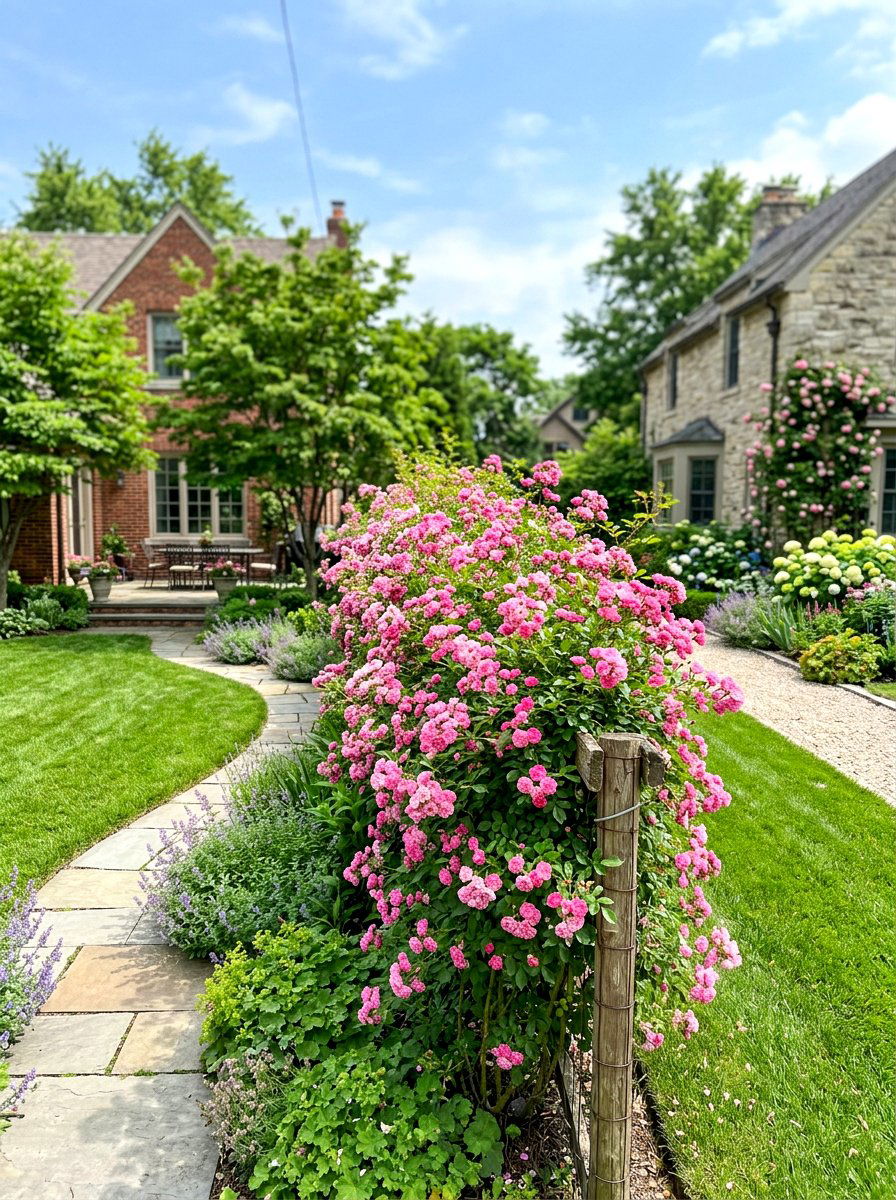
Are you looking for a way to mark your property line without the expense and harsh look of a wooden fence? Shrub roses are an excellent choice for creating a soft, flowering boundary that looks beautiful from both sides. Unlike climbing roses, shrub roses are self-supporting and grow into a rounded, bushy shape that fills in gaps quickly. You can plant them in a long row to create a continuous screen that provides a sense of enclosure for your backyard. During the spring, this living boundary will be covered in blooms, providing a much more pleasant view than a standard fence. It also creates a wonderful habitat for small birds who enjoy nesting in the dense, thorny branches, adding even more life to your garden's edge.
23. Miniature Rose Garden Rockery
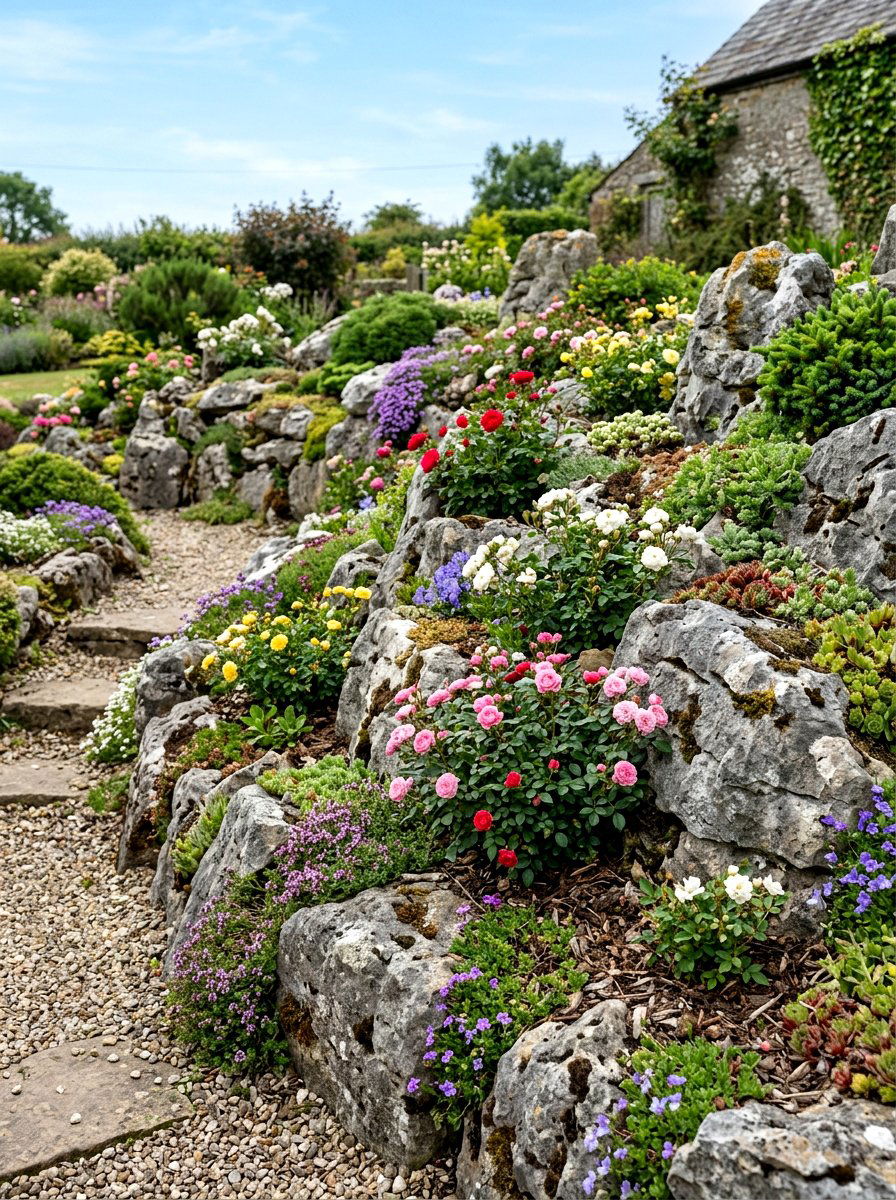
Do you have a rocky slope or a dedicated rock garden that needs a bit of color and softness? Miniature roses are perfectly suited for these environments because they are compact and can tuck into small pockets of soil between stones. These tiny plants produce perfectly formed roses that look like smaller versions of their full-sized cousins. They add a delicate touch to the rugged texture of the rocks and provide a surprising splash of color in unexpected places. You can also use them to edge stone steps or to fill in gaps in a dry stone wall. Their small scale makes them feel like a hidden treasure that you discover as you look closer at the details of your landscape, making your garden feel more layered and intricate.
24. Front Door Rose Garden Path
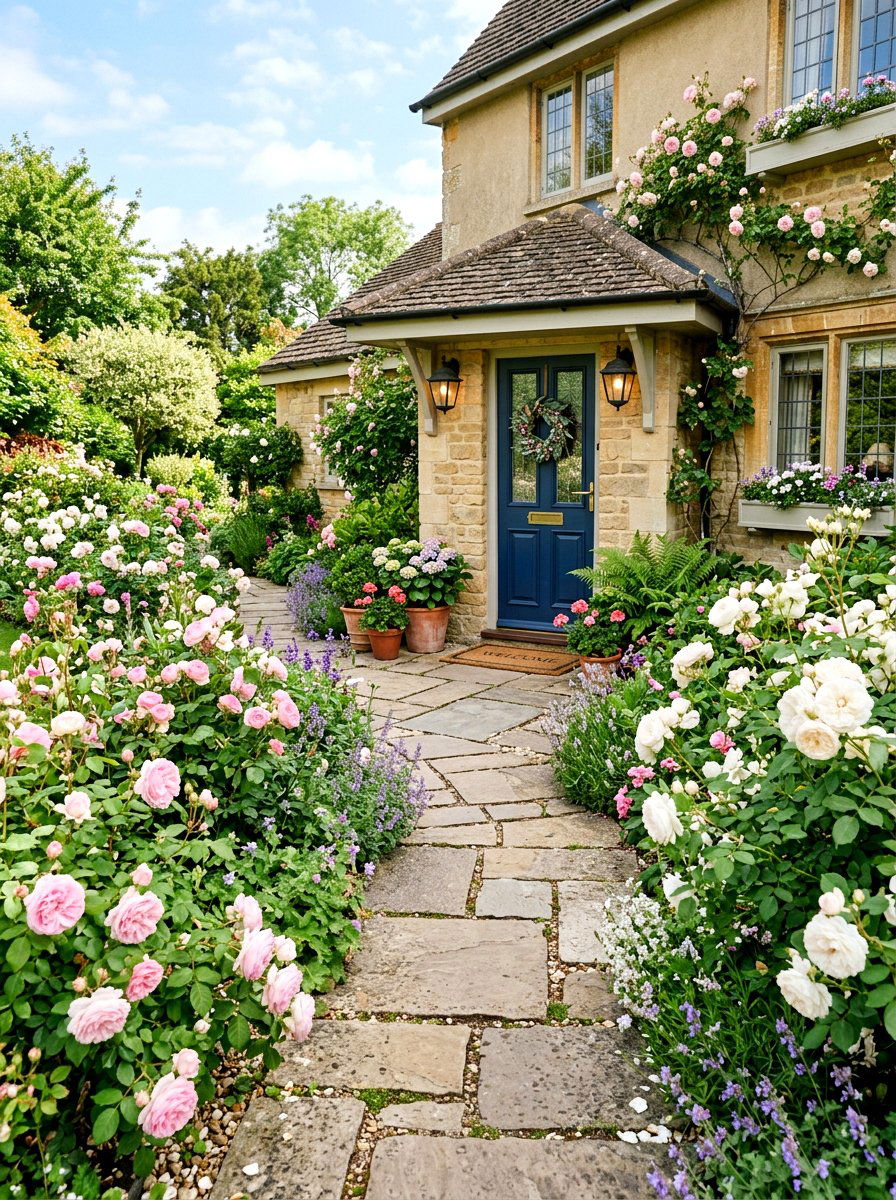
Creating a beautiful entrance to your home starts with the path leading to your front door. By planting fragrant roses along this walkway, you provide a wonderful greeting for anyone who visits. You should choose varieties that are known for their strong scent so that the fragrance lingers in the entryway. As people walk toward the house, they will be surrounded by the sight and smell of spring blooms, setting a positive tone before they even step inside. Keeping the roses neatly pruned ensures that the path remains clear and safe for walking. This design choice connects your home directly with the garden, making the transition between the outdoors and the indoors feel seamless and thoughtfully planned for maximum aesthetic enjoyment.
25. Shade Tolerant Rose Garden Corner
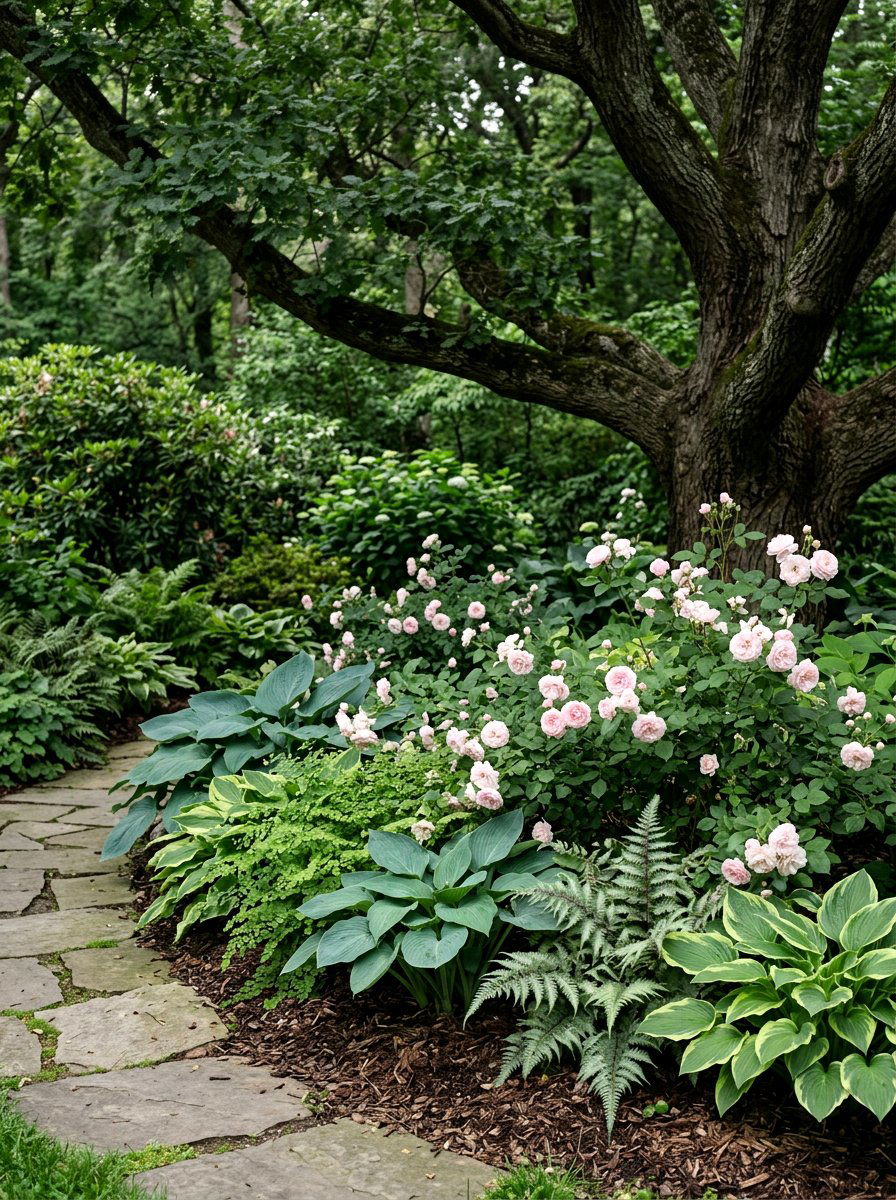
Do you have a corner of your yard that doesn 't get full sun but you still want to fill it with flowers? While most roses love the sun, some varieties, such as ' Ballerina 'or ' Gruss an Aachen ', can perform surprisingly well in partial shade. Creating a dedicated rose corner in a shadier spot allows you to brighten up a dark area of the garden with soft colors and foliage. You can pair these roses with shade-loving plants like hostas or ferns to create a lush, woodland feel. The blooms in the shade often last longer because they aren' t being scorched by the intense midday sun, giving you more time to enjoy them. This approach ensures that every part of your yard can participate in the beauty of the spring rose season.
Conclusion:
Designing a spring rose garden is a rewarding journey that allows you to express your creativity while connecting with the natural beauty of the season. By considering the various ways roses can be integrated into your landscape — from vertical trellises to formal beds and container gardens — you can create a space that reflects your personal style and meets your practical needs. Whether you are aiming for a romantic cottage feel or a clean modern look, the right combination of rose varieties and structural elements will transform your outdoor area into a breathtaking sanctuary. Remember that roses are versatile plants that can solve many landscaping challenges, such as providing privacy or enhancing curb appeal. With a little planning and care, your garden will become a fragrant, colorful haven that brings joy to you and your visitors every time spring arrives.
Related posts:
Leave a Reply