
Creating a backyard oasis that feels like a tranquil escape is a dream for many homeowners looking to upgrade their outdoor living space. By blending the structured elegance of Japanese aesthetics with the refreshing functionality of a swimming pool, you can transform your yard into a peaceful sanctuary. This style focuses on natural elements like stone, water, and greenery to evoke a sense of balance and harmony. Whether you have a small urban lot or a sprawling suburban yard, these concepts help you build a cohesive environment. You will find that Japanese-inspired landscaping brings a timeless quality that promotes relaxation and mindfulness every single day.
1. Zen Rock Garden Pool
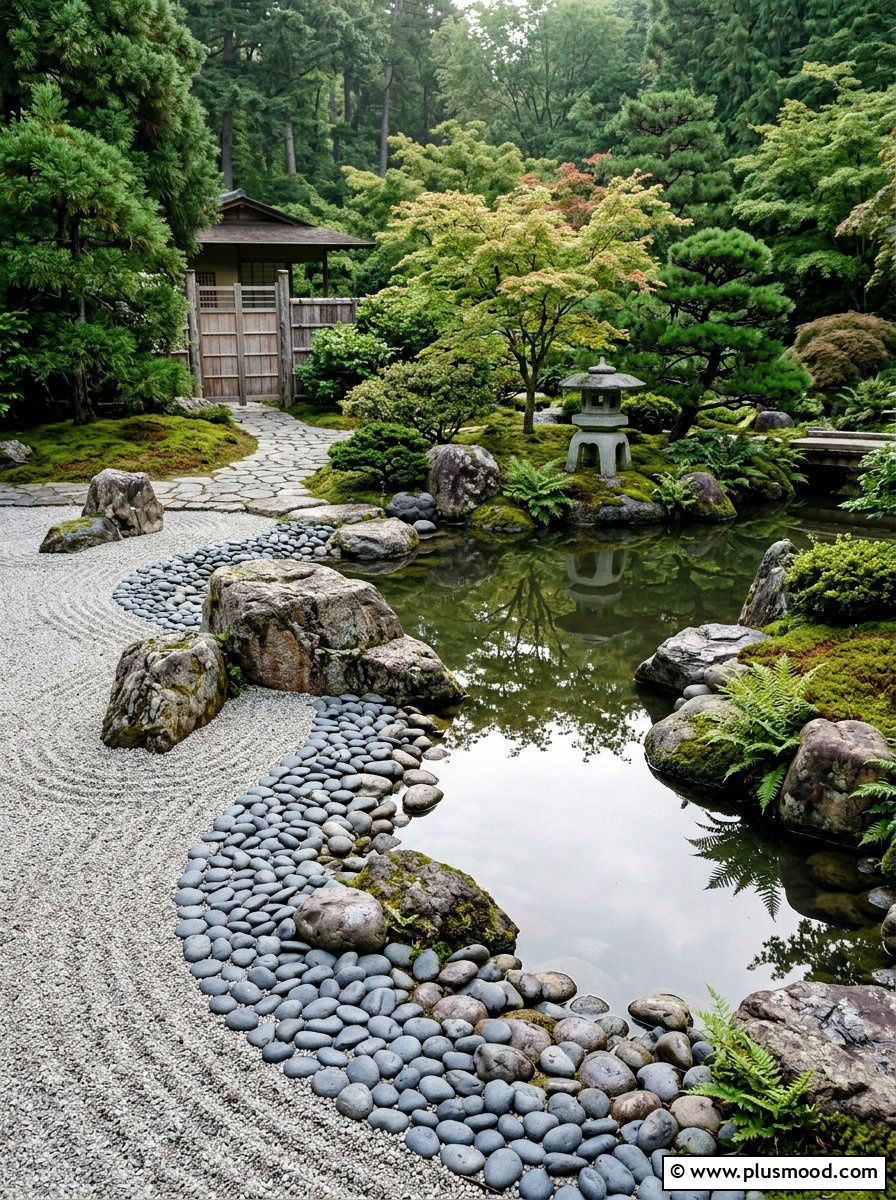
Imagine walking out to your pool and feeling an immediate sense of calm wash over you because of the balanced surroundings. Incorporating a Zen rock garden around the perimeter of your swimming area is a perfect way to achieve this minimalist aesthetic. Large, weathered boulders are carefully placed to mimic natural mountain landscapes, while smaller gravel or smooth river stones fill the gaps. This design emphasizes the beauty of raw materials and encourages a meditative mindset while you swim or lounge nearby. The contrast between the still rocks and the moving water creates a visual hierarchy that feels intentional and grounded. It is a low-maintenance solution that looks stunning throughout every season.
2. Bamboo Privacy Screen Pool
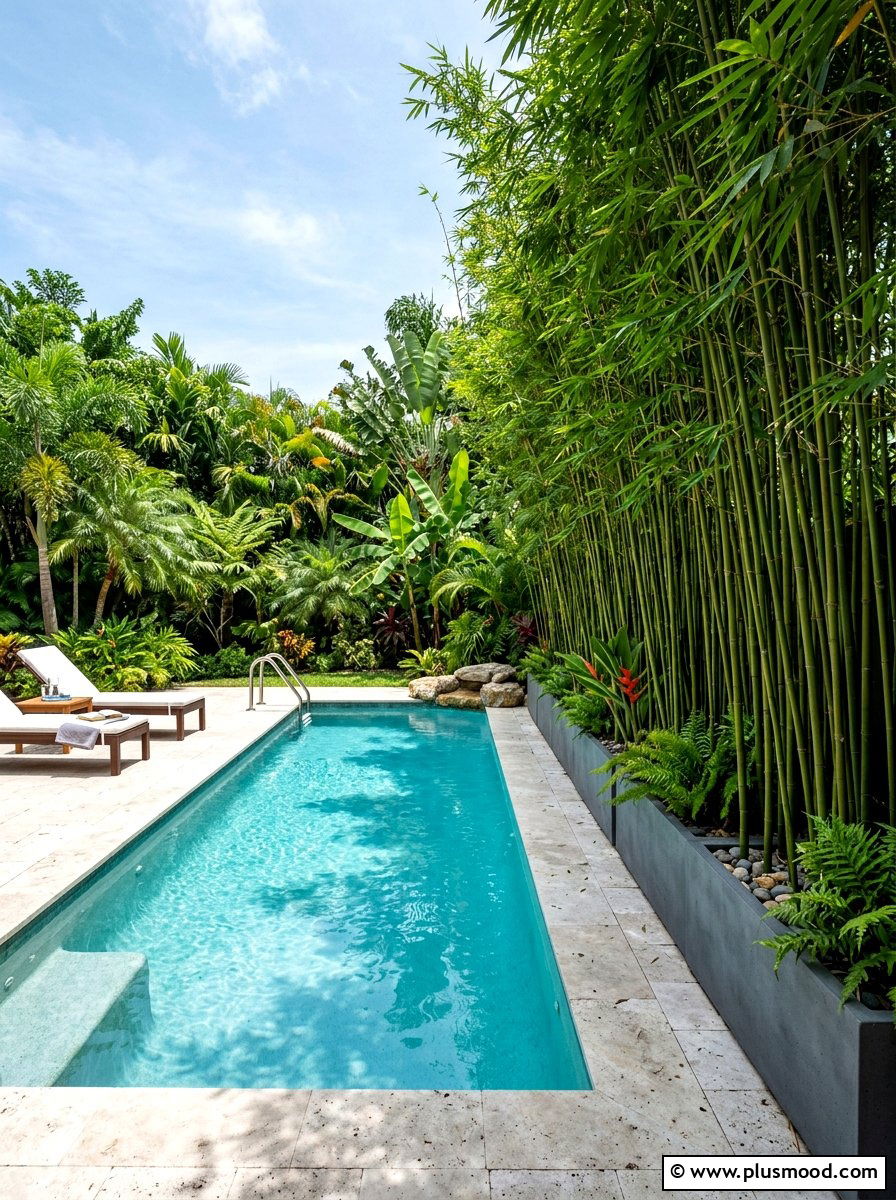
Do you ever feel like your neighbors are watching you while you try to relax in the water? A bamboo privacy screen offers a natural and sustainable way to enclose your pool area while sticking to a Japanese theme. These tall, slender stalks create a dense wall of greenery that filters light beautifully and provides a soft rustling sound in the wind. You can plant live bamboo in deep troughs or use dried bamboo poles for a more structured fence look. This element adds an instant vertical interest to the landscape and pairs perfectly with stone tiles. It creates an intimate, tropical-inspired atmosphere that feels completely secluded from the outside world.
3. Japanese Maple Near Pool
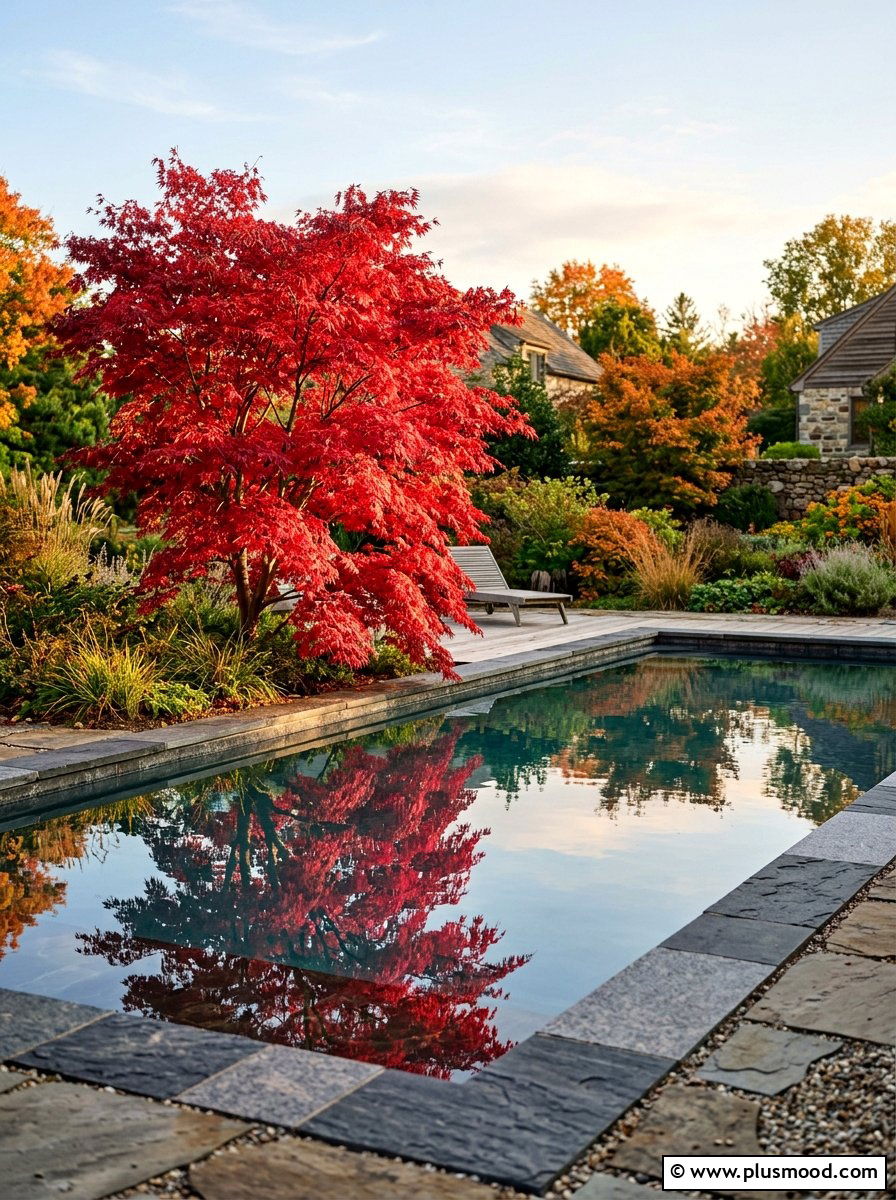
Have you seen the vibrant red and orange leaves of a Japanese maple reflecting off the surface of clear blue water? Planting these delicate trees near your pool adds a sophisticated touch of color and texture to the garden landscape. Their unique leaf shapes and graceful branch structures provide a soft contrast to the hard edges of a pool deck. Because they are relatively small trees, they fit well in compact spaces without overwhelming the area with heavy shade. You should place them where the afternoon sun can illuminate their foliage for a glowing effect. This choice brings a sense of changing seasons and organic beauty to your outdoor retreat.
4. Stone Lantern Pool Lighting
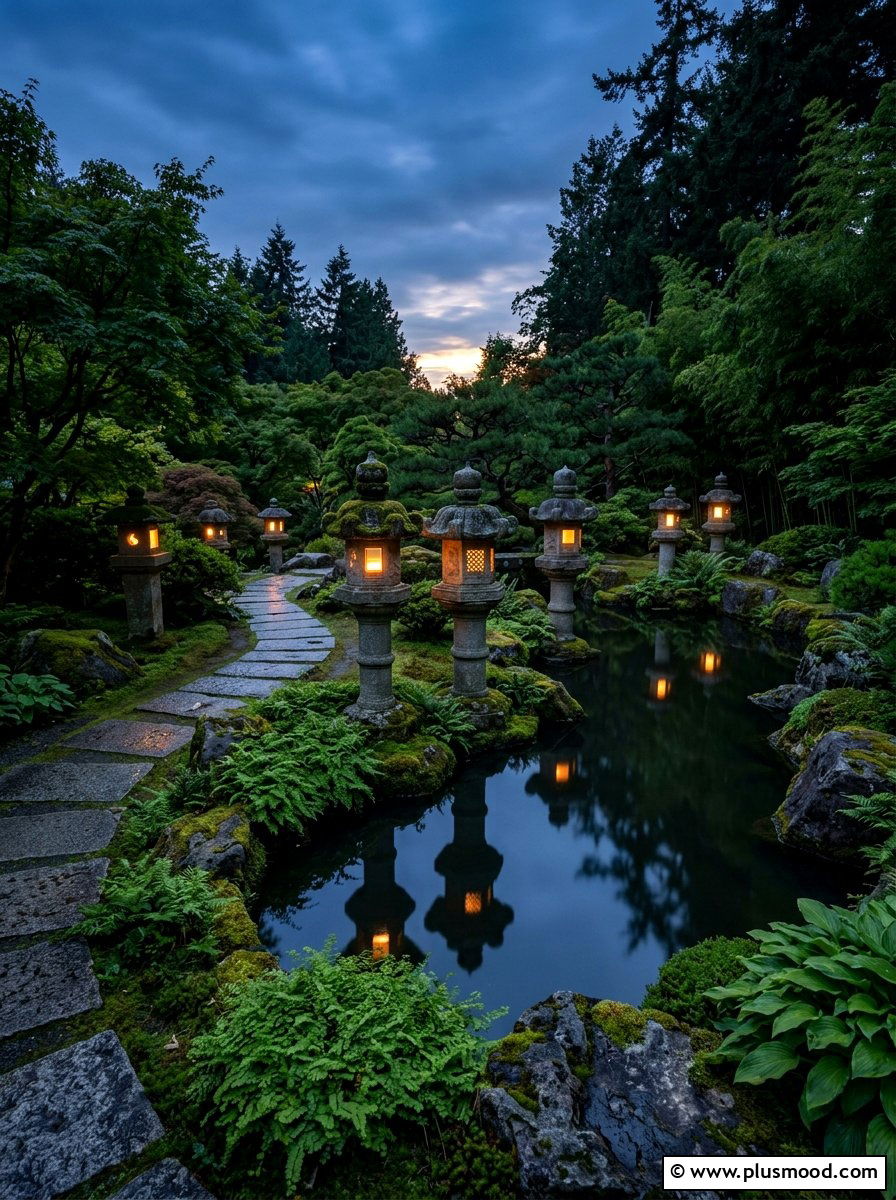
What better way to illuminate your evening swims than with the soft glow of traditional Japanese stone lanterns? These architectural elements, known as Ishidoro, serve as both functional light sources and beautiful sculptures during the daylight hours. Placing a few lanterns at key points around the pool creates a mysterious and high-end look that mimics ancient temple gardens. You can use modern LED inserts to mimic the flicker of a real candle without the fire hazard. These lanterns work best when nestled among low-growing ferns or placed on a large flat rock near the water's edge. They provide a focal point that anchors the entire backyard design.
5. Modern Shou Sugi Ban Pool Deck
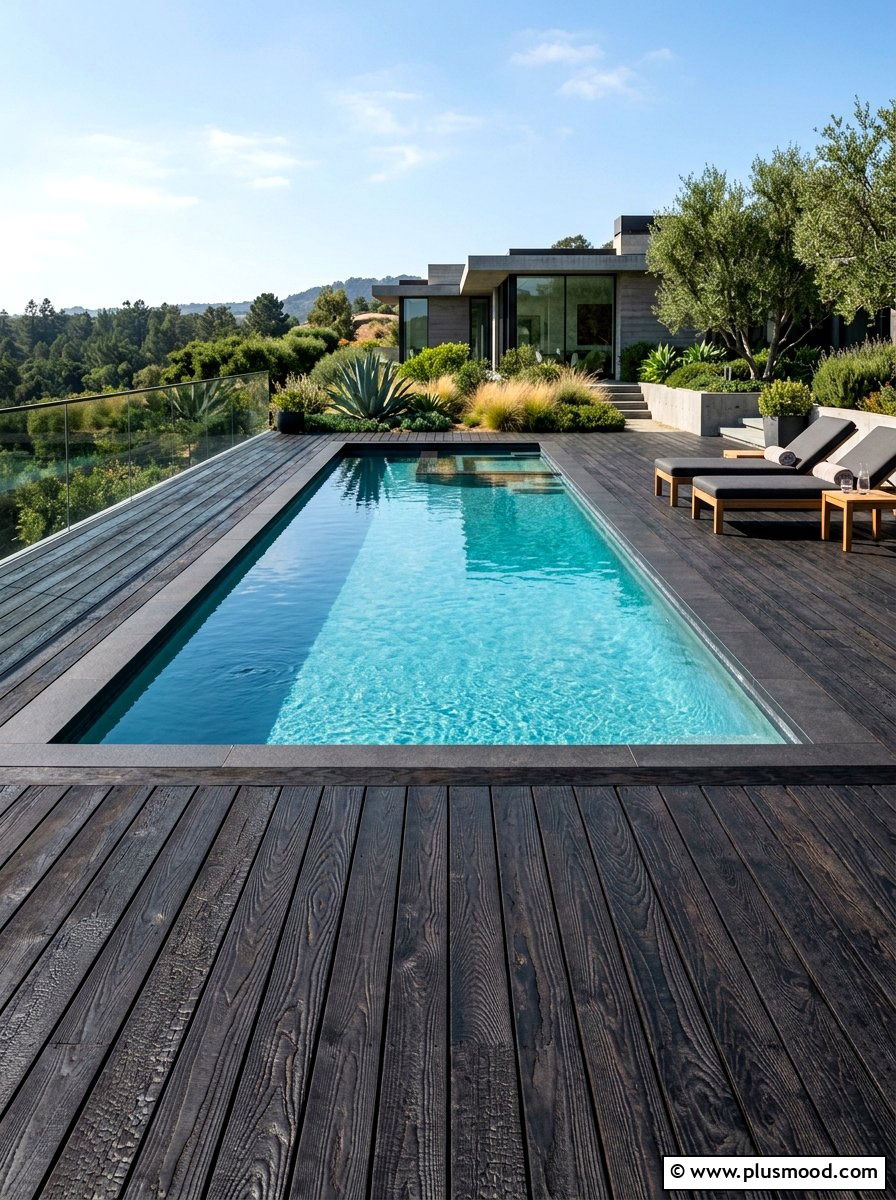
Are you looking for a pool deck material that stands out from the typical light-colored wood or cold concrete? Shou Sugi Ban is a traditional Japanese technique of charring wood to make it more durable and resistant to water or insects. The resulting deep black or dark charcoal finish looks incredibly sleek and modern against the bright blue of a swimming pool. This charred wood texture provides a tactile experience underfoot and creates a high-contrast look that is very popular in contemporary design. It frames the water perfectly and hides dirt or water spots better than lighter materials. This decking option is both visually striking and practically very long-lasting.
6. Natural Rock Pool Waterfall
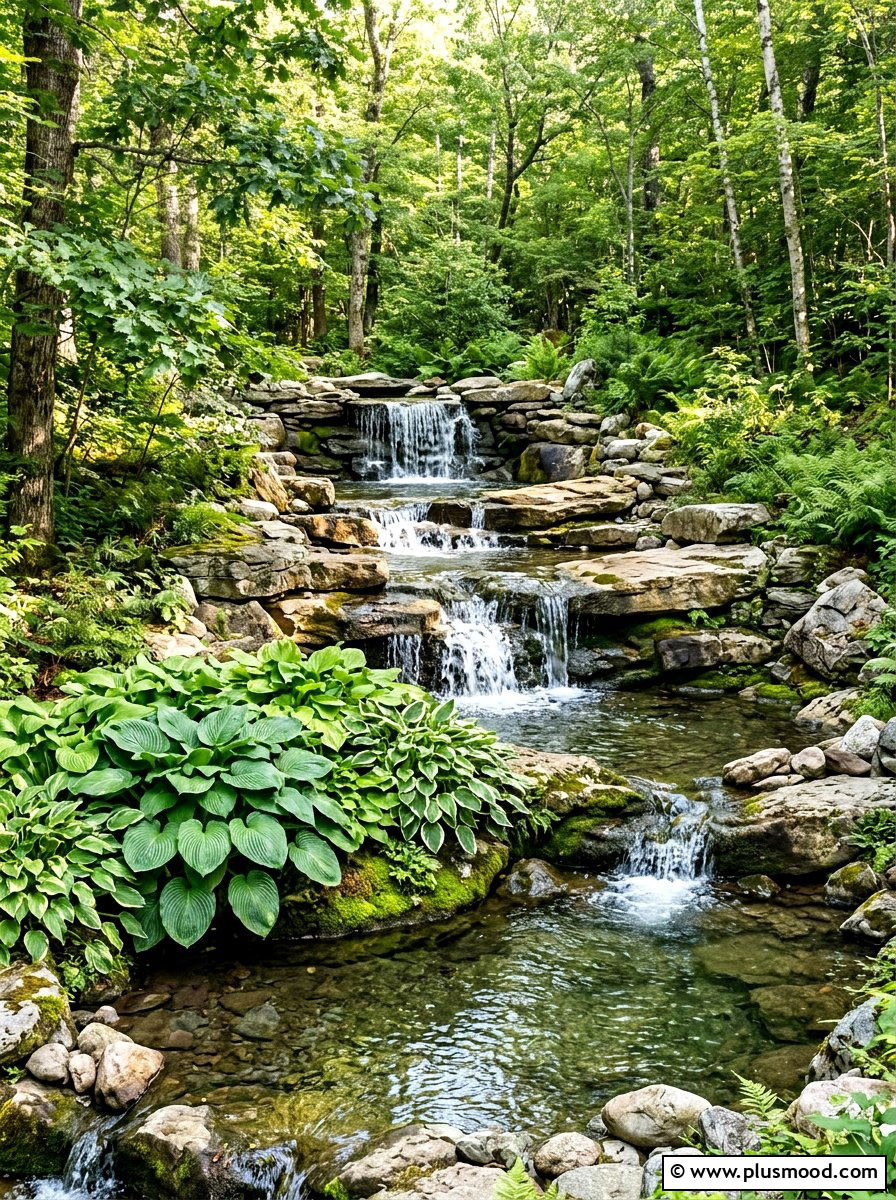
Could there be anything more relaxing than the sound of water cascading over natural stones into your swimming pool? A rock waterfall inspired by Japanese mountain streams brings a dynamic energy to your backyard landscape while masking neighborhood noise. By using local river rocks and large slabs, you can create a feature that looks like it has been there for centuries. The water should flow gently rather than forcefully to maintain that peaceful Zen vibe you are searching for. Surround the base of the waterfall with lush greenery like hostas or ferns to soften the transition between the stone and the pool. It serves as a stunning natural centerpiece.
7. Japanese Bridge Over Pool
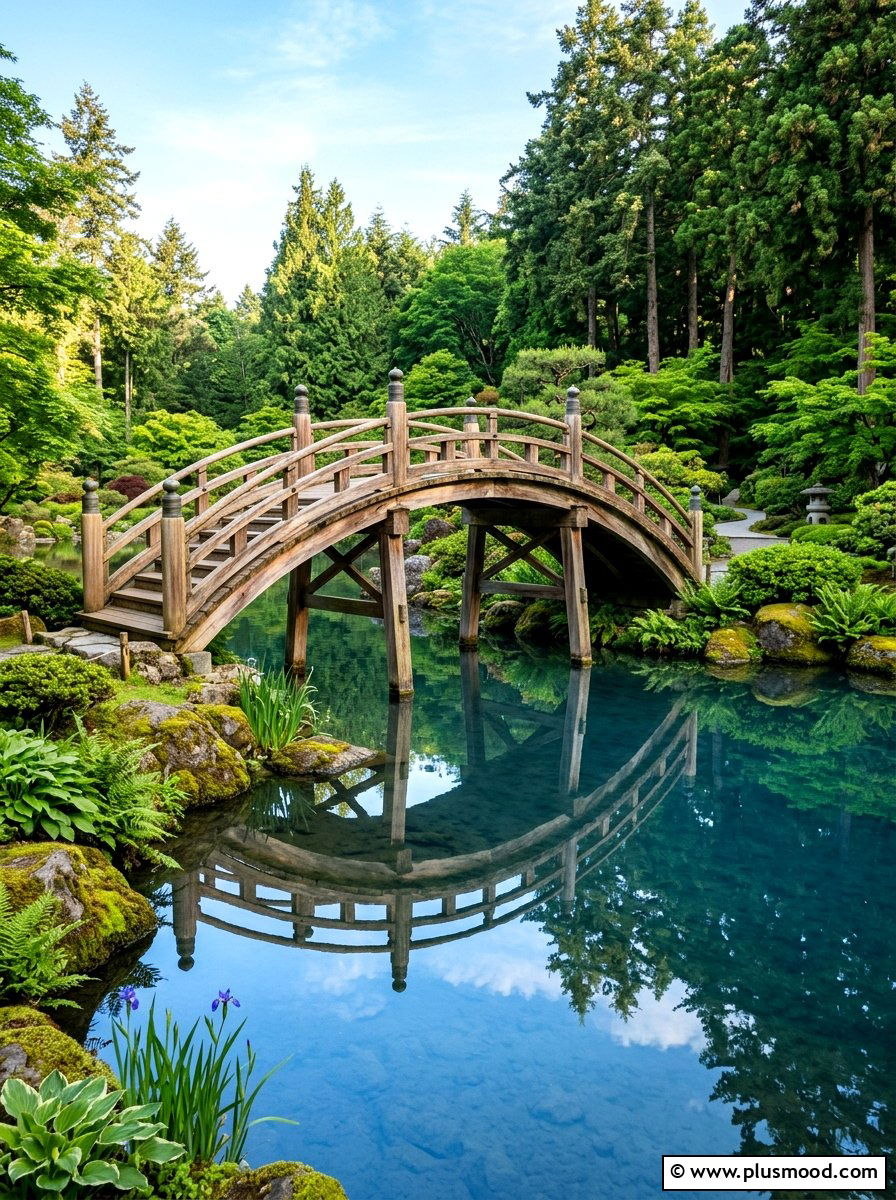
Have you ever considered adding a bridge to your pool to create a shortcut or a beautiful architectural focal point? A traditional arched wooden bridge, often painted in a deep red or left in a natural finish, adds a sense of journey to your garden. This feature allows you to cross over a narrow section of the pool or connect the deck to a central island. It creates a classic silhouette that is instantly recognizable as part of Japanese design heritage. The bridge provides a perfect spot for photos or simply standing and watching the water below. It adds height and structural variety to an otherwise flat landscape.
8. Moss Garden Pool Border
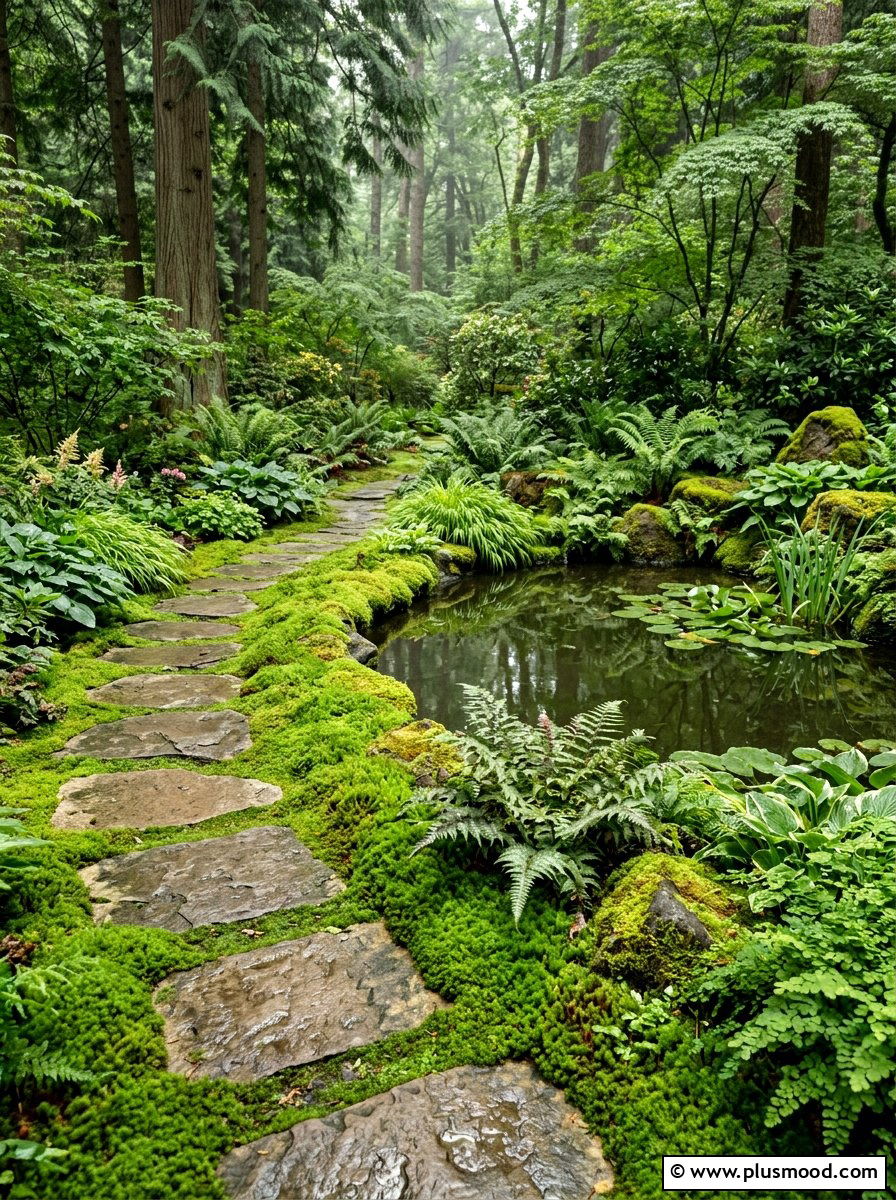
Soft, green moss provides a velvet-like texture that can make any pool area feel like a hidden forest retreat. While moss usually prefers shade, there are varieties that can thrive near the moisture of a pool in filtered light. Using moss as a ground cover between stepping stones or around the base of trees creates a lush, aged look. It fills in the gaps where grass might struggle to grow and requires very little mowing or heavy maintenance. The deep green color provides a refreshing cooling effect for the eyes during the hot summer months. This living carpet ties the different elements of your Japanese garden together seamlessly.
9. Black Pebble Pool Path
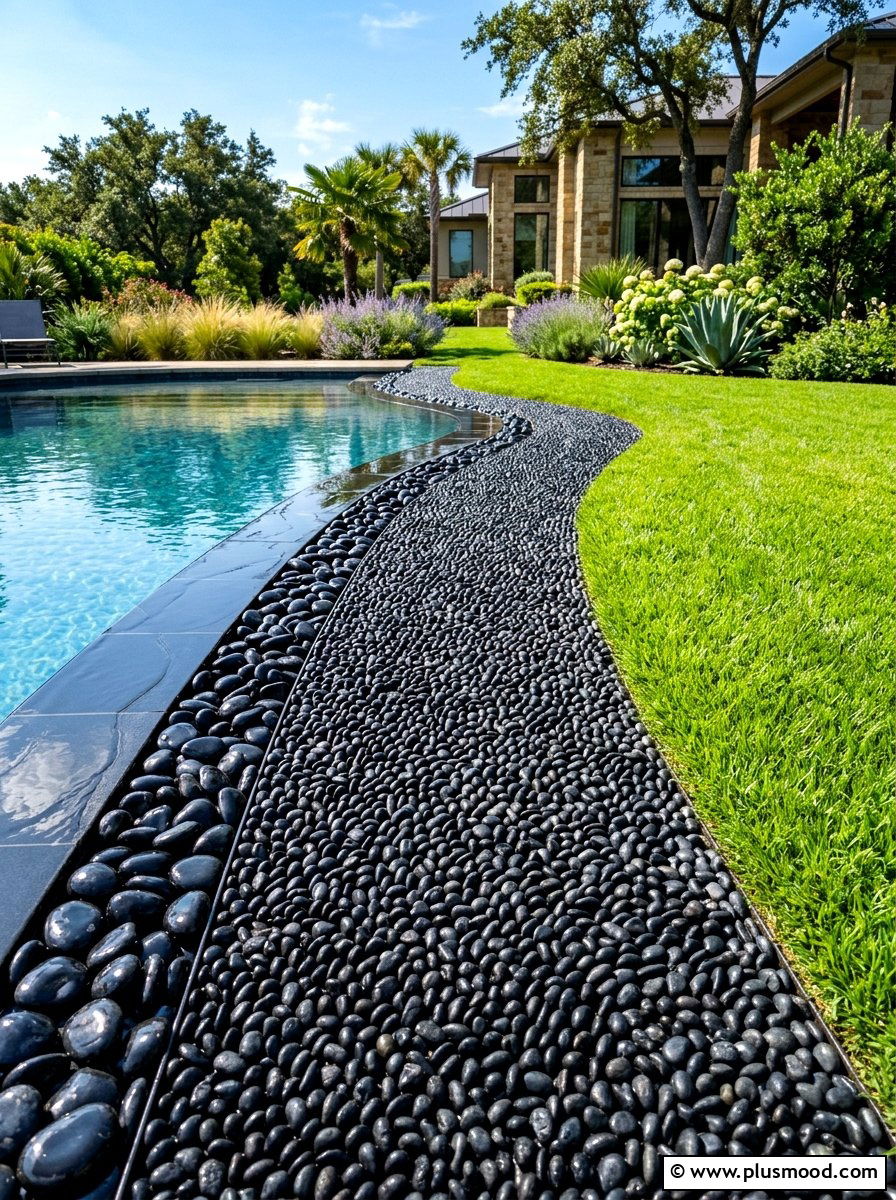
Walking on smooth black pebbles is a sensory experience that grounds you before you even touch the pool water. Creating a dedicated path or a decorative border of polished black river stones adds a sophisticated and clean look to your landscaping. These stones look particularly beautiful when wet, as they take on a deep, obsidian-like shine that reflects the sun. You can use them to define the edges of your pool or to create a transition zone between the water and the lawn. The dark color contrasts sharply with green plants and light-colored stone tiles. It is a simple way to add luxury and texture to the space.
10. Japanese Teahouse Pool Pavilion
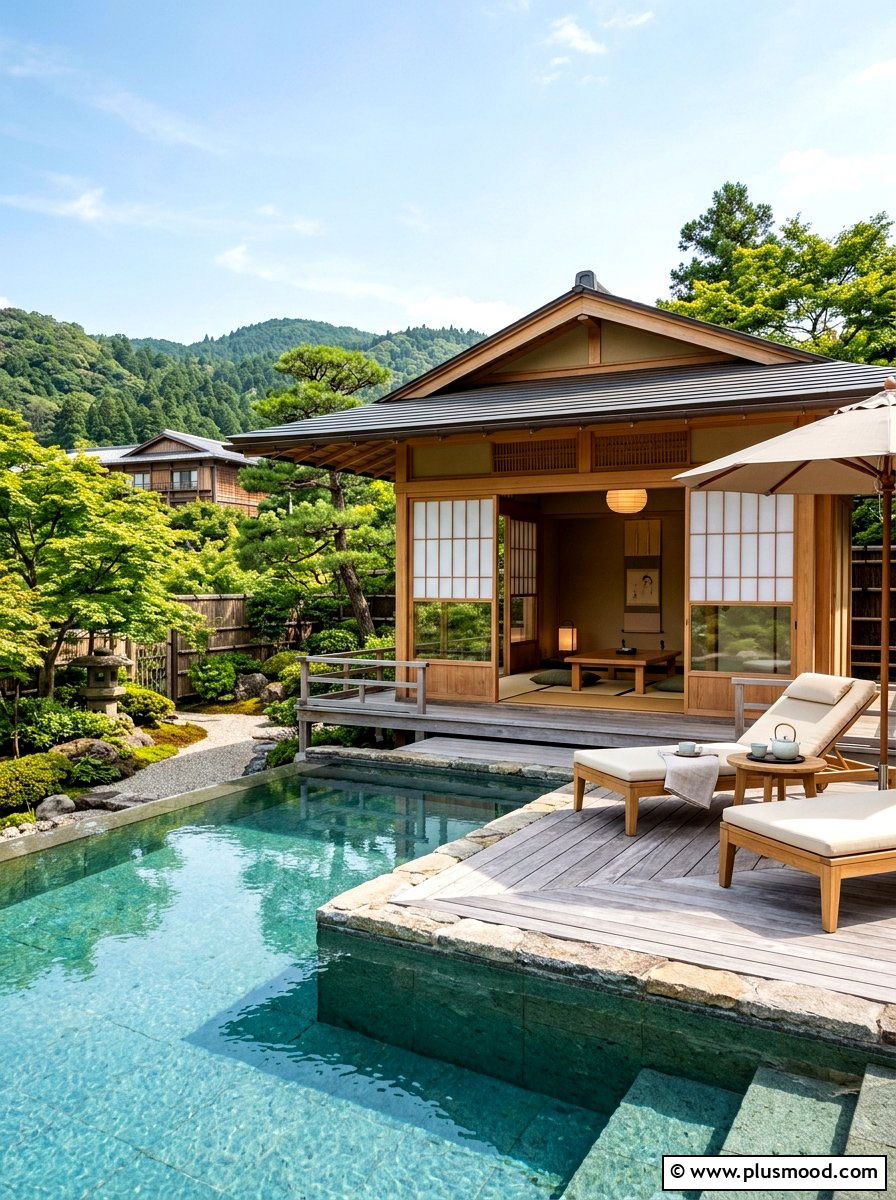
Why settle for a standard umbrella when you can have a beautiful Japanese-style pavilion or teahouse by the water? A wooden structure with a traditional sloped roof and sliding screen doors provides a functional shaded area for relaxing or dining. This building can serve as a pool house to store towels and equipment or as a quiet place for morning coffee. Using natural wood materials like cedar or redwood ensures the structure blends into the surrounding garden rather than standing out harshly. The teahouse becomes an extension of your home and a private destination in your own backyard. It offers a perfect balance of indoor and outdoor living.
11. Stepping Stone Pool Entry
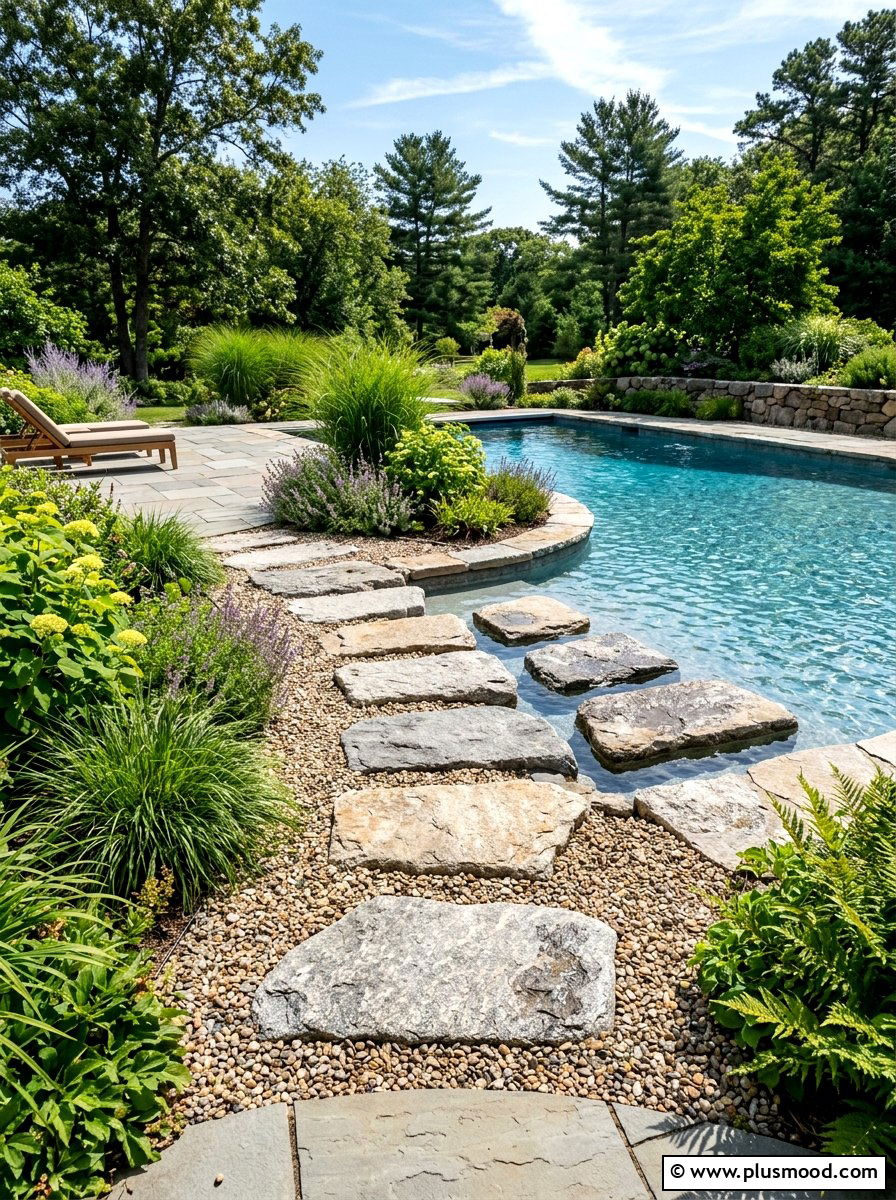
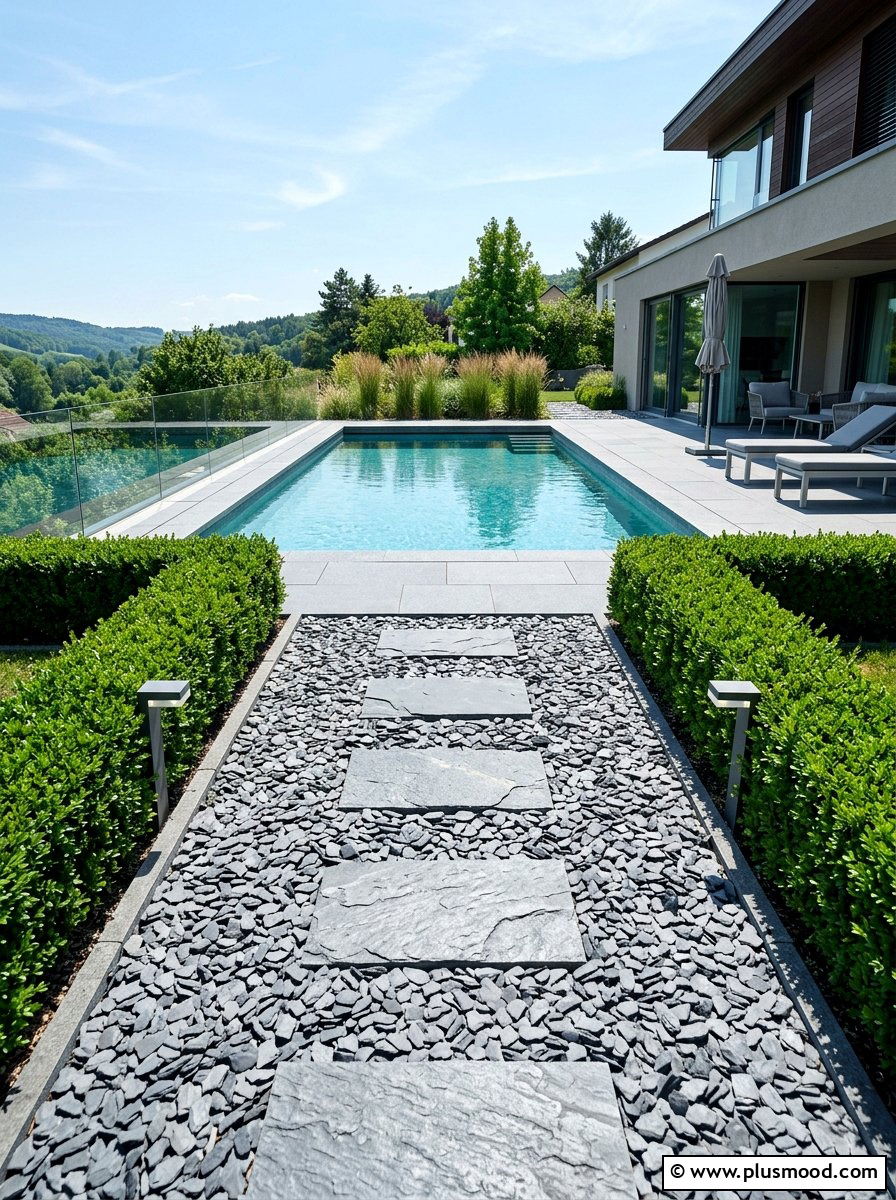
Using large, irregular flat stones as a walkway leading to your pool steps creates a natural and inviting entrance. This style of path is a staple in Japanese tea gardens, where the journey to the destination is just as important as the arrival. Each stone should be placed with enough space in between for low-growing plants or fine gravel to peek through. This design prevents the pool area from feeling too industrial or overly paved with heavy concrete. The organic shapes of the stones break up the straight lines of a rectangular pool. It makes the act of approaching the water feel like a scenic stroll through nature.
12. Japanese Pine Tree Landscaping
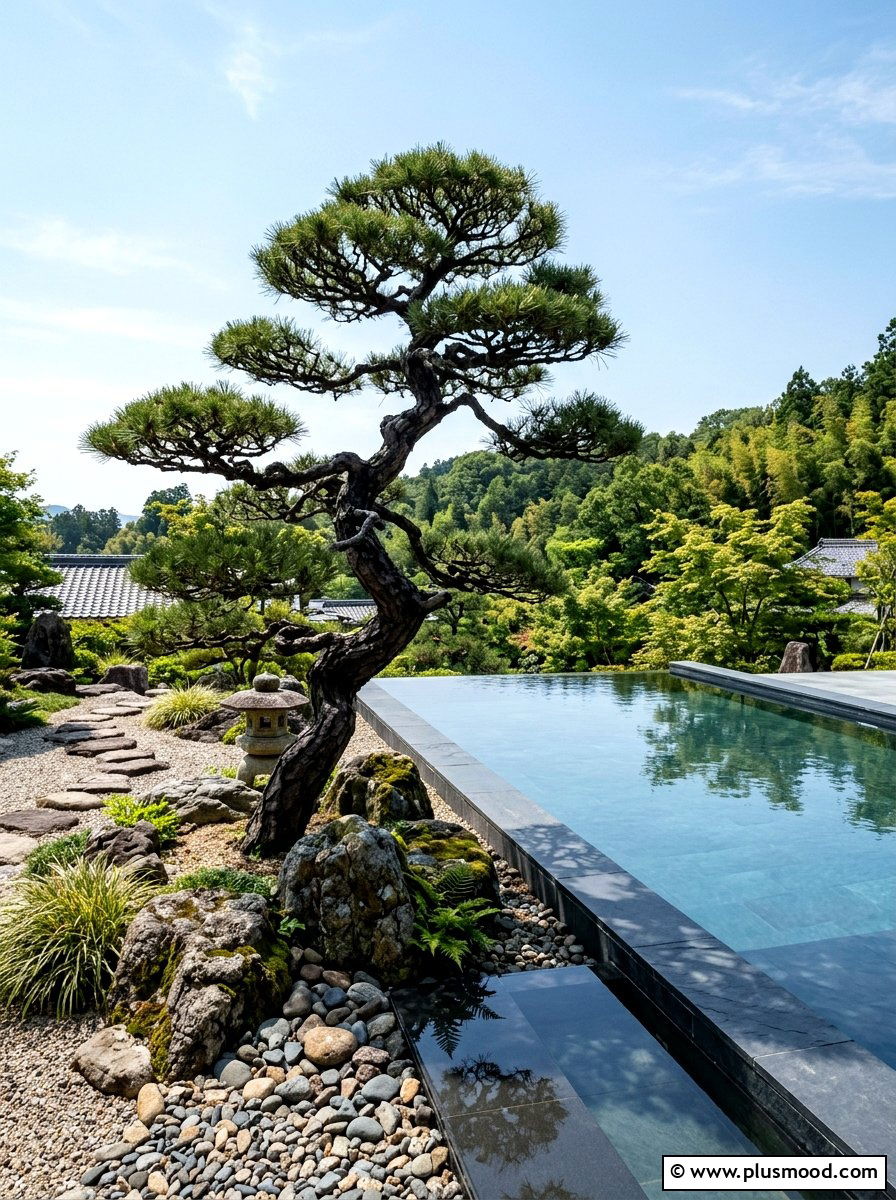
Japanese Black Pines or Cloud Pruned Pines are legendary for their twisted trunks and sculptural needle clusters that look like floating clouds. Integrating these trees into your pool landscaping adds an air of antiquity and artistic flair to the entire backyard. They are often pruned meticulously to maintain a specific shape that emphasizes horizontal lines and negative space. These pines are very hardy and provide year-round greenery, ensuring your pool area looks beautiful even during the winter months. Placing one as a specimen tree near the deep end of the pool creates a strong visual anchor. It brings a high level of craftsmanship to your garden design.
13. Bamboo Water Spout Feature
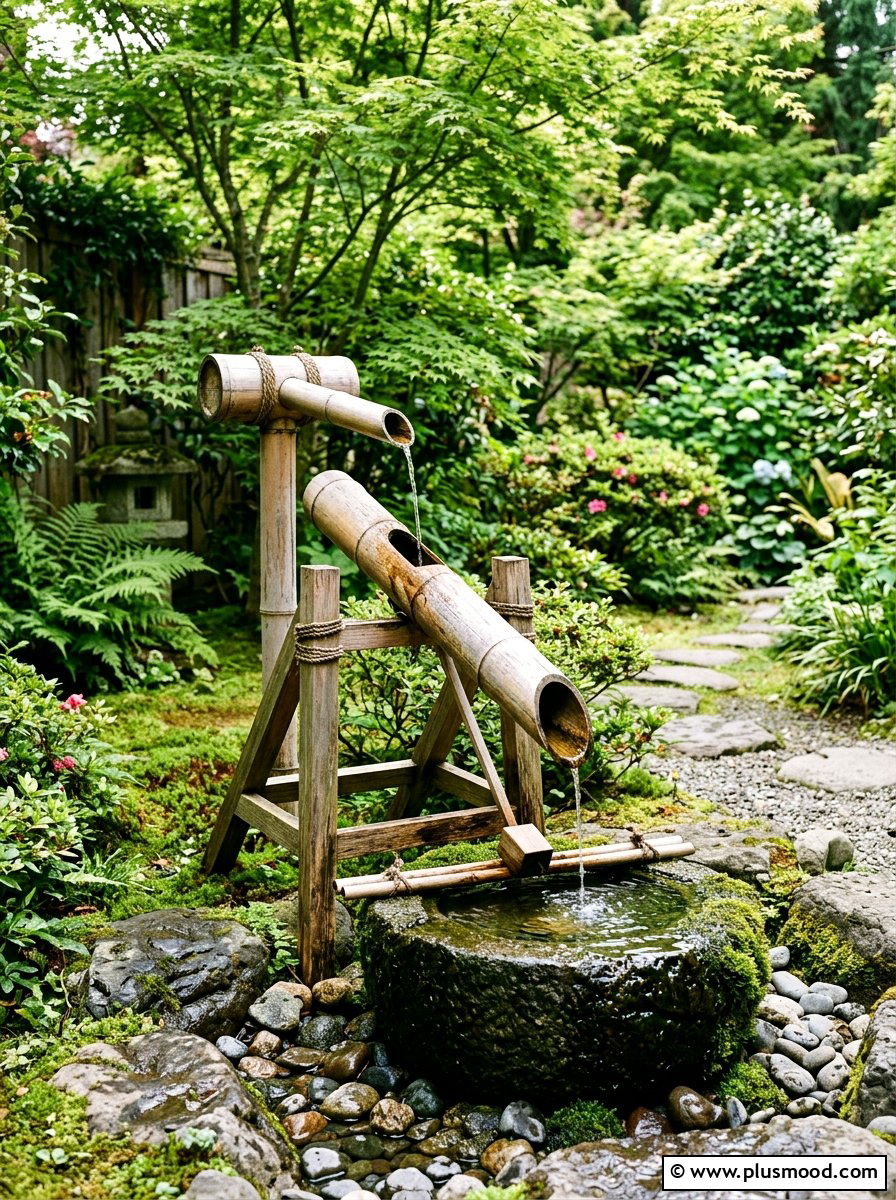
A traditional shishi-odoshi, or deer scarer, is a bamboo water spout that slowly fills with water until it tips over with a gentle click. Adding a larger version of this as a water feature for your pool adds a rhythmic and soothing sound to the environment. The bamboo material looks incredibly organic against the water and provides a vertical element to the pool's edge. This type of fountain is perfect for those who want the sound of moving water without the complexity of a massive waterfall. It is a charming detail that delights guests and keeps the atmosphere feeling playful yet peaceful. It fits perfectly in a small garden corner.
14. Granite Water Basin Pool Side
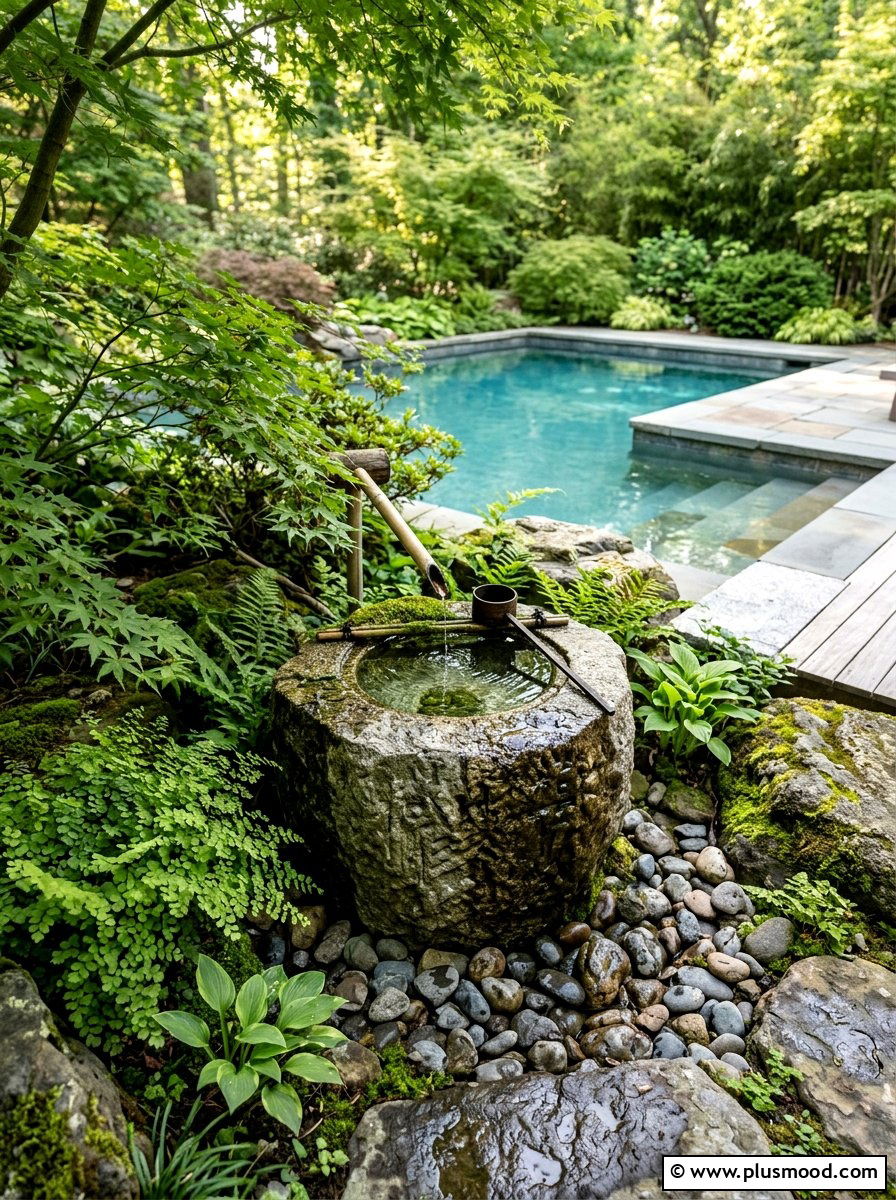
Tsukubai, or granite water basins, are traditionally used for ritual cleansing, but they make excellent decorative accents for a Japanese-themed pool. Placing a carved stone basin near the pool entrance allows you to add another layer of water interest to the landscape. You can surround the basin with small ferns and river rocks to create a miniature ecosystem. Sometimes, a small bamboo pipe trickles water into the basin, which then overflows into a bed of stones. This feature adds a human-scale detail to the yard that encourages people to slow down and appreciate the small things. It represents purity and calm in the overall design.
15. Japanese Soaking Tub Near Pool
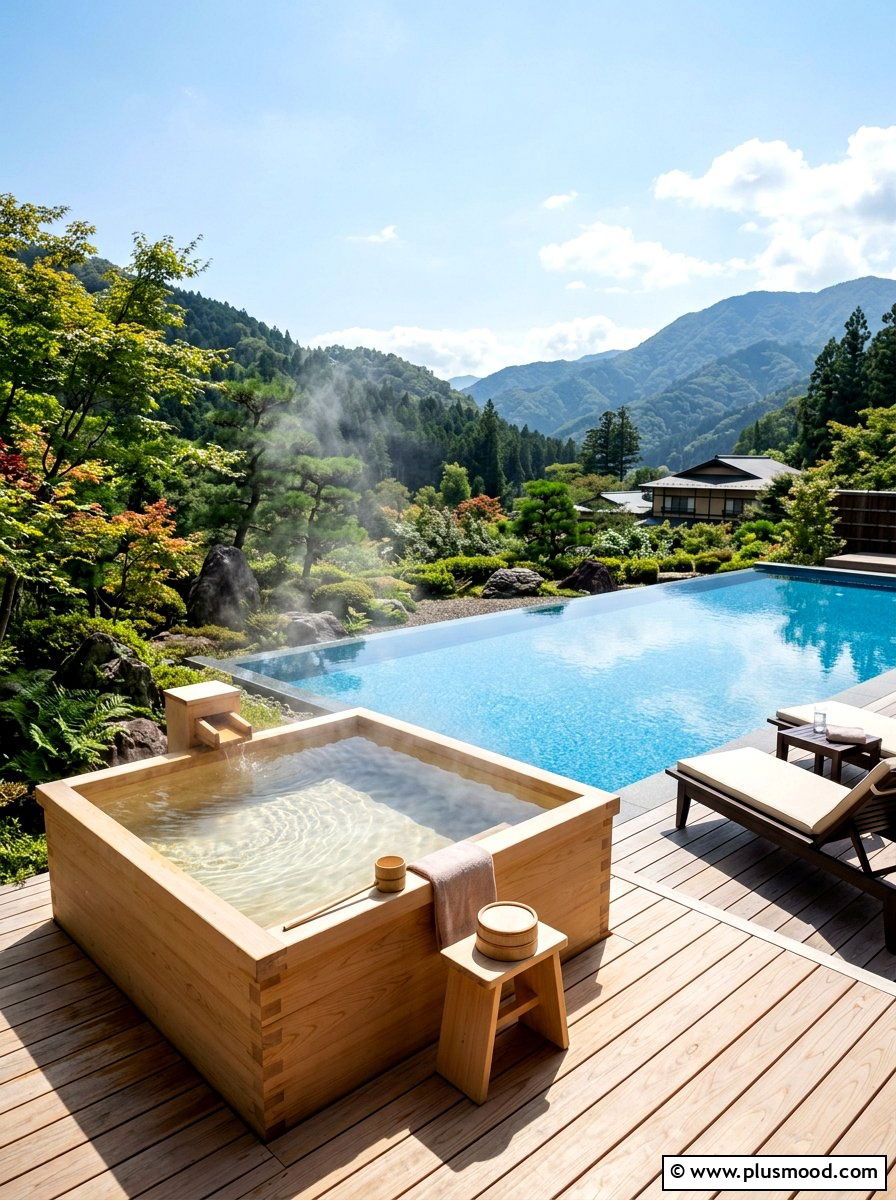
If you love the idea of hot and cold therapy, placing a wooden Japanese soaking tub, or Ofuro, next to your pool is a luxury upgrade. These tubs are usually made of fragrant Hinoki wood and are designed for deep relaxation rather than just washing. Having a hot tub option right next to your refreshing pool allows you to enjoy the garden in both hot and cold weather. The natural wood construction of the tub fits the Japanese aesthetic much better than a plastic or fiberglass hot tub. It creates a spa-like environment that makes your backyard feel like a high-end resort. It is a functional and beautiful addition.
16. Raked Sand Zen Pool Garden
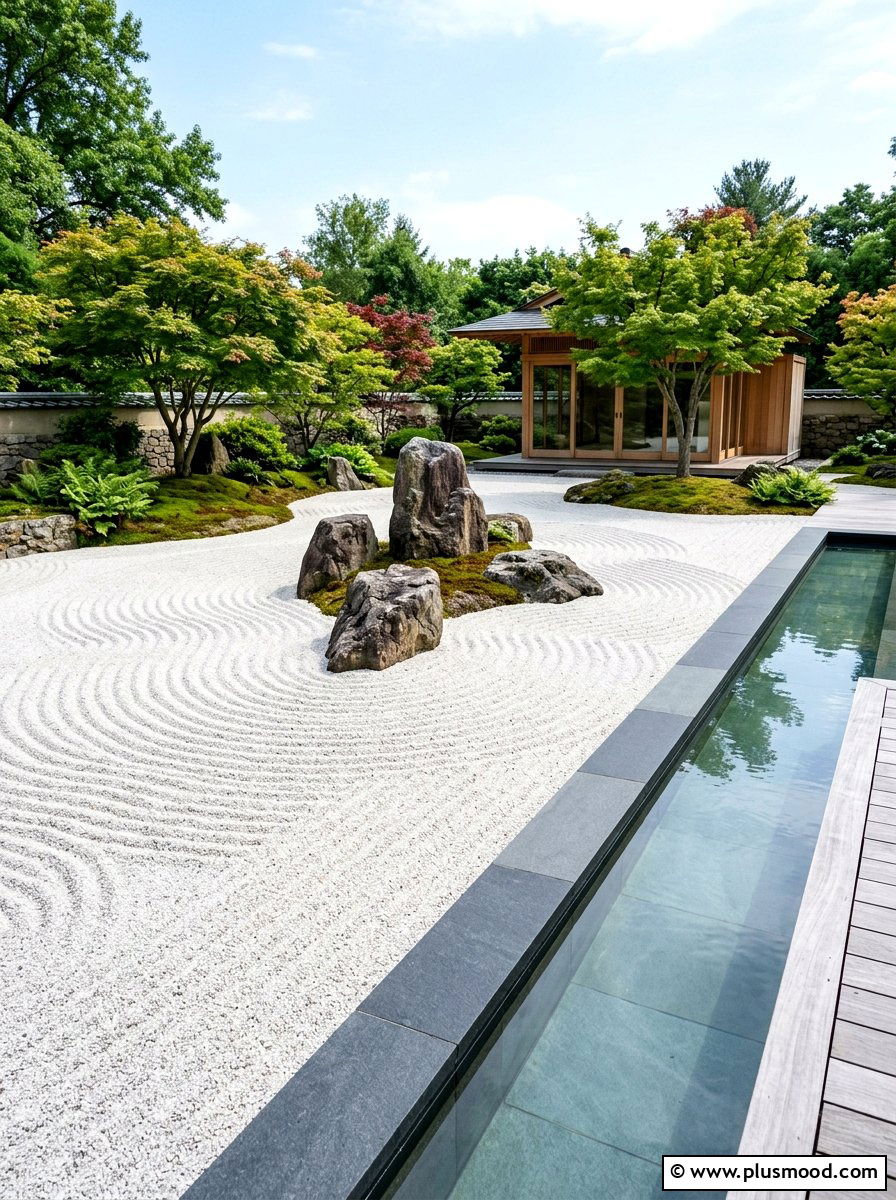
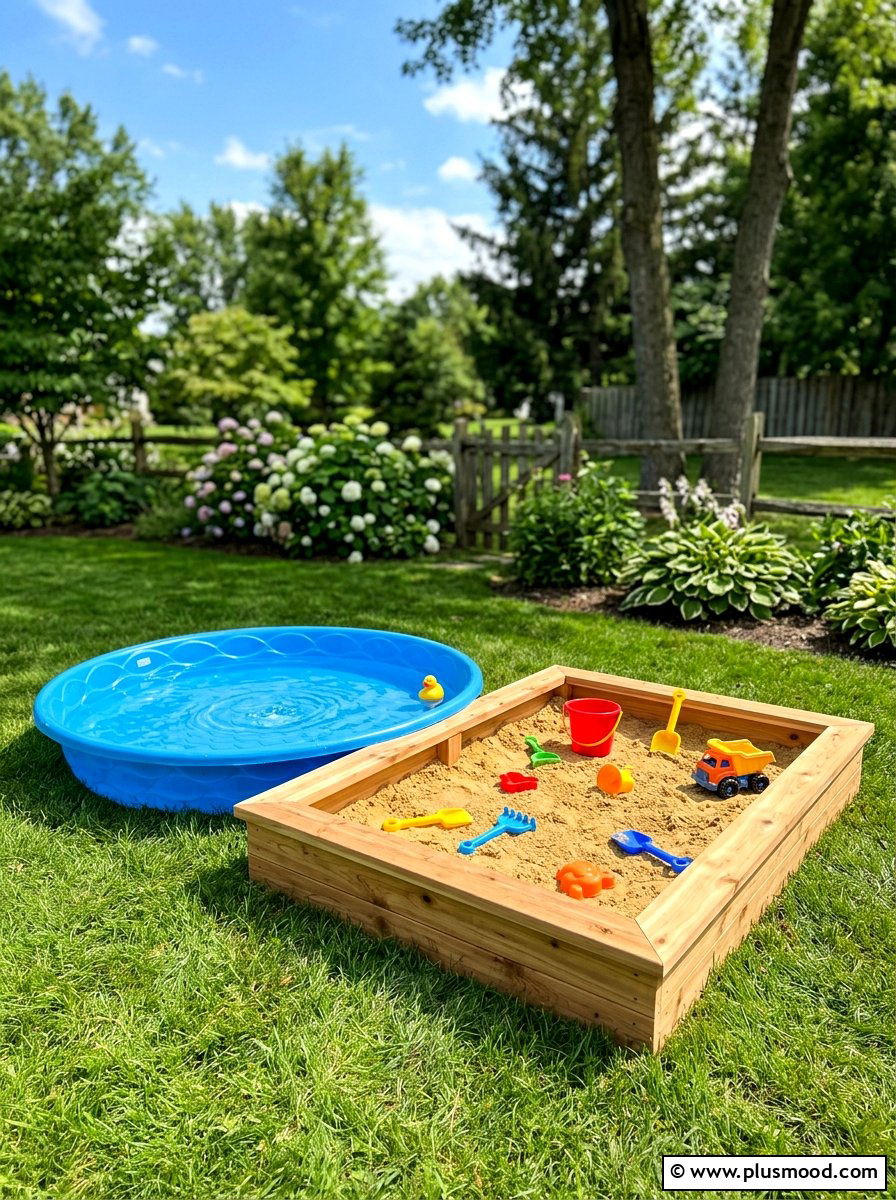
For the ultimate minimalist look, consider a dry landscape section adjacent to your pool featuring raked sand or fine gravel. This area mimics the look of water through patterns raked into the surface, creating a "dry" pool that complements the "wet" one. Large rocks placed within the sand represent islands or mountains, providing a peaceful scene to look at while you swim. This type of garden is very low maintenance and offers a unique texture that contrasts with the surrounding greenery. It is an excellent choice for modern homes with clean lines and a focus on simplicity. The raked patterns can be changed whenever you want a new look.
17. Cherry Blossom Tree Pool Landscape
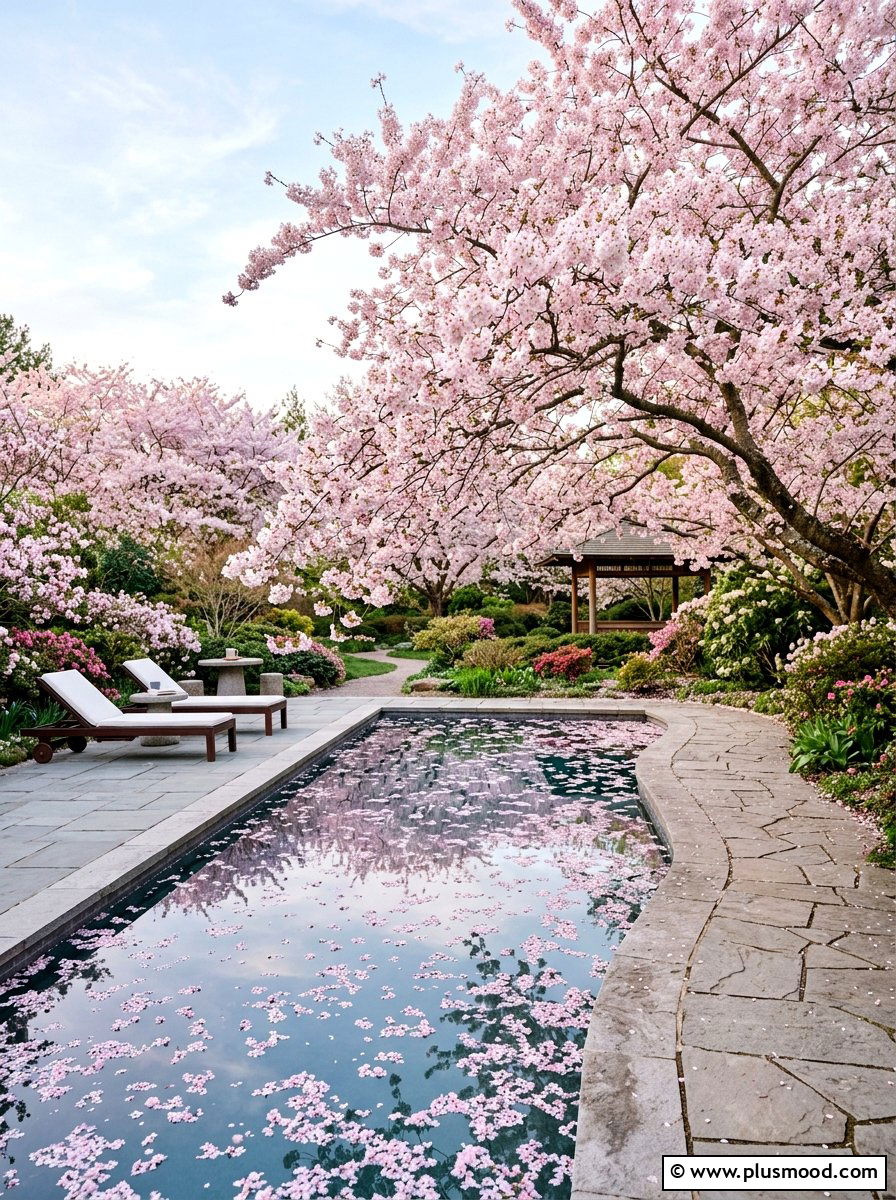
Is there anything more iconic than the soft pink petals of a cherry blossom tree falling gently onto the surface of a pool? Planting a Sakura tree near your water feature provides a stunning explosion of color in the early spring. While the blooms are temporary, the tree itself has a beautiful structure and provides light shade during the hotter months. The fallen petals floating on the water create a poetic and fleeting beauty that is highly valued in Japanese culture. Even when not in bloom, the tree offers a delicate canopy that frames the pool area beautifully. It is a romantic and classic choice for any garden.
18. Pagoda Statue Pool Accent
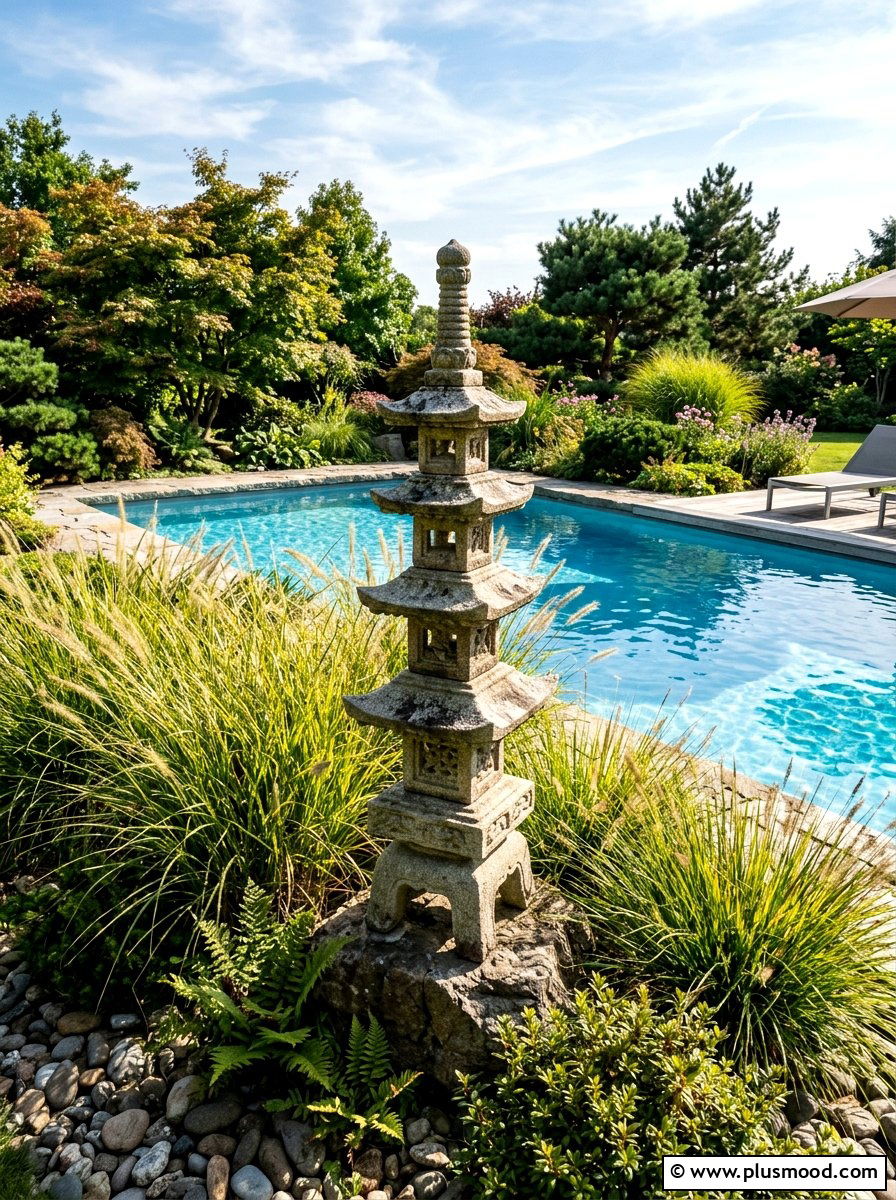
Adding a tiered pagoda statue near your pool is an easy way to signal a Japanese influence in your landscaping. These stone or metal structures represent traditional architecture and add a sense of height and history to the flower beds. A pagoda looks best when it is partially tucked away behind some tall grass or bamboo, making it feel like a discovered treasure. It serves as a visual landmark that draws the eye across the pool to the far side of the yard. You can find these in various sizes, from small tabletop versions to large floor-standing pillars. They provide a structural contrast to the organic shapes of the plants.
19. Bonsai Tree Pool Display
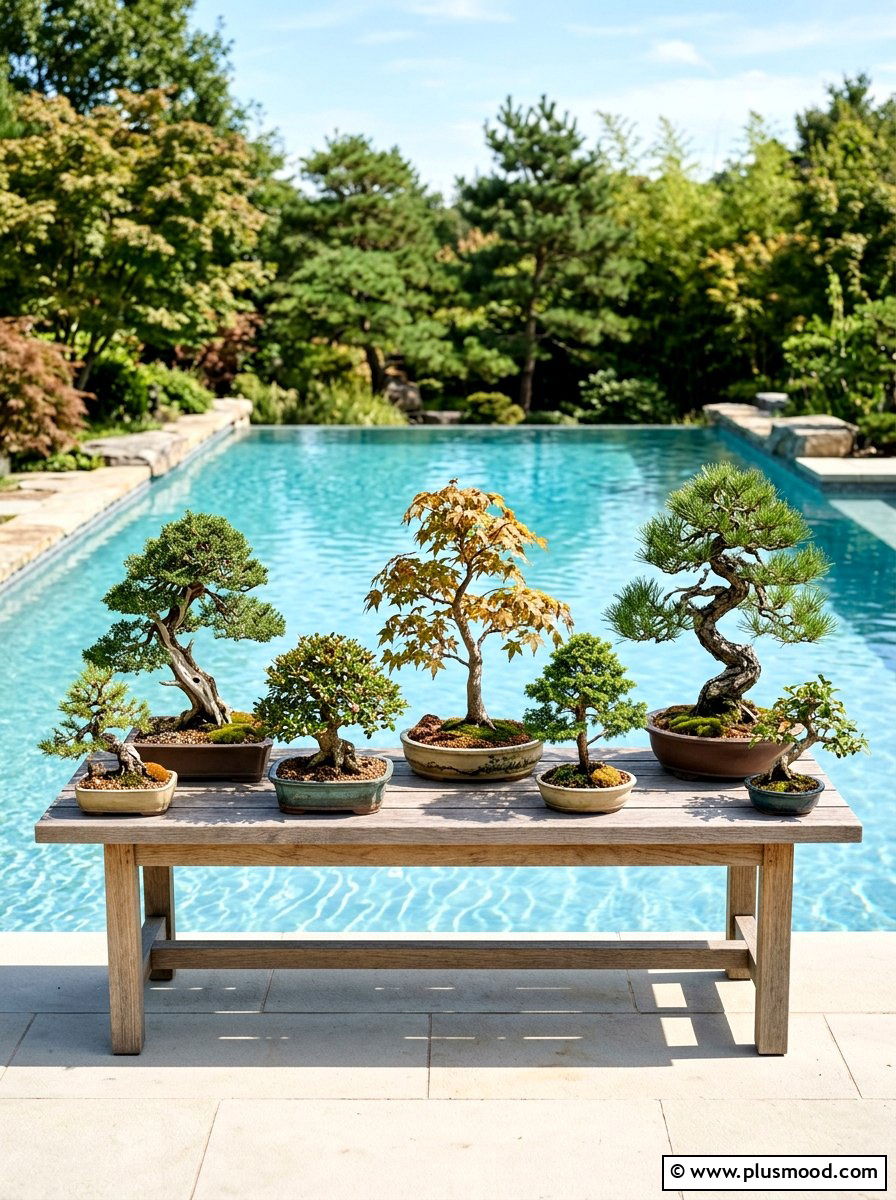
For those who enjoy gardening as a hobby, displaying a collection of bonsai trees on a stone wall or wooden bench near the pool is fantastic. These miniature trees are living works of art that require care and attention, reflecting the Japanese value of patience. Placing them near the pool allows you to admire their intricate shapes while you relax on a lounge chair. The small scale of the trees makes the pool area feel larger and more expansive by comparison. You can choose different species to ensure you have a variety of colors and leaf types. It adds a personal and sophisticated touch to the outdoor decor.
20. Wooden Lattice Pool Fence
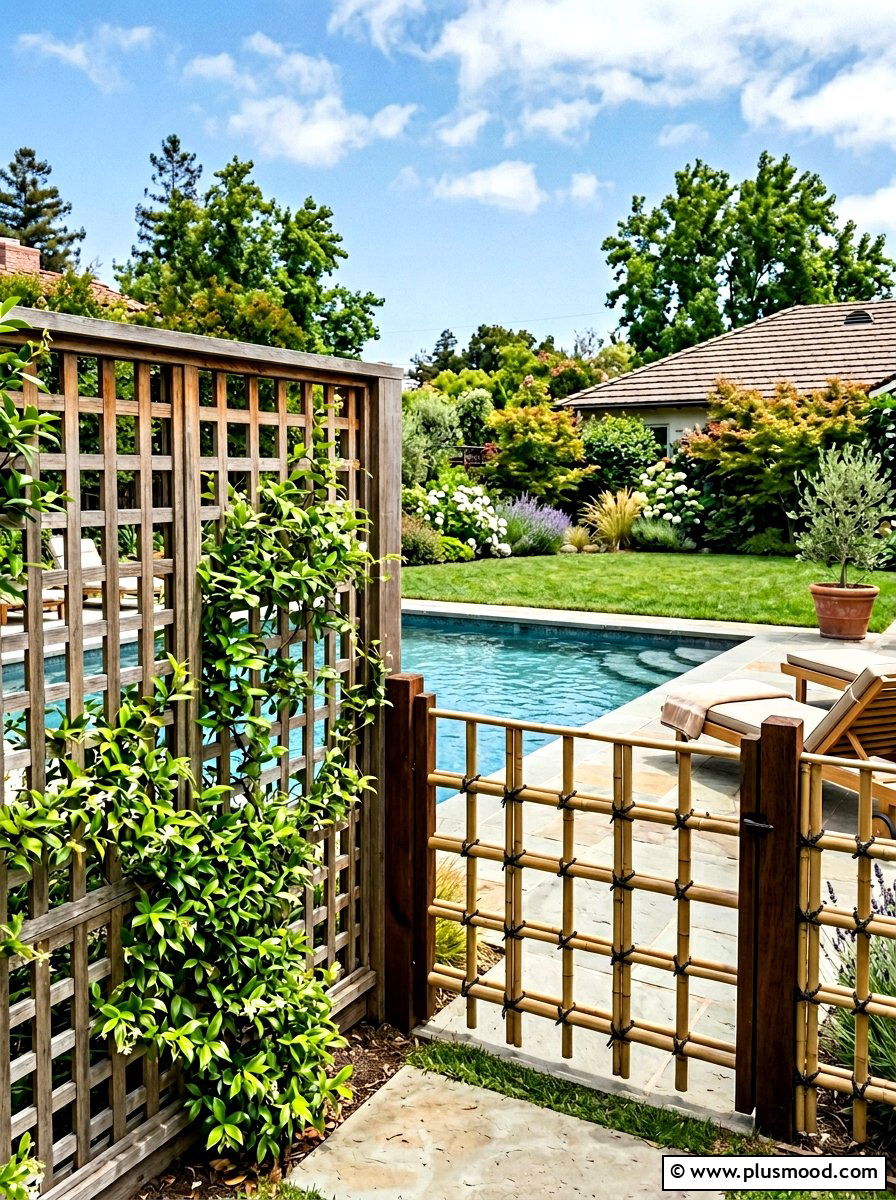
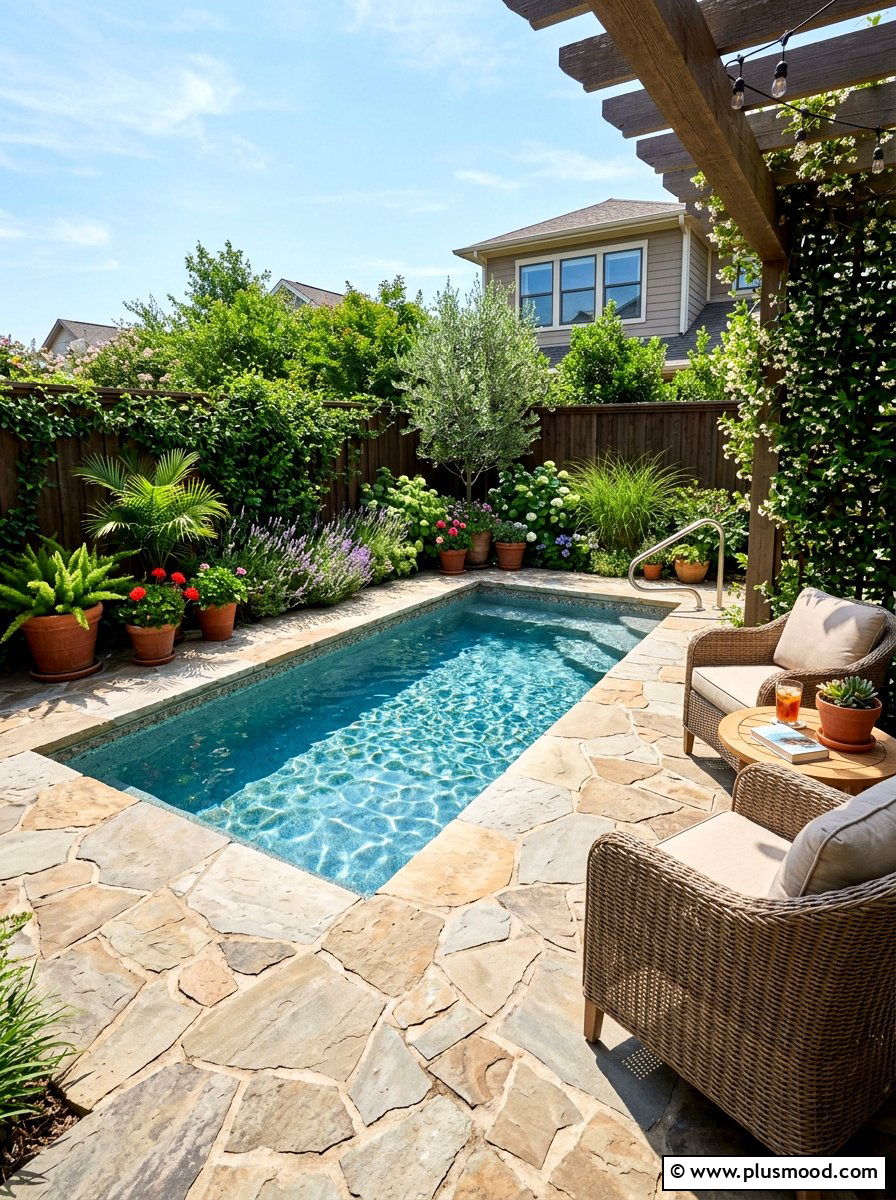
A traditional Japanese lattice fence, or Yotsume-gaki, provides a light and airy way to secure your pool area. Unlike solid walls, this type of fencing allows air and light to pass through while still defining the boundaries of the space. It is usually made from thin strips of wood or bamboo tied together with dark decorative cord. This fence style looks very elegant and doesn't make a small backyard feel cramped or boxed in. It provides a perfect trellis for climbing plants like clematis or jasmine to grow over. This fence combines safety requirements with a beautiful handcrafted look that enhances the theme.
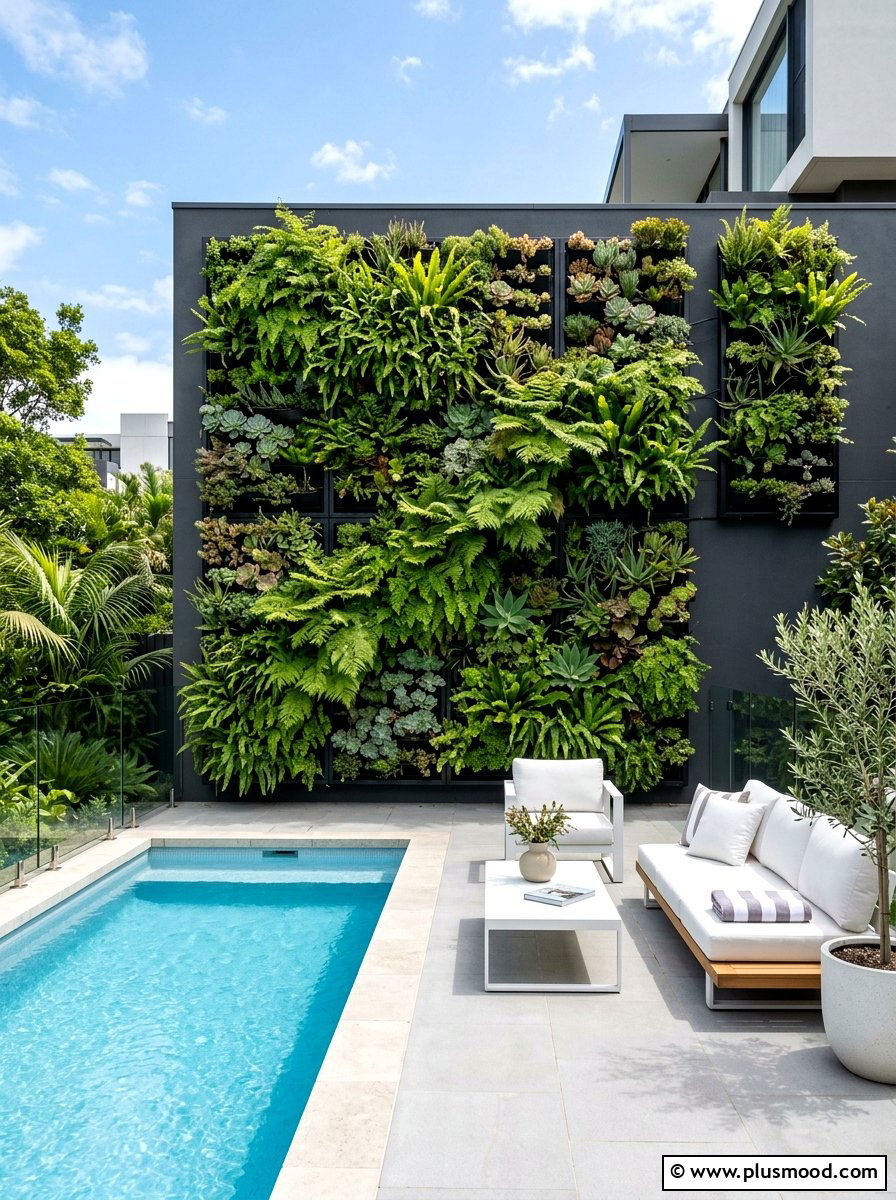
21. Hidden Jungle Pool Retreat
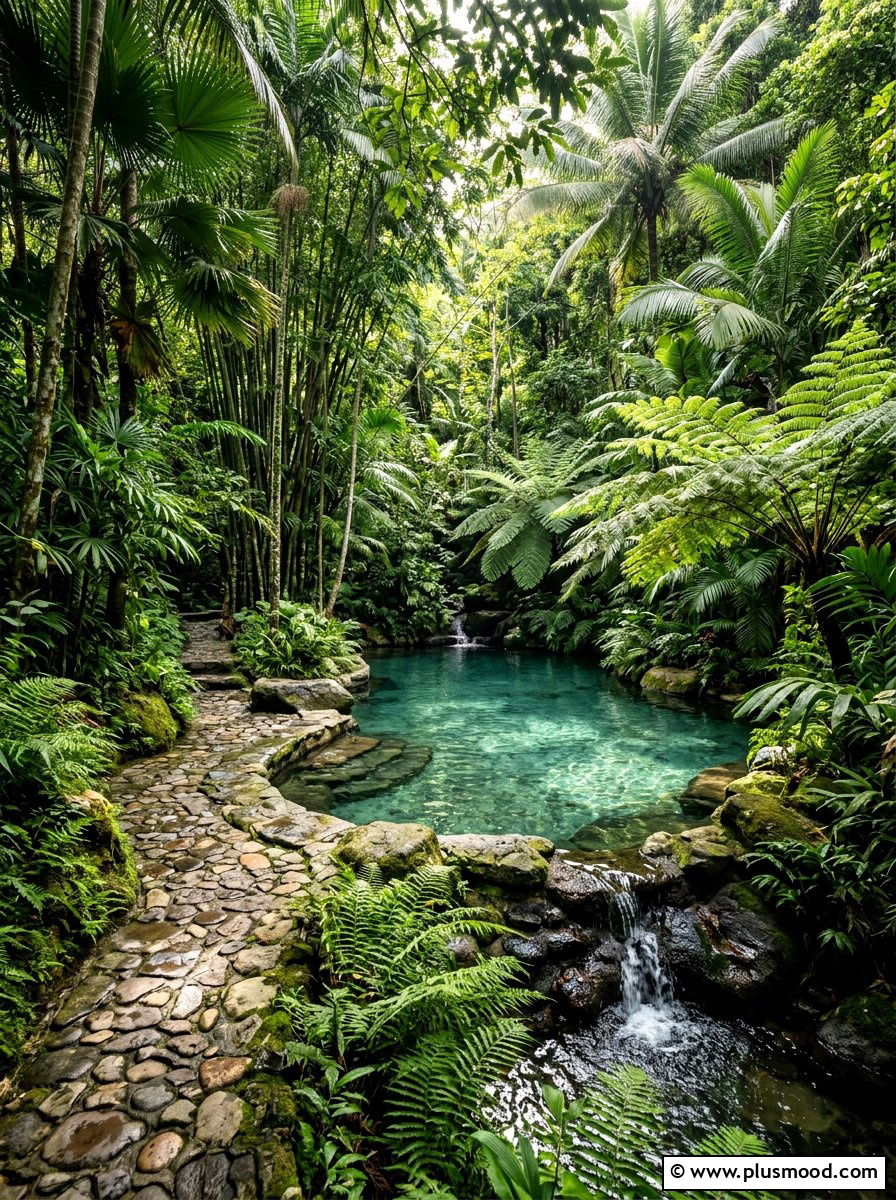
If you prefer a more overgrown and natural look, you can create a "hidden" pool by surrounding it with dense Japanese plants. Using a mix of tall bamboo, large-leafed hostas, and spreading ferns creates a lush canopy that hides the pool from view. This approach makes the pool feel like a secret pond found deep in a forest. Winding stone paths lead the way through the foliage until you suddenly come upon the clear blue water. This design focuses on privacy and a sense of discovery, making every swim feel like an adventure. It is a great way to handle an irregular or sloped backyard layout.
22. Floating Step Pool Walkway
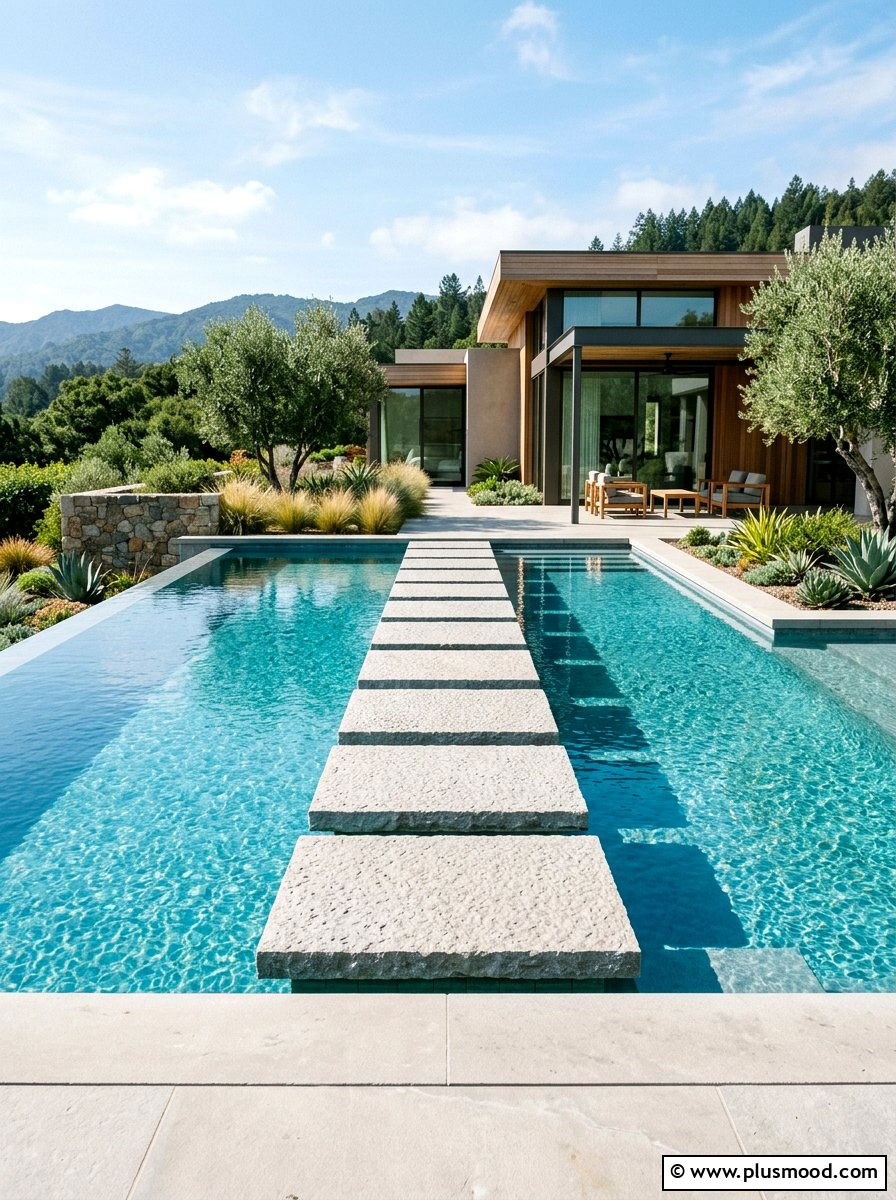
Create a magical feeling by installing large square pavers that appear to float on the surface of your pool water. These stepping stones can lead from one side of the deck to another or out to a small central sunbathing platform. This architectural feature is very popular in high-end Japanese-inspired villas because it creates a seamless connection between land and water. The clean lines of the pavers provide a modern look that still feels very much in line with the minimalist theme. It adds an interactive element to the pool that kids and adults alike will find fascinating. It is a bold and stylish design choice.
23. Azalea Bush Pool Border
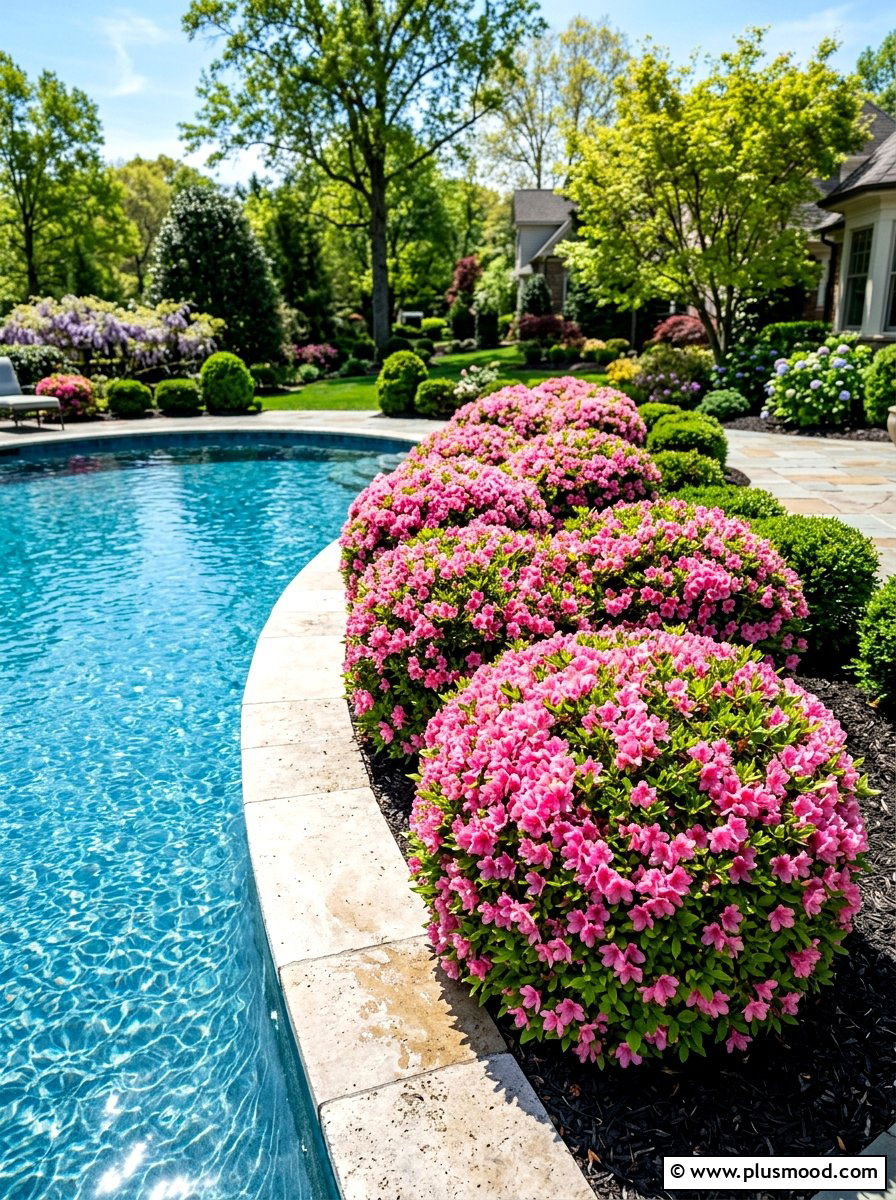
Azaleas are a staple of Japanese gardens because they can be pruned into tight, round mounds that look like green rolling hills. When they bloom, they cover the pool area in a blanket of vibrant pink, purple, or white flowers. Planting a row of these bushes along the edge of your pool deck creates a soft and colorful border that defines the space. Their evergreen leaves ensure that the garden looks full and healthy even when the flowers are gone. Pruning them into "karikomi" shapes adds a structured, manicured look that balances out more wild-looking plants. They are reliable and beautiful for pool borders.
24. Fern Garden Pool Surround
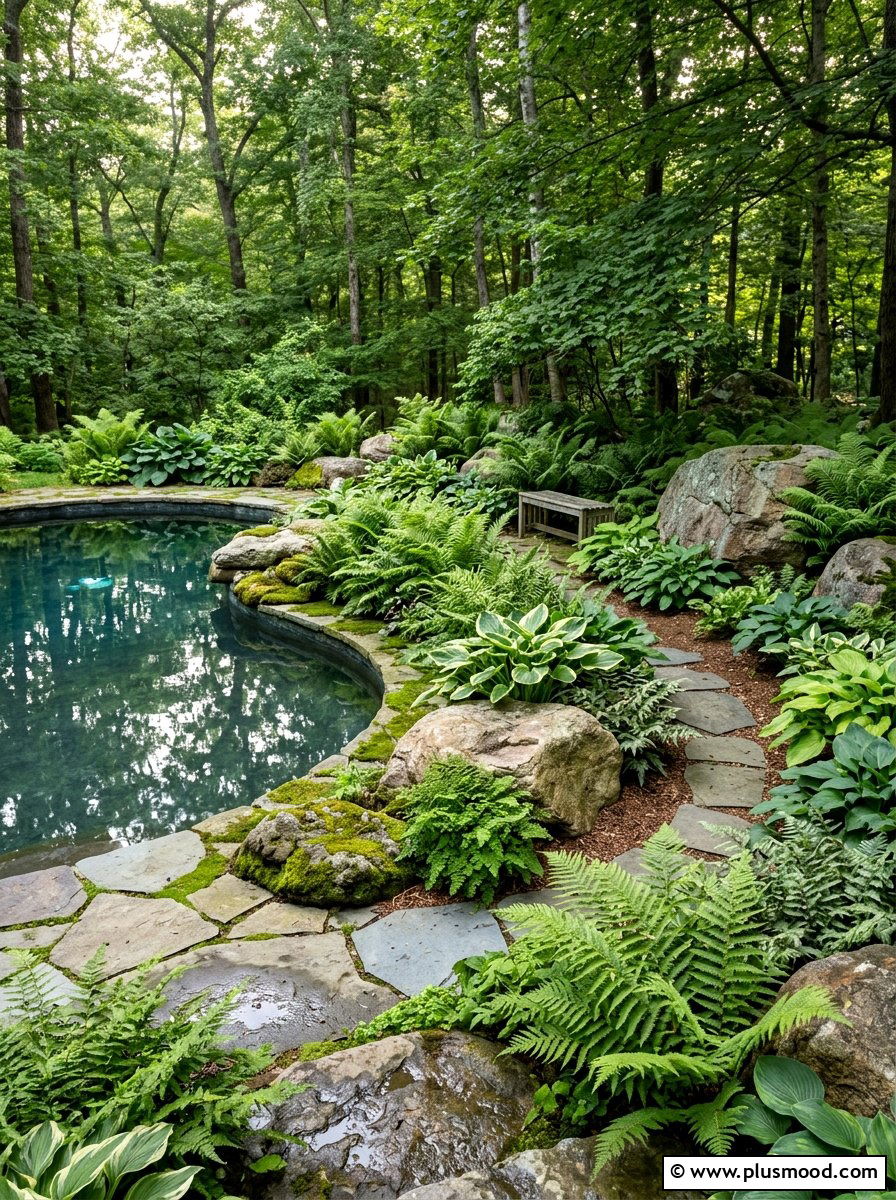
Ferns thrive in the humid and often shaded areas around a swimming pool, making them a perfect choice for a Japanese theme. Their feathery fronds add a delicate texture that looks wonderful tucked between large boulders or under the shade of a maple tree. Varieties like the Japanese Painted Fern offer unique silver and purple hues that add a subtle pop of color. Ferns are excellent for softening the hard edges of stone coping and making the pool look more integrated into the earth. They create a cool, refreshing atmosphere that is very welcome on a hot summer day. They are low-maintenance and very resilient.
25. Minimalist Gravel Pool Deck
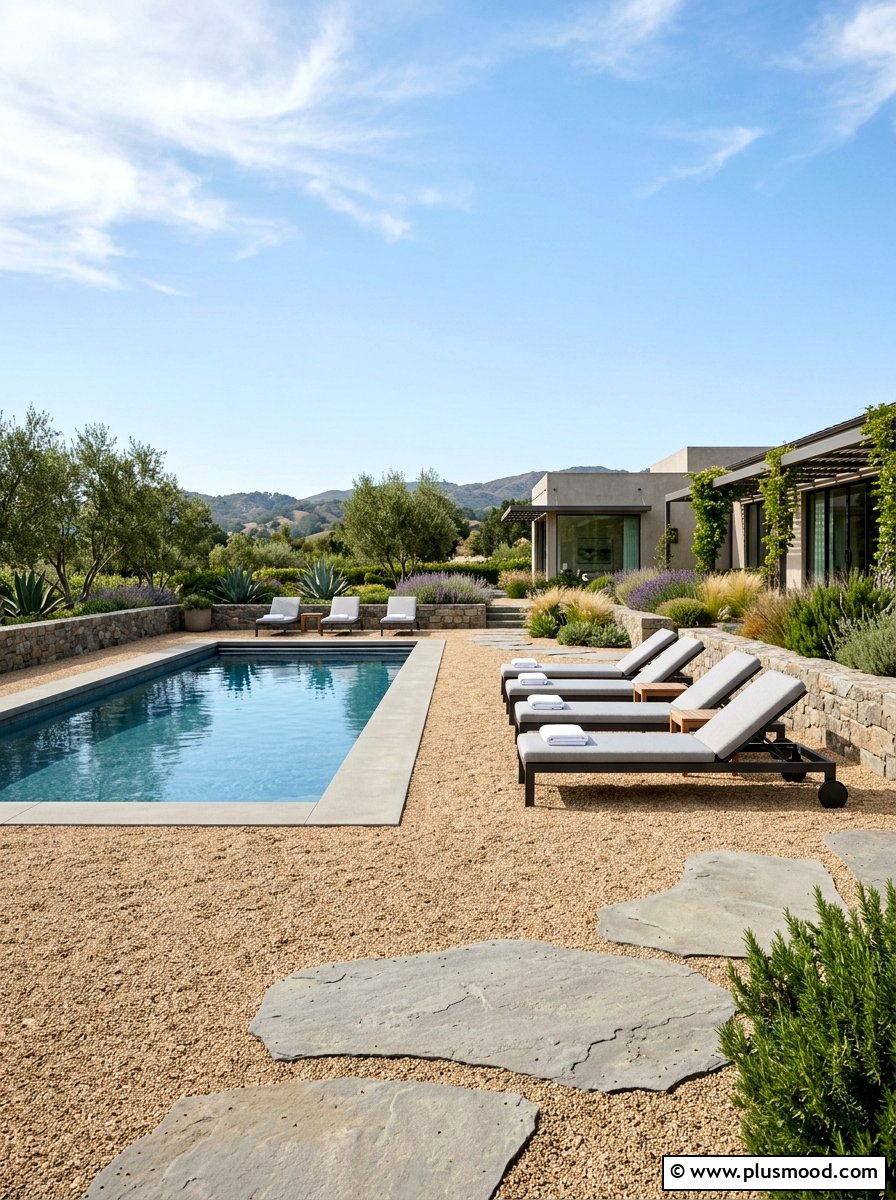
For a clean and contemporary take on Japanese style, consider using fine gravel for your entire pool lounge area. Unlike large pavers or wood, gravel is permeable, allowing water to drain away quickly and keeping the ground cool. You can place large flat stones within the gravel to create stable areas for lounge chairs and tables. The crunching sound of gravel underfoot is a classic element of Zen gardens that heightens the sensory experience of the outdoors. It provides a neutral color palette that allows your blue pool and green plants to truly shine. This approach is affordable, stylish, and very easy to install.
Conclusion:
Designing a pool area with a Japanese style is about more than just picking the right plants; it is about creating an environment that fosters peace and reflection. By using natural materials like stone, wood, and water, you can build a landscape that feels timeless and deeply connected to nature. Each of these ideas offers a unique way to bring balance and beauty to your backyard, whether you prefer a minimalist look or a lush forest vibe. The key is to focus on simplicity, quality, and the intentional placement of every element. Once your project is complete, you will have a stunning viral-worthy retreat that provides a daily escape from the stresses of modern life.
Related posts:
Leave a Reply