
As the frost begins to melt and the first hints of warmth touch the soil, nothing signals the arrival of spring quite like the cheerful crocus. These resilient little bulbs are often the very first flowers to poke through the snow, offering a much-needed burst of color after a long, gray winter. Whether you are looking to create a sprawling purple meadow in your front yard or a delicate arrangement in a small patio container, the versatility of these early bloomers is truly unmatched. Integrating these hardy perennials into your landscape not only boosts curb appeal but also supports early-season pollinators like bees. This guide explores creative ways to showcase these stunning flowers across your entire outdoor space.
1. Purple Crocus Lawn

Imagine walking out onto a velvet carpet of deep violet blooms before your grass even turns green for the season. This classic spring look involves naturalizing bulbs directly into your turf to create a wild, meadow-like appearance that feels both organic and magical. You simply scatter the bulbs randomly across the grass and plant them exactly where they fall to avoid a staged or linear look. It provides an essential early food source for hungry bees while adding massive curb appeal to your property. Since these flowers finish blooming before the first lawn mowing is usually necessary, they integrate perfectly into a low-maintenance yard while providing a spectacular visual.
2. White Crocus Border
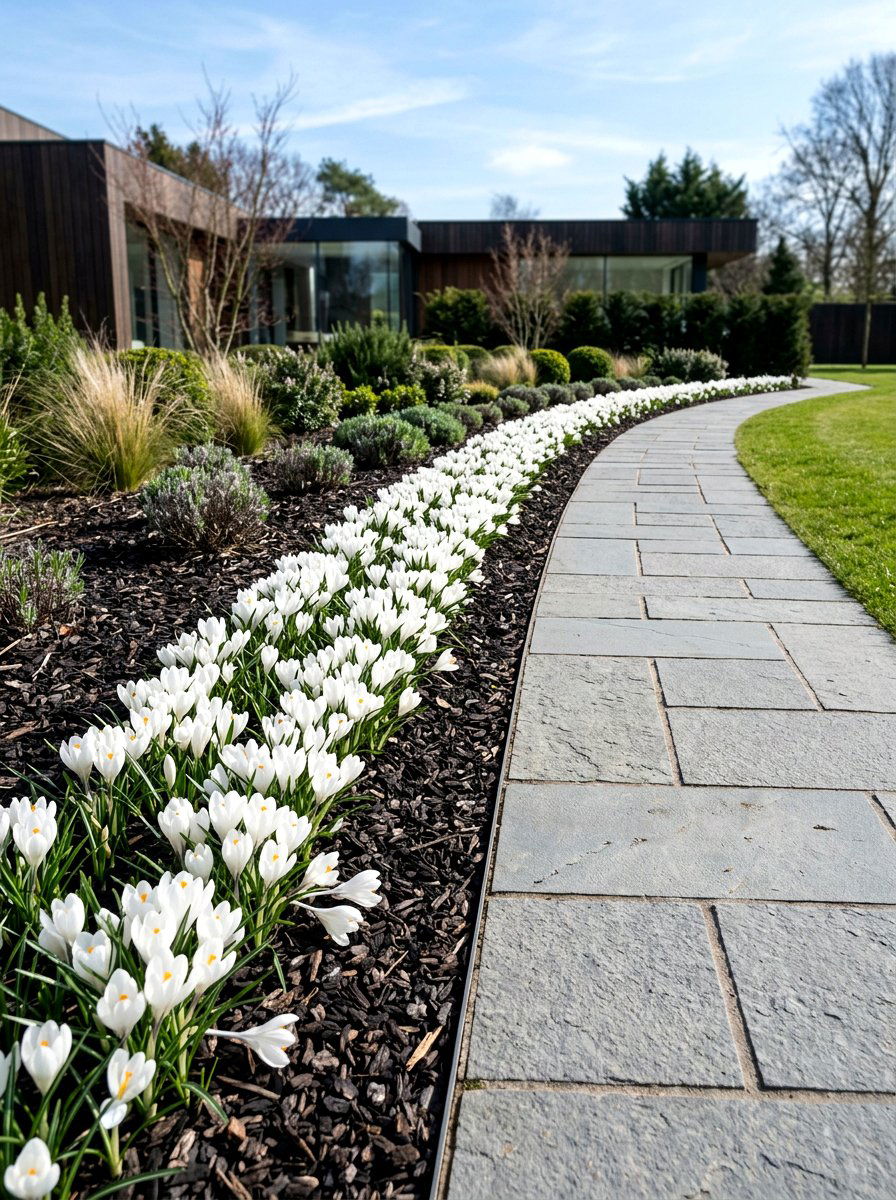
Creating a crisp and clean edge along your garden beds using pure white crocuses provides a sophisticated look that brightens any landscape. These snowy blooms act as a brilliant highlighter for the dark, damp soil of early spring, making your entire garden feel refreshed and intentional. When planted closely together in a thick line, they form a luminous boundary that defines walkways or separates the lawn from your planting zones. This monochromatic approach is perfect for modern or minimalist garden styles where simplicity and high contrast are the primary goals. The white petals catch the morning light beautifully, creating a glowing effect that lasts for several weeks.
3. Crocus In Rock Garden
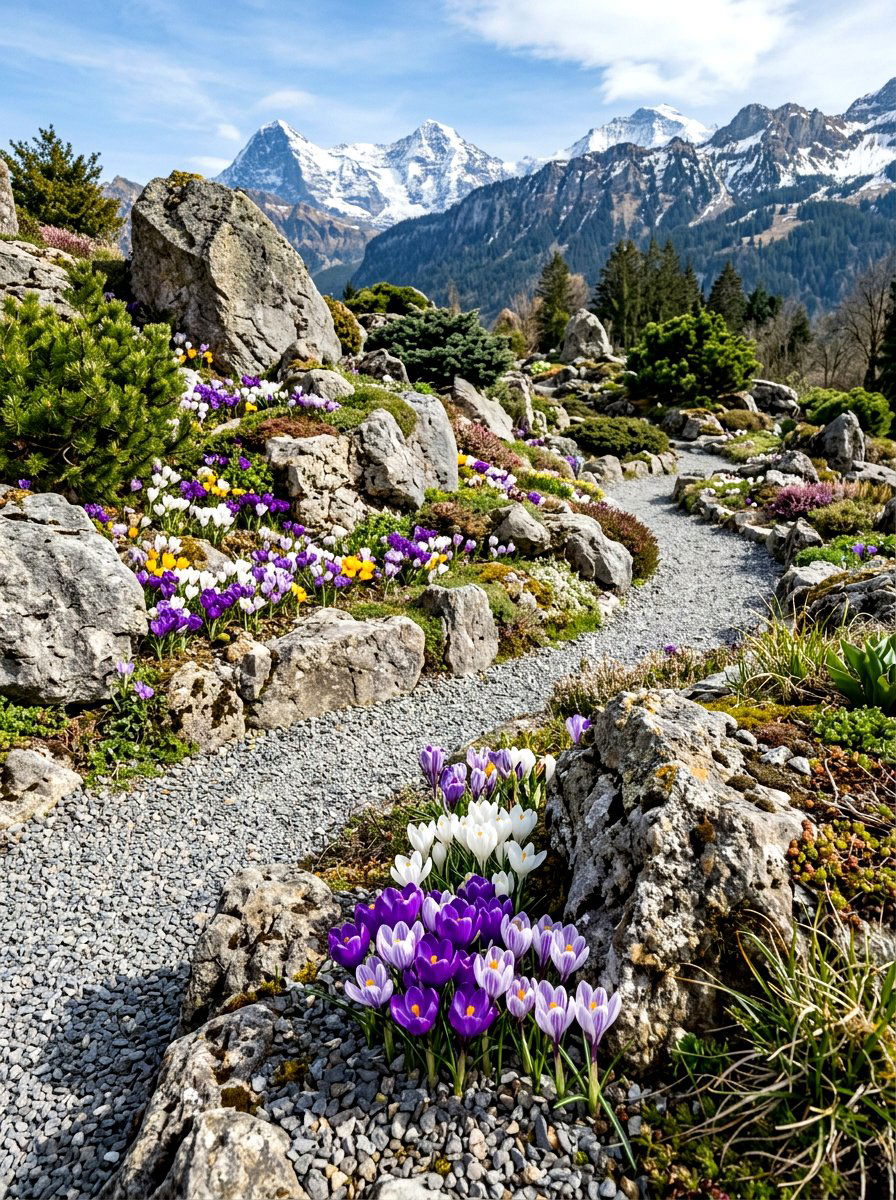
Rock gardens offer the perfect drainage and rugged backdrop for delicate spring bulbs to truly shine against the cold stone textures. Tucking small clusters of these flowers into the crevices between large boulders or among gravel paths creates a naturalistic scene reminiscent of alpine meadows. The heat absorbed by the stones during the day can even help the bulbs bloom slightly earlier than those planted in open soil. Using a mix of heights and textures within the rockery ensures that the low-profile crocuses remain the focal point without being overshadowed by larger shrubs. This setup is ideal for homeowners who want a high-impact, drought-tolerant spring display.
4. Mixed Bulb Container
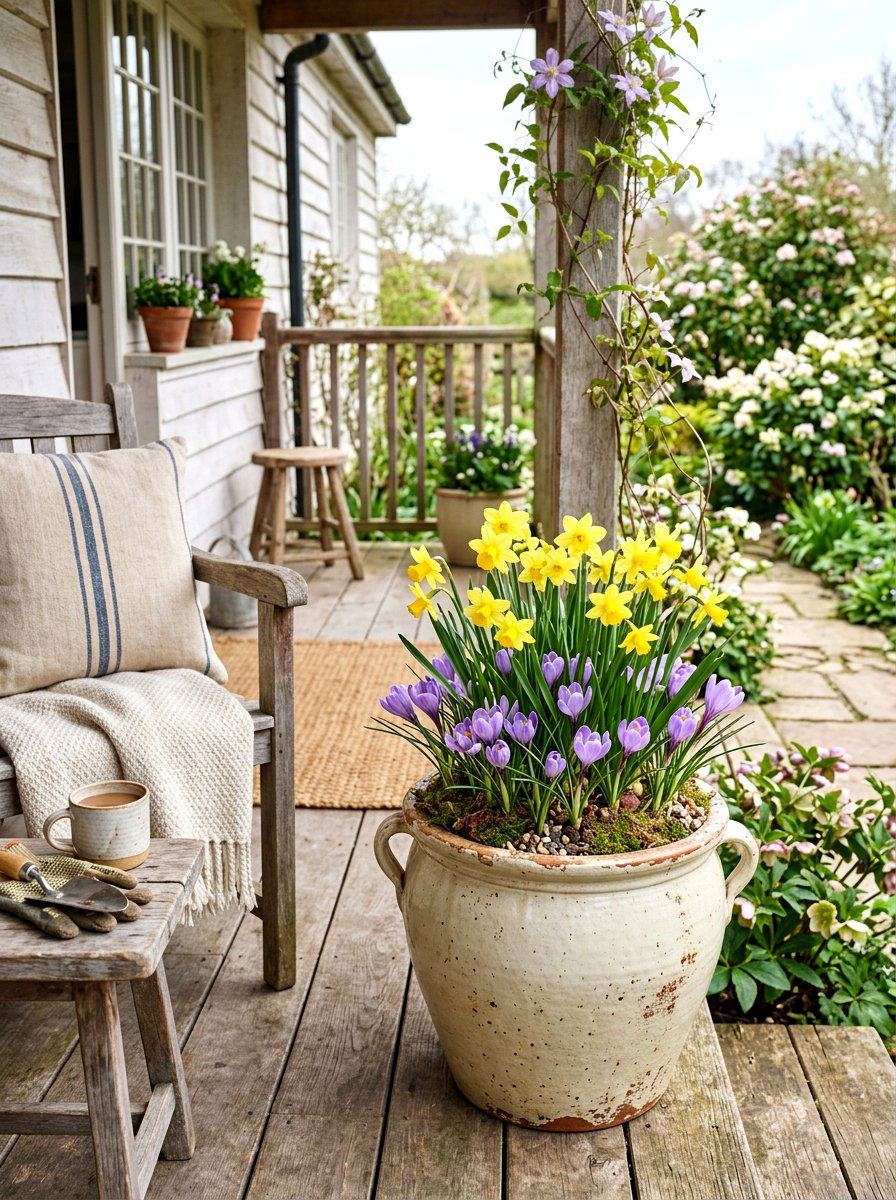
Grouping different types of early spring flowers into a single large pot creates a portable explosion of color for your porch. By layering crocus bulbs with taller species like daffodils or tulips, you can achieve a "bulb lasagna" effect that provides a long-lasting floral show. The crocuses will typically emerge first, surrounding the base of the taller plants with a lush ring of jewel-toned petals and grassy foliage. This method is fantastic for small spaces or urban balconies where ground planting isn't an option but a festive spring atmosphere is still desired. Choose a frost-proof terracotta or ceramic pot to ensure the bulbs stay safe throughout the winter.
5. Yellow Crocus Drift
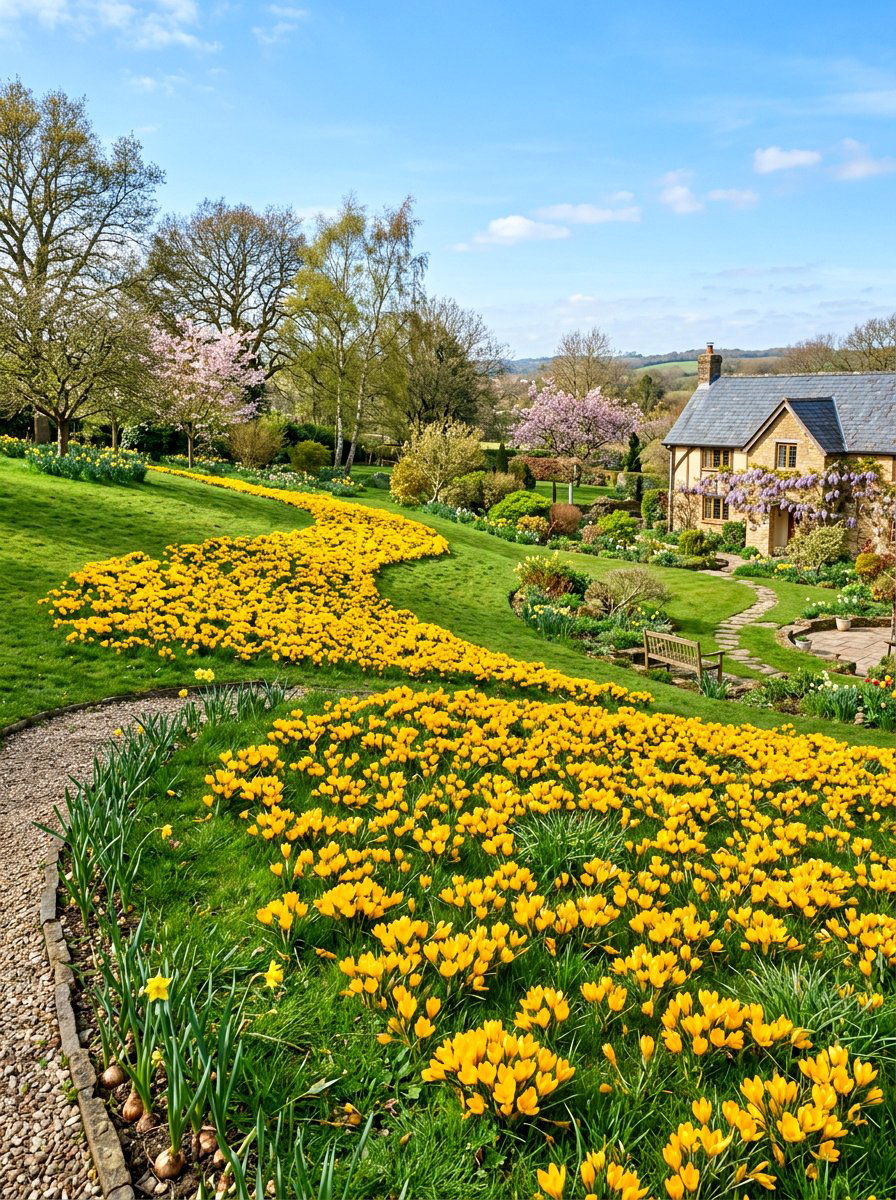
Nothing mimics the warmth of the sun quite like a massive drift of bright yellow crocuses flowing across a gentle garden slope. Planting these bulbs in large, sweeping groups rather than small patches creates a high-impact visual that can be seen from far across the neighborhood. The golden hue provides a stunning contrast against dark mulch or dormant green grass, instantly lifting the mood of any outdoor environment. When you plant them in a flowing, wave-like shape, it guides the eye through the landscape and makes the garden feel larger and more cohesive. These sunny blooms are particularly hardy and reliably return year after year.
6. Crocus Under Deciduous Trees
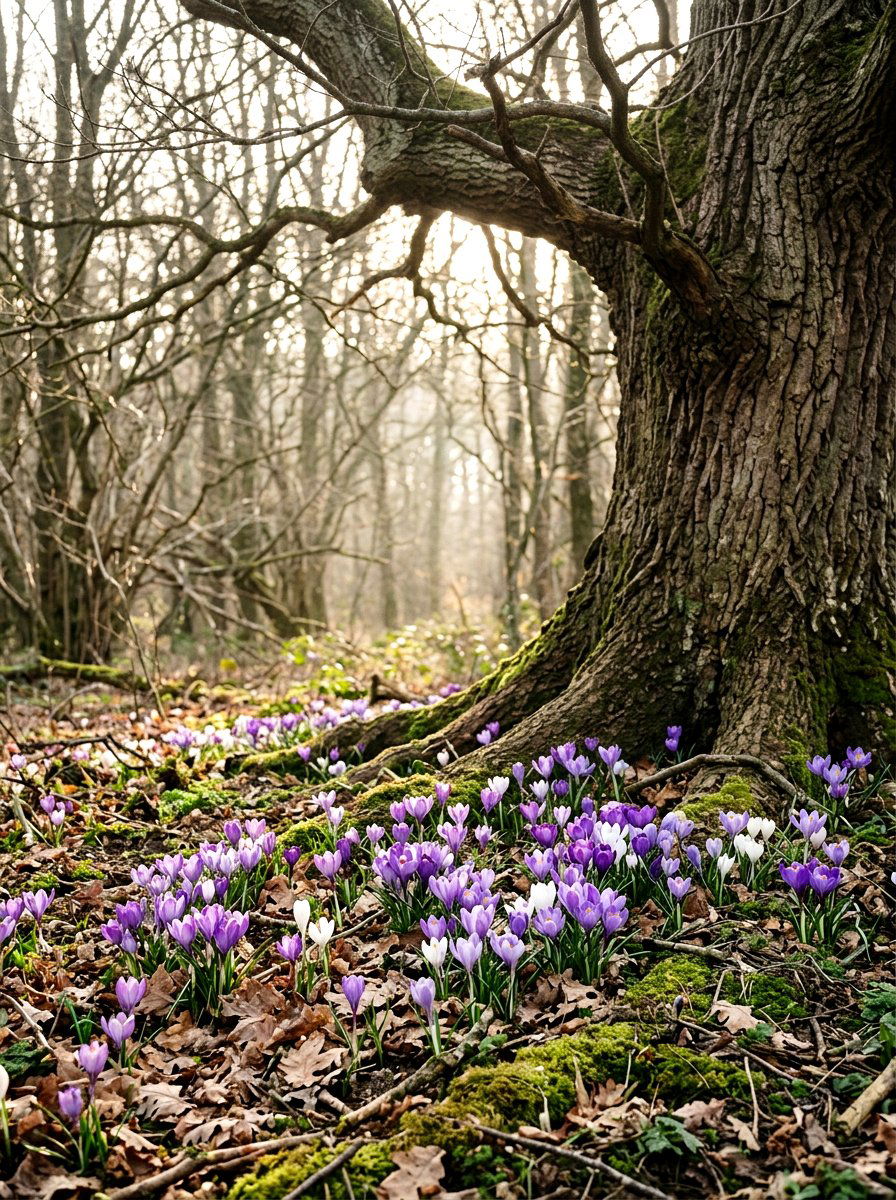
The bare branches of oak or maple trees in early spring allow plenty of sunlight to reach the ground for forest bulbs. Planting a circular ring of crocuses around the base of a large tree takes advantage of this temporary sunny window before the canopy fills in. This design idea creates a whimsical, fairy-tale aesthetic that makes your backyard feel like an ancient woodland even in a suburban setting. The fallen leaves from the previous autumn act as a natural mulch, protecting the bulbs during the cold winter months while providing organic nutrients. It is a smart way to utilize space that often remains empty or brown.
7. Spring Bulb Window Box
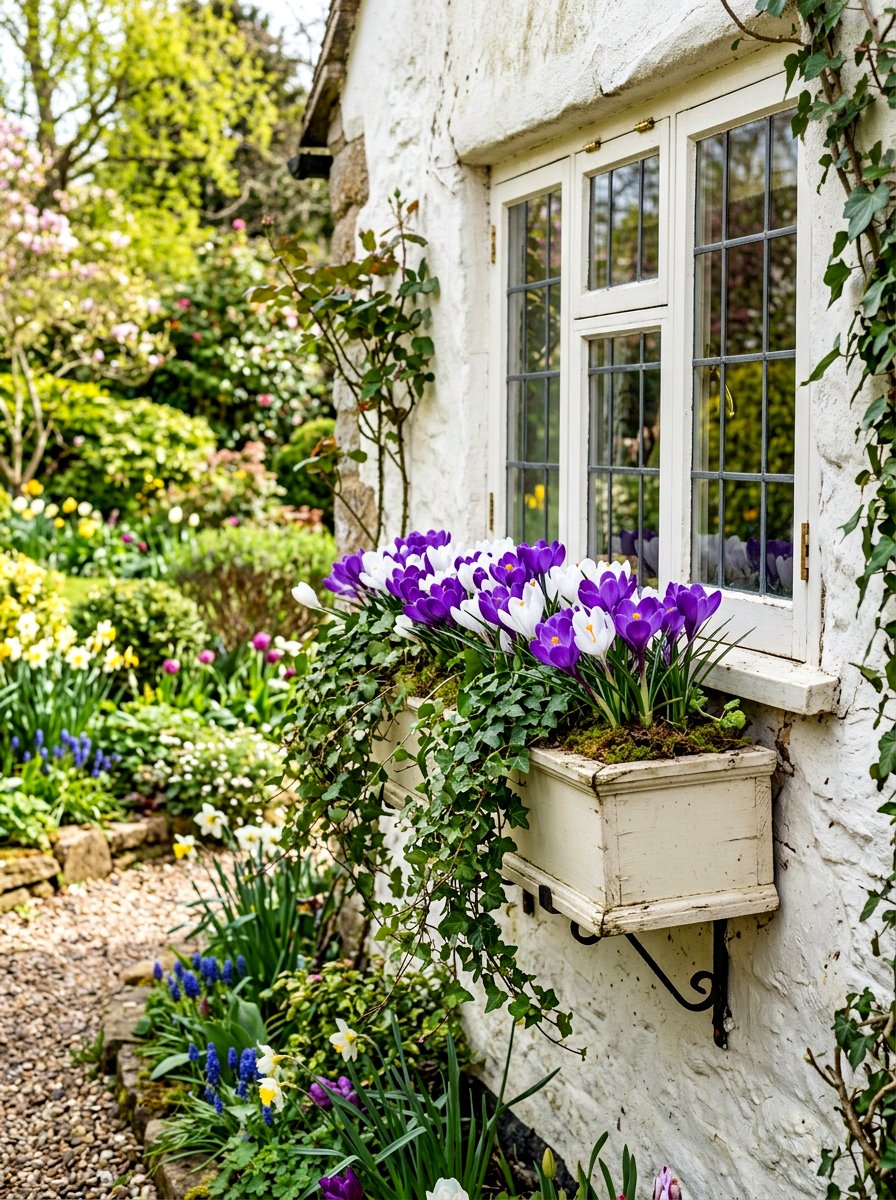
Dress up your home’s exterior by filling your window boxes with a dense arrangement of colorful crocuses and trailing ivy. This elevated planting style brings the beauty of spring right up to your eye level, allowing you to enjoy the blooms from both inside and outside. Because window boxes are more exposed to the elements, the early-blooming nature of crocuses makes them a perfect choice for resisting late-season chills. You can mix various shades like lavender, gold, and cream to create a vibrant tapestry that greets you every time you look out the window. It is an easy way to add instant charm to your home's facade.
8. Crocus Along Garden Path
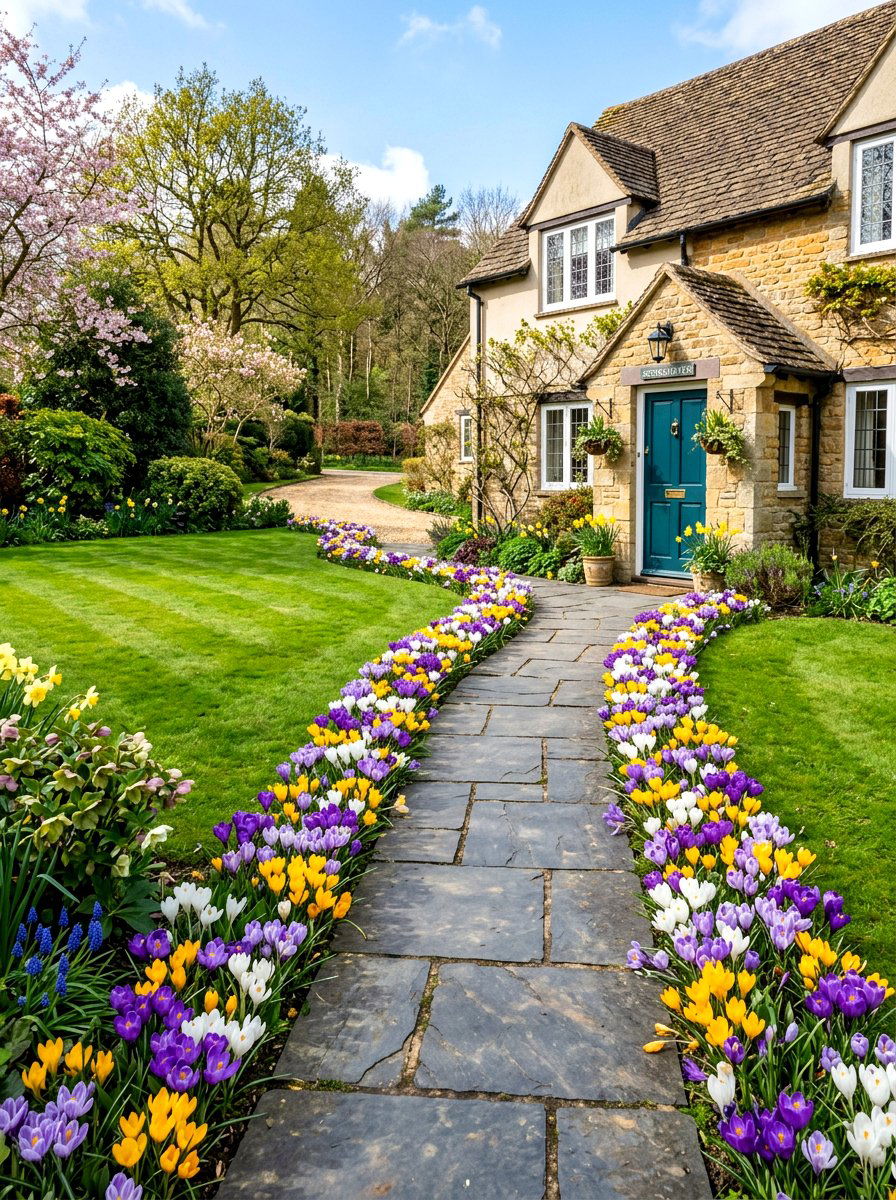
Line your primary walkway with a double row of early spring bulbs to create an inviting entrance for guests and family members. As you walk toward your front door, the sight of hundreds of tiny petals opening in the sunlight creates a joyful and welcoming experience. Using a single color for the entire length of the path produces a formal look, while a random mix of colors feels more cottage-core and relaxed. These low-growing plants won't overgrow the walkway or block your view, making them a practical choice for narrow spaces. The sweet fragrance of some varieties is an added bonus for anyone passing by.
9. Naturalized Woodland Crocus
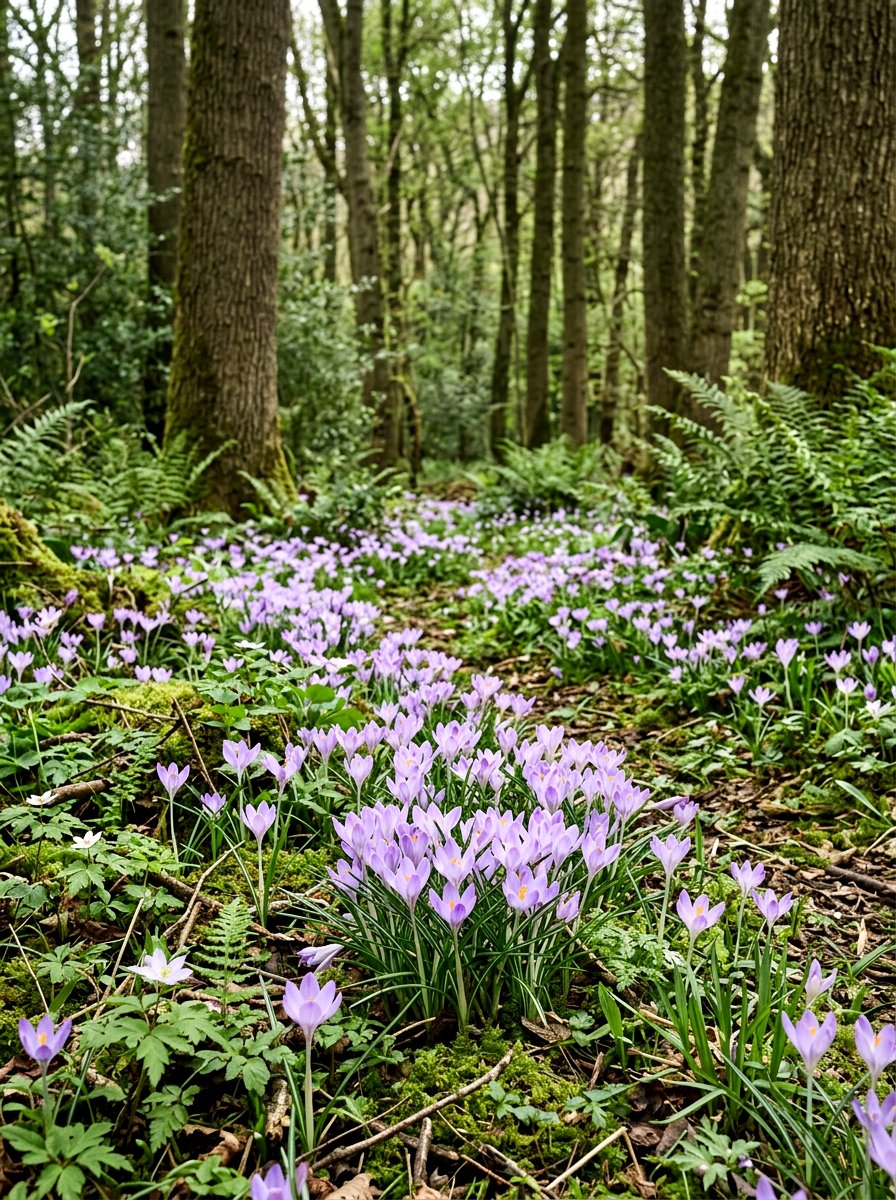
If you have a shaded or semi-wooded area on your property, you can create a stunning secret garden by naturalizing wild-type crocuses. These varieties are often smaller and more delicate, blending seamlessly into the mossy ground and fallen twigs of a natural forest floor. Over time, these bulbs will multiply and spread, eventually forming a thick carpet that looks like it has been there for centuries. This approach requires very little maintenance, as the natural cycle of the woods provides all the mulch and water the plants need. It is the ultimate way to bring a sense of peace and wild beauty to your landscape.
10. Crocus In Raised Beds
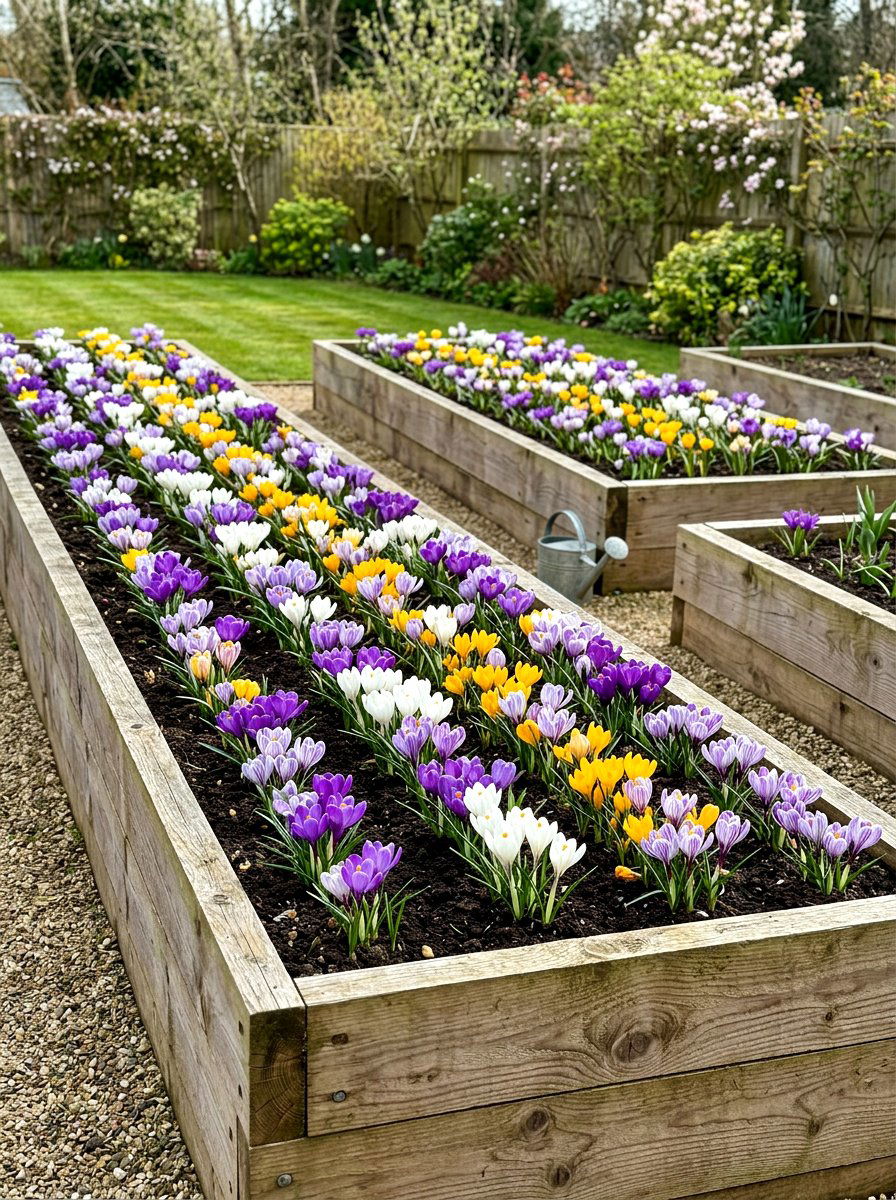
Raised garden beds are not just for vegetables; they provide an excellent stage for displaying the intricate details of spring bulb varieties. The elevated soil warms up faster in the spring sun, often resulting in earlier blooms than those planted in the cold ground. By keeping the flowers higher up, you can more easily appreciate the delicate striping and bright orange stamens that characterize many popular crocus types. This setup also keeps the bulbs safe from heavy foot traffic or accidental digging during other garden chores. It is a tidy and organized way to manage your spring color while keeping the rest of your garden accessible.
11. Striped Crocus Display
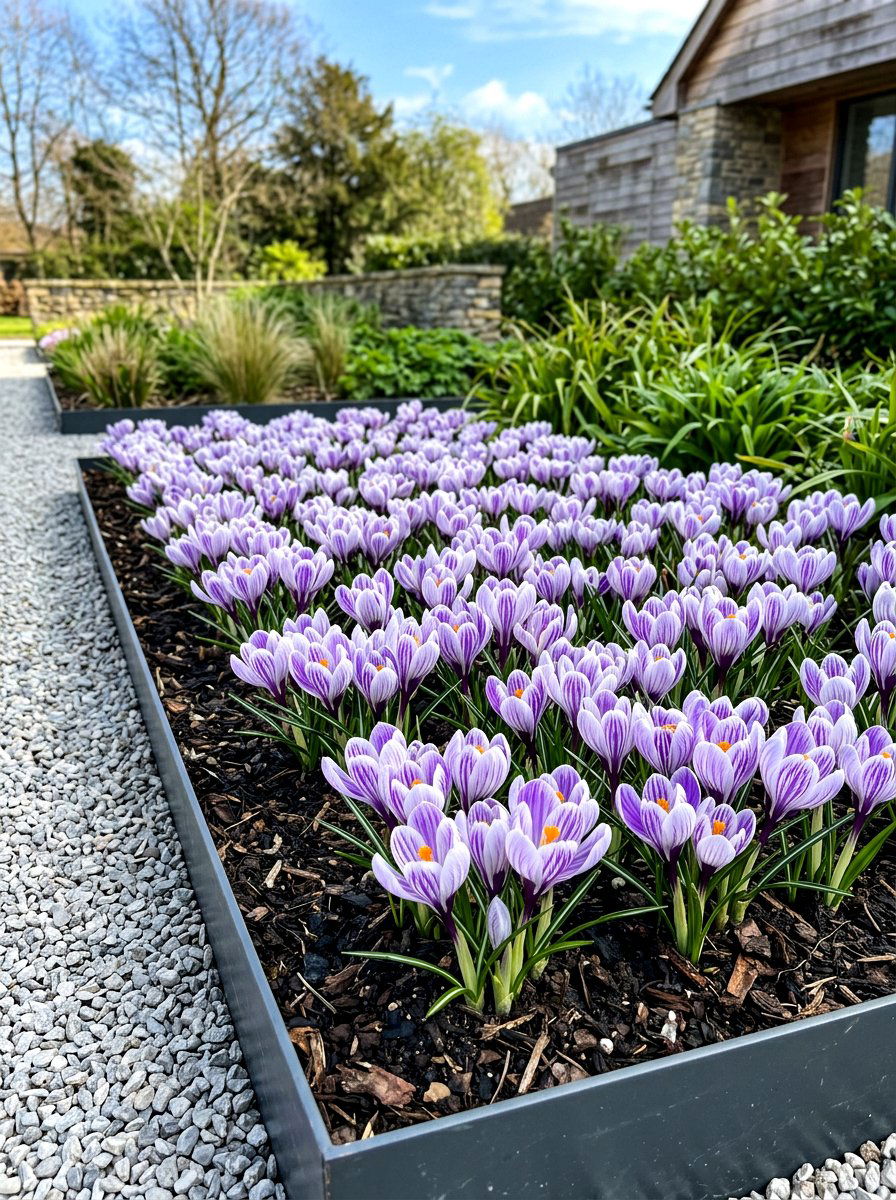
Using unique bicolor varieties like the "Pickwick" crocus adds a layer of artistic complexity and visual interest to your early spring flower beds. These specific flowers feature stunning silver and lilac stripes that look like they were hand-painted onto each petal, creating a high-end designer look. When planted in large groups, the pattern becomes even more mesmerizing, drawing the eye in for a closer look at the intricate details. Striped varieties pair exceptionally well with solid purple or white flowers, as the contrast helps the patterns pop even more significantly. They are a conversation starter and a favorite for those who enjoy unique botanical specimens in their yard.
12. Crocus And Snowdrop Mix
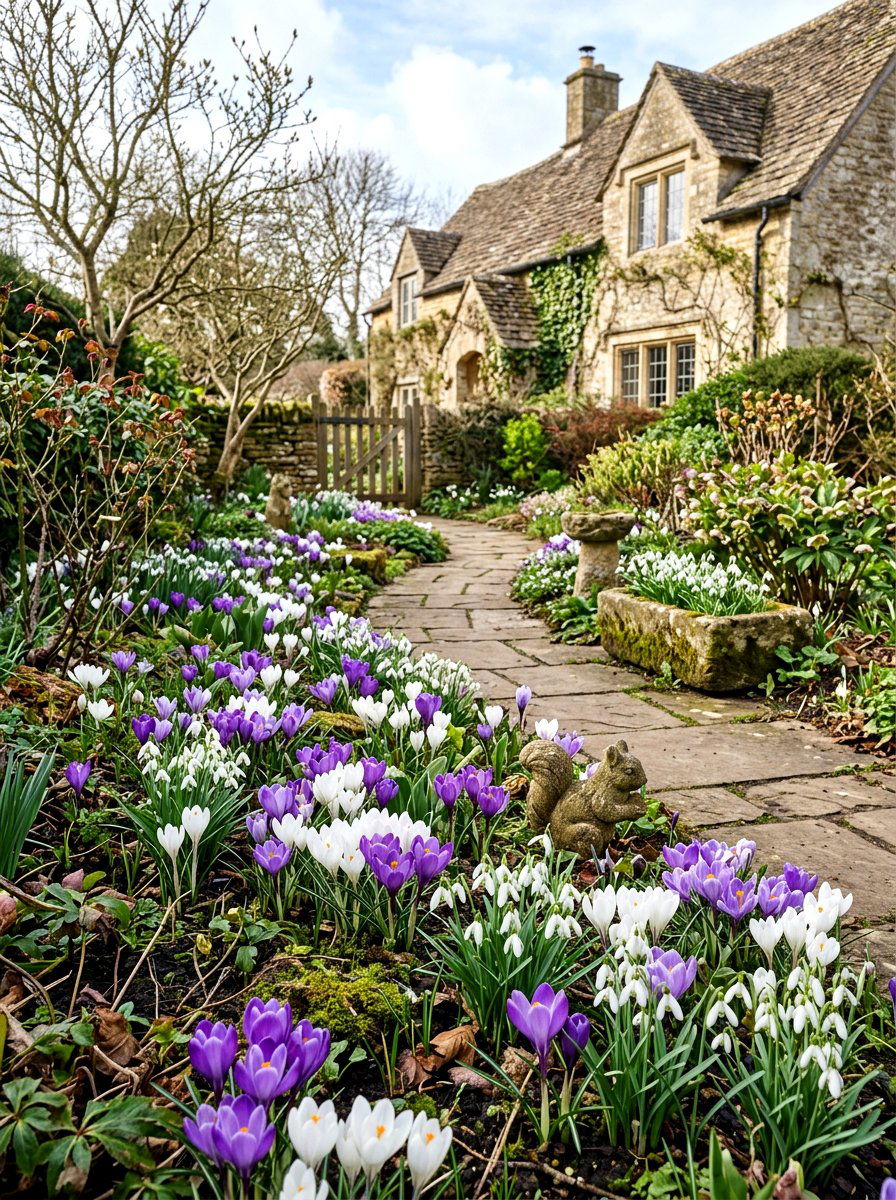
Combining white snowdrops with deep purple crocuses creates one of the most classic and elegant color palettes in the world of spring gardening. Both plants share a similar height and bloom time, allowing them to intermingle perfectly for a cohesive and balanced look in your flower beds. The drooping, bell-shaped heads of the snowdrops provide a lovely structural contrast to the upward-facing, cup-like shapes of the crocuses. This pairing looks especially beautiful when planted near a stone wall or at the edge of a patio where the subtle details can be seen clearly. It is a timeless combination that never goes out of style for traditional gardens.
13. Large Flowering Crocus Bed
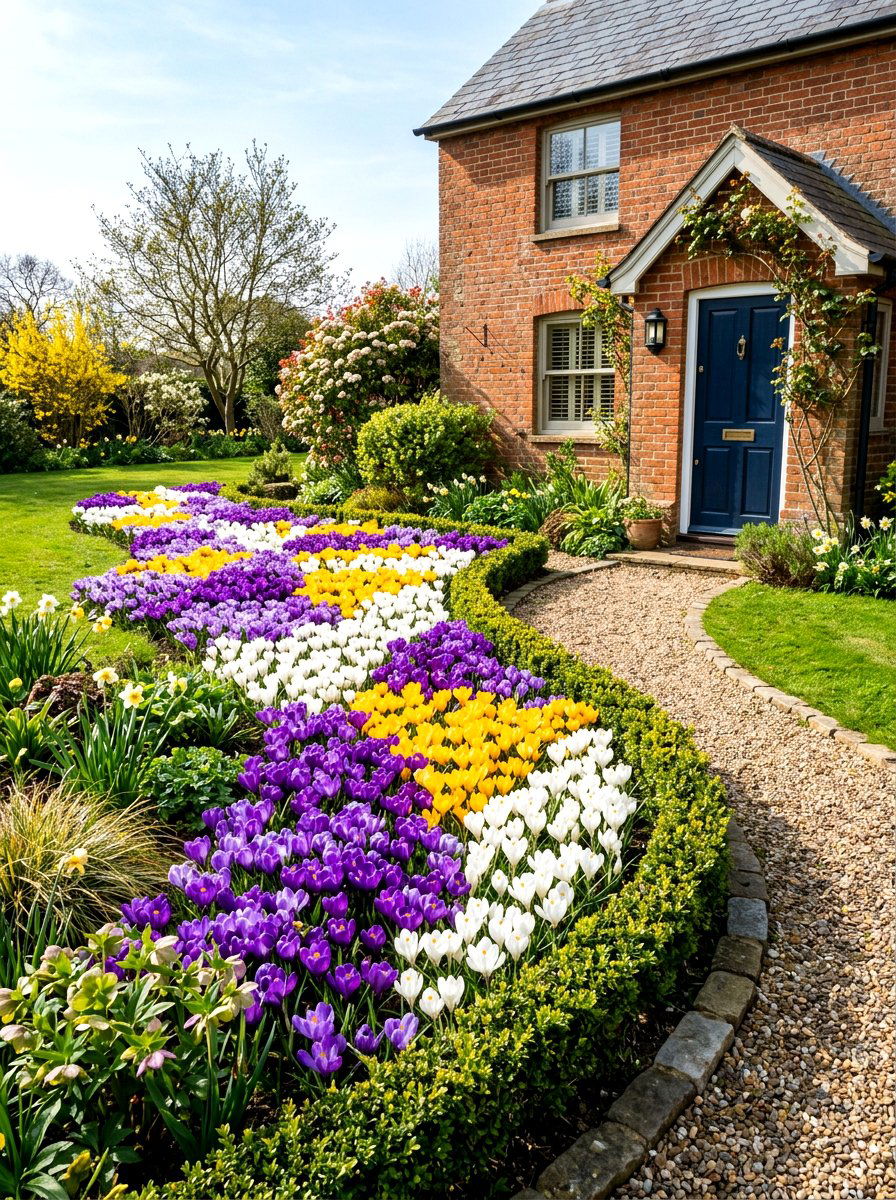
For maximum visual impact, choose giant Dutch crocus varieties and plant them in a dedicated, high-density flower bed near your home’s main entrance. These specific cultivars produce much larger blooms than the standard species, ensuring they are seen even from the street or a moving car. When you pack them tightly together, they create a solid block of color that looks professional and well-maintained, almost like a floral installation. This approach works best in a circular or rectangular bed that is clearly defined by plastic or metal edging. It is the perfect solution for homeowners who want a big, bold statement to start their gardening season.
14. Crocus In Terracotta Pots
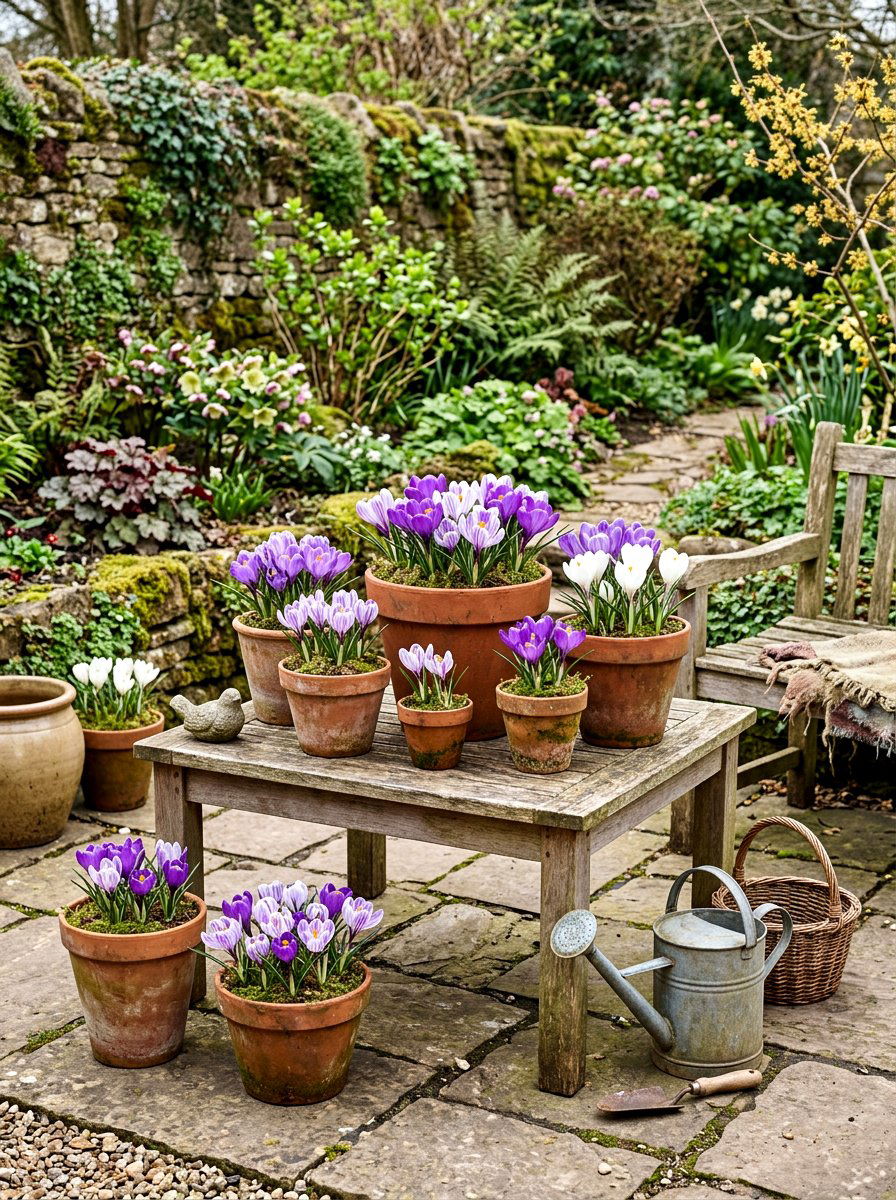
Simple clay pots filled with vibrant purple or yellow crocuses offer a rustic and charming aesthetic that fits perfectly on any porch or patio. Terracotta is a breathable material that prevents the bulbs from rotting in wet spring soil, making it a functional choice as well as a beautiful one. You can arrange several pots of different sizes in a cluster to create a multi-leveled display that adds depth to your outdoor living area. Once the flowers have finished blooming, the pots can easily be moved to a less visible spot while the foliage dies back naturally. This flexibility makes container gardening a favorite for many enthusiasts.
15. Blue Crocus Meadow
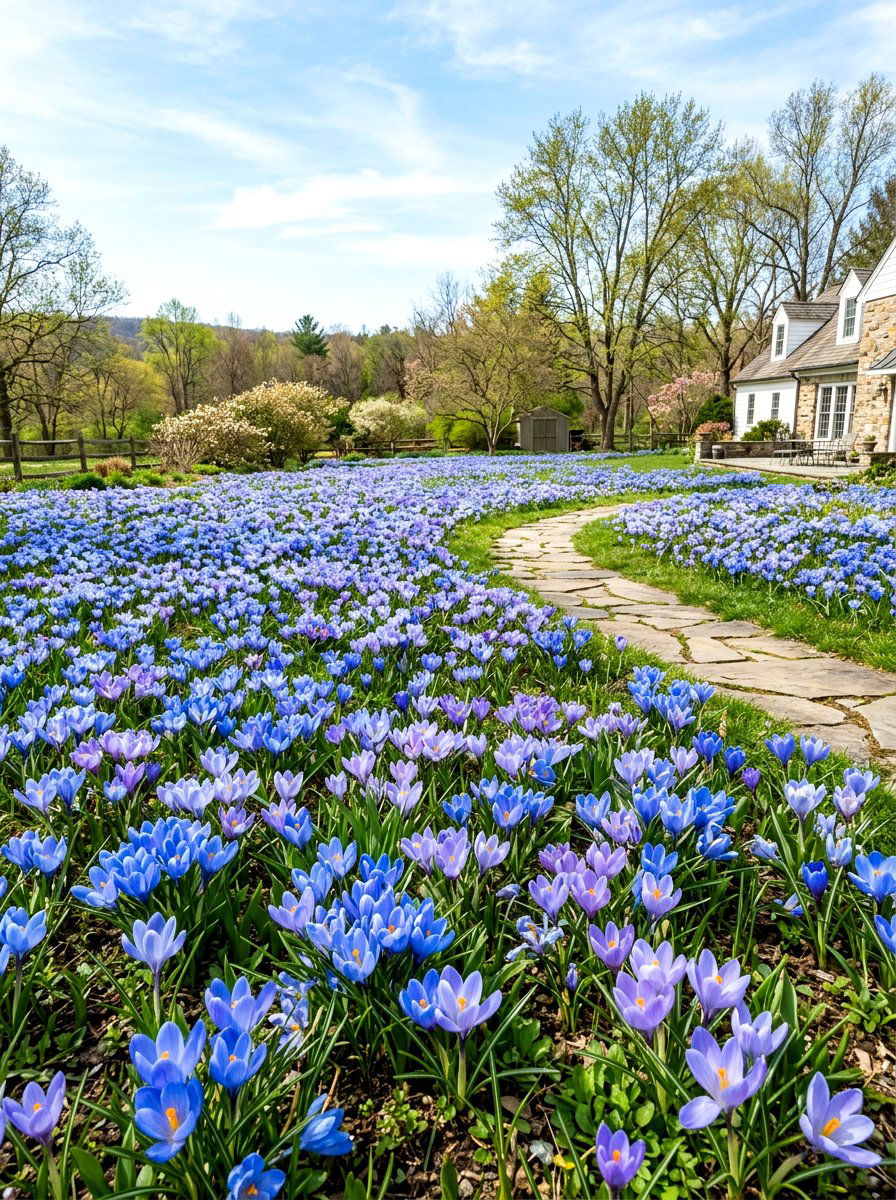
Transform a side yard or an unused patch of lawn into a dreamy blue meadow by planting thousands of pale lavender and blue bulbs. This cool-toned color palette creates a calming and serene atmosphere that feels like a quiet escape from the busy world outside. While true blue is rare in the floral world, many crocus varieties offer shades that lean heavily toward periwinkle and sky blue. When these flowers open wide in the midday sun, the collective effect is truly breathtaking and looks like a reflection of the spring sky on the ground. It is a sophisticated way to handle large, open spaces with minimal effort.
16. Early Spring Pollinator Garden
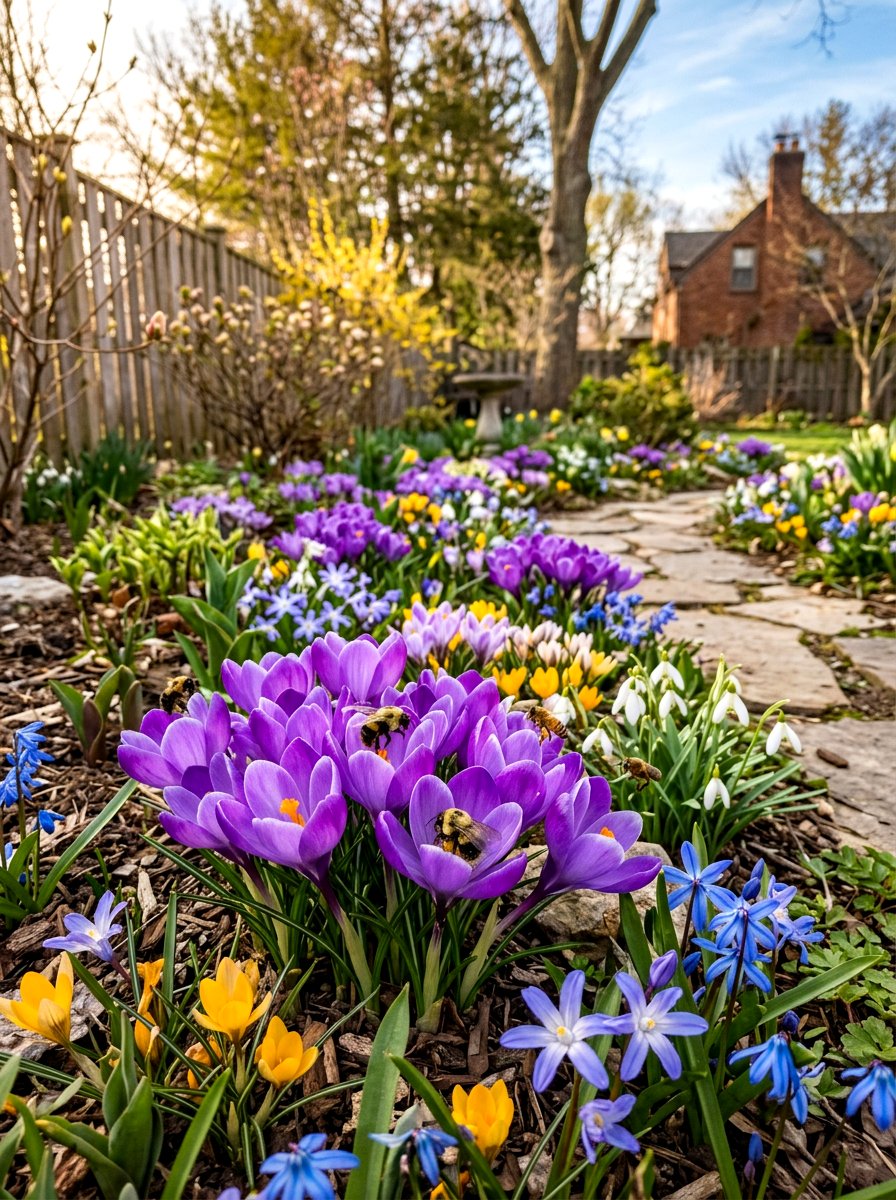
Planting crocuses is a wonderful way to support local ecology by providing a critical food source for bees emerging from hibernation. These early flowers offer high-quality pollen and nectar at a time when very few other plants are in bloom, making your garden a sanctuary for wildlife. To create a pollinator-friendly space, choose a sunny, sheltered spot where insects can forage without being buffeted by cold spring winds. Mixing different colors and varieties ensures a diverse range of nutrients and a longer blooming window for the visiting bees. This thoughtful design choice combines environmental stewardship with undeniable beauty, making your garden serve a greater purpose.
17. Crocus Around Tree Base
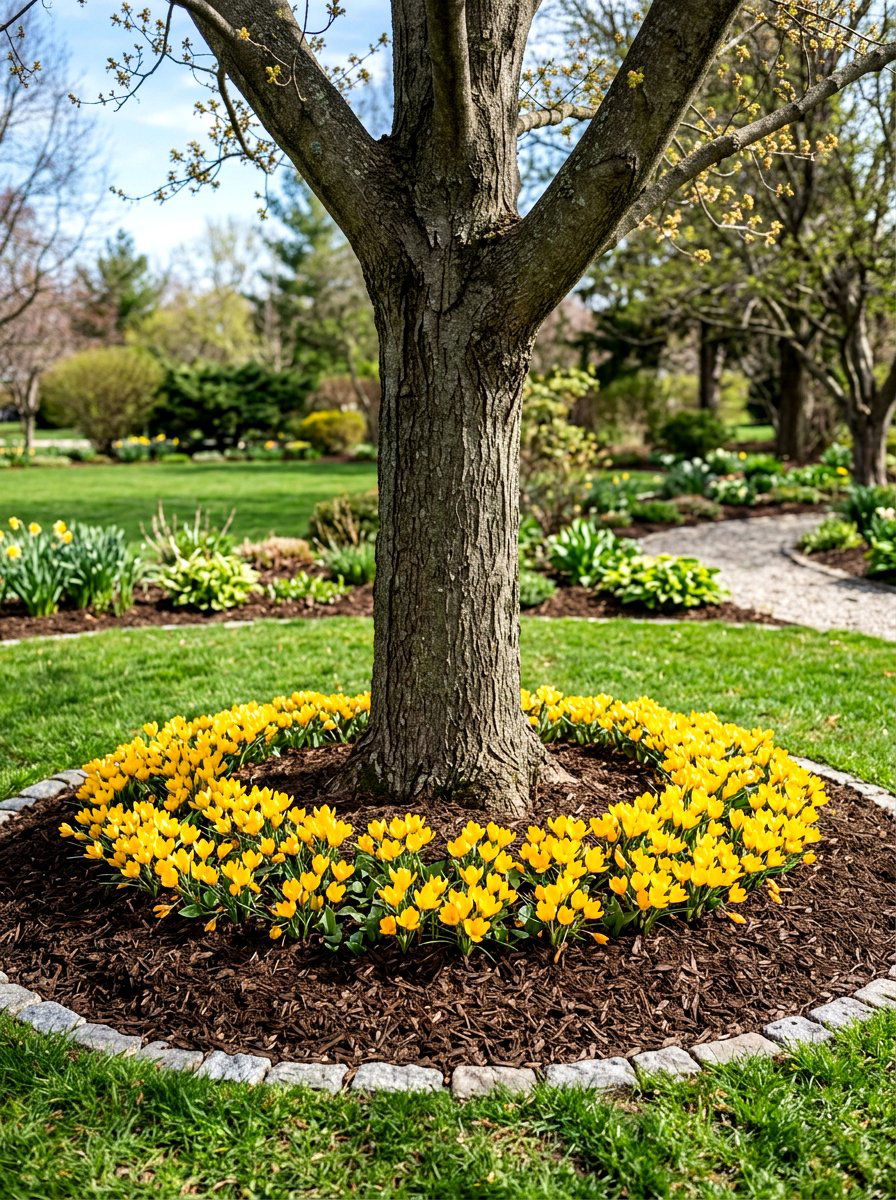
Focusing your planting efforts directly around the trunk of a specimen tree creates a focal point that draws the eye upward and outward. This "tree skirt" of flowers adds a finished and polished look to your landscaping, making even a young tree feel established and grand. Using a mix of early and late-blooming crocuses can extend the show for several weeks, providing a changing tapestry of color as the season progresses. It is important to plant the bulbs carefully between the roots to avoid causing any damage to the tree's health. The result is a charming, naturalized look that enhances the structural beauty of your favorite trees.
18. Miniature Crocus Rockery
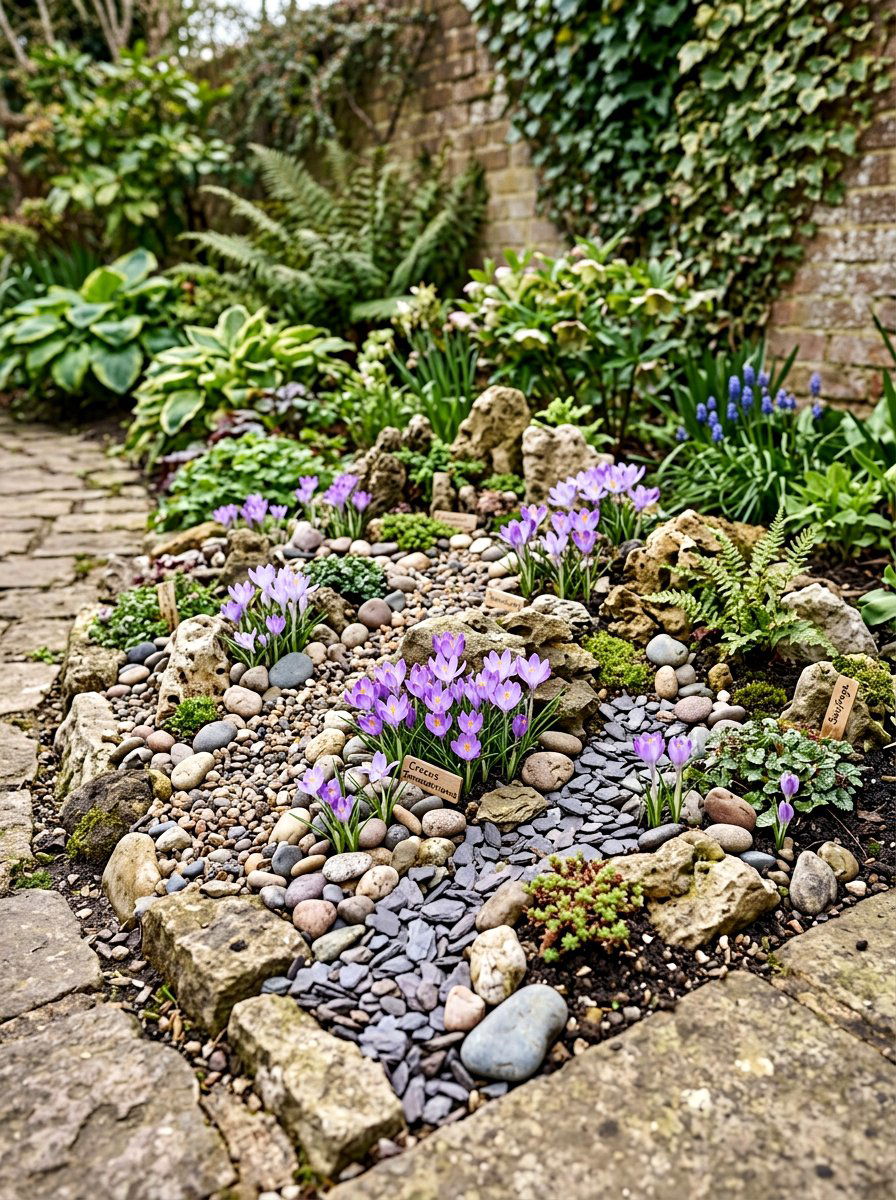
If you have a very small garden or just a tiny nook near your stairs, a miniature rockery dedicated to small crocus species is a great idea. These diminutive varieties, often called "tommies, " are incredibly hardy and have a delicate, dainty appearance that is perfectly suited for small-scale landscapes. You can use interesting pebbles, slate chips, and small succulents to create a tiny world that feels much larger than it actually is. This project is easy to complete in a single afternoon and provides immense satisfaction when the first tiny sprouts appear. It is proof that you do not need a massive yard to enjoy a stunning spring display.
19. Crocus With Hellebores
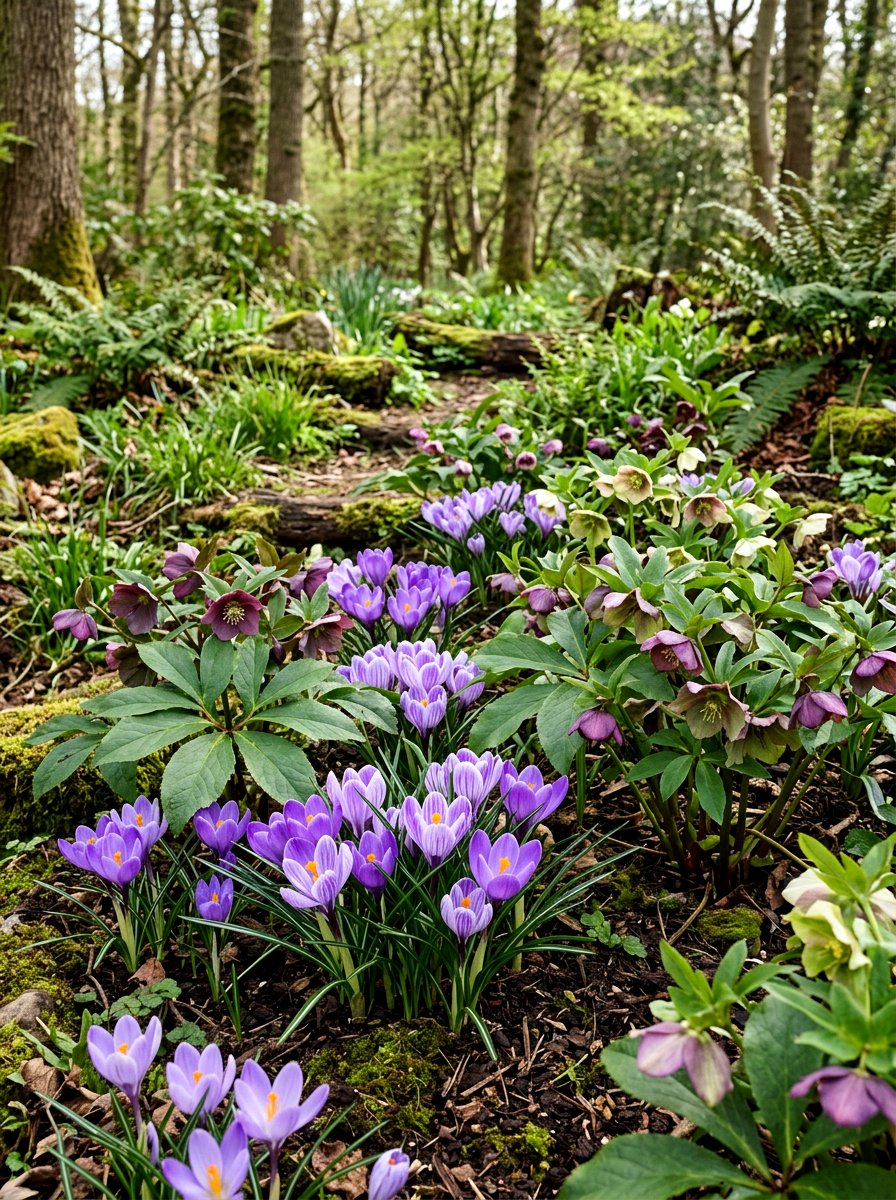
Hellebores, also known as Lenten roses, are another early spring favorite that pairs beautifully with the low-growing profile of the common crocus. The large, leathery leaves and nodding flowers of the hellebore provide a sturdy backdrop for the fragile-looking crocus petals. Because hellebores thrive in partial shade, this combination is ideal for those tricky spots in the garden that don't get full all-day sun. The varying heights create a layered look that adds dimension and architectural interest to your flower beds. This duo is exceptionally hardy and can often survive late spring snowfalls without losing their beauty, making them reliable choices for colder climates.
20. Mass Planted Purple Crocus
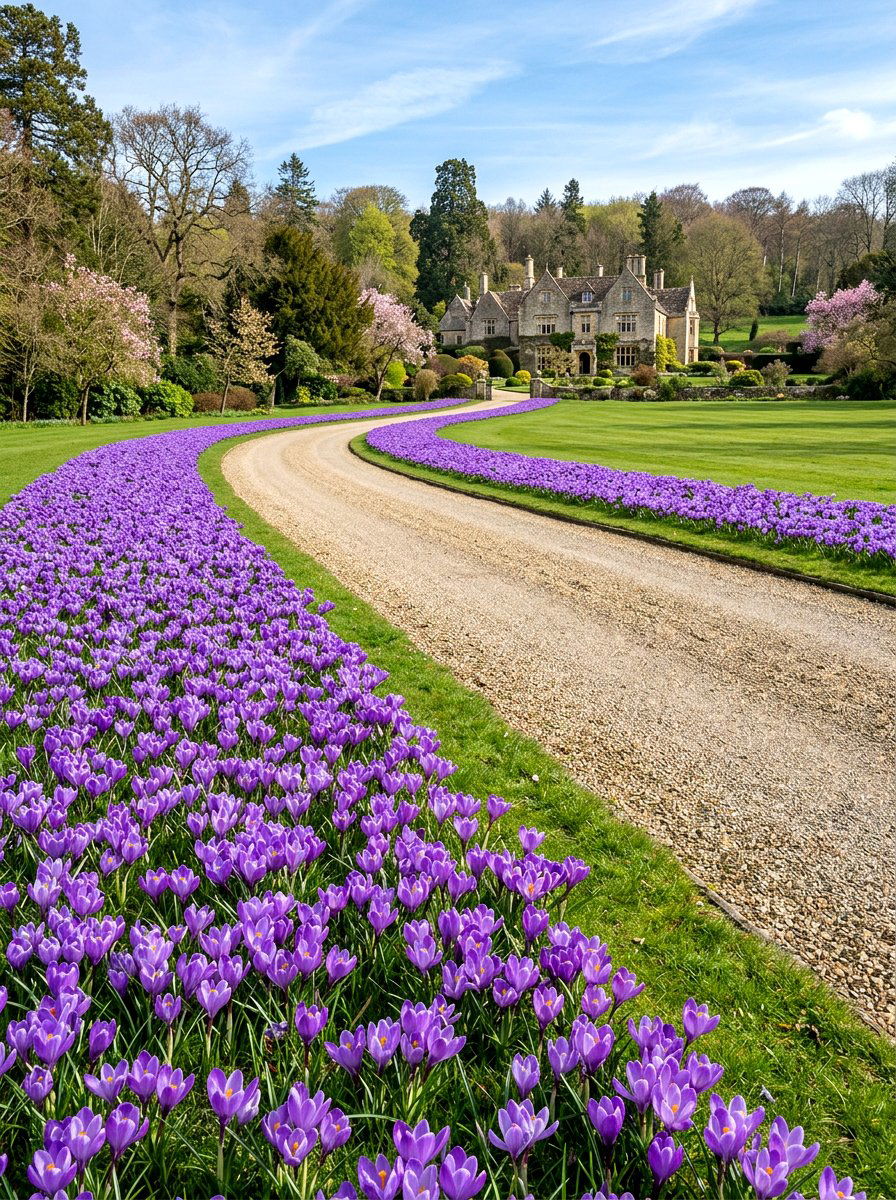
There is undeniable power in numbers when it comes to gardening, and mass planting a single shade of purple is a perfect example. By planting hundreds or even thousands of the same variety in one large area, you create a sea of color that feels expensive and luxurious. This technique is often used in public parks and botanical gardens because it creates a high-impact "wow" factor that smaller patches simply cannot achieve. In a home setting, this works best in a large front bed or along a long driveway where the repetition creates a sense of rhythm and harmony. It is a bold, confident design choice for any homeowner.

21. Crocus In Gravel Garden
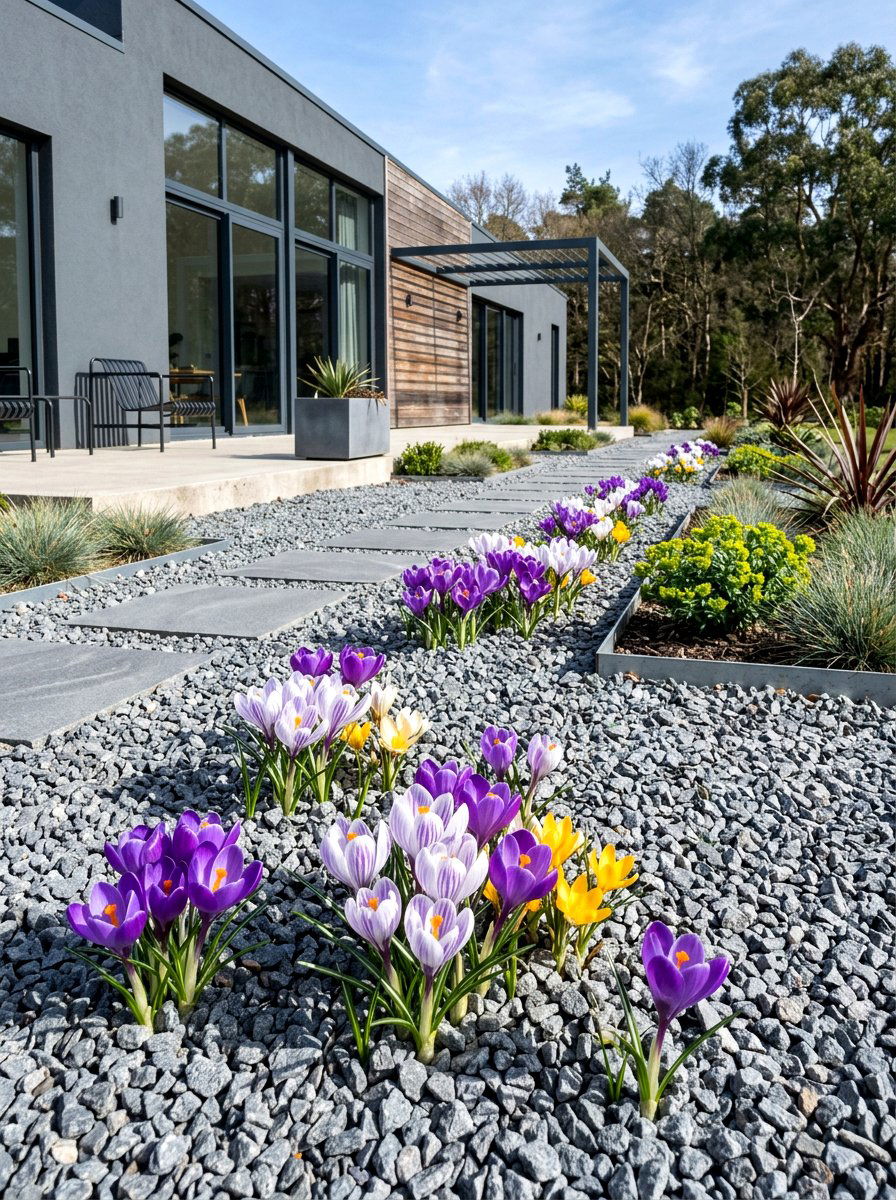
Modern landscapes often feature gravel or crushed stone instead of traditional mulch, and crocuses look spectacular emerging from these clean, grey surfaces. The contrast between the organic, colorful flowers and the cold, industrial feel of the gravel creates a very contemporary and chic aesthetic. This type of garden is excellent for drainage, ensuring that the bulbs stay dry and healthy throughout the dormant winter months. Because the stones hold heat, you might find that your crocuses bloom several days earlier than those in traditional soil beds. It is a low-maintenance, high-style option for people who prefer a clean and tidy garden look all year.
22. Colorful Spring Flower Circle
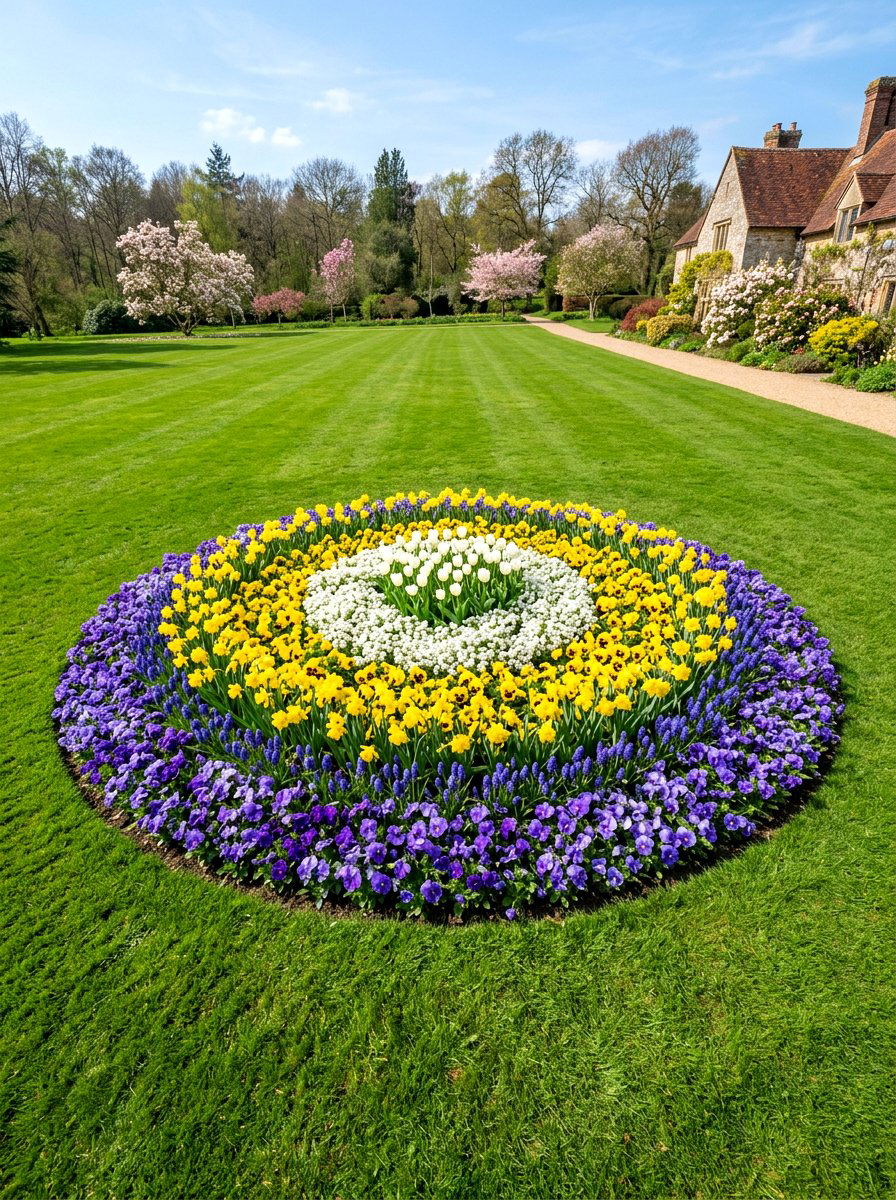
Design a perfect circle in the middle of your lawn and fill it entirely with a rainbow mix of crocus bulbs for a whimsical touch. This geometric shape acts as a focal point in the landscape, breaking up the expanse of green grass with a concentrated burst of energy. You can arrange the colors in concentric rings — starting with white in the center, followed by yellow, and then purple on the outside — for a target-like effect. This structured approach to planting adds a sense of playfulness and intentionality to your yard. It is a fun project for families to do together in the fall in anticipation of the spring.
23. Crocus Along Stone Wall
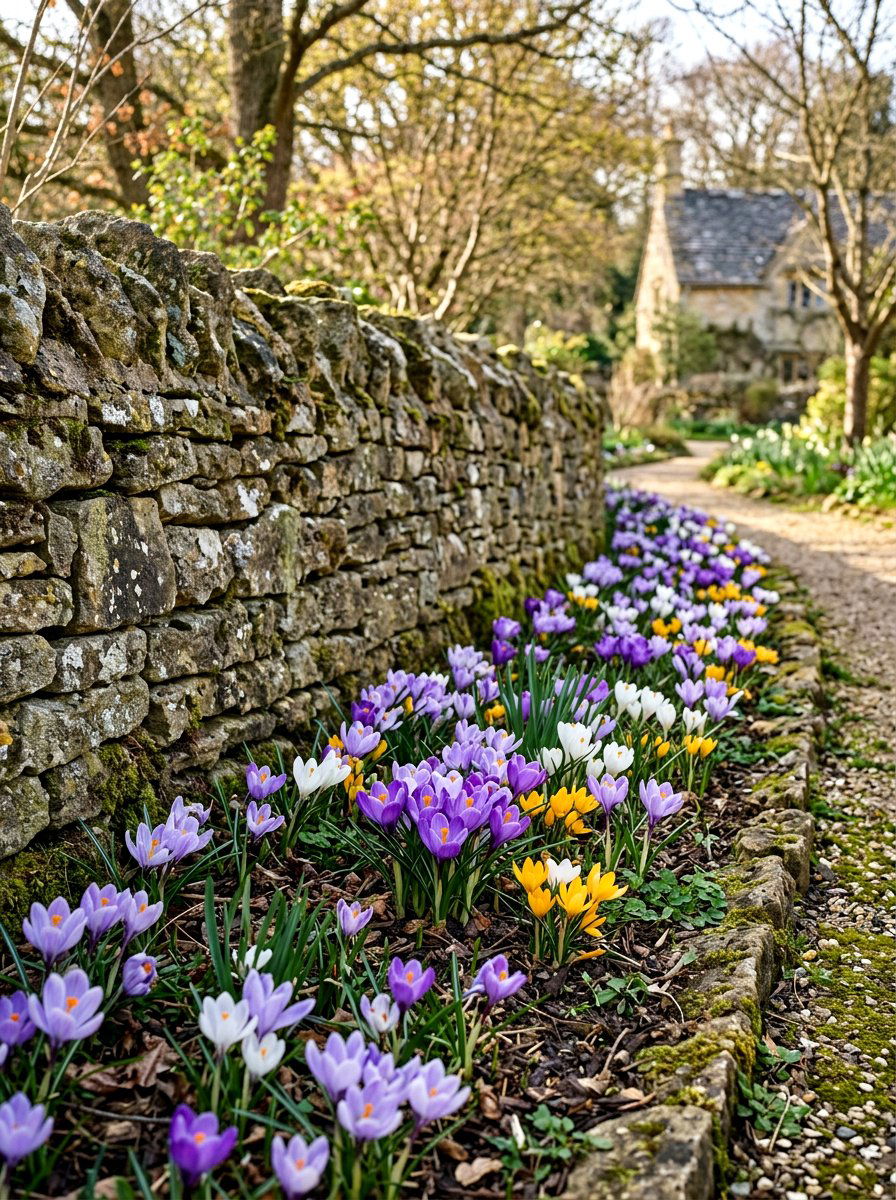
Stone walls provide a beautiful, textured backdrop that reflects heat and protects delicate flowers from harsh spring winds. Planting crocuses right at the base of a wall allows them to lean against the stone, creating a cozy and tucked-in appearance. The grey or brown tones of the rock make the vibrant purples and golds of the flowers appear even more saturated and intense. This location is also great for bulbs because the soil near walls often stays slightly drier, preventing the common problem of bulb rot. It is a classic landscaping move that adds a sense of history and permanence to your garden's design.
24. Urban Garden Bulb Display
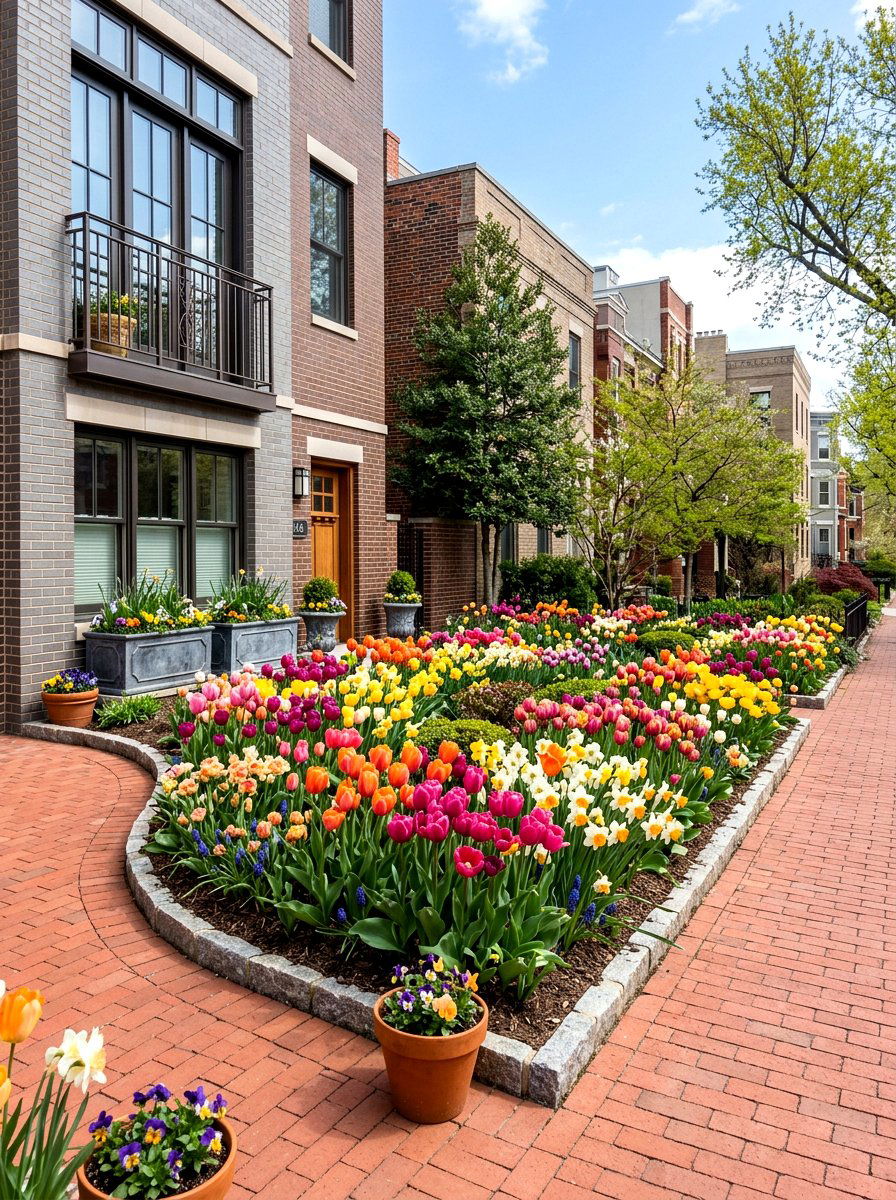
Even if you only have a small patch of soil between the sidewalk and your house, you can still enjoy a world-class crocus display. In urban environments, these early bloomers are especially appreciated because they provide the first signs of life in a landscape often dominated by concrete and brick. A dense planting in a small square of soil can create a jewel-box effect that catches the eye of every passerby. Using bright colors like orange or neon purple ensures that the flowers stand out against the urban backdrop. It is a small but powerful way to bring nature back into the city and brighten your daily commute.
25. Layered Spring Bulb Planter
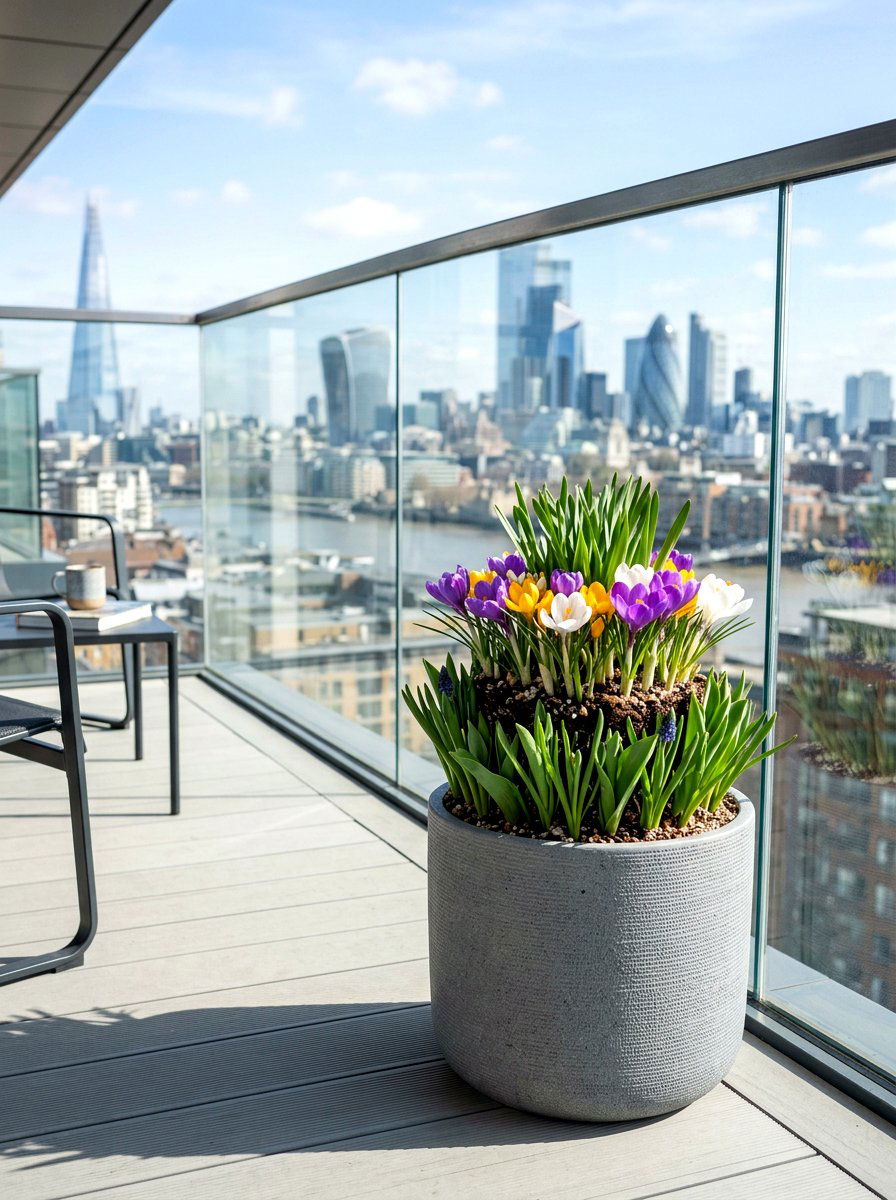
For those who want a long-lasting floral show, the layered planter technique is the ultimate solution for a small patio or balcony. By planting crocuses near the surface and larger bulbs like tulips or lilies deeper down, you ensure a continuous succession of blooms for months. The crocuses act as the opening act, filling the pot with color while the other plants are still just green shoots. This maximized use of space is perfect for people who want the most "bloom for their buck" in a limited area. It creates a lush, full look that makes any outdoor space feel like a professionally designed garden sanctuary.
Conclusion:
Spring crocuses are more than just flowers; they are a symbol of hope and the renewal of the natural world after a long winter. By incorporating these twenty-five ideas into your garden, you can create a landscape that is not only visually stunning but also ecologically beneficial and easy to maintain. From the grand scale of a naturalized lawn to the intimate beauty of a single terracotta pot, there is a crocus design for every style and space. Taking the time to plan and plant these bulbs in the fall will reward you with a breathtaking display that welcomes the sunshine every year. Start your journey today and transform your outdoor space into a spring paradise.
Related posts:

Leave a Reply