
Spring arrives with a burst of life as the landscape awakens from its winter slumber, and nothing captures this transformation better than flowering trees. These natural masterpieces serve as the focal point of any outdoor space, offering vibrant colors, intoxicating fragrances, and a sense of renewal that resonates with every homeowner. Choosing the right variety requires a balance of climate considerations, soil health, and aesthetic goals to ensure the tree thrives for generations. From the delicate petals of a cherry blossom to the bold architectural presence of a magnolia, these trees do more than just bloom; they define the character of your home. Incorporating these living ornaments into your garden creates an inviting atmosphere that beckons you to spend more time outdoors enjoying the fresh air.
1. Japanese Cherry Blossom
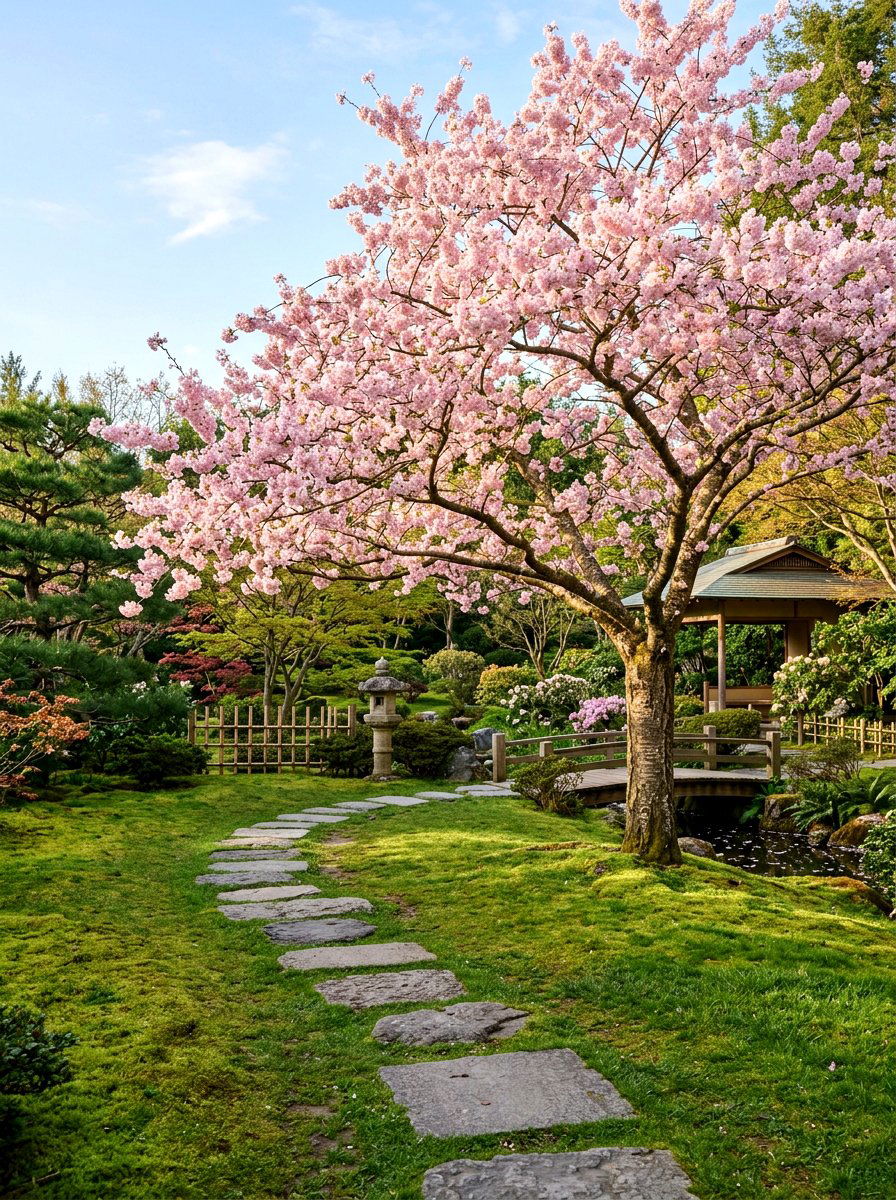
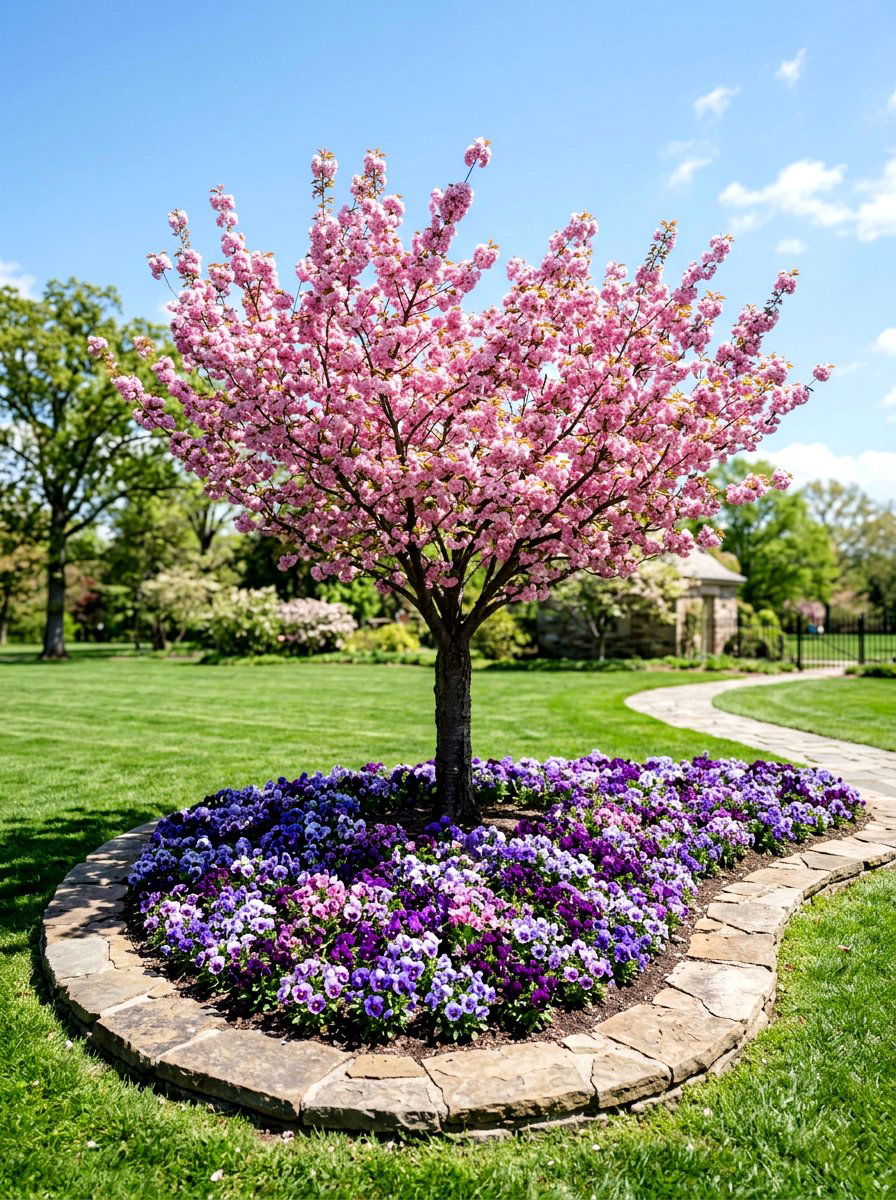
Soft pink petals drift through the air like delicate snowflakes when you plant a Japanese cherry blossom in your yard. These iconic trees provide a breathtaking spectacle that signals the true arrival of spring with their dense clusters of fluffy blooms. They thrive in sunny spots and offer a graceful canopy that works perfectly as a focal point in a front lawn or a backyard retreat. Homeowners often choose these trees for their romantic aesthetic and the way they transform a simple green space into a magical wonderland for a few weeks each year. Maintaining them is straightforward if you provide well-drained soil and regular watering during dry spells.
2. Pink Magnolia
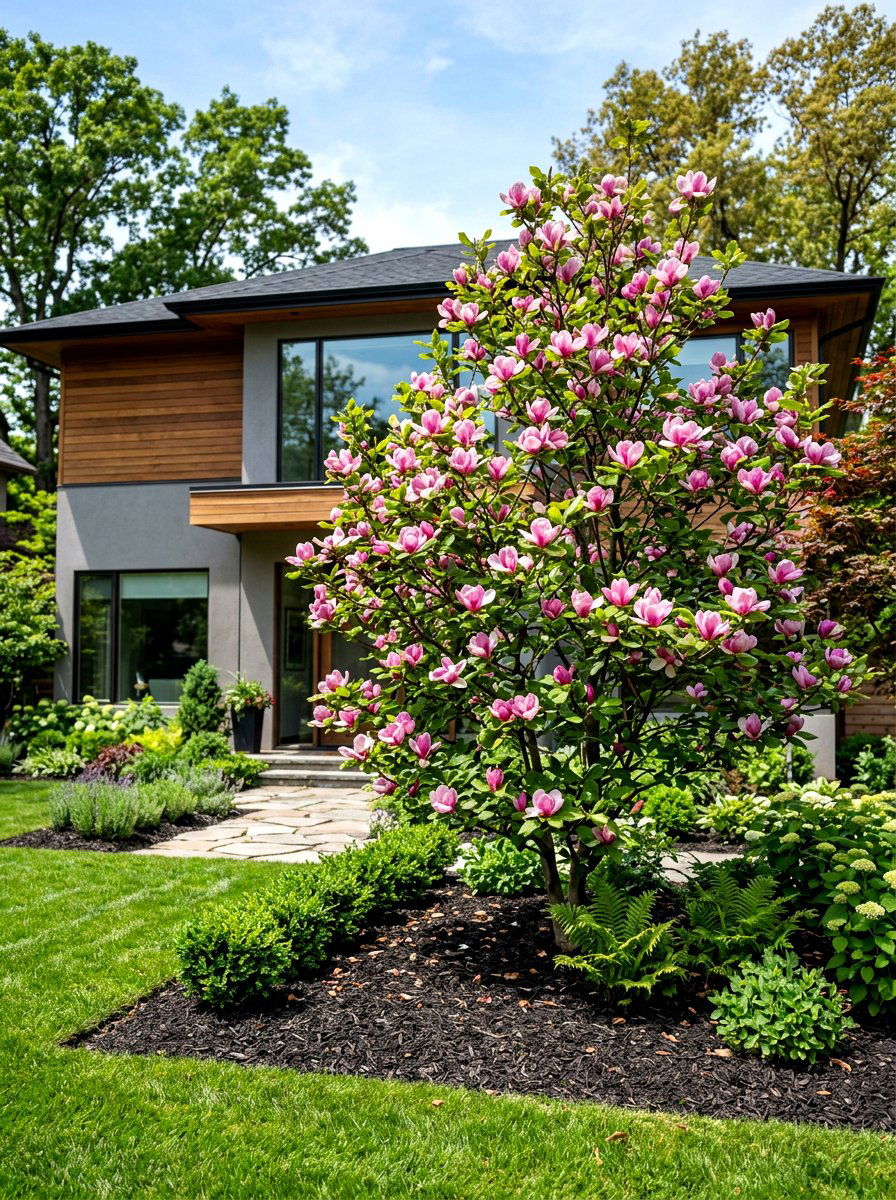
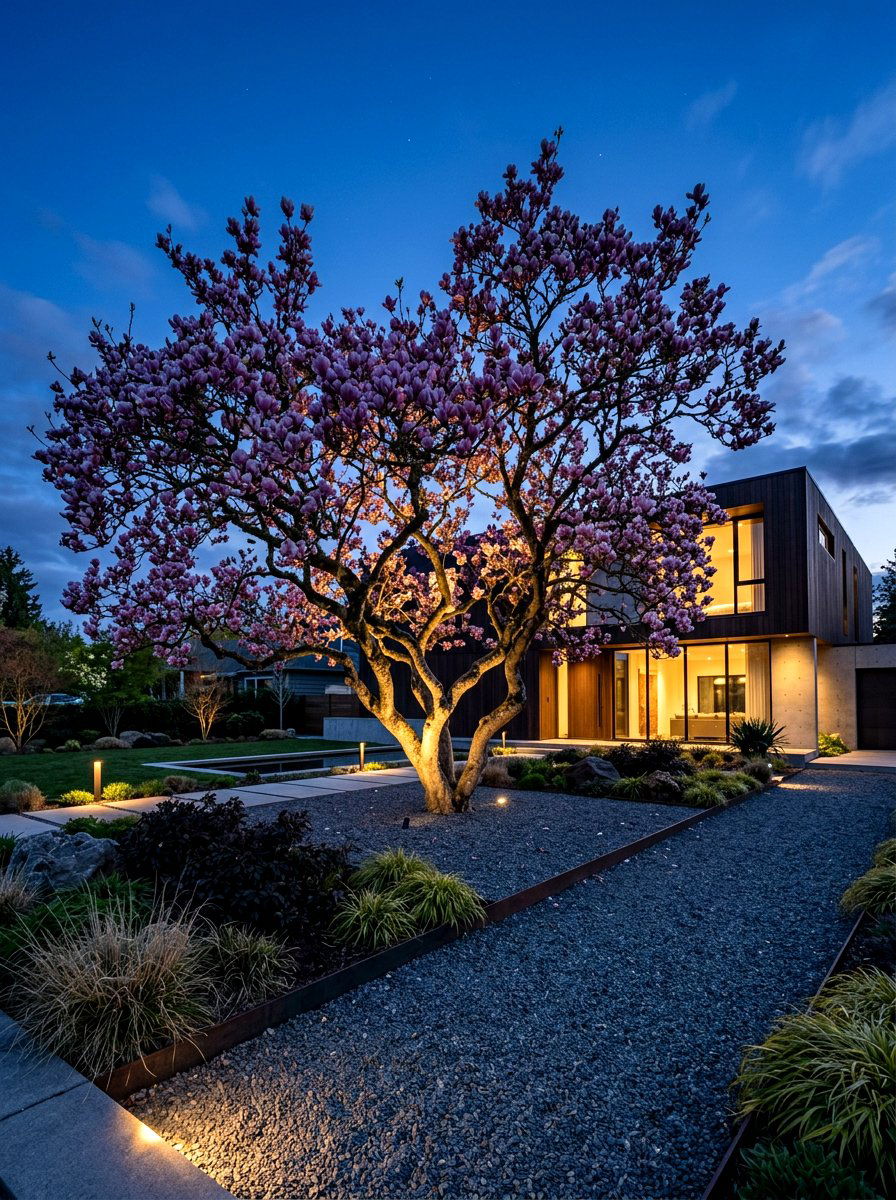
Have you ever noticed the giant, waxy pink flowers that appear on bare branches before the leaves even emerge in early spring? The pink magnolia is a showstopper that brings a sense of ancient elegance to any modern landscape design. Its large cup-shaped blossoms create a dramatic visual impact that is hard to ignore from the street. These trees are incredibly hardy and can grow quite large, providing plenty of shade once the flowering season concludes and the lush green leaves fill in. Adding one to your garden ensures a sophisticated look that increases curb appeal while offering a fragrant scent that drifts through the windows.
3. Eastern Redbud
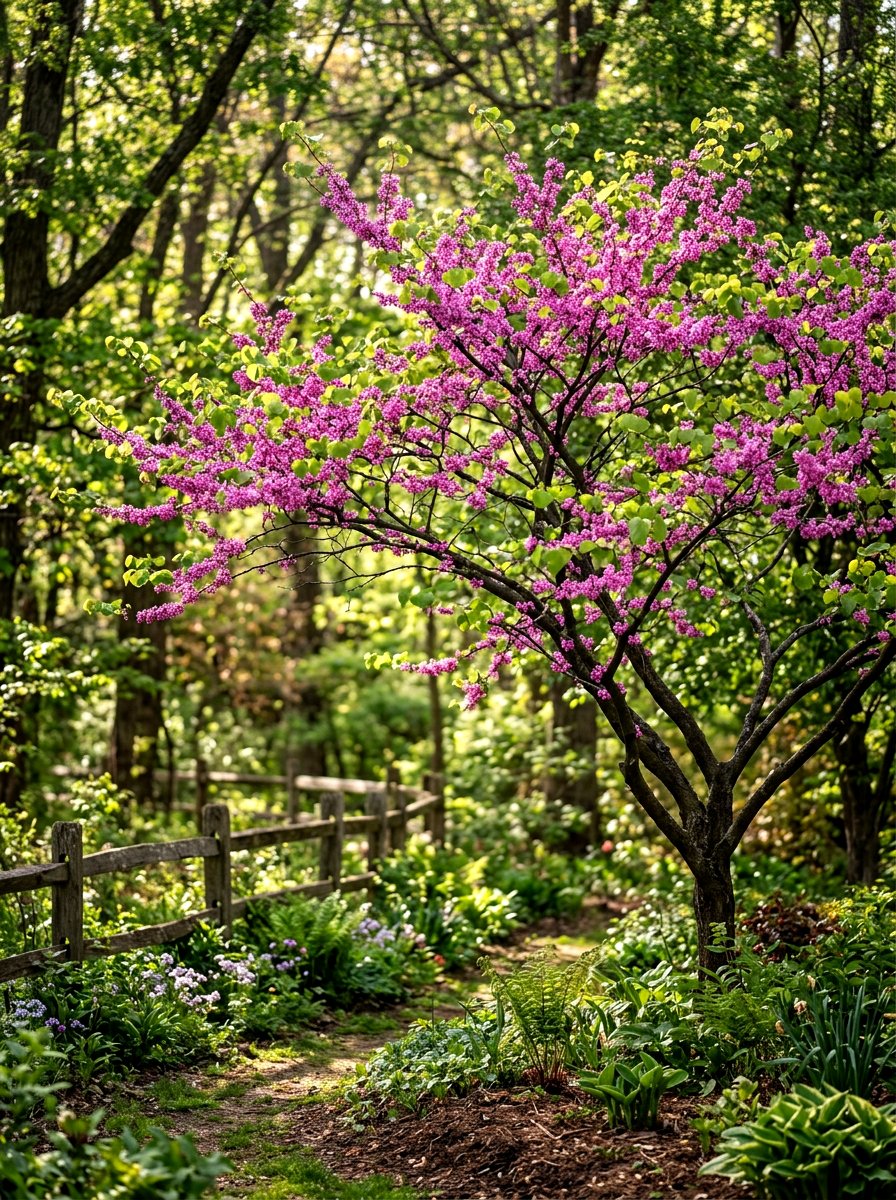
Imagine a tree that covers its dark bark in tiny, neon-pink flowers before a single leaf appears on the branches. The Eastern redbud is a native favorite that offers a unique horizontal growth habit, making it ideal for smaller yards or urban spaces. Its heart-shaped leaves follow the blooms, turning a beautiful golden yellow in the autumn for multi-season interest. This tree is particularly adaptable to different soil types and can handle partial shade, which makes it a versatile choice for many different garden layouts. It attracts pollinators like bees and butterflies, supporting the local ecosystem while looking absolutely stunning throughout the entire year.
4. White Dogwood
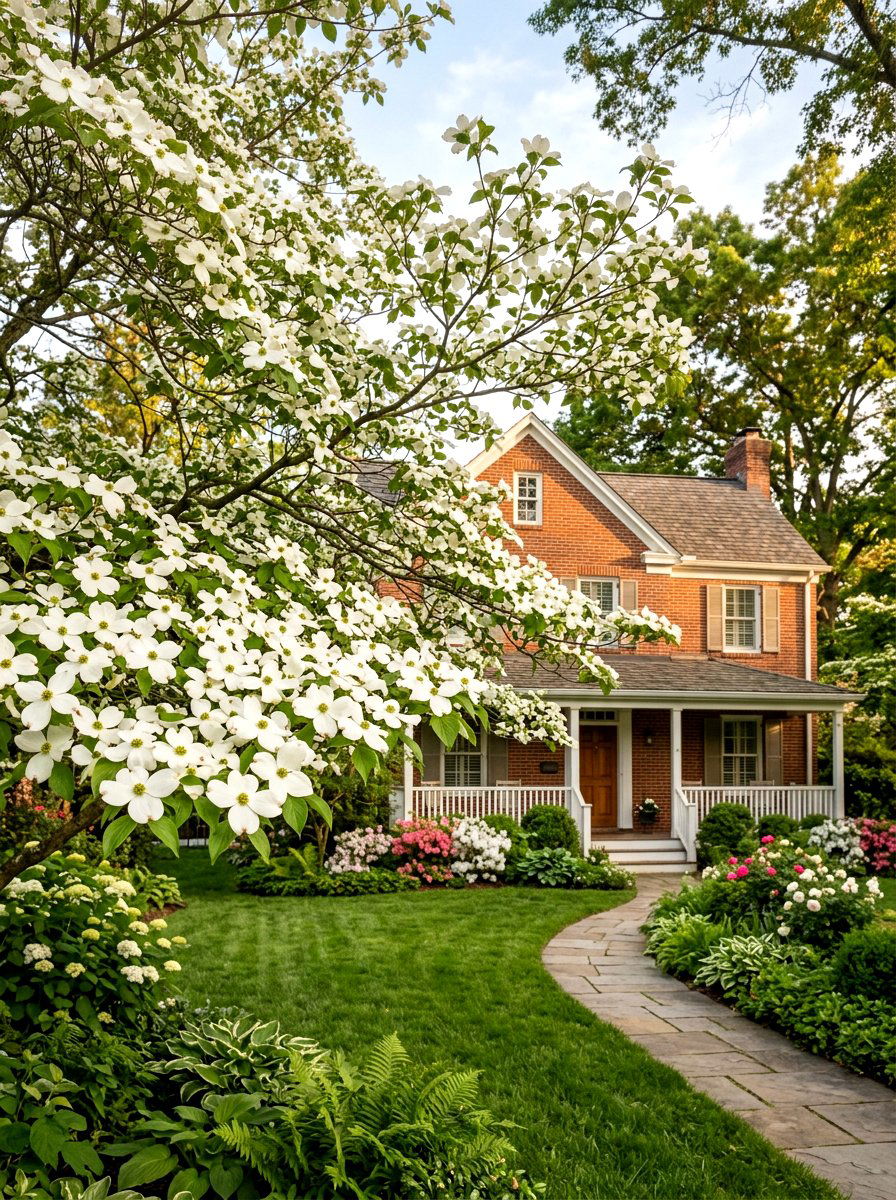
Can you picture a classic American garden without the iconic presence of a pristine white dogwood tree standing tall? These trees are beloved for their layered branching structure and the four-petaled white bracts that look like stars against the sky. They prefer a bit of afternoon shade and moist, acidic soil to truly flourish and produce their best floral displays. In the fall, the leaves turn a deep burgundy, and bright red berries appear to feed the local bird population during the colder months. This tree is a perfect example of a landscape element that provides visual interest and ecological value across all four seasons.
5. Flowering Crabapple
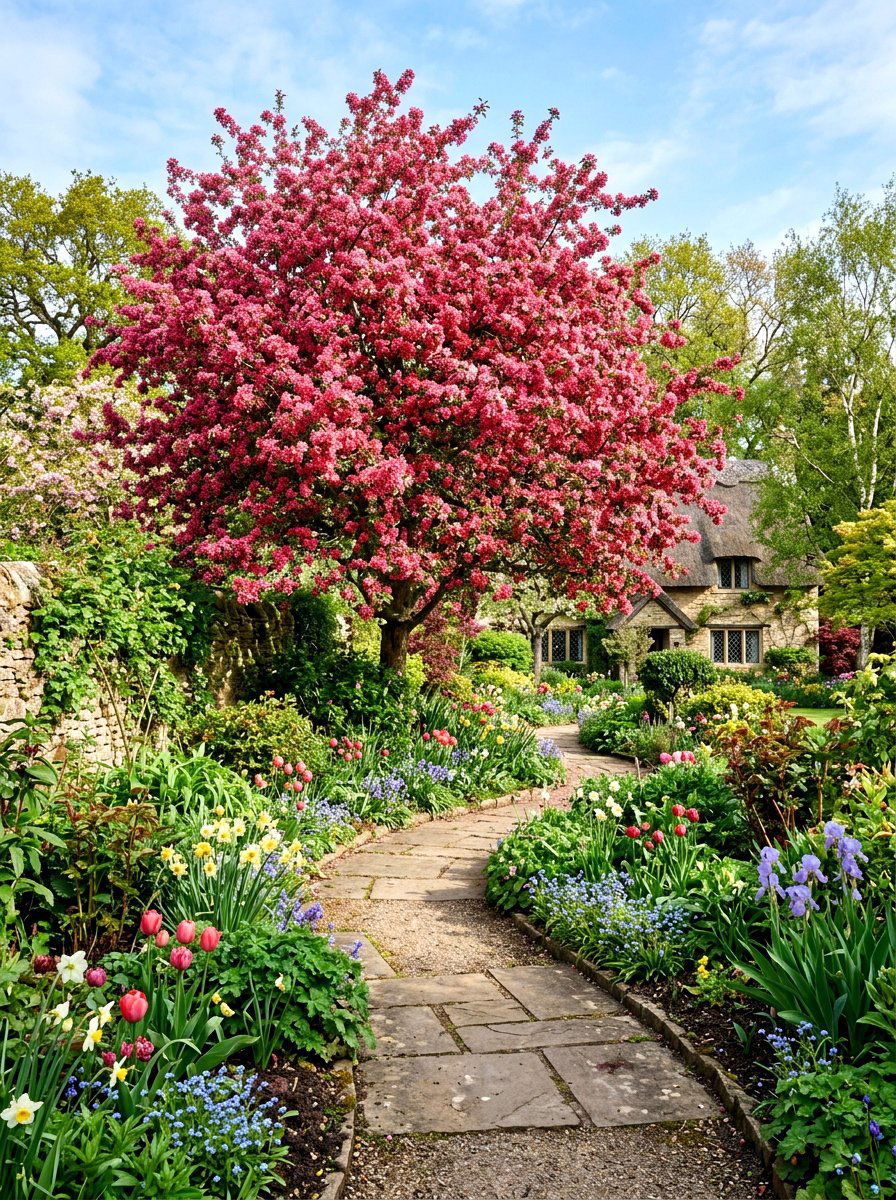
Vibrant bursts of red, pink, or white flowers cover the flowering crabapple, creating a dense cloud of color in the mid-spring. These trees are celebrated for their incredible variety in size and shape, ranging from weeping forms to upright, columnar types. While the flowers are the main draw, the small ornamental fruits provide food for wildlife and add a pop of color during the winter. They are exceptionally hardy and can withstand colder climates better than many other flowering varieties. Planting a crabapple ensures that your garden will be buzzing with life as birds and pollinators are naturally drawn to its abundant, sweet-smelling blossoms.
6. Serviceberry Tree
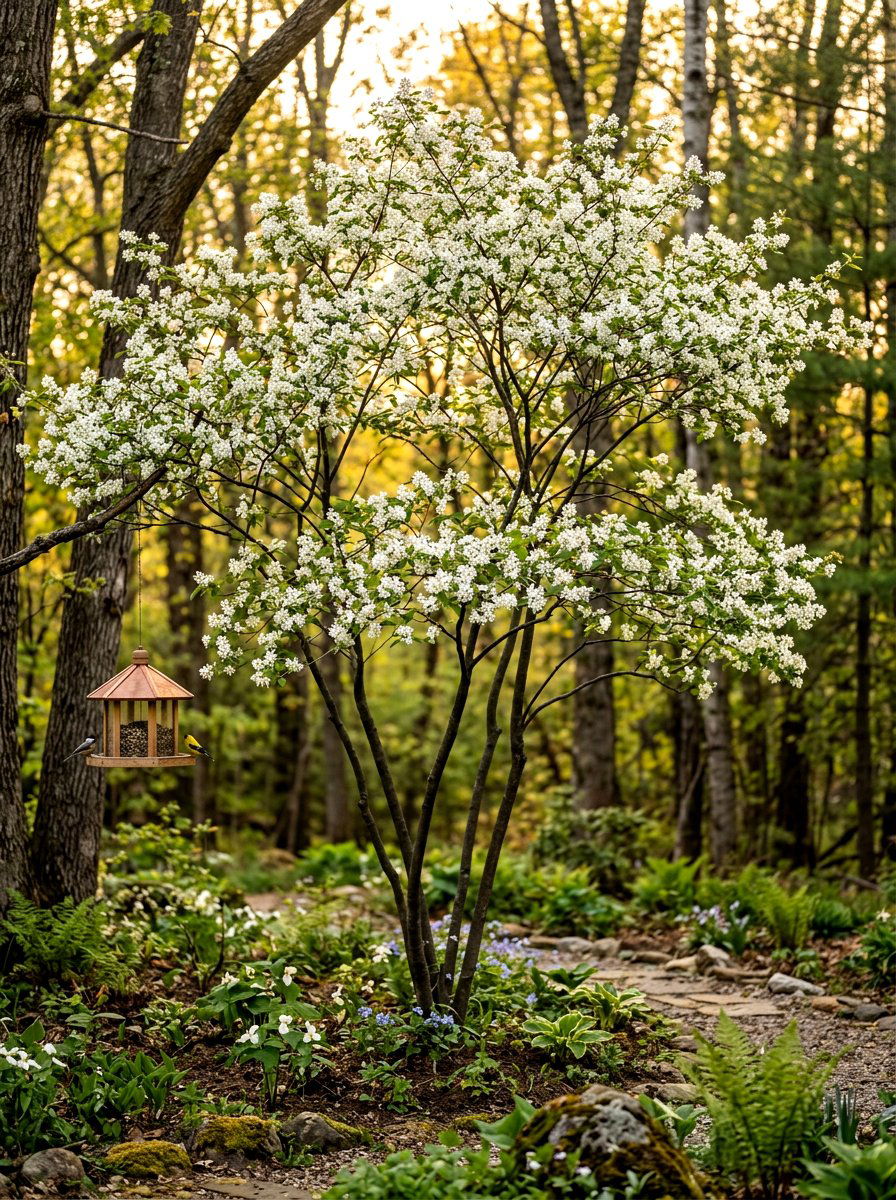
Do you want a tree that offers edible berries alongside its delicate, star-shaped white flowers every single spring season? The serviceberry, also known as Juneberry, is a fantastic multi-stemmed tree that works beautifully in naturalistic or woodland garden designs. The early blooms are among the first to appear, providing a critical food source for early-emerging pollinators when other plants are still dormant. Its delicate foliage turns a brilliant orange-red in the fall, making it a powerhouse for seasonal color transitions. This tree is low-maintenance and resistant to many common pests, which makes it a top choice for busy homeowners who want maximum beauty.
7. Purple Jacaranda
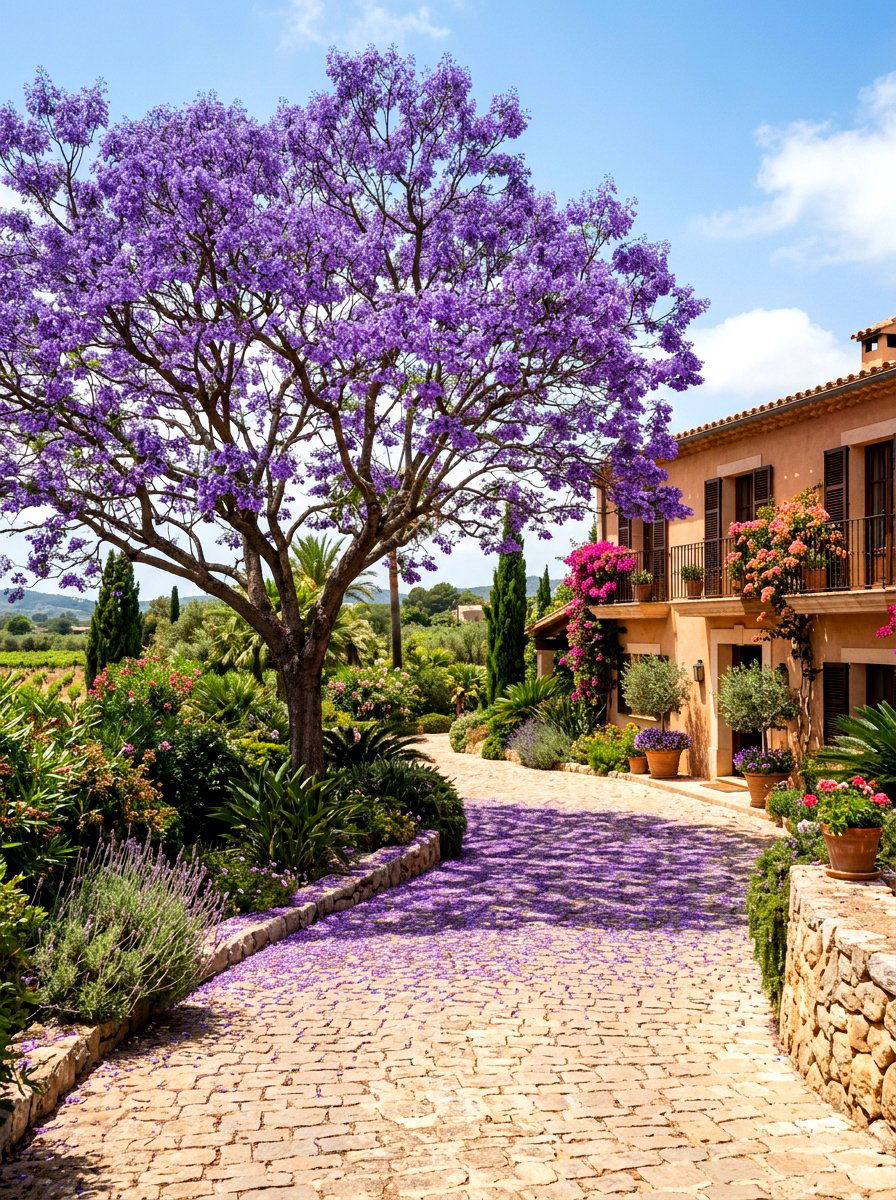
Lush canopies of vibrant purple trumpet-shaped flowers define the jacaranda, a tree that creates a surreal landscape in warmer, Mediterranean climates. When these trees bloom, they often drop a soft carpet of purple petals on the ground below, adding to the ethereal atmosphere of the space. The fern-like foliage is light and airy, allowing dappled sunlight to reach the plants growing beneath the canopy. Because they can grow quite tall, they are best suited for larger properties where they have room to spread their wide branches. This tree is a true statement piece that brings a tropical, high-end feel to any luxury garden or streetscape.
8. White Fringe Tree
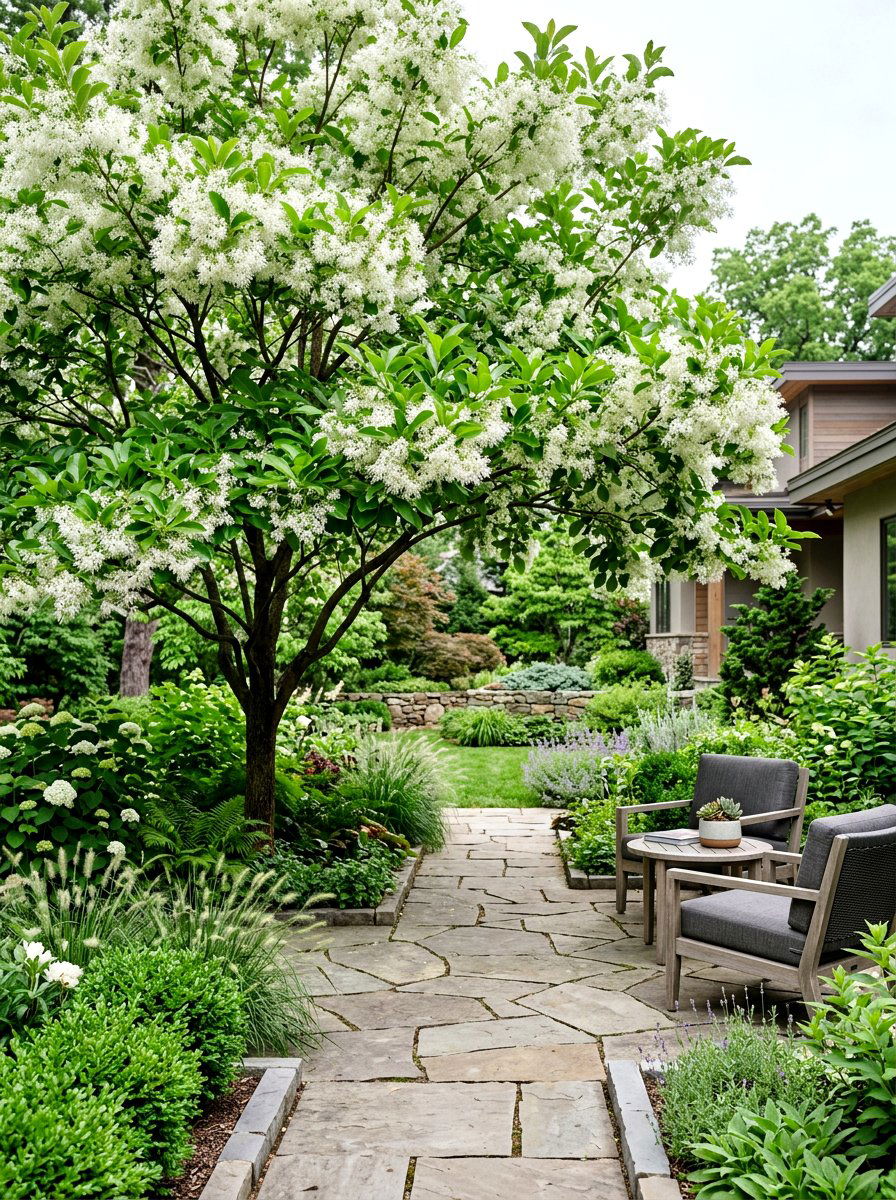
Fragrant, lacy white flowers hang in long clusters from the branches of the white fringe tree, resembling a soft, snowy beard. This native tree is often overlooked but deserves a spot in any garden for its unique texture and incredible sweet scent. It typically grows as a small tree or large shrub, making it a perfect choice for planting near a patio or an entryway. The deep green leaves are glossy and healthy, providing a nice backdrop for other summer-blooming perennials once the spring flowers fade. It is a slow-growing species that requires very little pruning to maintain its naturally rounded and attractive shape.
9. Golden Chain Tree
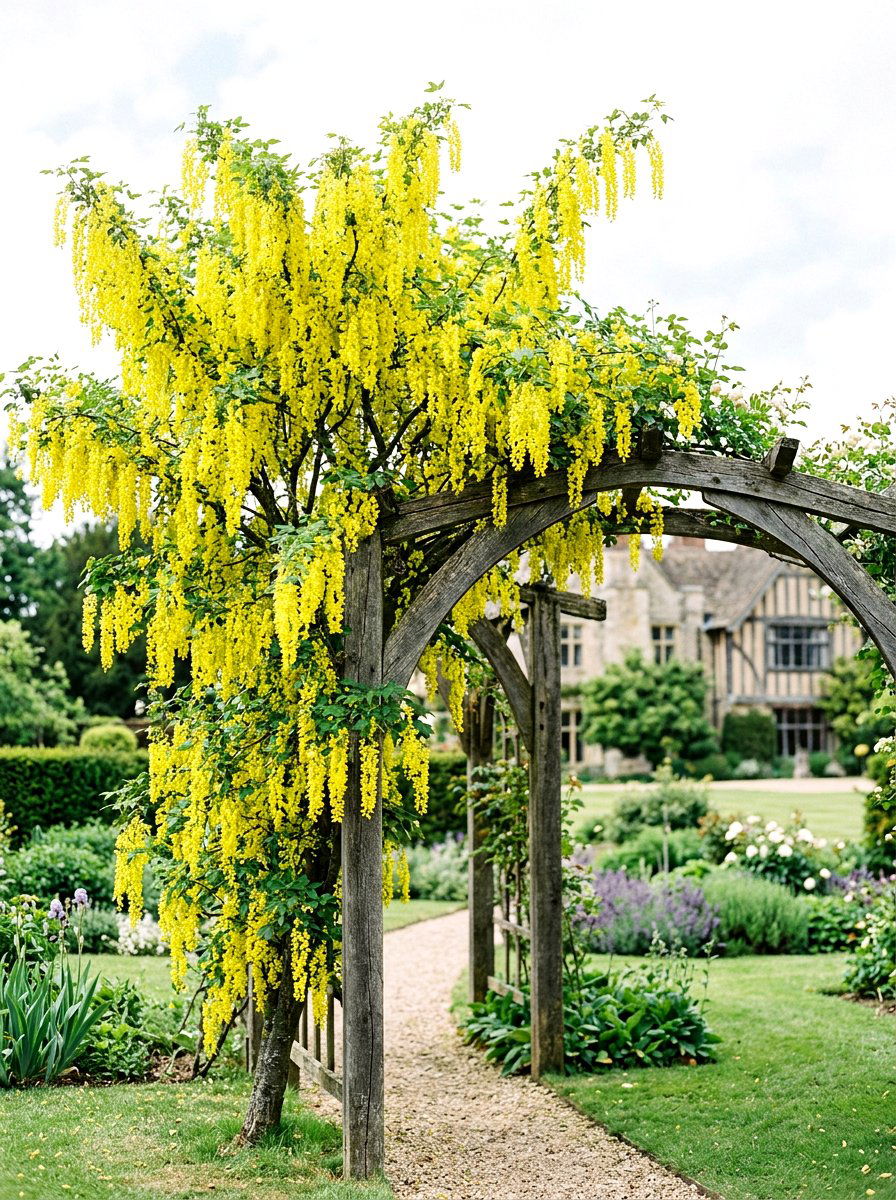
What if your garden could feature hanging clusters of bright yellow flowers that look exactly like cascading chains of pure gold? The golden chain tree offers a spectacular display in late spring, with pea-like blossoms that can reach up to twenty inches in length. It prefers cooler summer climates and performs best when planted in a spot that is protected from harsh, direct afternoon sun. Because of its pendulous growth habit, it is often trained over arbors or pergolas to create a stunning floral tunnel that visitors will never forget. This tree adds a touch of classic European elegance to any well-manicured landscape or traditional estate.
10. Saucer Magnolia
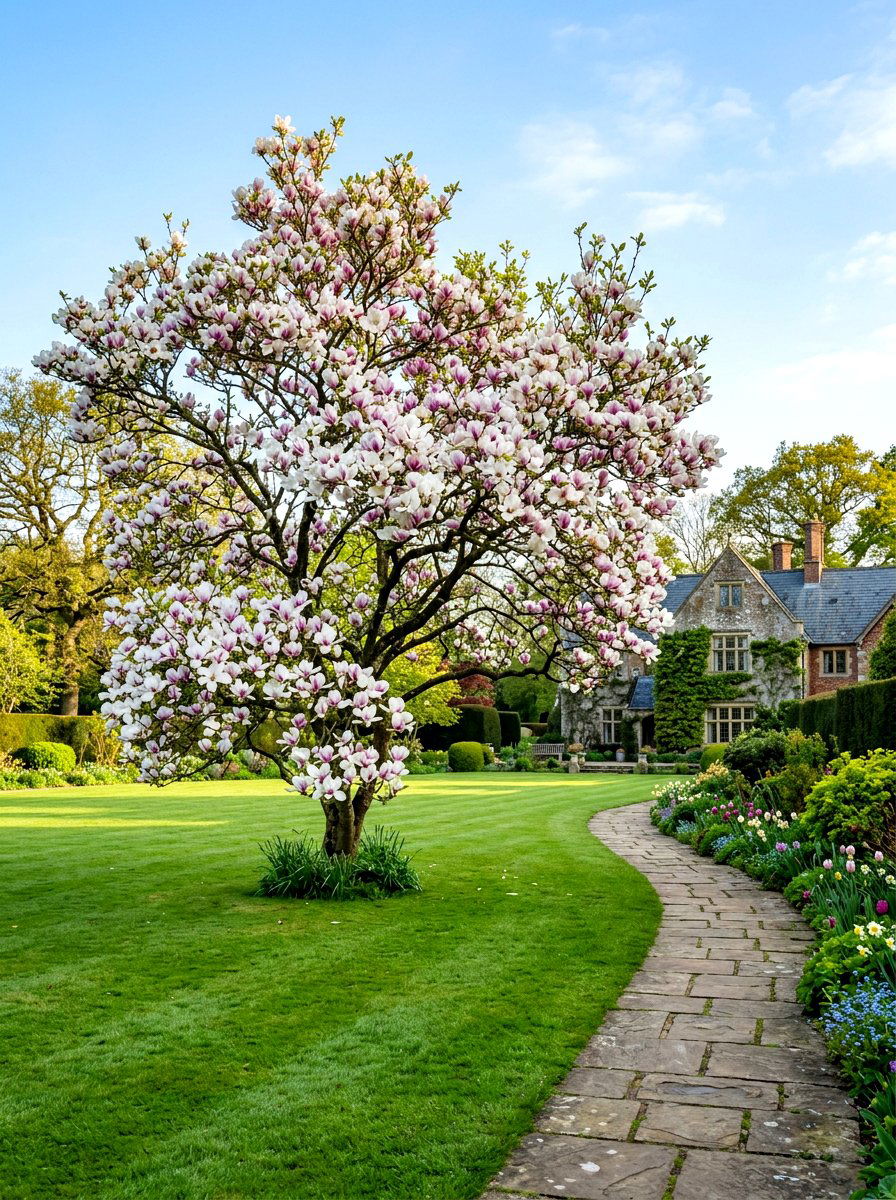
Massive, plate-sized blooms in shades of white and purple cover the saucer magnolia, making it one of the most popular garden trees. The flowers have a thick, leathery texture and a light fragrance that signals the height of the spring season for many gardeners. This tree typically grows with multiple trunks, creating a wide, spreading silhouette that provides excellent architectural interest even during the winter months. It needs a sunny location with rich, organic soil to reach its full potential and produce the largest possible blossoms. This magnolia variety is a timeless choice that has been a staple in elegant home landscapes for many decades.
11. Star Magnolia
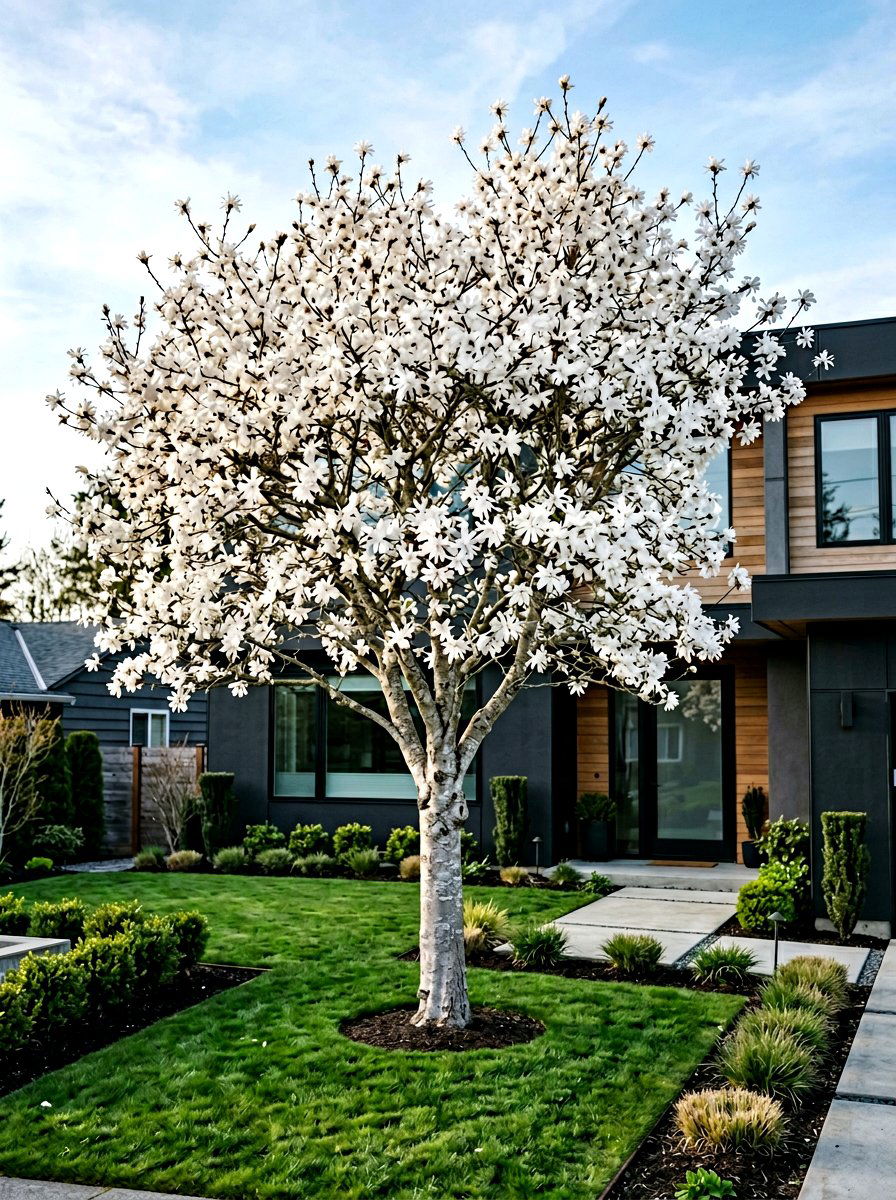
Early in the season, before most other plants have even thought about waking up, the star magnolia bursts into white bloom. Its flowers feature narrow, ribbon-like petals that fan out to look like many-pointed stars against the dark, leafless wooden branches. This tree is much smaller and more compact than its saucer cousin, making it an ideal candidate for small suburban lots or corner plantings. It is surprisingly cold-hardy, though the early blooms can sometimes be caught by a late frost, so planting it in a sheltered spot is wise. The silver-gray bark provides a lovely winter aesthetic, ensuring the tree looks good even when it is dormant.
12. Flowering Plum
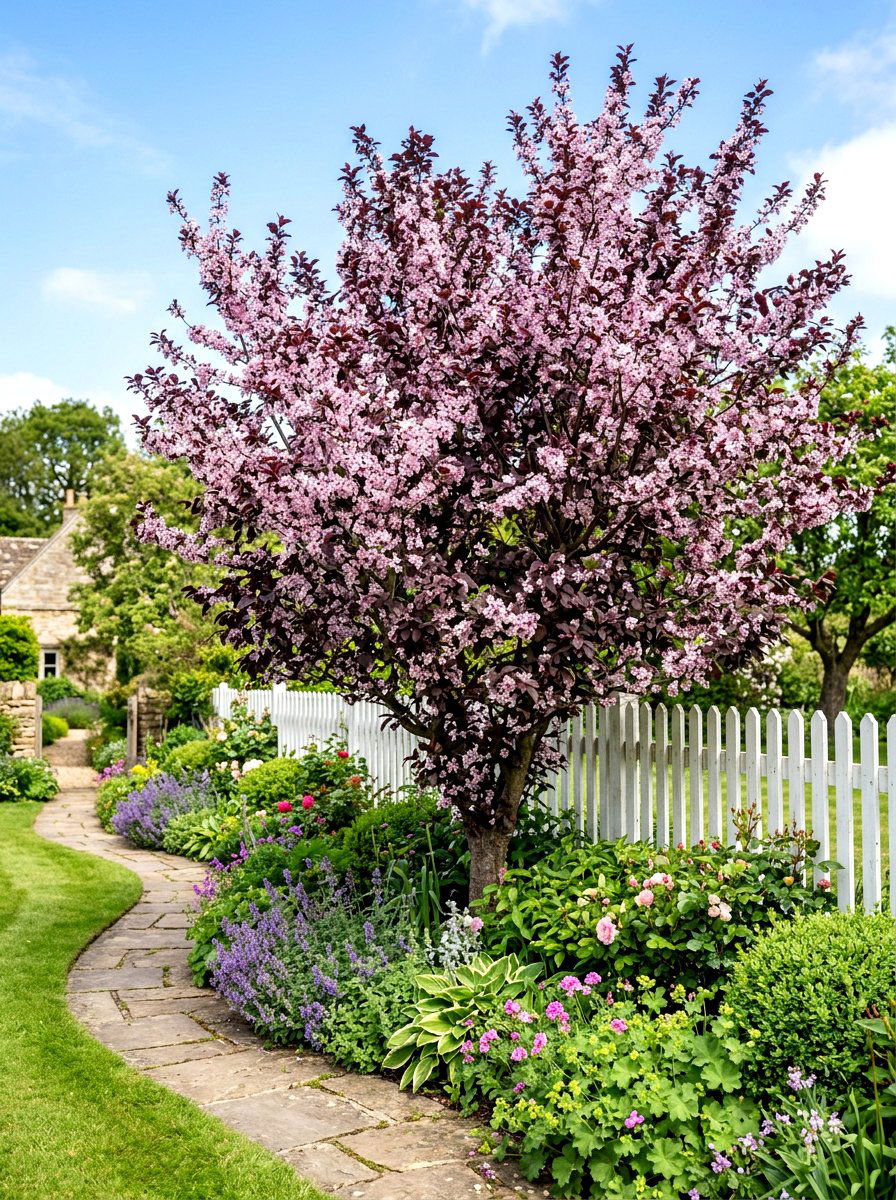
Deep purple foliage paired with delicate light pink flowers makes the flowering plum a dramatic addition to any colorful garden palette. Unlike many other flowering trees that have green leaves, this variety maintains its dark, moody foliage throughout the entire growing season. This contrast ensures that the tree remains a visual focal point long after the spring blossoms have fallen to the ground. It is a fast-growing tree that works well for creating privacy screens or adding height to a mixed border of shrubs. The small, round fruits that sometimes follow the flowers are attractive to local birds, adding a layer of nature to your yard.
13. Japanese Apricot
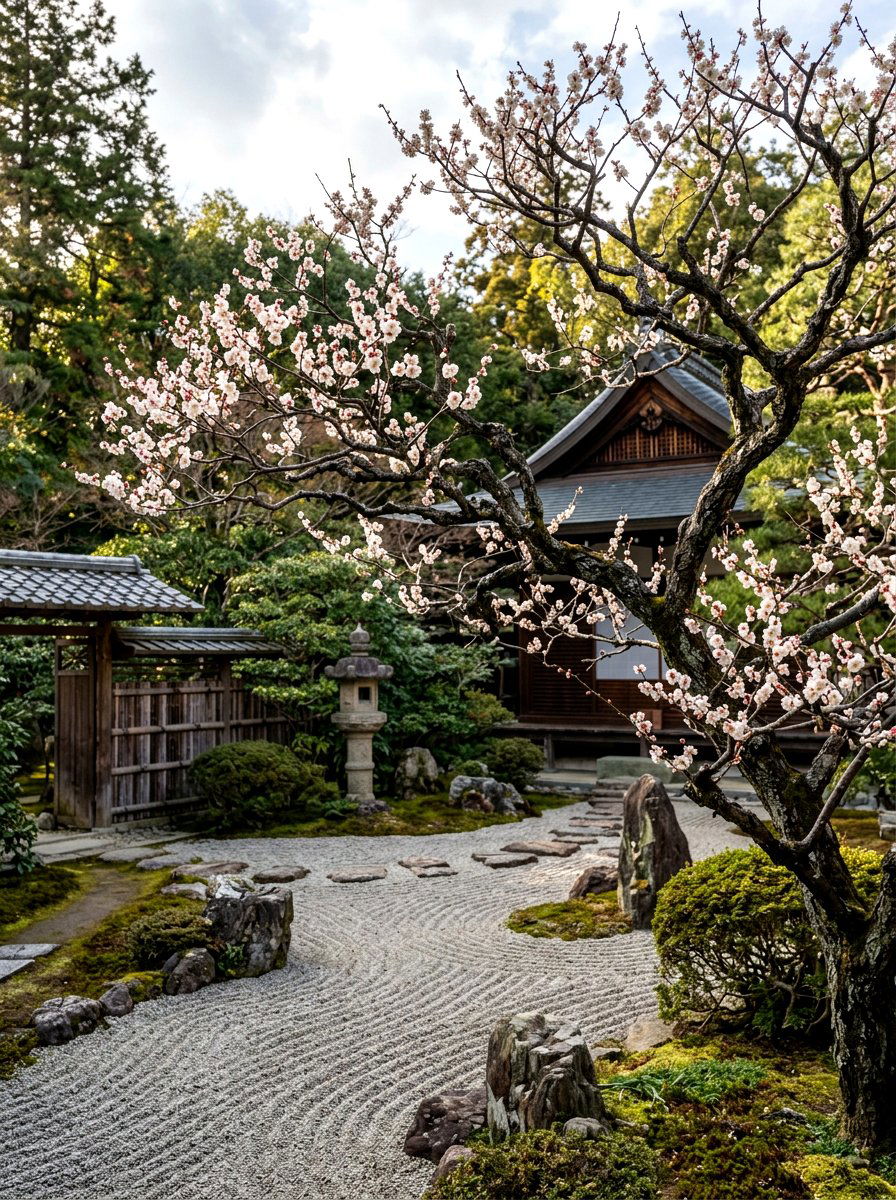
Sweetly scented blossoms in shades of white, pink, or red appear on the Japanese apricot as early as late winter. This tree is prized for its longevity and its ability to bloom when the rest of the world still looks gray. It has a rugged, artistic branching pattern that looks stunning when silhouetted against a bright blue spring sky or a snowy background. Because it blooms so early, it provides an essential early nectar source for honeybees that are starting to forage. This tree is a symbol of resilience and hope in many cultures, making it a meaningful and beautiful addition to any home landscape design.
14. Lilac Tree
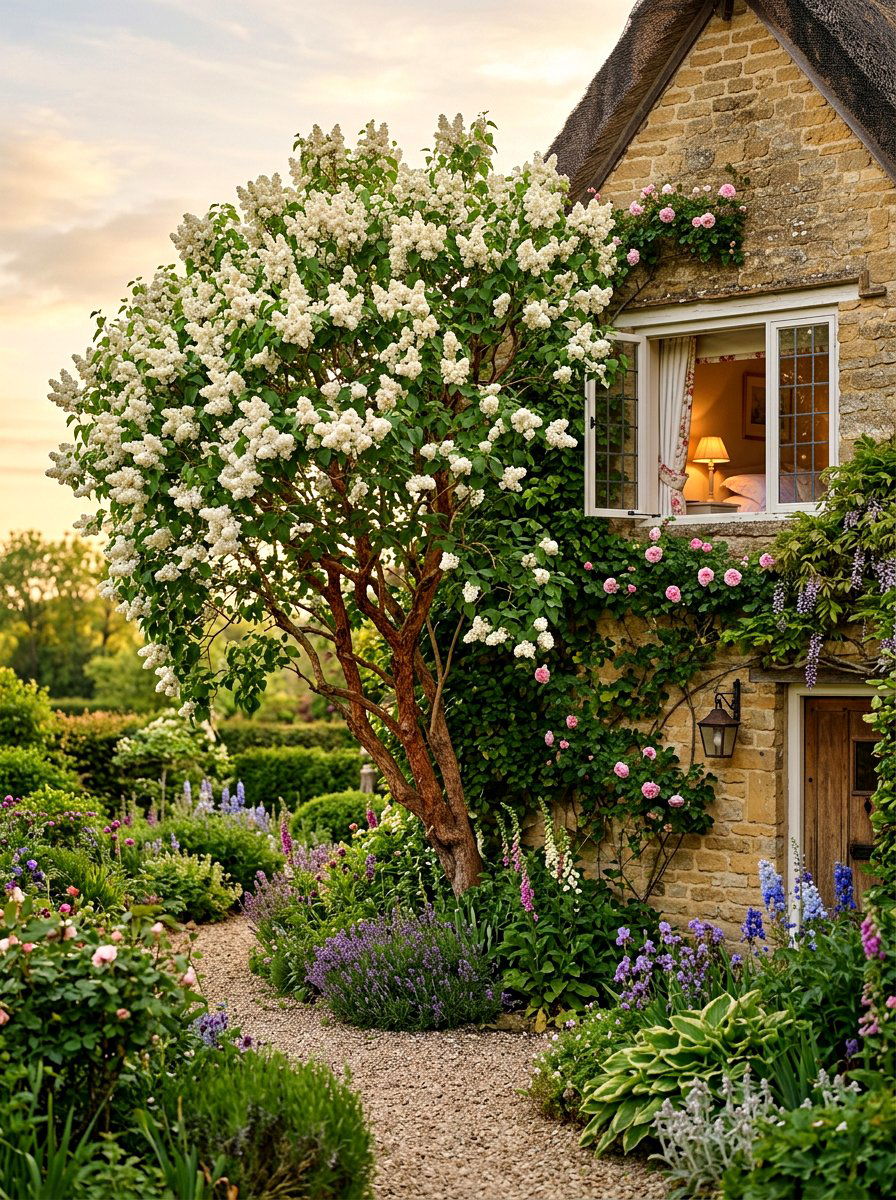
Everyone recognizes the intoxicating scent of a lilac, but did you know they can be grown in a majestic tree form? The Japanese tree lilac produces massive panicles of creamy white flowers in late spring or early summer, extending the blooming season. Unlike the common shrub variety, the tree lilac has beautiful reddish-brown bark that peels slightly, providing interesting texture during the winter months. It is highly resistant to mildew and other common lilac diseases, making it a very low-maintenance alternative for modern gardens. This tree is perfect for planting near windows or outdoor seating areas where its incredible fragrance can be fully appreciated by everyone.
15. Horse Chestnut
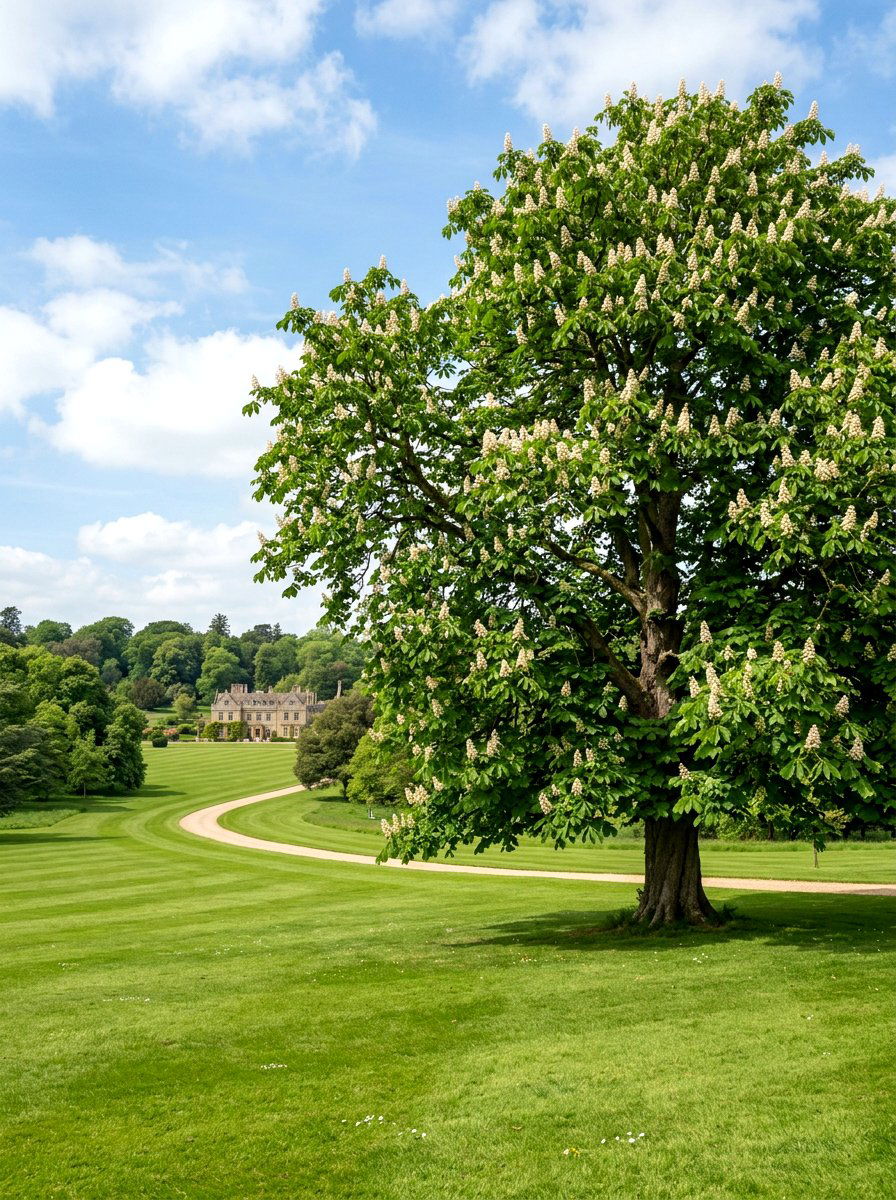
Grand and imposing, the horse chestnut tree features upright spikes of white flowers that look like candles held on a green candelabra. Each individual flower has a tiny spot of yellow or red at its center, adding a sophisticated level of detail to the display. This is a large-scale tree that needs plenty of room to grow, making it perfect for wide open lawns or park-like settings. The large, palmate leaves provide dense shade during the hot summer months, creating a cool retreat for people and pets alike. In the fall, the tree produces spiky green husks containing the famous shiny brown nuts known as buckeyes.
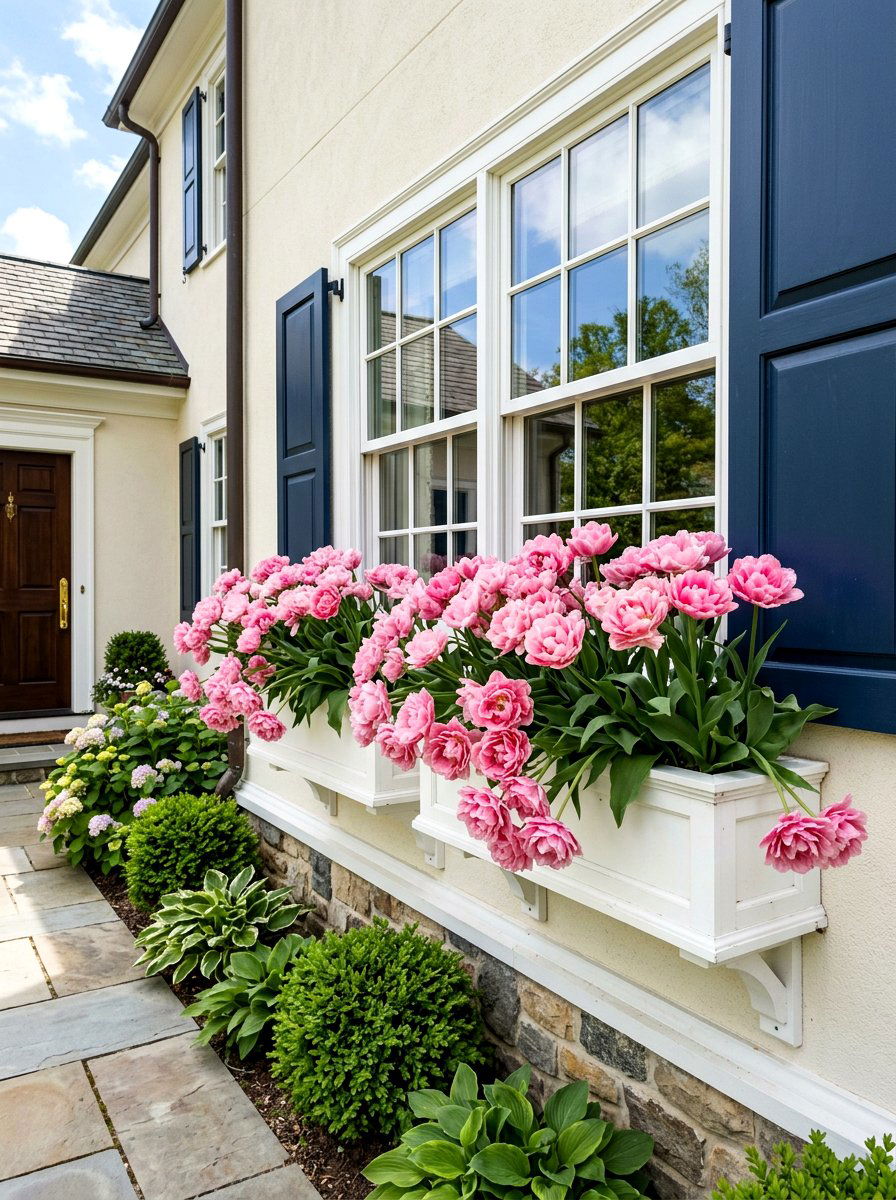
16. Weeping Cherry
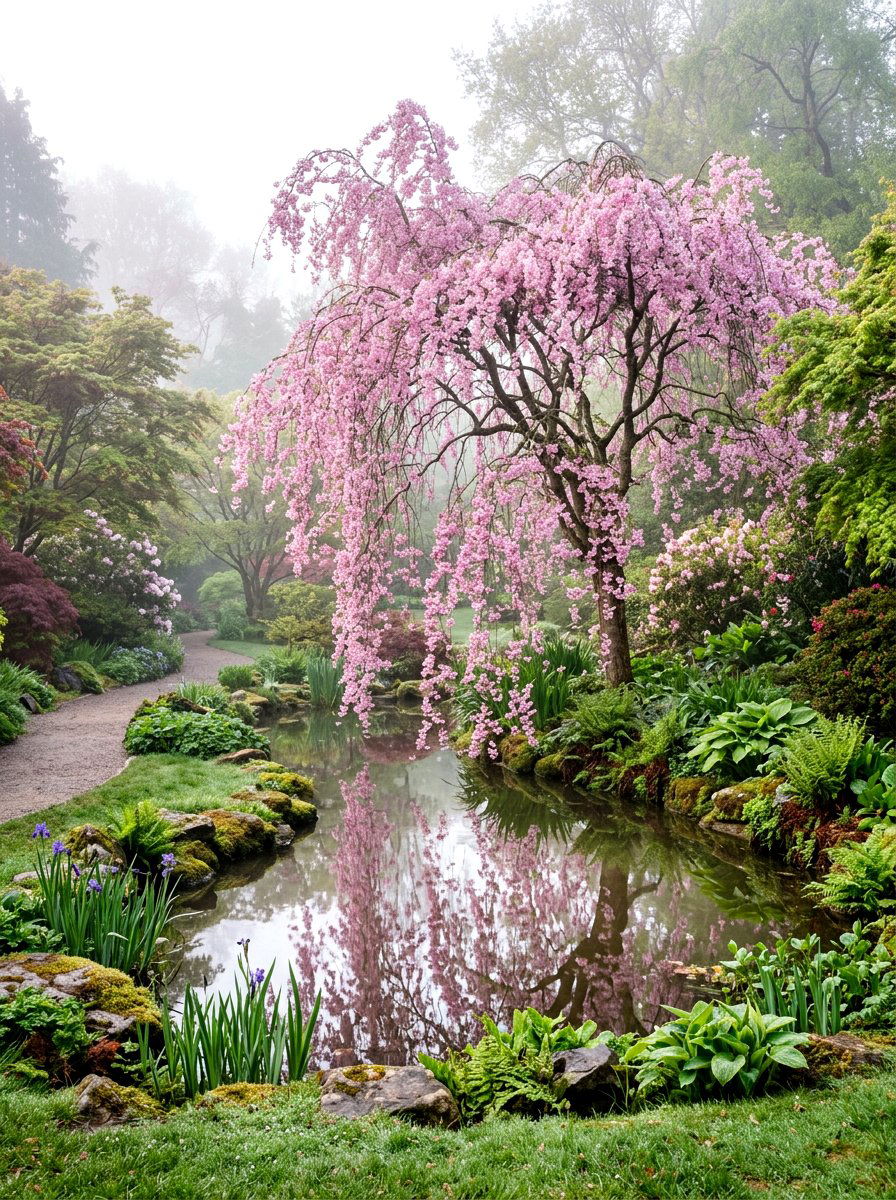
Graceful, cascading branches that reach all the way to the grassy ground characterize the stunning and timeless weeping cherry tree variety. When in full bloom, the tree looks like a pink or white fountain of flowers, creating a romantic and soft atmosphere. It is an excellent choice for planting near water features or as a standalone specimen in the center of a circular driveway. To keep the weeping form looking its best, minimal pruning is required to remove any stray branches that grow straight upward. This tree captures the essence of spring elegance and provides a sense of movement and fluidity to a static garden landscape.
17. Tulip Tree
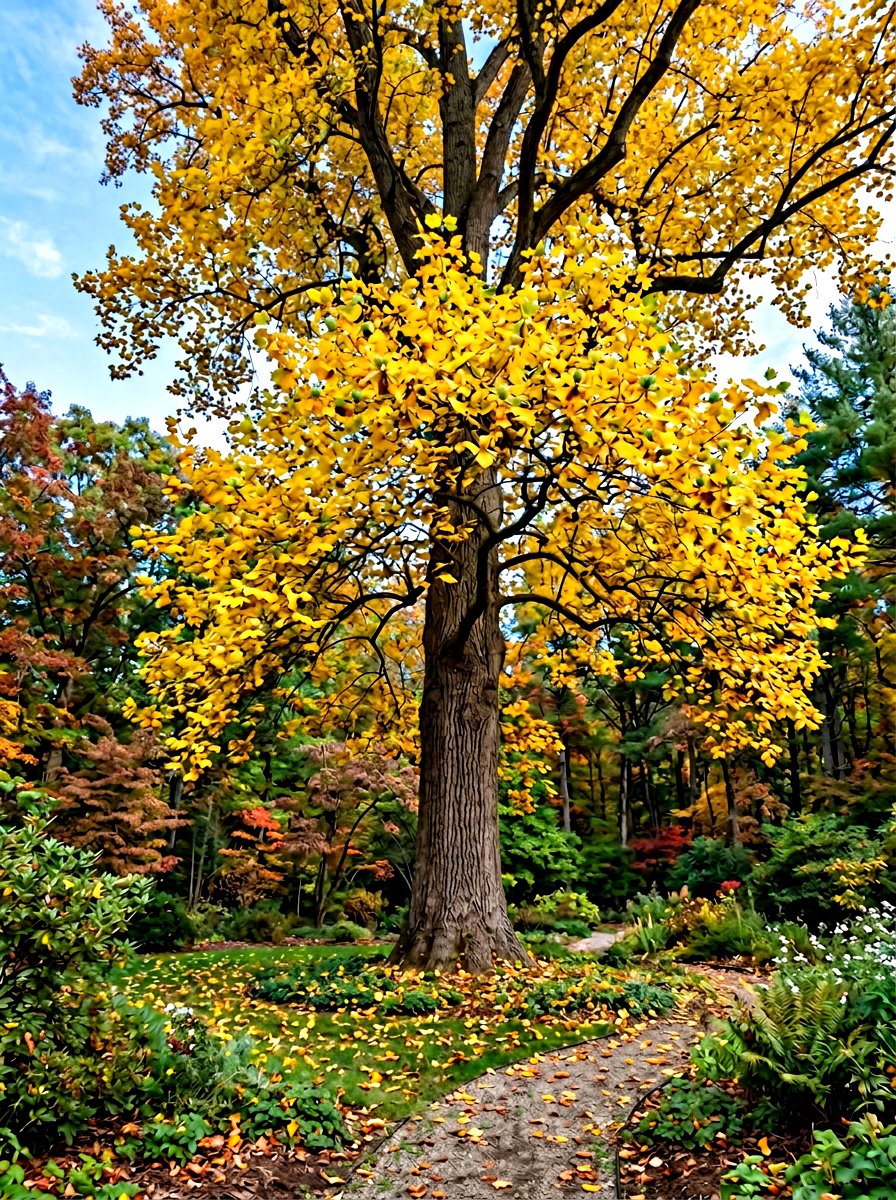
Fast-growing and massive, the tulip tree is named for its unique flowers that resemble greenish-yellow tulips with a bright orange base. These blooms often appear high up in the canopy, so they are best enjoyed from a distance or from a second-story window. The leaves have a distinct four-lobed shape that is unlike any other tree, turning a brilliant, clear yellow in the autumn. Because it can reach heights of eighty feet or more, it is a tree intended for large properties where it can serve as a primary shade provider. It is a sturdy, long-lived species that adds significant value and maturity to any home landscape.
18. Flowering Almond
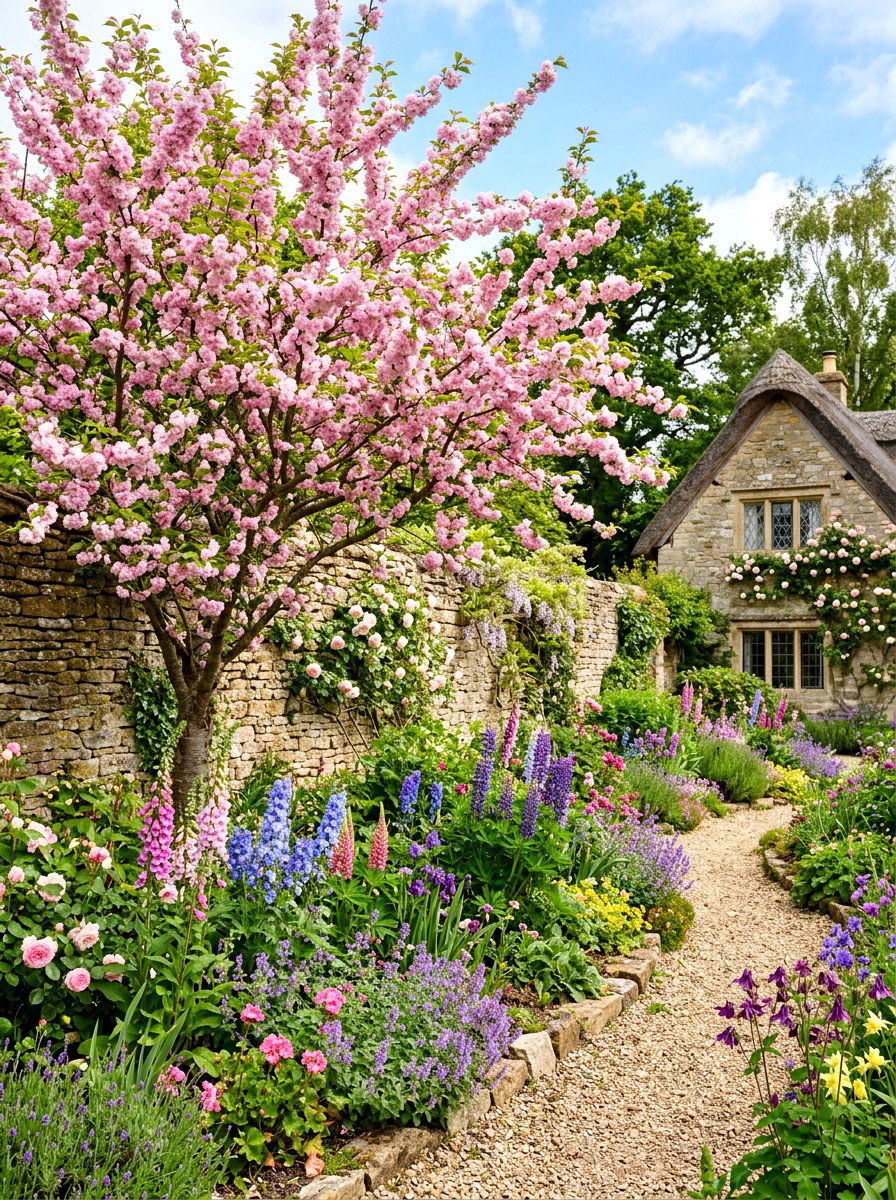
Soft, double-pink flowers cover every inch of the flowering almond 's branches, creating a fluffy and cloud-like appearance in the early spring. This small tree or large shrub is a favorite for those who love a traditional, cottage-garden look with plenty of pastel colors. It is very easy to grow and can handle a variety of soil conditions, though it prefers a sunny spot to bloom well. The blossoms are exceptionally dense, often obscuring the branches entirely for a few weeks of intense, high-impact color. It is a nostalgic choice that reminds many people of their grandparents' gardens, bringing a sense of history and comfort to the yard.
19. Catalpa Tree
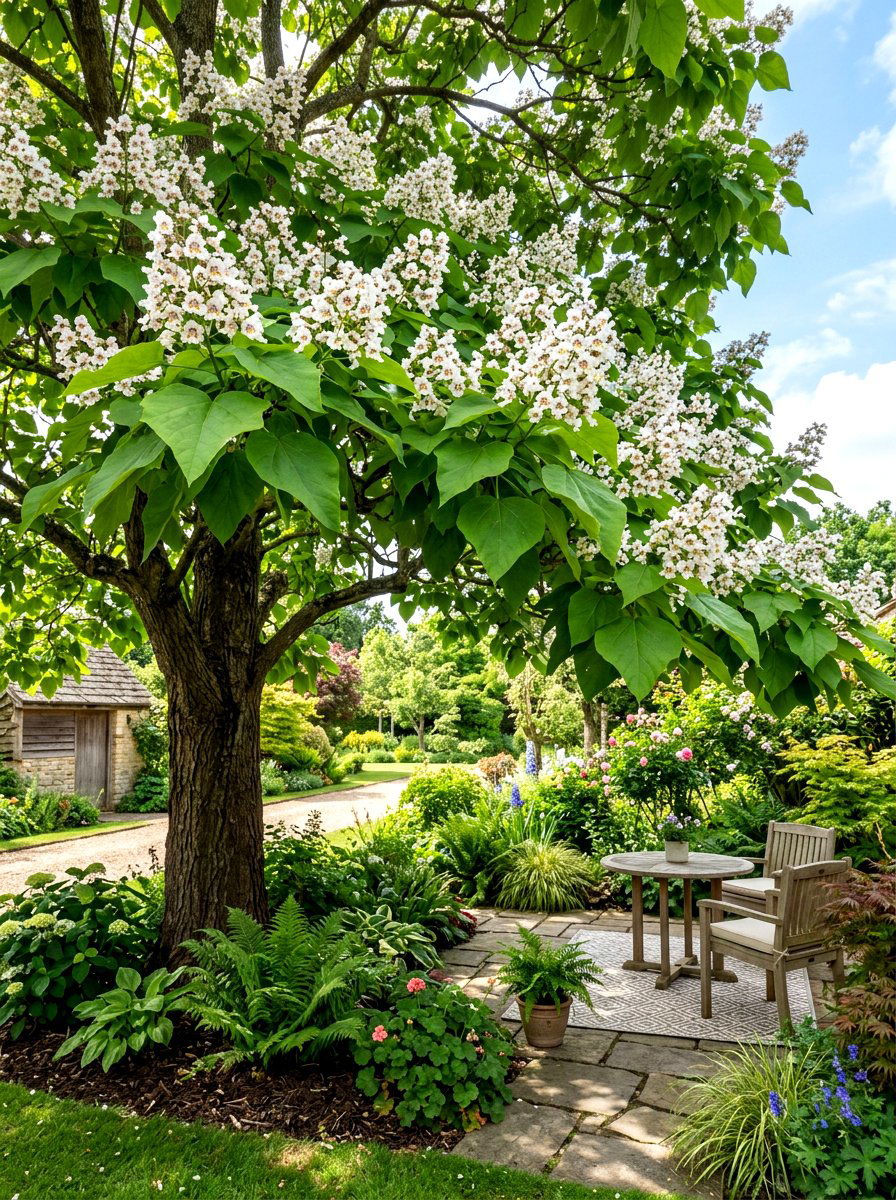
Huge, heart-shaped leaves and large clusters of white, bell-shaped flowers make the catalpa tree a bold and tropical-looking choice for temperate climates. The flowers have intricate purple and yellow spotted throats, inviting closer inspection from anyone walking by your garden path or lawn. It is a tough tree that can grow in difficult soil conditions where other more delicate flowering trees might struggle to survive. In the late summer, it produces long, bean-like seed pods that hang from the branches, adding a quirky and unique visual element. This tree provides excellent shade and a fast growth rate for homeowners looking for immediate landscape impact.
20. Mimosa Tree
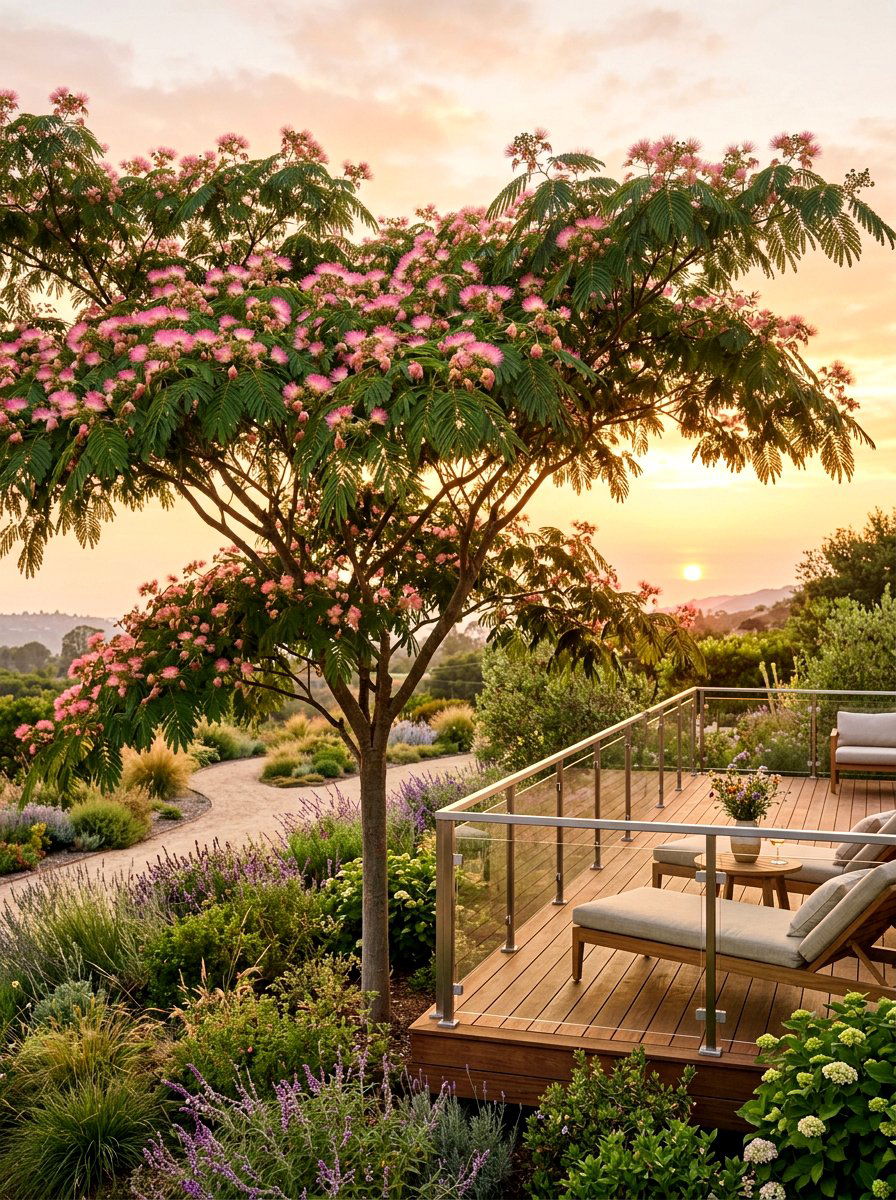
Feathery, pink pom-pom flowers sit atop the delicate foliage of the mimosa tree, giving it a soft and whimsical appearance in the landscape. The leaves are fern-like and actually fold up at night or when touched, which is a fascinating natural trait that children especially love. It has a wide, flat-topped canopy that creates a beautiful umbrella of shade for a patio or a small garden seating area. While it is a fast grower, it is best suited for managed garden areas where its spreading nature can be appreciated without it becoming too unruly. The fragrance is sweet and exotic, drawing in hummingbirds and butterflies all summer long.
21. Yellow Wood
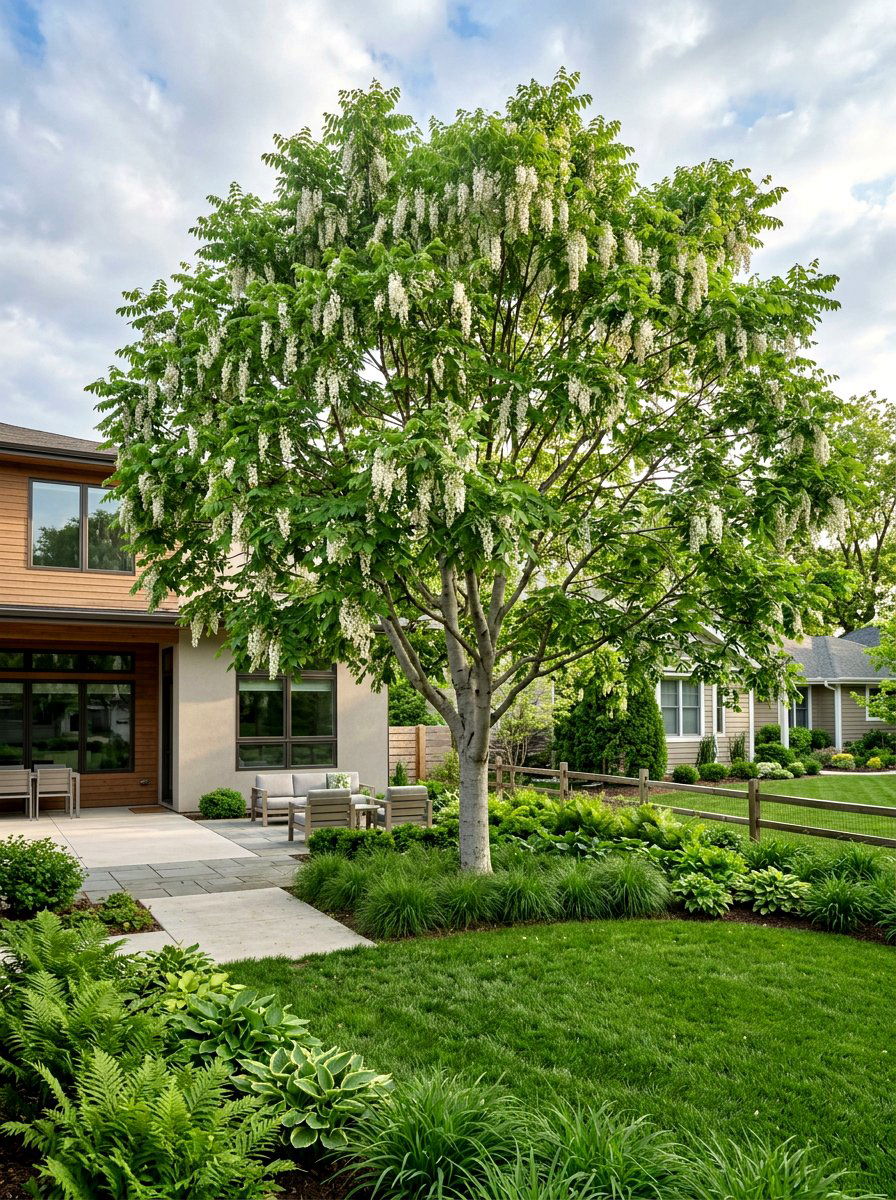
Dangling clusters of fragrant white flowers cover the yellow wood tree every few years, creating a spectacular and rare garden event. While it may not bloom heavily every single season, the wait is absolutely worth it for the sheer beauty of its pendulous blossoms. The tree gets its name from the yellow color of its heartwood, and it features a beautiful smooth gray bark that resembles a beech tree. Its foliage turns a stunning gold in the fall, providing a secondary season of high visual interest for the homeowner. This is a medium-sized tree that fits perfectly into a suburban backyard, offering both shade and unique floral beauty.
22. Kousa Dogwood
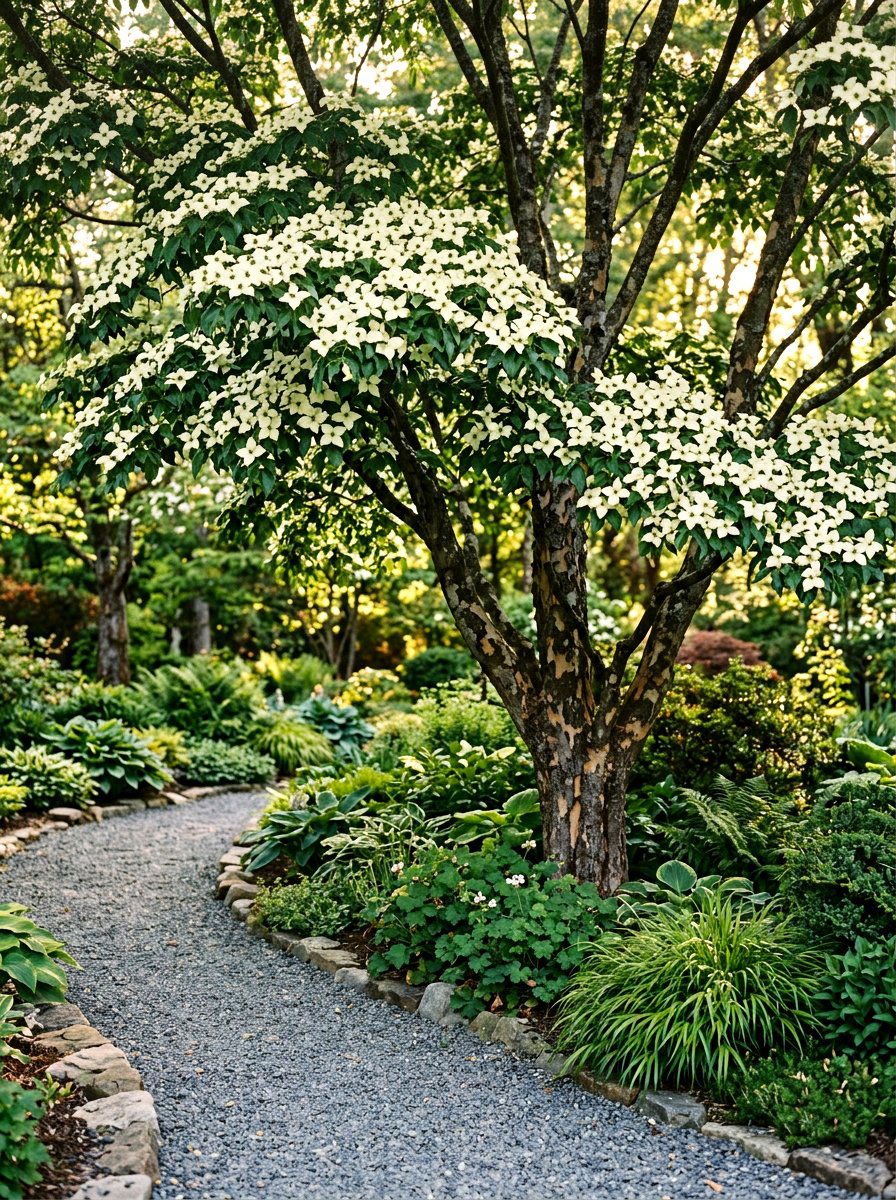
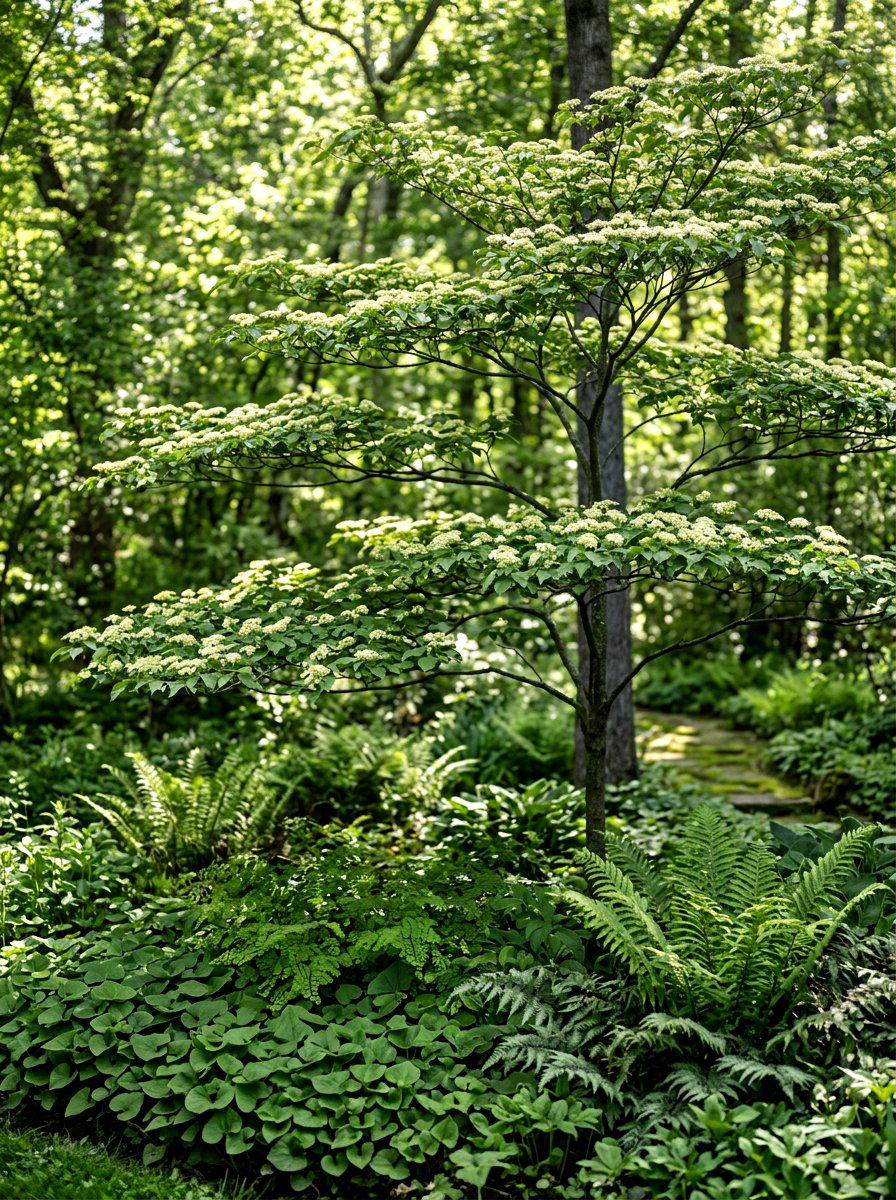
Late-blooming and disease-resistant, the kousa dogwood extends the flowering season by showing off its pointed white bracts well after other dogwoods have faded. This variety is known for its horizontal branching pattern and its beautiful exfoliating bark that peels away to reveal a mosaic of colors. In the late summer, it produces bumpy red fruits that look like oversized raspberries, which are edible and highly attractive to various bird species. The leaves turn a deep, burnished red in the autumn, making it one of the best trees for consistent year-round interest. It is a sophisticated choice for modern landscapes that require a clean and structural look.
23. Okame Cherry
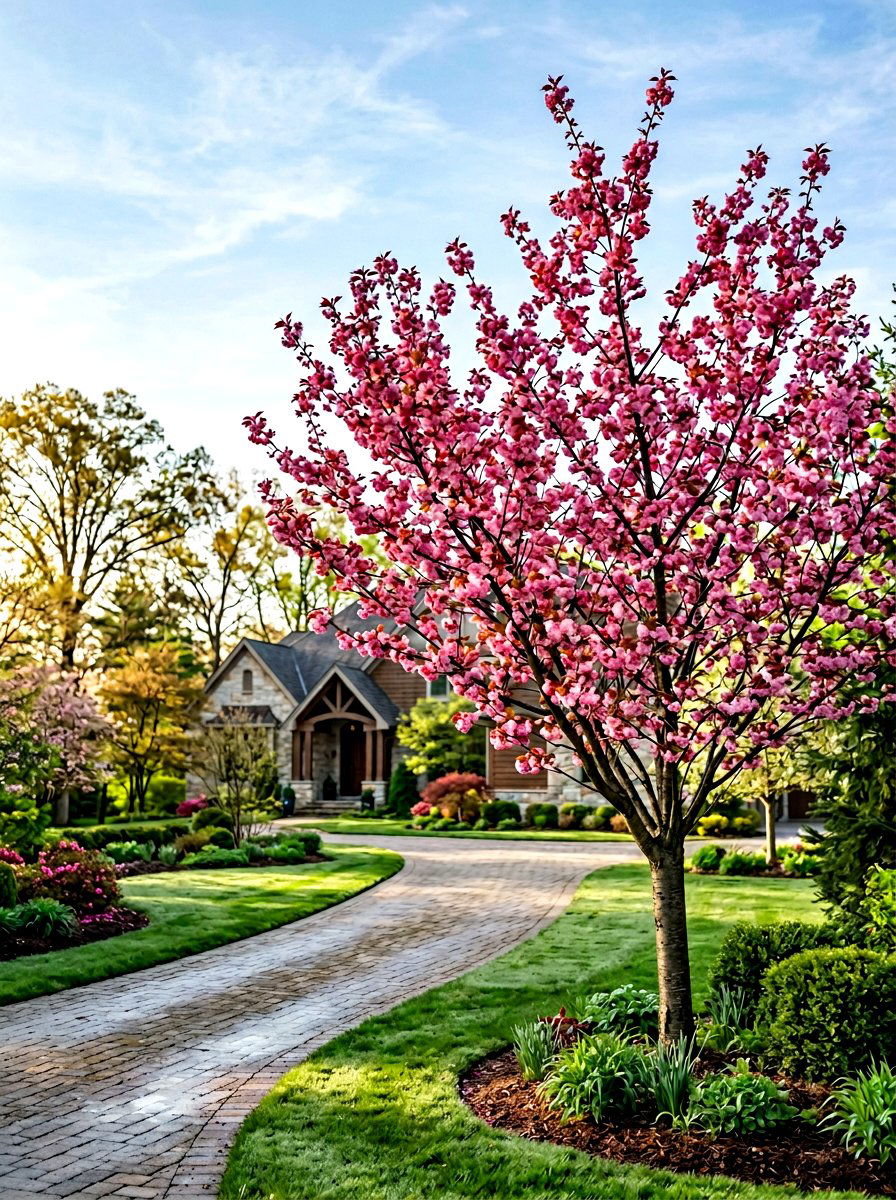
Bright carmine-pink flowers with red calyxes make the okame cherry one of the most vibrant and early-blooming cherry varieties available for home gardens. It has a more upright and vase-shaped growth habit compared to other cherries, making it a great choice for lining a long driveway or walkway. The flowers are slightly fragrant and are very attractive to pollinators that are just beginning to wake up from their winter hibernation. In the fall, the dark green leaves transform into shades of orange and bronze, providing a warm and inviting glow to the landscape. This tree is exceptionally hardy and can tolerate heat better than many other ornamental cherries.
24. Royal Star Magnolia
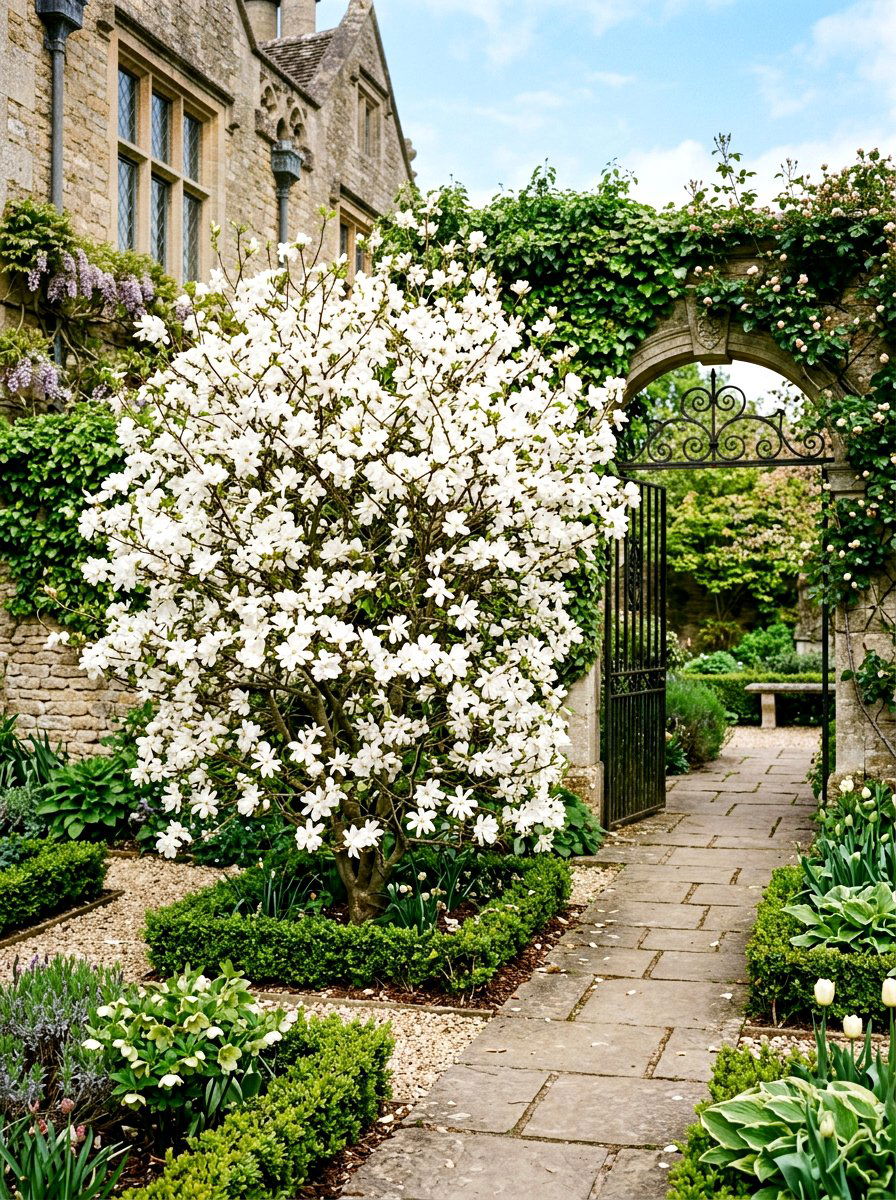
Pristine white flowers with double the number of petals found on standard magnolias give the royal star magnolia a full and lush appearance. It is a compact cultivar that stays relatively small, making it the perfect flowering tree for a foundation planting or a small courtyard. The blooms emerge early and are highly fragrant, filling the surrounding area with a sweet scent that defines the essence of the spring season. Because of its slower growth rate, it is easy to maintain and won't quickly outgrow its designated space in your garden design. It is a refined and elegant plant that adds a touch of class to any entrance.
25. Flowering Peach
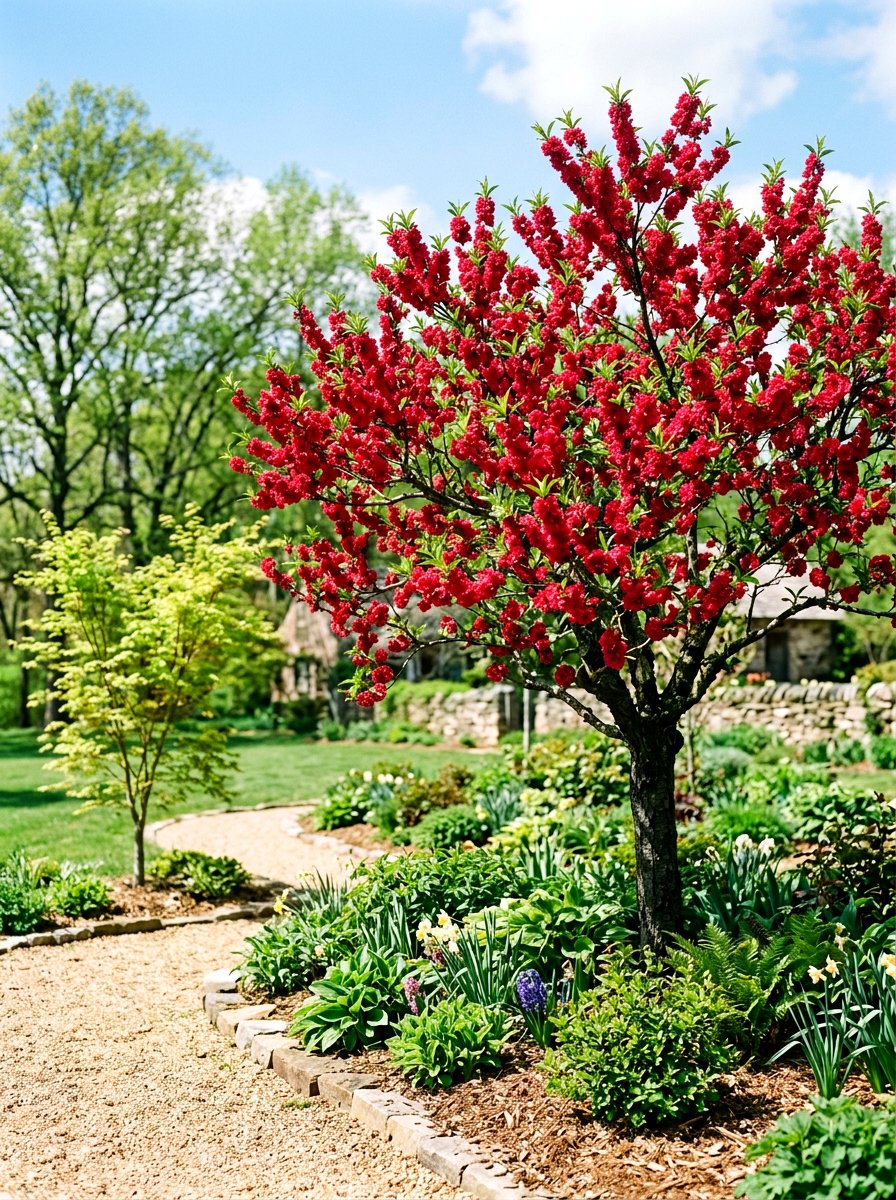
Intense shades of pink and red cover the branches of the flowering peach, offering some of the most saturated colors found in nature. These trees are bred specifically for their ornamental blossoms rather than their fruit, resulting in spectacular displays of double-petaled flowers that look like roses. They are smaller trees that work well in mixed borders or as a colorful accent in a sunny corner of the backyard. To keep them healthy and blooming profusely, they require a bit of regular pruning and a watchful eye for common fruit tree pests. The visual payoff is a stunning explosion of color that creates a high-energy focal point.
Conclusion:
Selecting the perfect spring flowering tree is a rewarding journey that transforms your home’s exterior into a vibrant sanctuary of color and fragrance. By understanding the specific needs of each variety — from soil type and sunlight to mature size — you can ensure that your landscape remains beautiful for years to come. These trees do more than just improve your property’s curb appeal; they provide essential habitats for local wildlife and create a peaceful environment for your family to enjoy. Whether you prefer the classic elegance of a white dogwood or the bold purple of a jacaranda, there is a flowering tree that perfectly matches your personal style. Investing in these living landmarks is a way to celebrate the return of spring every year with a spectacular natural show that never fails to inspire and delight everyone who sees it.
Related posts:
Leave a Reply