
As winter fades away, your home deserves a fresh look that celebrates the arrival of spring sunshine. Spring window boxes offer the perfect way to add instant curb appeal and vibrant color to your exterior without a full garden renovation. These charming containers act as a living frame for your windows, bringing nature closer to your everyday life indoors. Choosing the right combination of flowers and foliage ensures your home feels welcoming and alive throughout the season. Whether you prefer classic bulbs or trailing vines, there are endless ways to style these boxes to match your architecture. Let us explore some of the best ways to brighten your home this beautiful spring season.
1. Tulip Window Box
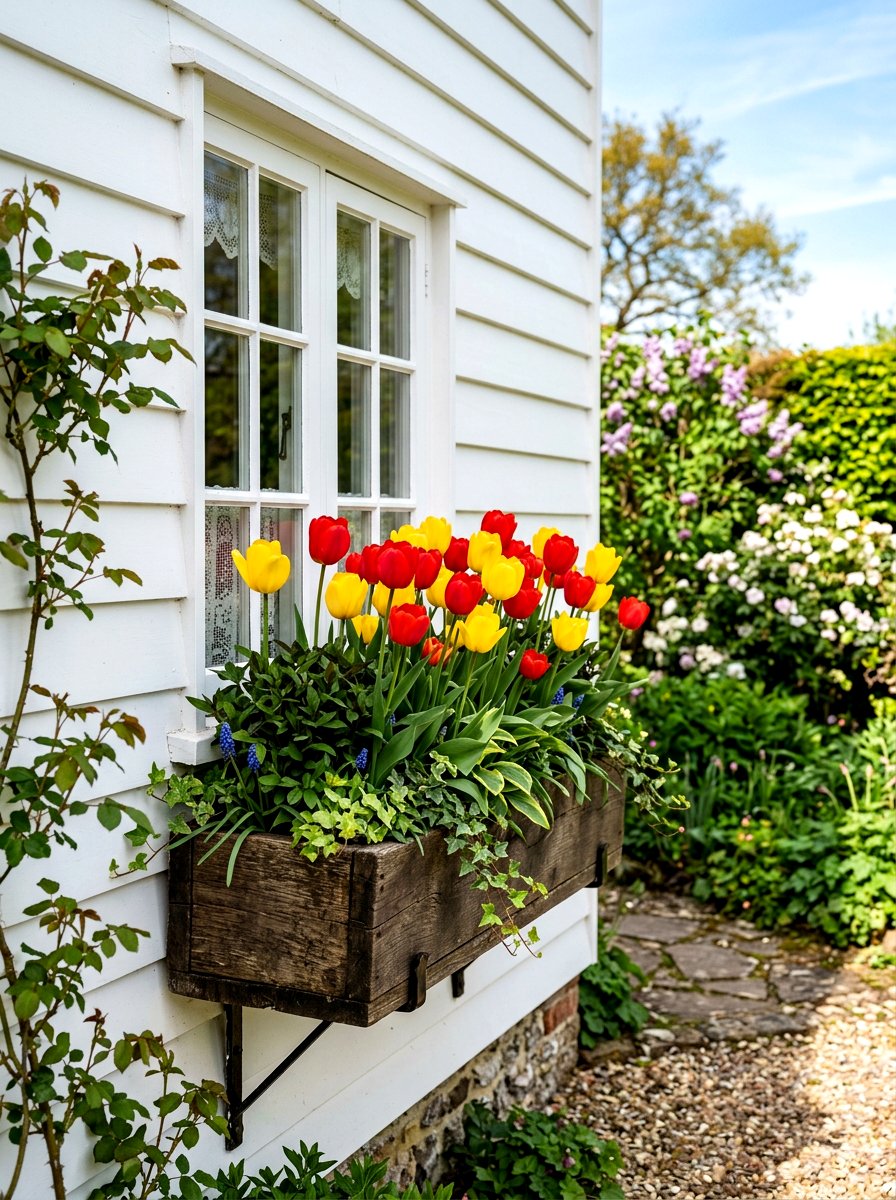
Planting bright tulips in your window boxes creates a classic look that signals the true start of spring. These tall, elegant flowers come in almost every color imaginable, allowing you to coordinate perfectly with your home shutters or siding. For the best results, use a mix of early and late blooming varieties to ensure a long-lasting display of color. Tulips look best when planted closely together to create a full, lush appearance that catches the eye from the street. Make sure your window box has excellent drainage, as tulip bulbs do not like to sit in overly soggy soil during the rainy spring weeks.
2. Daffodil Window Box
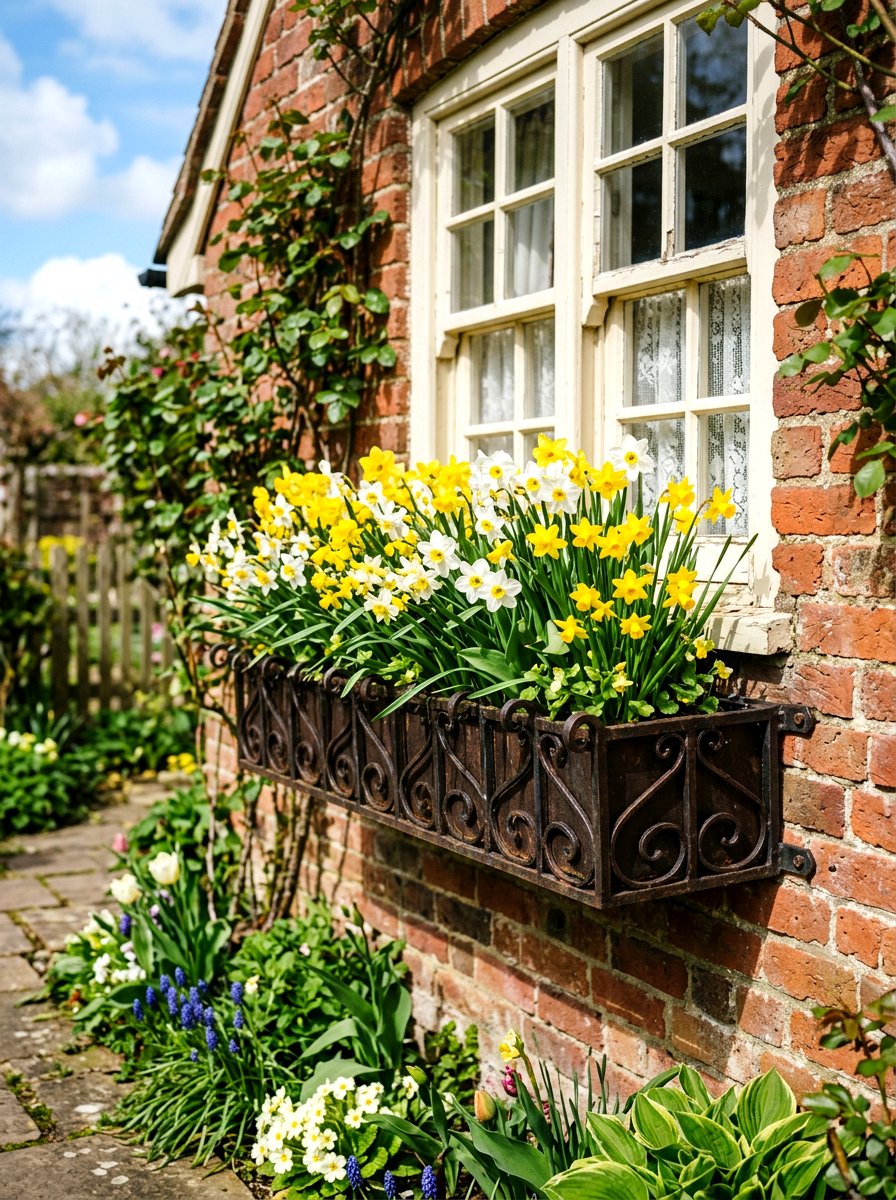
Yellow daffodils bring a cheerful and sunny vibe to any window ledge during the early months of the year. These hardy bulbs are often the first to bloom, providing a much-needed burst of energy after a long, gray winter. You can choose miniature varieties if your window boxes are smaller, as they will not grow too tall or flop over in the wind. Pairing yellow daffodils with white accents creates a crisp, clean look that feels incredibly fresh. Because these flowers are quite resilient, they can handle the occasional cold snap that often occurs during the transition into the warmer spring months.
3. Pansy Window Box
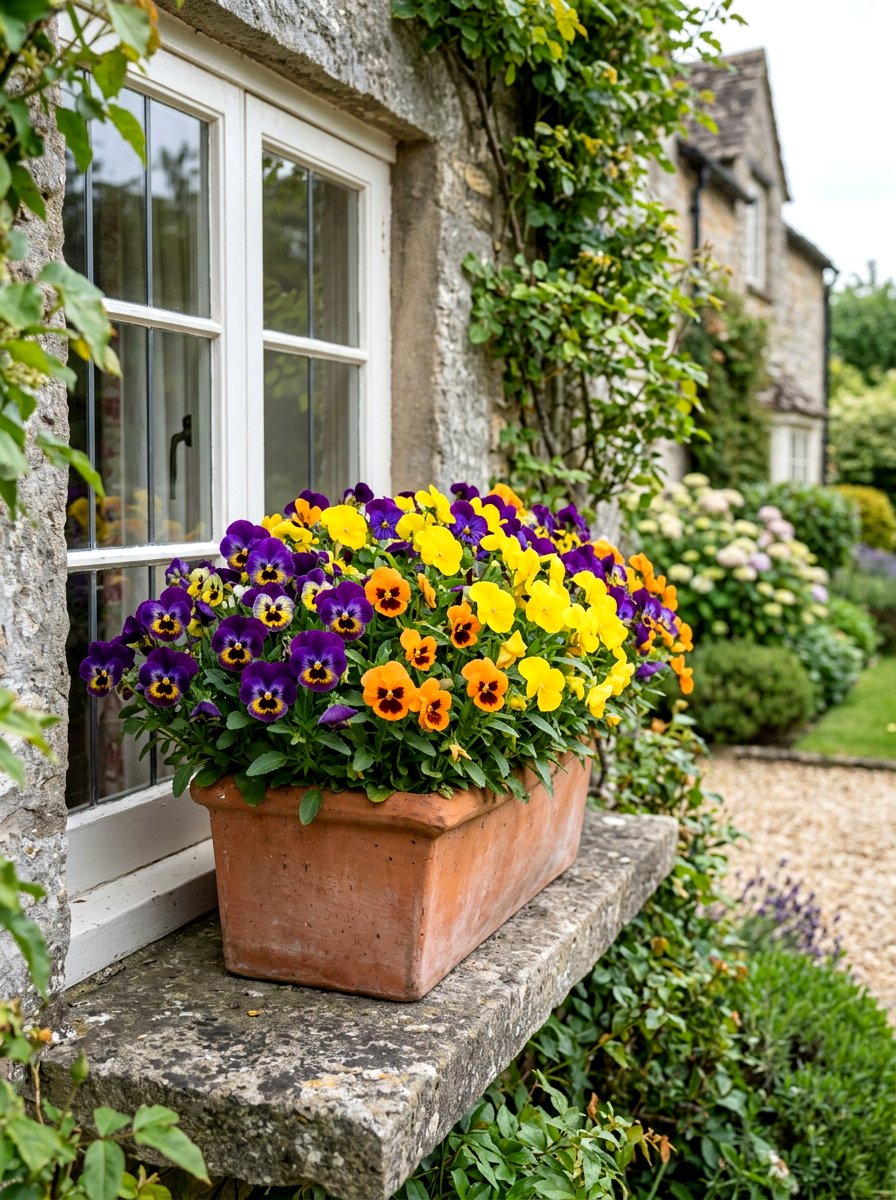
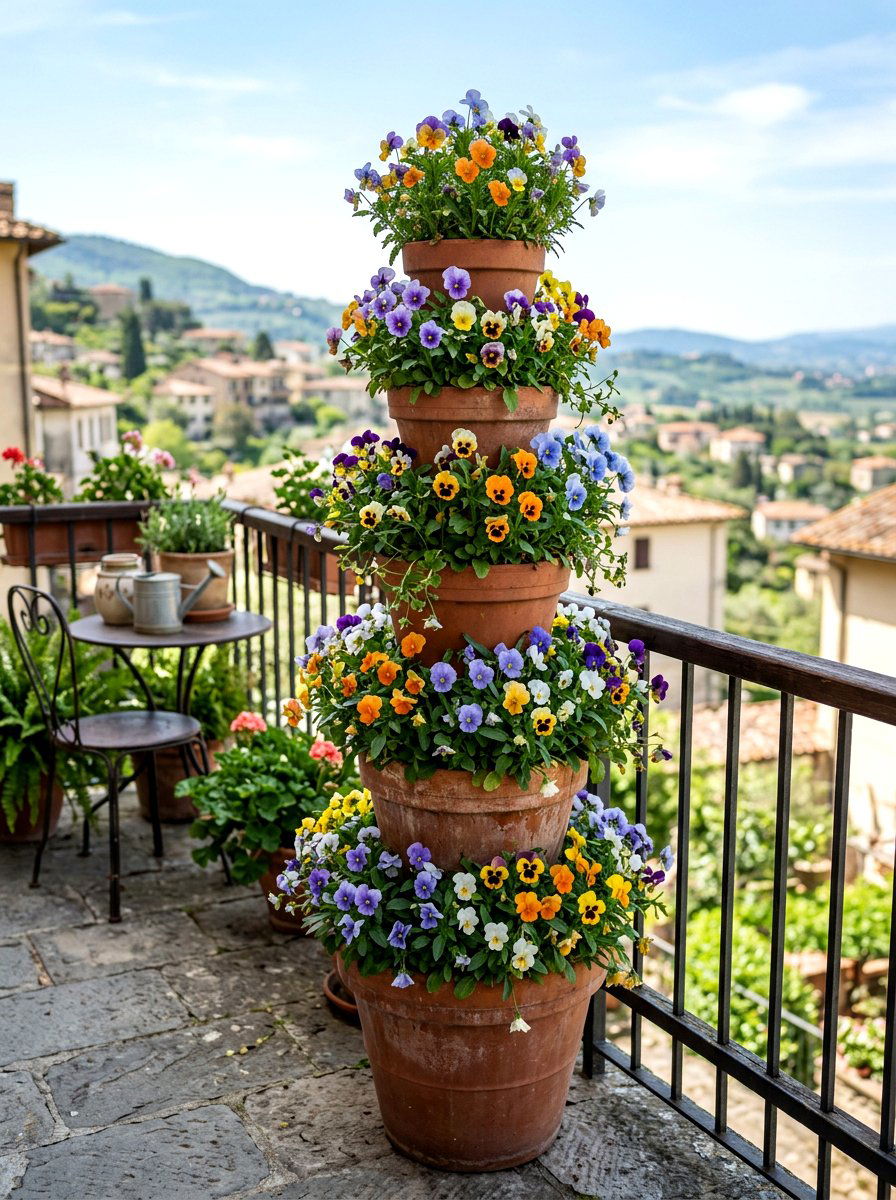
Pansies are a favorite choice for spring because they thrive in the cooler temperatures of the early season. These versatile flowers offer a wide range of colors, from deep purples and blues to bright yellows and oranges. Many varieties feature unique "faces" that add a touch of personality and charm to your home exterior. Pansies are relatively low-maintenance, requiring only regular watering and the occasional removal of spent blooms to keep them flowering. They look wonderful when packed tightly into a box, creating a carpet of color that remains vibrant even when the weather is still a bit chilly outside.
4. Petunia Window Box
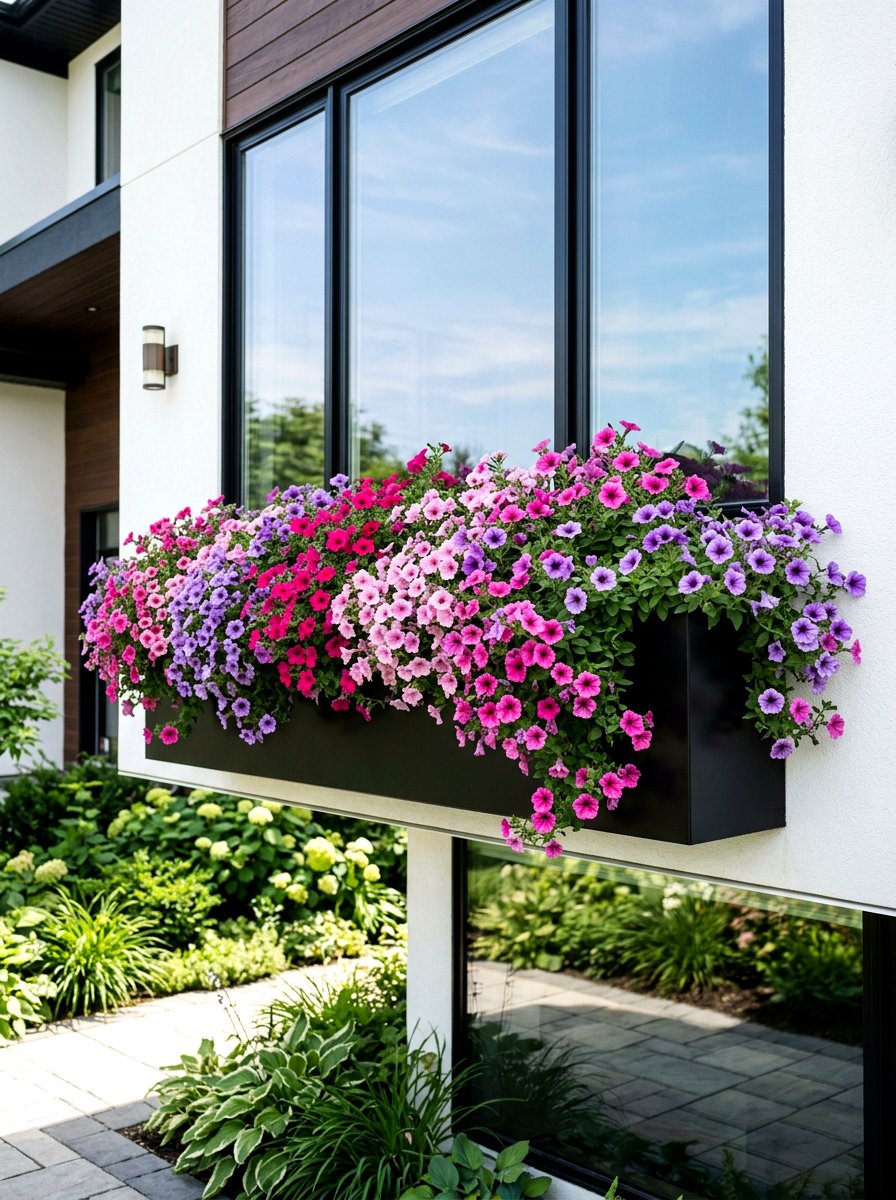
Petunias are famous for their ability to spill over the edges of a container, creating a beautiful cascading effect. As the spring weather warms up, these flowers will grow rapidly and fill your window box with hundreds of soft blooms. They come in many patterns, including stripes and speckles, which can add a modern or whimsical touch to your home. Regular deadheading and weekly feeding with a liquid fertilizer will keep your petunias looking their absolute best. Placing them in a sunny spot ensures they have enough energy to produce flowers continuously throughout the spring and into the early summer months.
5. Hyacinth Window Box
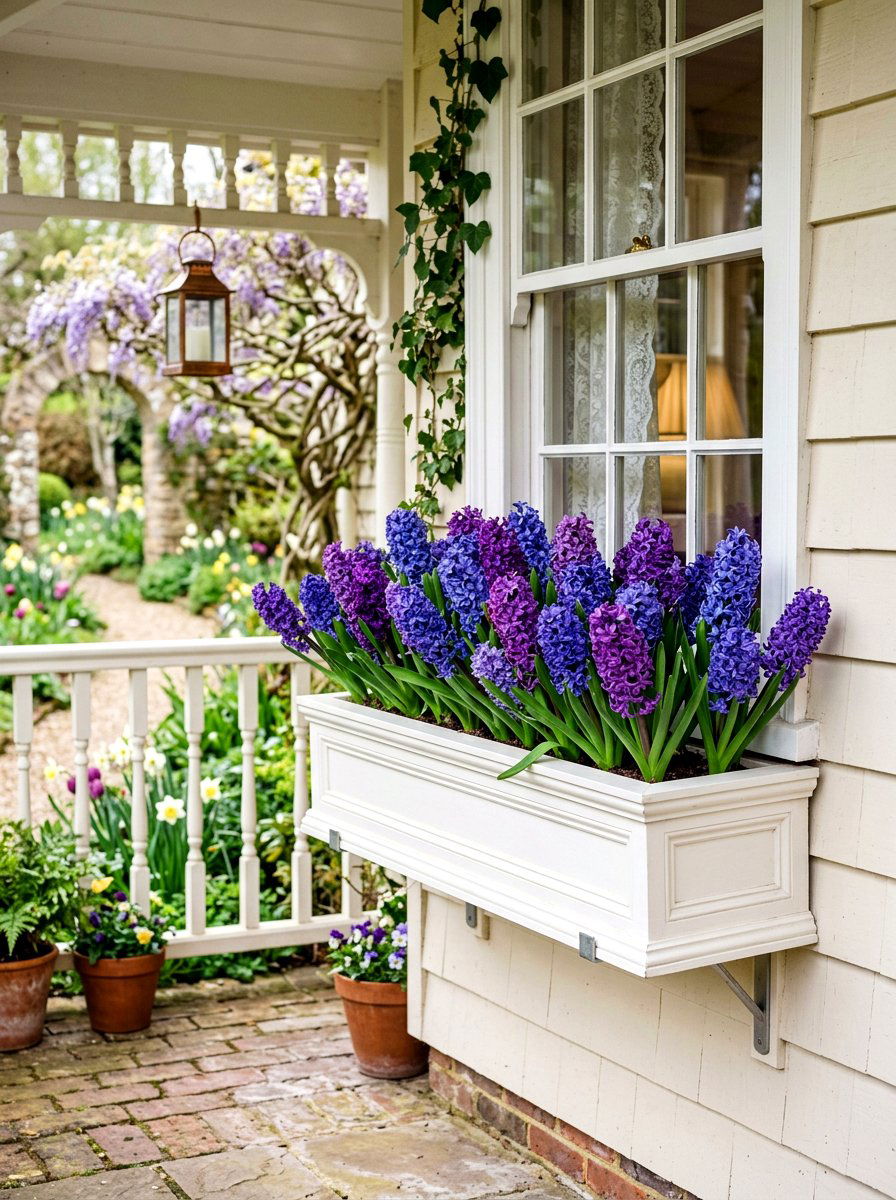
Hyacinths provide both stunning visual appeal and an incredible fragrance that can drift through your open windows on a breezy day. These sturdy, upright flowers come in shades of blue, purple, pink, and white, making them easy to match with any decor. Their thick stems mean they rarely need staking, even when they are in full bloom. Because their scent is so strong, a few hyacinths can go a long way in making your outdoor space feel like a professional garden. They pair beautifully with shorter groundcover plants that can fill in the space around the base of the flower spikes.
6. Primrose Window Box
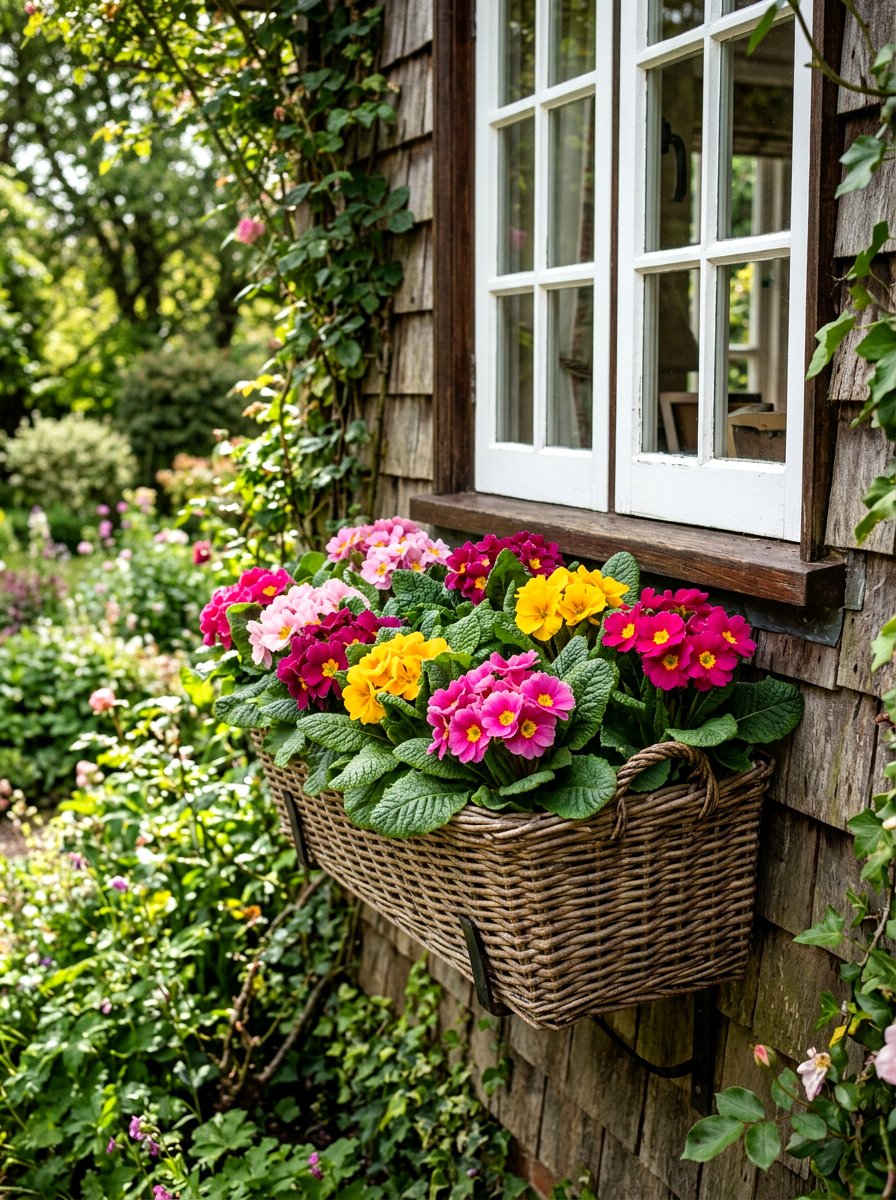
Primroses are delightful spring plants that offer a variety of jewel-toned colors and interesting leaf textures. These compact plants are perfect for smaller window boxes or for filling in gaps between larger, more upright flowers. They prefer slightly cooler spots, making them ideal for windows that do not receive harsh, direct afternoon sunlight. Primroses have a very traditional, cottage-garden feel that adds a sense of nostalgia and warmth to your home. Keeping the soil consistently moist but not waterlogged is the key to keeping these beauties happy. Their crinkled green leaves provide a lovely backdrop for their bright, center-focused flower petals.
7. White Flower Window Box
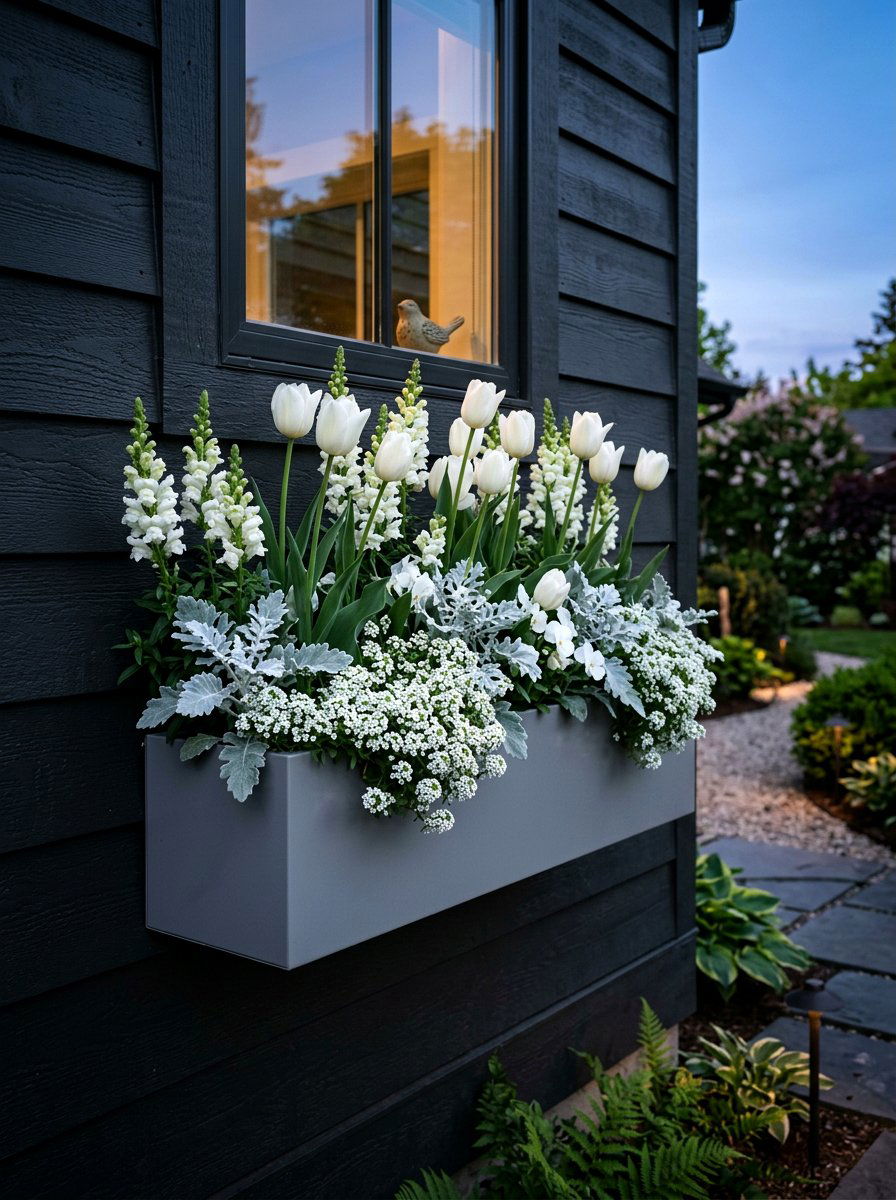
A monochrome white window box offers a sophisticated and timeless look that complements almost any house color or style. You can combine different white flowers like tulips, pansies, and sweet alyssum to create depth through various shapes and textures. White flowers tend to glow in the twilight, making your home look magical during the evening hours. This clean aesthetic feels very modern and high-end, especially when paired with dark green foliage for contrast. Using a variety of heights, from tall white snapdragons to low-growing white lobelia, ensures the arrangement looks professionally designed. It is a simple yet high-impact choice for spring.
8. Pink Spring Window Box
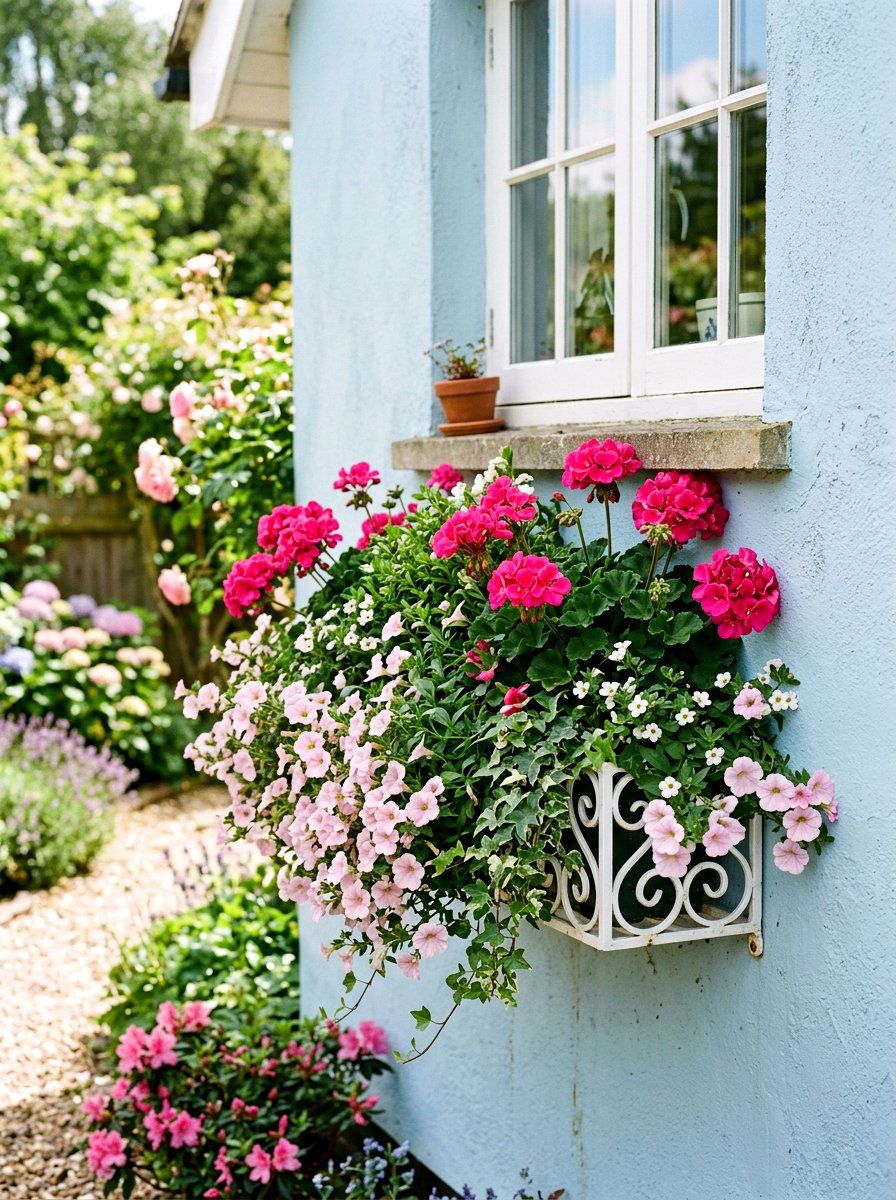
Pink flowers are the epitome of spring romance and can make your home feel incredibly inviting and soft. You can mix different shades of pink, from pale blush to vibrant fuchsia, to create a layered and interesting monochromatic display. Combining pink geraniums with trailing pink ivy or petunias adds movement and volume to the window box. This color palette works particularly well against white or gray exterior walls, providing a pop of color that is not too overwhelming. Adding a few silver-leafed plants like dusty miller can help to break up the pink and add a touch of elegant, cool-toned contrast.
9. Shade Window Box Plants
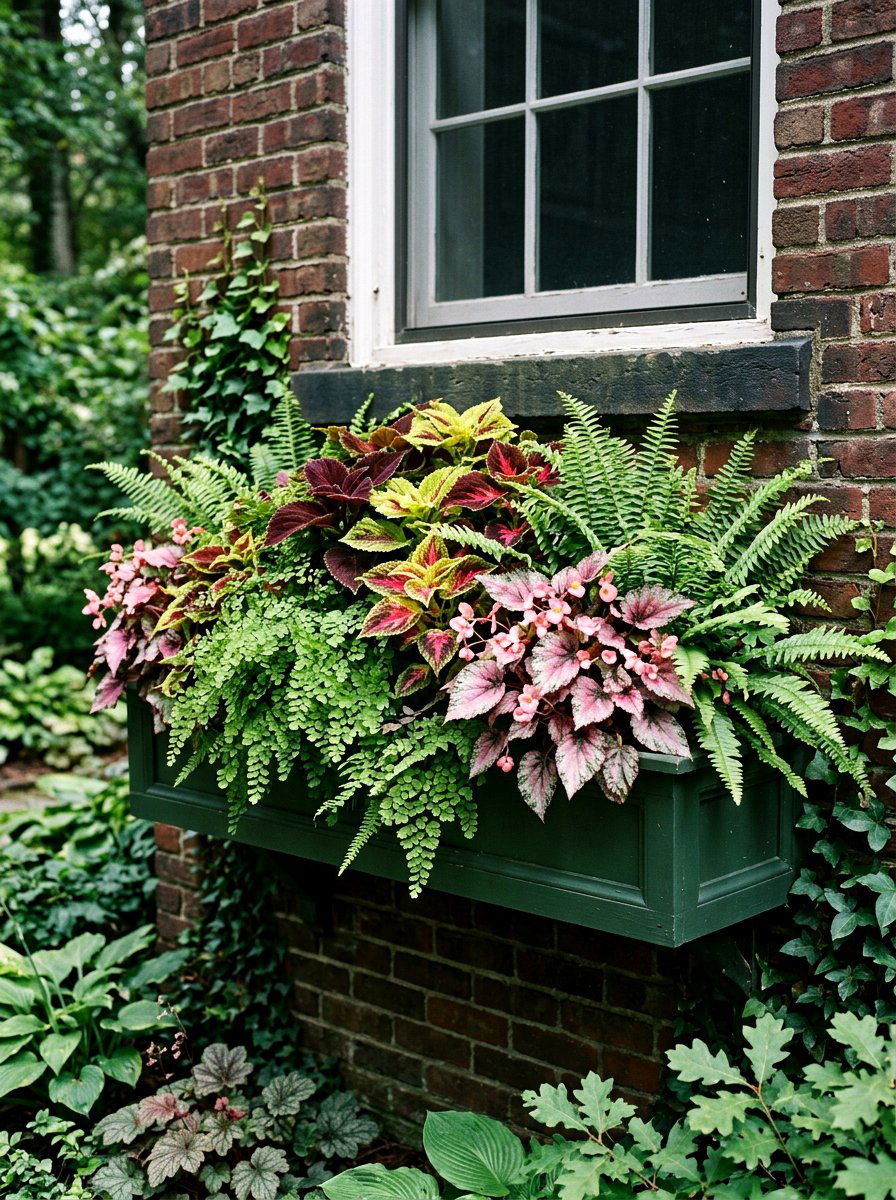
If your windows face north or are blocked by large trees, you can still have a stunning spring display. Shade-loving plants like begonias, ferns, and coleus offer beautiful colors and patterns without needing direct sunlight to thrive. Hostas also make a surprising but effective addition to larger window boxes, providing bold leaves that stay green all season. Many shade plants focus more on foliage than flowers, which creates a lush, forest-like atmosphere right outside your glass. Incorporating light-colored plants or variegated leaves can help to brighten up a dark corner of your home exterior and make it feel more spacious.
10. Sunny Window Box Flowers
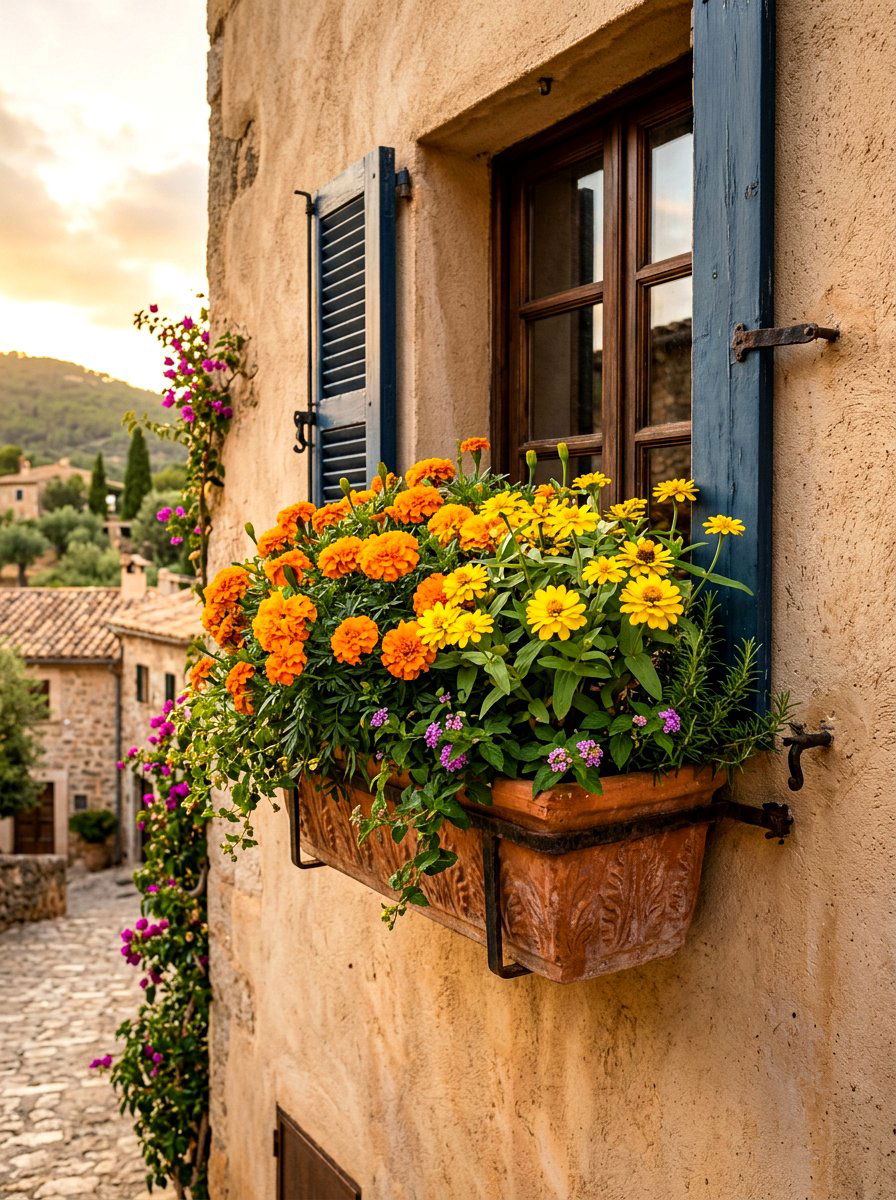
For windows that receive six or more hours of direct sun, you need plants that can handle the heat. Marigolds, zinnias, and salvias are excellent choices that love soaking up the rays and will reward you with constant blooms. These sun-loving varieties often come in very bright, saturated colors that look stunning under a clear blue spring sky. It is important to remember that sun-facing boxes dry out much faster, so choosing drought-tolerant plants can save you time on maintenance. Succulents are another great option for very sunny spots, offering a unique and modern look that requires very little water.
11. Mixed Bulb Window Box
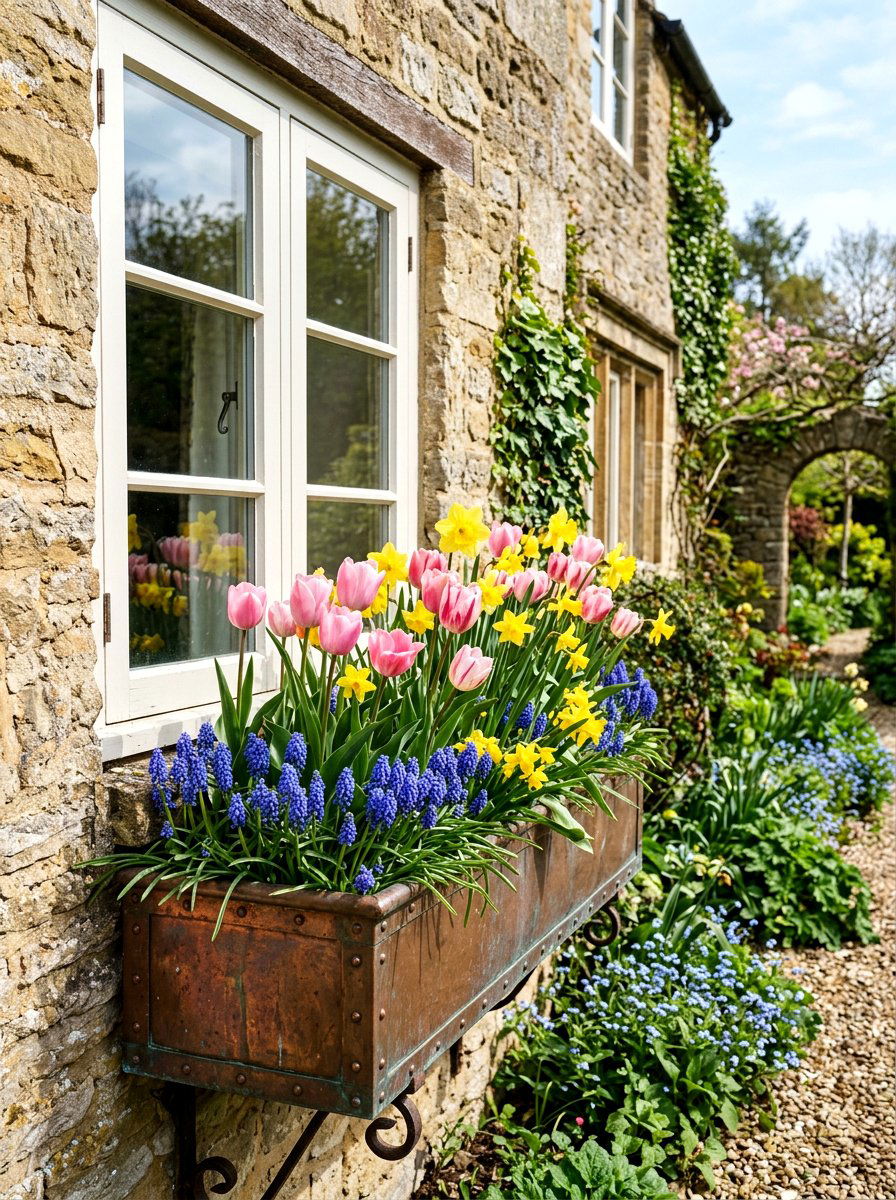
Creating a mixed bulb display allows you to experience a changing landscape as different flowers bloom at various times. You can layer bulbs at different depths, with larger ones like daffodils at the bottom and smaller ones like grape hyacinth near the top. This "lasagna" planting method ensures that as one flower finishes its cycle, another is ready to take its place. The result is a dynamic window box that keeps your home looking fresh for many weeks. Mixing different heights and textures creates a natural, wild look that mimics a spring meadow. It is a wonderful way to maximize small spaces.
12. Succulent Window Box
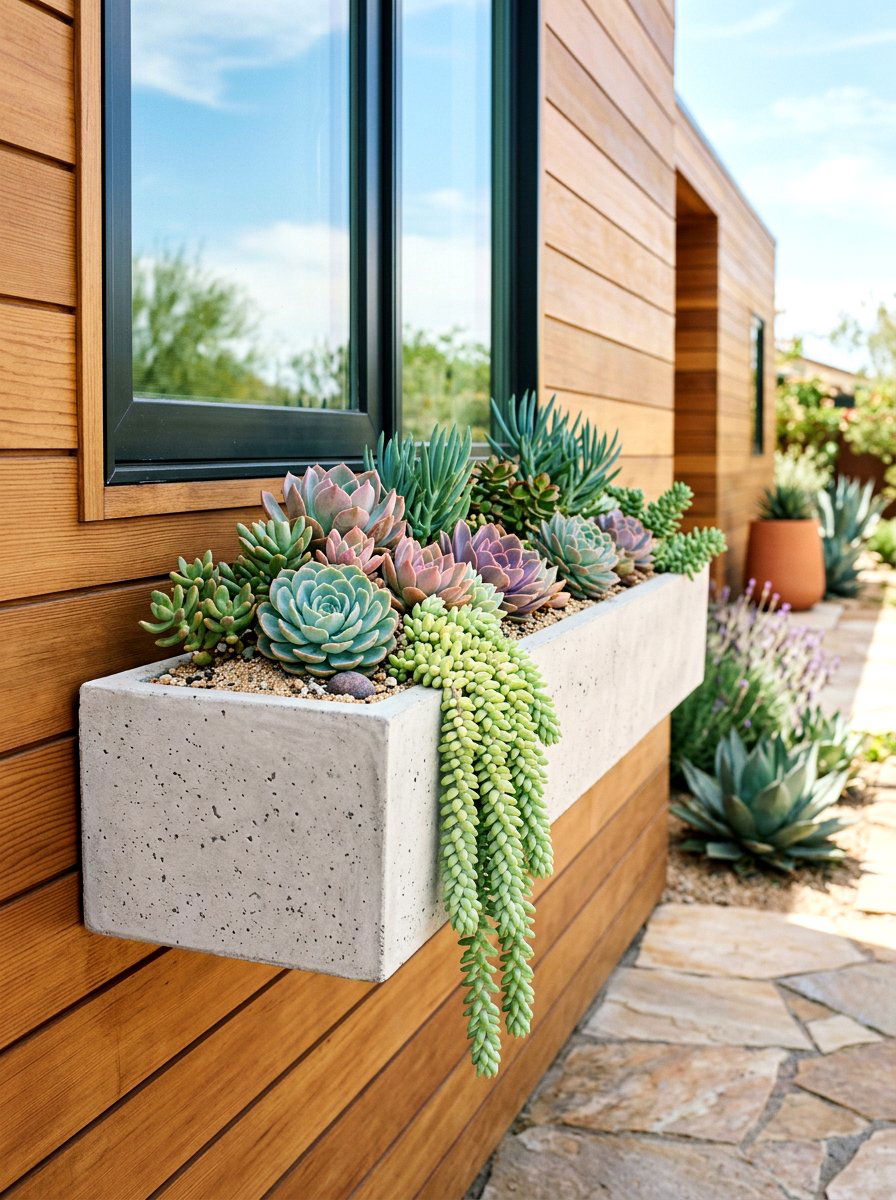
Succulents offer a modern and low-maintenance alternative to traditional flowering window boxes, perfect for busy homeowners. These plants come in an incredible array of shapes, from rosettes to trailing chains, and many different shades of green, blue, and purple. They are incredibly hardy and can survive with very little water, making them ideal for boxes that are hard to reach. In the spring, many succulents produce small, delicate flowers that add a surprising touch of color. Using a mix of upright and trailing succulents creates a sculptural effect that looks like a piece of living art. They require very well-draining, sandy soil.
13. Lavender Window Box
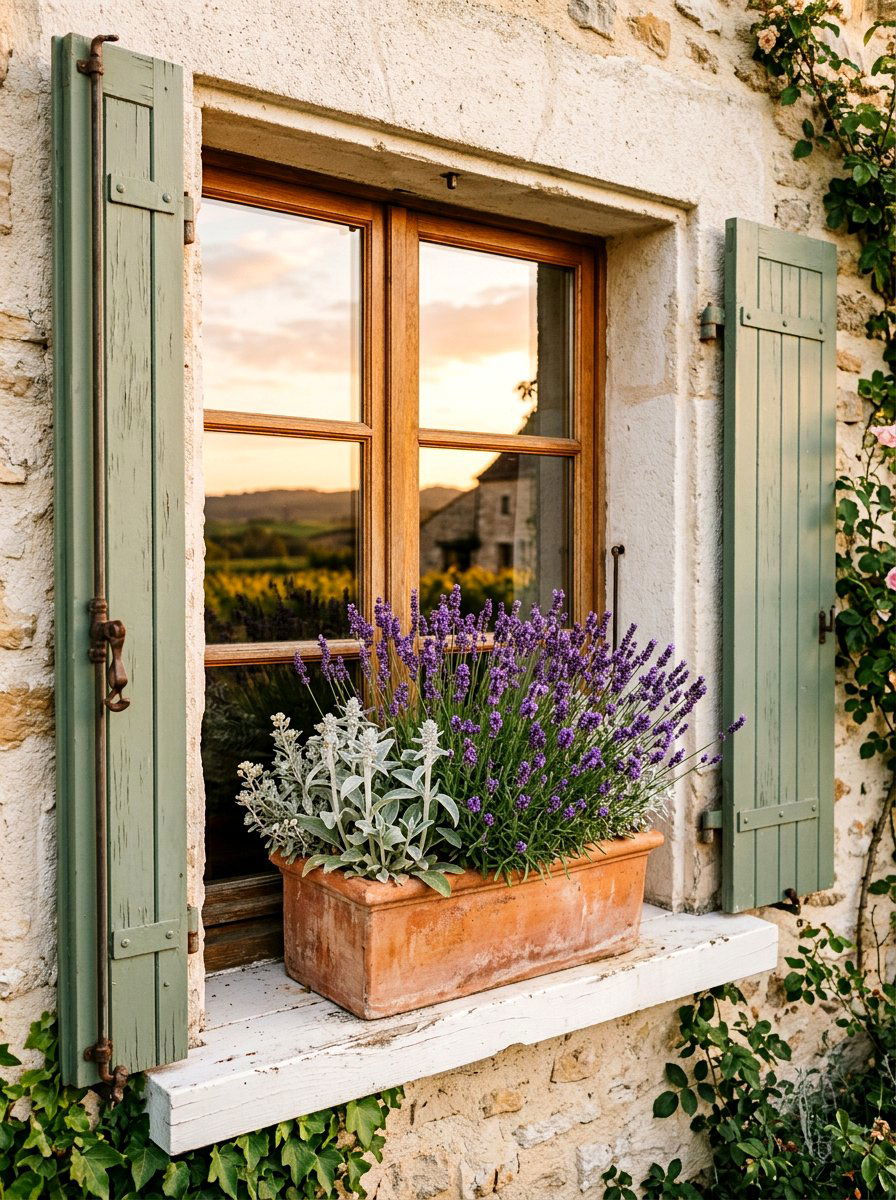
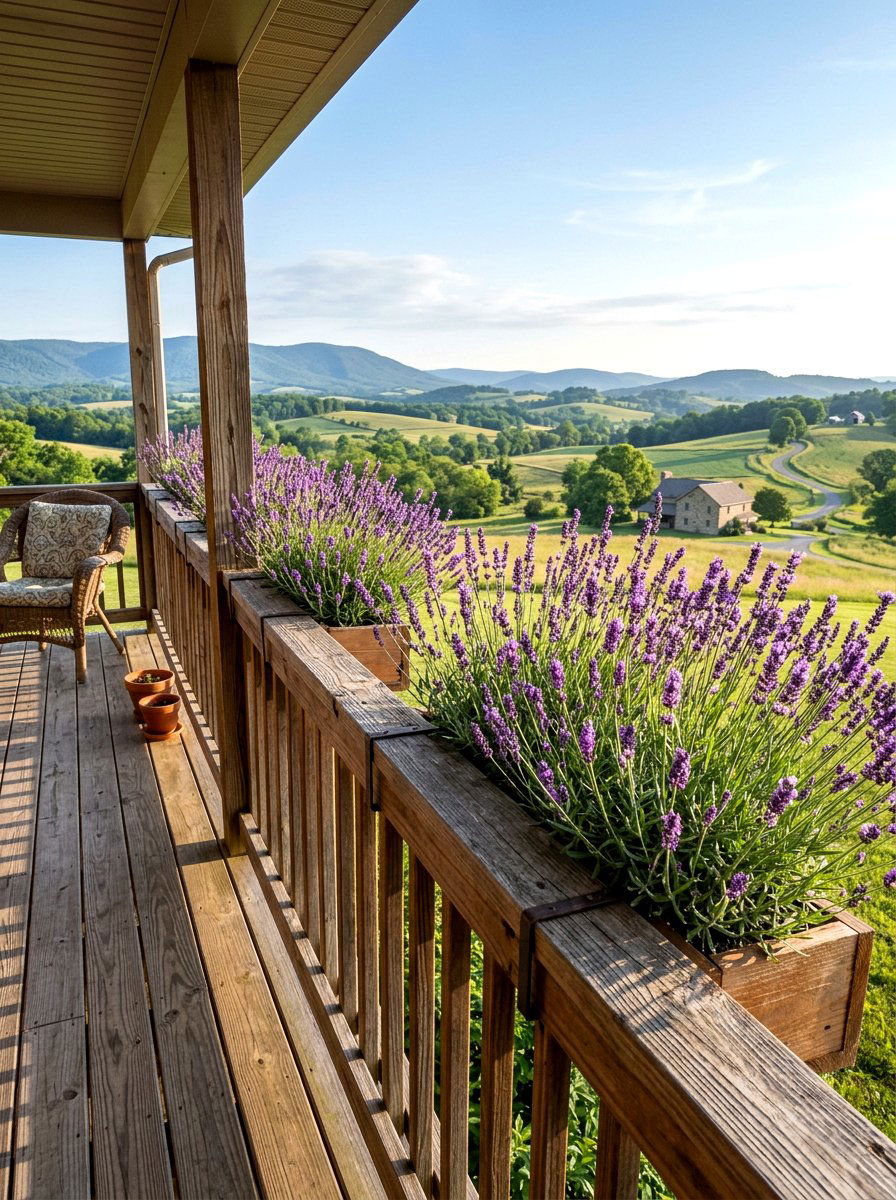
Lavender is a fantastic choice for a window box because it offers beautiful silvery foliage and a relaxing scent. When you open your window, the gentle fragrance of lavender can fill your room, creating a peaceful and calm environment. These plants love full sun and well-drained soil, making them perfect for south-facing windows. Lavender is also excellent for attracting bees and butterflies, which adds life and movement to your home garden. The purple spikes of flowers look elegant and provide a touch of Mediterranean style to your exterior. It is a hardy perennial that will continue to grow and smell wonderful.
14. Fern Window Box
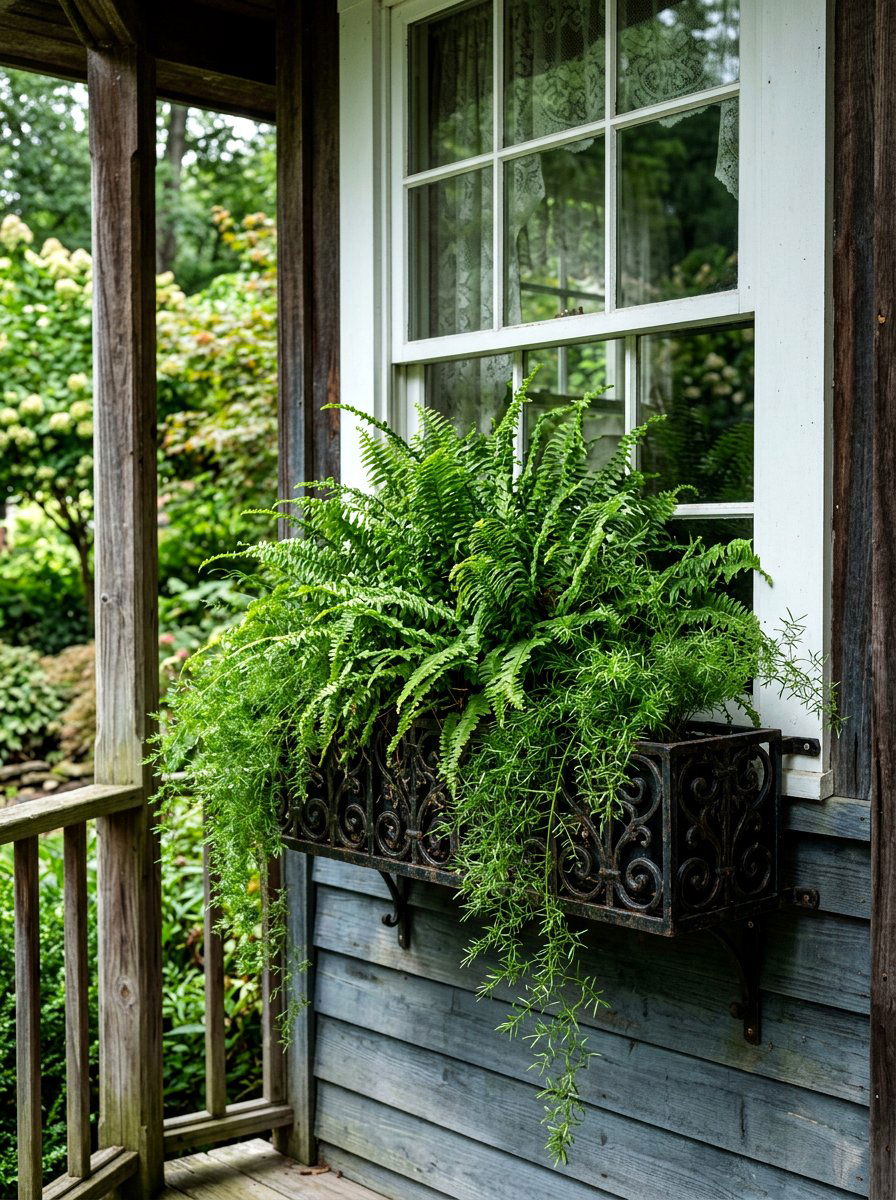
Ferns provide a lush, green, and textural look that can make any window feel like a hidden garden retreat. These plants are perfect for shady or partially shady spots where other flowering plants might struggle to grow. Their delicate fronds add a sense of movement and airiness to the window box, especially when a light breeze catches them. You can mix different types of ferns, such as Boston ferns or maidenhair ferns, to create a rich and varied green display. Ferns love moisture, so keeping the soil consistently damp is essential for maintaining their vibrant color and preventing the leaves from turning brown.
15. Begonia Window Box
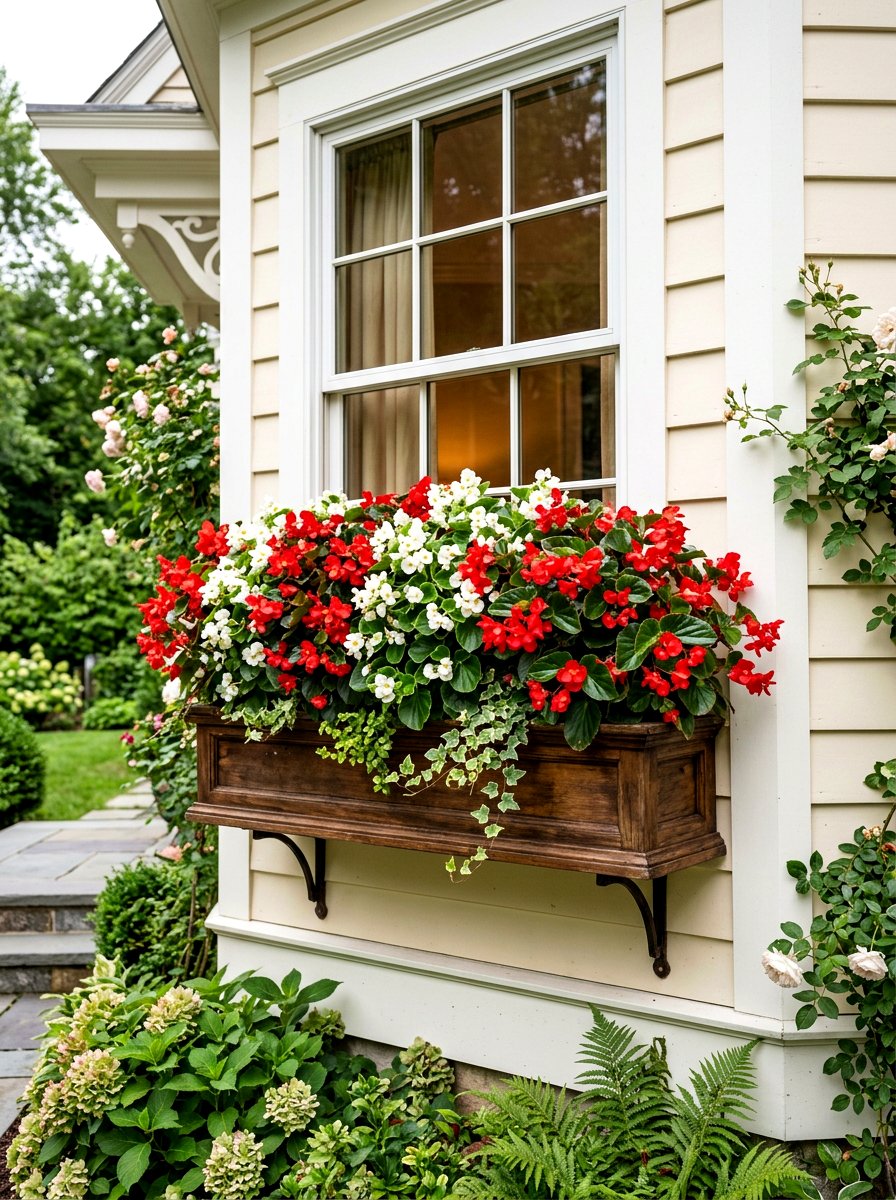
Begonias are versatile plants that offer both stunning flowers and incredibly decorative leaves in many different colors. They are well-suited for window boxes because they tend to stay relatively compact while producing an abundance of blooms. You can find varieties that thrive in the shade as well as those that can handle a bit more sunlight. The thick, waxy leaves of begonias help them retain moisture, making them a bit more forgiving if you miss a watering. Their flowers can be single or double, often resembling small roses, which adds a touch of classic elegance to your home's exterior design scheme.
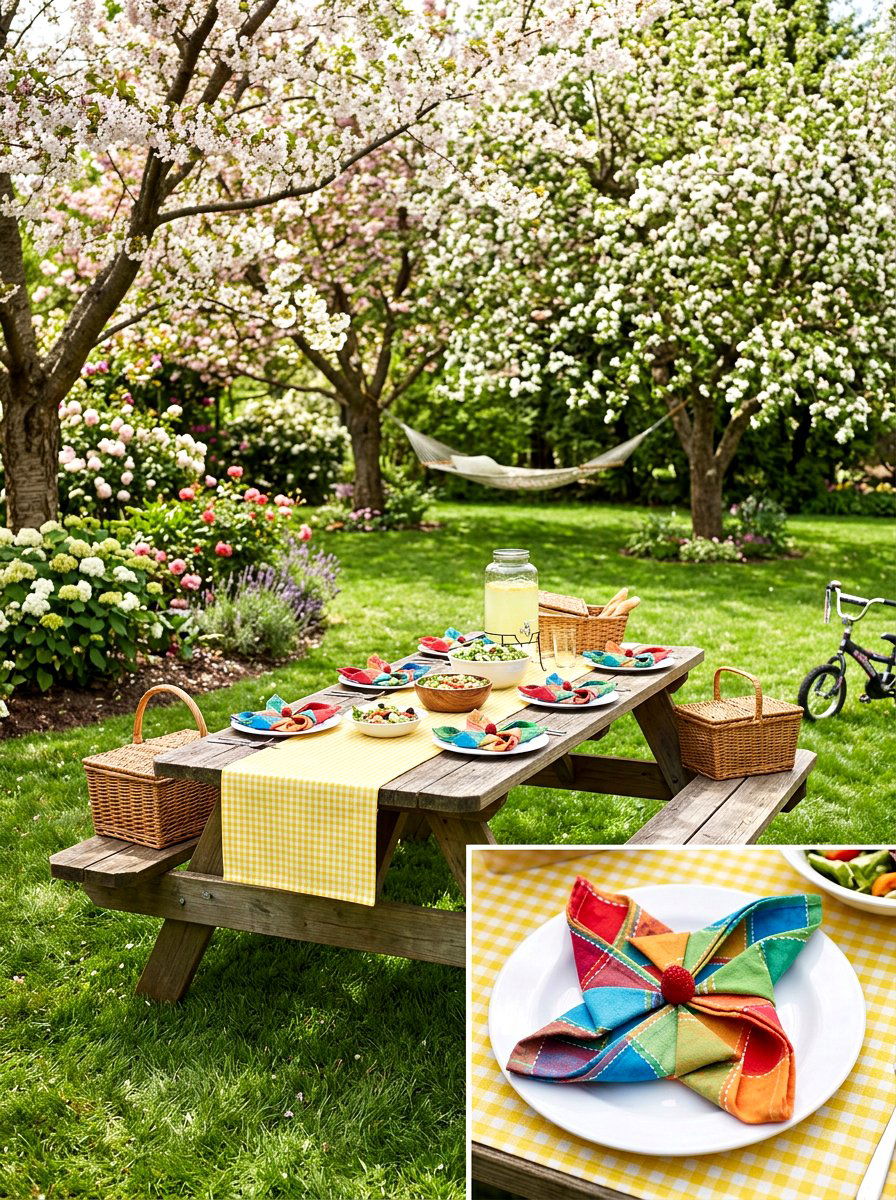
16. Viola Window Box
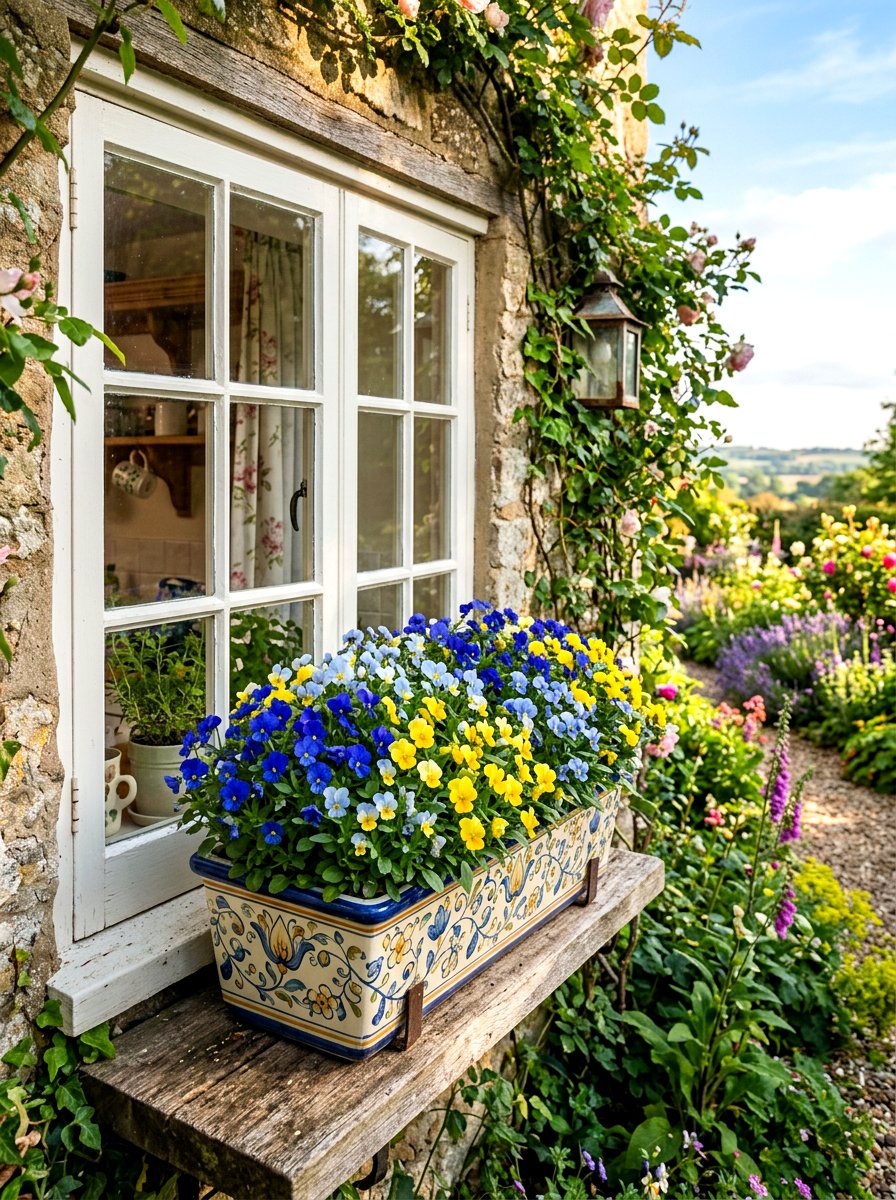
Violas are the smaller, daintier cousins of pansies and are equally famous for their hardiness in the early spring. These little flowers produce a massive amount of blooms, often covering the entire plant in a sea of color. They are perfect for creating a dense, low-growing display that looks great from both inside and outside the house. Violas come in many bicolors and patterns, often with dark centers that look like tiny whiskers. Because they are so compact, they are excellent for filling in the front of a window box where larger plants might leave some bare soil visible. They are very easy to grow.
17. Cyclamen Window Box
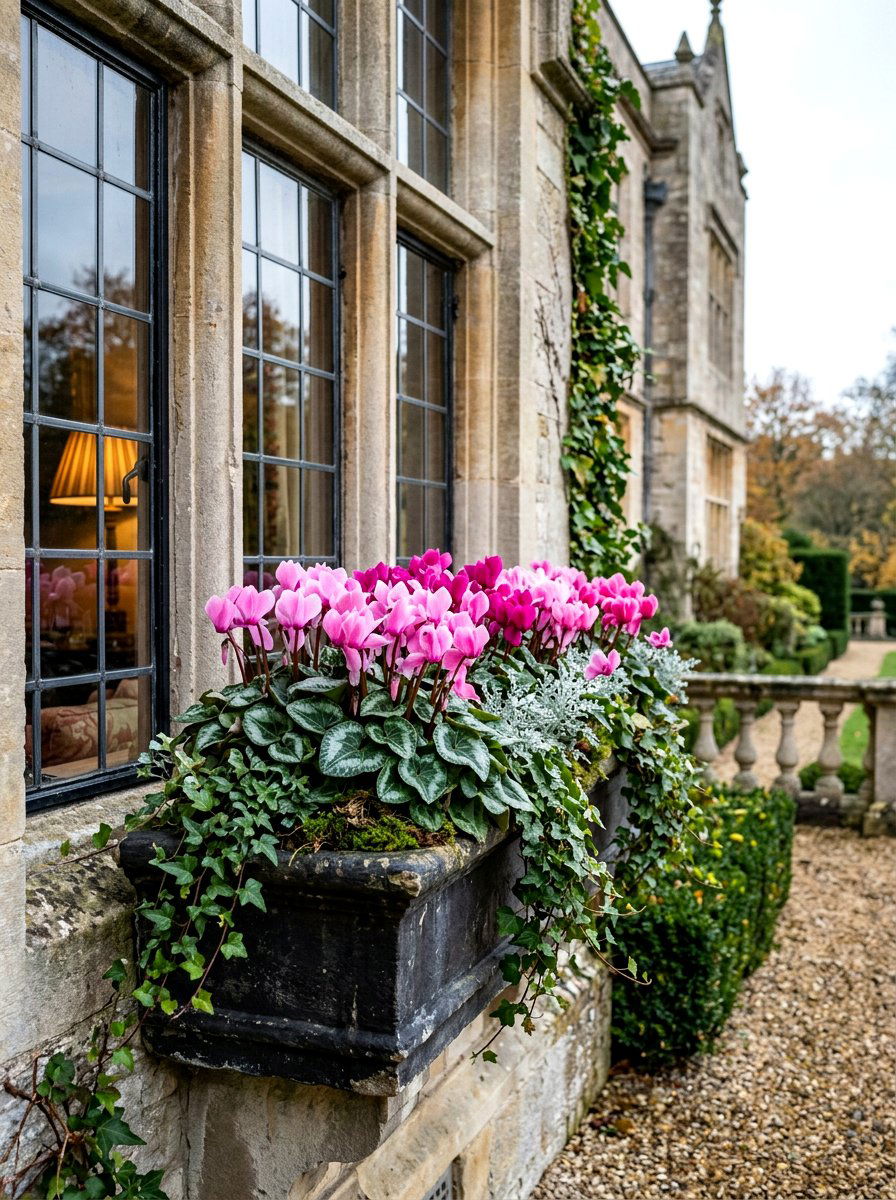
Cyclamen are unique spring plants known for their swept-back flower petals and beautifully patterned, heart-shaped leaves. They prefer the cool, damp conditions of early spring and will bloom for many weeks if kept in the right spot. The flowers come in vibrant shades of red, pink, and white, standing tall above the foliage on slender stems. Cyclamen add a touch of sophisticated detail to a window box that is sure to draw compliments from neighbors. They do best in partial shade and should be watered from the bottom to avoid getting the crown of the plant too wet, which can cause rotting issues.
18. Snapdragon Window Box
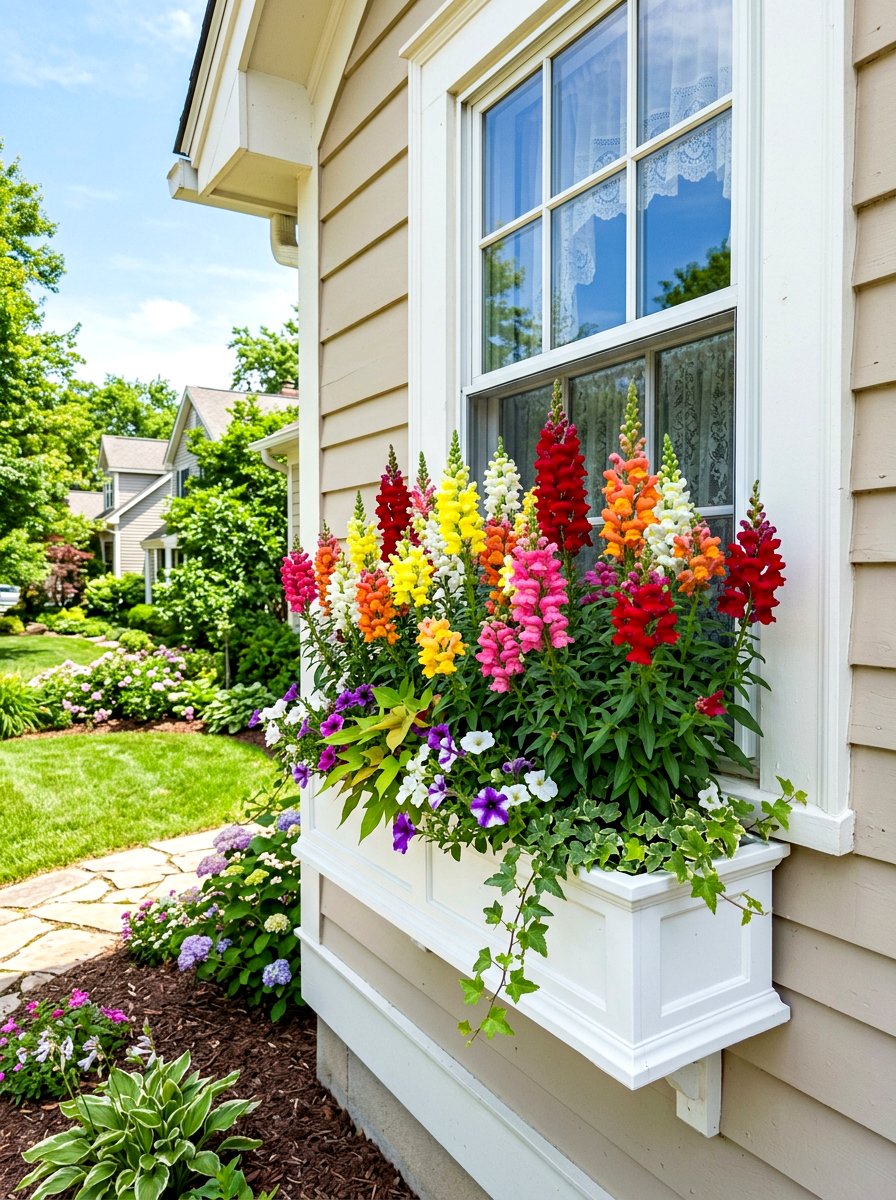
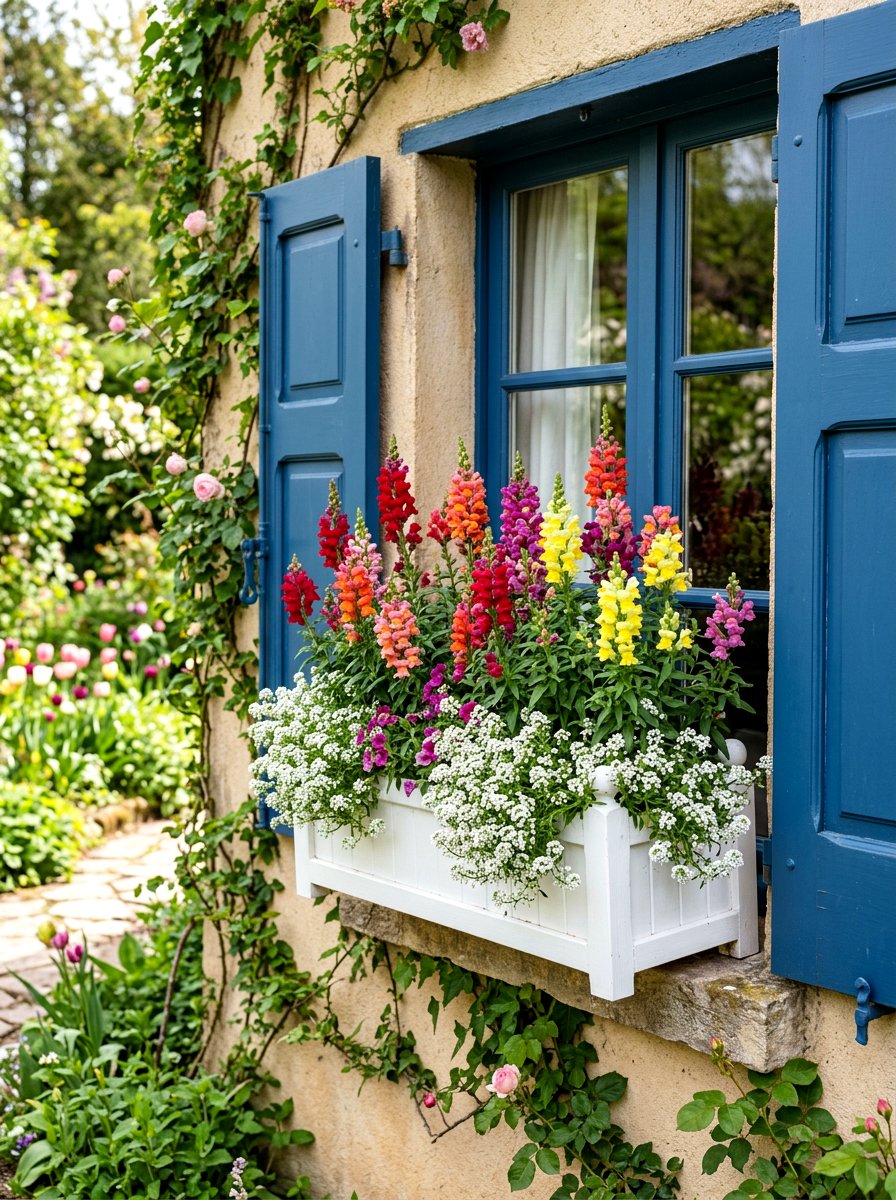
Snapdragons add wonderful vertical interest to a window box with their tall spikes of colorful, uniquely shaped flowers. Kids especially love these plants because the flowers can be "pinched" to make them look like a dragon opening its mouth. They come in a variety of heights, so you can choose dwarf versions for a small box or tall ones for a dramatic statement. Snapdragons are very hardy and can withstand the fluctuating temperatures of the spring season quite well. Planting them in the back of your window box provides a beautiful backdrop for shorter, trailing plants in the front of the container.
19. Geranium Window Box
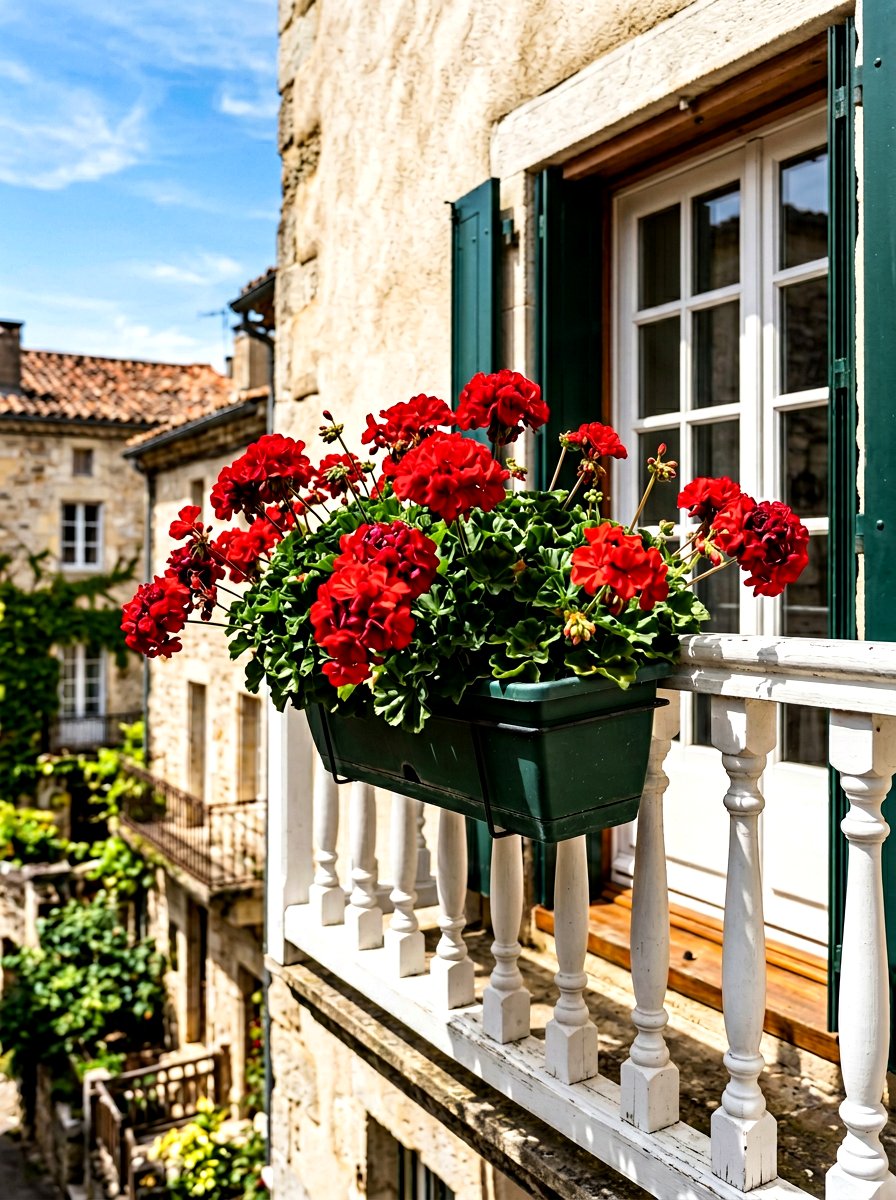
Geraniums are a classic choice for window boxes because they are incredibly reliable and produce large clusters of vibrant flowers. They are available in many colors, though bright red and pink are the most popular for creating a traditional look. These plants prefer plenty of sunlight and will bloom continuously if you remove the old flower heads regularly. Geraniums are also quite drought-tolerant, meaning they can handle a bit of neglect if the weather gets surprisingly warm. Their scalloped green leaves provide a nice textural element even when the plant is not in full bloom, making them a great anchor for spring.
20. Lobelia Window Box
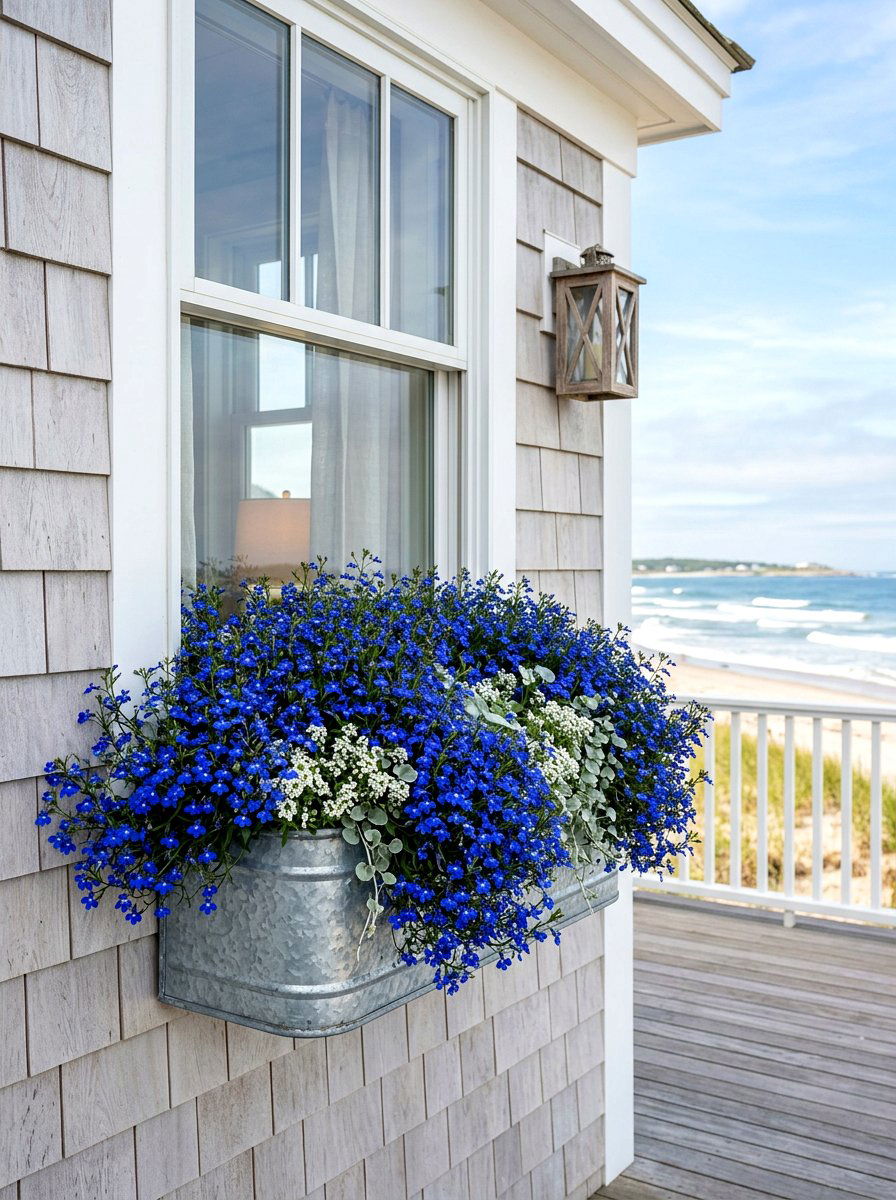
Lobelia is prized for its intense, true-blue color, which is a relatively rare shade to find in the gardening world. These delicate plants produce tiny, prolific flowers that create a soft, cloud-like effect in your window box. They look particularly beautiful when allowed to trail over the edges, softening the hard lines of the container. While blue is the most common color, you can also find lobelia in shades of white and purple. They prefer cooler temperatures and may need a bit of extra water as the spring days begin to get longer and warmer. They are perfect for adding a dainty touch.
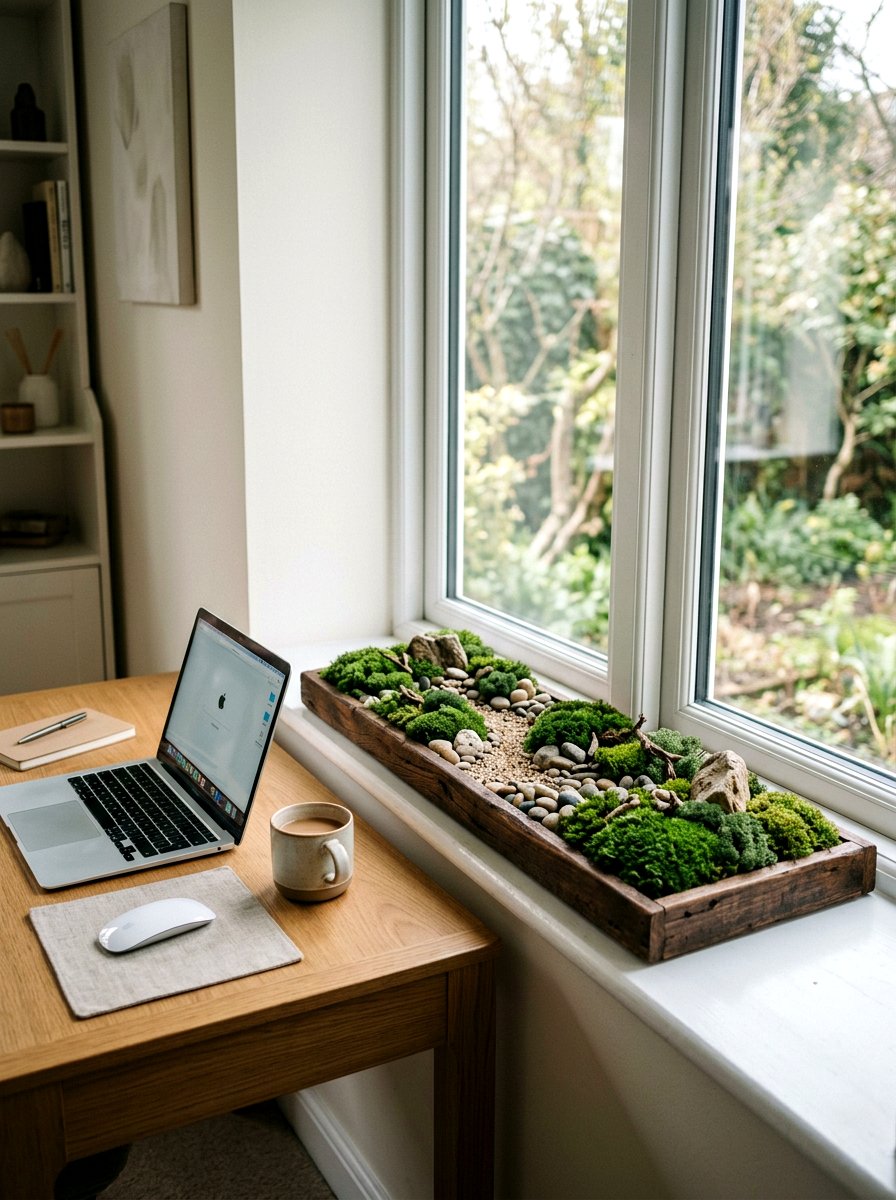
21. Rustic Wood Window Box
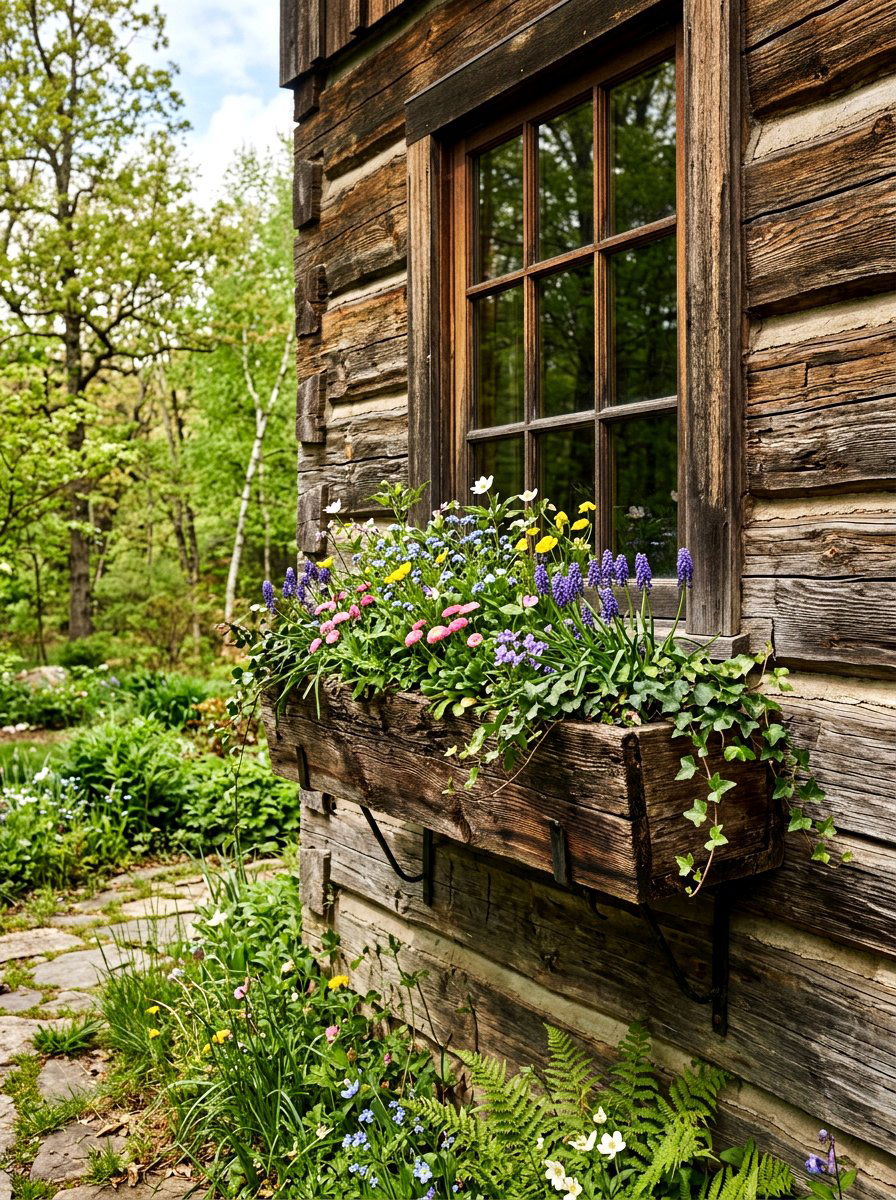
Choosing a rustic wood window box adds a warm, farmhouse feel to your home that complements natural spring plantings. Cedar or redwood are excellent choices for these boxes because they are naturally resistant to rot and look better as they age. You can leave the wood natural for a weathered look or stain it to match your home's trim or front door. A wooden box provides a neutral, organic backdrop that allows the colors of your flowers to truly pop. This style works beautifully with casual, wilder-looking flower arrangements that include plenty of trailing greenery and mixed textures for a relaxed, charming aesthetic.
22. Modern Metal Window Box
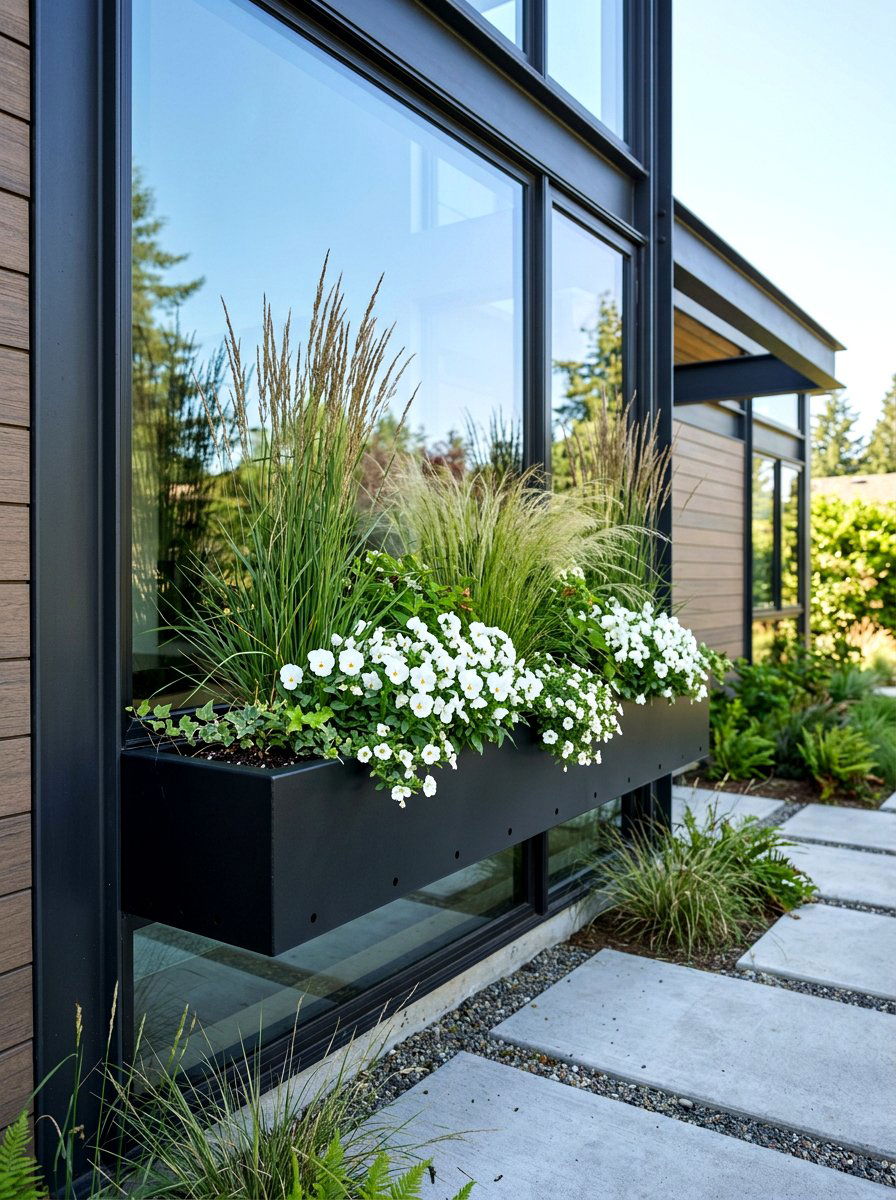
For a contemporary home, a modern metal window box made of steel or zinc offers a sleek and industrial look. These boxes often have clean lines and a minimalist feel that highlights the architectural beauty of your windows. Metal containers are very durable and can provide a sharp contrast to the soft, organic shapes of the plants inside. Darker metals like charcoal or black look particularly striking against light-colored siding or brick. When using metal boxes, ensure they have proper liners to protect the roots from extreme temperature changes. This style is perfect for structured plantings like ornamental grasses or uniform rows of succulents.
23. Trailing Ivy Window Box
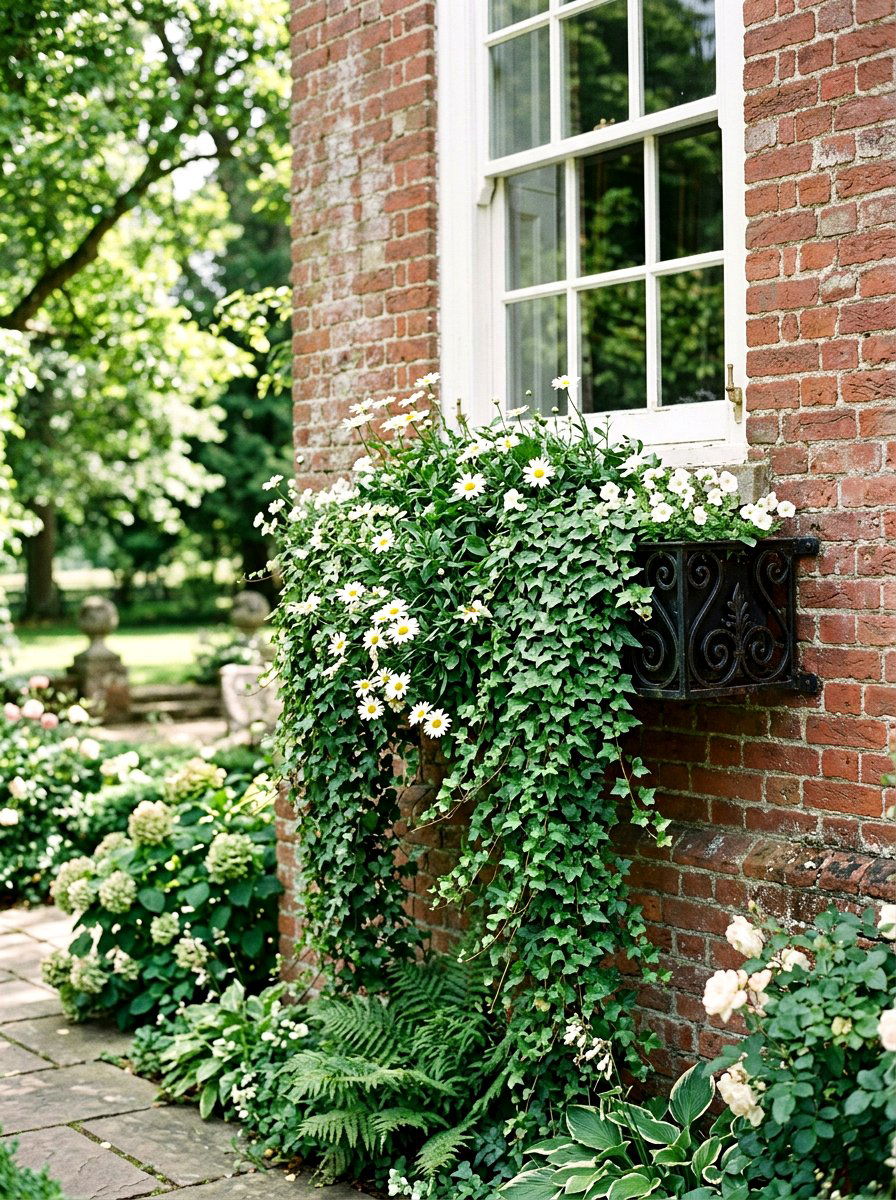
Adding trailing ivy to your window box is the easiest way to create a sense of lushness and permanence. The long, cascading vines of ivy break up the horizontal line of the box and draw the eye downward, making the display feel much larger. Ivy is incredibly hardy and stays green year-round, providing a consistent base for your changing seasonal flowers. It comes in many different leaf shapes and colors, including variegated types with white or yellow edges. Ivy is very easy to maintain and can be trimmed back if it starts to grow too long or cover too much of your wall.
24. Spring Herb Window Box
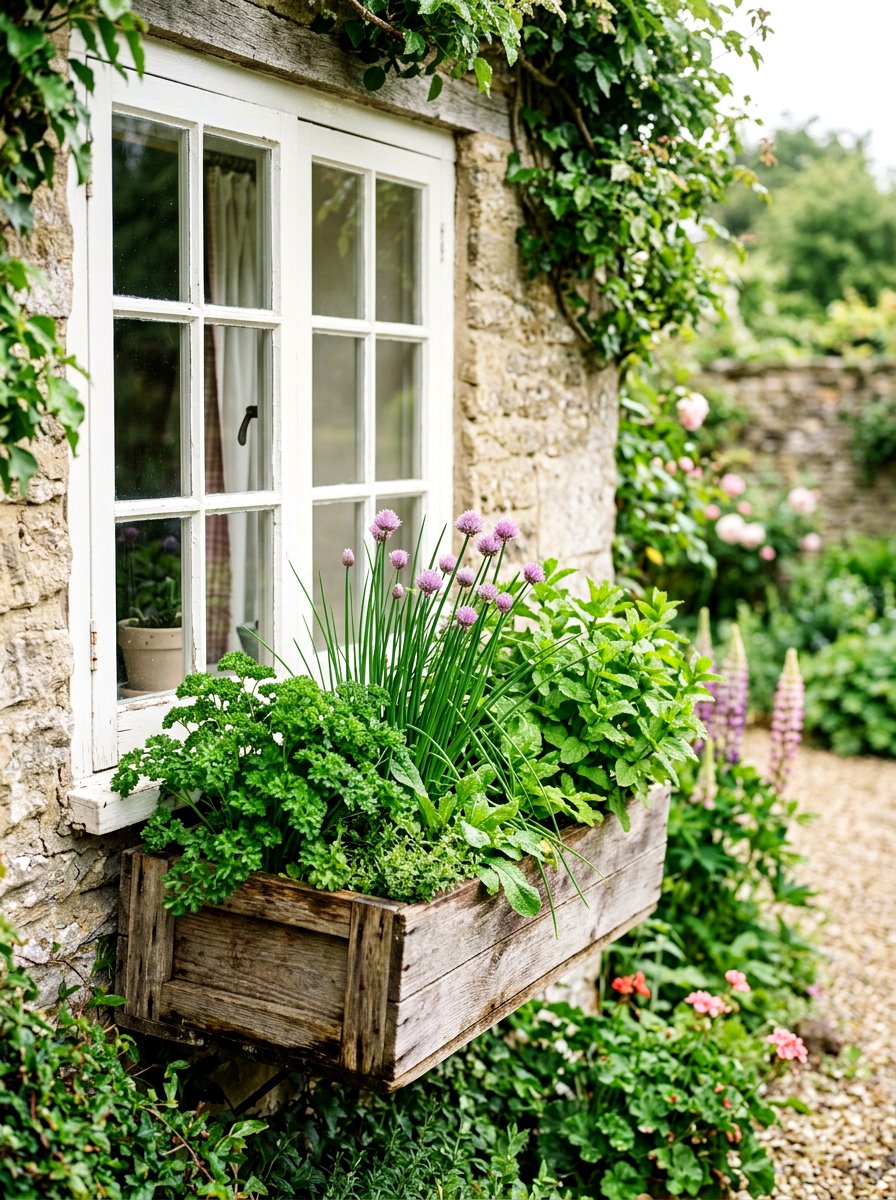
A window box filled with spring herbs is both beautiful and functional, providing fresh flavors for your kitchen right at your fingertips. Herbs like parsley, chives, mint, and cilantro grow very well in containers and offer a variety of green textures and scents. Many herbs also produce small, attractive flowers that can add a subtle touch of color to your display. Placing an herb box outside a kitchen window makes it easy to snip what you need while you are cooking. This practical approach to window gardening is perfect for those with limited space who still want to enjoy the benefits of growing food.
25. Blue Flower Window Box
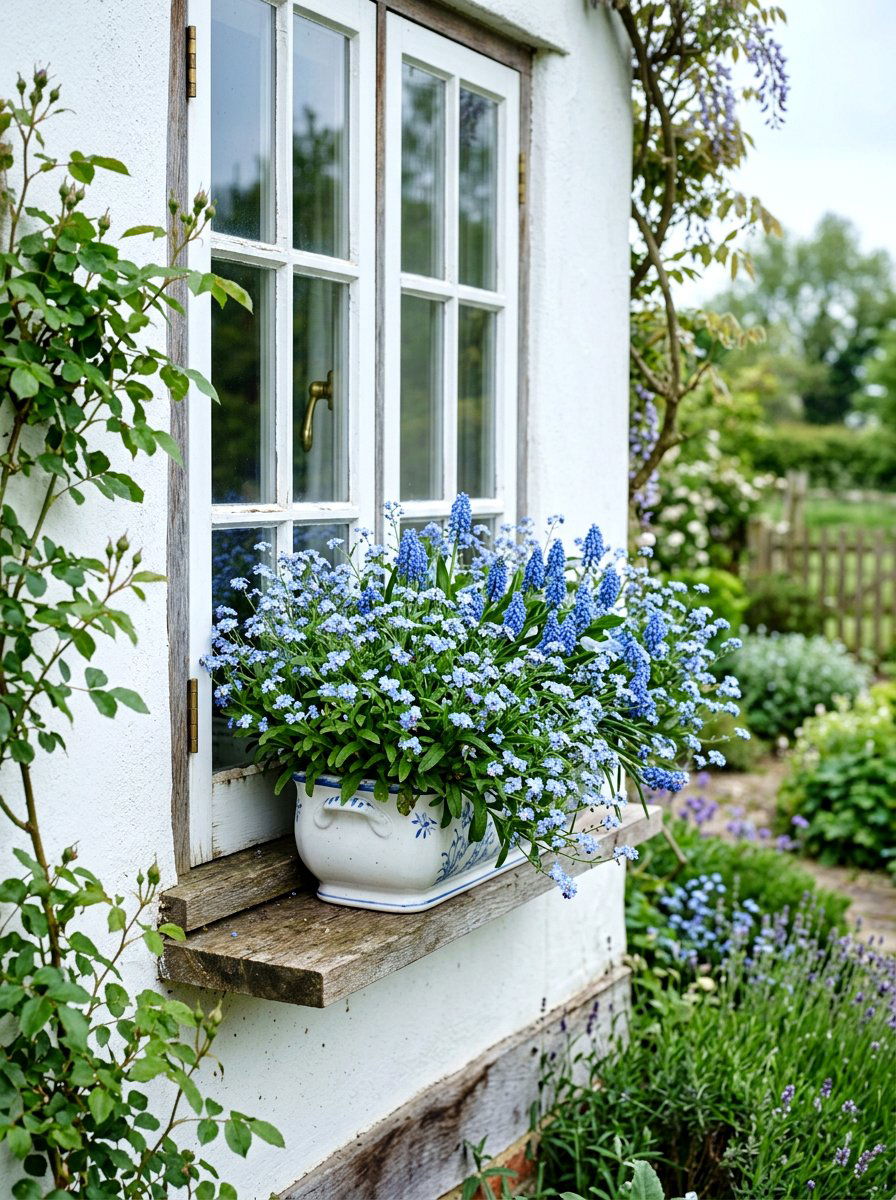
A blue-themed window box creates a calm and serene atmosphere that feels very sophisticated and refreshing. By combining different shades of blue from plants like grape hyacinth, lobelia, and forget-me-nots, you can create a beautiful layered look. Blue flowers are often associated with peace and tranquility, making them a lovely sight to see when you look out your window. This color palette looks particularly striking when paired with silver foliage or white accents. Since true blue is a unique color in nature, a dedicated blue window box is sure to be a standout feature on your street that draws plenty of admiration.
Conclusion:
Transforming your home's exterior with spring window boxes is a rewarding project that pays off in daily visual joy. These small-scale gardens allow you to experiment with different textures, scents, and colors every year as the seasons change. By selecting plants that thrive in your specific light conditions, you ensure a healthy and vibrant display that lasts until summer arrives. Remember to water your boxes regularly, as the limited soil volume can dry out quickly on sunny afternoons. With a little bit of planning and care, your windows will become the focal point of the neighborhood. Enjoy the process of creating your own personal floral masterpiece this spring.
Related posts:
Leave a Reply