
Summer gardening often centers around finding plants that can handle the intense heat while delivering massive amounts of color, and nothing does this better than the calibrachoa, frequently called million bells. These petunia-like flowers offer a stunning variety of shades and a trailing habit that makes them the absolute stars of any porch or patio arrangement. Whether you are looking for a monochromatic look or a wild mix of textures, these versatile bloomers fit perfectly into almost any decorative container. In this guide, we explore twenty-five distinct ways to style these vibrant flowers to ensure your outdoor spaces remain lush and inviting all summer long.
1. Pink Calibrachoa And White Petunias
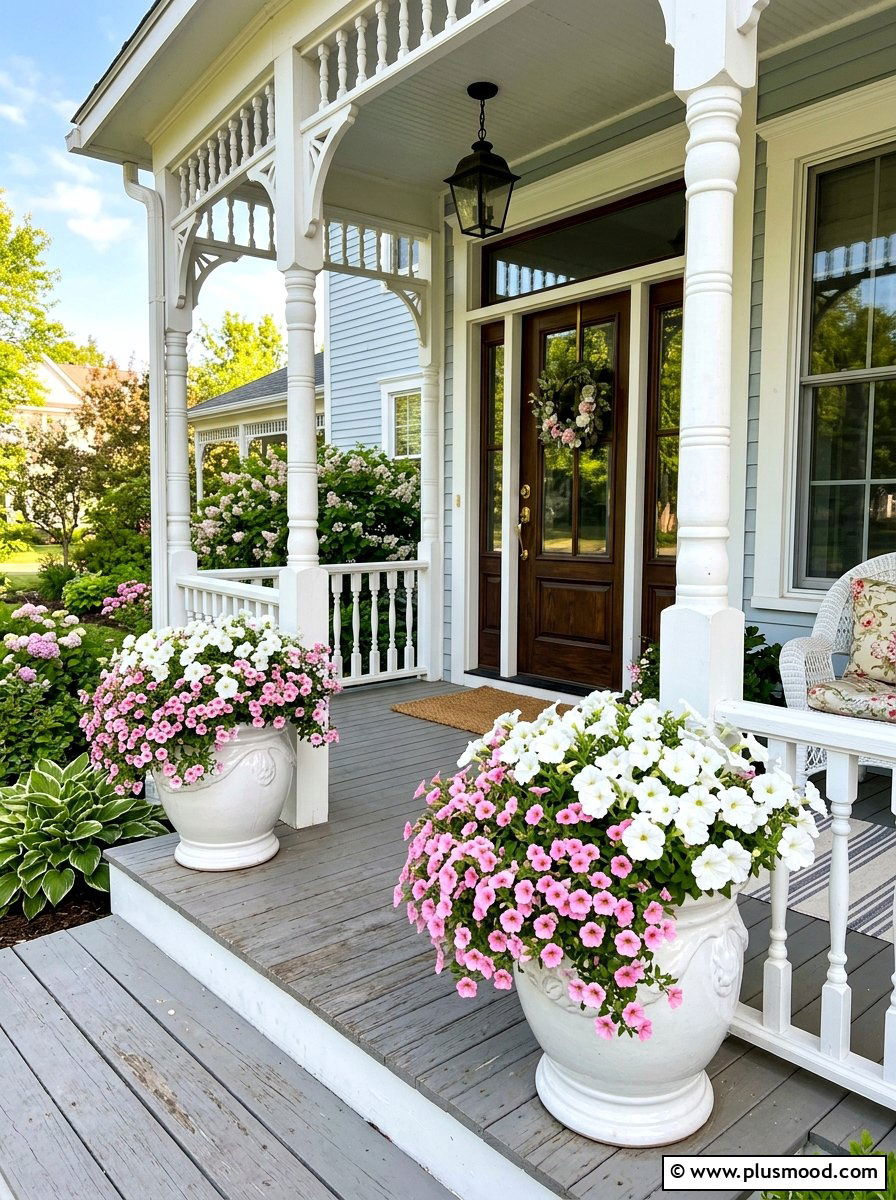
Combining soft pink calibrachoa with crisp white petunias creates a romantic and classic aesthetic that works beautifully for traditional garden spaces. The large petals of the petunias provide a bold structural contrast against the smaller, more delicate bells of the calibrachoa. This pairing is particularly effective in large ceramic pots where the colors can mingle and trail over the edges. To maintain this look, ensure the soil stays consistently moist since both plants are heavy feeders during the peak of July heat. The result is a cloud of soft colors that brightens up sunny entryways and adds a touch of timeless elegance to your porch.
2. Purple Million Bells Hanging Basket
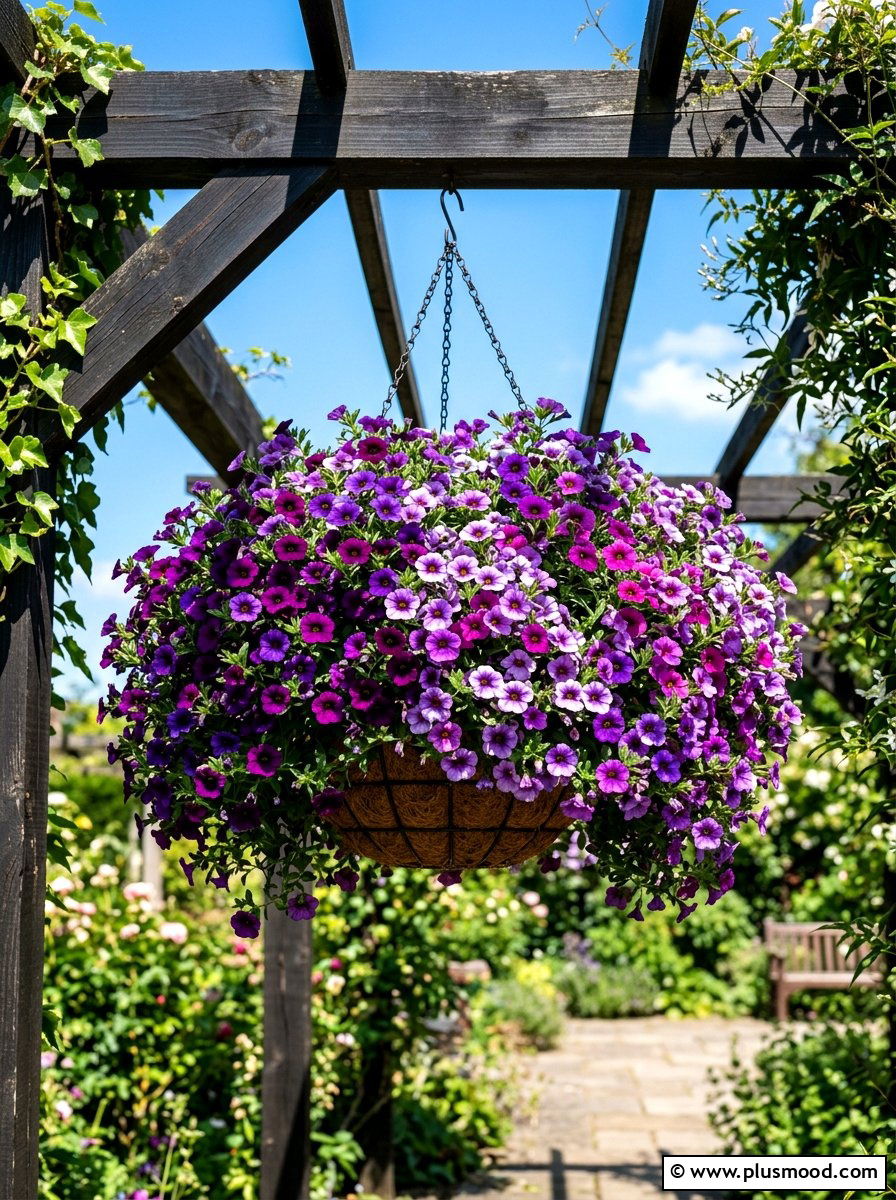
A monochromatic purple hanging basket using various shades of million bells offers a sophisticated and deeply saturated color palette for your outdoor ceiling. By mixing deep plum tones with lighter lavender varieties, you create a sense of depth and visual interest without needing different plant species. These baskets are ideal for hanging from pergolas or porch eaves where they can receive at least six hours of direct sunlight. The trailing nature of the calibrachoa quickly hides the basket itself, leaving only a lush sphere of purple flowers. Regular liquid fertilization every two weeks will keep these prolific bloomers producing new buds through the hottest months.
3. Yellow Calibrachoa Window Box
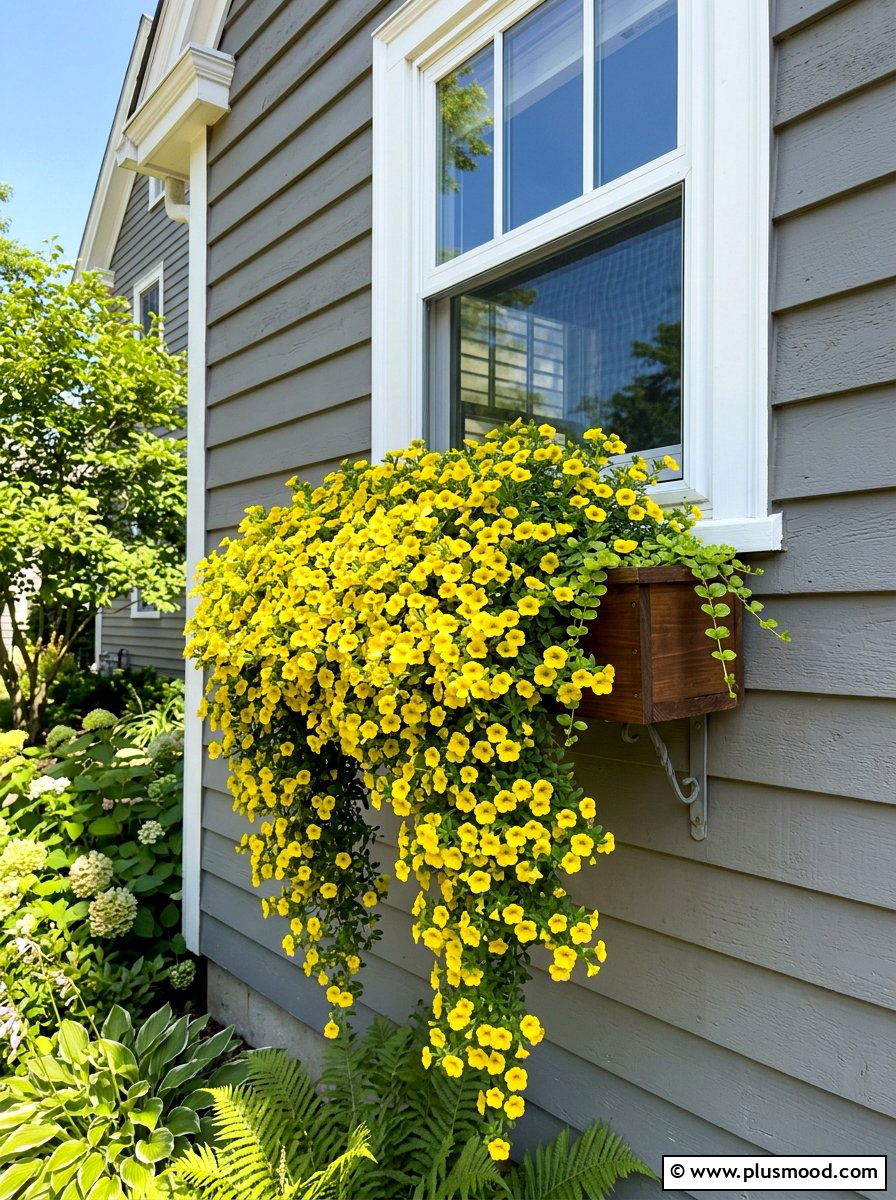
Adding bright yellow calibrachoa to a window box is a fantastic way to bring sunshine to your home's exterior regardless of the actual weather. These prolific bloomers create a dense carpet of color that spills over the front of the box, masking the container and focusing all attention on the flowers. Yellow is a high-visibility color that stands out even from the street, making it a great choice for boosting curb appeal. When planted in a window box, they benefit from the extra drainage and airflow provided by the elevated position. This setup ensures a vibrant display that lasts from late spring until the first frost.
4. Orange Calibrachoa And Blue Lobelia
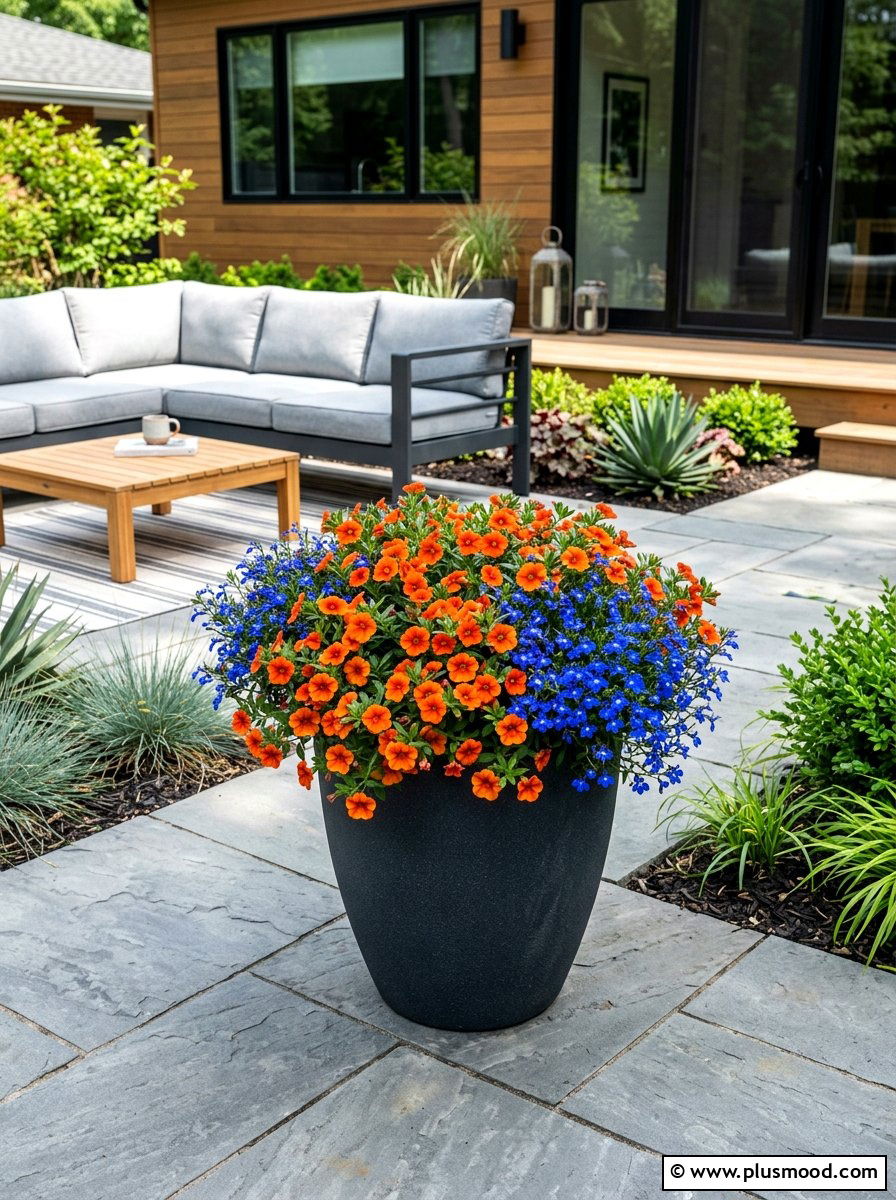
Creating a complementary color scheme with bright orange calibrachoa and electric blue lobelia provides a striking visual punch that demands attention in any garden. The warm tones of the orange flowers are perfectly balanced by the cool, airy texture of the lobelia. This combination thrives in full sun but appreciates some afternoon shade to keep the lobelia from drying out too quickly. Using a dark-colored container can further accentuate these colors, making them pop against the background of your patio. This pairing is especially effective for modern landscapes where bold and contrasting colors are used to create a focal point near seating areas.
5. Red Million Bells In Terra Cotta Pots
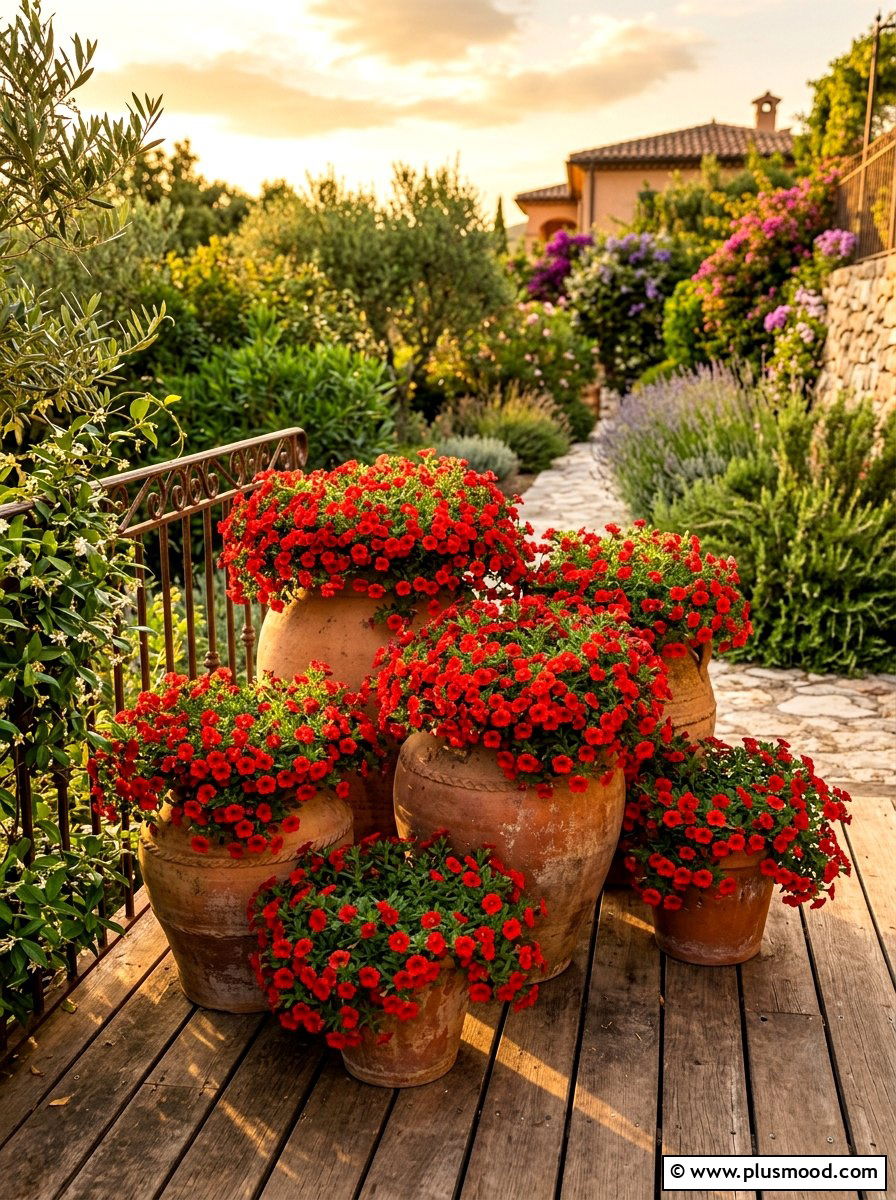
Red calibrachoa planted in traditional terra cotta pots offers a rustic and Mediterranean feel that is both warm and inviting. The natural earthy tones of the clay pots complement the fiery red blooms, creating a cohesive and organic look for a sunny deck. Because terra cotta is porous, it provides excellent drainage, which is essential for preventing root rot in million bells. However, these pots dry out faster, so daily watering may be necessary during heatwaves. This simple yet effective design is perfect for grouping several pots of different sizes together to create a tiered display of vibrant, cascading red flowers.
6. Calibrachoa And Sweet Potato Vine Container
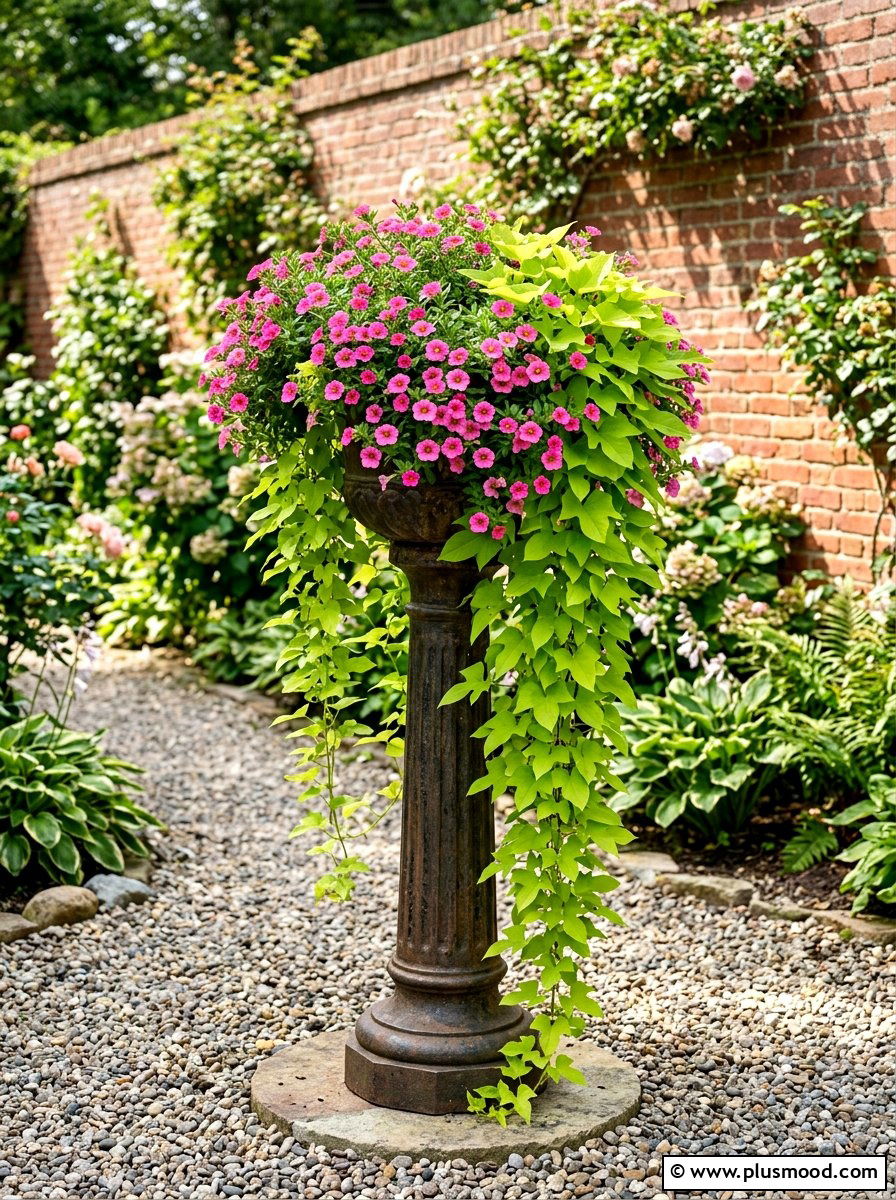
Pairing the vibrant flowers of calibrachoa with the dramatic foliage of lime green or dark purple sweet potato vine creates a lush, high-contrast container. The broad leaves of the vine provide a solid backdrop that makes the tiny, colorful bells of the calibrachoa stand out even more. This combination is prized for its vigor and ability to quickly fill large pots and trail several feet down. It is an excellent choice for placing on a pedestal or tall planter where the cascading effect can be fully appreciated. Ensure the container has plenty of room for both root systems to expand throughout the summer season.
7. Mixed Color Calibrachoa Tall Urn
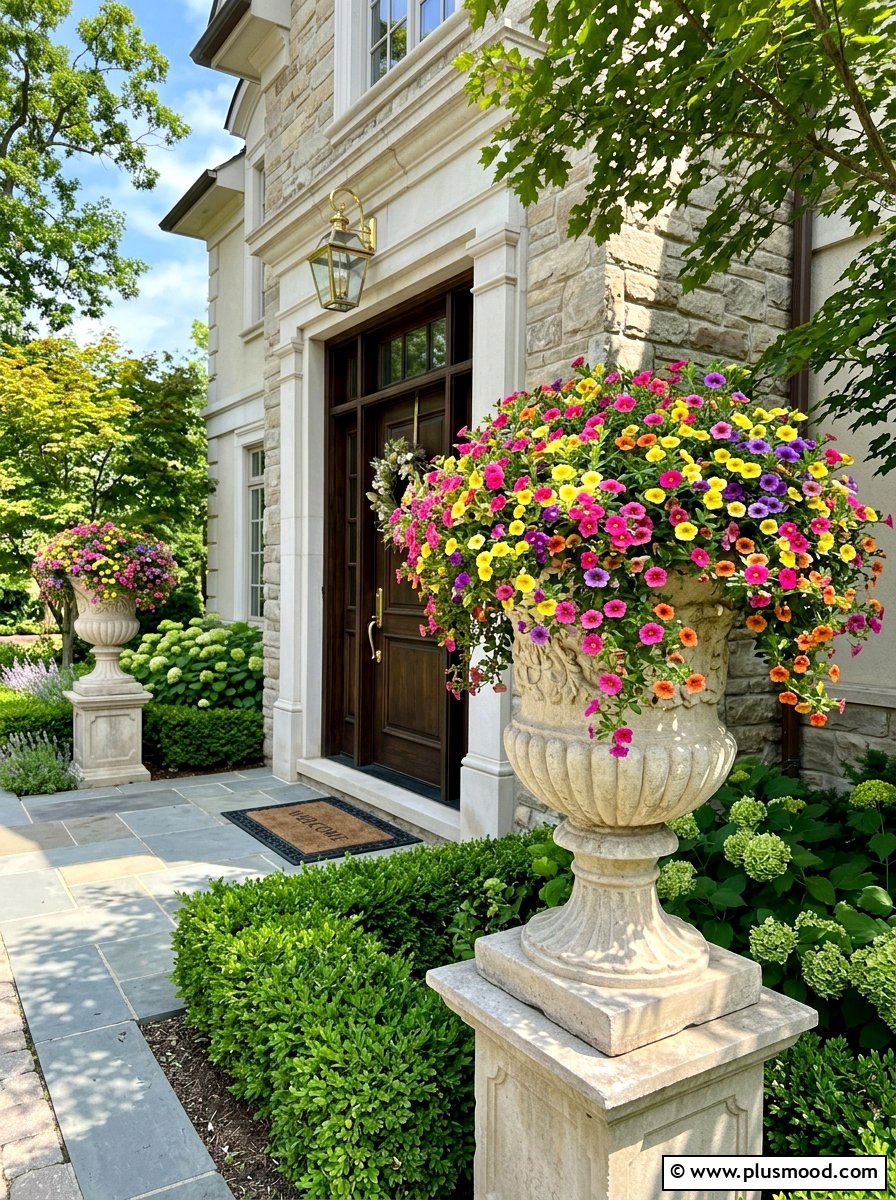
Using a tall, formal urn filled with a kaleidoscope of different calibrachoa colors creates a festive and grand entrance for any home. By mixing pink, yellow, purple, and orange varieties in one container, you achieve a "confetti" look that is playful yet organized. The height of the urn allows the flowers to trail gracefully, softening the hard lines of the stone or resin material. This design works exceptionally well as a symmetrical pair flanking a front door or staircase. Since the plants are all the same species, they share identical water and light needs, making maintenance simple and highly successful.
8. Calibrachoa And Verbena Summer Pot
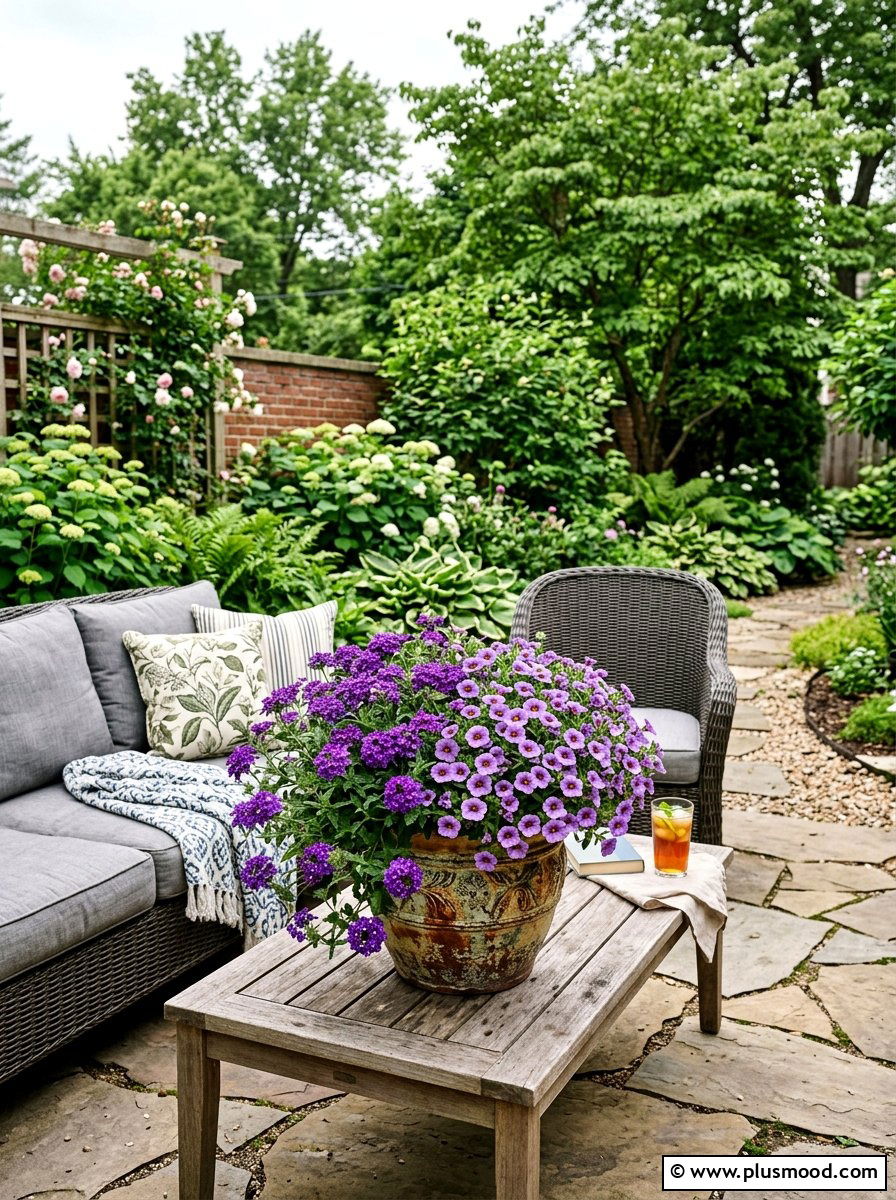
A combination of calibrachoa and trailing verbena results in a multi-textured floral display that is incredibly resilient against summer heat and humidity. Verbena adds a different flower shape and clustered blooming habit that complements the individual bells of the calibrachoa. Choosing colors in the same family, such as various shades of pink and purple, creates a harmonious and soothing look for a backyard retreat. Both plants are known for being self-cleaning, meaning they do not require constant deadheading to keep blooming. This low-maintenance duo is perfect for busy gardeners who want maximum floral impact with minimal effort during the busy season.
9. White Calibrachoa And Silver Falls Dichondra
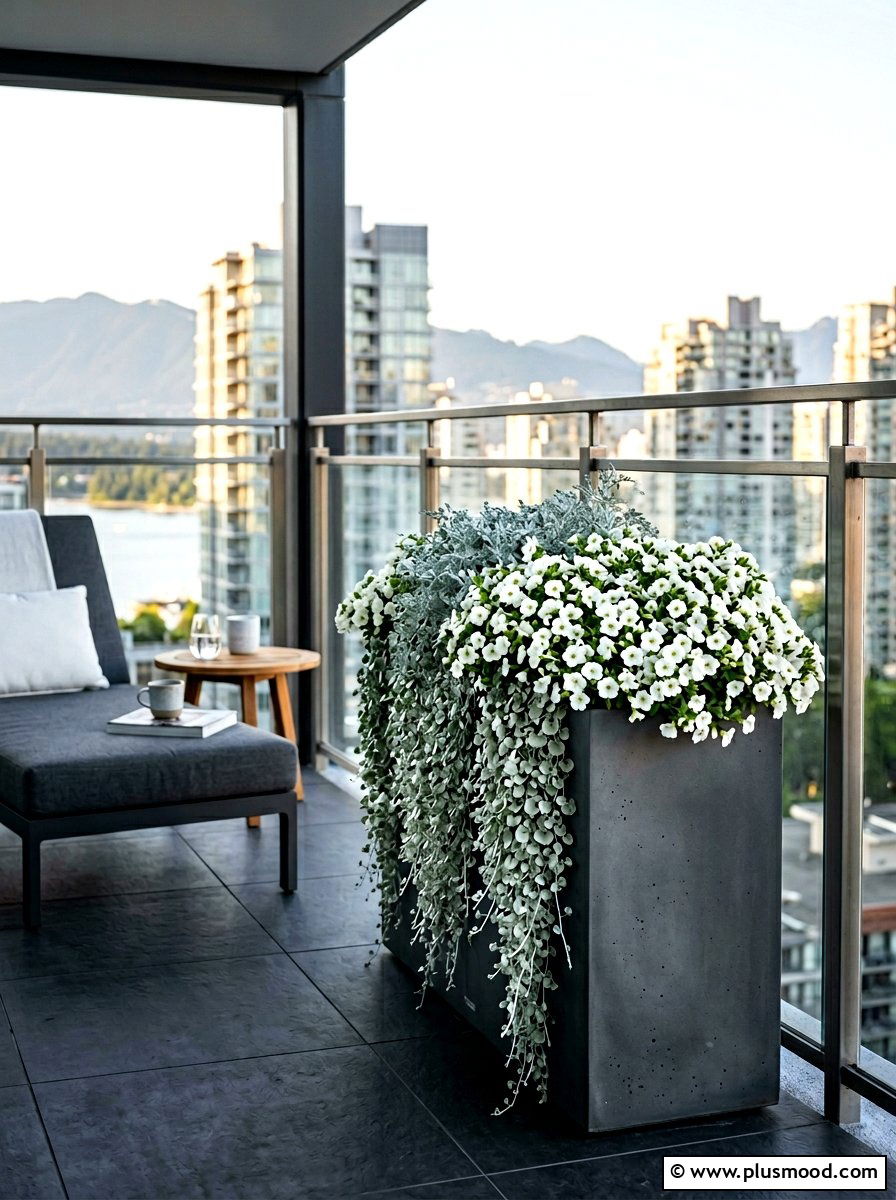
For a sophisticated and neutral look, pair pure white calibrachoa with the shimmering, metallic foliage of Silver Falls dichondra. The tiny silver leaves of the dichondra create a waterfall effect that beautifully frames the bright white flowers, offering a cool and refreshing aesthetic. This combination is perfect for moonlight gardens, as the white and silver tones reflect the light during the evening hours. It looks best in sleek, modern containers or dark grey pots that highlight the bright, clean colors of the plants. This elegant design brings a touch of calm and refinement to a sunny balcony or contemporary patio space.
10. Calibrachoa And Lantana Mixed Planter
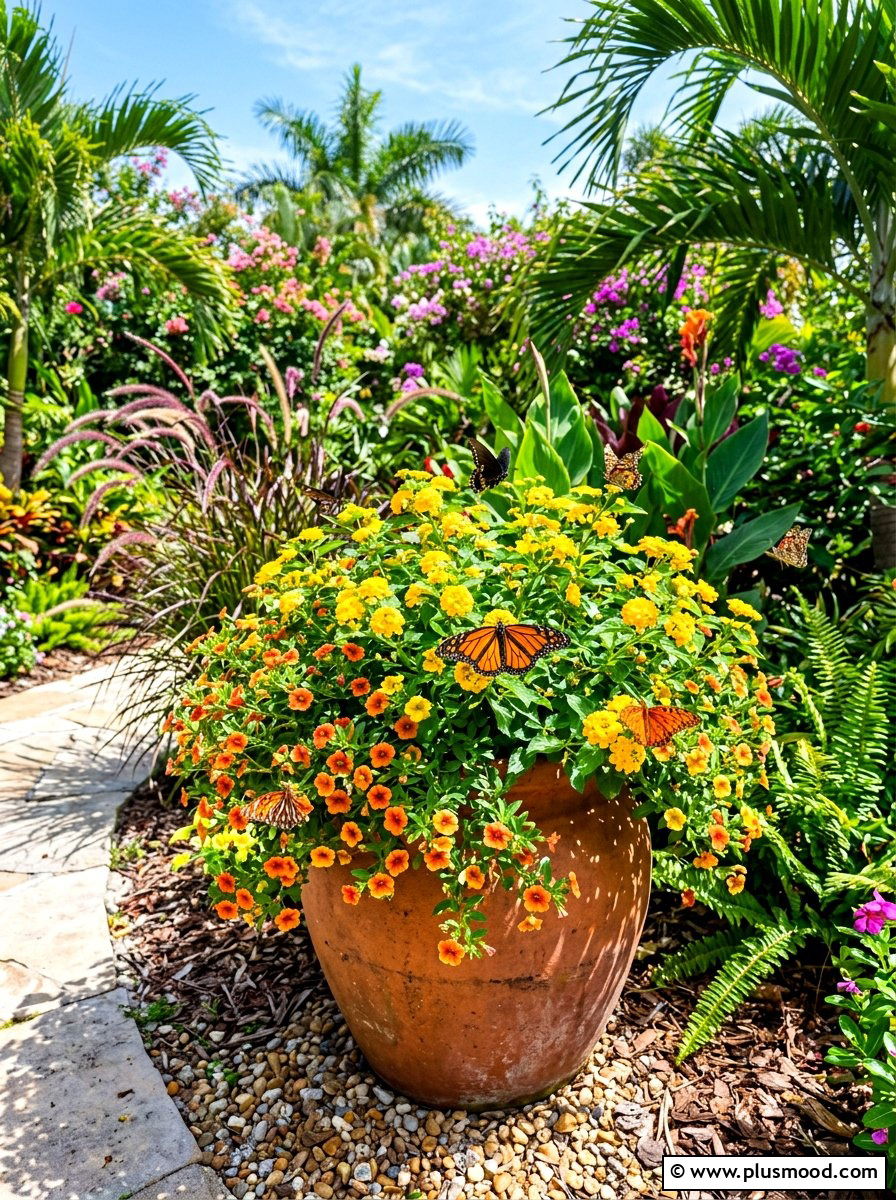
Pairing calibrachoa with lantana creates a powerhouse planter that can withstand the most punishing summer sun and occasional dry spells. Lantana provides a sturdy, upright structure with clusters of tiny flowers, while the calibrachoa spills over the edges to fill the lower gaps. Both plants are highly attractive to butterflies and hummingbirds, turning your planter into a mini wildlife sanctuary. Using warm tones like yellow, orange, and red will enhance the tropical feel of this arrangement. This combination is exceptionally durable and will continue to look fresh even when other more delicate annuals begin to fade under the intense August sun.
11. Blue Calibrachoa And Yellow Marigolds
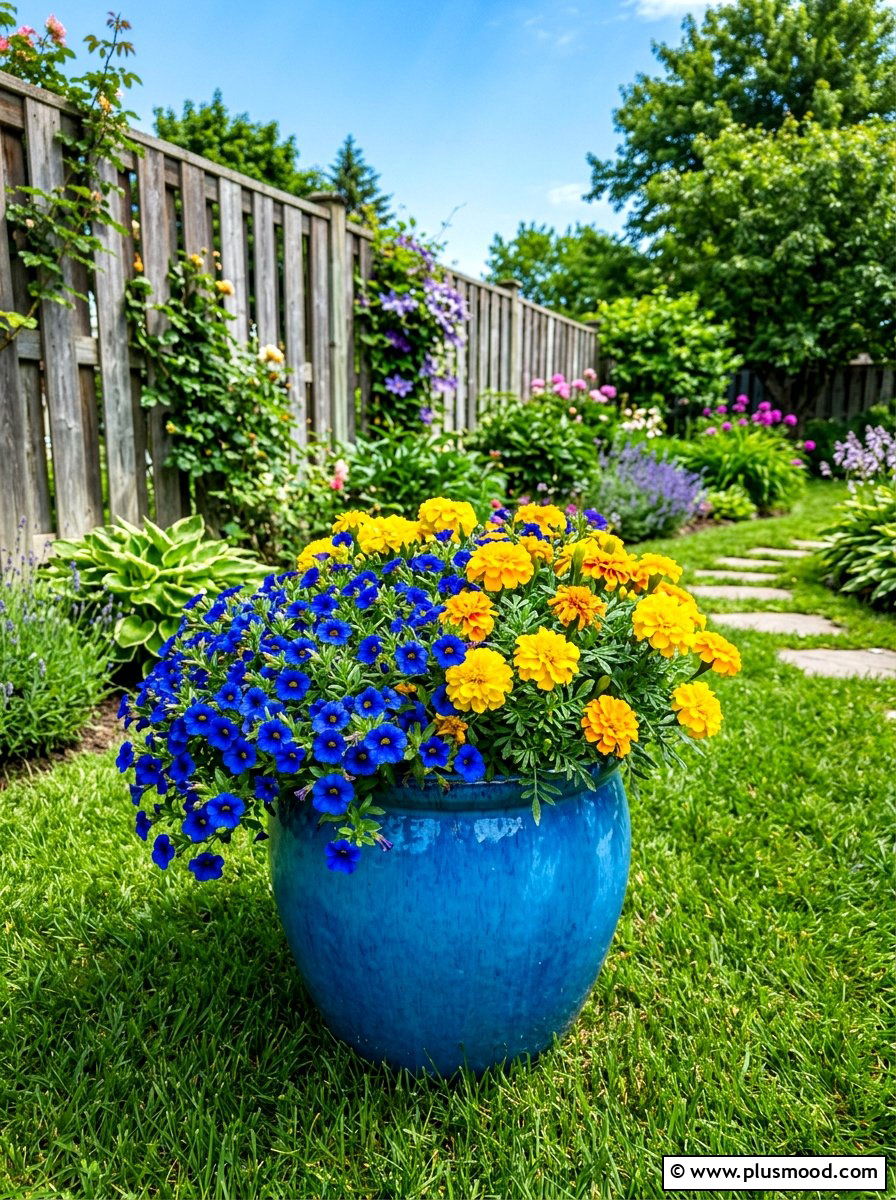
The classic primary color combination of deep blue calibrachoa and bright yellow marigolds creates a cheerful and high-energy display for a child's garden or sunny patio. The mounded shape of the marigolds acts as a "thriller" in the center of the pot, while the blue calibrachoa serves as the "spiller" around the perimeter. This pairing is not only beautiful but also practical, as marigolds are known to help deter certain garden pests. The contrast between the saturated blue and the sunny yellow is visually stimulating and provides a focal point that can be seen from across the yard, adding life to the landscape.
12. Calibrachoa And Euphorbia Diamond Frost Mix
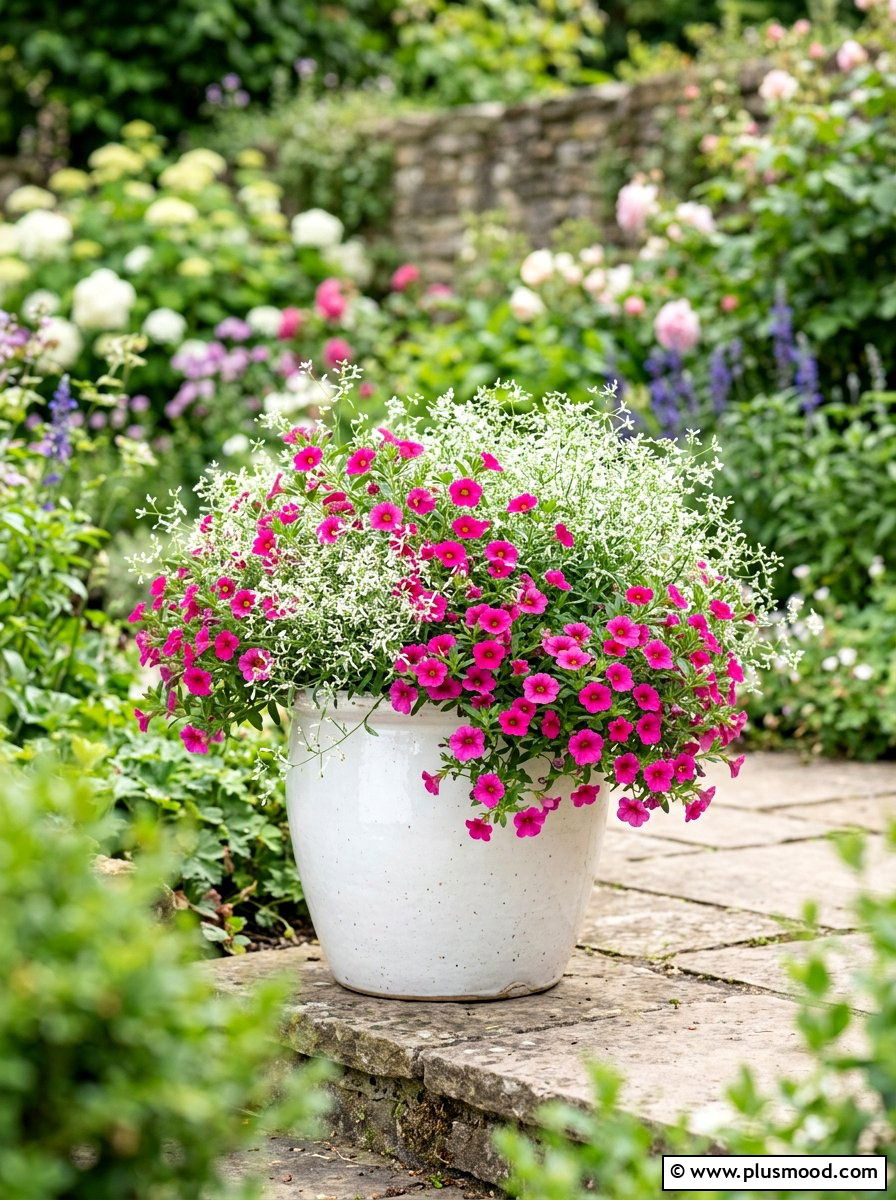
Mixing calibrachoa with Euphorbia 'Diamond Frost' creates an ethereal and airy look that resembles a cloud of flowers. The tiny white blossoms of the euphorbia act as a delicate filler that weaves through the more substantial calibrachoa stems, softening the overall appearance. This combination works with any color of calibrachoa, but it is especially stunning with soft pastels or deep jewel tones. The euphorbia adds a fine texture that makes the container look professional and carefully curated. Because both plants are heat-tolerant and have similar watering needs, they thrive together in a sunny spot without competing for resources or space.
13. Pink Million Bells In Galvanized Bucket
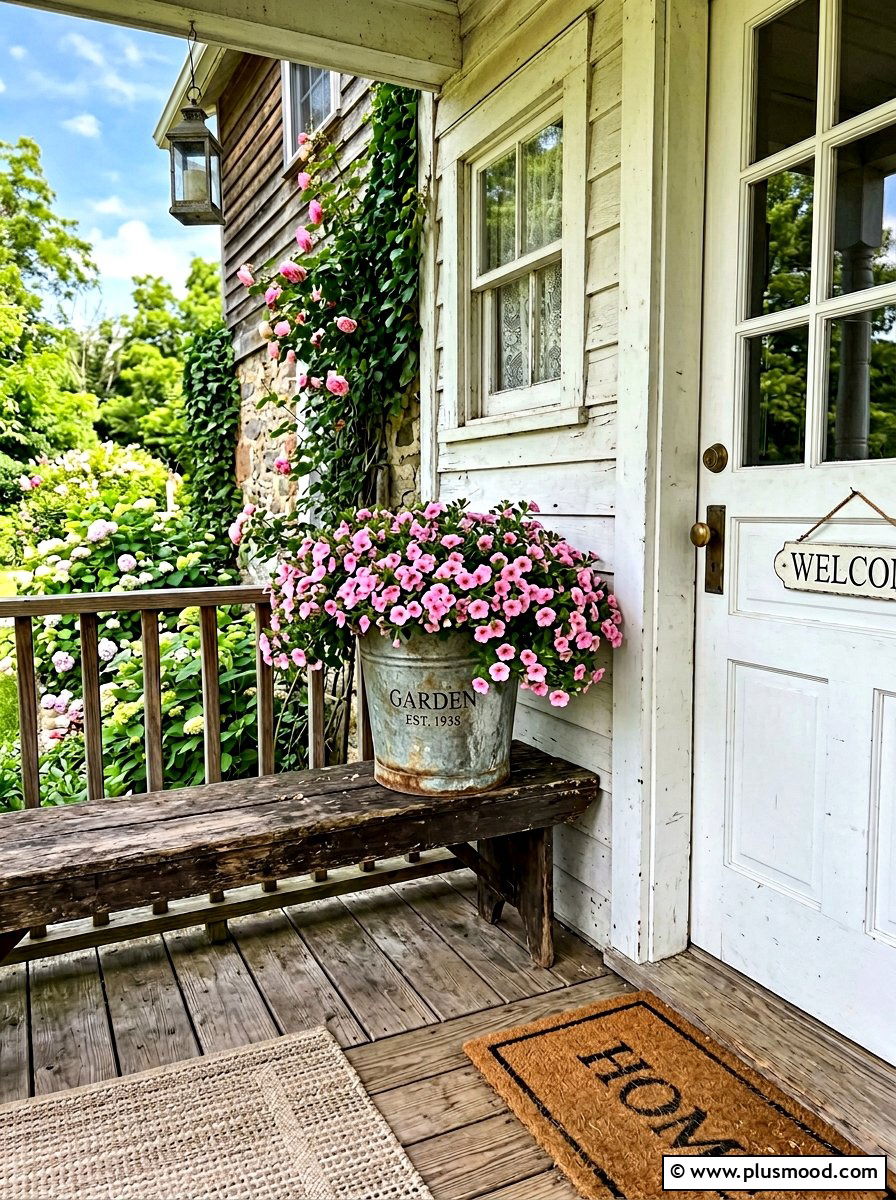
For a charming farmhouse or country aesthetic, plant overflowing pink million bells in a vintage galvanized metal bucket. The cool grey tones of the metal provide a perfect industrial contrast to the soft, feminine pink flowers and green foliage. To ensure success, make sure to drill plenty of drainage holes in the bottom of the bucket before planting. This arrangement looks wonderful sitting on a wooden porch step or a rustic garden bench. The simplicity of using a single color of calibrachoa in a unique vessel highlights the natural beauty of the plant while adding a touch of personality to your decor.
14. Calibrachoa And Angelonia Summer Arrangement
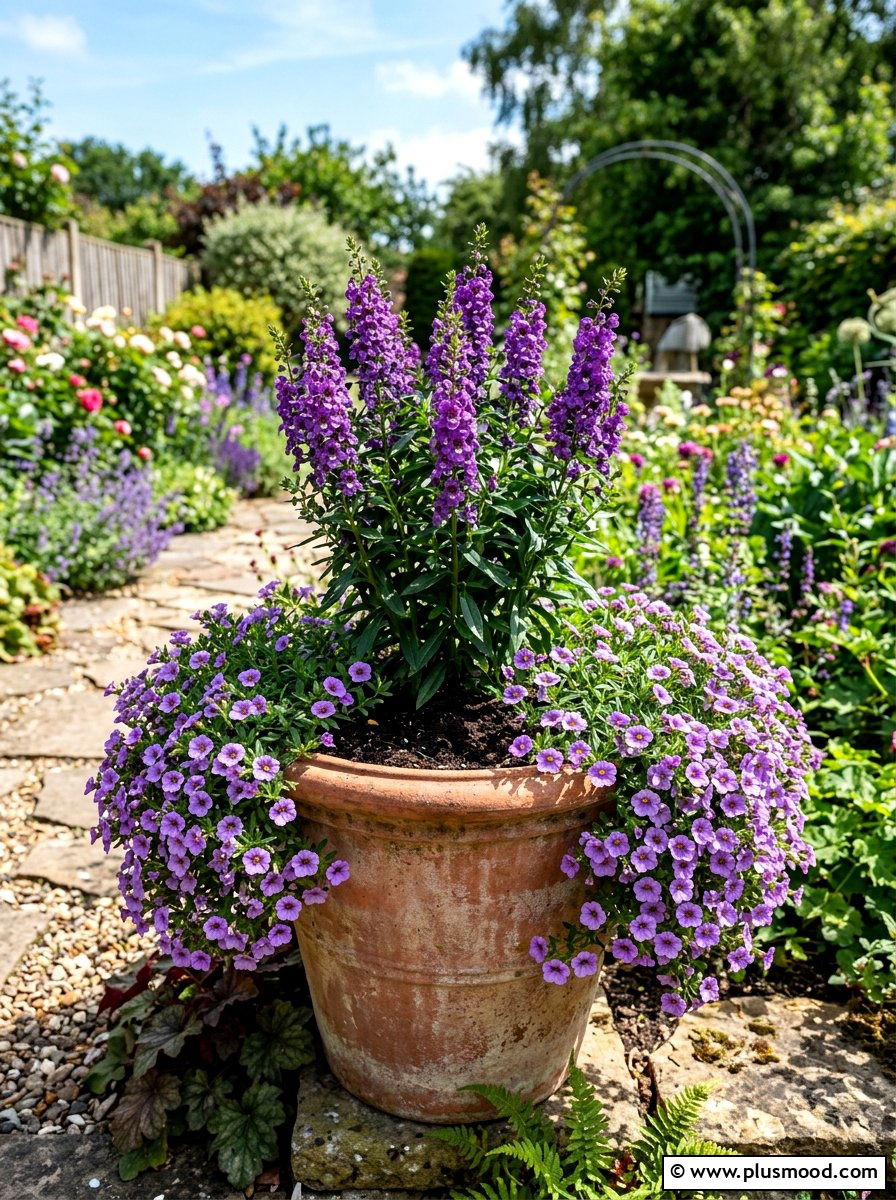
Combining calibrachoa with upright angelonia, also known as summer snapdragon, provides a beautiful vertical element to your container garden. Angelonia stands tall in the center, providing structure and height, while the calibrachoa mounds and spills around the base. This "thriller and spiller" combination is very effective in large, deep pots that can support the growth of both plants. Choose complementary colors like purple angelonia with lavender calibrachoa for a sophisticated tone-on-tone look. Both plants are heat-loving and will bloom continuously throughout the summer without needing much maintenance, making them a reliable choice for any sunny location in your outdoor living area.
15. Purple Calibrachoa And Creeping Jenny Container
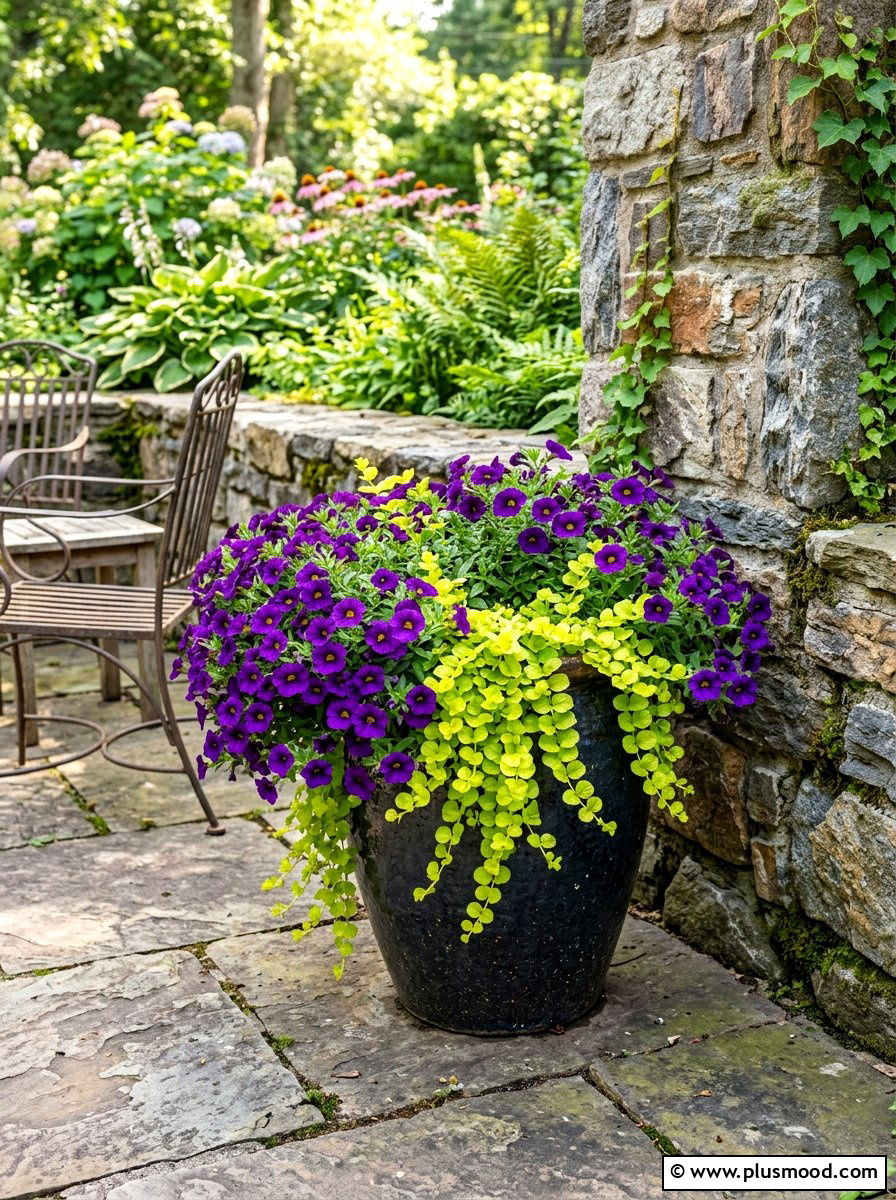
The bold contrast between deep purple calibrachoa and the chartreuse foliage of creeping jenny creates a vibrant, jewel-toned display that brightens up any corner. The lime green leaves of the creeping jenny act as a living mulch, trailing far down the sides of the pot and providing a glowing backdrop for the dark purple flowers. This combination is particularly effective for adding a pop of color to areas with dark siding or stone walls. While the calibrachoa loves the sun, the creeping jenny appreciates consistent moisture, so keep a close eye on watering during dry spells to ensure both plants remain healthy and lush.
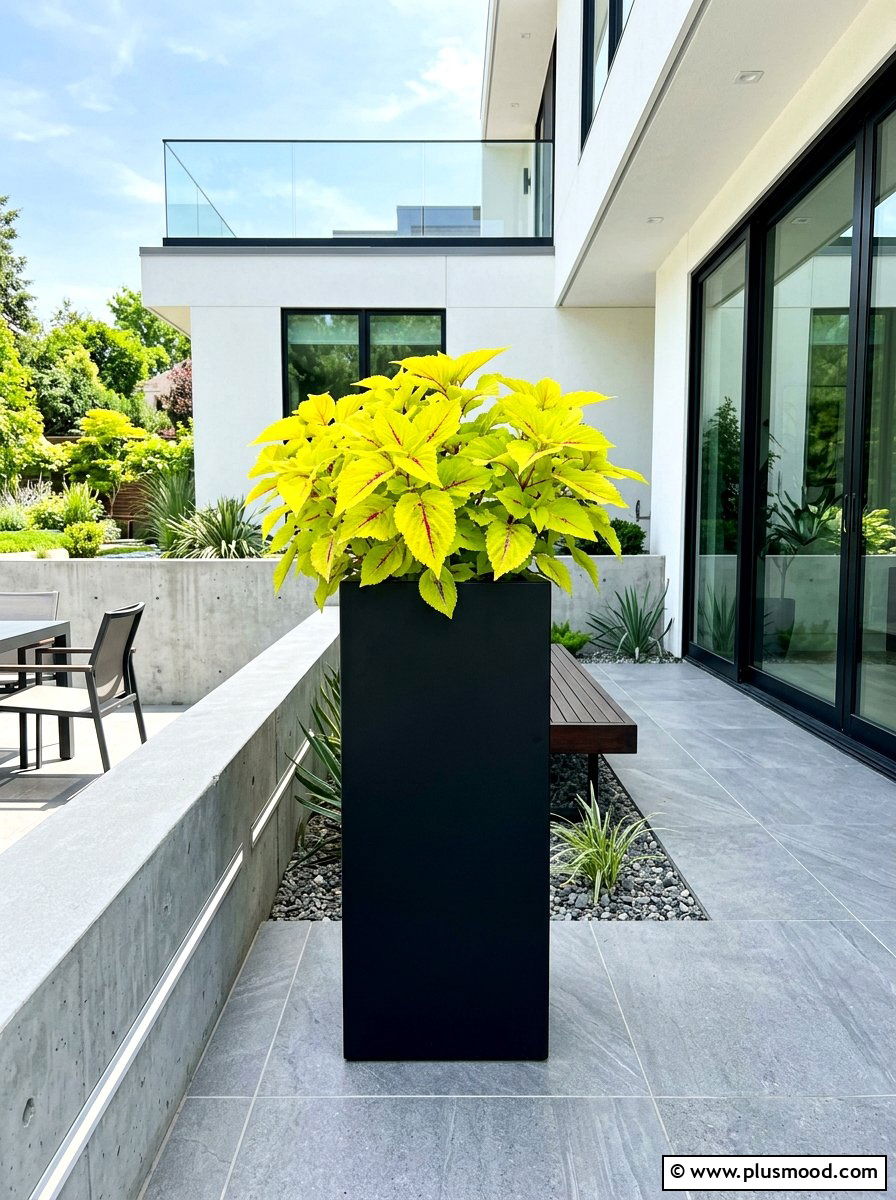
16. Calibrachoa And Geranium Full Sun Planter
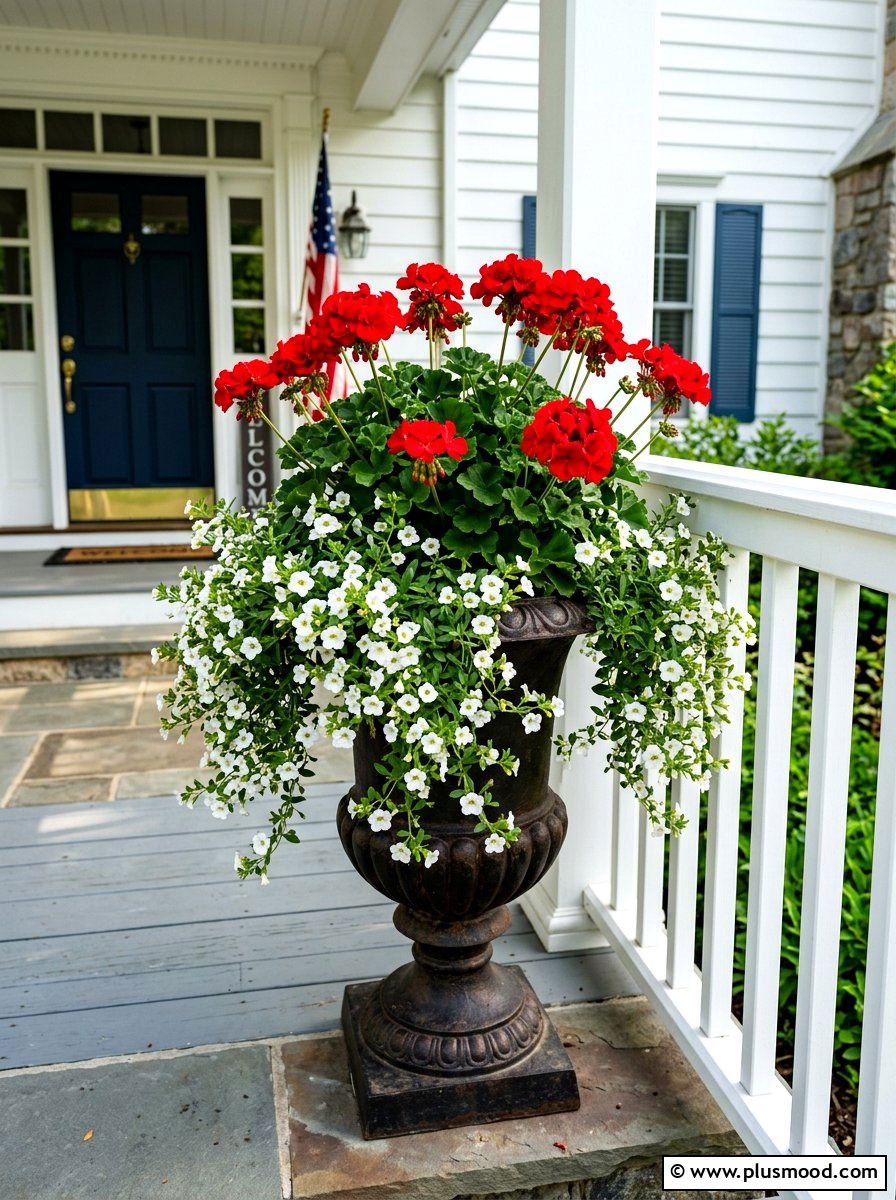
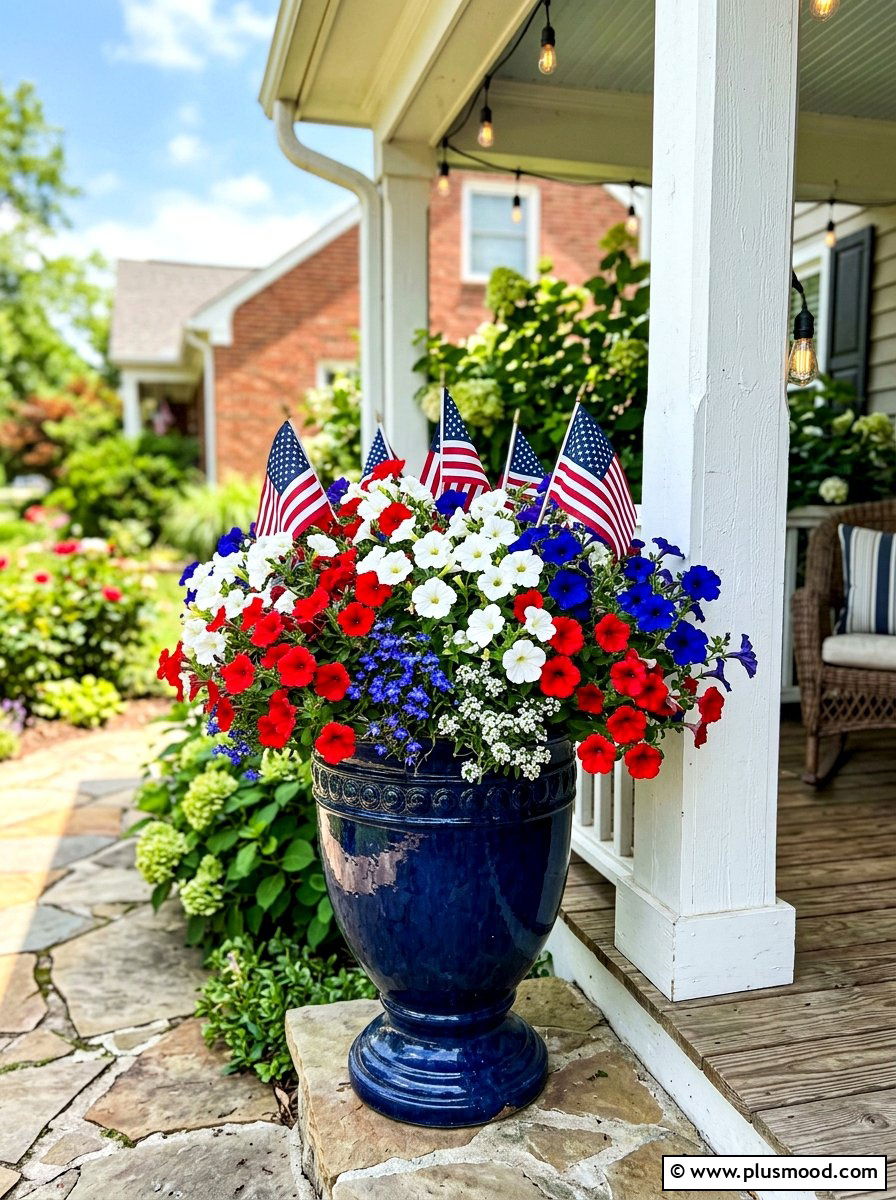
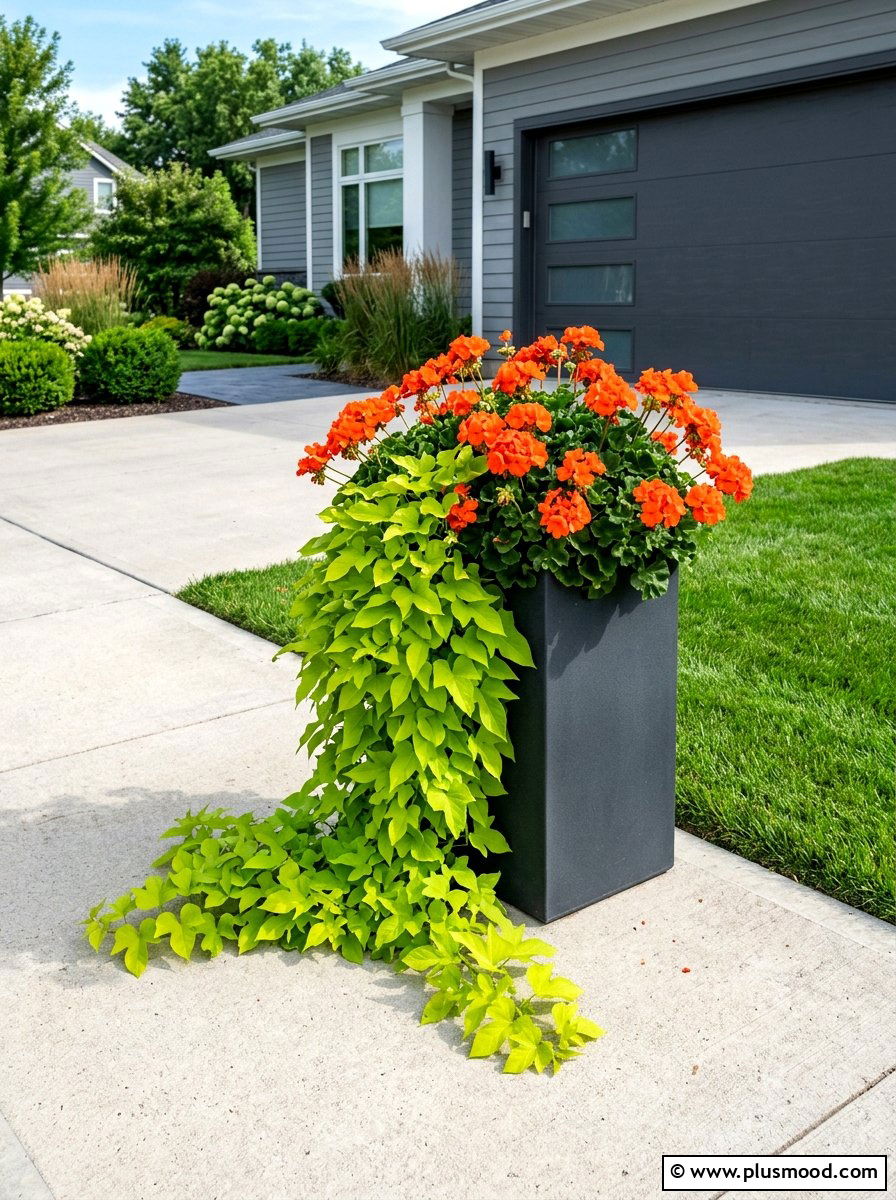
Pairing calibrachoa with zonal geraniums offers a traditional and time-tested look that is synonymous with summer gardening. The large, rounded flower heads of the geraniums provide a sturdy focal point, while the calibrachoa fills in the spaces around the stems and cascades over the rim. This combination is very popular for front porch urns and large deck planters because it delivers a massive amount of color and texture. Choosing a red and white color scheme can create a crisp, patriotic vibe, while pinks and purples offer a softer, cottage-style feel. Both plants require regular feeding to sustain their heavy blooming habit.
17. Red Calibrachoa And White Bacopa Mix
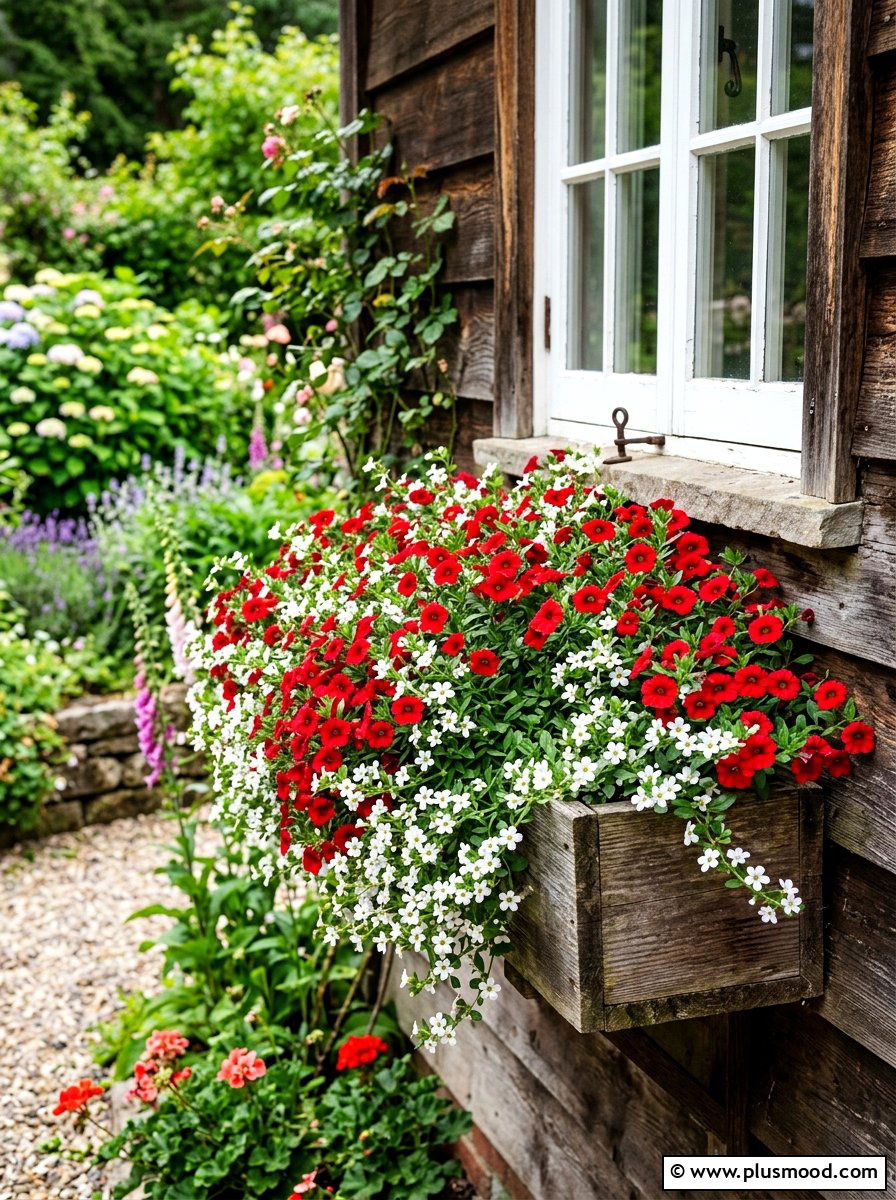
A mix of vibrant red calibrachoa and delicate white bacopa creates a clean and high-contrast look that is both refreshing and bold. The tiny, five-petaled flowers of the bacopa mingle perfectly with the slightly larger bells of the red calibrachoa, creating a layered and intricate floral carpet. This pairing is excellent for hanging baskets or window boxes where the trailing stems can be viewed at eye level. Bacopa is known for its ability to trail and fill gaps, making the entire arrangement look exceptionally full and healthy. Ensure the soil stays moist, as bacopa can be sensitive to drying out completely during the day.
18. Calibrachoa And Scaevola Fan Flower Basket
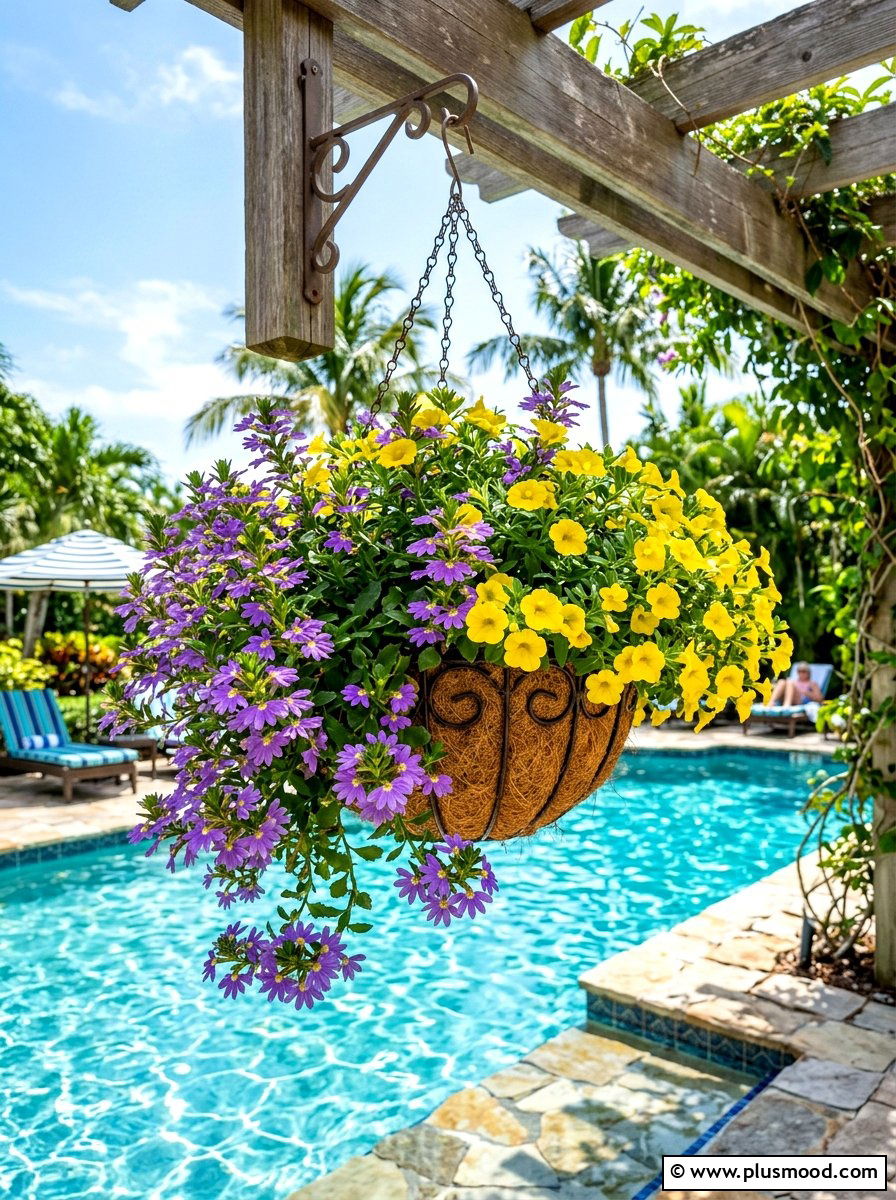
Combining calibrachoa with scaevola, or fan flower, results in a unique and texture-rich basket that stands out from typical summer arrangements. Scaevola has distinctive fan-shaped blooms and thick, succulent-like foliage that pairs beautifully with the delicate stems of calibrachoa. Both plants are exceptionally heat-tolerant and can handle the drying winds often associated with hanging baskets. A mix of purple scaevola and yellow calibrachoa creates a high-contrast, energetic look that is perfect for a sunny pool area or a bright patio. This combination is very low-maintenance, as both plants are virtually pest-free and do not require deadheading to produce new blooms.
19. Pastel Calibrachoa And Dusty Miller Arrangement
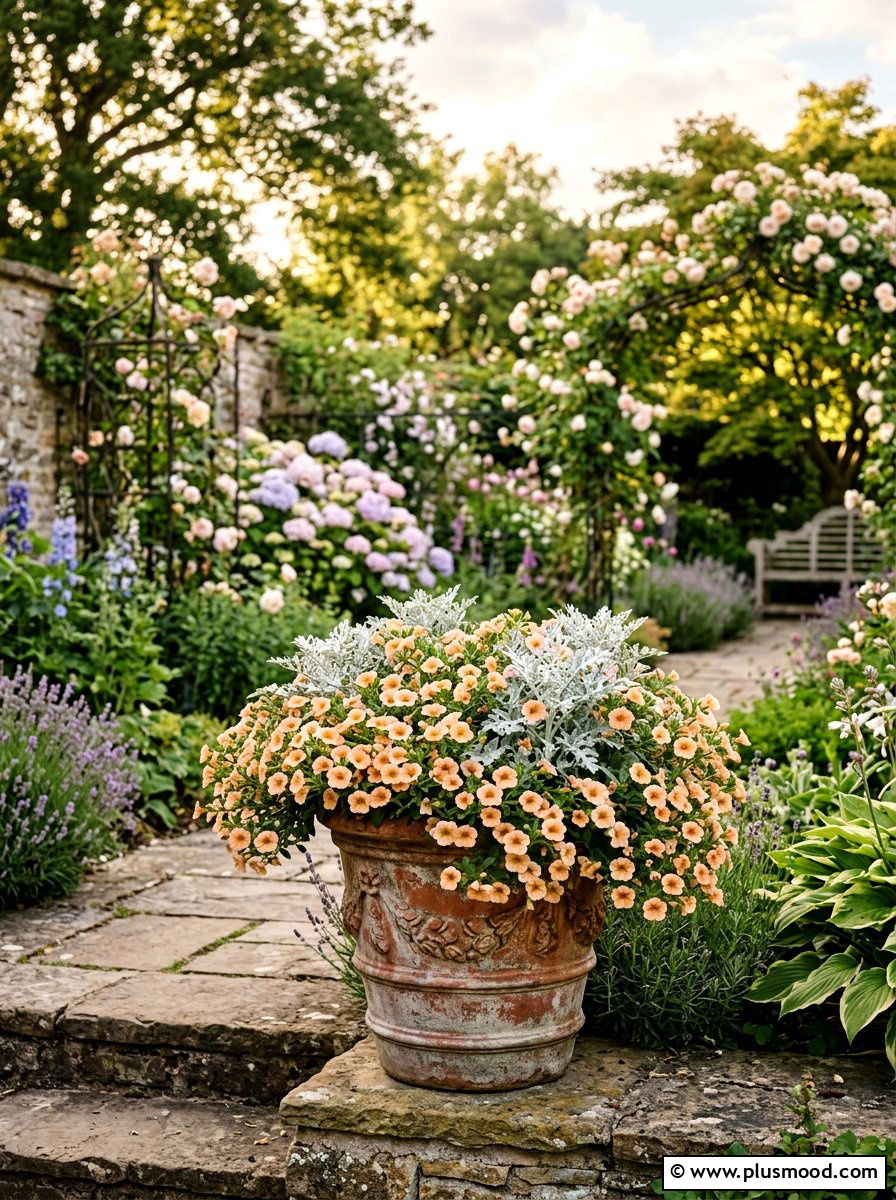
For a soft, vintage aesthetic, pair pastel-colored calibrachoa, such as light peach or soft lavender, with the silvery, felted leaves of dusty miller. The muted tones of the flowers are enhanced by the cool grey foliage, creating a sophisticated and romantic planter. This look is perfect for a garden party or a quiet corner of the yard where a more subtle color palette is desired. Dusty miller provides a stable, mounded structure in the center, while the calibrachoa trails around the edges. This arrangement is very drought-tolerant once established and maintains its soft, attractive appearance even during the peak of summer heat.
20. Calibrachoa And Nemesia Summer Container
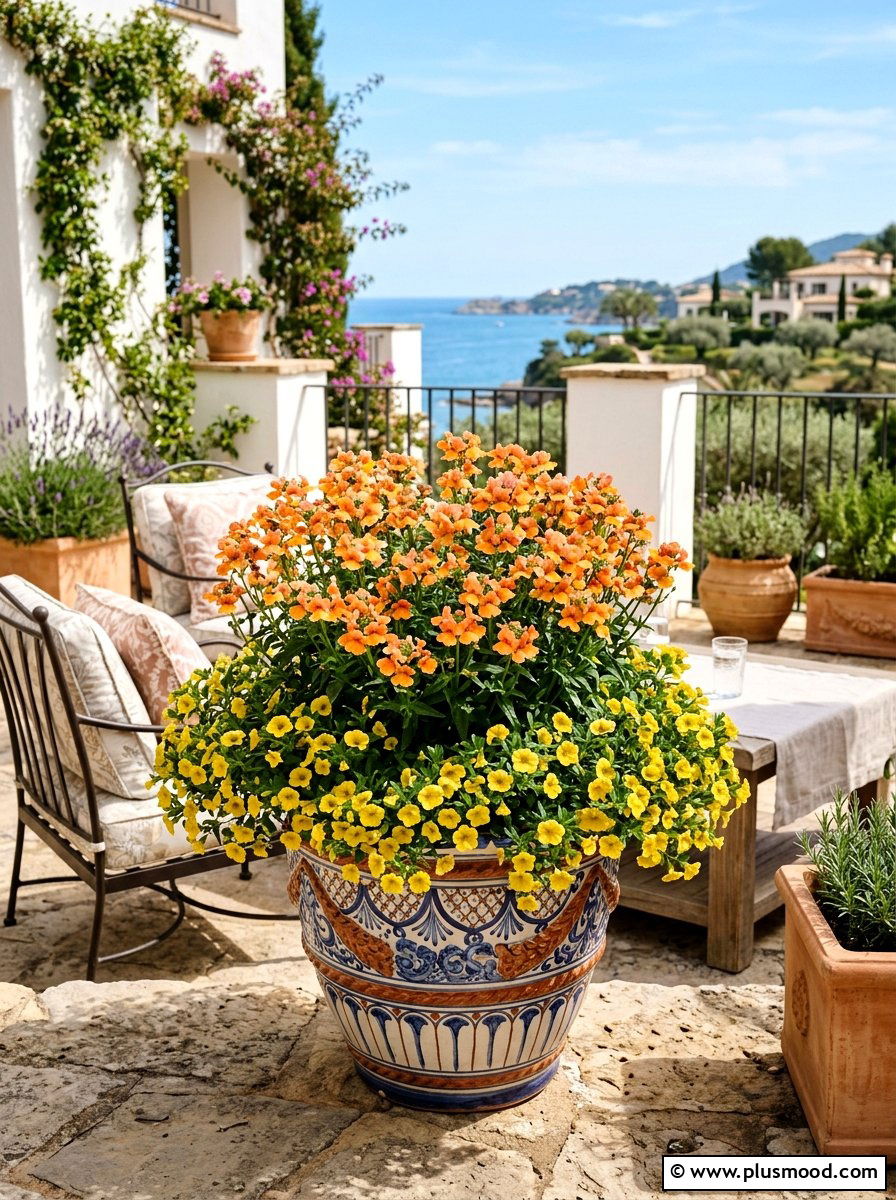
Pairing calibrachoa with nemesia creates a delicate and often fragrant container that is a delight for the senses. Nemesia offers a wider range of bi-color flowers and a slightly more upright, bushy habit that complements the trailing calibrachoa. This combination works best in areas where you can enjoy the light scent of the nemesia, such as near a seating area or a doorway. Choose colors that coordinate, like sunset oranges and yellows, to create a warm and glowing effect. Both plants prefer well-draining soil and regular moisture, making them ideal companions in a decorative ceramic pot on a sunny balcony or terrace.
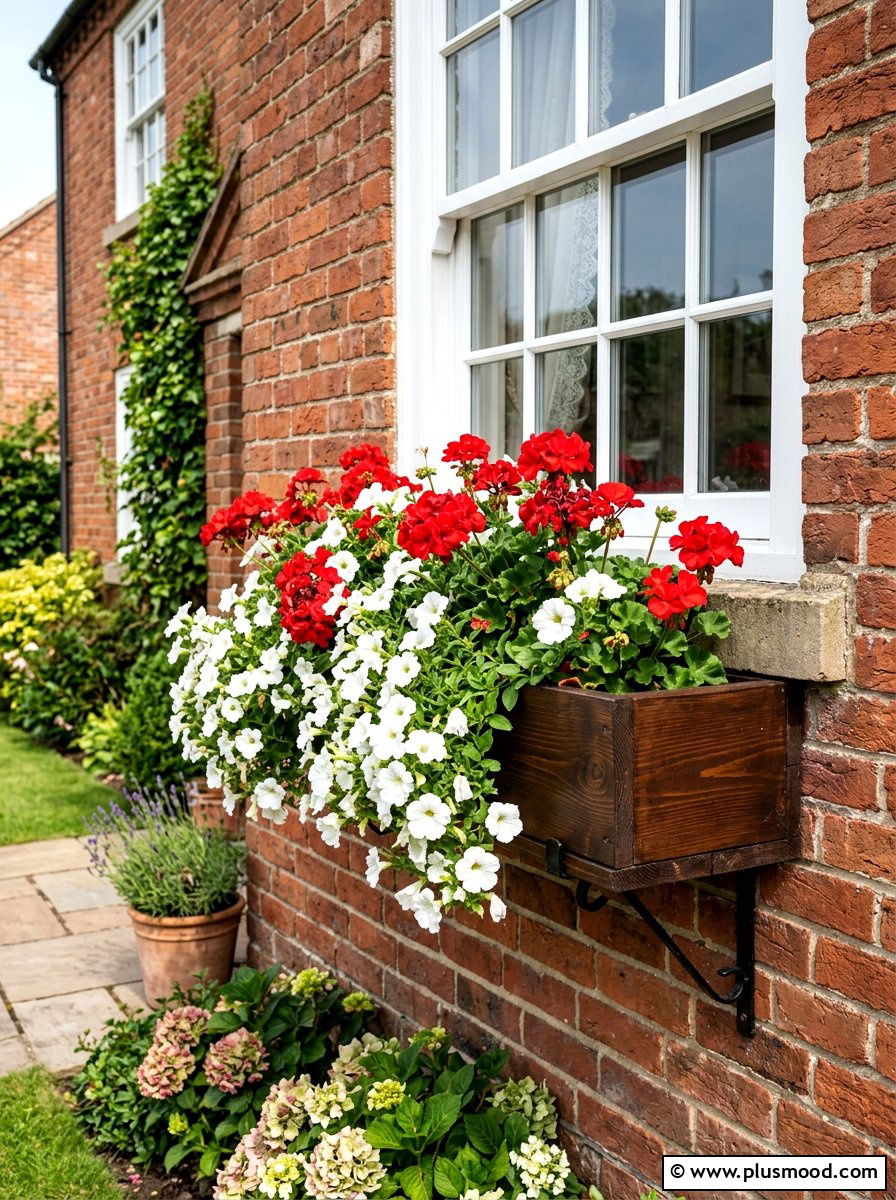

21. Dark Purple Million Bells In Modern Black Pot
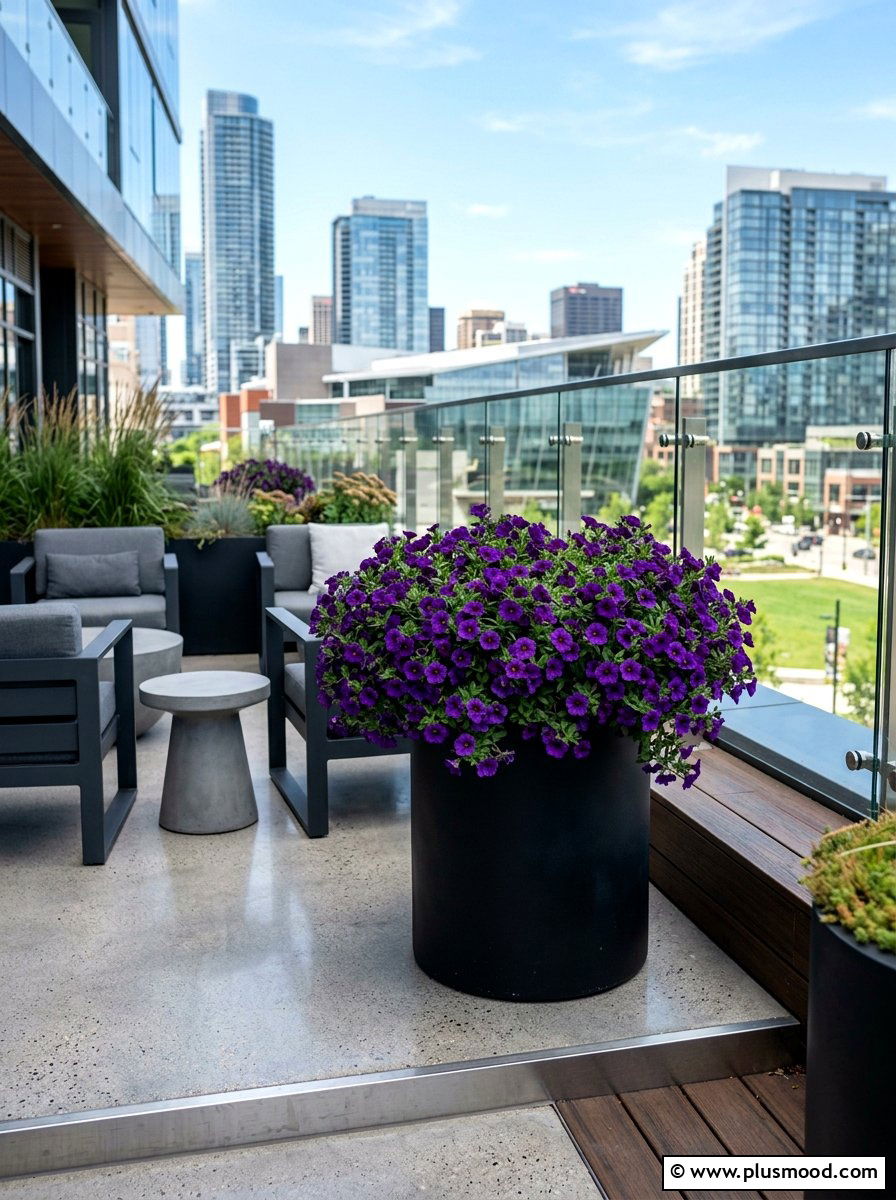
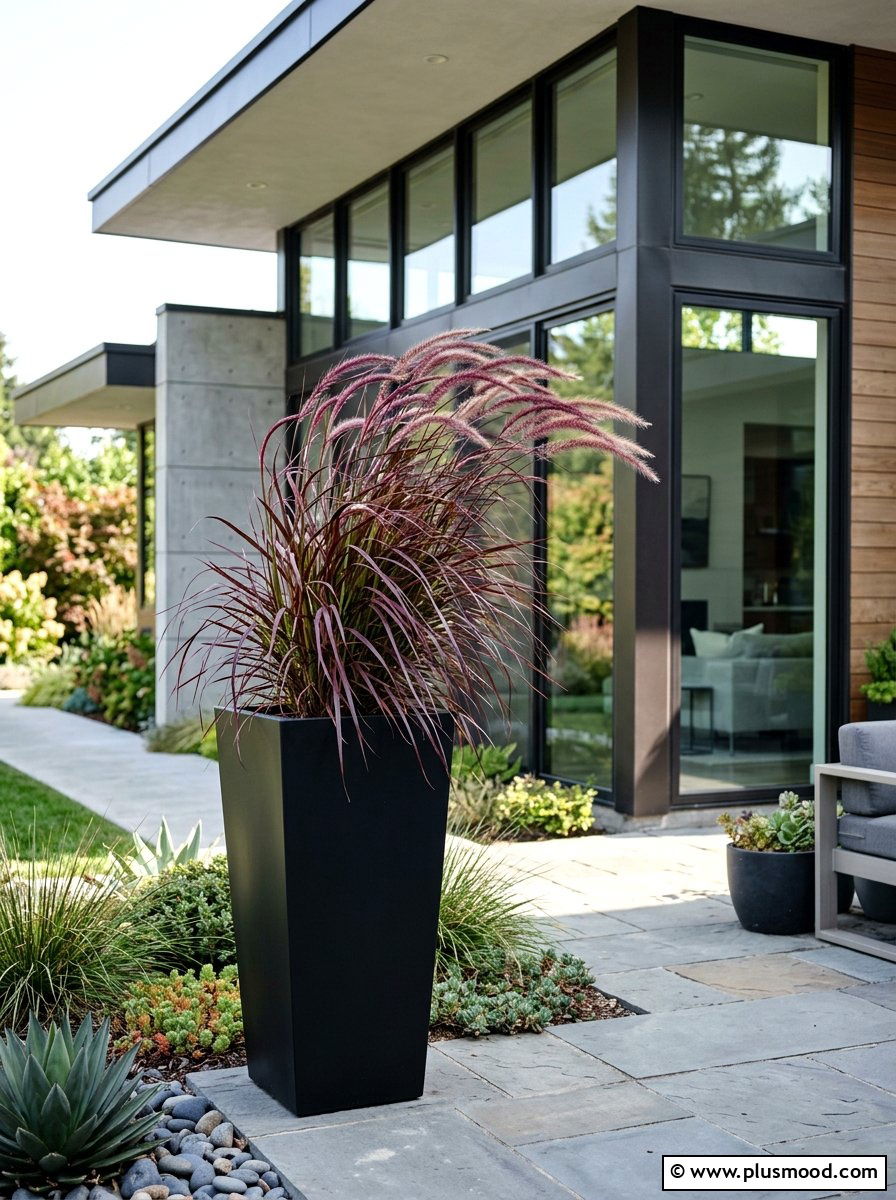
Placing dark purple million bells in a sleek, matte black container creates a contemporary and high-drama look for a minimalist patio. The dark pot makes the saturated purple flowers appear even richer and more vibrant, while the green foliage provides a necessary mid-tone contrast. This monochromatic approach is very stylish and works well in urban settings or modern architectural landscapes. To keep the look clean and professional, ensure the plants are well-watered so the foliage stays a deep, healthy green. This simple design demonstrates how the right choice of container can completely transform the aesthetic of a single plant variety.
22. Calibrachoa And Heliotrope Fragrant Planter
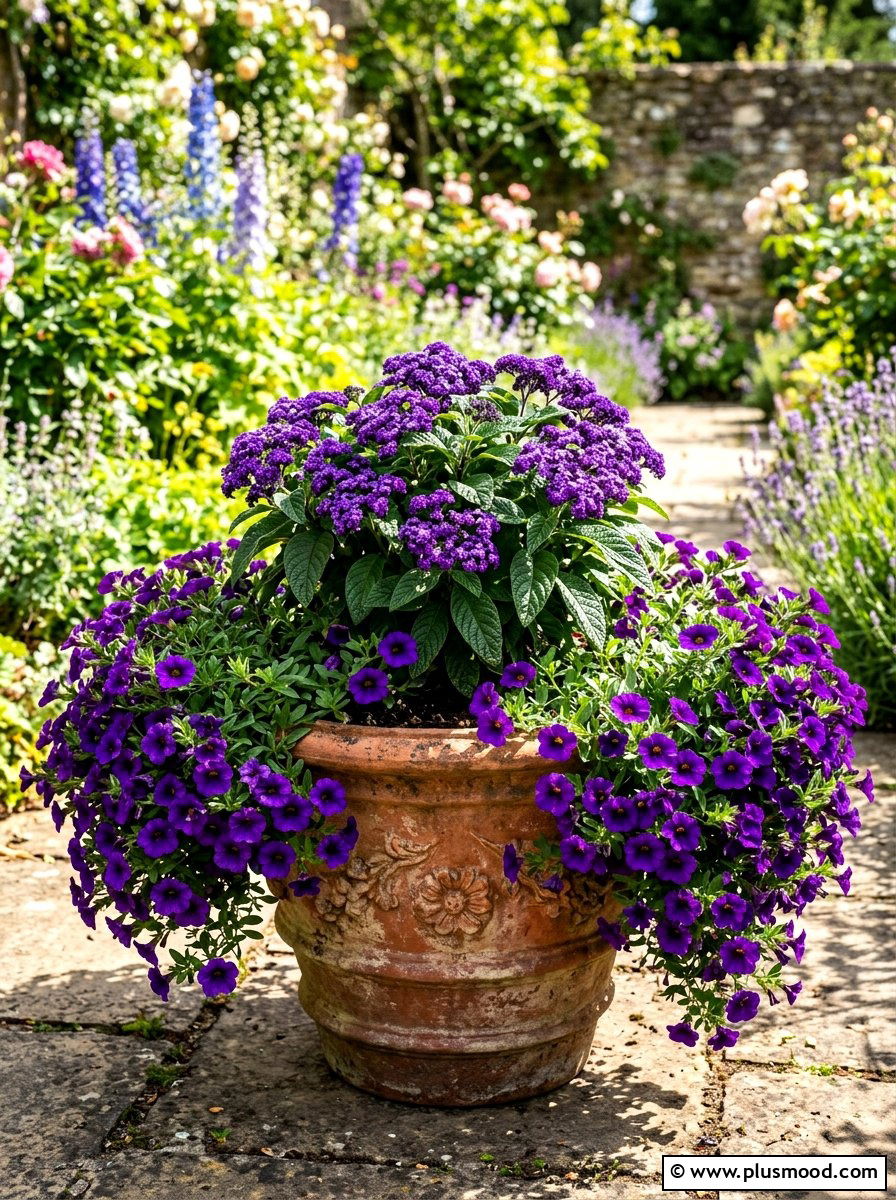
Combining deep purple calibrachoa with heliotrope creates a lush, royal-toned planter with an incredible vanilla-like fragrance. Heliotrope provides large, textured leaves and clusters of tiny purple flowers that grow upright, serving as the perfect center for the cascading calibrachoa. This pairing is a favorite for those who value scent as much as color in their garden design. Place this container in a sunny spot where the heat will help release the fragrance throughout the day. Because both plants have deep purple tones, adding a few sprigs of light green foliage can help break up the colors and make the purple blooms stand out even more.
23. Sunset Color Calibrachoa Mixed Basket
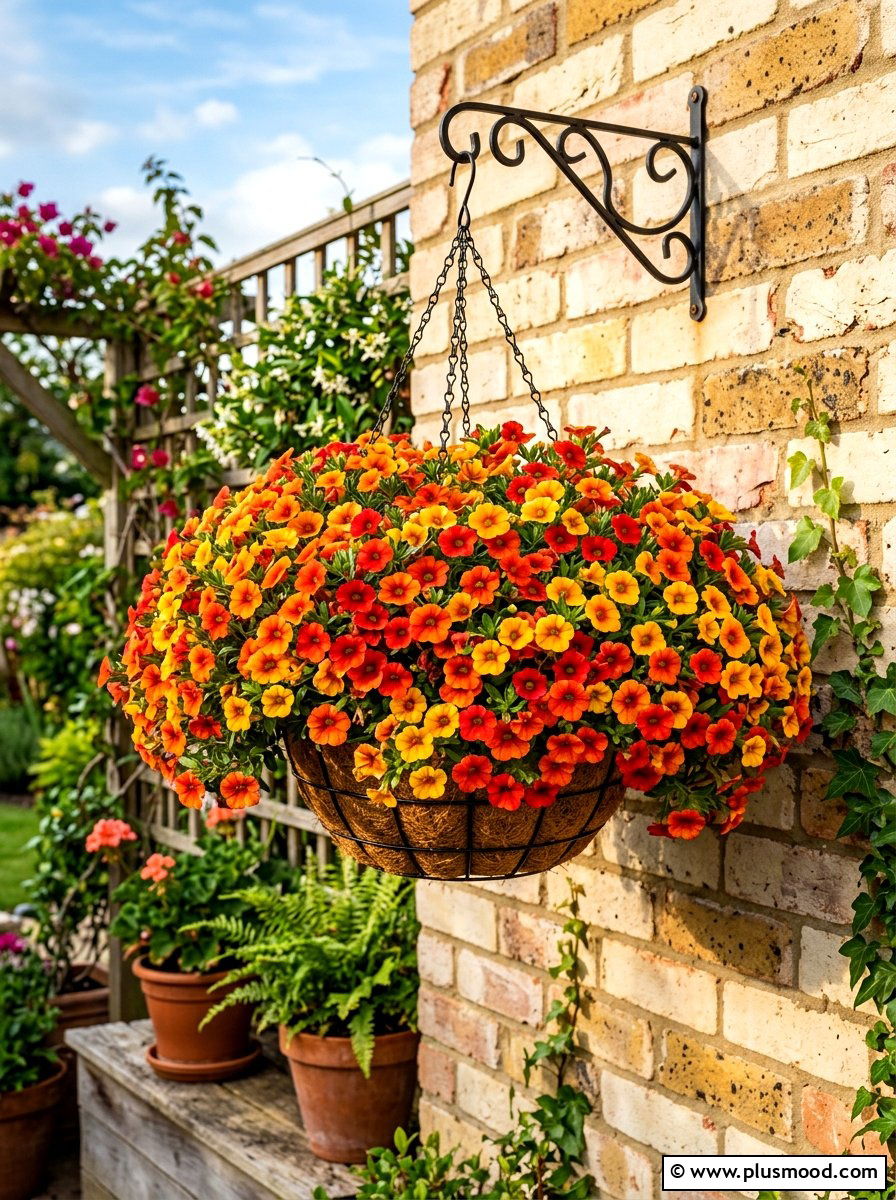
Create a stunning "sunset" effect in a hanging basket by mixing calibrachoa varieties in shades of red, orange, and golden yellow. This warm color palette mimics the sky at dusk and brings a glowing, tropical energy to your outdoor space. By using only calibrachoa, you ensure a uniform growth habit that creates a perfect sphere of color as the plants mature. This look is particularly effective when hung against a neutral background like a white fence or a light-colored house wall. The vibrant, warm tones are highly attractive to pollinators and provide a cheerful welcome to any guest visiting your home.
24. Calibrachoa And Salvia Tall Planter
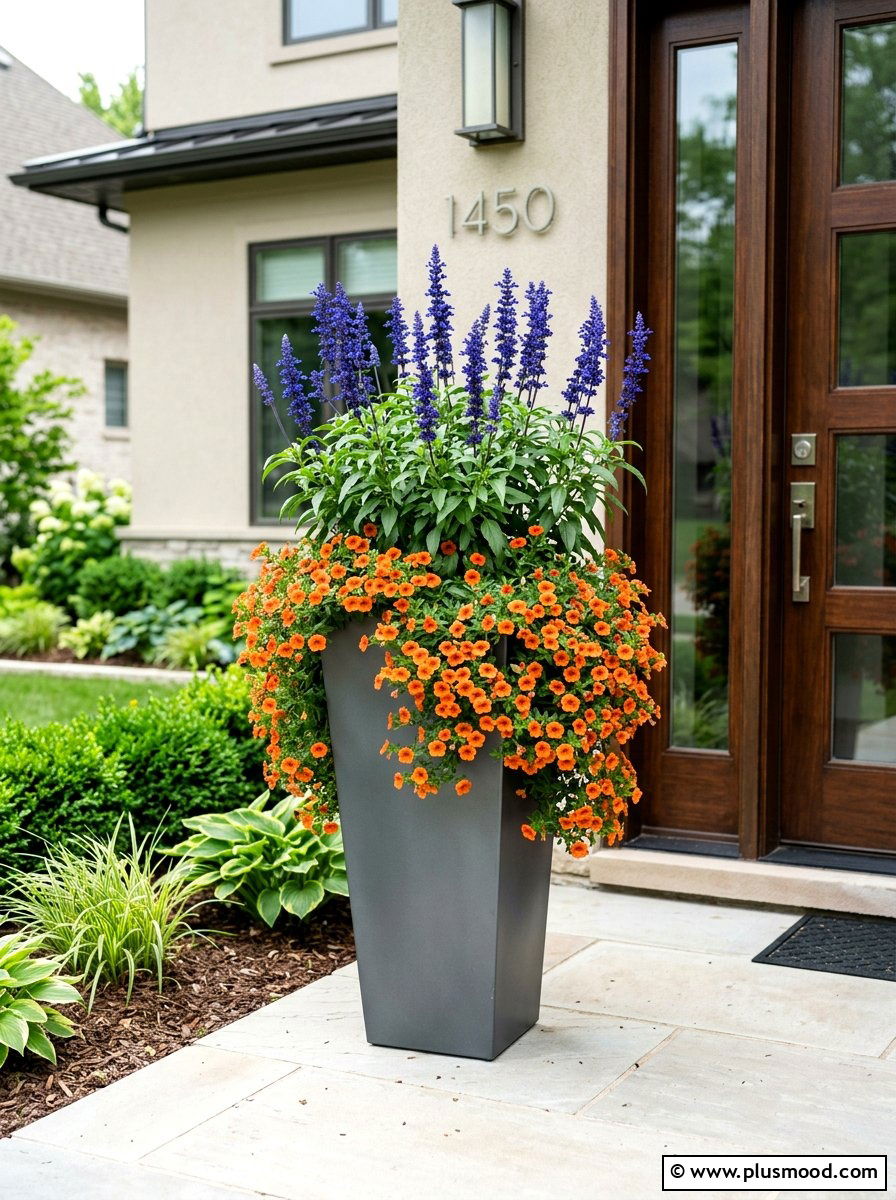
Using a tall, slender planter with upright salvia and trailing calibrachoa provides a dynamic and multi-layered look for a sunny entryway. The salvia acts as the "thriller, " reaching upward with its spiked flowers, while the calibrachoa fills the middle and spills over the edges. This combination creates a sense of movement and height that is very appealing in formal garden designs. Choose a blue salvia to contrast with orange calibrachoa, or go with a red-on-red theme for a bold, monochromatic statement. Both plants are exceptionally sun-loving and will thrive in a high-exposure location with regular watering and fertilizing during the summer.
25. Calibrachoa And Coleus Foliage Container
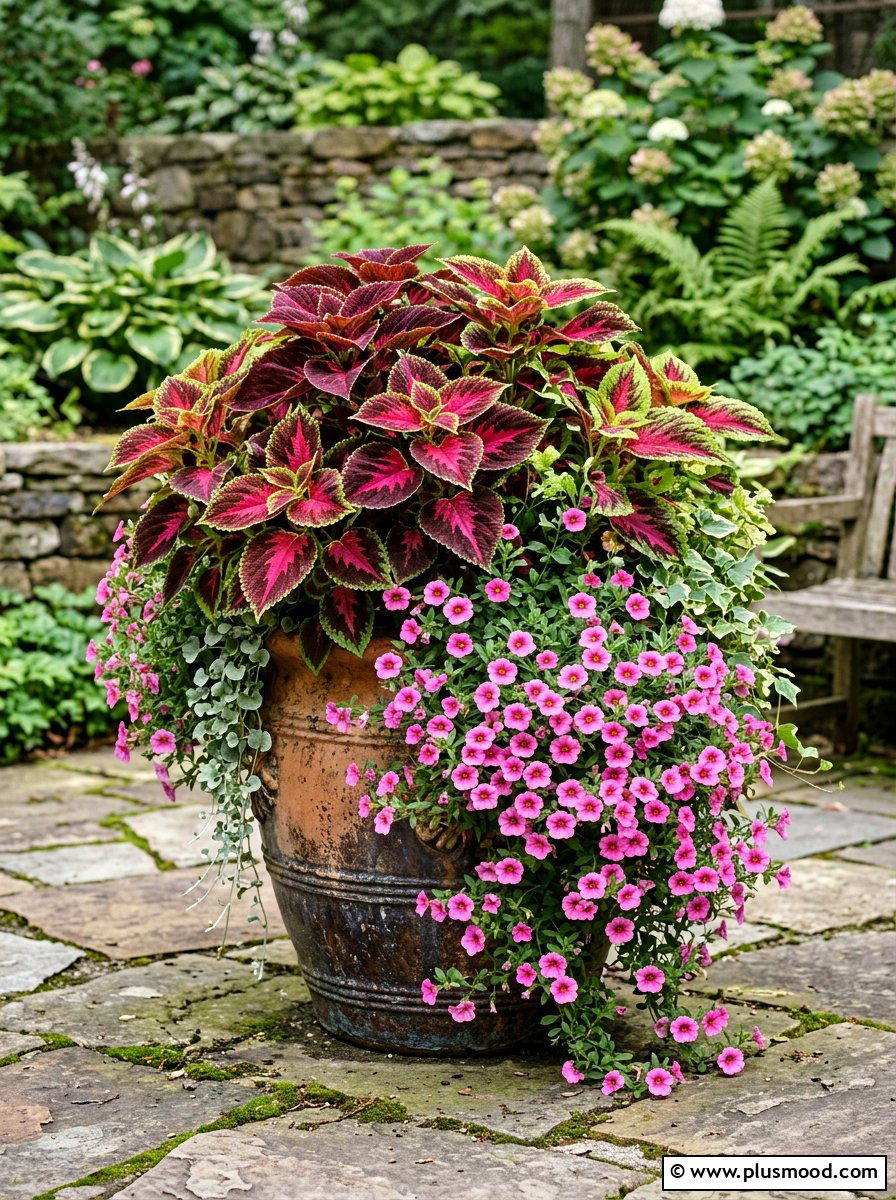
Pairing the bright blooms of calibrachoa with the intricate patterns of coleus creates a container that focuses on both flower and foliage beauty. Coleus comes in an endless variety of leaf colors and shapes, allowing you to match the foliage to the specific shade of your calibrachoa bells. This combination is great for areas that transition from morning sun to afternoon shade, as some coleus varieties prefer a break from the intense heat. The large leaves of the coleus provide a solid structure that anchors the more delicate, trailing stems of the million bells, resulting in a full and balanced look that lasts all season.
Conclusion:
Designing summer planters with calibrachoa allows for endless creativity and a guaranteed splash of long-lasting color in your outdoor living spaces. These versatile plants are the ultimate choice for containers, offering a unique combination of heat tolerance, self-cleaning habits, and a stunning variety of hues that fit any aesthetic. Whether you prefer the rustic charm of terra cotta or the sleek lines of modern pots, million bells provide the lush, trailing growth needed to create professional-looking arrangements. By pairing them with the right companions and following a consistent care routine, you can enjoy a vibrant and flourishing garden from the first day of summer until the frost.
Related posts:

Leave a Reply