
Creating a stunning summer front yard is more than just a hobby; it is a creative art form that transforms your home’s exterior into a welcoming sanctuary. As the sun warms the earth, your garden becomes a vibrant canvas where colors, textures, and scents harmonize to create lasting impressions for neighbors and guests alike. A well-planned flower bed not only boosts curb appeal but also reflects your personal style and appreciation for nature’s seasonal beauty. Whether you prefer a structured formal look or a wild cottage aesthetic, the right combination of summer blooms can thrive under intense heat while providing a lush, professional finish to your landscape. Planning carefully ensures a beautiful result.
1. Full Sun Perennial Garden
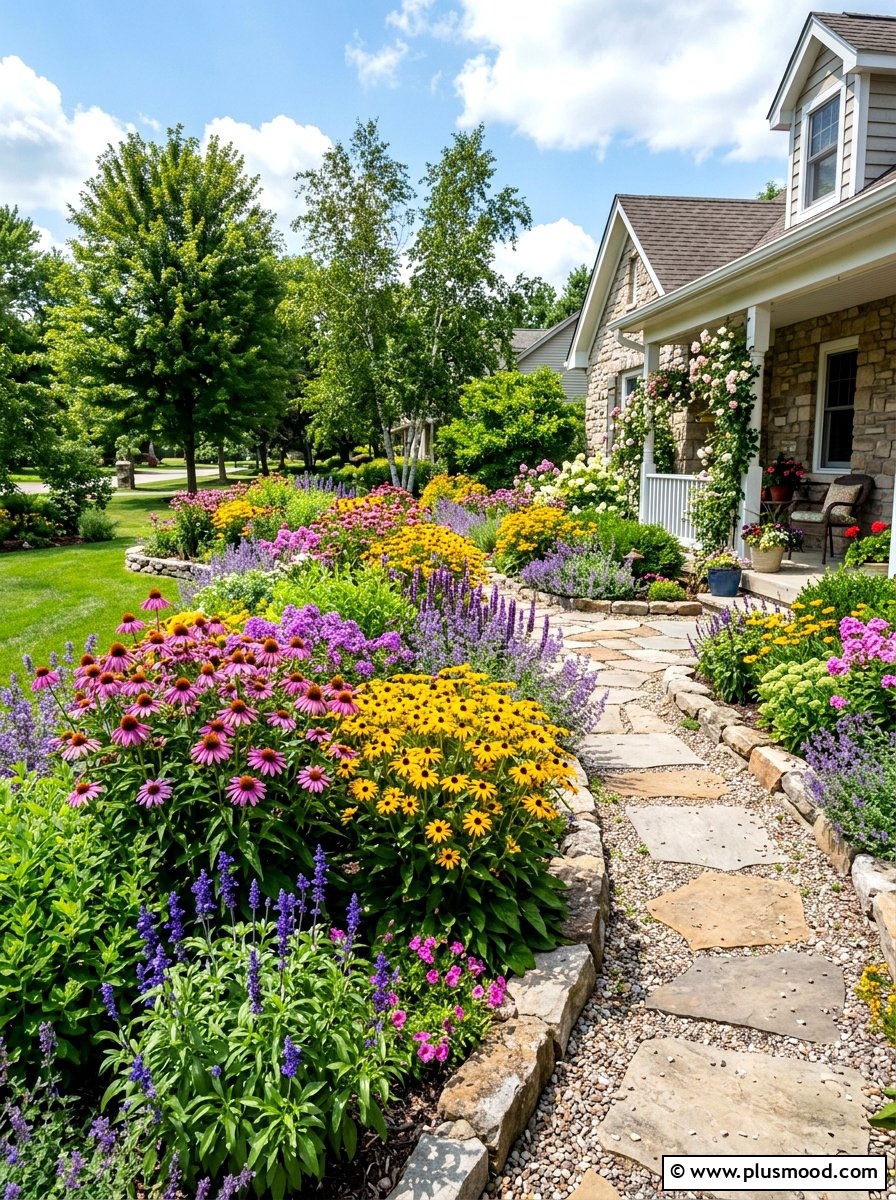
A full sun perennial garden is a fantastic way to ensure your front yard stays colorful year after year with minimal replanting. These hardy plants thrive in direct sunlight, soaking up at least six hours of rays to produce the most spectacular blooms. Popular choices like coneflowers, black-eyed Susans, and coreopsis are staples for this setup because they handle summer heat with grace. When planning the layout, place taller varieties in the back and shorter ones in front to create a sense of depth and visual interest. This structured approach ensures every plant gets its moment to shine while providing a dense, lush appearance for your home's exterior.
2. White Flower Theme
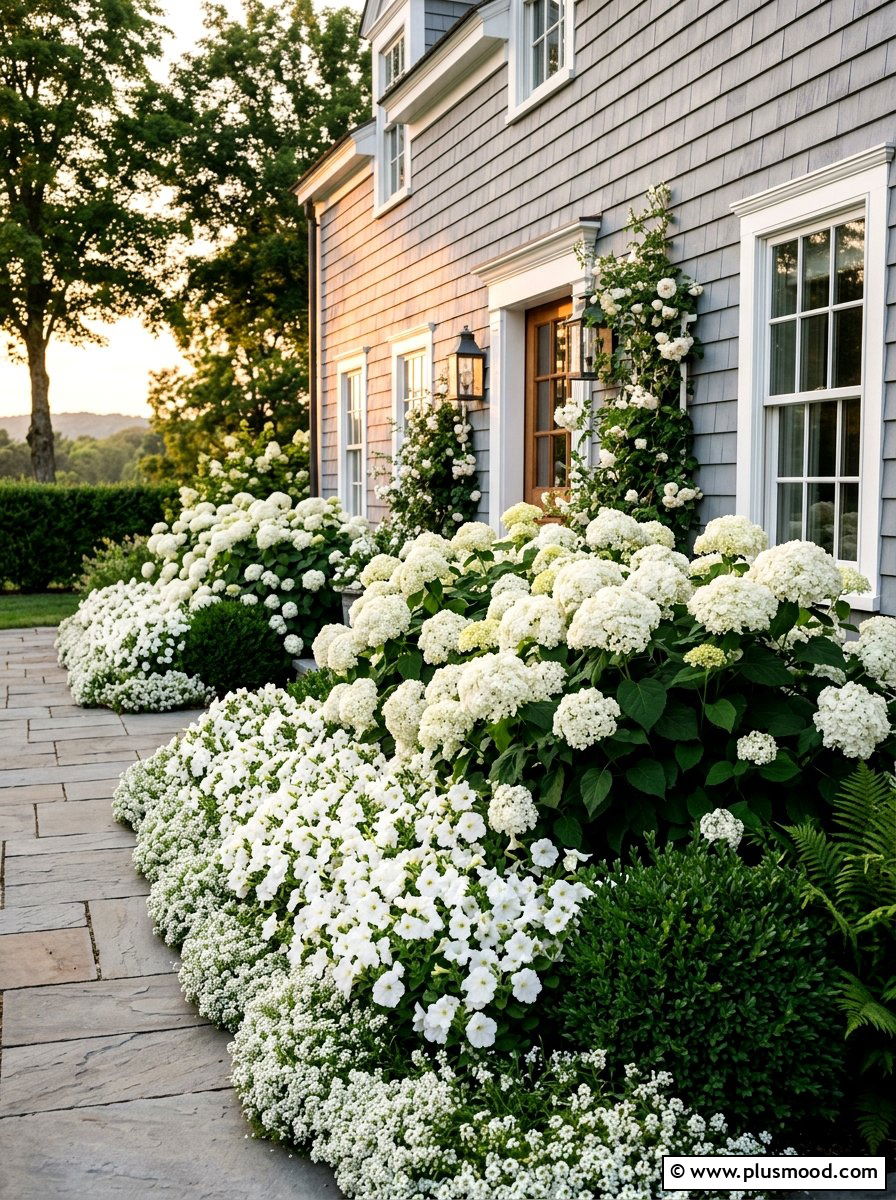
Have you ever considered the elegance of a monochromatic white garden to brighten your front yard during the summer evenings? A white flower theme creates a crisp, clean look that feels incredibly sophisticated and timeless against any home color. You can mix different textures by combining the large, fluffy heads of white hydrangeas with the delicate, airy petals of white cosmos or alyssum. These light-colored blooms reflect moonlight, making your garden glow beautifully after the sun goes down. Incorporating dark green foliage as a backdrop will make the white petals pop even more, providing a high-contrast and professional aesthetic that neighbors will definitely notice.
3. Low Maintenance Drought Tolerant Plants
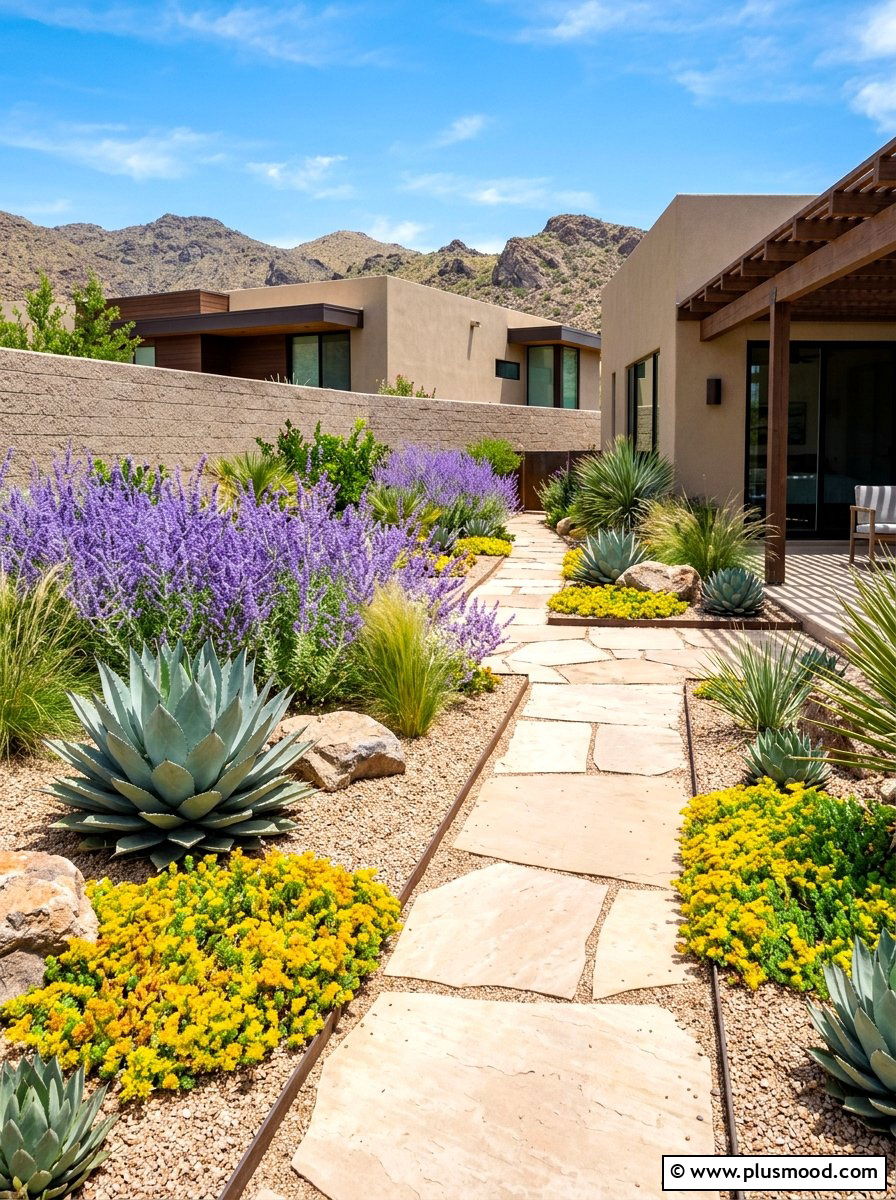
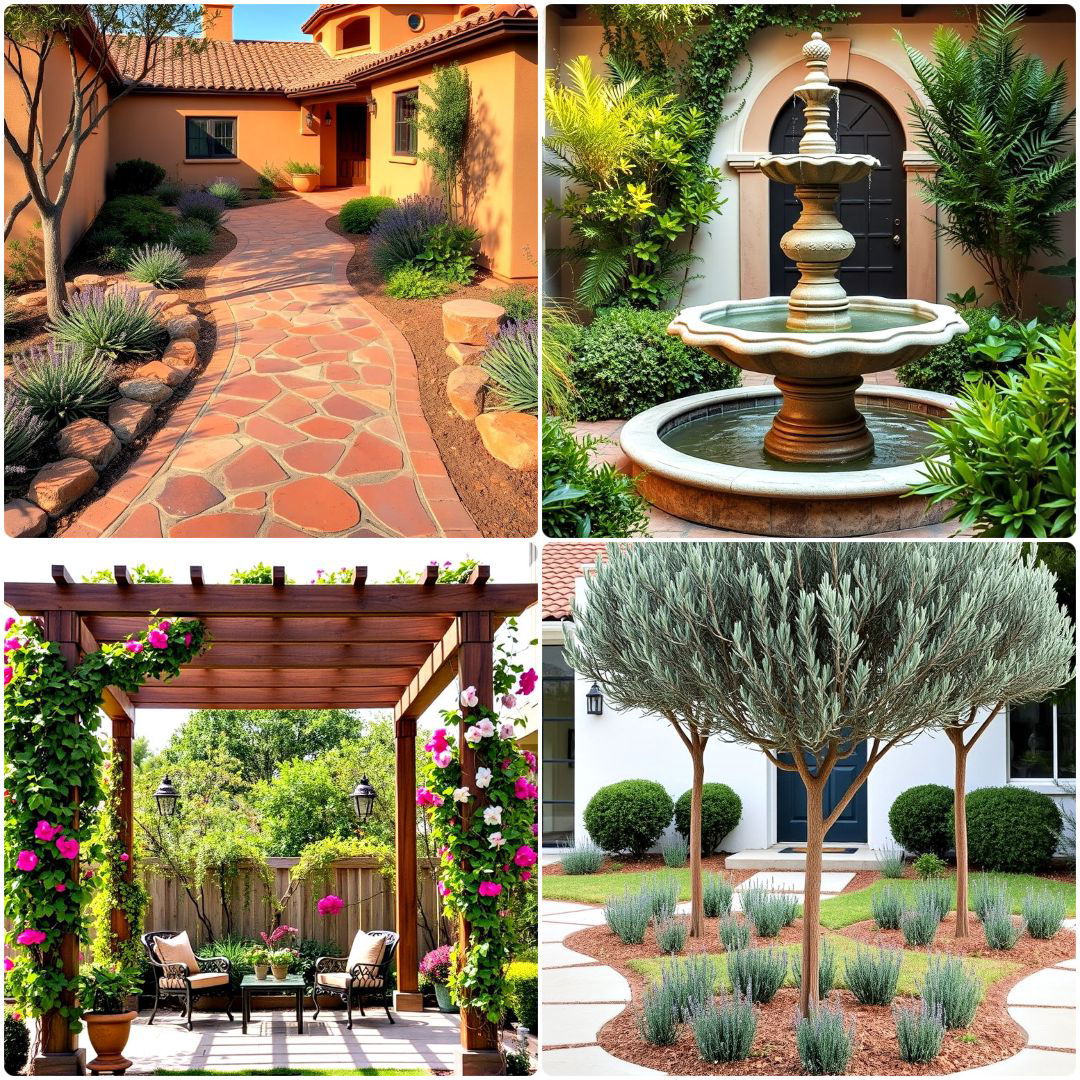
Finding the right balance between beauty and water efficiency is easier than ever with a drought-tolerant flower bed. This approach uses resilient plants that require very little supplemental watering once they are established in your front yard. Succulents like sedum and ice plants pair beautifully with heat-loving perennials such as Russian sage and lavender. These plants not only save on your utility bills but also offer a unique texture and a relaxed, Mediterranean vibe. To finish the look, use a high-quality gravel or wood mulch to help retain soil moisture. This design is perfect for busy homeowners who want maximum impact with very little effort.
4. Pollinator Garden With Native Flowers
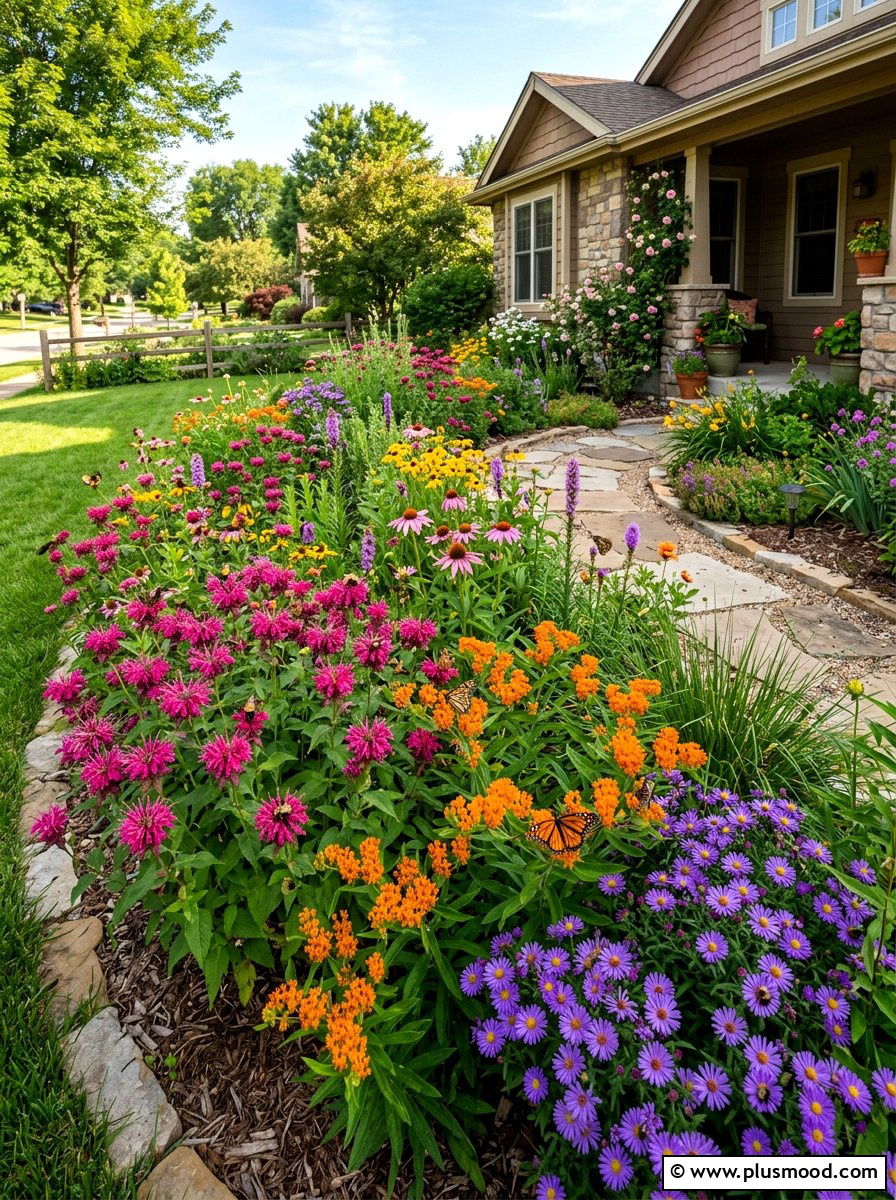
Inviting local wildlife into your front yard is a rewarding experience that starts with a dedicated pollinator garden. By selecting native flowers like milkweed, bee balm, and aster, you provide essential food and habitat for bees, butterflies, and hummingbirds. Native plants are naturally adapted to your local climate and soil, making them much easier to grow than exotic species. A pollinator-friendly bed usually looks best when planted in drifts, which are large groups of the same flower species clustered together. This technique makes it easier for pollinators to find the nectar while creating a bold, colorful statement that feels organic and naturally beautiful.
5. Front Yard Cottage Style Garden
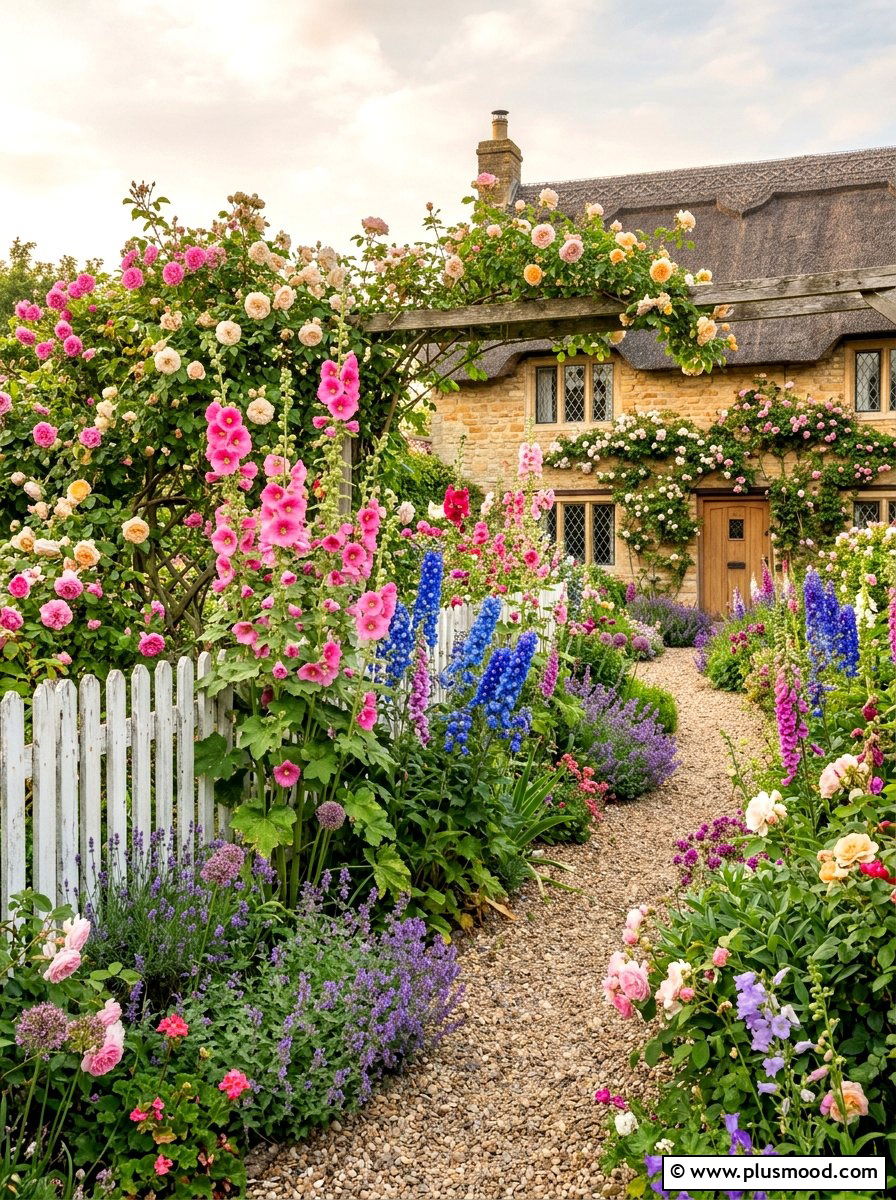
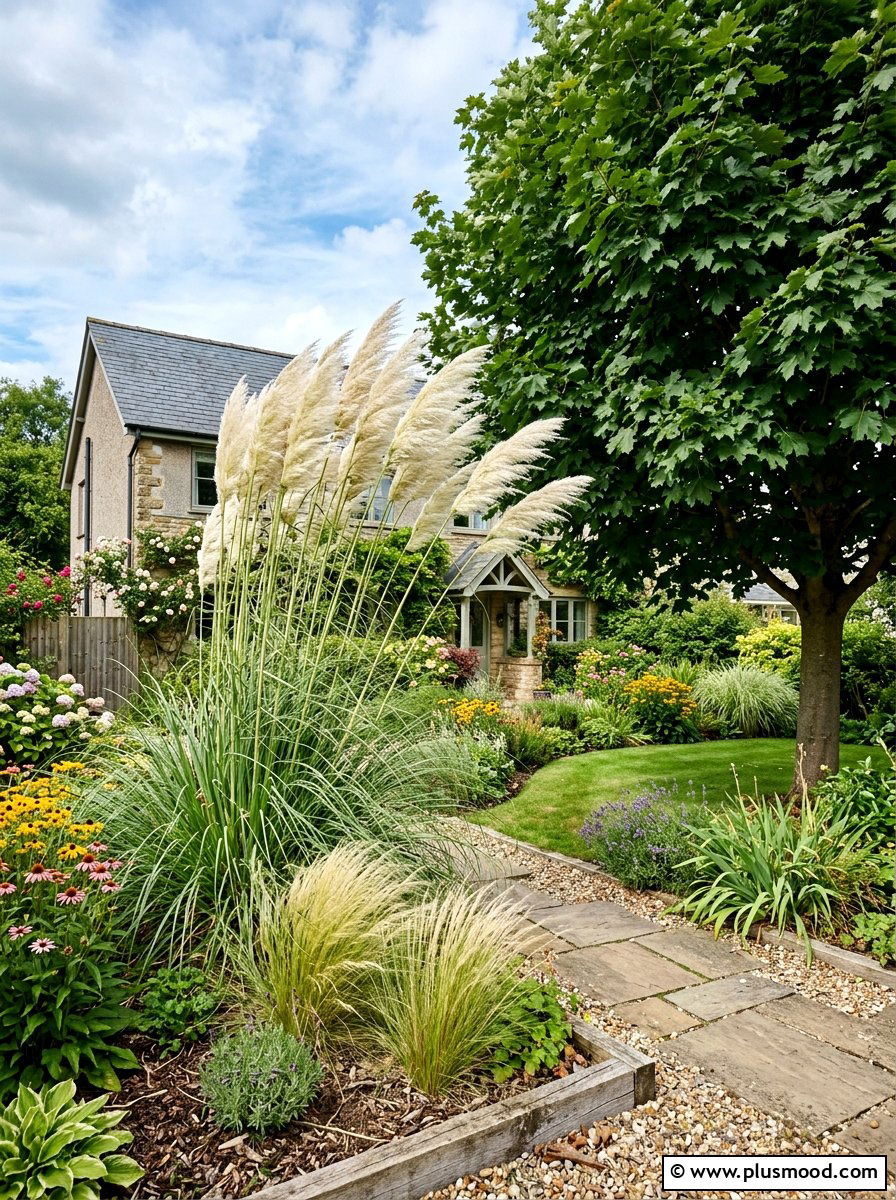
Is there anything more charming than a front yard cottage garden overflowing with a romantic tangle of summer blooms? This style embraces a "more is more" philosophy, featuring a dense mix of traditional favorites like hollyhocks, delphiniums, and foxgloves. Instead of rigid rows, the plants are allowed to spill over pathways and mingle together in a seemingly effortless way. To keep the look intentional rather than messy, use classic edging materials like weathered brick or low picket fencing. The fragrance from roses and lavender will greet visitors as they walk to your door, making your home feel cozy, lived-in, and exceptionally inviting for guests.
6. Layered Flower Bed For Curb Appeal
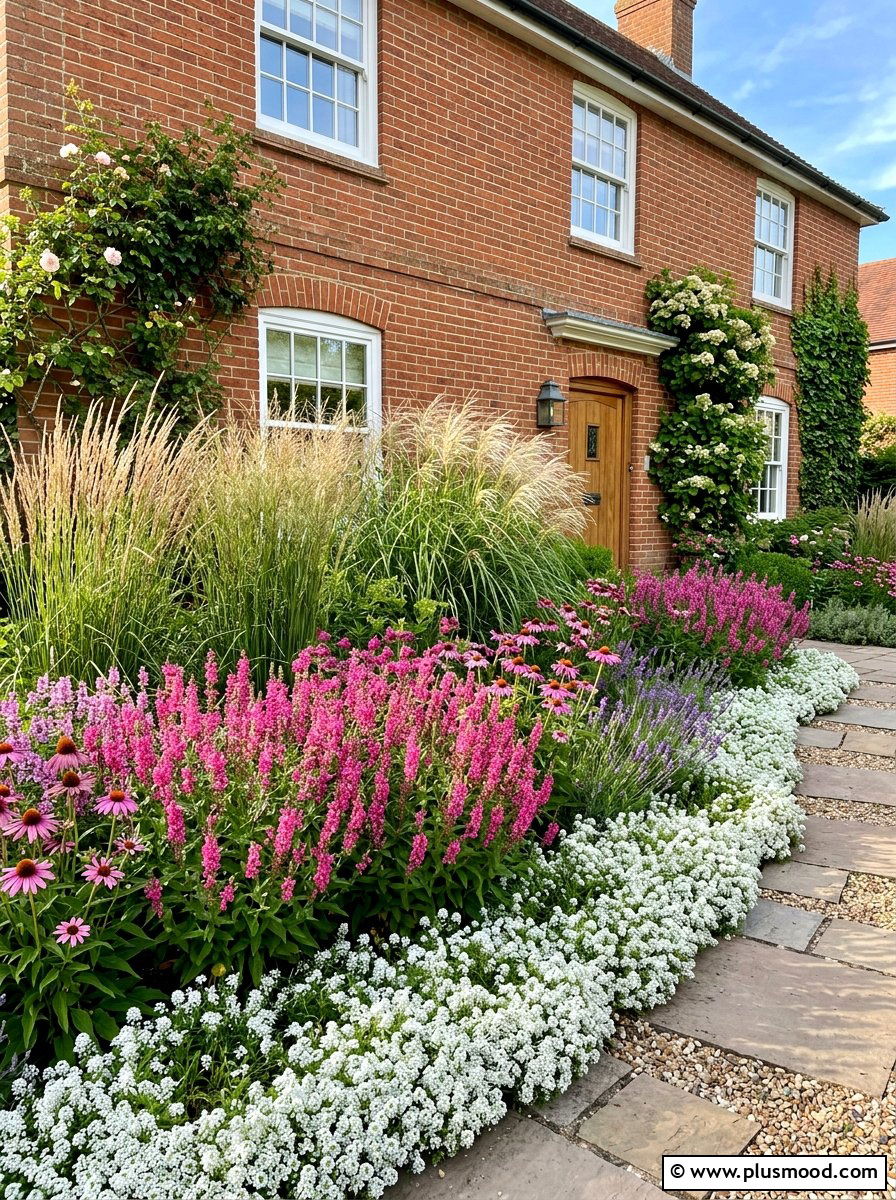
Creating a layered flower bed is the secret to achieving professional-looking curb appeal that stands out in the neighborhood. This technique involves organizing plants by height, starting with tall focal points like ornamental grasses or small flowering trees at the back. The middle layer should feature medium-sized perennials such as salvia or daisies to bridge the gap and add bulk. Finally, low-growing groundcovers like creeping thyme or lobelia should line the very front edge to soften the transition to the lawn. This tiered arrangement ensures that every plant is visible from the street, creating a full and balanced look that looks great all season long.
7. Modern Minimalist Flower Bed
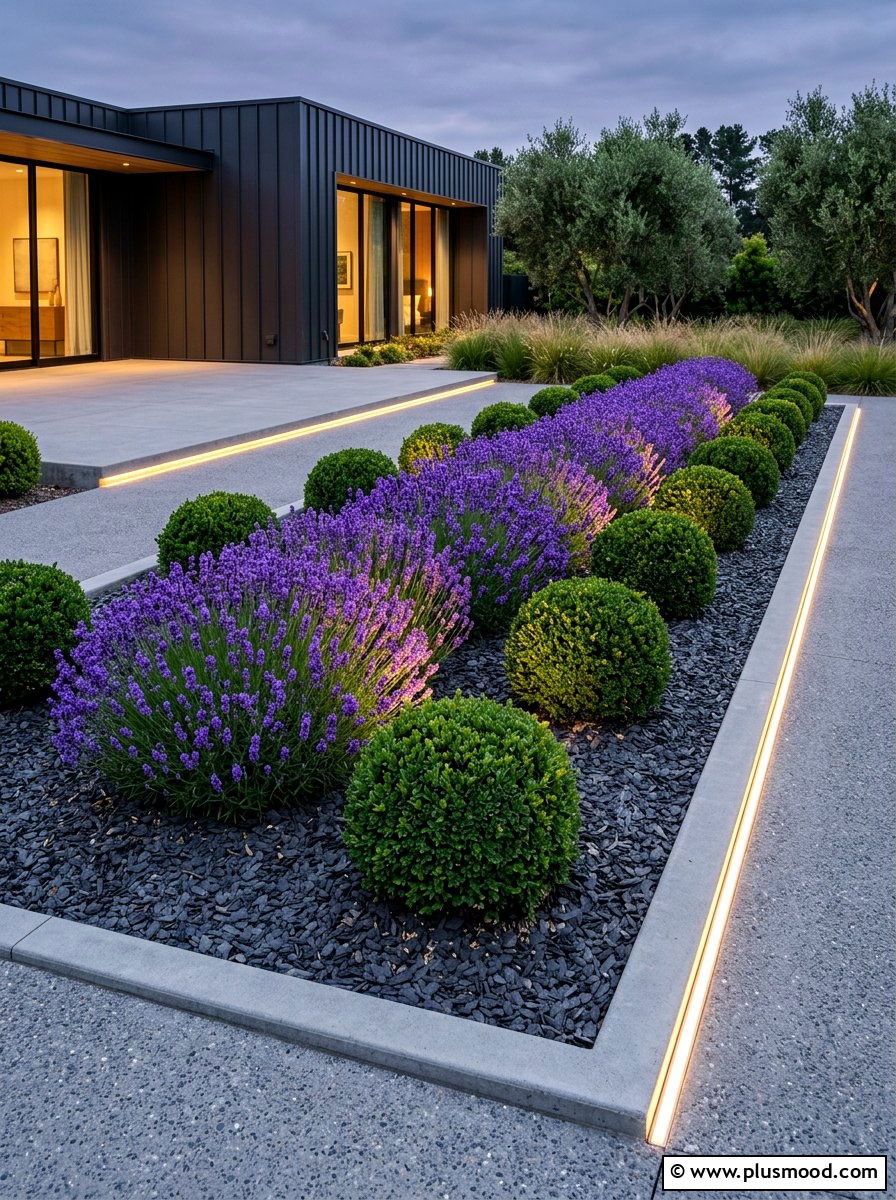
Clean lines and a restrained color palette are the hallmarks of a modern minimalist flower bed for the front yard. Instead of a riot of different colors, focus on a few select species planted in geometric patterns or repetitive rows. Boxwood hedges can provide a structural green frame for a single type of flowering plant, such as white alliums or purple lavender. This look is very sleek and complements contemporary architecture perfectly by emphasizing form and texture over chaotic variety. Using dark mulch or decorative river stones around the plants will highlight their unique shapes and maintain a tidy, uncluttered appearance that feels very high-end.
8. Colorful Annual Flower Bed
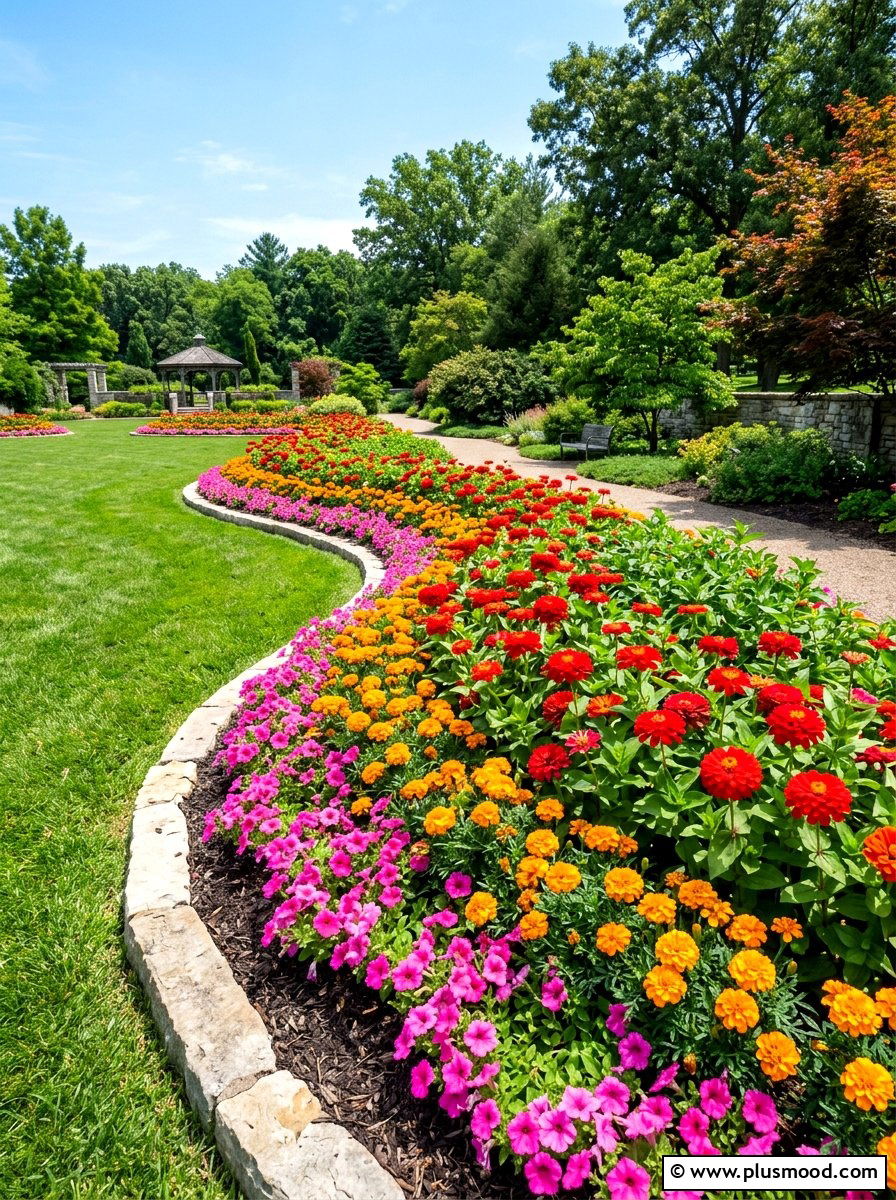
Why settle for a single look when a colorful annual flower bed allows you to reinvent your yard every summer? Annuals like petunias, zinnias, and marigolds are prized for their ability to bloom continuously from late spring until the first frost. These plants are perfect for filling in gaps between young perennials or for creating high-impact borders along your front walkway. You can experiment with bold, tropical color schemes featuring bright oranges and pinks or stick to a more traditional pastel palette. Because annuals complete their life cycle in one season, they often produce more flowers per plant than perennials, ensuring a truly vibrant display.
9. Shady Front Porch Flowers
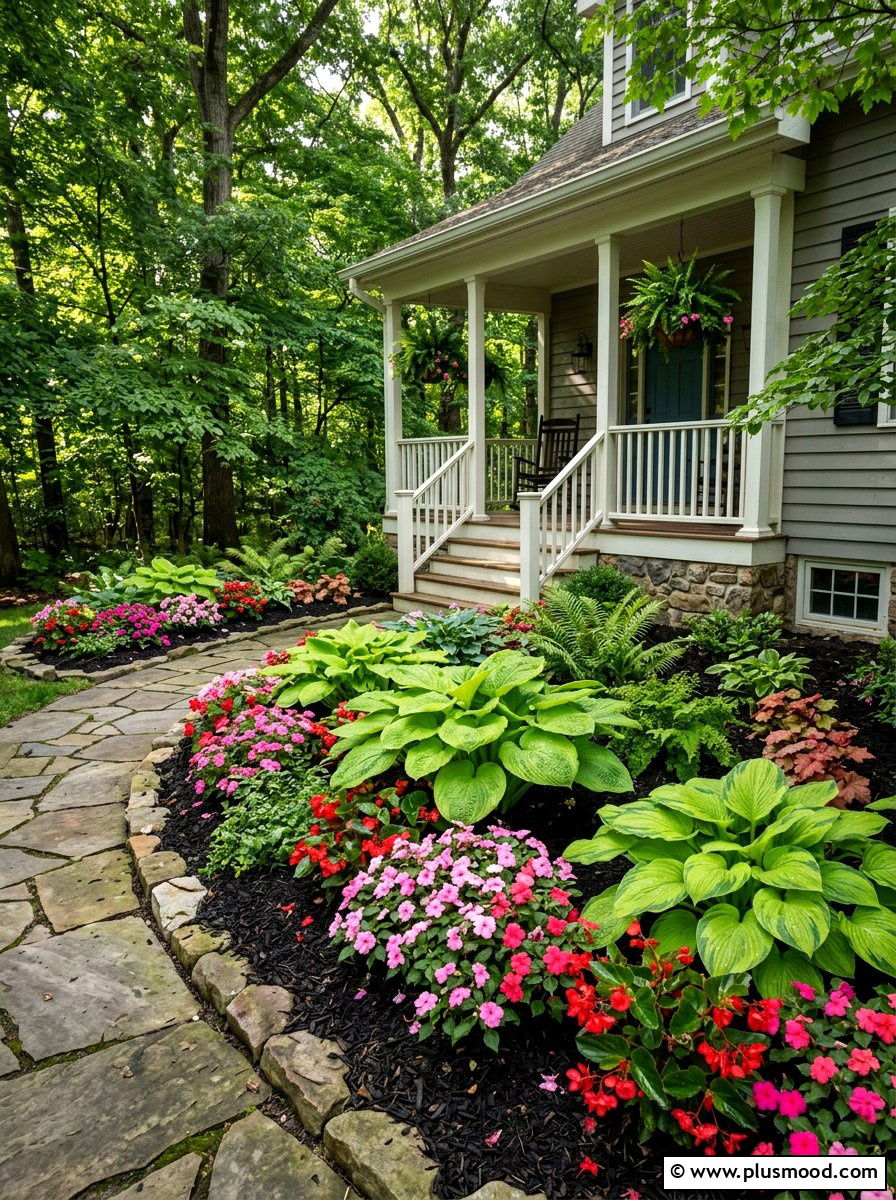
If your front yard is tucked under large trees or faces north, a shady flower bed can become a lush, cool retreat. Many people worry that shade means no flowers, but plants like begonias, impatiens, and fuchsia thrive in lower light conditions. You can also lean into beautiful foliage by planting various types of hostas, which come in stunning shades of blue, lime green, and variegated white. Adding bleeding hearts or columbine can provide delicate, interesting shapes that catch the eye. A shade garden often feels more serene and peaceful than a sun-drenched bed, offering a refreshing visual break during the hot summer months.
10. Raised Stone Garden Bed
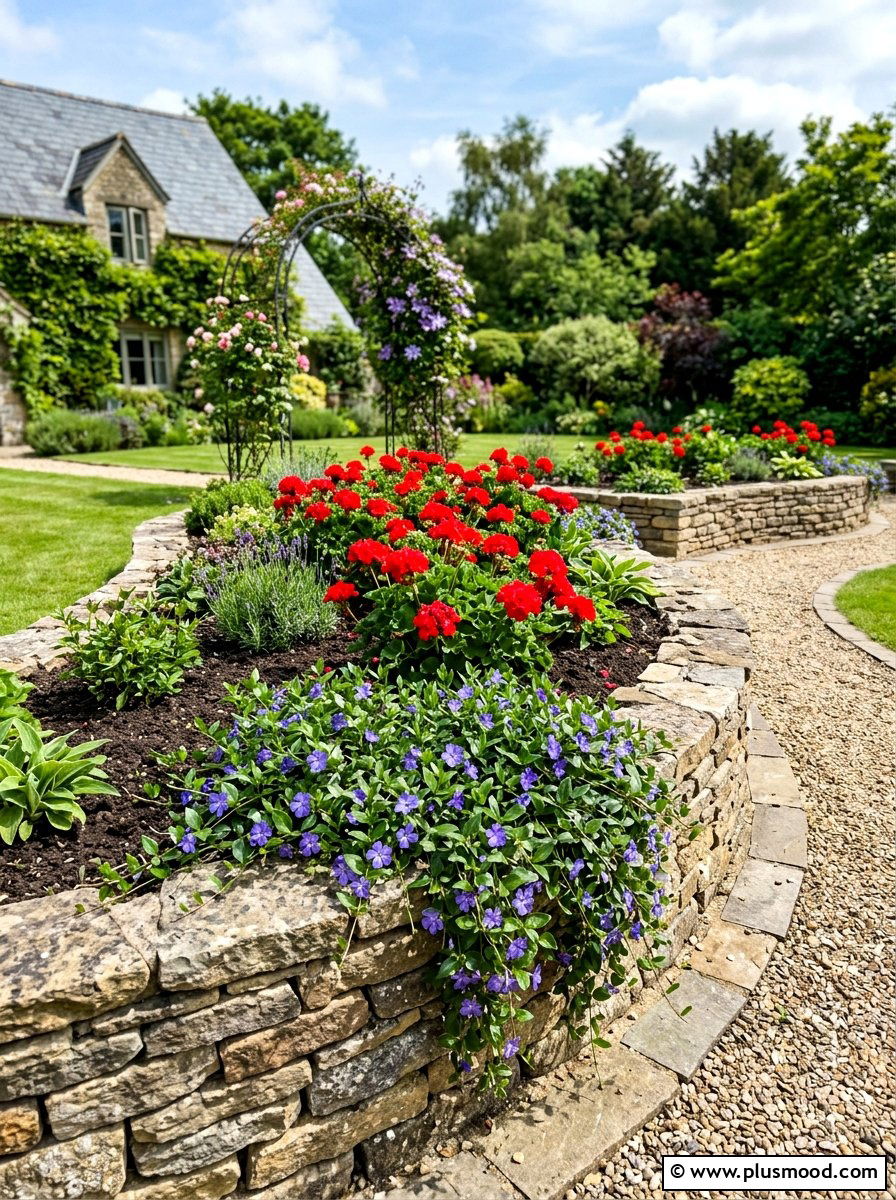
Building a raised stone garden bed is an excellent way to add architectural interest and permanent structure to your front yard. Raised beds allow you to control the soil quality perfectly, which is ideal if your natural ground is rocky or heavy with clay. Using natural stacked stone or decorative pavers creates a beautiful border that doubles as a focal point in the landscape. You can fill these beds with a mix of trailing plants like sweet potato vine that spill over the edges and upright summer flowers like geraniums. The added height makes maintenance much easier on your back while elevating your favorite blooms for better visibility.
11. Circular Flower Bed Around Tree
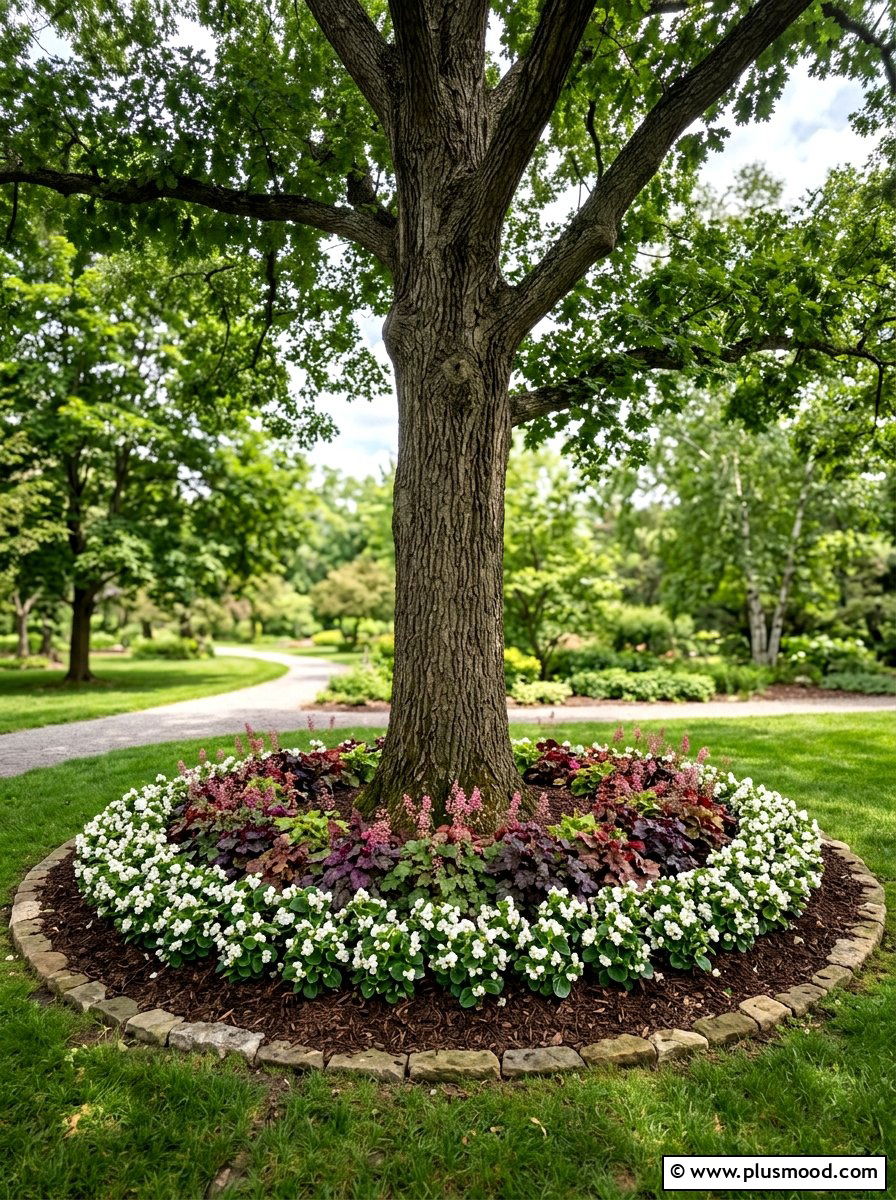
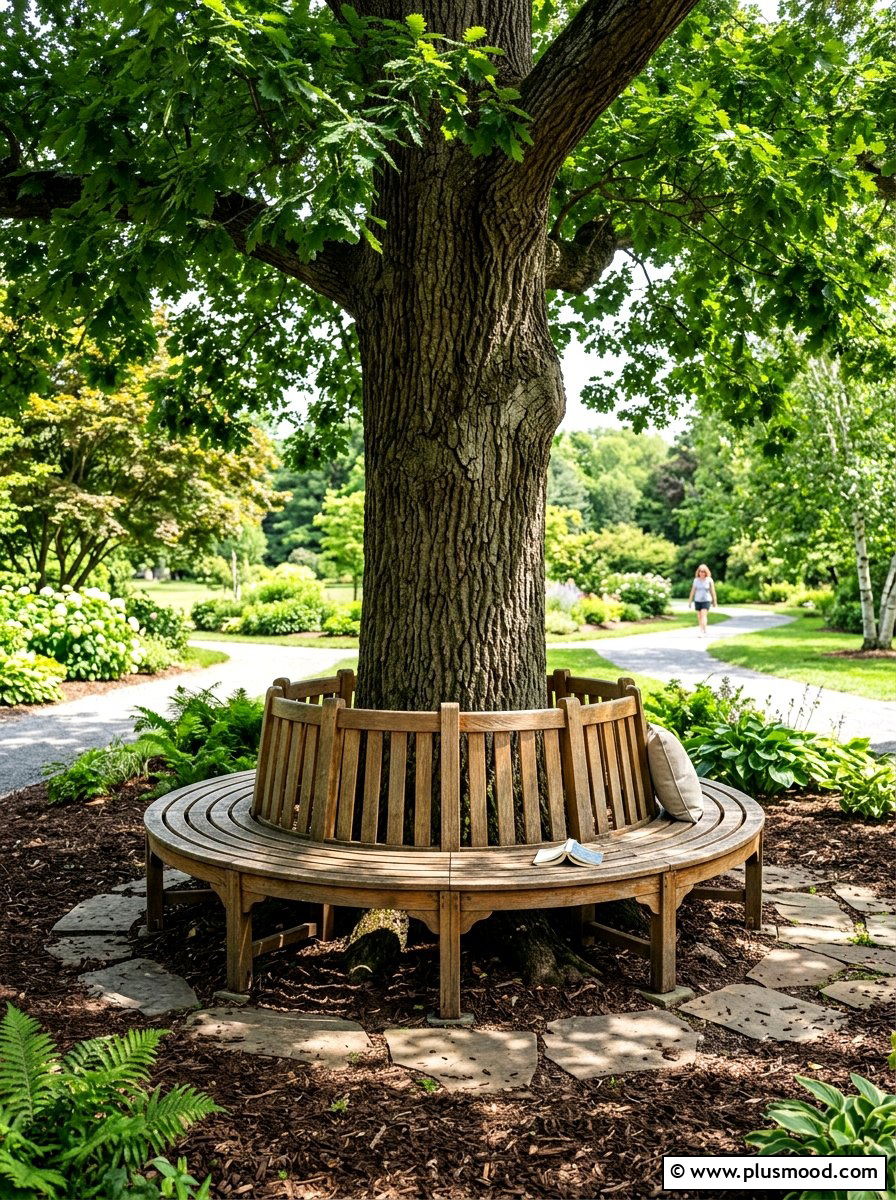
Transforming the space around a mature tree into a circular flower bed is a smart way to solve the problem of patchy grass. This design creates a beautiful island of color that helps protect the tree 's trunk from mower damage while adding a decorative element to the lawn. When planting under a tree, choose species that can handle root competition and varying light levels, such as coral bells or vinca. Ensure you don' t pile mulch too high against the tree bark, as this can cause rot. A circular bed with a well-defined edge creates a professional, finished look that anchors the entire front yard.
12. Mailbox Garden With Summer Blooms
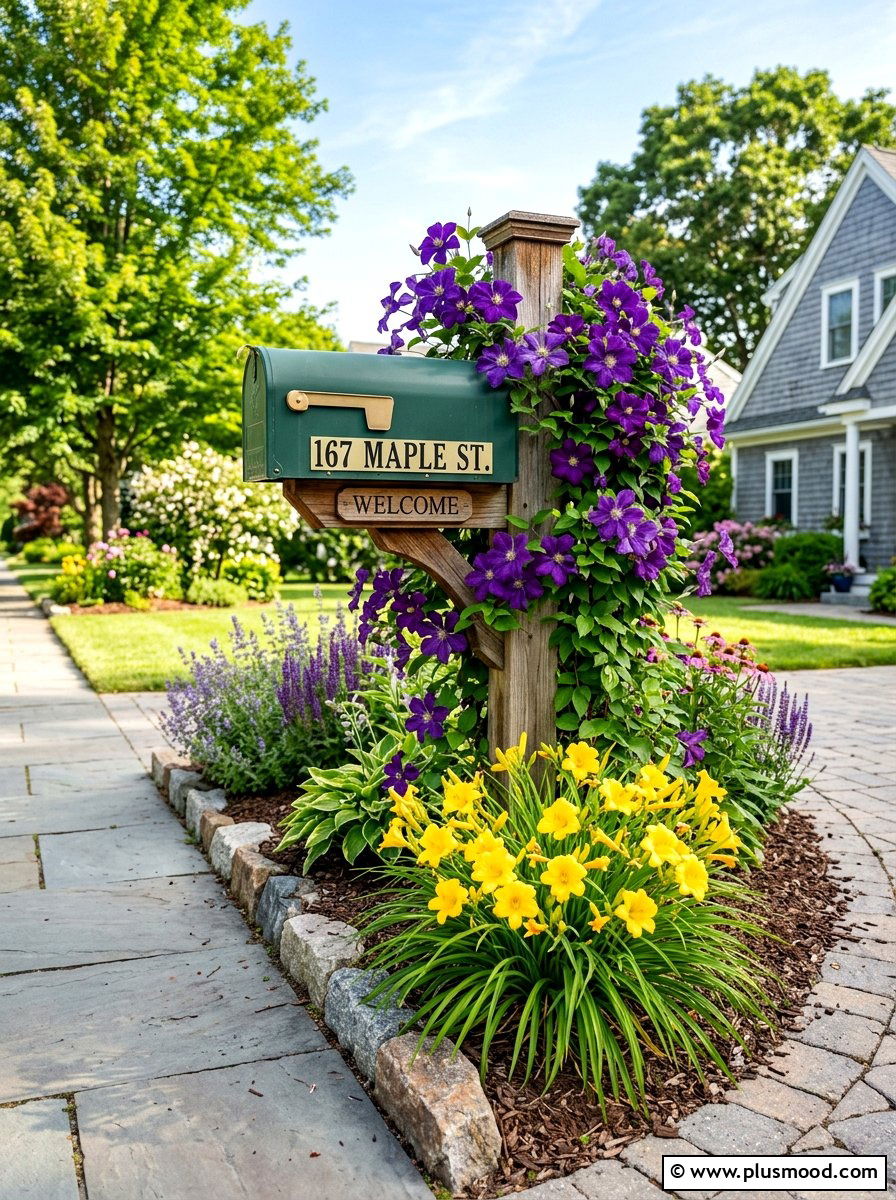
Your mailbox is often the first thing people see, so why not turn it into a tiny, blooming masterpiece? A mailbox garden is a small-scale project that can have a huge impact on your home's overall curb appeal. Clematis is a popular choice for this area, as it can be trained to climb the post and produce stunning summer flowers. Surround the base with low-maintenance annuals or perennials like daylilies and vinca to hide the soil and add extra layers of color. This small garden bed is easy to maintain and provides a cheerful welcome for you and your mail carrier every single day.
13. Lavender Border For Walkway
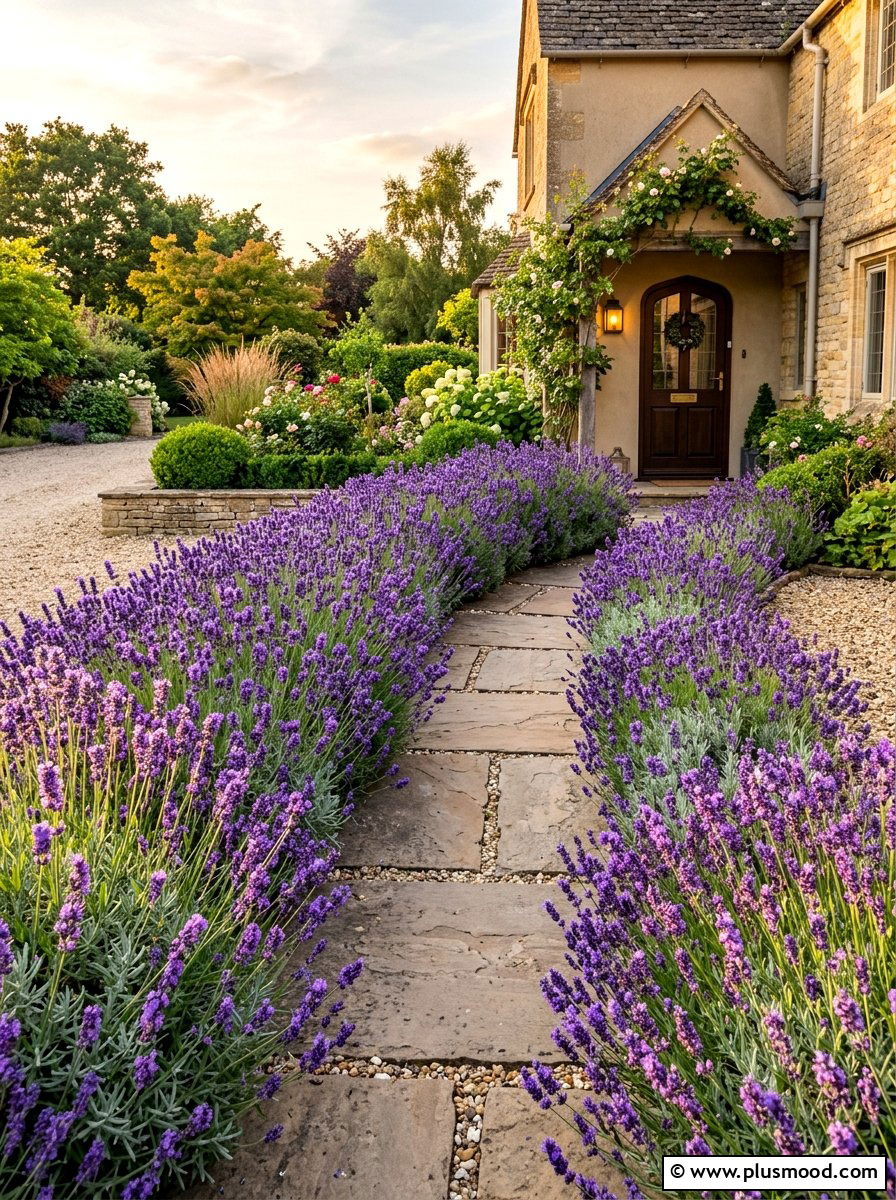
Imagine walking toward your front door and being greeted by the relaxing, sweet scent of a lavender border. Lavender is a hardy summer favorite that thrives in sunny spots with well-drained soil, making it perfect for lining a front walkway. Its silvery-green foliage and upright purple spikes provide a soft, hazy look that feels very upscale and polished. Besides its beauty and fragrance, lavender is also excellent for attracting helpful pollinators like bees and butterflies. To keep the border looking neat, choose a compact variety like 'Munstead' or 'Hidcote' and prune it lightly after the first flush of flowers to encourage new growth.
14. Tropical Garden With Hibiscus And Cannas
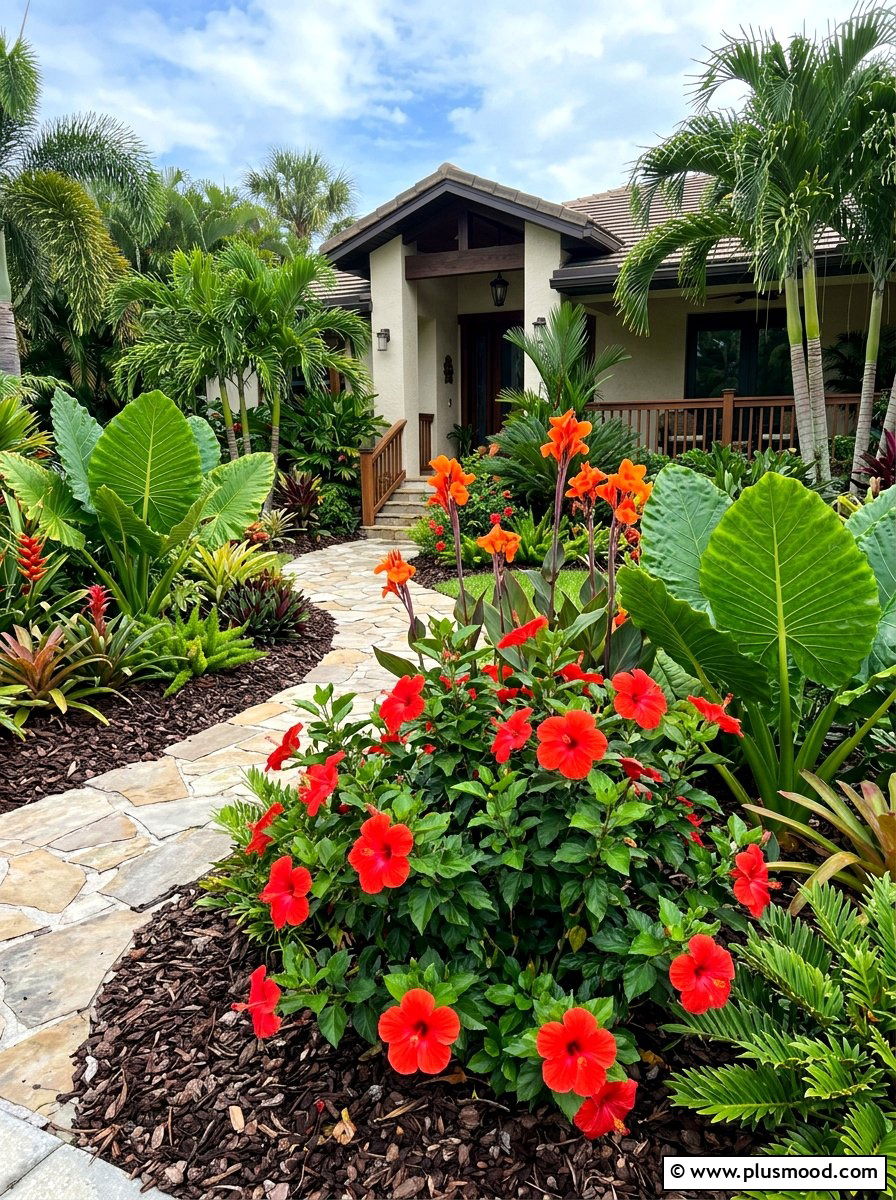
Are you looking to give your front yard a bold, exotic makeover this summer with a tropical-inspired garden? Using plants with oversized leaves and neon-bright flowers, such as hibiscus, cannas, and elephant ears, creates an instant vacation vibe right at home. These plants love the heat and humidity of summer, growing rapidly to create a lush, dense screen of greenery and color. Canna lilies provide height and architectural interest with their striped foliage and torch-like blooms. To complete the tropical theme, add a layer of dark wood mulch and perhaps a small decorative water feature to create a sensory experience that feels worlds away from the suburbs.
15. Formal Rose Garden Bed
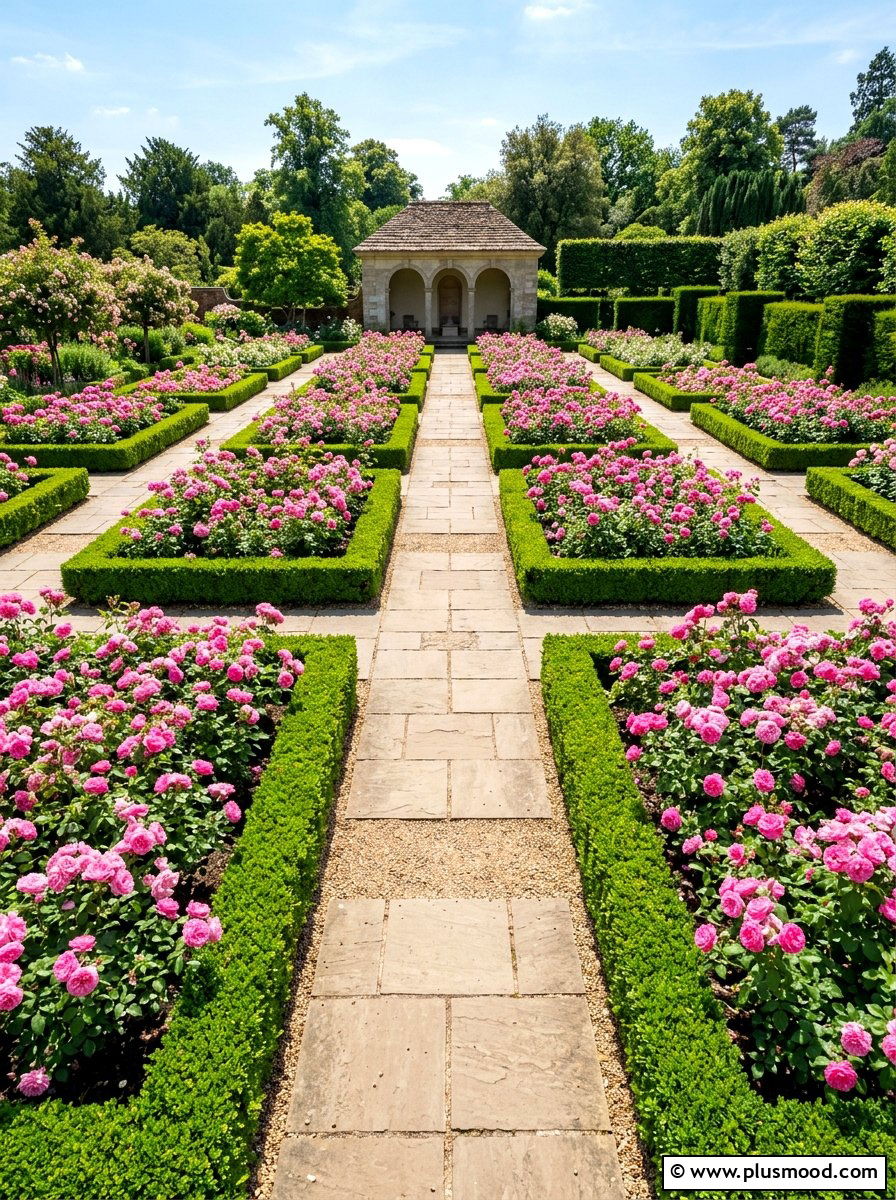
A formal rose garden bed brings a sense of tradition, elegance, and incredible fragrance to any front yard design. By arranging rose bushes in a symmetrical layout or within a neat boxwood border, you create a timeless look that never goes out of style. Modern shrub roses are much easier to care for than older varieties, offering better disease resistance and continuous blooming throughout the summer. You can choose a single color for a powerful, unified statement or mix different shades for a more classic English garden feel. Regular deadheading will keep the bushes looking tidy and encourage even more beautiful roses to form.
16. Blue And Purple Summer Flowers
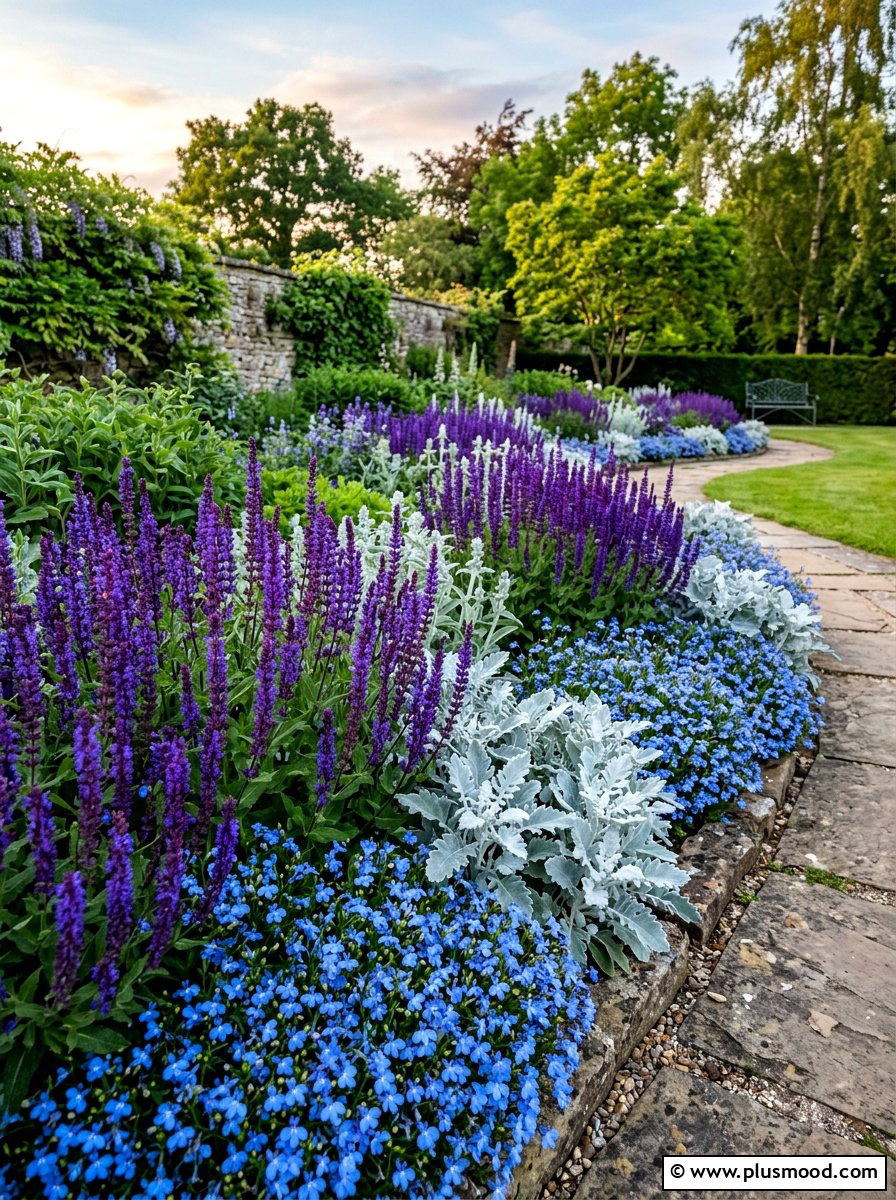
Using a color palette of blue and purple summer flowers can create a calming and sophisticated atmosphere in your front yard. Cool tones like these often make a space feel larger and more expansive, which is great for smaller yards. Plants such as salvia, nepeta (catmint) , and lobelia offer various shades ranging from deep violet to soft sky blue. These colors look particularly striking when paired with silver-foliage plants like dusty miller or lamb's ear. This color scheme is also highly attractive to bees and butterflies, ensuring your garden is full of life while maintaining a serene and very elegant visual aesthetic for all visitors.
17. Window Box Flower Arrangement
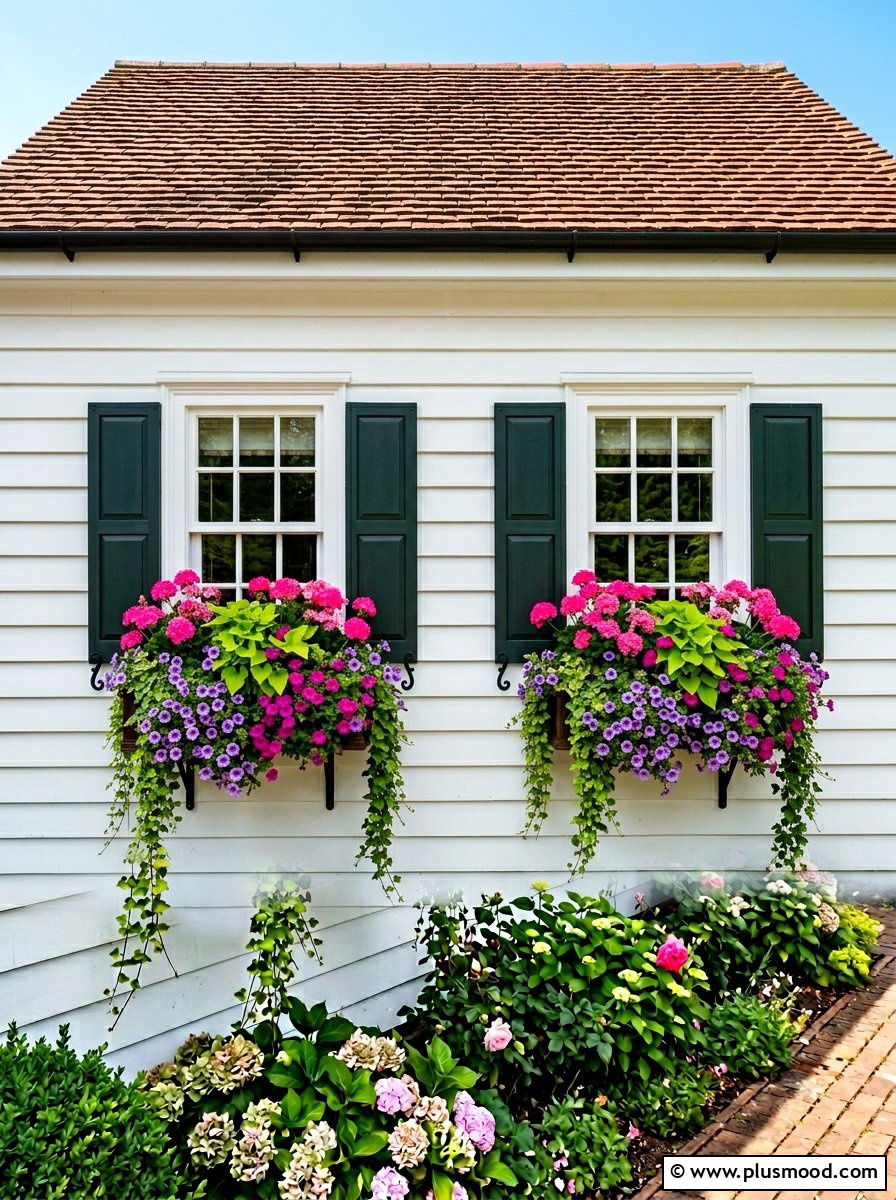
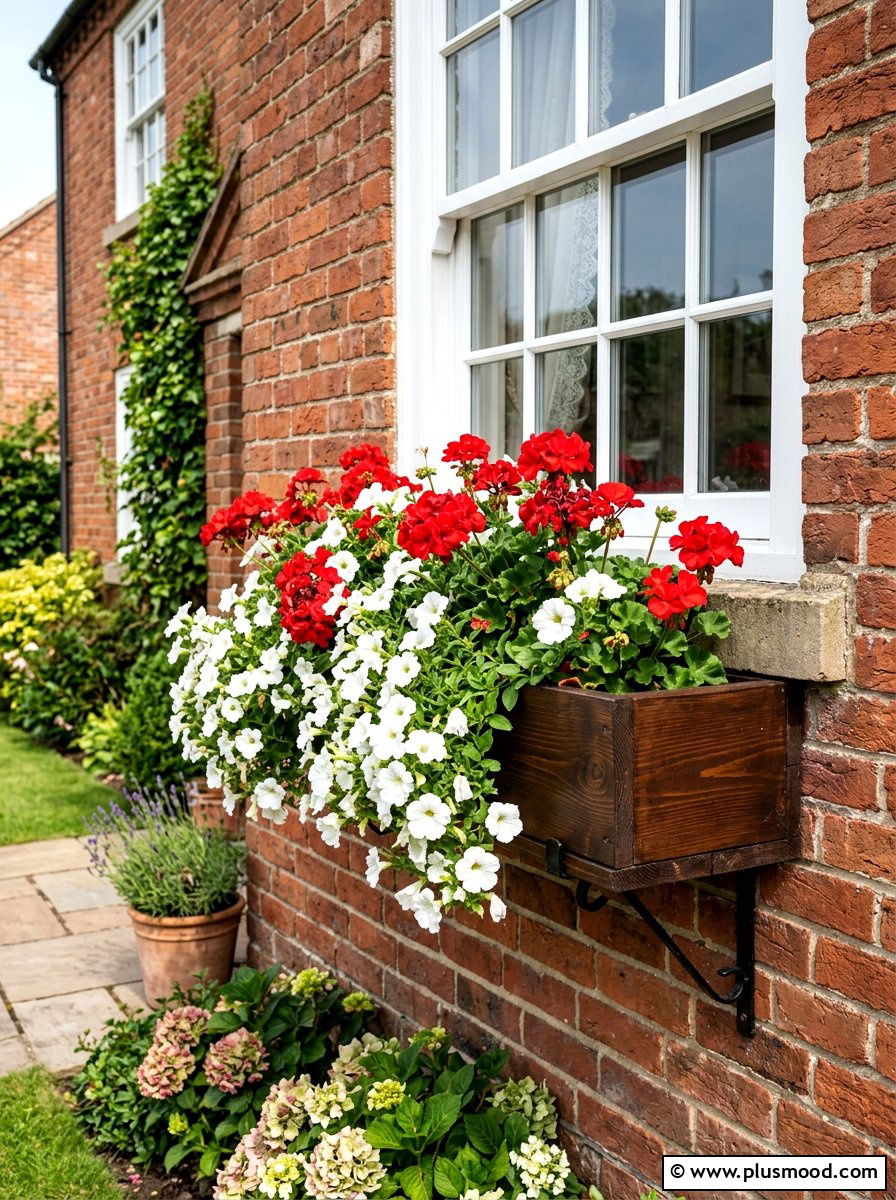
Enhancing your home's windows with a lush flower arrangement is a classic way to add vertical interest and charm. Window boxes allow you to bring color right up to the house, softening the transition between the architecture and the lawn. For a successful summer display, use the "thriller, filler, spillers" method: an upright plant like a geranium in the center, mounding flowers like petunias to fill the space, and trailing vines like bacopa to hang over the edge. Ensure your boxes have proper drainage and are watered regularly, as they tend to dry out faster than ground beds. This simple addition makes a huge visual difference.
18. Rock Garden With Summer Flowering Succulents
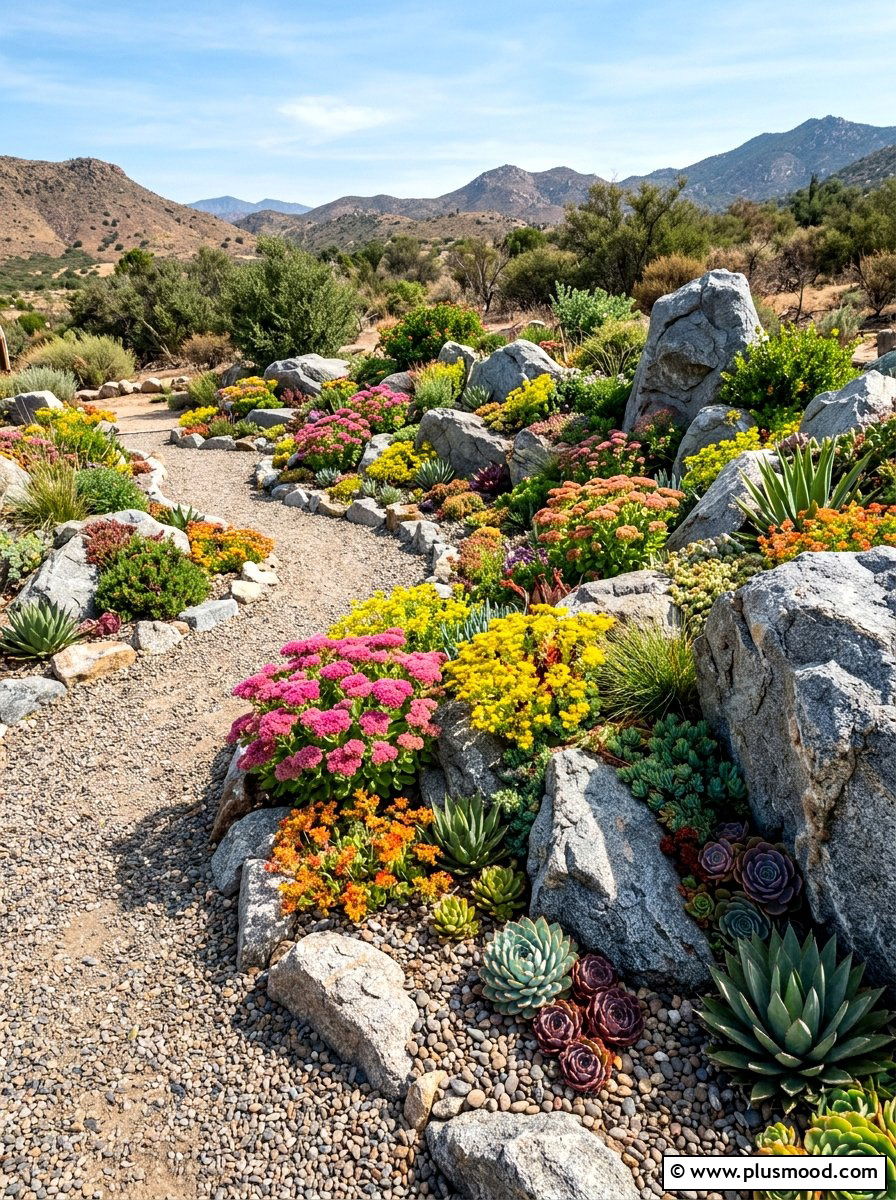
If you have a sloping front yard or poor soil, a rock garden featuring summer-flowering succulents is a practical and beautiful solution. This design mimics a natural alpine or desert environment, using various sizes of stones and boulders to create texture and structure. Flowering succulents like sedum 'Autumn Joy' or hens and chicks produce surprisingly beautiful blooms that stand out against the rugged backdrop of the rocks. This type of garden is exceptionally low-maintenance and highly resistant to pests and disease. It provides a unique, sculptural look that remains interesting throughout the year, even when the plants aren't in their peak blooming stage.
19. Wildflower Meadow Front Yard
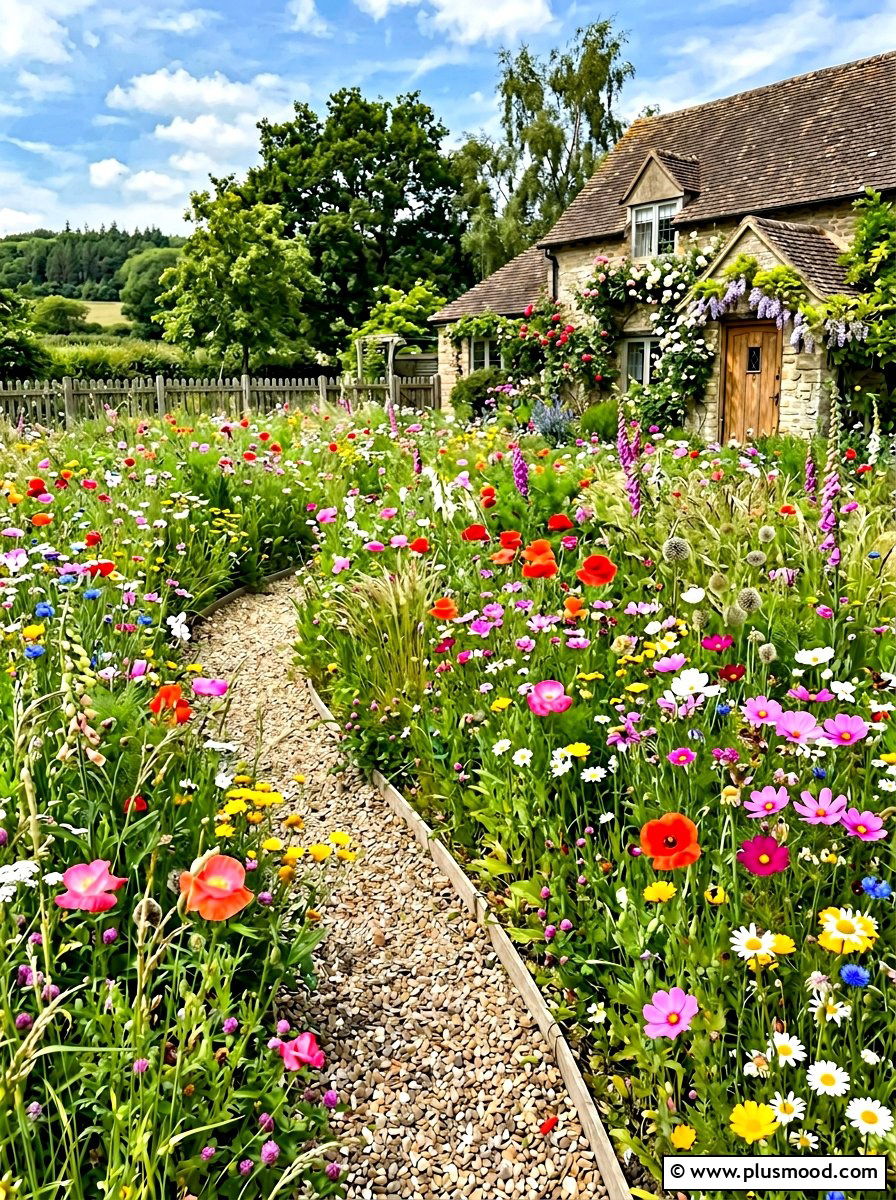
Replacing a traditional grass lawn with a wildflower meadow is a growing trend for eco-conscious homeowners who want a natural look. A front yard meadow is filled with a diverse mix of native grasses and sun-loving flowers like cosmos, poppies, and zinnias. This style creates a soft, waving field of color that changes throughout the summer as different species begin to bloom. It requires much less water and no mowing once established, making it a sustainable and time-saving alternative. To keep it looking intentional, mow a neat path through the center or add a formal border of stones to frame the wild growth.
20. Hydrangea Border For Foundation Planting
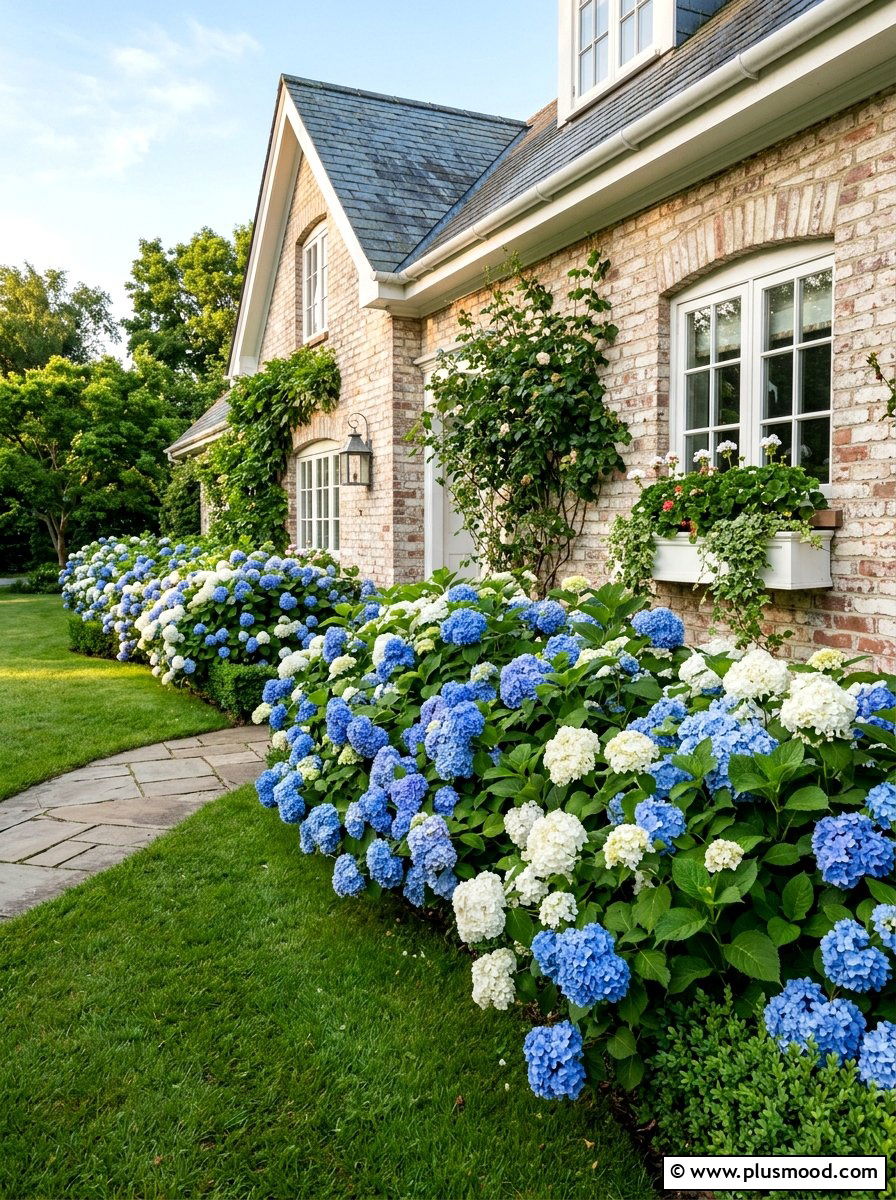
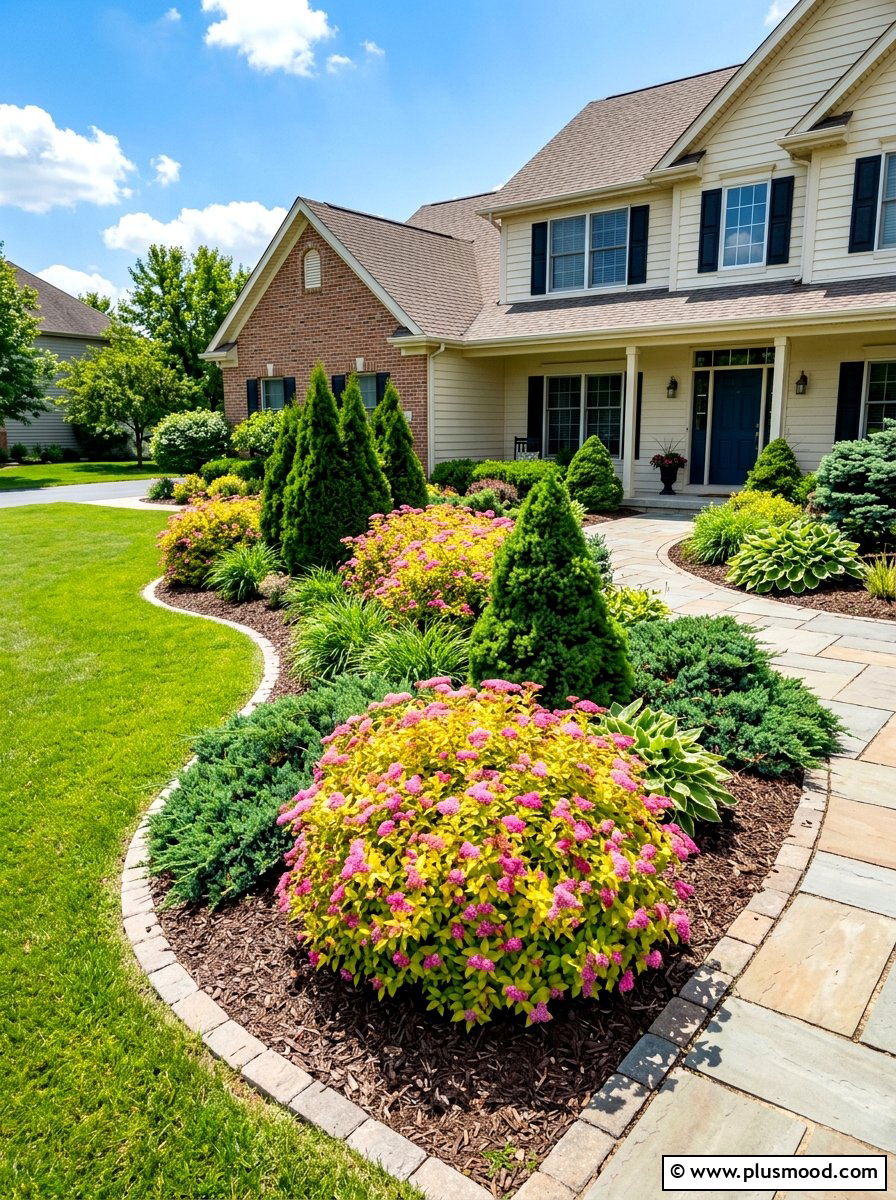
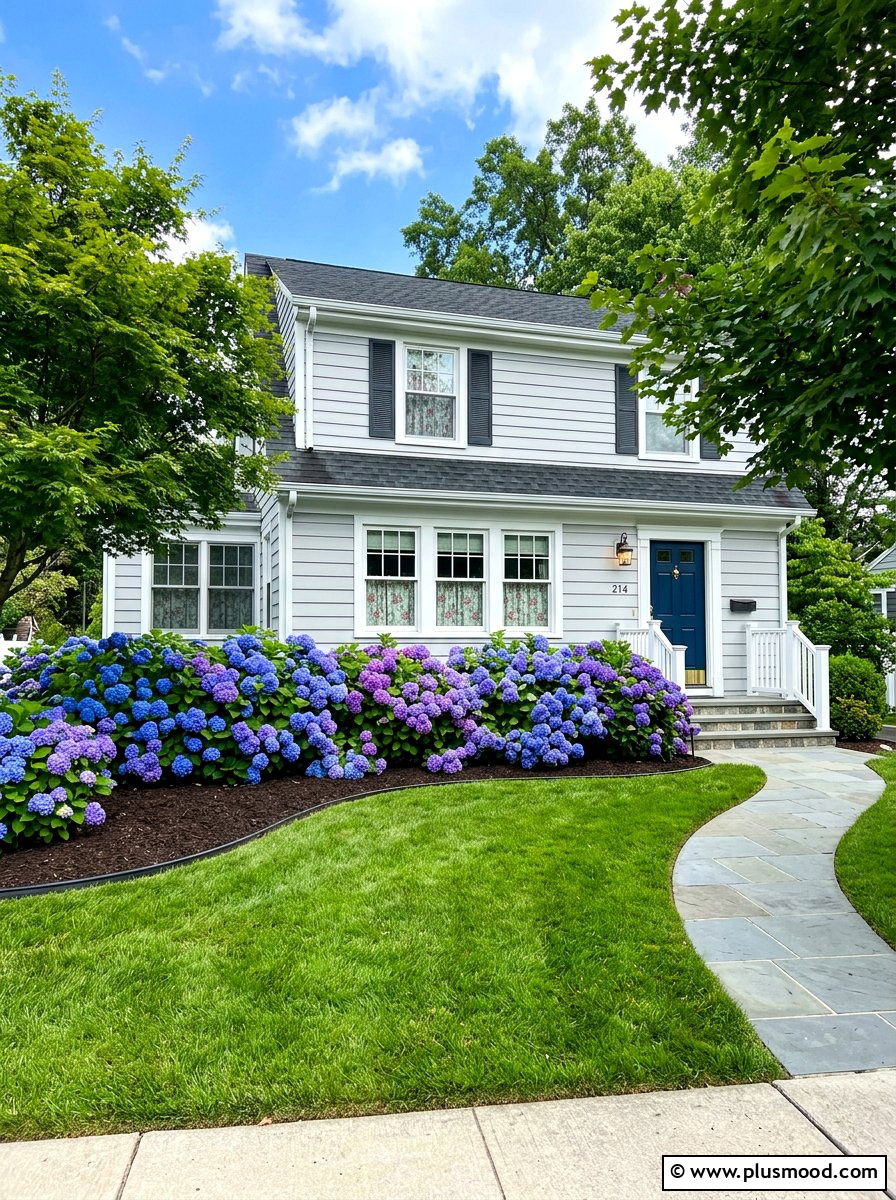
Hydrangeas are the undisputed stars of the summer garden, and using them as a foundation border creates a classic, high-impact look. These large shrubs produce massive flower heads in shades of blue, pink, white, or lime green, depending on the variety and soil acidity. Planting them along the front of your house softens the hard lines of the foundation and provides a lush, green backdrop even when they aren't in bloom. For a stunning effect, mix different types like mopheads and panicle hydrangeas to ensure a long season of interest. They thrive in partial shade, making them perfect for many front yard locations.
21. Tiered Retaining Wall Garden
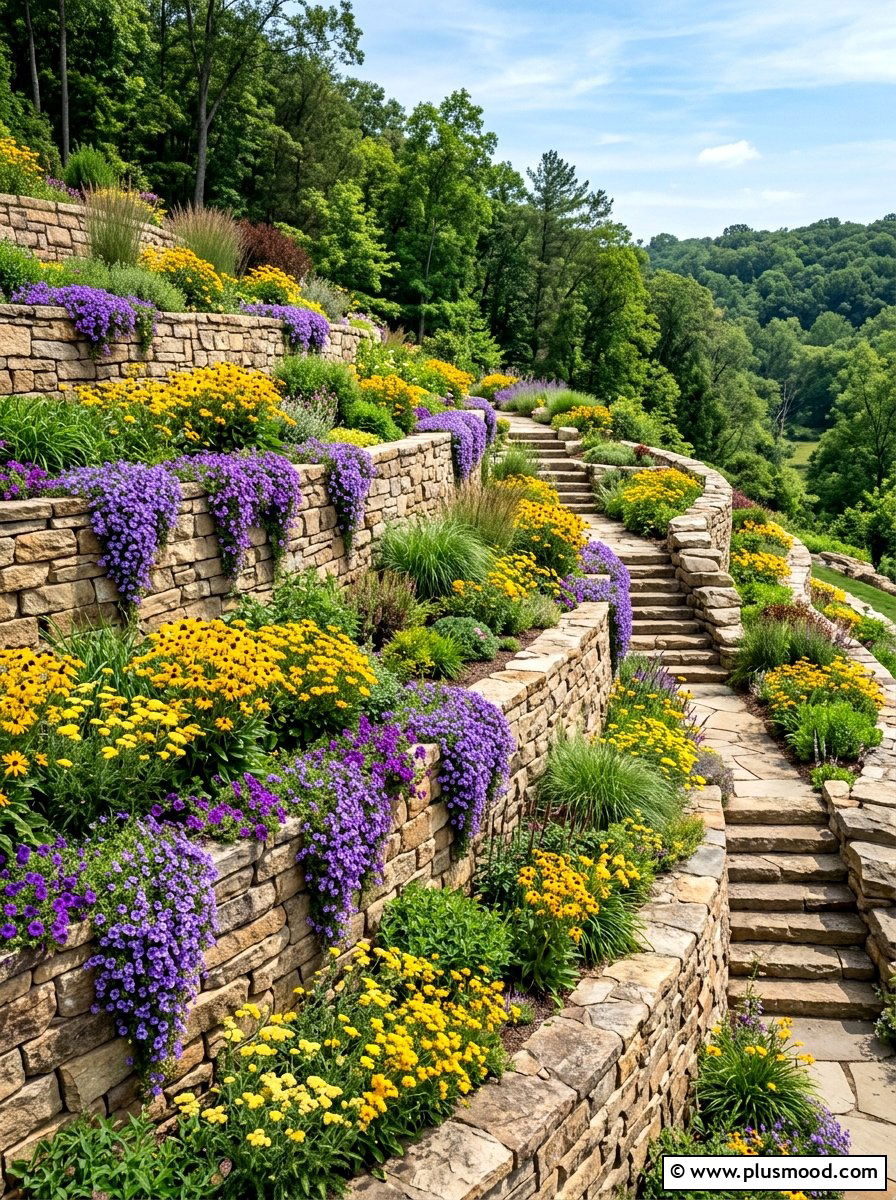
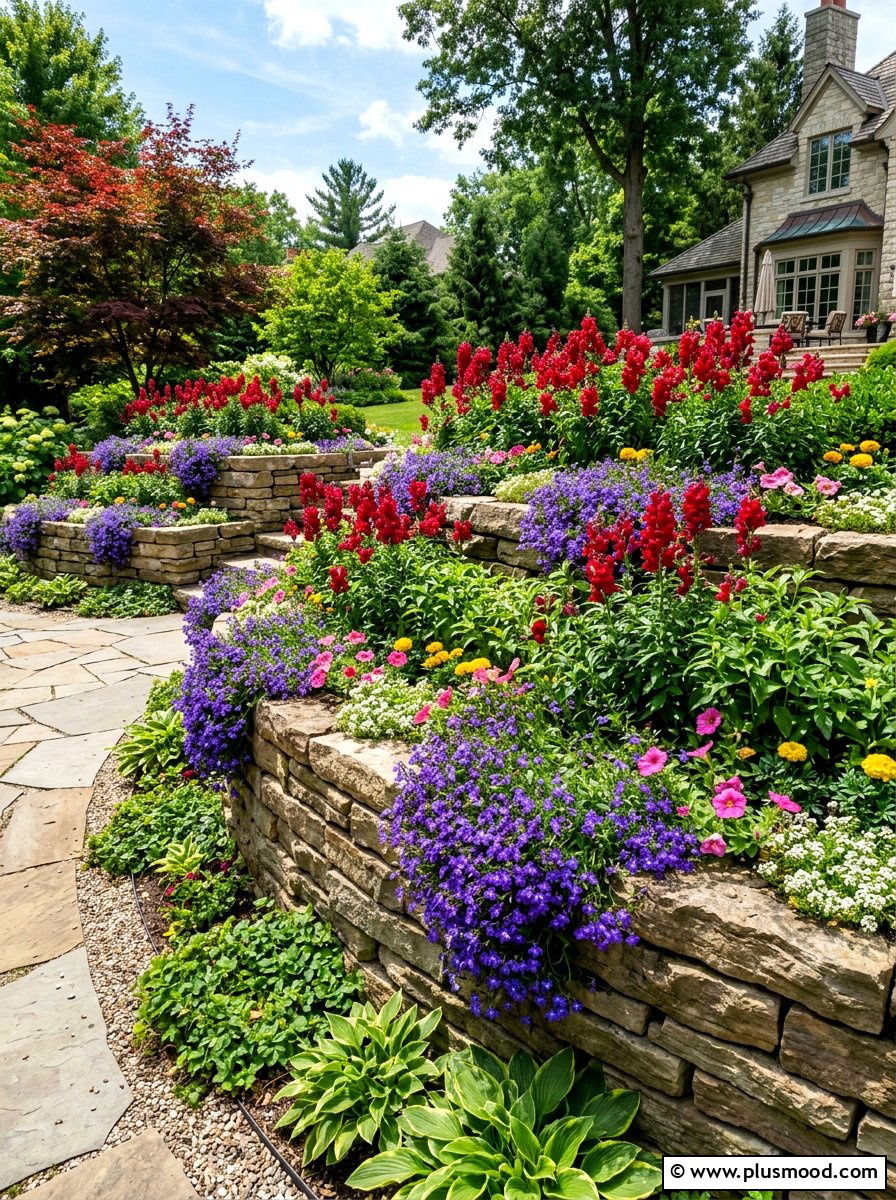
A tiered retaining wall garden is an ingenious way to manage a sloped front yard while creating multiple levels of blooming space. By breaking up a steep incline with stone or timber walls, you create flat planting beds that are easier to maintain and much more visually interesting. You can dedicate each tier to a different theme, such as one for fragrant herbs and another for bright summer annuals. Trailing plants like creeping phlox or silver falls dichondra look spectacular as they cascade down the face of the walls. This architectural approach adds value to your property while providing a truly unique and beautiful garden.
22. Butterfly Bush And Coneflower Garden
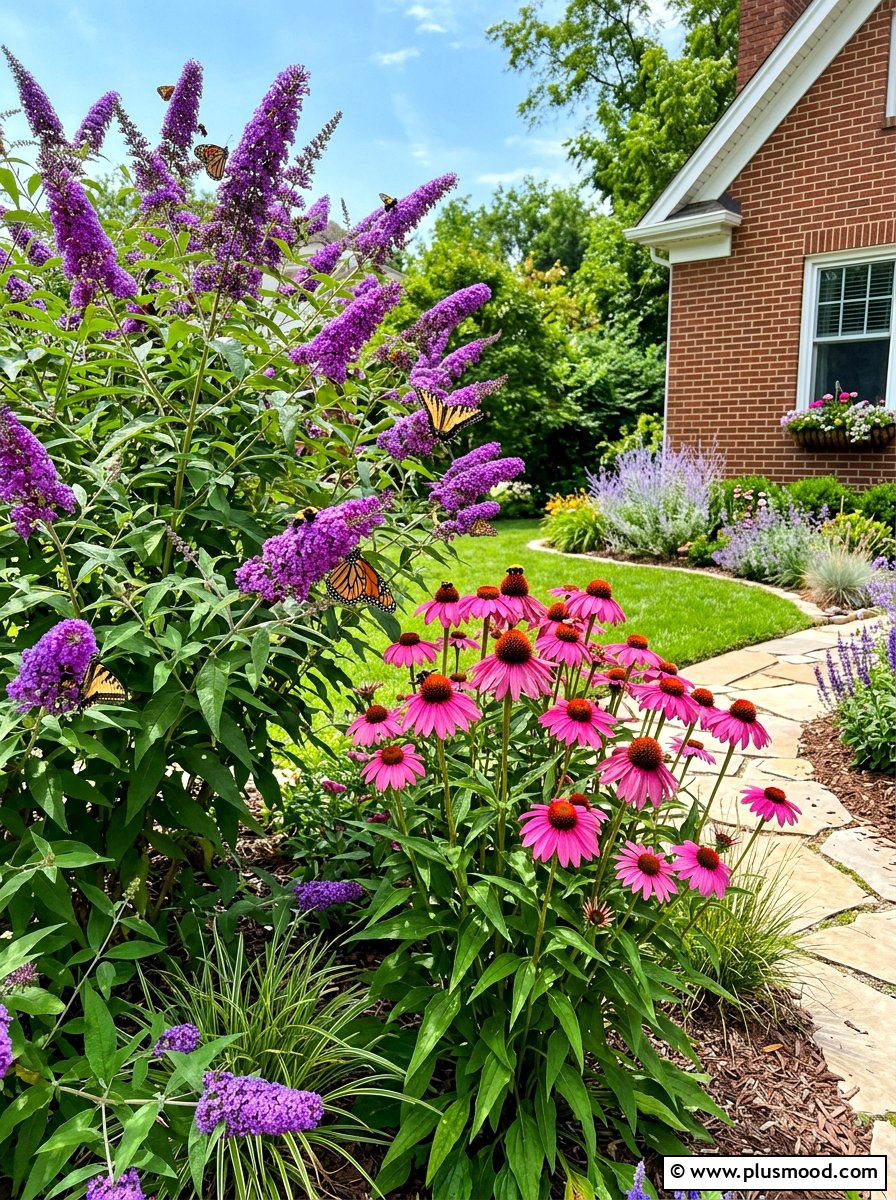
Combining butterfly bushes with purple coneflowers creates a powerhouse garden bed that is virtually guaranteed to attract winged visitors. Butterfly bushes (Buddleia) provide height and long, arching panicles of flowers in colors like deep purple, pink, and white. In front of these, the sturdy, daisy-like heads of echinacea provide a wonderful contrast in shape and texture. Both plants are incredibly heat-tolerant and continue to bloom throughout the hottest parts of the summer. This combination is a favorite for those who love watching nature at work, as the constant movement of butterflies adds a dynamic and magical element to the front yard landscape.
23. Sunflowers And Tall Summer Blooms
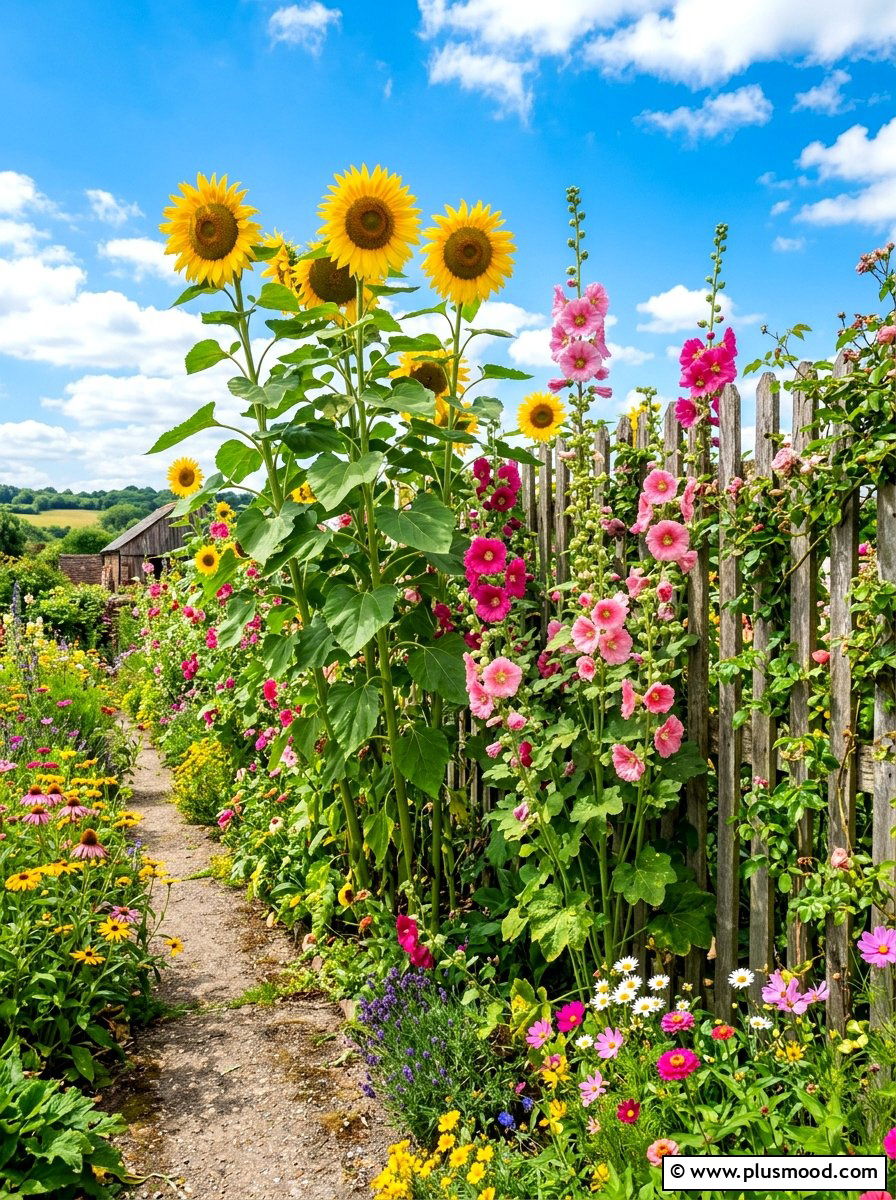
Do you want to make a bold, cheerful statement that can be seen from down the street? Planting a row of sunflowers along a fence or at the back of a flower bed adds instant height and a touch of whimsy to your front yard. You can choose from giant varieties that tower over the garden or multi-branching types that produce dozens of smaller blooms. Pair them with other tall summer favorites like hollyhocks or ornamental grasses to create a dramatic, vertical wall of color. Sunflowers are incredibly easy to grow from seed, making this a fun and budget-friendly project for families and beginners.
24. Red And Yellow Summer Color Palette
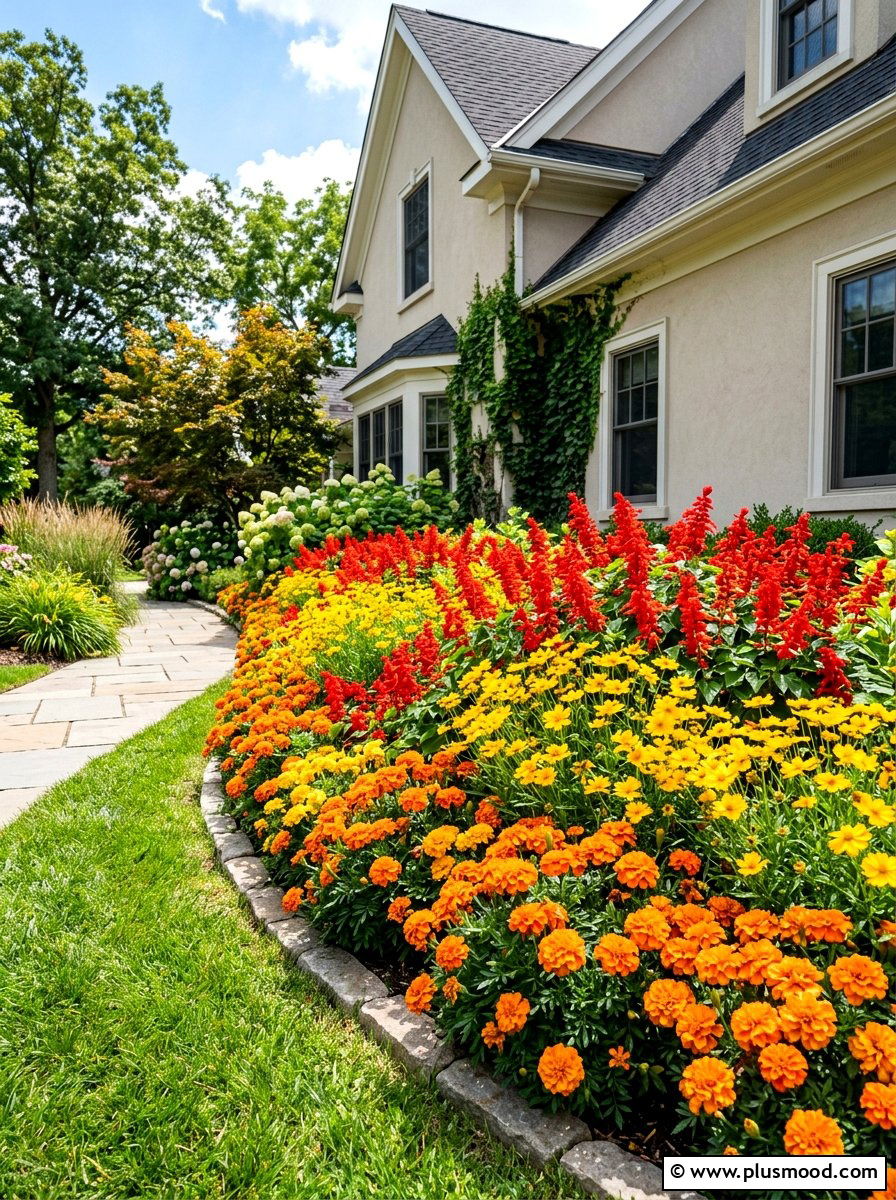
For a high-energy look that feels warm and inviting, try a red and yellow summer color palette in your front beds. These "fire" colors are naturally eye-catching and look fantastic under the bright summer sun. Marigolds, red salvia, and yellow coreopsis are all hardy choices that maintain their color even in extreme heat. This combination works particularly well against homes with neutral siding or dark brick, as the bright colors provide a necessary pop of visual excitement. You can temper the intensity by adding a few touches of orange or deep bronze foliage to create a rich, multi-dimensional display that feels vibrant.
25. Front Walkway Lining With Marigolds
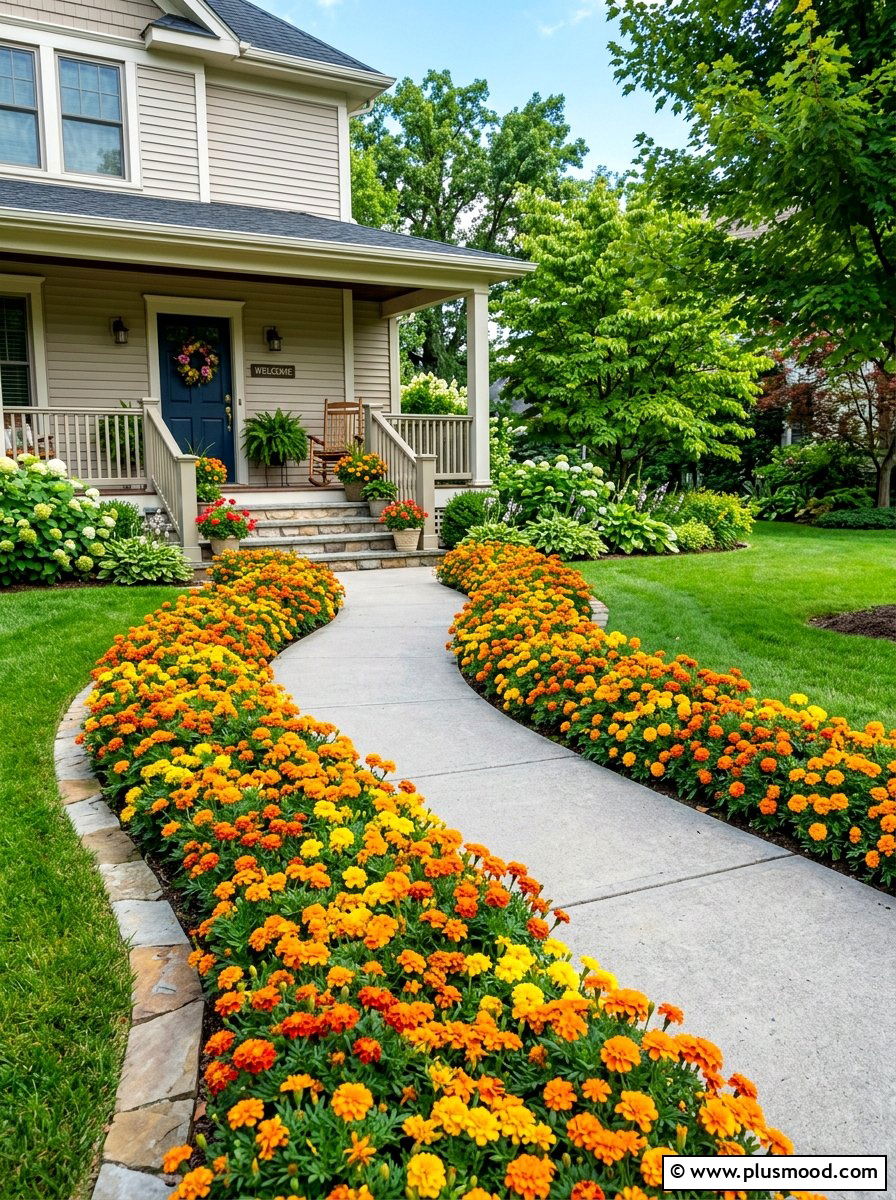
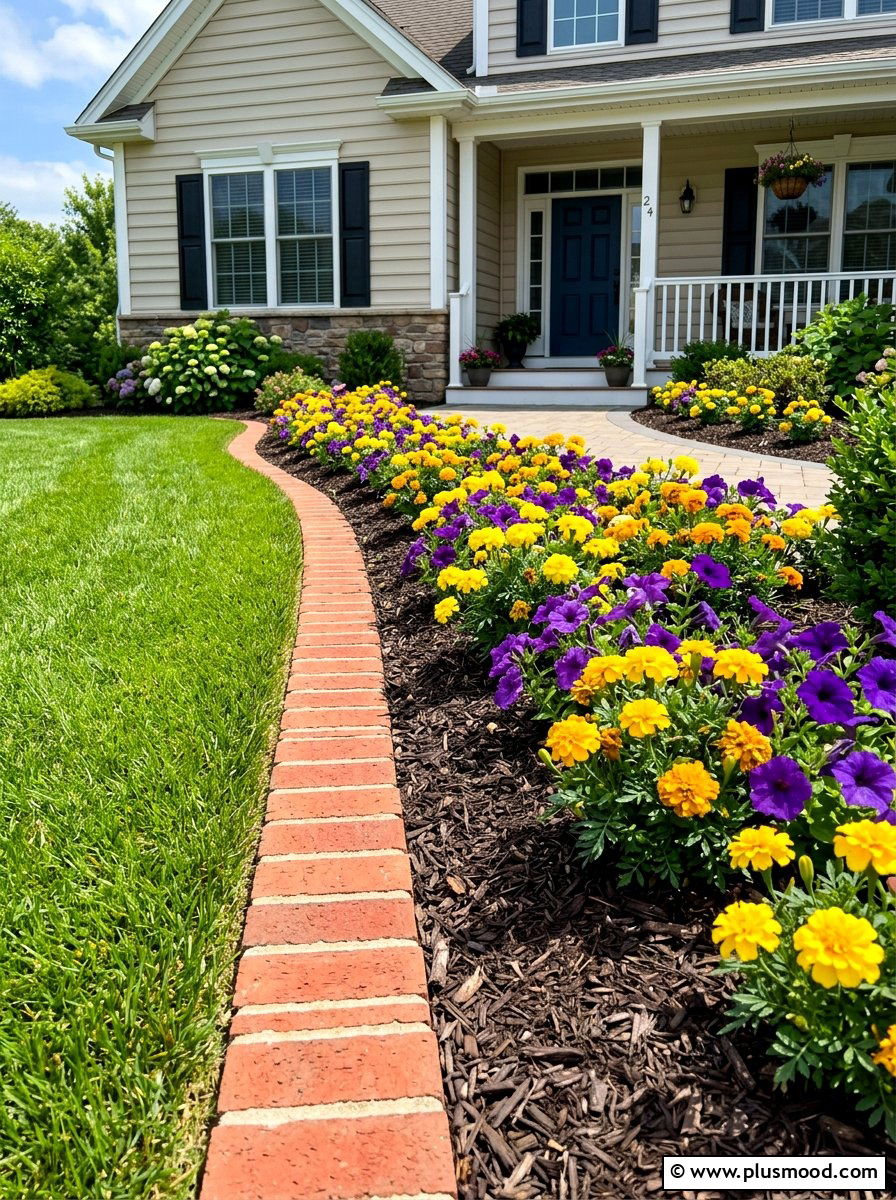
Lining your front walkway with a thick ribbon of marigolds is a simple yet incredibly effective way to define the path and add charm. Marigolds are one of the most reliable summer flowers, known for their pest-repellent properties and their ability to bloom non-stop. Their tight, pom-pom shapes in shades of gold, orange, and copper create a neat and orderly look that frames the entrance to your home beautifully. Because they stay relatively low to the ground, they won't obstruct the view of the path. This classic gardening choice is perfect for adding a splash of color that lasts until the very end of the season.
Conclusion:
Designing a beautiful summer flower bed for your front yard is a journey that pays dividends in both curb appeal and personal satisfaction. By choosing the right plants for your specific light conditions and maintenance style, you can create an outdoor space that feels like a natural extension of your home. Whether you opt for a low-maintenance succulent rock garden or a lush, fragrant lavender border, the impact of living color cannot be overstated. A well-tended garden invites people to slow down and appreciate the details, turning a simple house into a truly welcoming home. Start small, experiment with colors, and enjoy the vibrant transformation this summer.
Related posts:
Leave a Reply