
Summer brings a unique opportunity to transform your outdoor space into a vibrant sanctuary filled with life and color. When the sun stays out longer, your garden becomes the primary focal point of your home’s exterior. Planning a summer flower bed involves more than just picking pretty colors; it requires understanding how different textures and heights work together under the heat. Whether you want a sprawling cottage aesthetic or a clean, modern look, the right combination of annuals and perennials can create a breathtaking display. This guide explores creative ways to elevate your landscaping, ensuring your yard remains a lush, inviting retreat throughout the warmest months of the year.
1. Cottage garden flowers
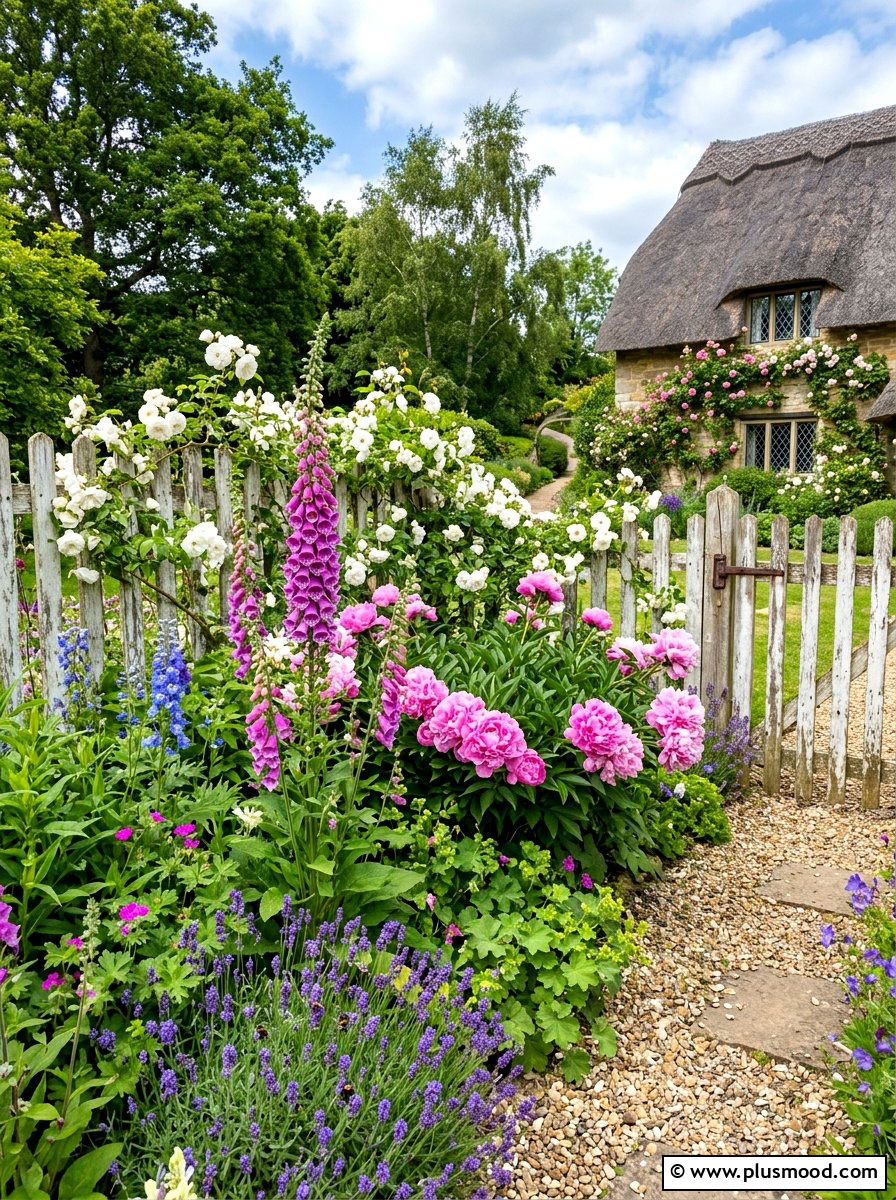
Creating a classic cottage garden is all about embracing a bit of beautiful chaos and layered textures. This style thrives on a mix of tall spikes like foxgloves and delphiniums combined with softer, mounding blooms like peonies and roses. To achieve this look, avoid rigid lines and instead let the plants spill over the edges of your walkways. Incorporating traditional favorites ensures a nostalgic feel that looks effortless yet intentional. Dense planting helps suppress weeds while providing a lush, full appearance that lasts all summer. You can add rustic elements like a wooden picket fence or a weathered bench to complete this charming, timeless outdoor aesthetic.
2. Tropical garden plants
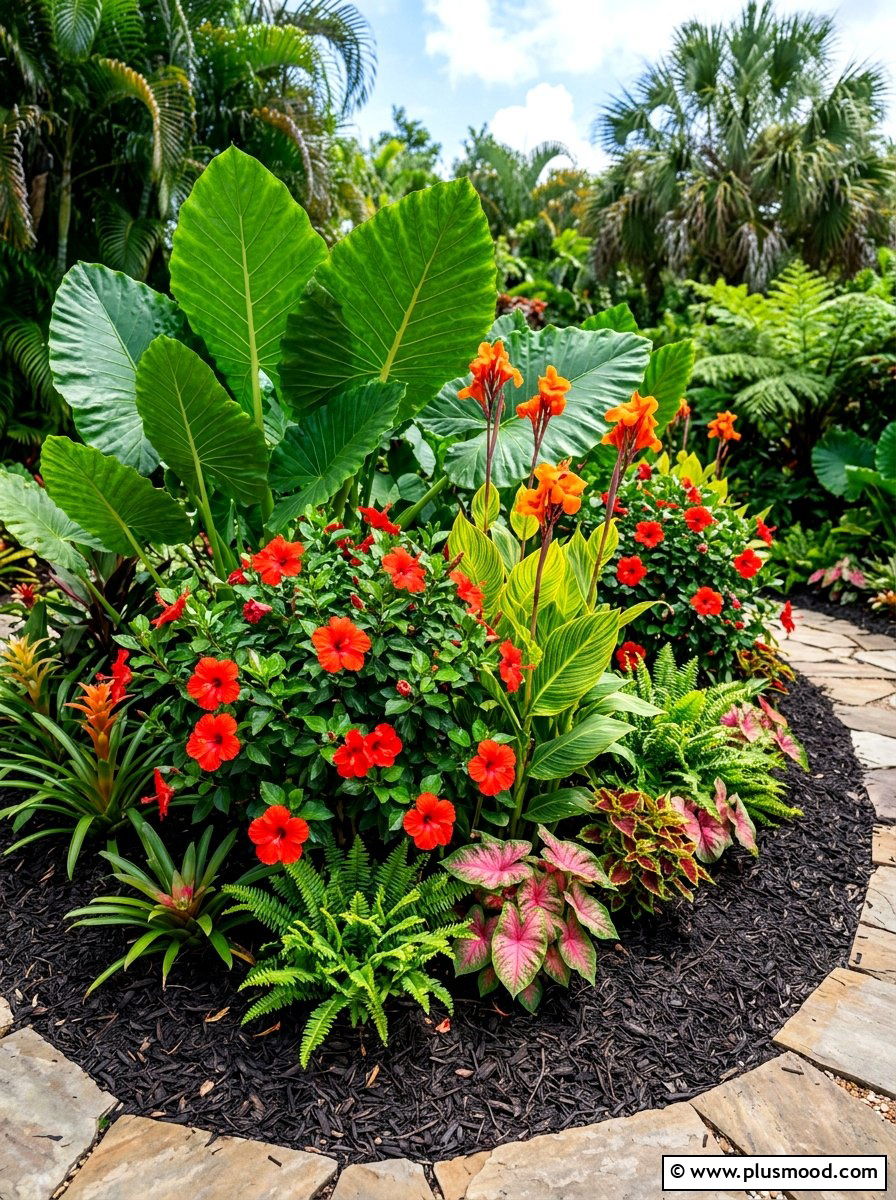
Transform your backyard into a private island getaway by using bold, tropical-inspired plants that love the summer heat. Focus on large-leaved varieties like canna lilies and elephant ears to create a dramatic structural backdrop. Add pops of intense color with hibiscus, mandevilla, or bird of paradise to make the flower bed feel exotic and vibrant. These plants typically crave plenty of moisture and sunlight, making them perfect for those humid summer afternoons. By layering different heights and focusing on saturated hues like hot pink, orange, and deep red, you can create a high-impact zone that feels like a lush vacation spot right in your own backyard.
3. Drought tolerant flower bed
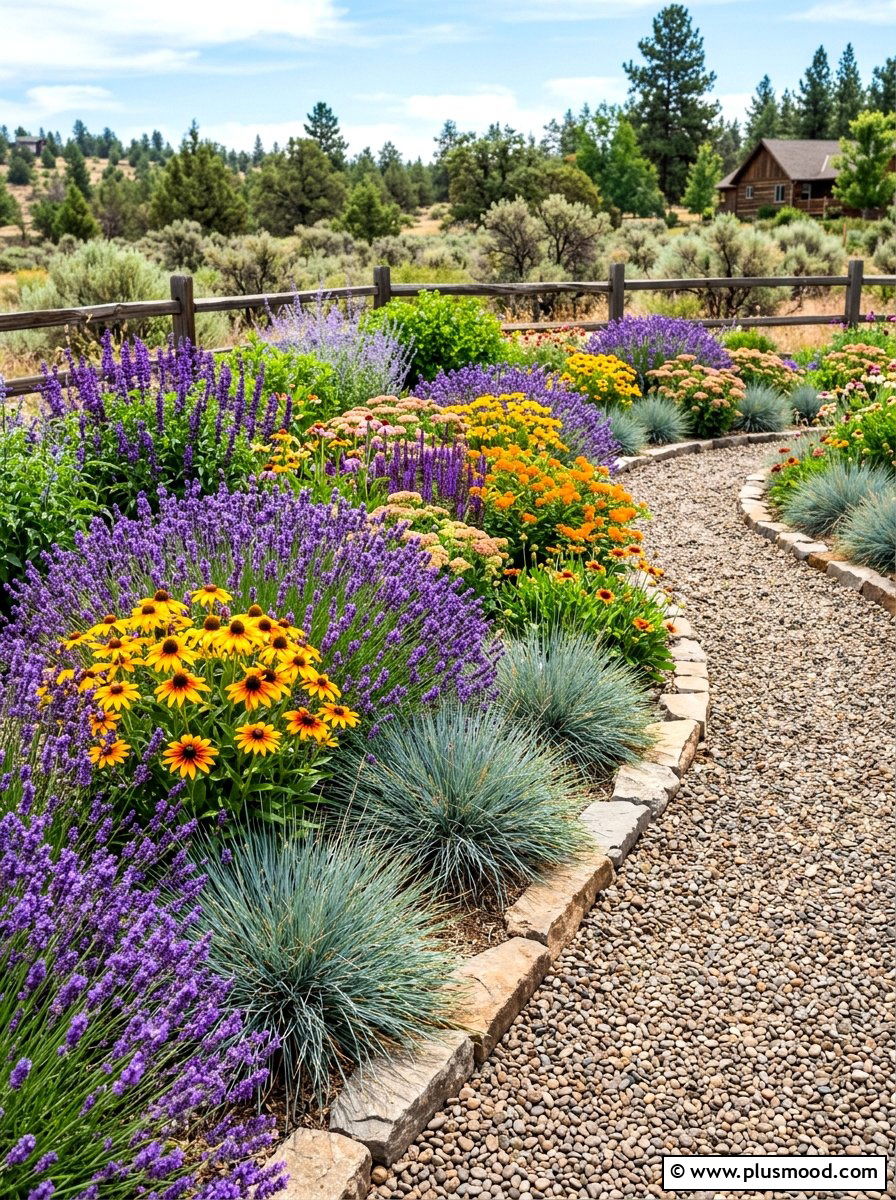
Designing a flower bed that withstands intense heat without needing constant watering is both practical and beautiful. You can utilize resilient species such as lavender, coneflowers, and black-eyed Susans which thrive in full sun and well-draining soil. These plants not only survive dry spells but also provide a long season of color and texture. Adding a thick layer of organic mulch helps retain the little moisture available while keeping the roots cool. To enhance the visual appeal, mix in ornamental grasses like blue fescue for a modern touch. This low-maintenance approach allows you to enjoy a stunning, eco-friendly garden that remains vibrant even during the peak of summer.
4. Pollinator garden flowers
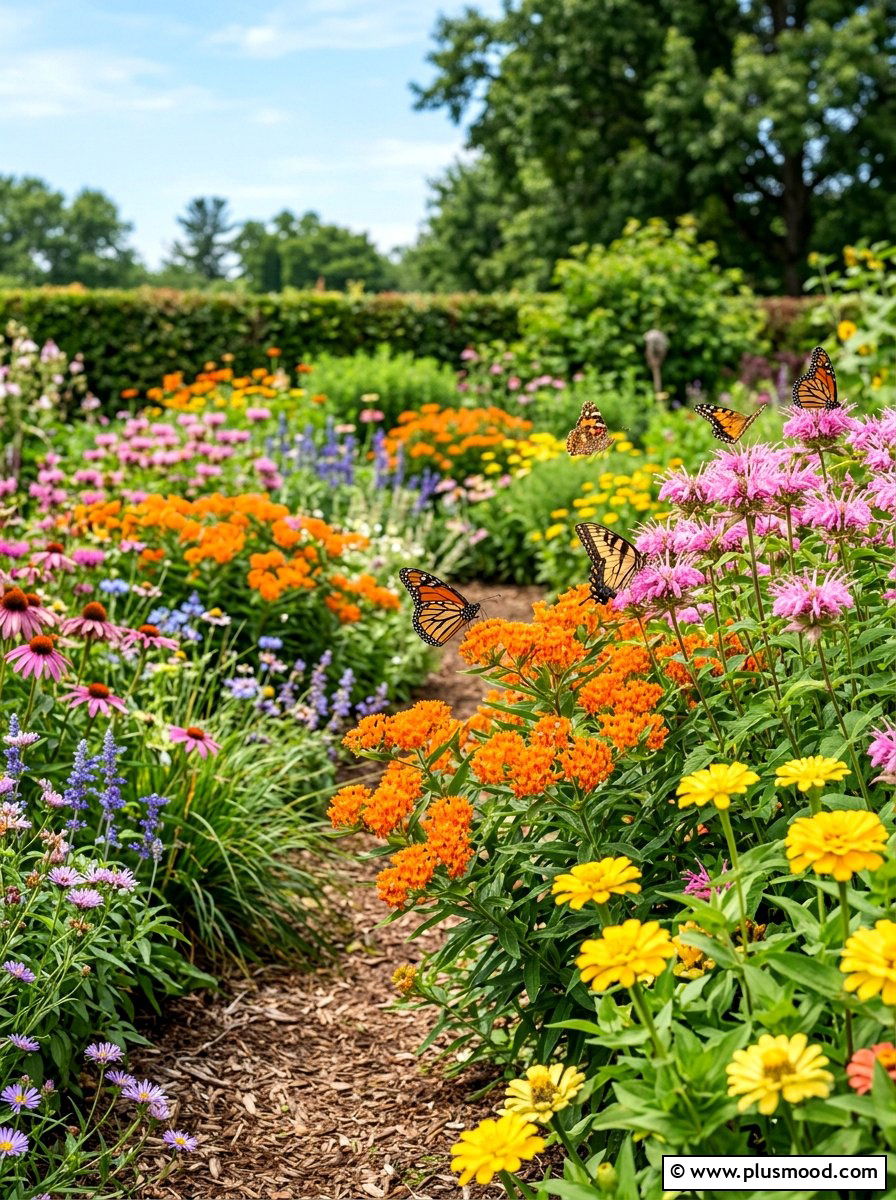
Bringing your garden to life with butterflies, bees, and hummingbirds is a rewarding way to spend your summer. To build a successful pollinator bed, choose a variety of nectar-rich plants like milkweed, zinnia, and bee balm. It is important to group similar flowers together in clusters to make it easier for insects to locate them. Try to include plants that bloom at different times throughout the summer to provide a steady food source. Avoid using harsh chemicals so the local wildlife can safely visit your yard. This type of garden not only looks energetic and colorful but also plays a vital role in supporting the local ecosystem.
5. White flower garden
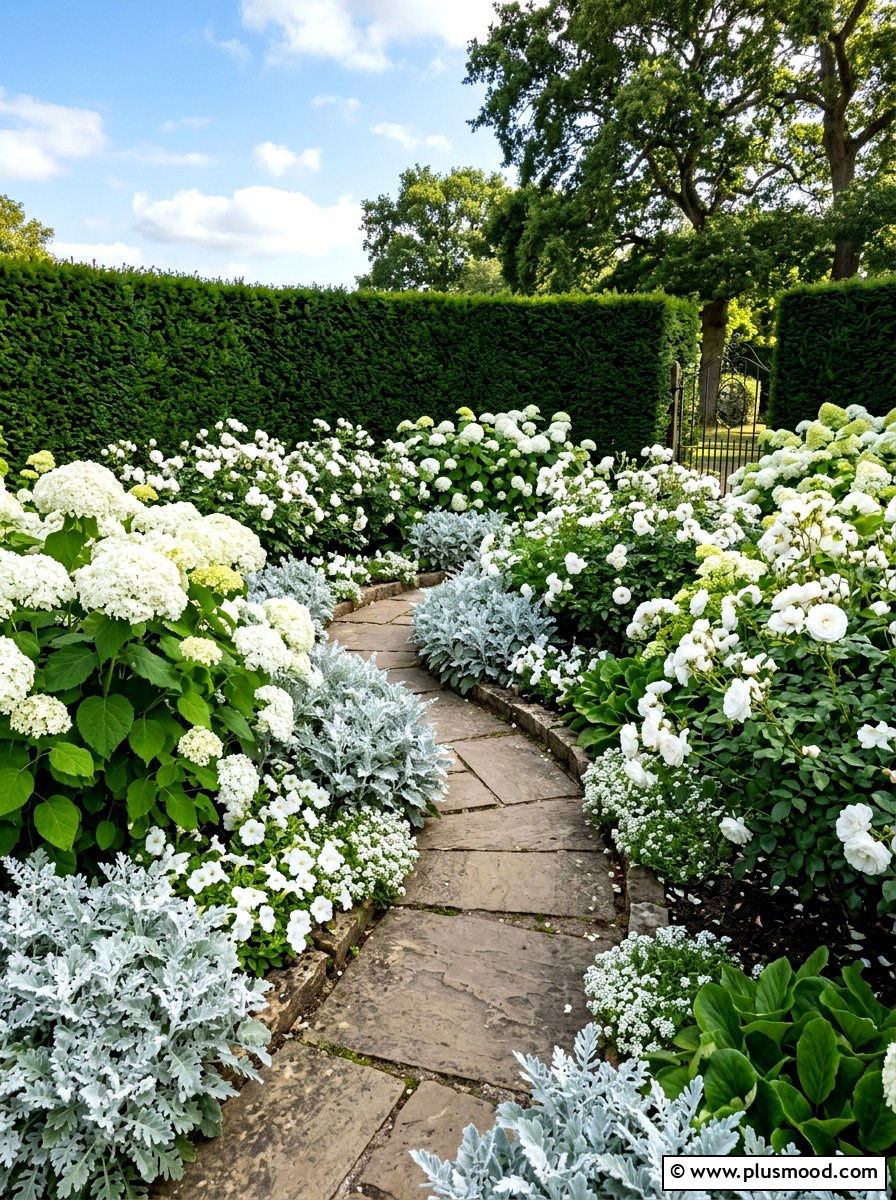
A monochromatic white flower bed offers a sense of elegance and tranquility that is hard to match with multi-colored displays. By using only white blooms such as hydrangeas, alyssum, and white roses, you create a sophisticated and clean look. This design style is particularly effective because white flowers seem to glow during the evening hours, making it perfect for moonlight viewing. To keep the bed interesting, focus on varying the textures of the foliage and the shapes of the flowers. Deep green leaves provide a sharp contrast that makes the white petals stand out even more. This timeless aesthetic works beautifully in both modern and traditional home landscapes.
6. Raised garden bed design
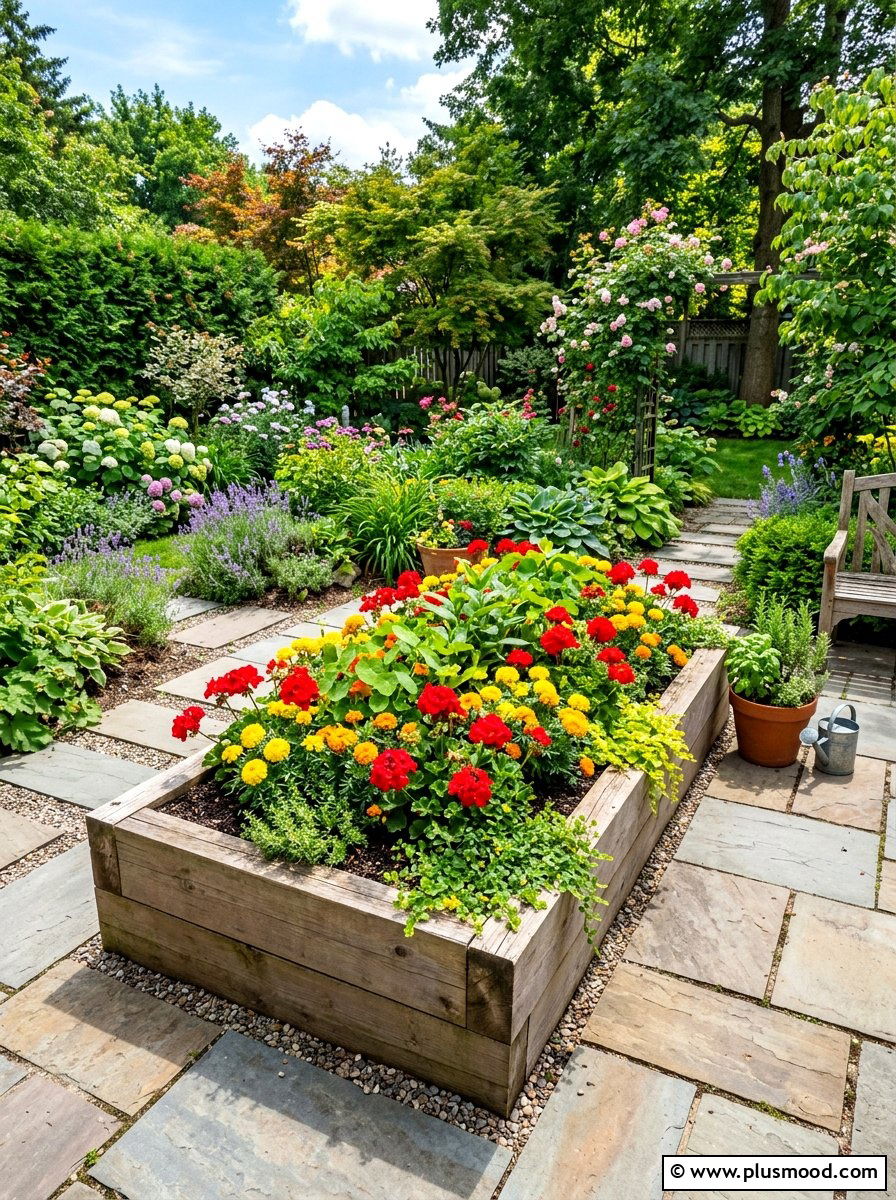
Utilizing raised beds is an excellent strategy for organizing your summer flowers while improving soil drainage and accessibility. You can construct these beds from wood, stone, or even corrugated metal to match your home's exterior style. Raising the plants off the ground helps protect them from some pests and makes maintenance much easier on your back. Fill these beds with a high-quality soil mix to ensure your summer annuals, like marigolds and petunias, grow tall and healthy. The structured lines of a raised bed provide a neat, tidy appearance that works well for front yard landscaping. It creates a defined focal point that draws the eye.
7. Shade flower bed
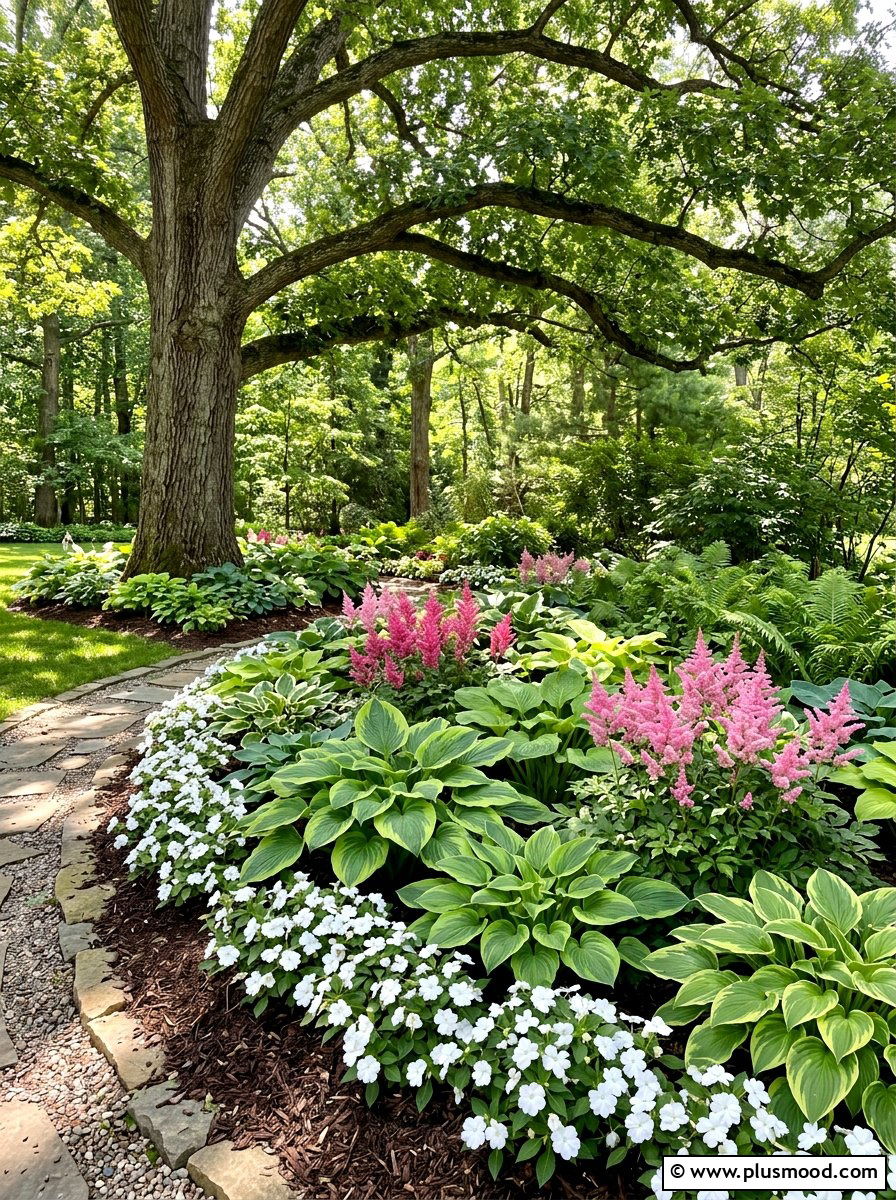
Even the darkest corners of your yard can become a lush oasis with the right selection of shade-loving summer plants. Hostas, ferns, and astilbes are perfect choices for areas that receive little direct sunlight throughout the day. You can add bright pops of color using impatiens or begonias, which thrive in cooler, shaded environments. Focus on incorporating different leaf patterns and shades of green to create visual depth where flowers might be less abundant. Using light-colored mulch or decorative stones can help brighten the area and make the plants stand out. A well-planned shade bed provides a refreshing, cool retreat during the hottest parts of the summer season.
8. Perennial border garden
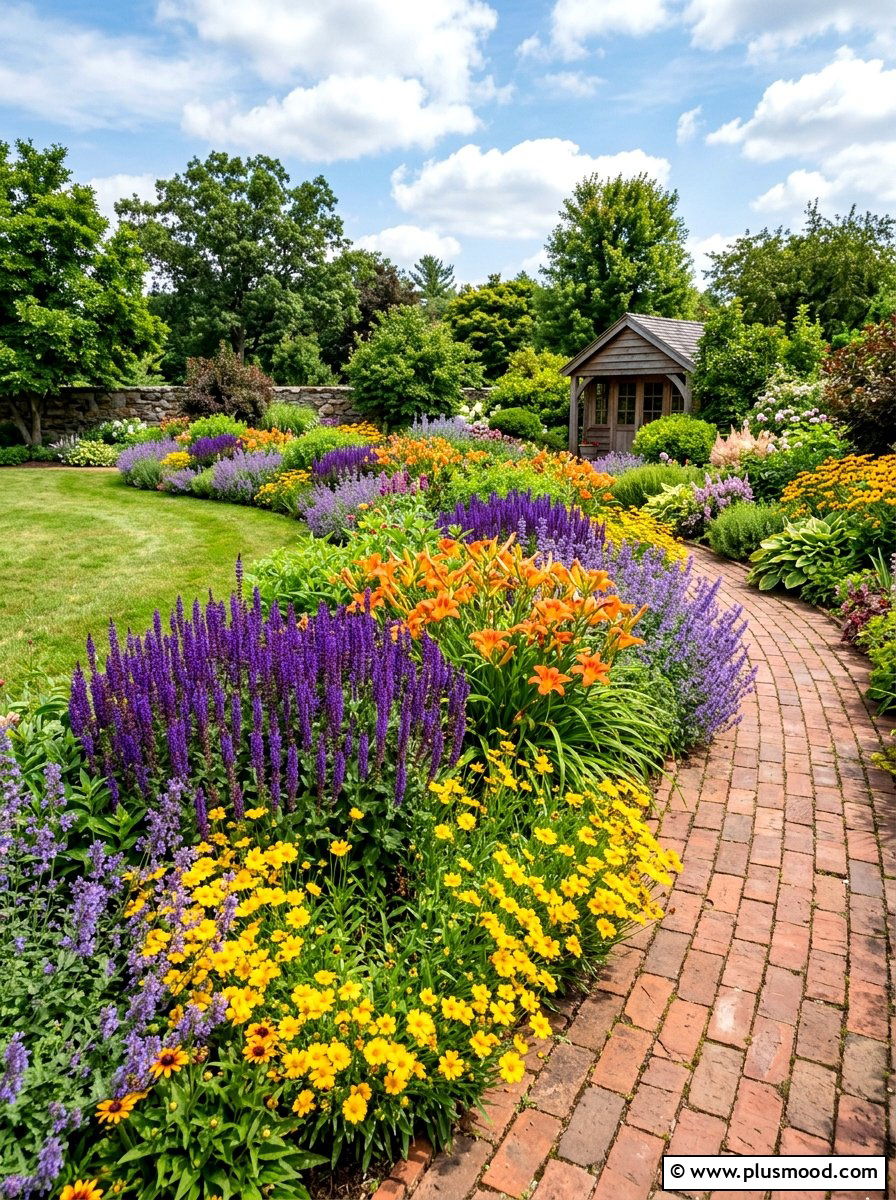
Establishing a perennial border is a smart long-term investment that brings your garden back to life year after year. These beds are typically designed along fences or walkways, using plants like daylilies, hostas, and salvia to create a permanent structure. The key to a successful perennial border is layering; place taller plants in the back and shorter ones in the front to ensure everything is visible. While the initial setup takes some planning, these flowers require less work over time compared to annuals. You can mix in a few seasonal favorites to fill any gaps, but the core perennials will provide a reliable and beautiful foundation for your summer landscape.
9. Colorful annual garden
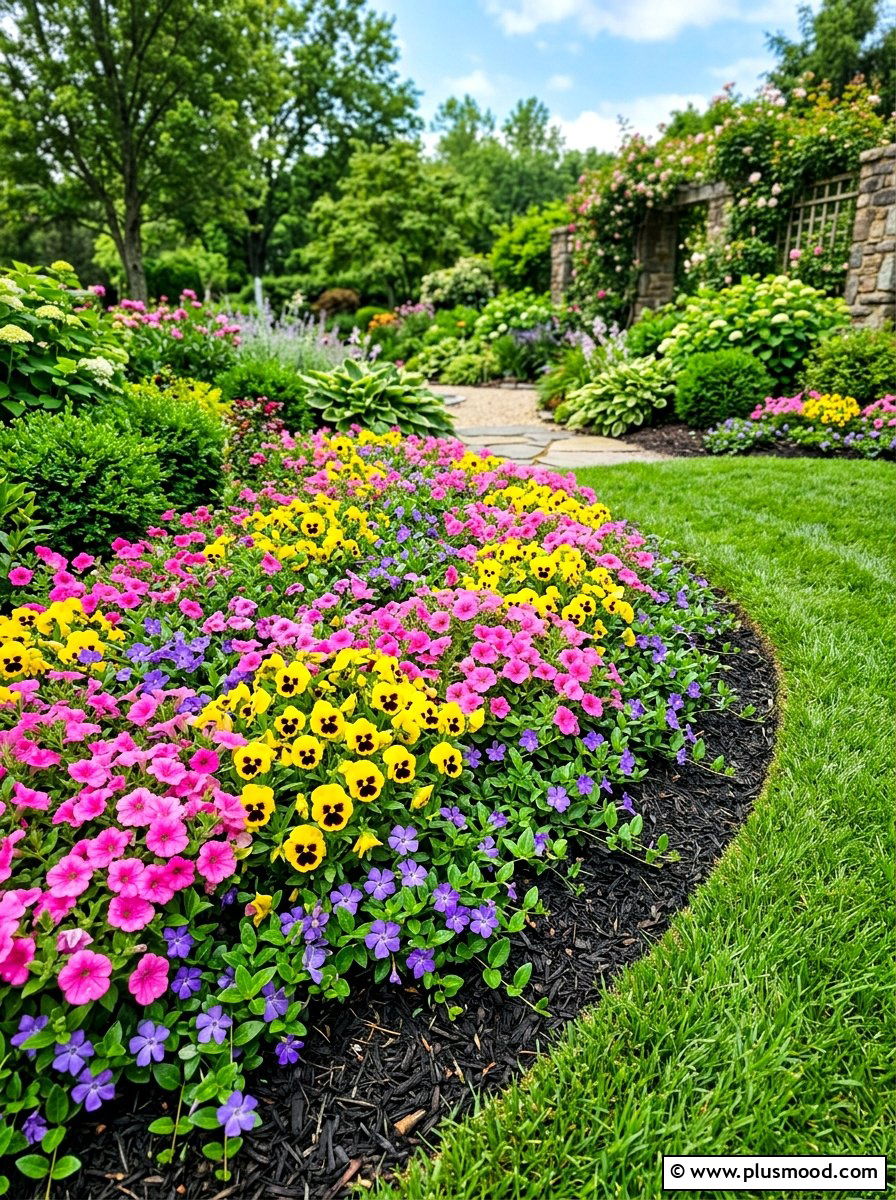
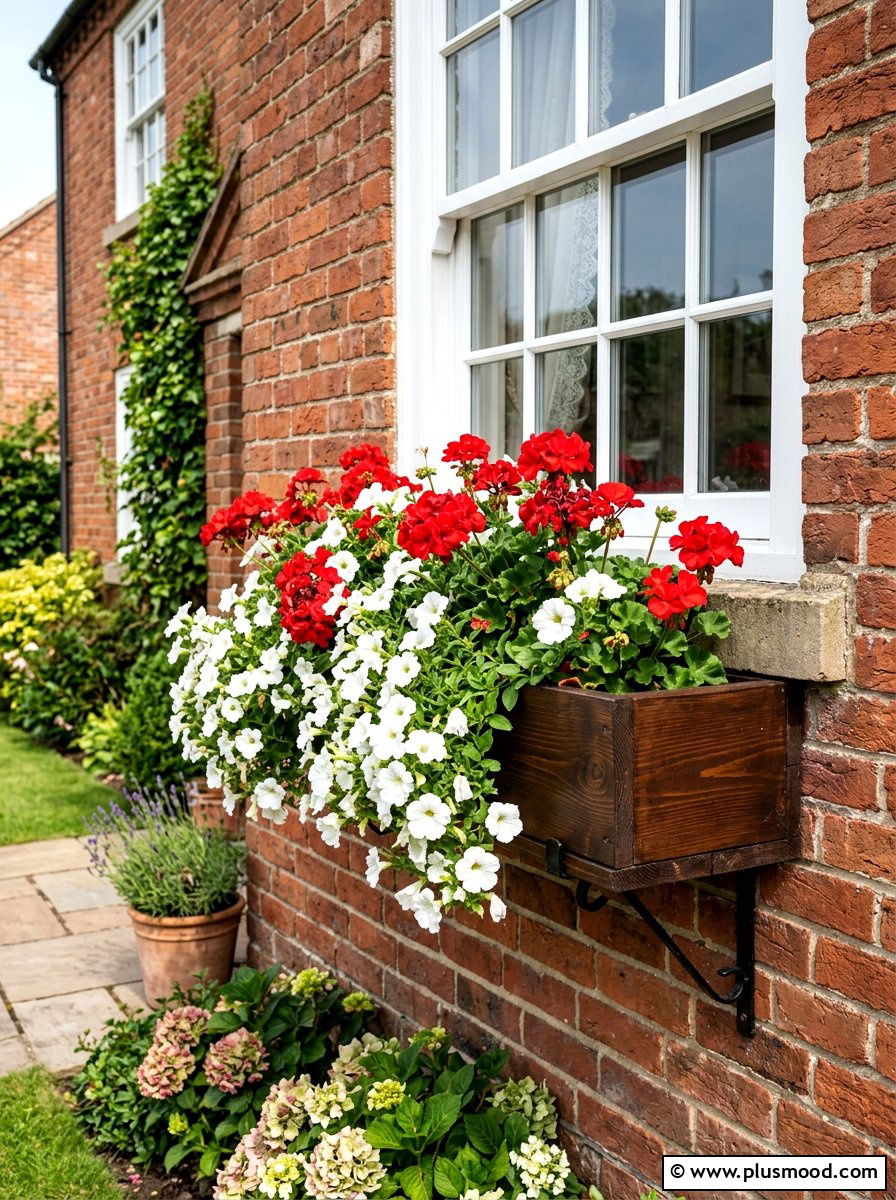
If you want an explosion of color that lasts from late spring until the first frost, a bed of annual flowers is the way to go. Species like geraniums, petunias, and vincas offer intense, non-stop blooming throughout the entire summer season. Unlike perennials, annuals put all their energy into flowers, resulting in a much more vivid and dense display. You can experiment with different color palettes every year, from bright rainbows to sophisticated pastel themes. These plants are perfect for filling empty spaces in your garden or creating high-impact focal points near your home’s entrance. Regular deadheading and fertilization will keep these blooms looking fresh and vibrant all summer long.
10. Modern minimalist garden
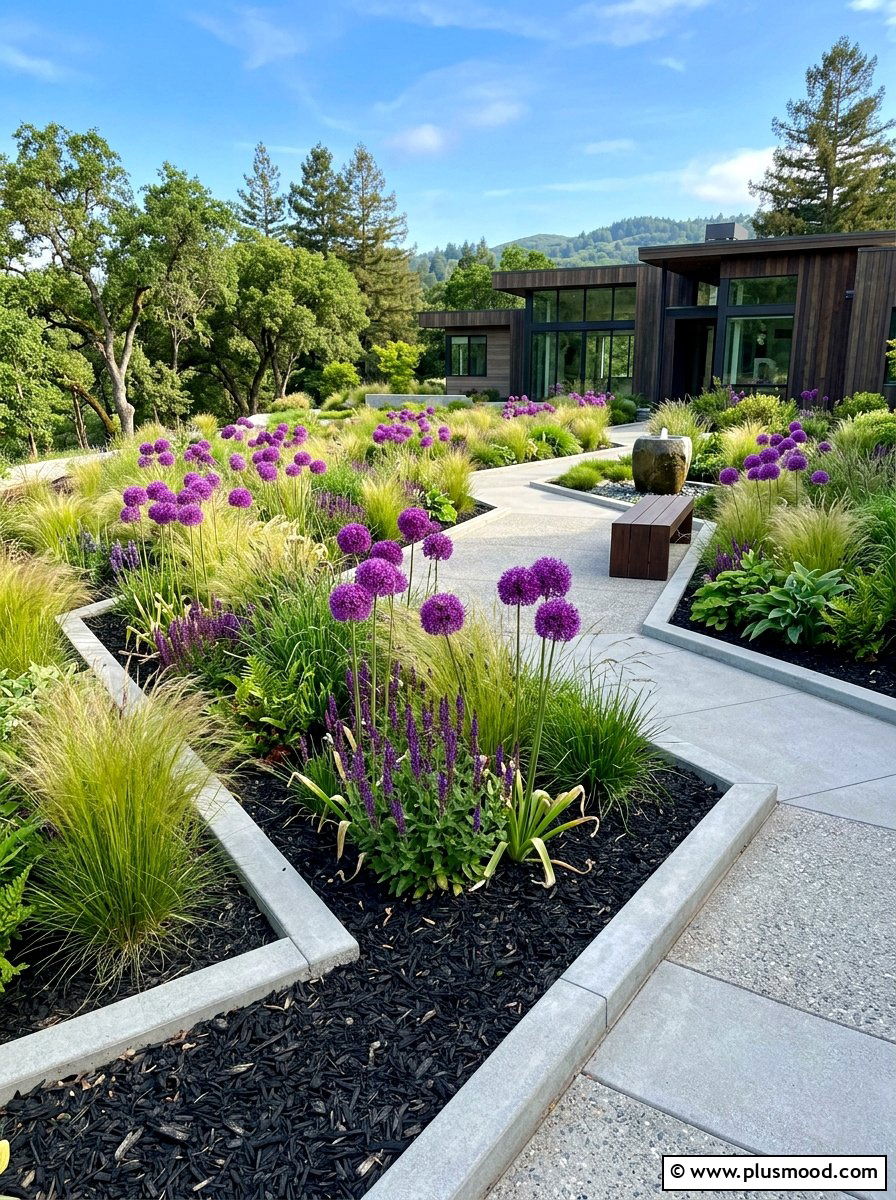
A modern minimalist flower bed focuses on clean lines, simple palettes, and structural plant choices. Instead of a crowded mix of varieties, choose a few key plants and repeat them in a rhythmic pattern for a calm effect. Allium, ornamental grasses, and boxwood shrubs are excellent choices for this sleek, architectural look. Use materials like concrete edging or dark mulch to emphasize the geometric shapes of the planting area. This style is perfect for contemporary homes where the goal is to complement the architecture rather than overwhelm it. The simplicity of the design makes it easy to maintain while providing a high-end, sophisticated feel to your outdoor living space.
11. Wildflower meadow garden
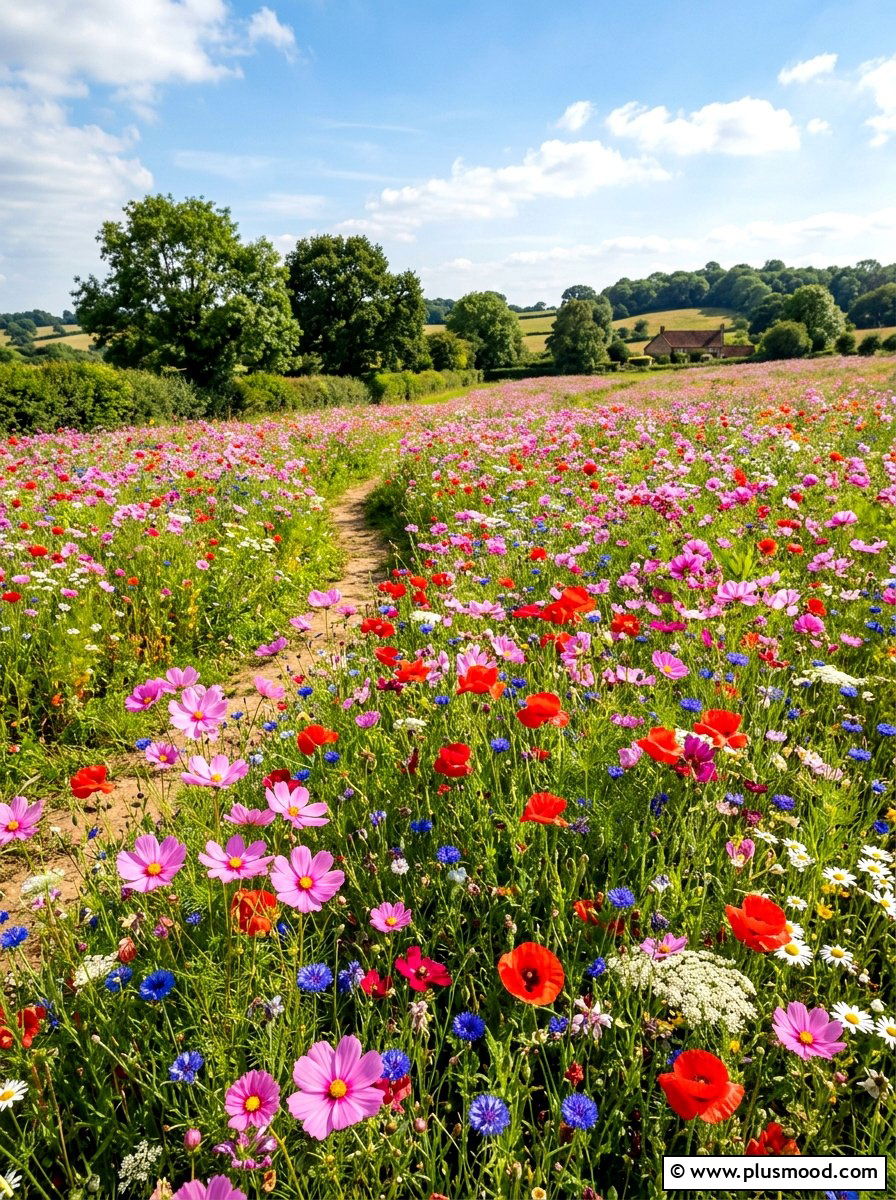
Creating a wildflower meadow bed is a wonderful way to embrace nature and support local biodiversity in your own yard. This style involves sowing a mix of native seeds that produce a variety of textures, heights, and colors. Plants like cosmos, poppies, and coreopsis grow easily and create a whimsical, free-spirited appearance that requires very little maintenance once established. This approach is perfect for larger, sun-drenched areas where you want a natural look rather than a manicured lawn. The ever-changing display of blooms provides constant visual interest and attracts a wide range of beneficial insects. It’s a sustainable choice that celebrates the raw beauty of the summer season.
12. Edible flower garden
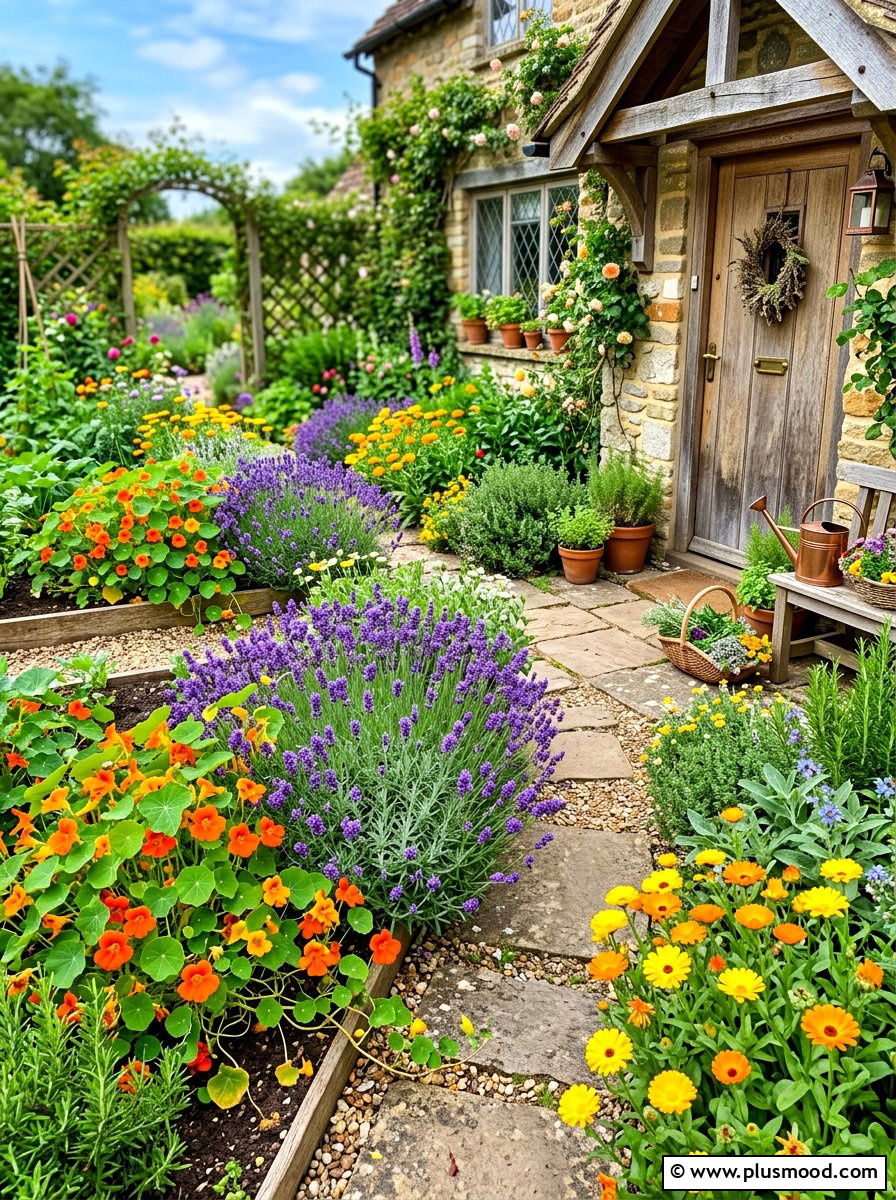
An edible flower bed is a unique way to combine beauty and functionality in your summer landscaping. Many stunning summer flowers, such as nasturtiums, pansies, and calendula, are actually safe to eat and can be used to garnish salads or desserts. Incorporating herbs like lavender and rosemary adds fragrance and texture while also being useful in the kitchen. When designing this type of bed, ensure you are using organic gardening practices to keep the blooms safe for consumption. Grouping these plants near a kitchen door or patio makes harvesting easy and convenient. This multi-purpose garden offers a sensory experience that is both visually delightful and practically rewarding.
13. Rock garden flowers
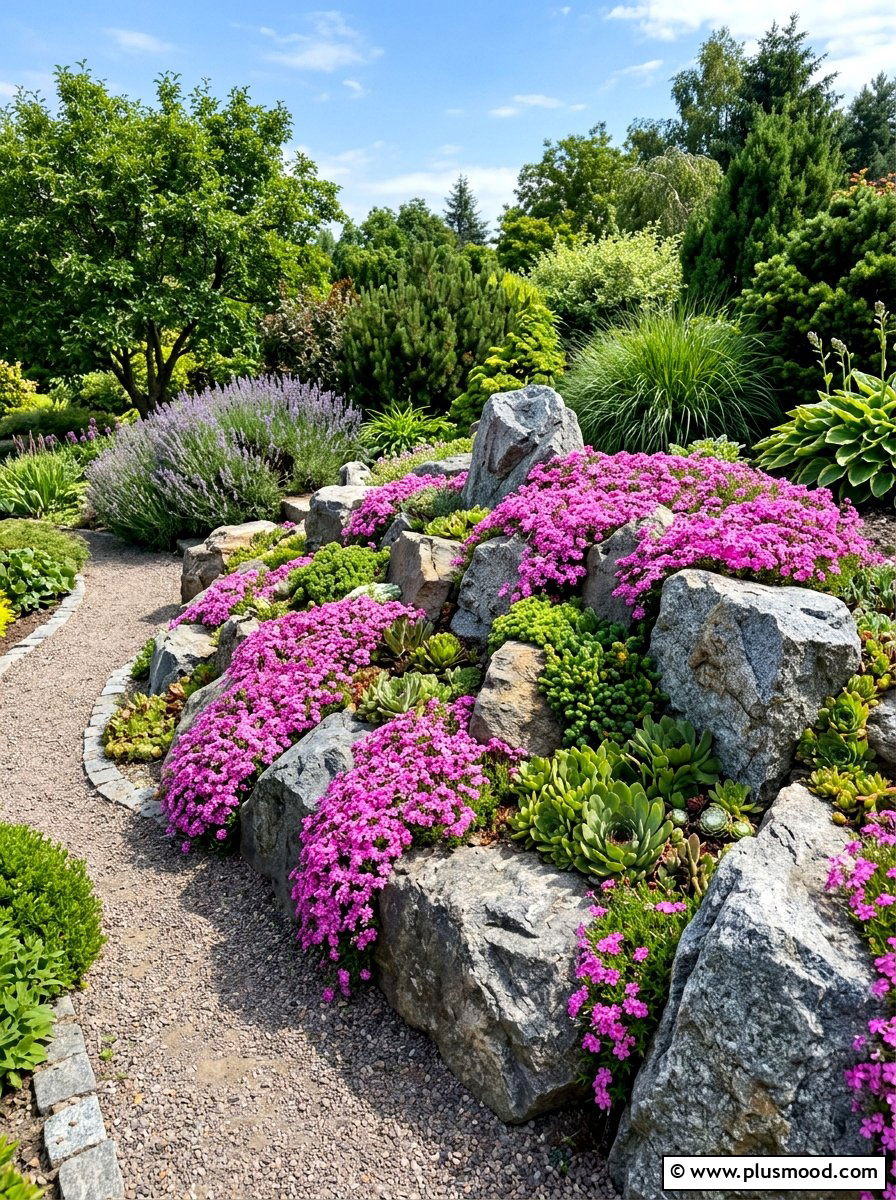
Rock gardens provide a rugged, natural aesthetic that works perfectly for sloped areas or spots with poor soil quality. By combining large boulders with low-growing, sun-loving plants, you can create a low-maintenance landscape that looks beautiful all summer. Succulents, sedum, and creeping phlox are ideal choices because they tuck into the crevices between rocks and require very little water. The contrast between the hard, grey stones and the soft, colorful foliage creates a striking visual balance. This type of flower bed is extremely durable and can withstand harsh summer sun without wilting. It’s an excellent way to add texture and a sense of permanence to your garden design.
14. Cutting garden flowers
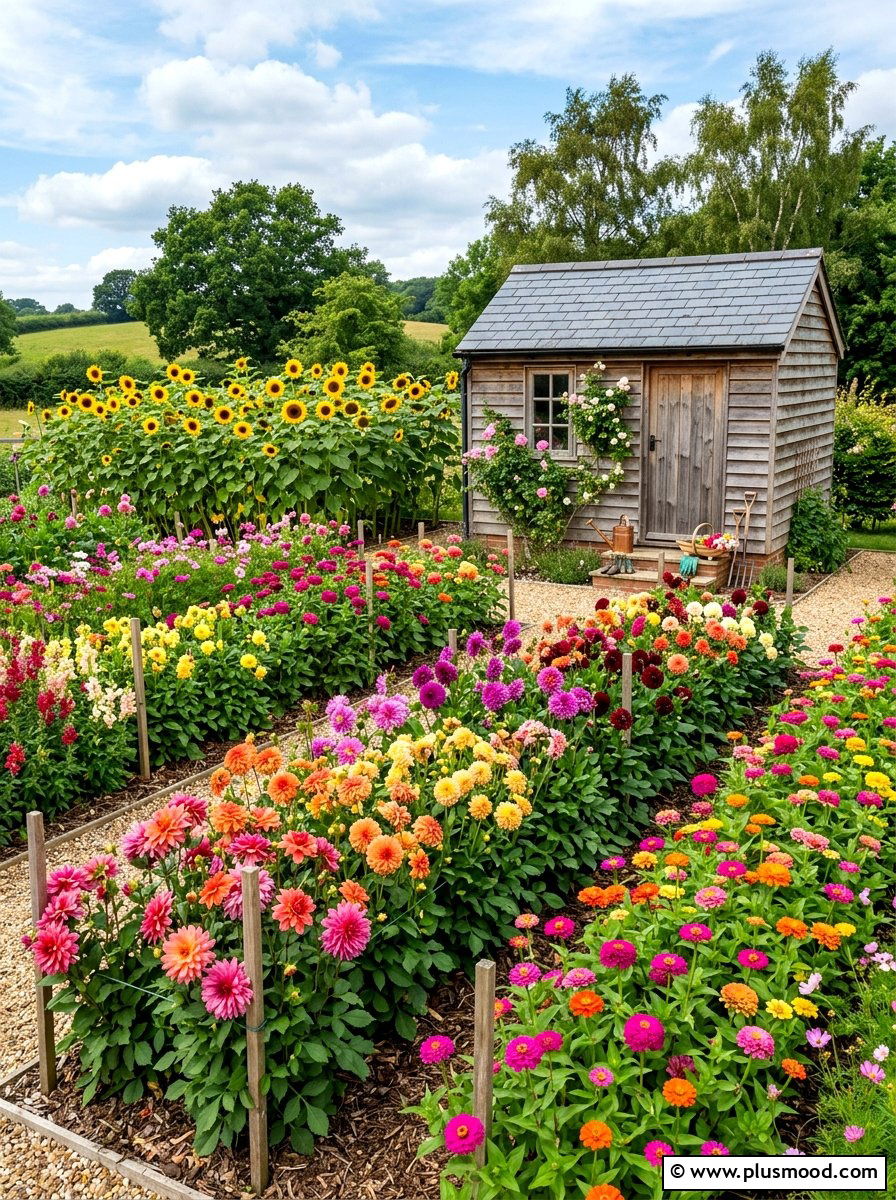
If you love filling your home with fresh bouquets, a dedicated cutting garden is a must-have summer project. This bed should focus on high-yield plants with long, sturdy stems like zinnias, dahlias, and sunflowers. By growing your own flowers for arrangements, you can choose specific colors and varieties that match your interior decor. It is often best to plant these in rows, similar to a vegetable garden, to make harvesting and maintenance much more efficient. Regular cutting actually encourages many of these plants to produce even more blooms, ensuring you have a steady supply throughout the season. It’s a functional and beautiful addition to any backyard space.
15. Vertical garden wall
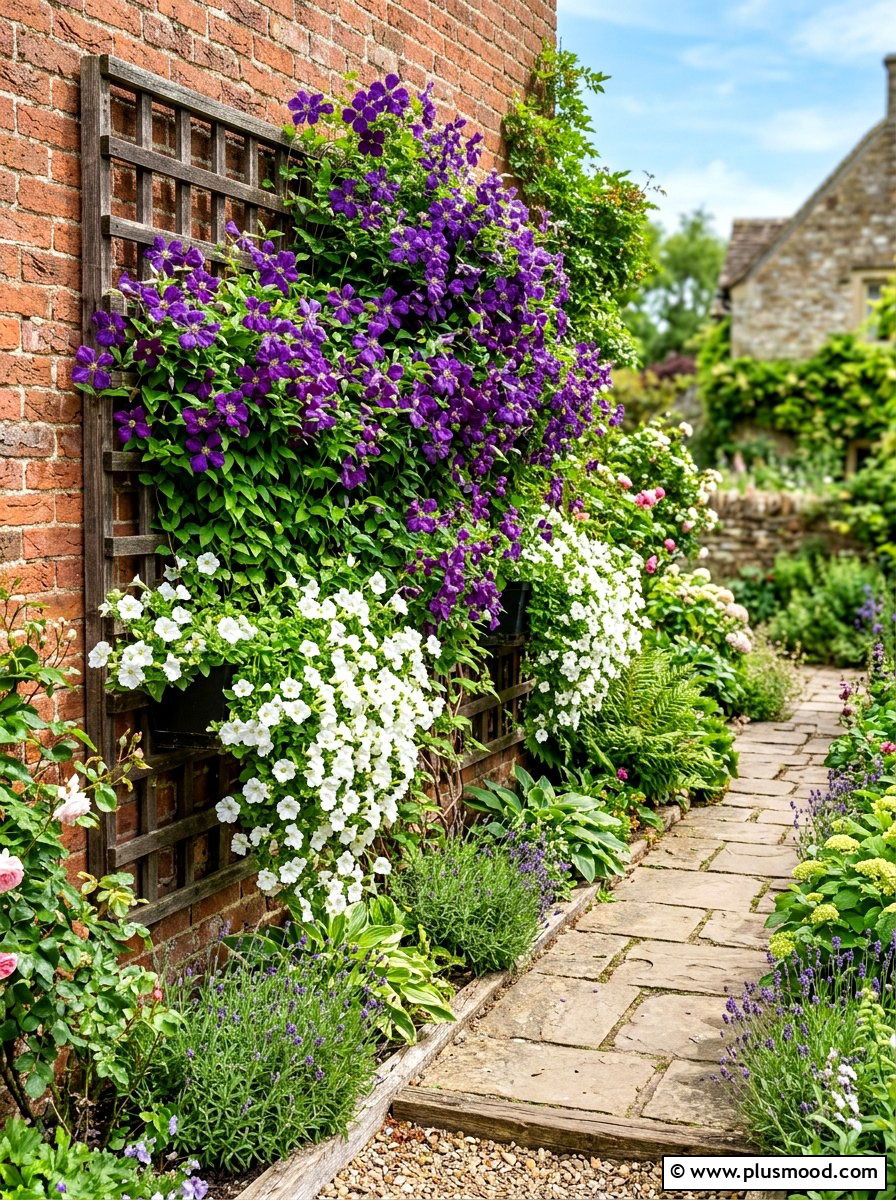
A vertical flower wall is a brilliant solution for small yards or balconies where ground space is limited. By using wall-mounted planters, trellises, or specialized pocket systems, you can grow a lush tapestry of summer color upwards. Vining plants like morning glories, clematis, and trailing petunias are perfect for creating a living wall of foliage and blooms. This approach adds a unique architectural element to your outdoor area and can even help cool down your home by providing extra insulation. Ensure your vertical system has a reliable watering method, as these plants can dry out faster than those in the ground. It’s a modern, space-saving way to garden.
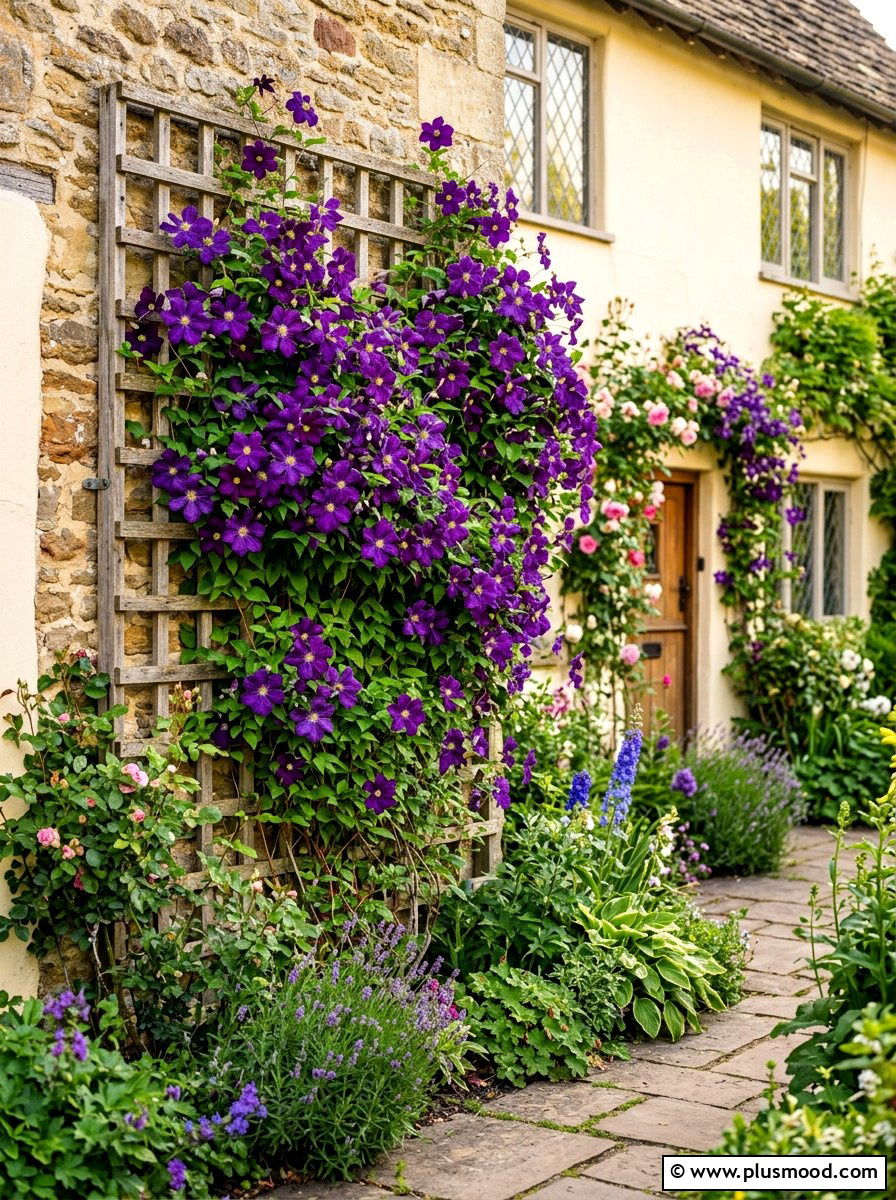
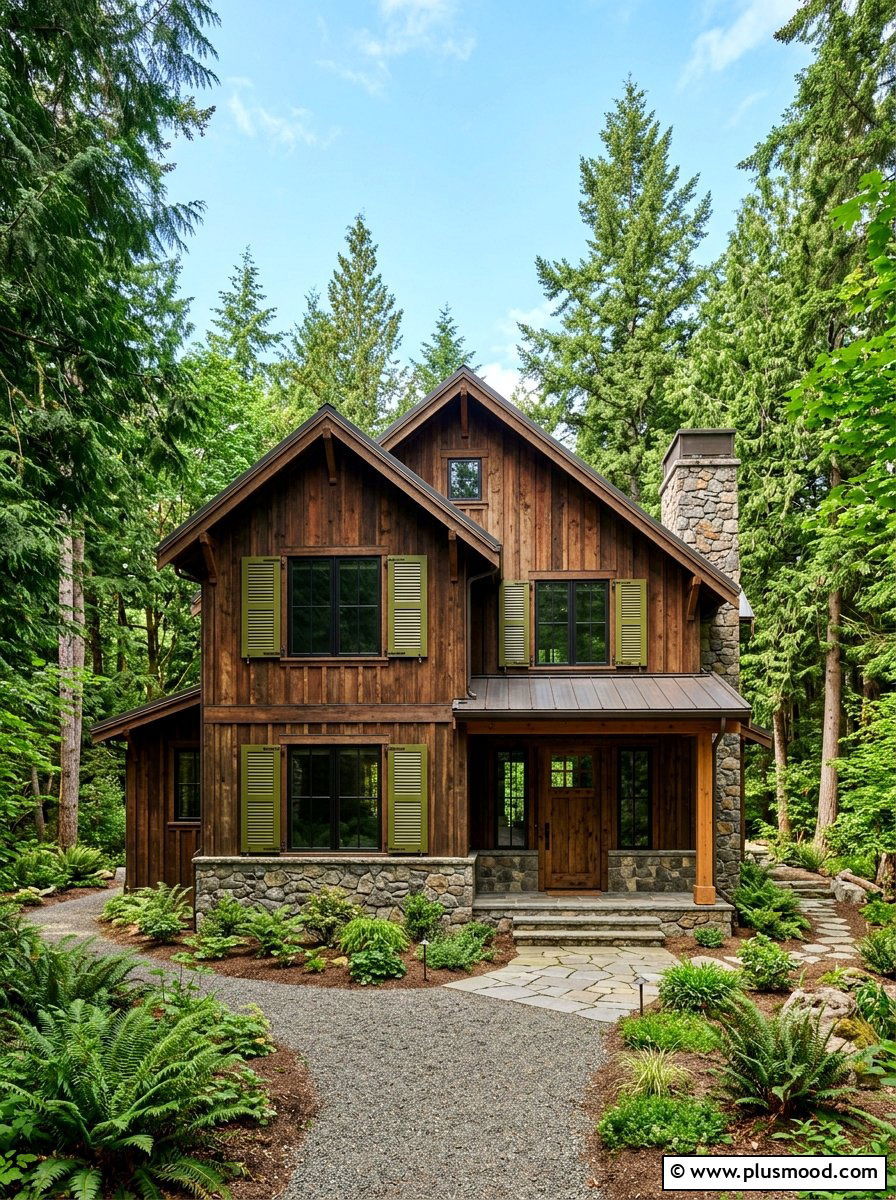
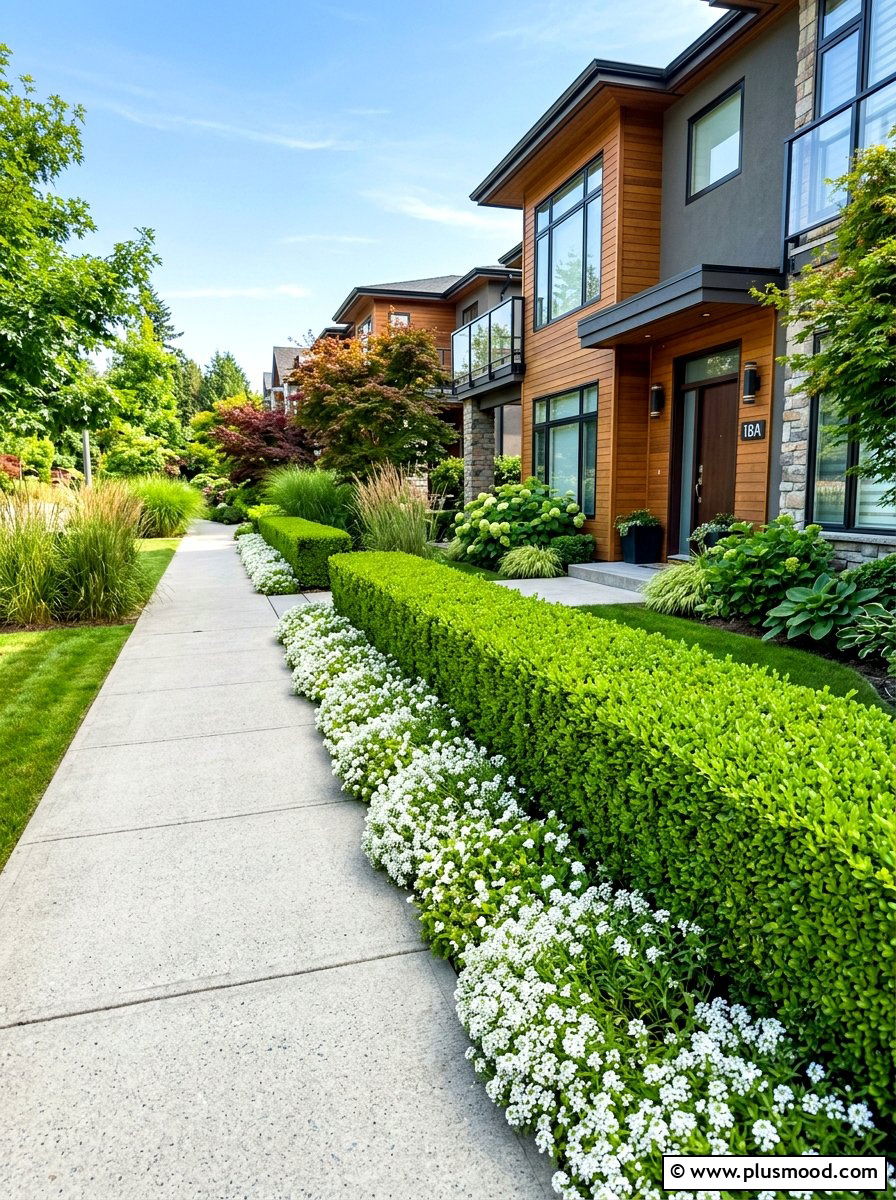
16. Low maintenance ground cover
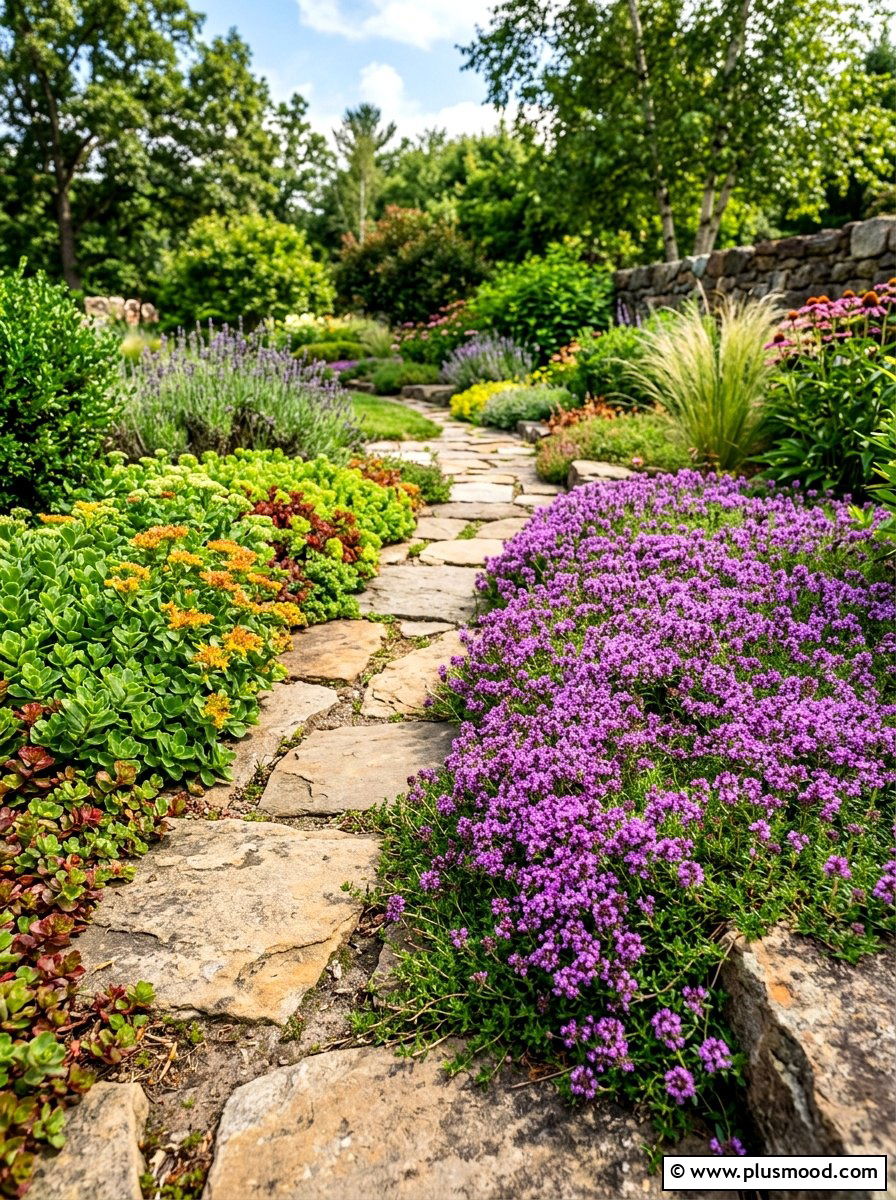
Replacing traditional grass with flowering ground covers is a smart way to reduce lawn care while adding summer beauty. Plants like thyme, stonecrop, and vinca minor create a dense carpet of greenery and small flowers that naturally suppress weeds. Once these plants are established, they require very little mowing or supplemental watering compared to a standard lawn. This style of flower bed is perfect for hillsides, under trees, or as a soft border along garden paths. Ground covers provide a consistent look that ties different areas of the yard together effortlessly. They offer a lush, green foundation that stays vibrant even during the hottest weeks.
17. Fragrant flower bed
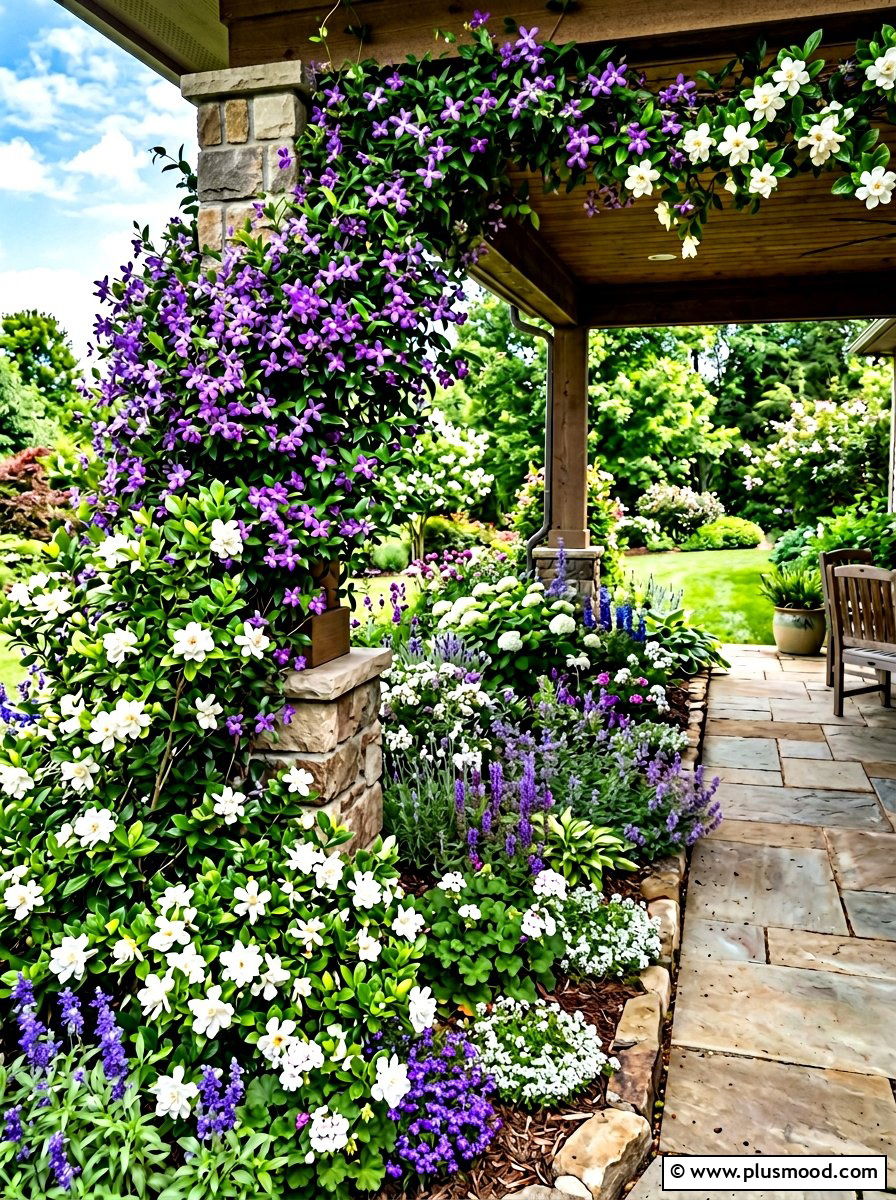
Designing a flower bed specifically for its scent can transform your garden into a truly immersive sensory experience. By choosing fragrant varieties like gardenias, jasmine, and sweet peas, you create a space that smells as good as it looks. These plants are best placed near windows, patios, or entryways where their perfume can be enjoyed by everyone passing by. Many of these flowers release their strongest scents in the evening, making your outdoor area a magical place to relax after sunset. Mixing different scents can create a complex and pleasing aroma that defines your garden’s character. A fragrant bed adds an invisible layer of luxury to your landscaping.
18. Coastal garden flowers
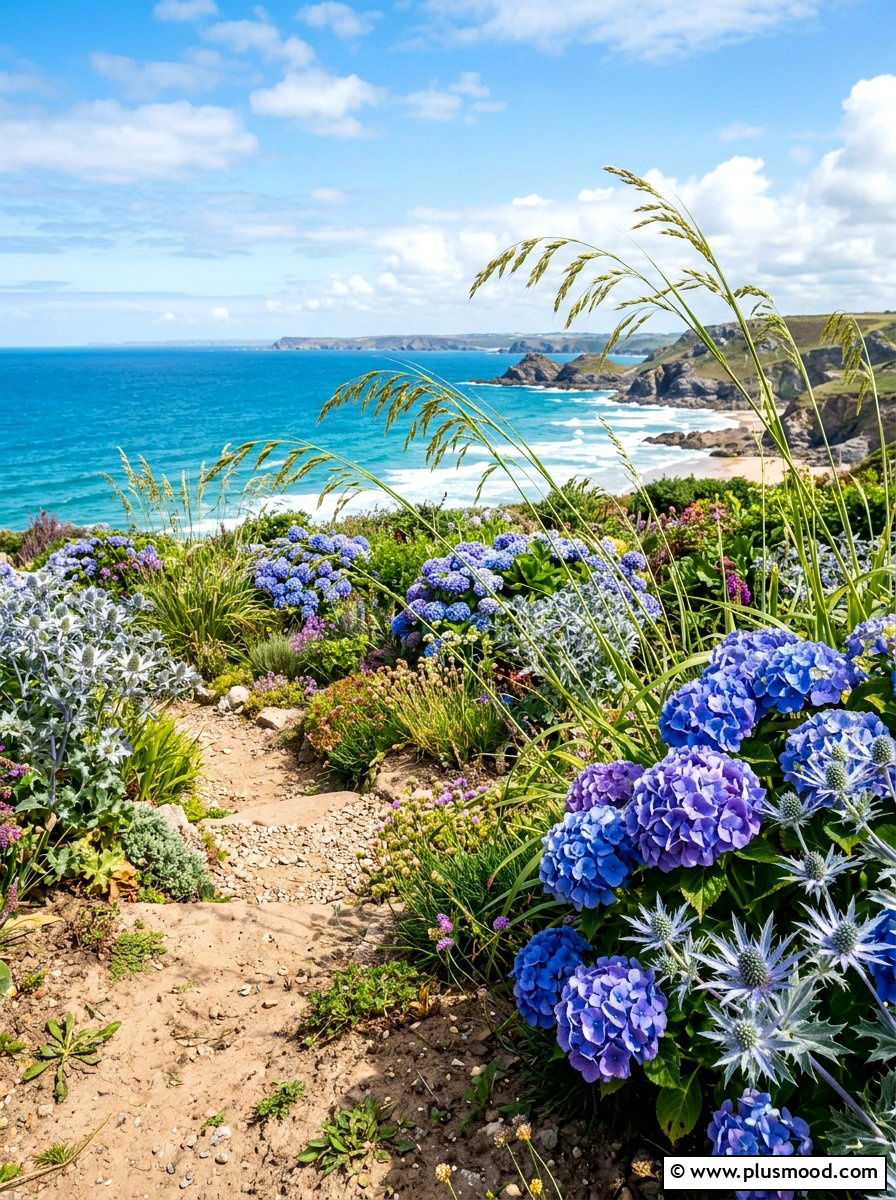
A coastal-themed flower bed uses plants that can handle salt spray, sandy soil, and windy conditions while maintaining a breezy aesthetic. Focus on a color palette of soft blues, whites, and sandy yellows using plants like hydrangeas, sea holly, and beach roses. Adding ornamental grasses that sway in the wind, such as sea oats, helps capture the relaxed feeling of the shoreline. You can incorporate decorative elements like driftwood or smooth river stones to enhance the seaside vibe. This design is perfect for beach houses or anyone who wants to bring a bit of the ocean’s tranquility to their suburban backyard. It’s a resilient and refreshing style.
19. Formal garden design
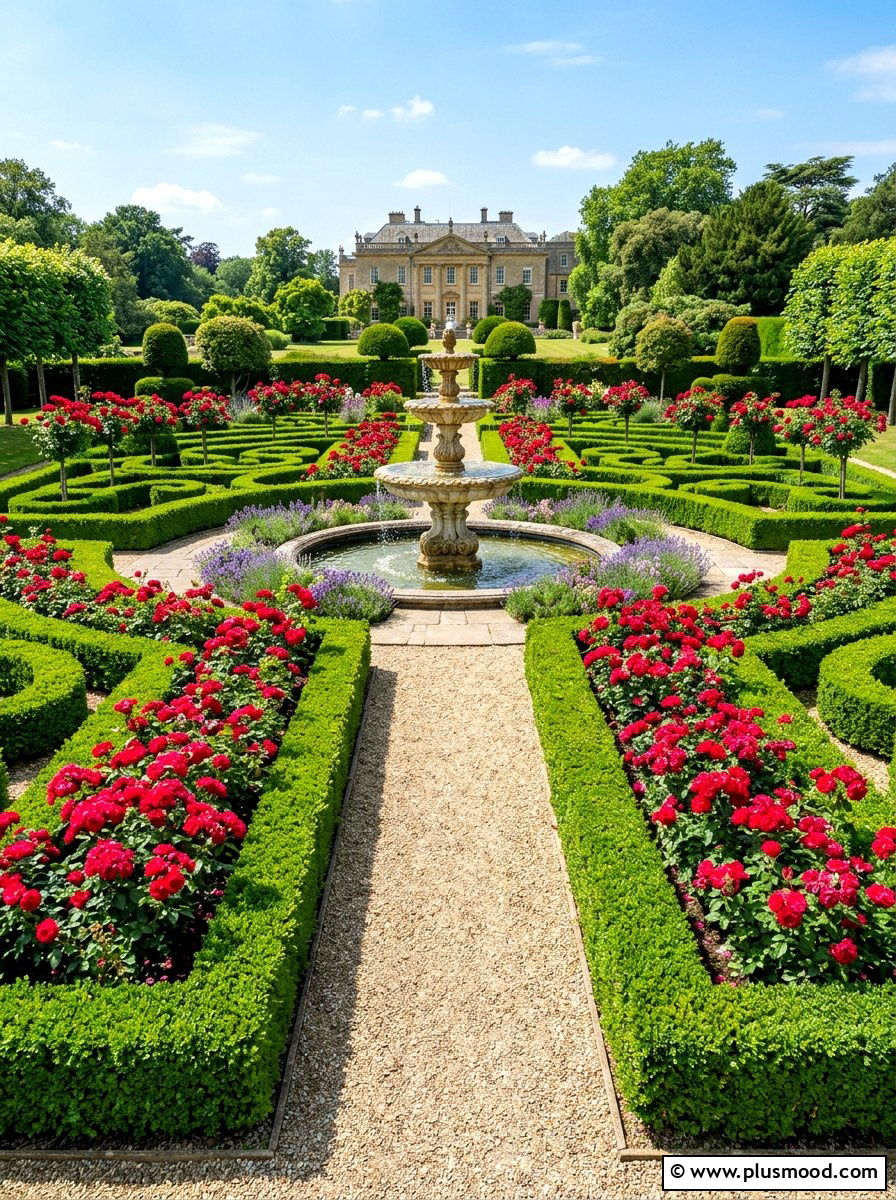
Formal flower beds are characterized by their symmetry, clear boundaries, and structured layouts that provide a sense of order. You can use low-growing boxwood hedges to create geometric frames for your summer blooms, such as roses or begonias. This style often features a central focal point, like a fountain, sundial, or a singular dramatic plant, to anchor the design. The clean lines and repetition of colors create a sophisticated and polished look that complements traditional or neoclassical architecture. While formal gardens require more frequent pruning and maintenance to stay tidy, the result is an incredibly elegant and high-end outdoor space. It’s a classic approach that never goes out of style.
20. Desert landscape flowers
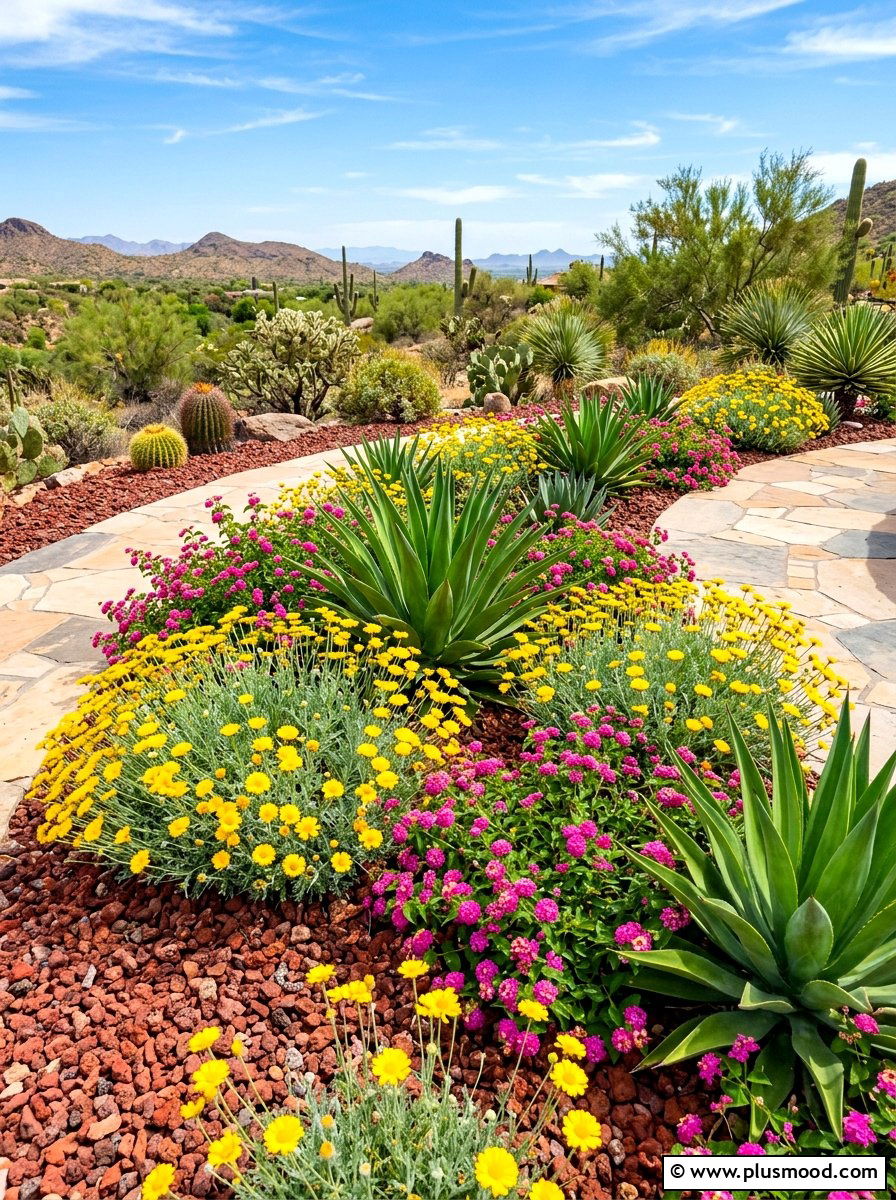
Embracing a desert-inspired look is a fantastic way to create a high-impact, low-water flower bed that thrives in extreme heat. Use sculptural plants like agave, yucca, and various cacti species to provide year-round structure and interest. During the summer, you can add heat-loving flowers like desert marigolds and lantana to provide bursts of bright color against the sandy or gravel mulch. This xeriscape approach is not only environmentally friendly but also incredibly low-maintenance once the plants are settled. The combination of unique shapes and vibrant blooms creates a modern, artistic vibe that stands out in any neighborhood. It’s a bold choice for homeowners looking for resilience.
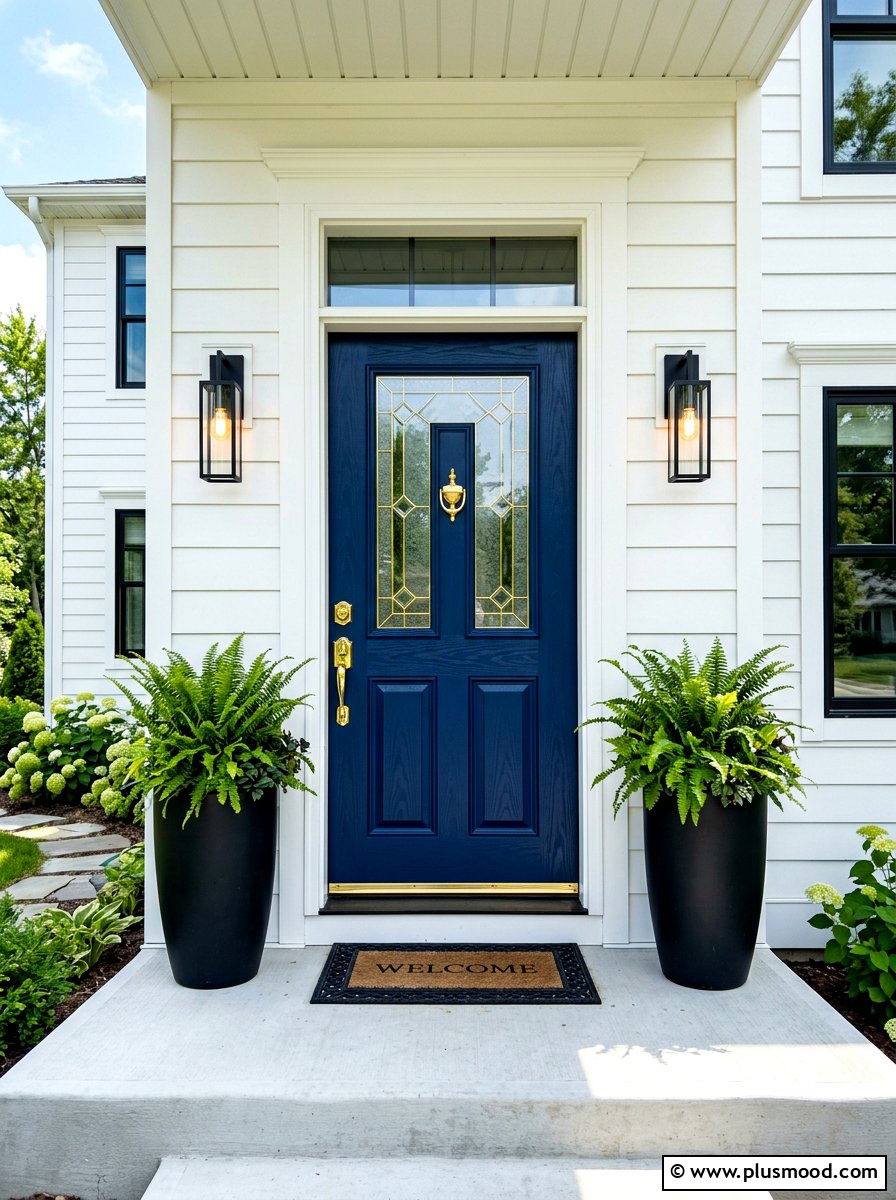
21. Tiered retaining wall flowers
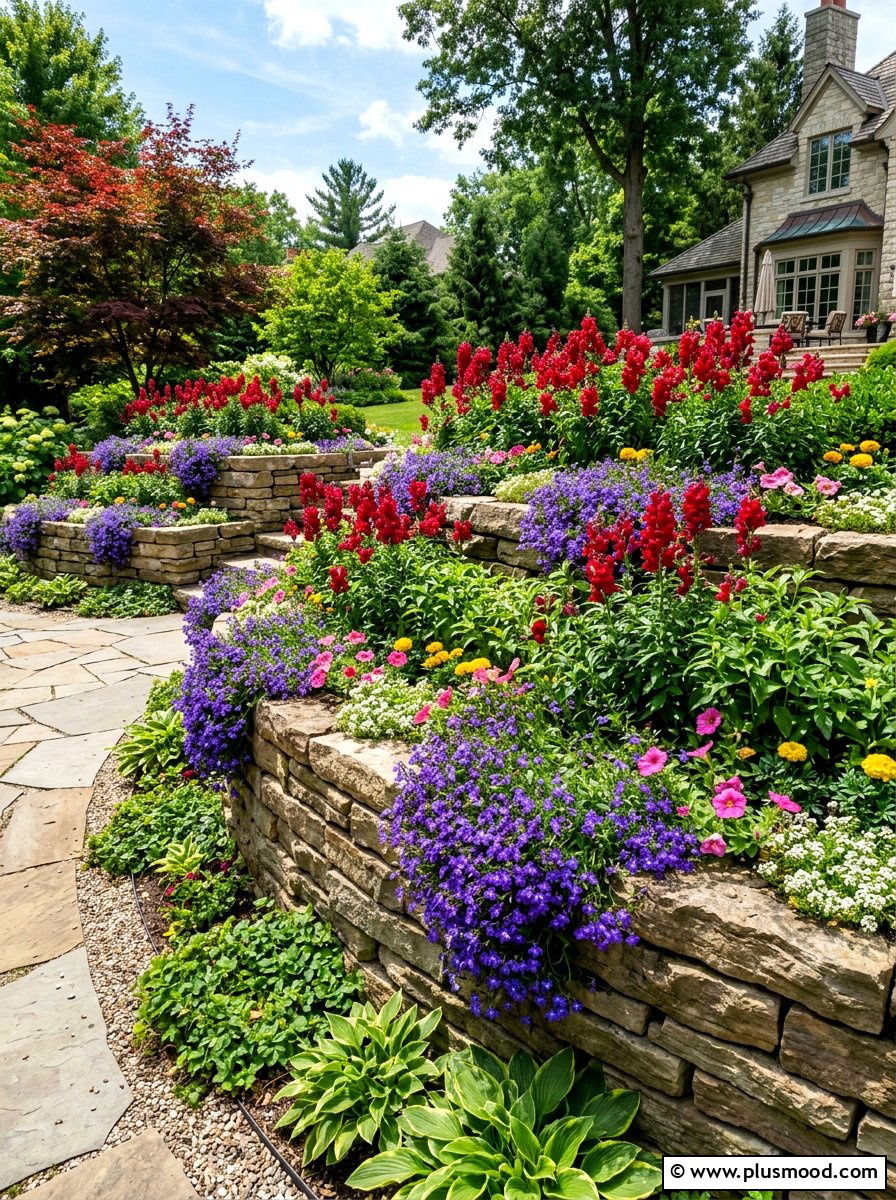
If your yard has a significant slope, a tiered retaining wall is the perfect opportunity to create multiple levels of summer flowers. You can plant different varieties on each level to create a cascading effect of color and texture that moves down the hill. Use trailing plants like lobelia or ivy geraniums at the edges so they spill over the stone or wood walls beautifully. On the upper tiers, taller plants like snapdragons or salvias can add height and drama. This structural approach turns a difficult landscape challenge into a stunning vertical feature. It also helps prevent soil erosion while making every part of your garden visually engaging.
22. Pathway edging flowers
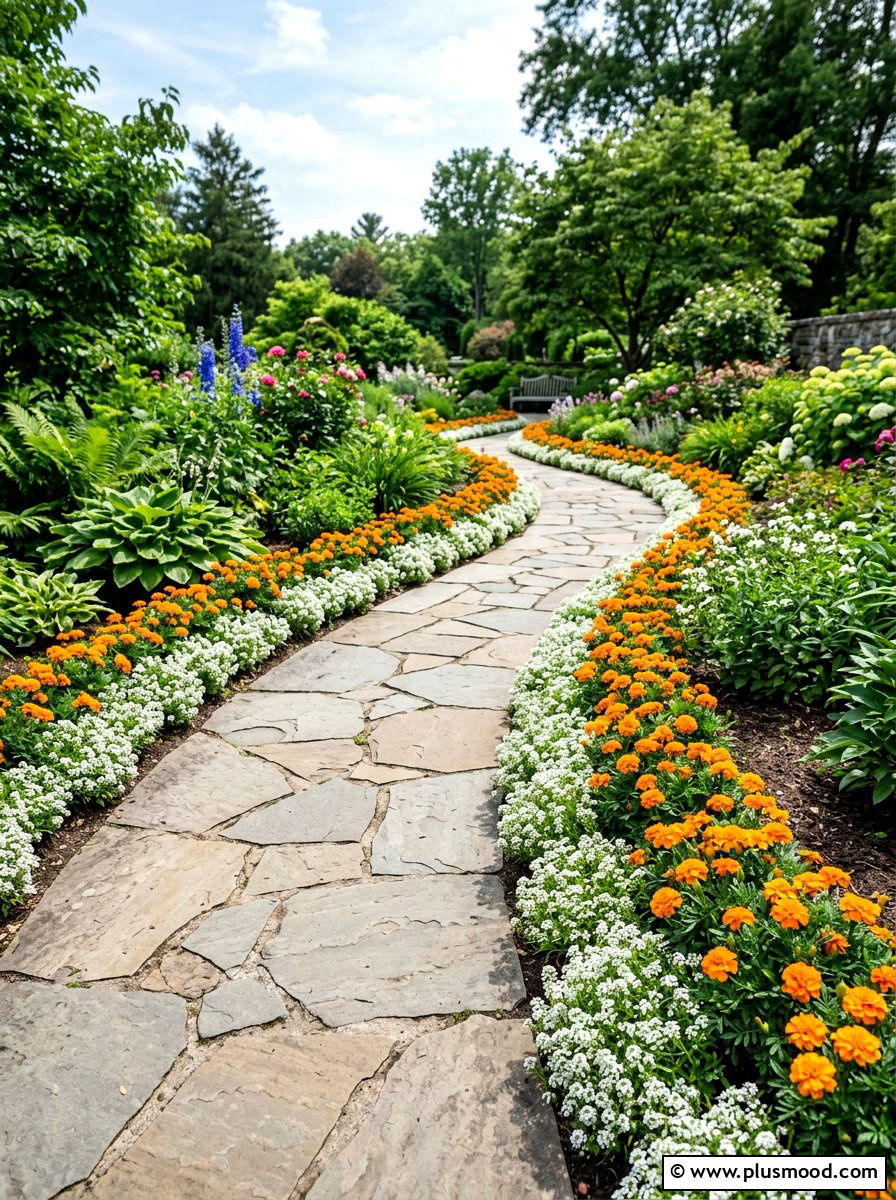
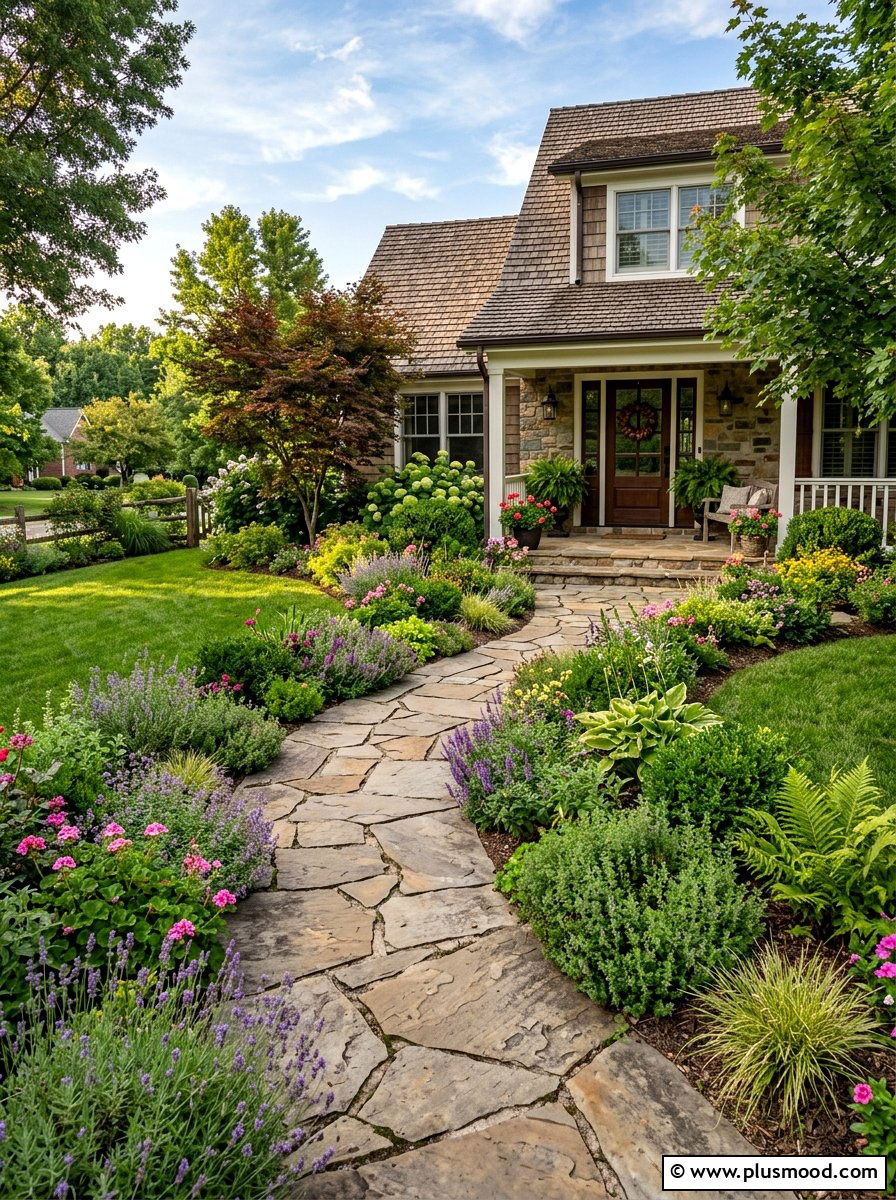
Using flowers to line your garden paths creates an inviting and soft transition between different areas of your yard. Low-growing, hardy plants like creeping thyme, alyssum, and marigolds are excellent for this purpose because they won’t block the walkway. These edging plants help define the shape of your path and prevent soil from washing away during summer rainstorms. Choose varieties that can handle a bit of foot traffic and provide consistent color throughout the season. The fragrance of flowers like lavender can be especially pleasant as you brush past them while walking. This simple addition makes any garden feel more finished, thoughtful, and professionally designed.
23. Shrub and flower mix
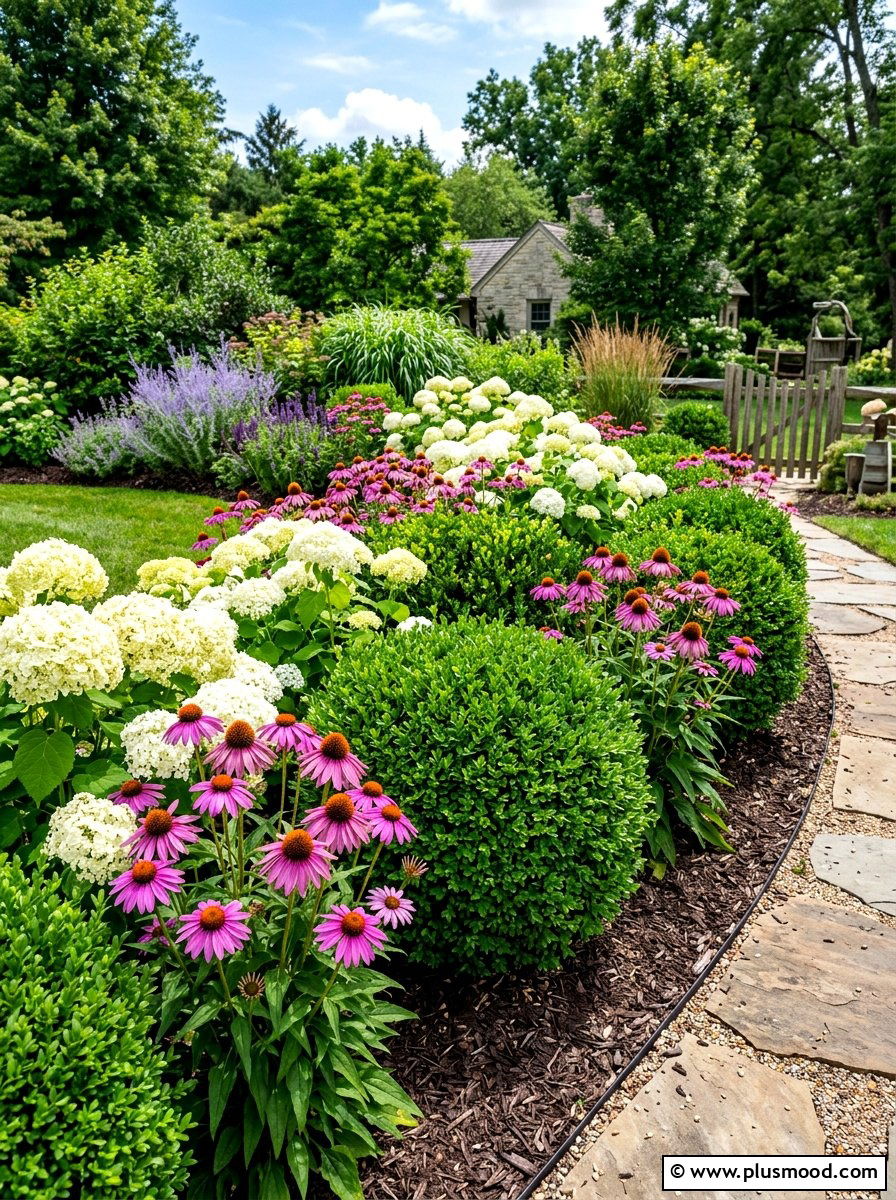
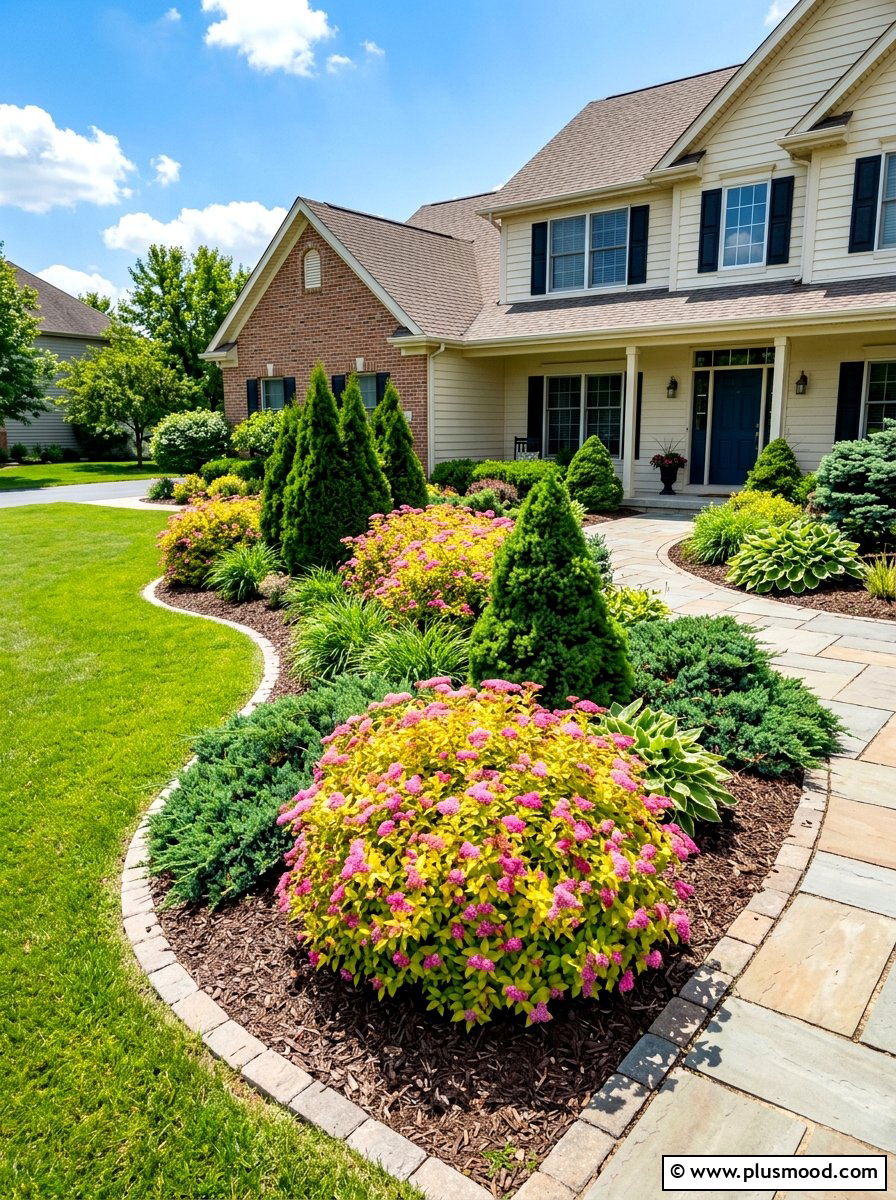
Mixing permanent shrubs with seasonal summer flowers provides a balanced look that offers both structure and variety. Evergreen shrubs like boxwood or azaleas serve as a year-round backdrop, while summer annuals provide the changing pops of seasonal color. This combination ensures that the garden bed doesn’t look empty during the winter but remains vibrant and exciting during the peak growing season. You can use shrubs to create height in the middle of a bed and surround them with lower-growing perennials like hostas or coneflowers. This layered approach creates a mature, established feel in your landscape that is easy to manage. It’s a versatile strategy for any garden.
24. Butterfly garden flowers
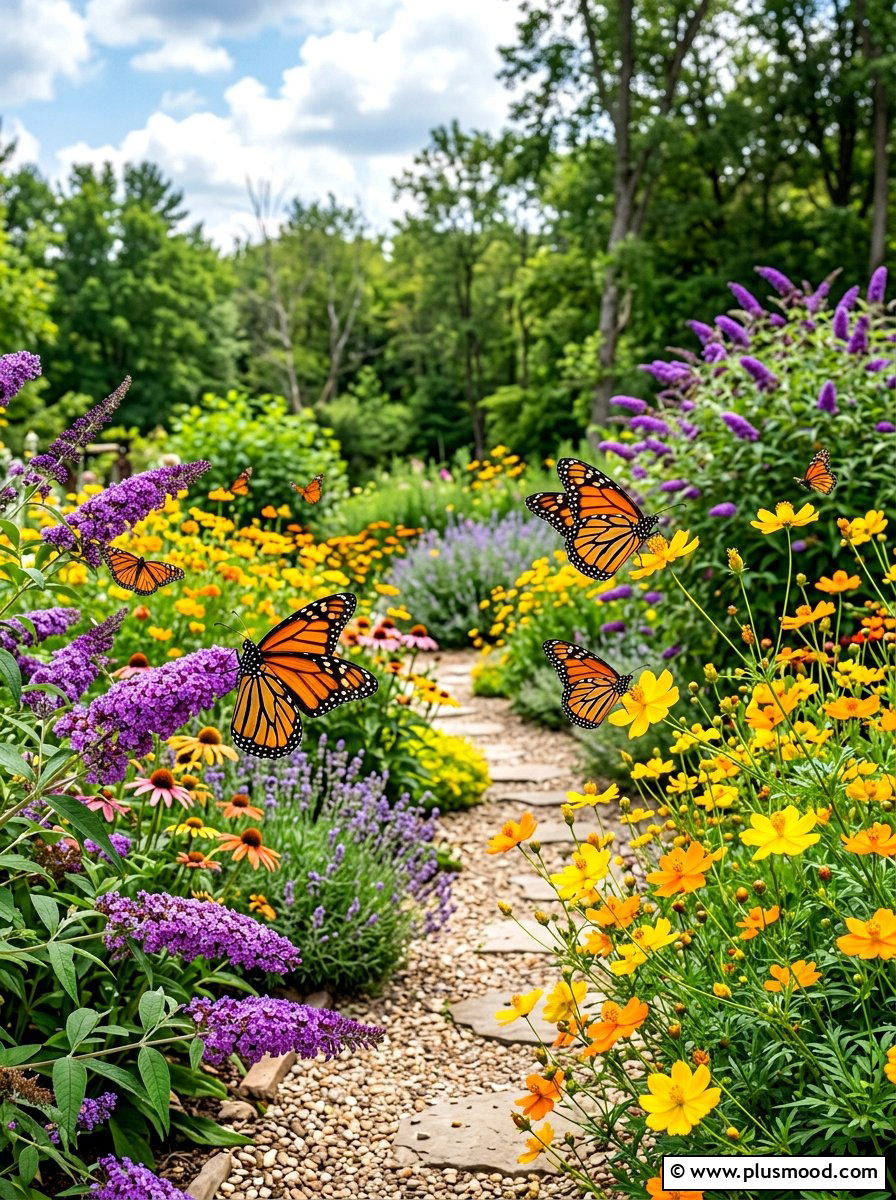
A dedicated butterfly garden is designed to attract and support these beautiful insects through their entire life cycle. Focus on planting host species like milkweed for caterpillars and nectar-rich flowers like buddleia, cosmos, and zinnias for adult butterflies. Choosing a sunny, sheltered spot will help the butterflies stay warm and active as they feed. It is helpful to include a few flat stones where they can rest and soak up the sun’s rays. Avoid all pesticides in this area to ensure the safety of your winged visitors. A butterfly bed is not only visually stunning with its bright, varied colors but also adds a dynamic element.
25. Moon garden flowers
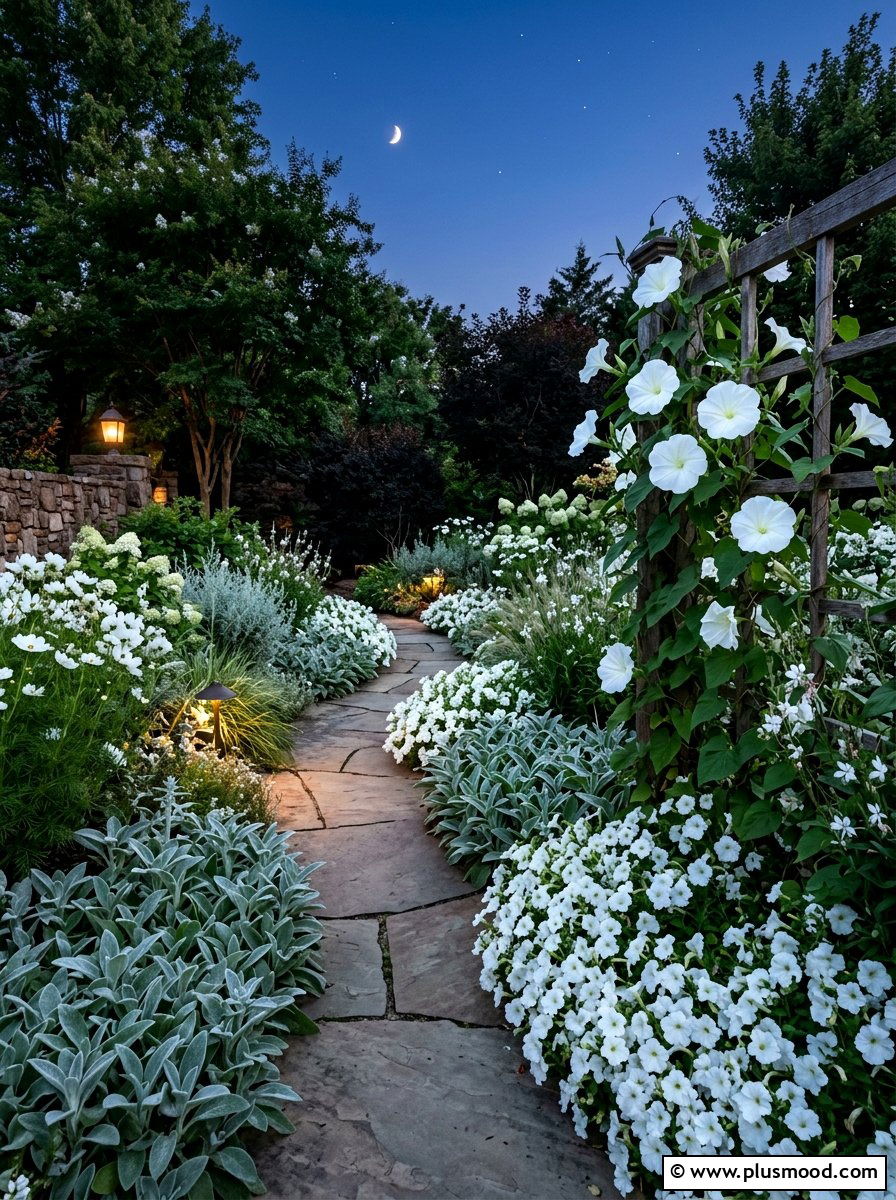
A moon garden is a clever design choice that focuses on plants that look best in the dim light of dusk and evening. By using white flowers and silver foliage, you create a space that reflects moonlight and seems to glow in the dark. Plants like dusty miller, lamb's ear, and white petunias are staples for this ethereal, nighttime aesthetic. Night-blooming jasmine or moonflowers add a heavy, sweet fragrance that enhances the magical atmosphere after the sun goes down. This type of flower bed is perfect for those who spend their summer evenings relaxing on a patio or deck. It offers a serene environment for winding down.
Conclusion:
Planning and planting a summer flower bed is one of the most rewarding ways to enhance your home’s curb appeal and personal enjoyment. From the wild and whimsical look of a native wildflower meadow to the clean, structured lines of a formal garden, there is a design for every style and skill level. By considering factors like sunlight, soil quality, and local climate, you can choose plants that will truly thrive during the hottest months. Whether you want to attract wildlife or grow your own bouquets, these ideas provide a foundation for a beautiful outdoor space. We hope these 25 summer flower bed ideas inspire you to get outside and start digging. With a little bit of effort and creativity, you can turn your yard into a spectacular summer destination that you and your guests will absolutely love for many seasons to come.
Related posts:
Leave a Reply