
A beautiful garden pathway serves as more than just a functional route through your outdoor space; it acts as a visual guide that defines the rhythm and character of your landscape. During the bright summer months, a well-planned walkway creates a seamless transition between lush flower beds and shaded seating areas, inviting visitors to explore every hidden corner. Whether you prefer the rustic charm of weathered stone or the clean lines of modern pavers, choosing the right design can significantly elevate your home's curb appeal. These pathways also provide essential structure, protecting your delicate plants from foot traffic while offering a stable surface for leisurely afternoon strolls through the sunshine.
1. Natural Flagstone Garden Walkway
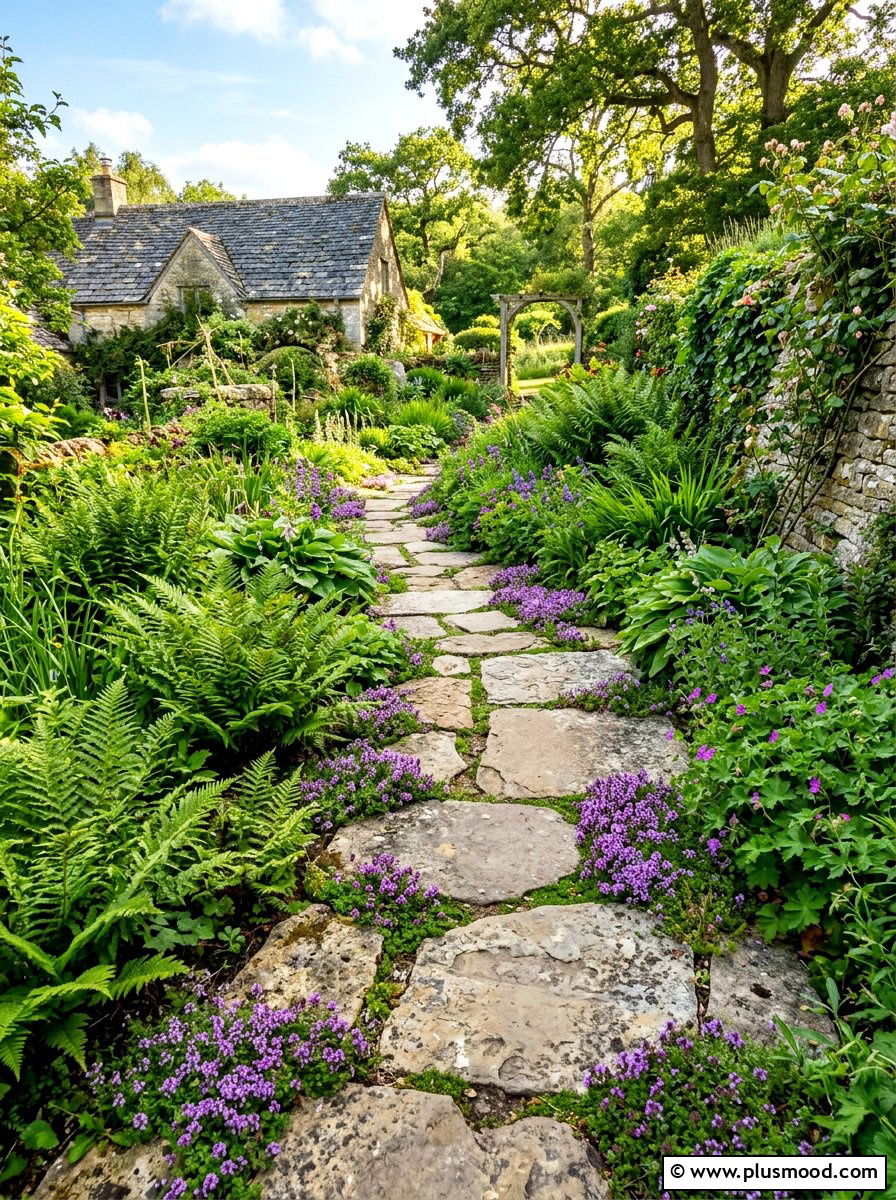
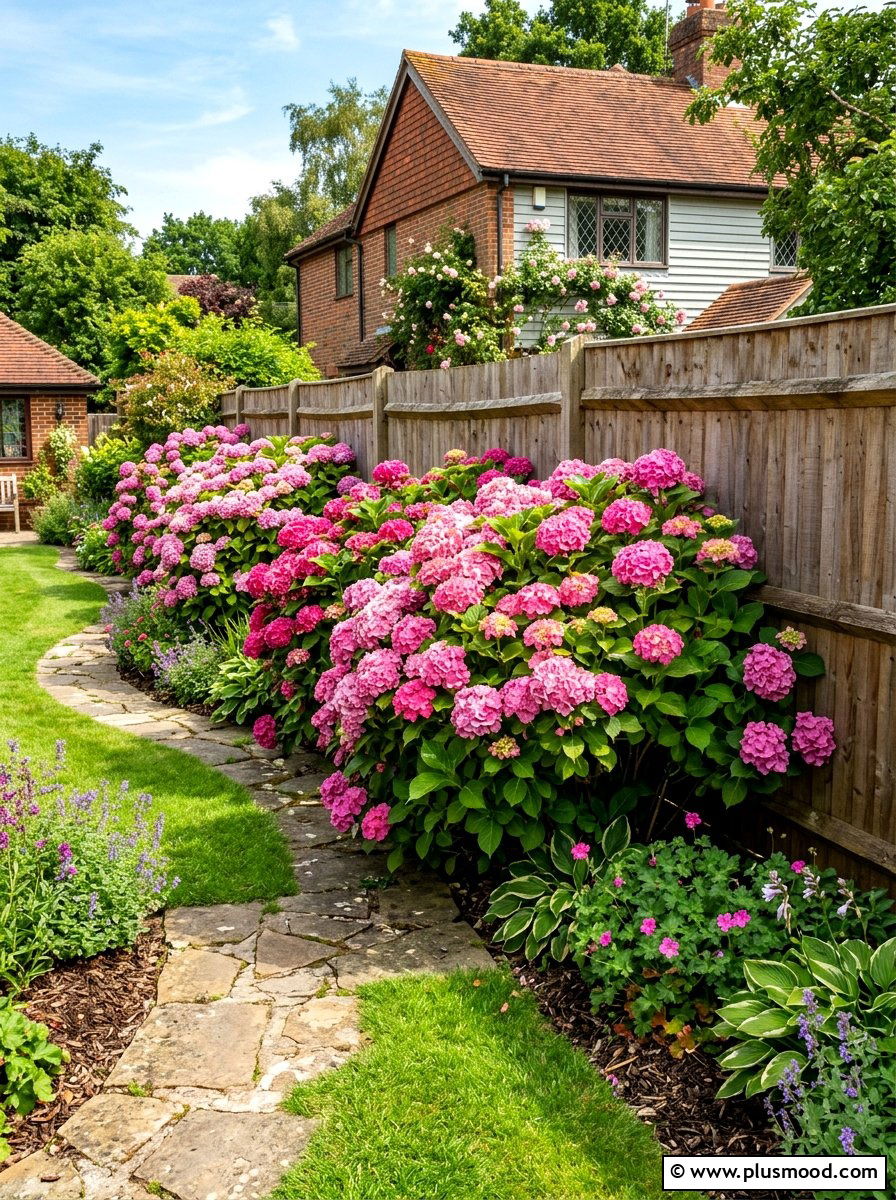
A natural flagstone garden walkway brings a timeless and organic feel to any backyard setting. These large, irregular stone slabs are perfect for creating a meandering path that mimics the flow of nature. You can choose from various earthy tones like tan, gray, and rust to complement your existing landscape. For a truly professional finish, consider planting low-growing ground cover like creeping thyme or moss between the wide gaps. This not only softens the hard edges of the stone but also adds a delightful fragrance and pops of color when stepped upon. The durability of flagstone ensures your summer path remains beautiful and functional for many years to come.
2. Pea Gravel Landscape Path
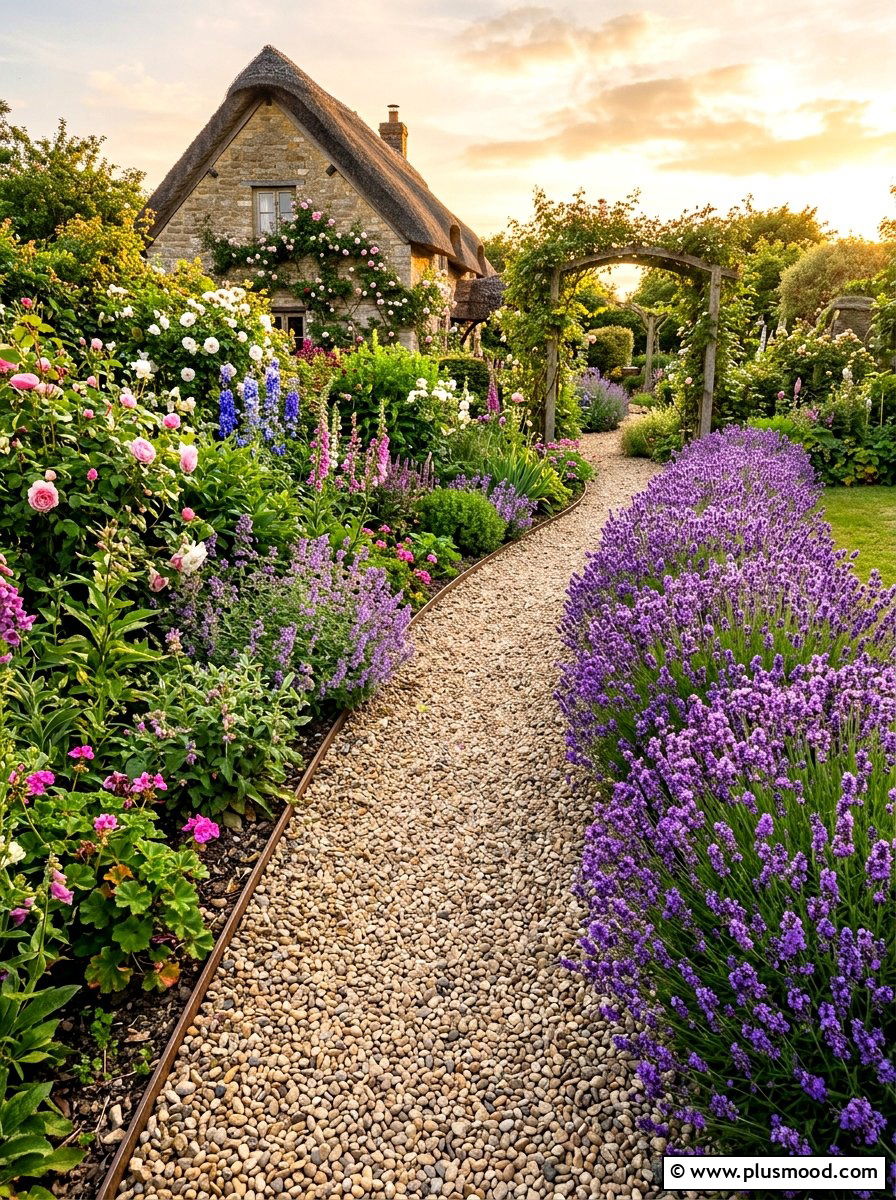
A pea gravel landscape path offers a soft, crunching sound underfoot that adds a sensory layer to your outdoor experience. This budget-friendly option is incredibly easy to install and provides excellent drainage during summer rain showers. To keep the loose stones in place, it is best to use a sturdy edging material like metal, wood, or brick along the borders. You can create a more structured look by placing larger stepping stones within the gravel bed. This combination provides a stable walking surface while maintaining the casual, rustic aesthetic of the loose stone. It is an ideal choice for connecting different garden zones with a relaxed vibe.
3. Rustic Reclaimed Brick Walkway
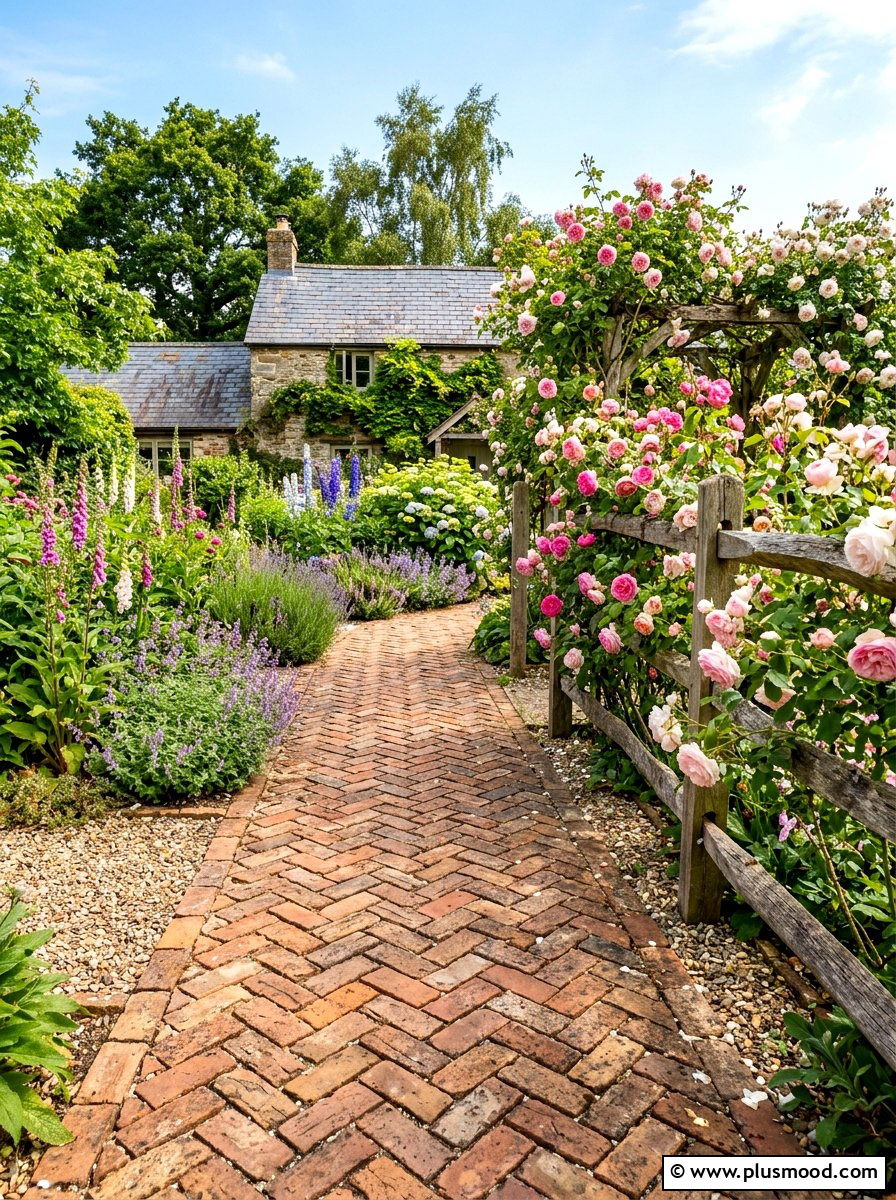
A rustic reclaimed brick walkway introduces historical charm and a sense of permanence to your summer garden. Using salvaged bricks gives the path a unique, weathered appearance with varying shades of red, orange, and brown. You can lay them in traditional patterns such as herringbone or basket weave to create visual interest and structural strength. This design pairs beautifully with cottage-style gardens filled with roses and lavender. The warm tones of the brick glow beautifully in the late afternoon sun, creating a cozy and inviting atmosphere. Because bricks are highly durable, they can withstand heavy foot traffic while remaining a beautiful focal point in your yard.
4. Circular Wood Slice Path
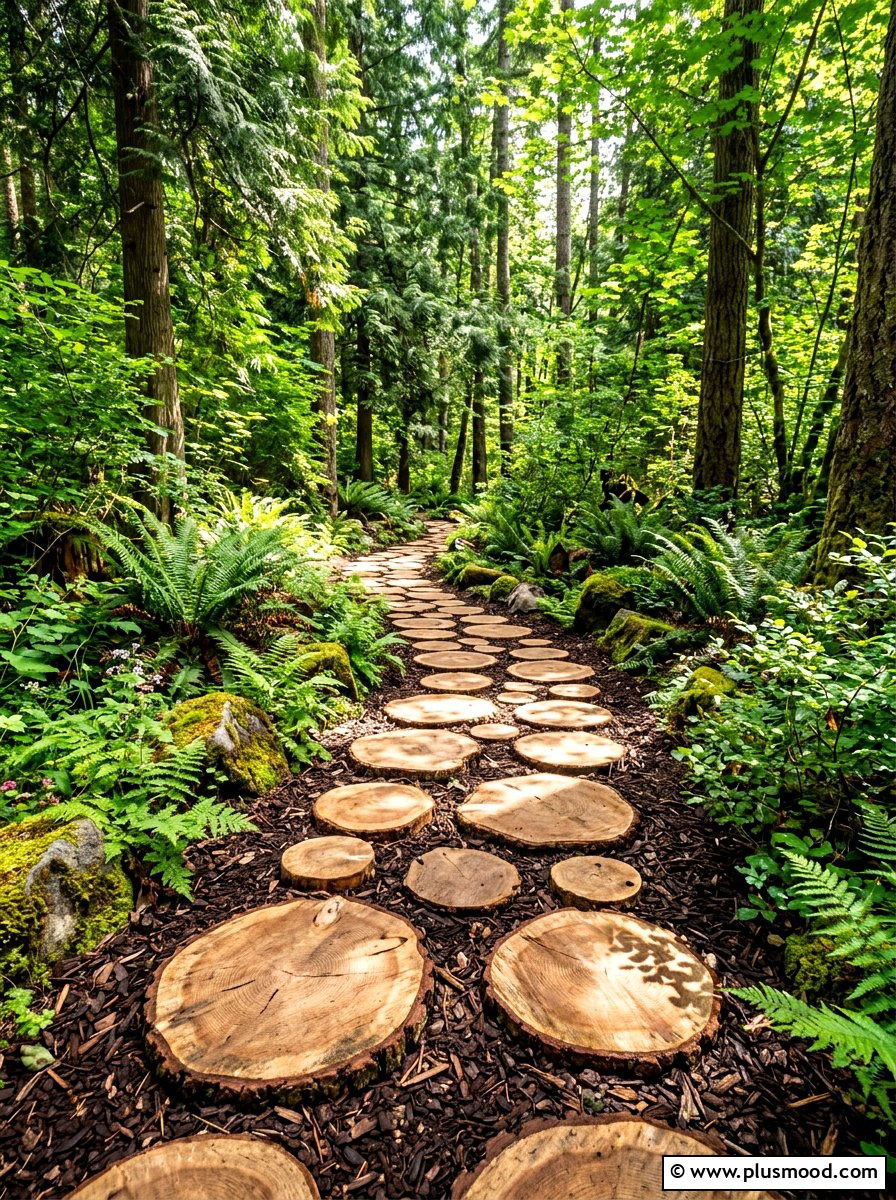
A circular wood slice path is a whimsical and eco-friendly way to navigate through a wooded or shaded garden area. By using cross-sections of rot-resistant logs, you can create a natural stepping-stone effect that feels right at home in a forest-inspired setting. These wooden rounds vary in size and texture, offering an artistic and rustic look that appeals to nature lovers. It is important to treat the wood or choose naturally durable species like cedar or redwood to prevent decay. Placing these slices over a bed of wood chips or fine mulch creates a cohesive and soft walkway that blends perfectly with the surrounding trees and shrubs.
5. Modern Slate Tile Walkway
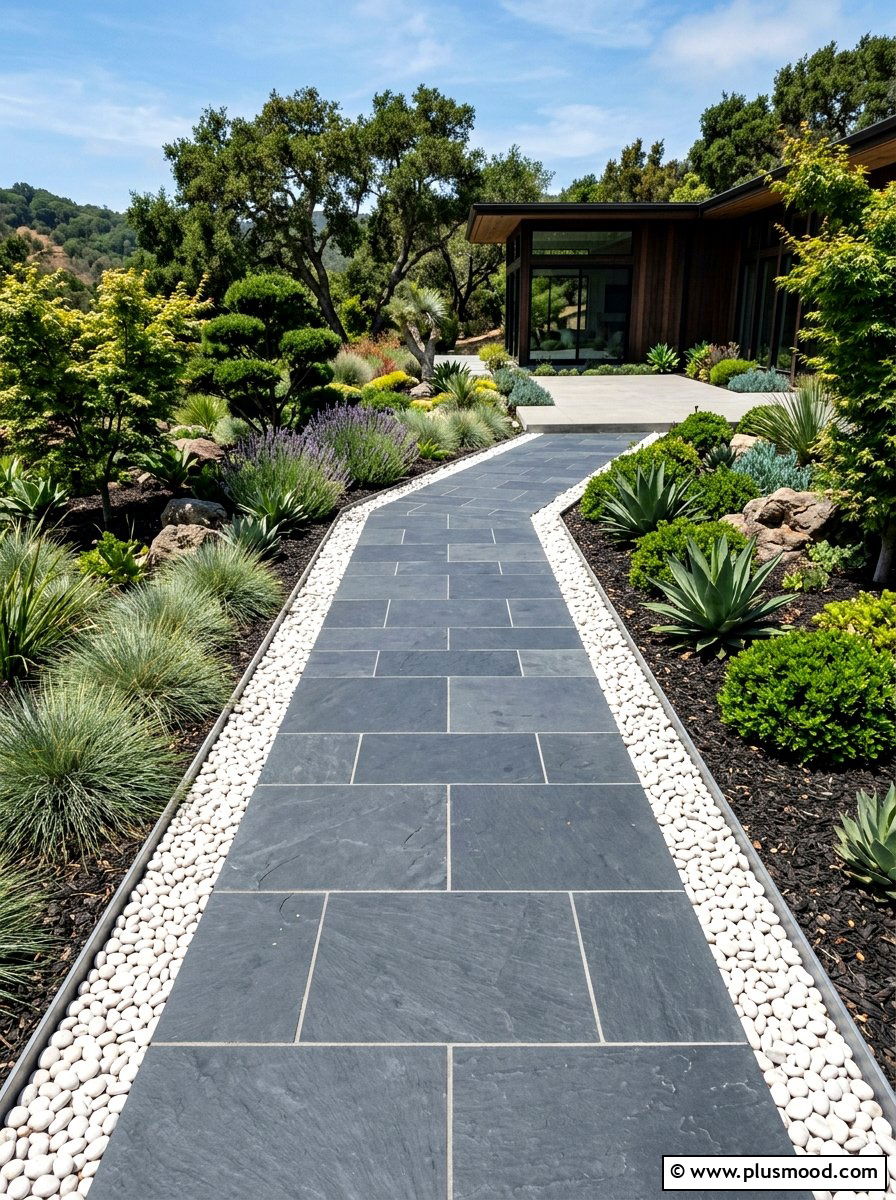
A modern slate tile walkway provides a sleek and sophisticated entrance to a contemporary garden space. Slate is known for its beautiful dark tones and subtle textures, which look particularly striking when the stones are wet or under bright summer light. You can arrange the rectangular tiles in a clean, linear fashion to emphasize the architecture of your home. To enhance the modern feel, leave uniform gaps between the tiles and fill them with contrasting white pebbles or short, manicured grass. This high-end look is perfect for minimalist landscapes where clean lines and neutral palettes take center stage, offering a durable and very stylish surface.
6. Clean Concrete Slab Walkway
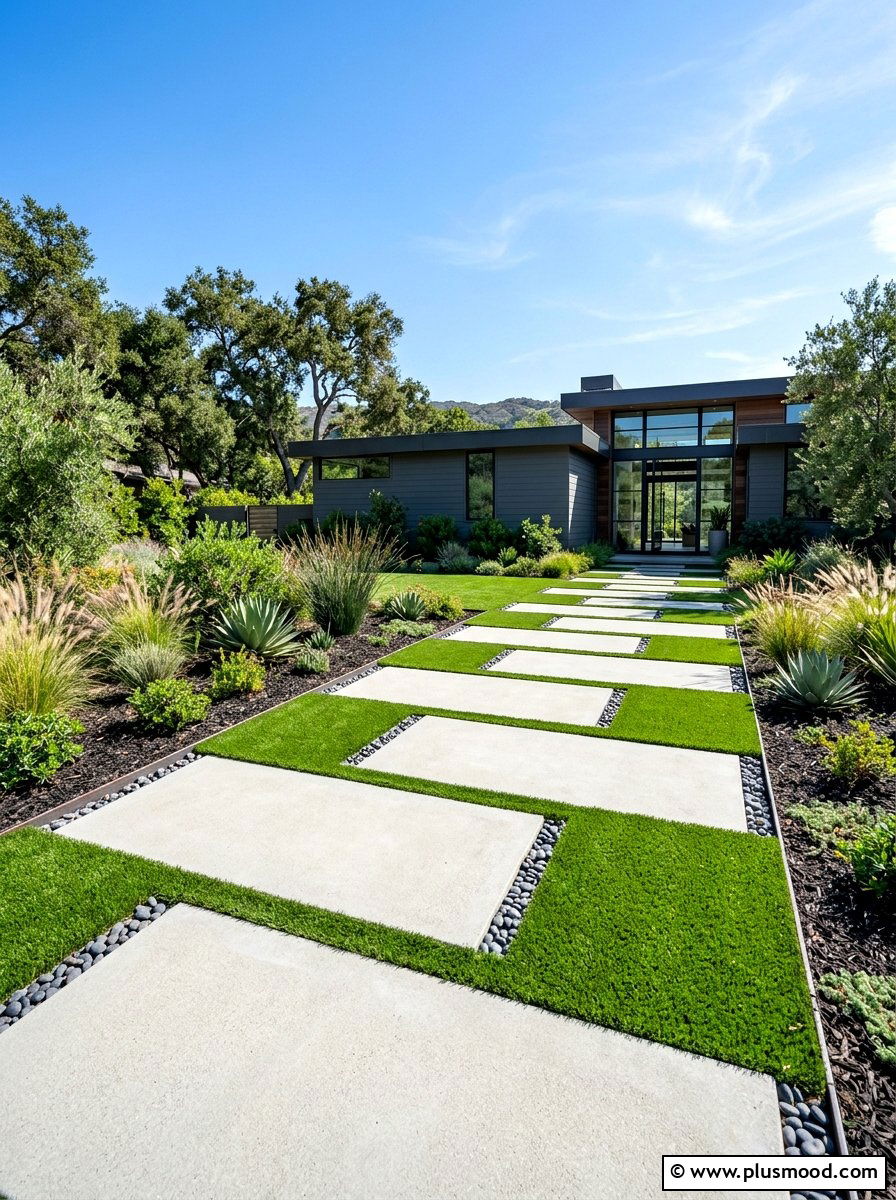
A clean concrete slab walkway is a versatile and durable solution for homeowners who appreciate minimalist design. Large, precast concrete rectangles or squares can be placed in a straight line or staggered pattern to create a rhythmic flow. This style works exceptionally well in modern landscapes, providing a smooth and level surface for walking. By surrounding the slabs with dark gray river rocks or vibrant green turf, you create a high-contrast look that defines the space. Concrete is incredibly low-maintenance and can be stained or textured to match your specific aesthetic preferences. It offers a permanent and structural feel that anchors the entire garden design.
7. Vintage Cobblestone Garden Path
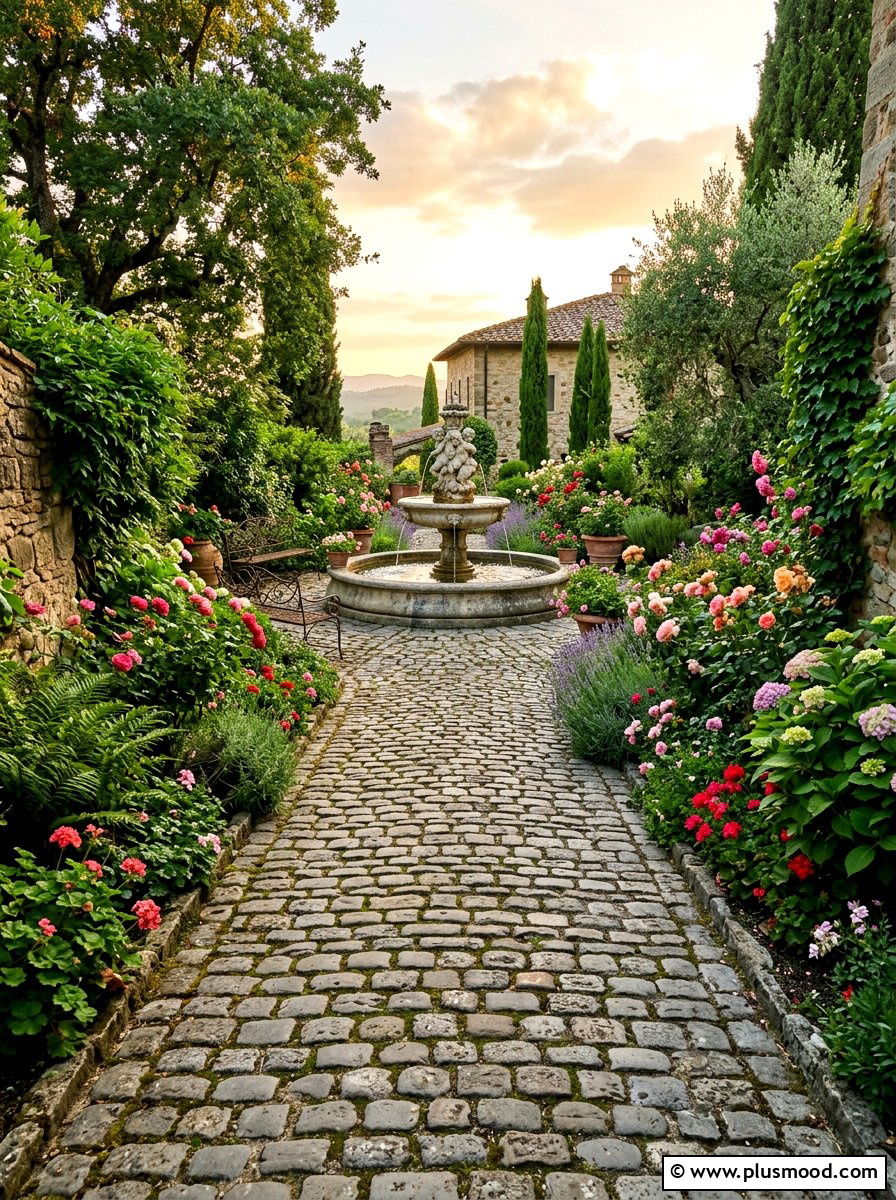
A vintage cobblestone garden path evokes the feeling of old-world European streets and brings a sense of history to your yard. These small, rounded stones are typically set in a bed of sand or mortar, creating a rugged and textured surface that is full of character. Cobblestones are exceptionally durable and can handle the weight of garden carts or heavy traffic without shifting. The irregular heights and shapes of the stones give the path a handmade quality that looks stunning alongside classic flowering borders. This design is perfect for creating a formal yet charming walkway that leads to a focal point like a fountain or a bench.
8. Organic Mulch Garden Path
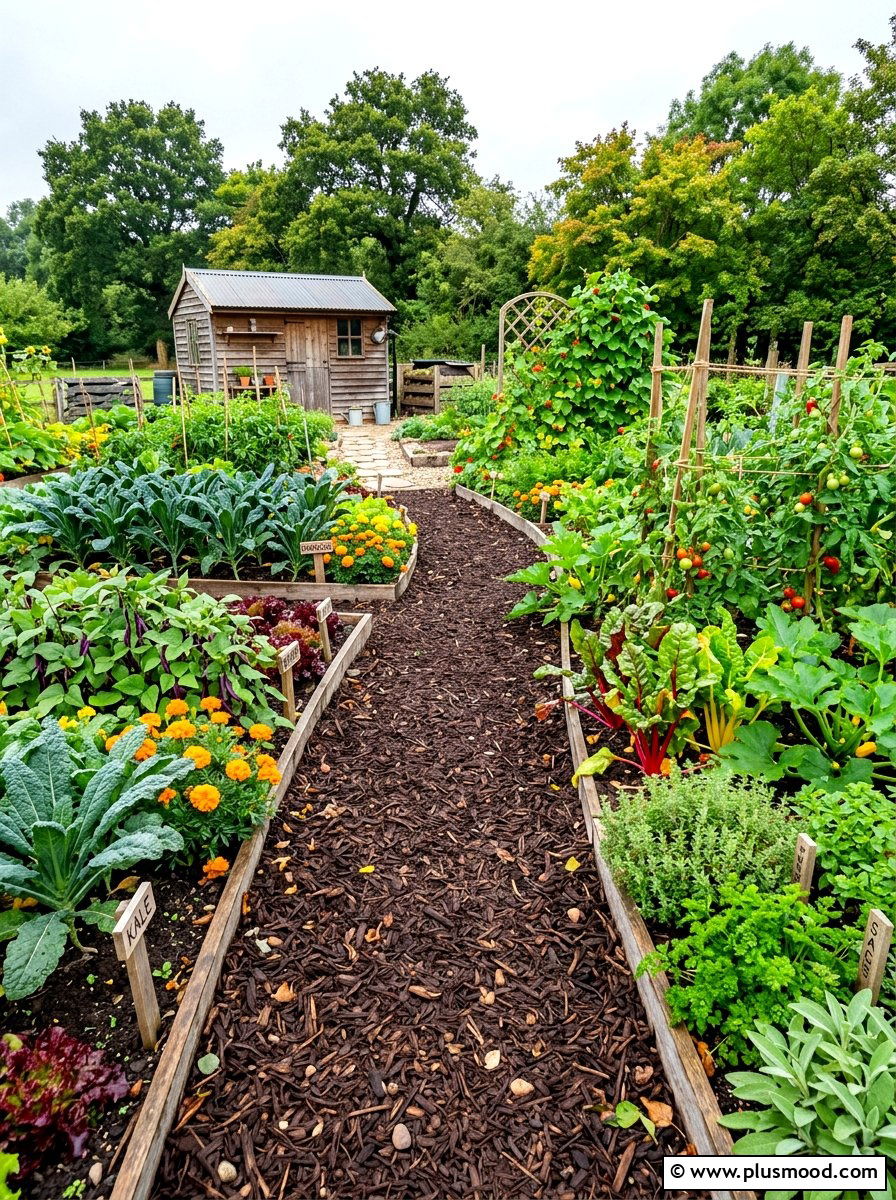
An organic mulch garden path is the simplest and most cost-effective way to create a functional trail through your summer plantings. Mulch pathways have a soft, natural appearance that integrates seamlessly with garden beds and helps to suppress weeds. They are especially useful in vegetable gardens or informal woodland areas where a rigid structure is not required. You can choose from various types of mulch, such as shredded bark or wood chips, to match the color of your soil or plants. While mulch requires occasional refreshing, it is a sustainable choice that improves the soil health over time as it breaks down naturally into the earth.
9. Polished River Rock Walkway
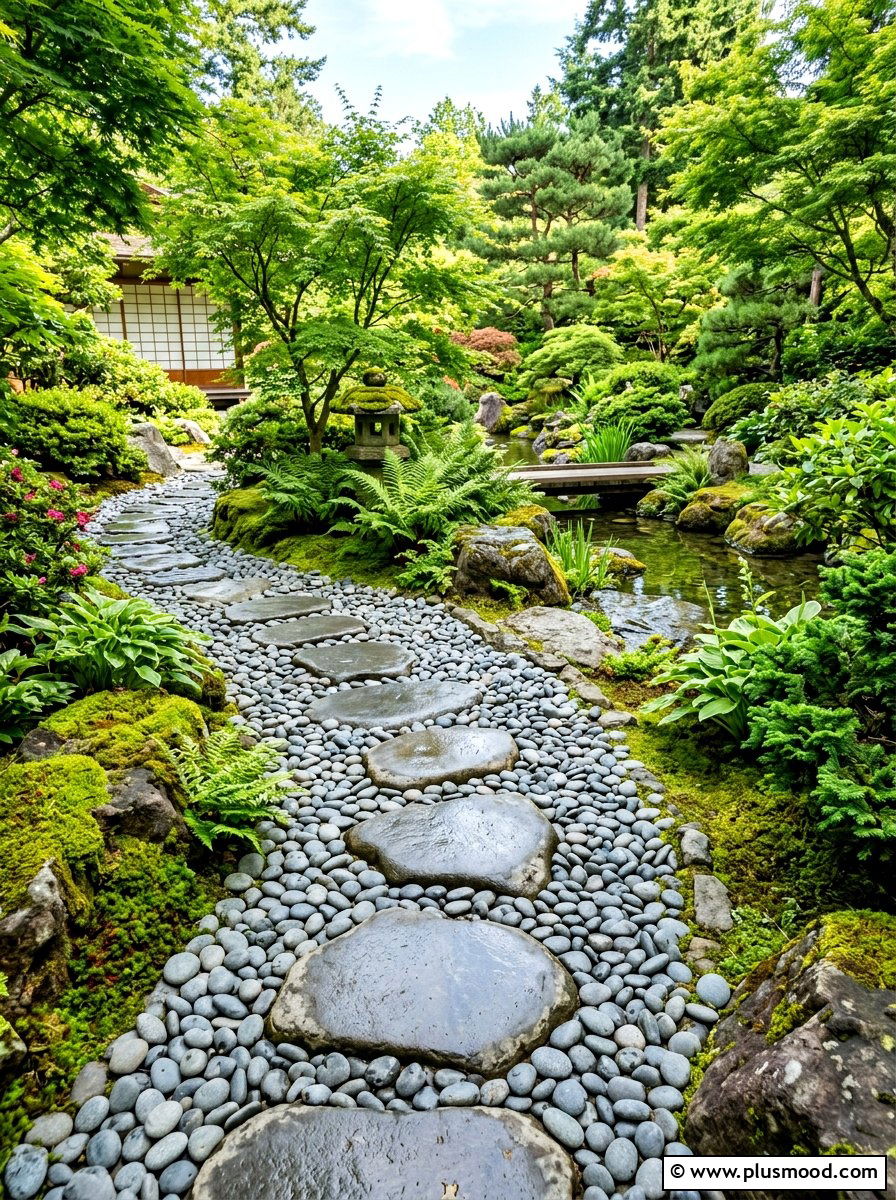
A polished river rock walkway adds a serene and sophisticated touch to your garden, often used in Zen or Japanese-inspired designs. The smooth, rounded stones come in a variety of natural colors, from cool grays to warm tans, providing a calming aesthetic. You can use these stones to create a "dry creek bed" look that doubles as a functional path. For better stability, it is often best to set larger flat stones as primary steps while the river rocks fill the surrounding space. This design provides excellent drainage and creates a beautiful visual texture that looks particularly stunning when placed near water features or lush ornamental grasses.
10. Lush Grass Path Border
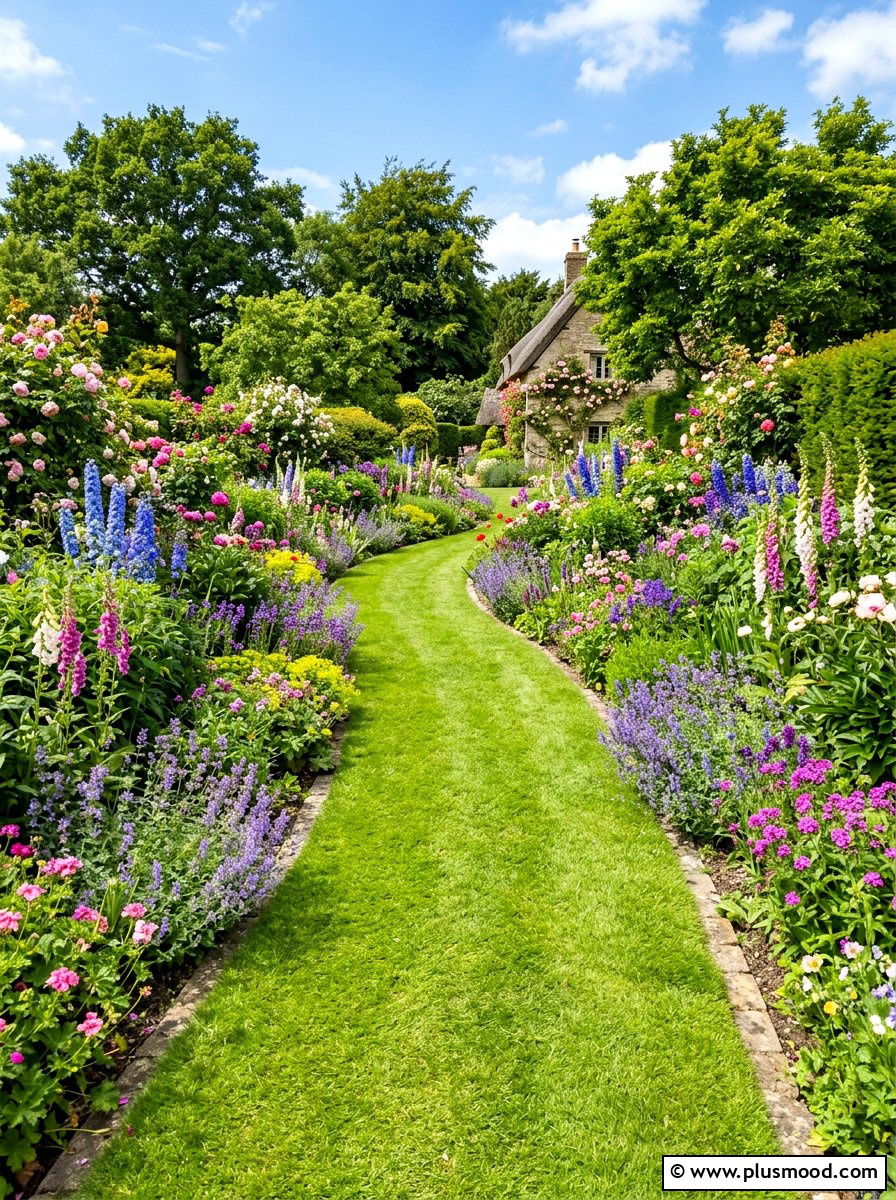
A lush grass path border is a classic choice for large, sprawling gardens where you want to maintain a soft and green appearance. This design involves keeping a mown strip of turf as the walkway, often bordered by vibrant flower beds or neatly trimmed hedges. To make the path feel intentional, you can use brick or stone edging to create a clear definition between the lawn and the plantings. Grass paths are incredibly comfortable to walk on during the summer, providing a cool surface for bare feet. While they require regular mowing and maintenance, the result is a traditional and refreshing look that feels very open.
11. Compact Decomposed Granite Path
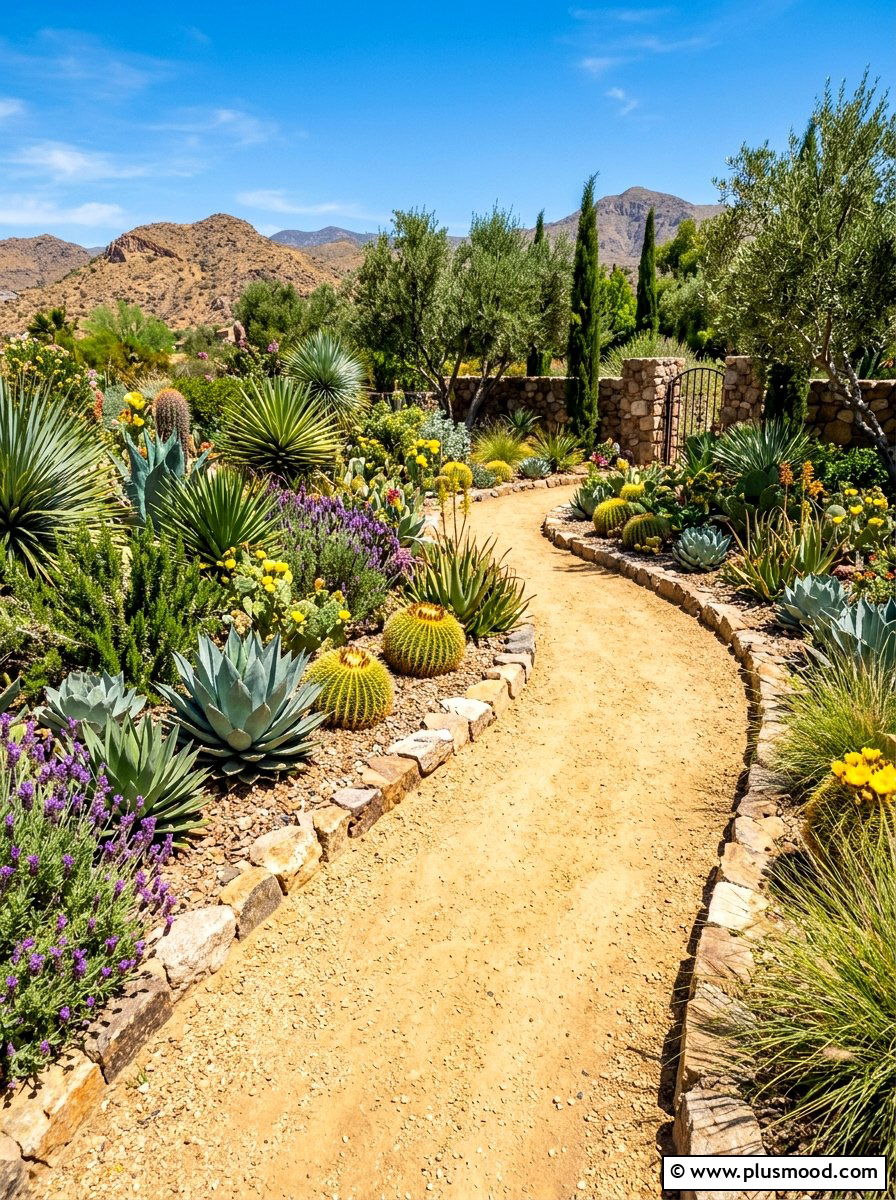
A compact decomposed granite path is a popular choice for Mediterranean or desert-style gardens due to its natural, sandy appearance and durability. This material consists of very fine granite particles that pack down firmly to create a stable, non-slip surface. It is highly permeable, allowing water to soak into the ground rather than running off. You can choose from various colors like gold, gray, or rose to match your garden's palette. Decomposed granite is often used for curved pathways because it easily follows any shape. To prevent the material from spreading into the lawn, use a subtle metal or plastic edging to keep it contained.
12. Patterned Herringbone Brick Walkway
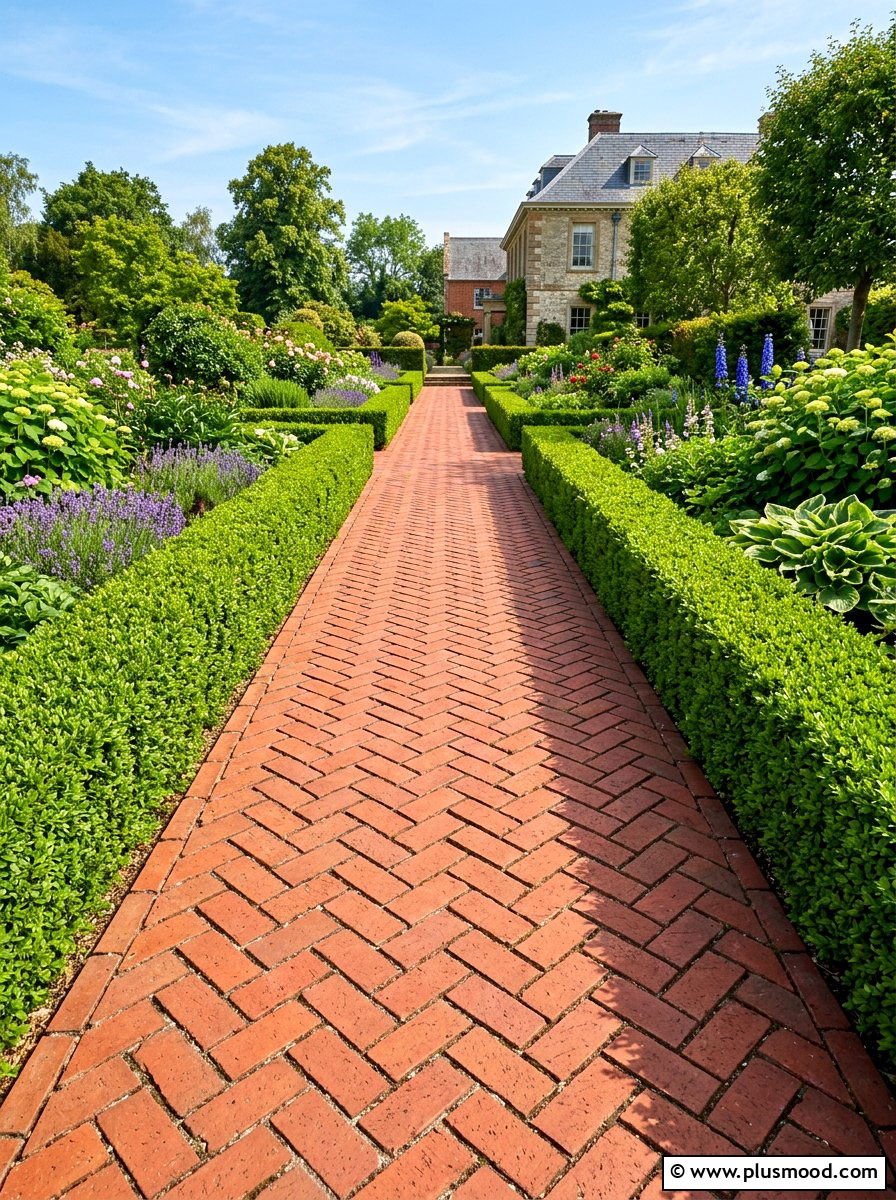
A patterned herringbone brick walkway is a sophisticated choice that adds a sense of movement and architectural detail to your landscape. By laying bricks at a forty-five-degree angle, you create a sturdy interlocking surface that resists shifting over time. This classic pattern is visually striking and can make a narrow garden path appear wider and more expansive. You can use traditional red clay bricks for a warm, historic feel or choose modern concrete pavers in neutral tones for a contemporary twist. This design works beautifully for main entrances or high-traffic areas where durability and style are equally important for the overall garden presentation.
13. Sustainable Cedar Plank Walkway
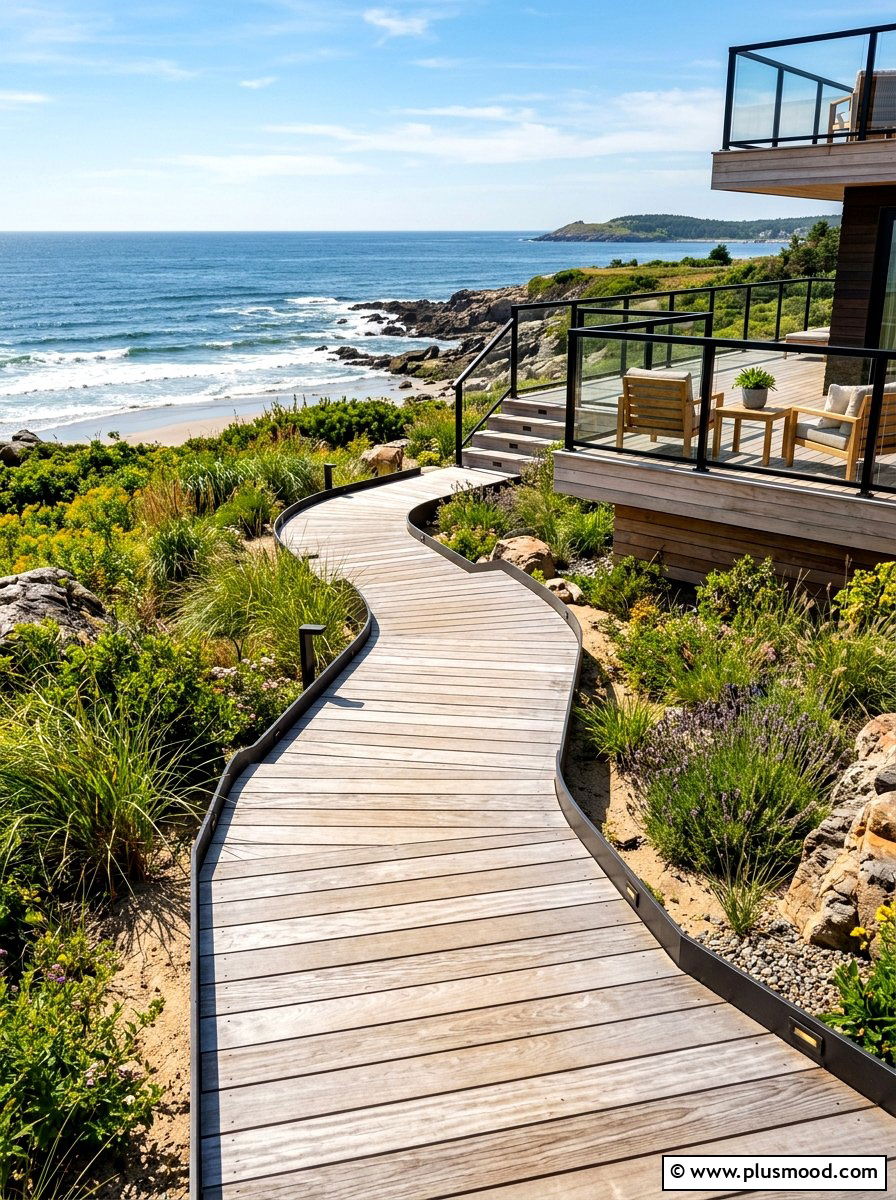
A sustainable cedar plank walkway provides a warm, elevated feel that is perfect for uneven terrain or damp garden areas. Cedar is naturally resistant to rot and insects, making it an excellent choice for long-lasting outdoor construction. You can build a low-profile boardwalk style by laying the planks across sturdy sleepers, allowing air to circulate underneath. This design creates a clean and modern look that feels like an extension of your indoor living space. The natural wood grain and pleasant aroma of cedar add a luxurious touch to the garden. It is an ideal way to bridge the gap between a deck and a distant seating area.
14. Artistic Mosaic Pebble Path
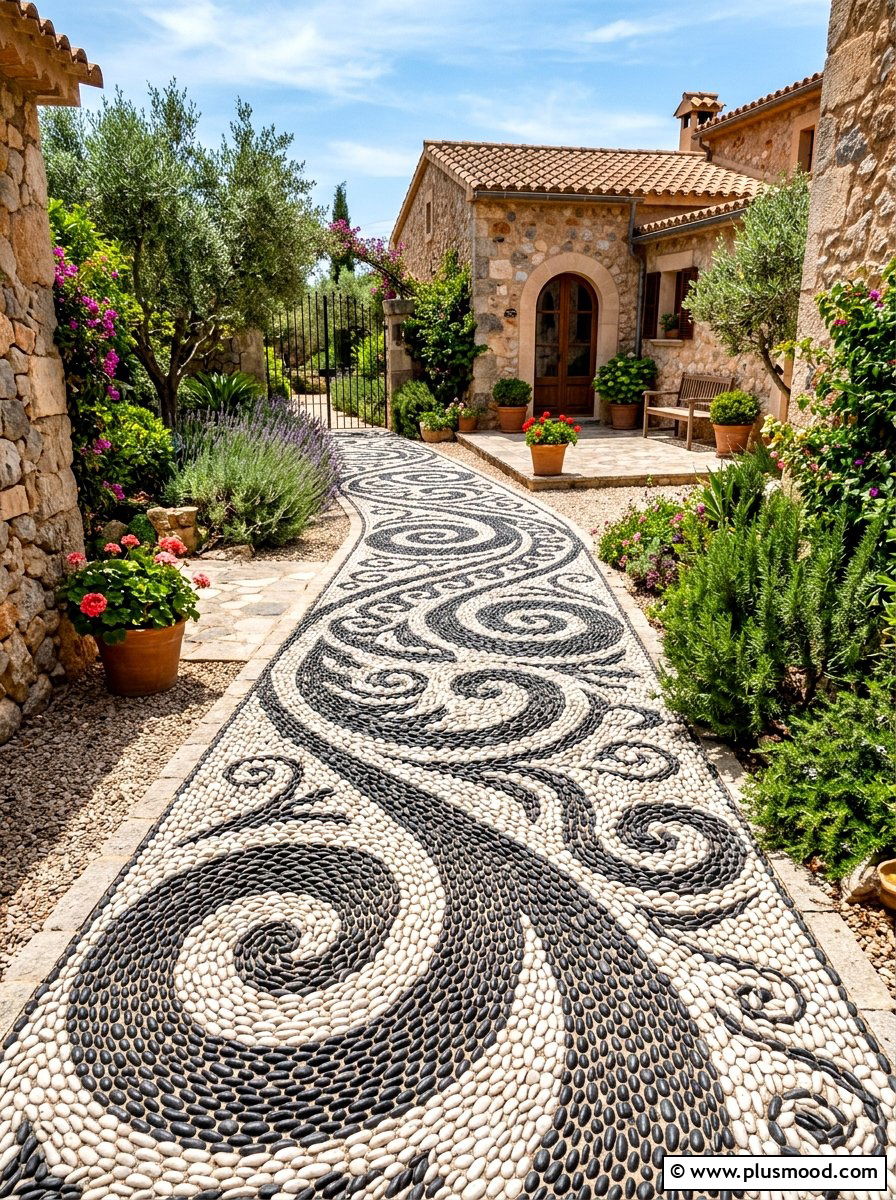
An artistic mosaic pebble path turns a simple walkway into a stunning work of handcrafted art. By setting small, colorful pebbles into a bed of wet mortar, you can create intricate patterns, swirls, or floral designs. This labor-intensive project results in a unique and personal feature that serves as a major focal point in your summer garden. You can use pebbles of varying sizes and colors to build depth and contrast within the design. While these paths are highly decorative, they are also very durable and provide a slip-resistant surface. This style is perfect for small courtyard gardens where every detail counts toward the overall atmosphere.
15. Traditional Limestone Flagstone Walkway
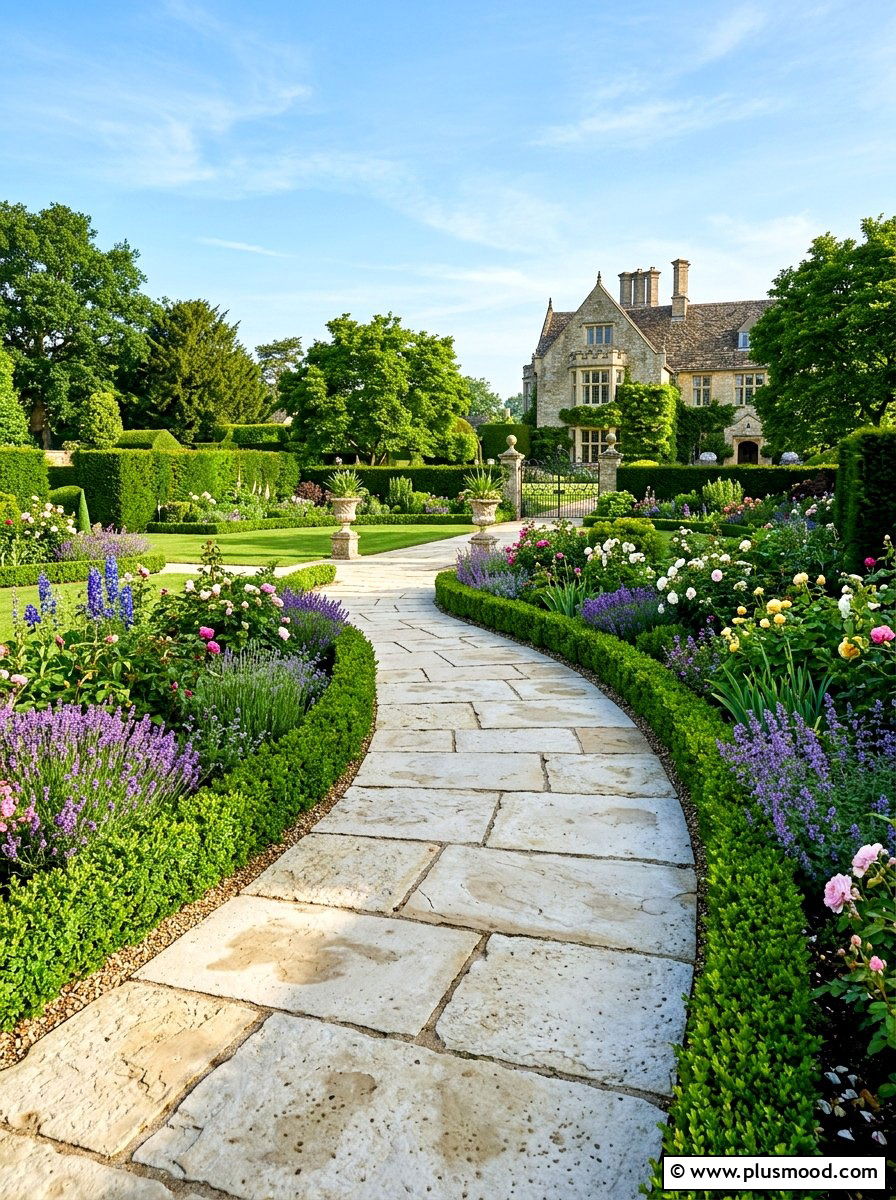
A traditional limestone flagstone walkway offers a bright and elegant look that reflects the summer sun beautifully. Limestone is prized for its uniform texture and light color palette, ranging from creamy white to soft gray. Using large, square-cut slabs creates a formal and clean aesthetic that is perfect for a classic estate-style garden. The light color of the stone stays cooler underfoot than darker materials, making it a practical choice for hot summer climates. When paired with neatly trimmed boxwood hedges or colorful perennial borders, a limestone path creates a sense of luxury and order that elevates the entire outdoor living space for your guests.
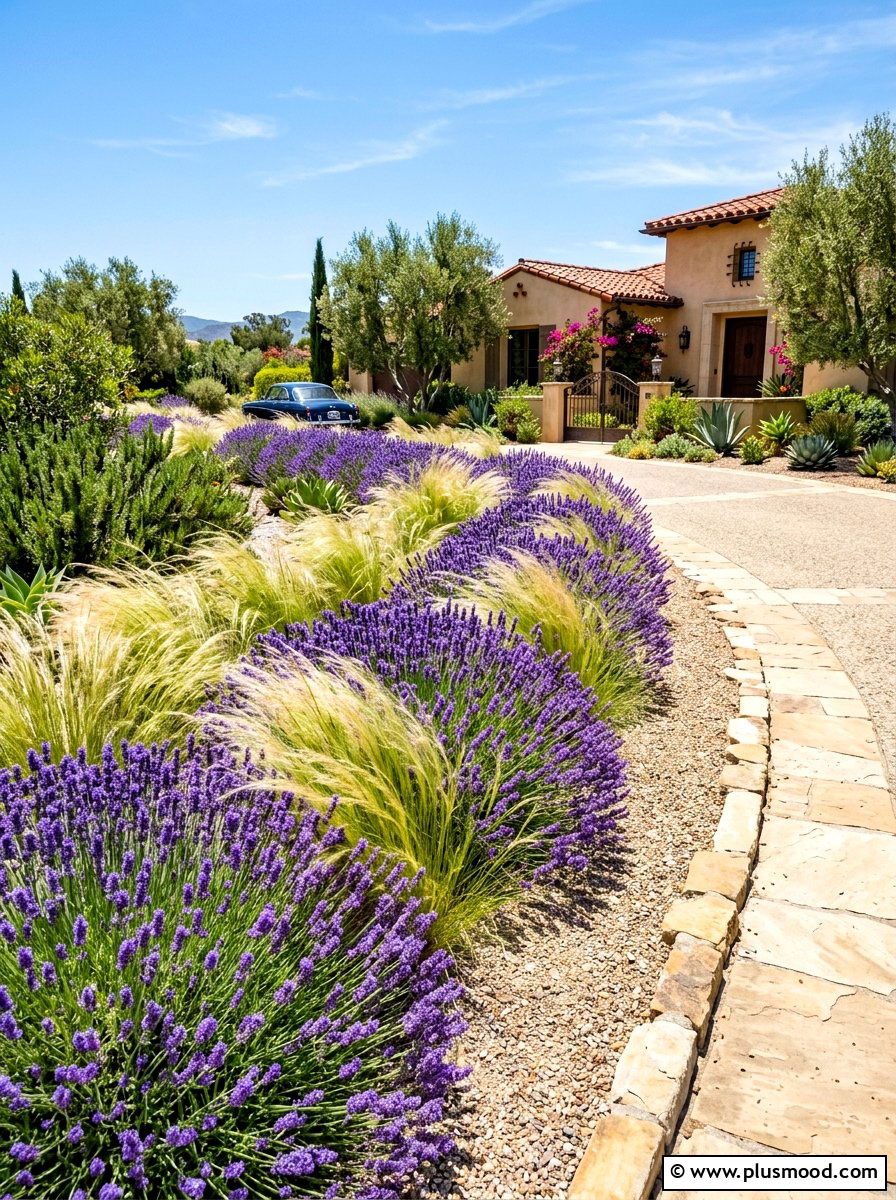
16. Natural Bark Mulch Path
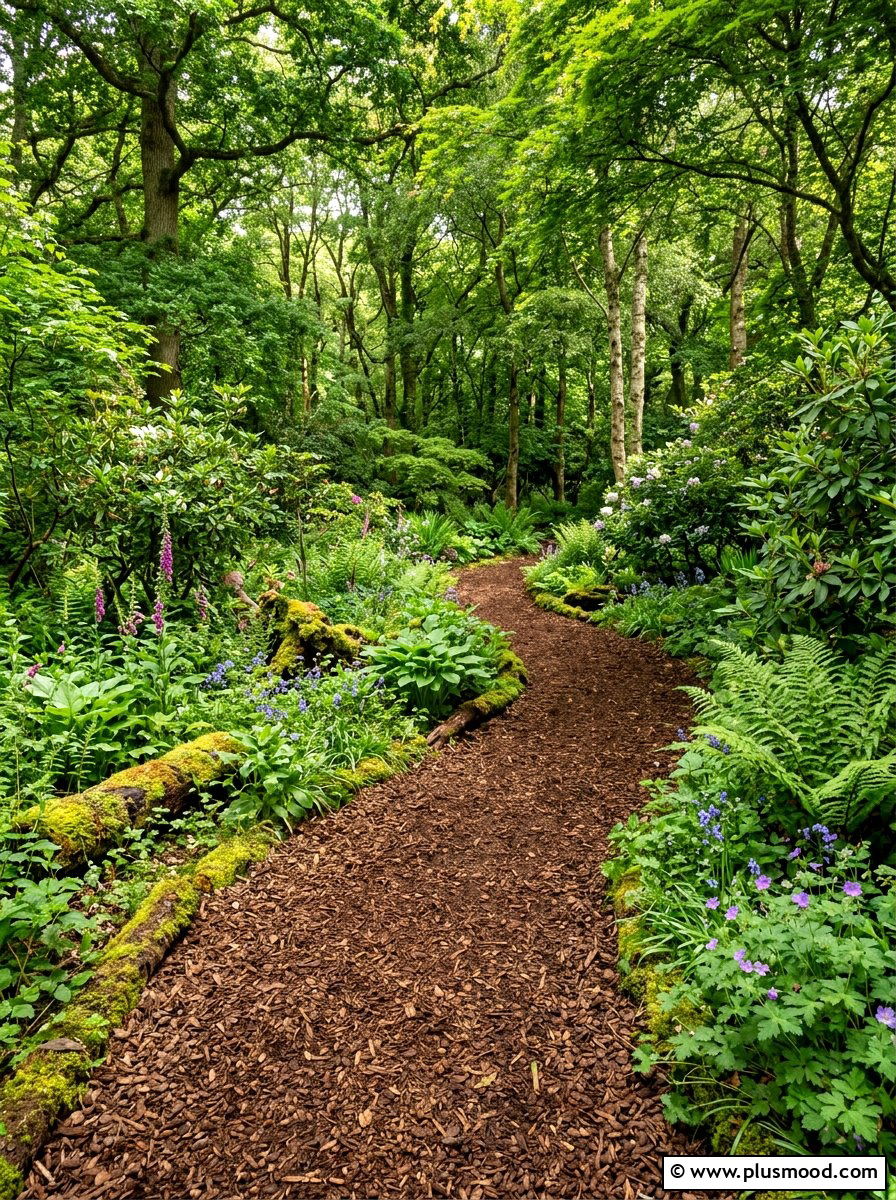
A natural bark mulch path is an excellent choice for creating a soft and informal trail through a woodland or cottage garden. This material is made from shredded tree bark, offering a rich, dark brown color that provides a beautiful contrast to green foliage. Bark mulch is very easy to spread and conforms to any shape, making it ideal for winding paths through dense plantings. It creates a cushioned surface that is easy on the joints and feels very organic. Because it is a natural byproduct, it is an eco-friendly option that eventually decomposes to enrich the soil, making it a sustainable gardening choice.
17. Elegant Travertine Outdoor Walkway
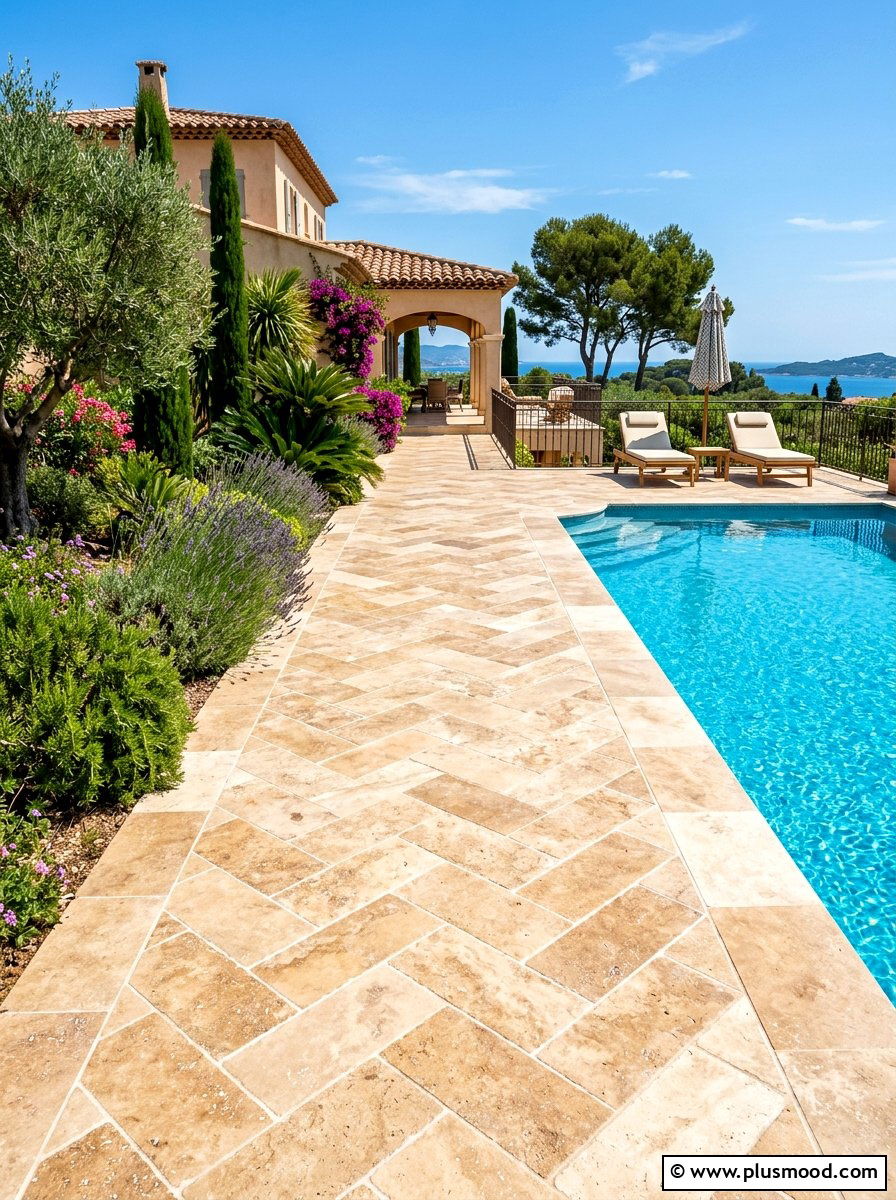
An elegant travertine outdoor walkway brings a touch of Mediterranean luxury to your backyard oasis. Travertine is a natural stone known for its unique pitted texture and warm, sandy hues that stay remarkably cool in the summer heat. You can lay the tiles in a French pattern for a sophisticated, old-world look that pairs perfectly with a pool area or a sun-drenched patio. The porous nature of the stone provides natural slip resistance, making it both safe and beautiful. Surrounding the path with lavender, rosemary, or olive trees enhances the Mediterranean vibe, creating a cohesive and high-end design that feels like a permanent vacation spot.
18. Textured Sandstone Garden Path
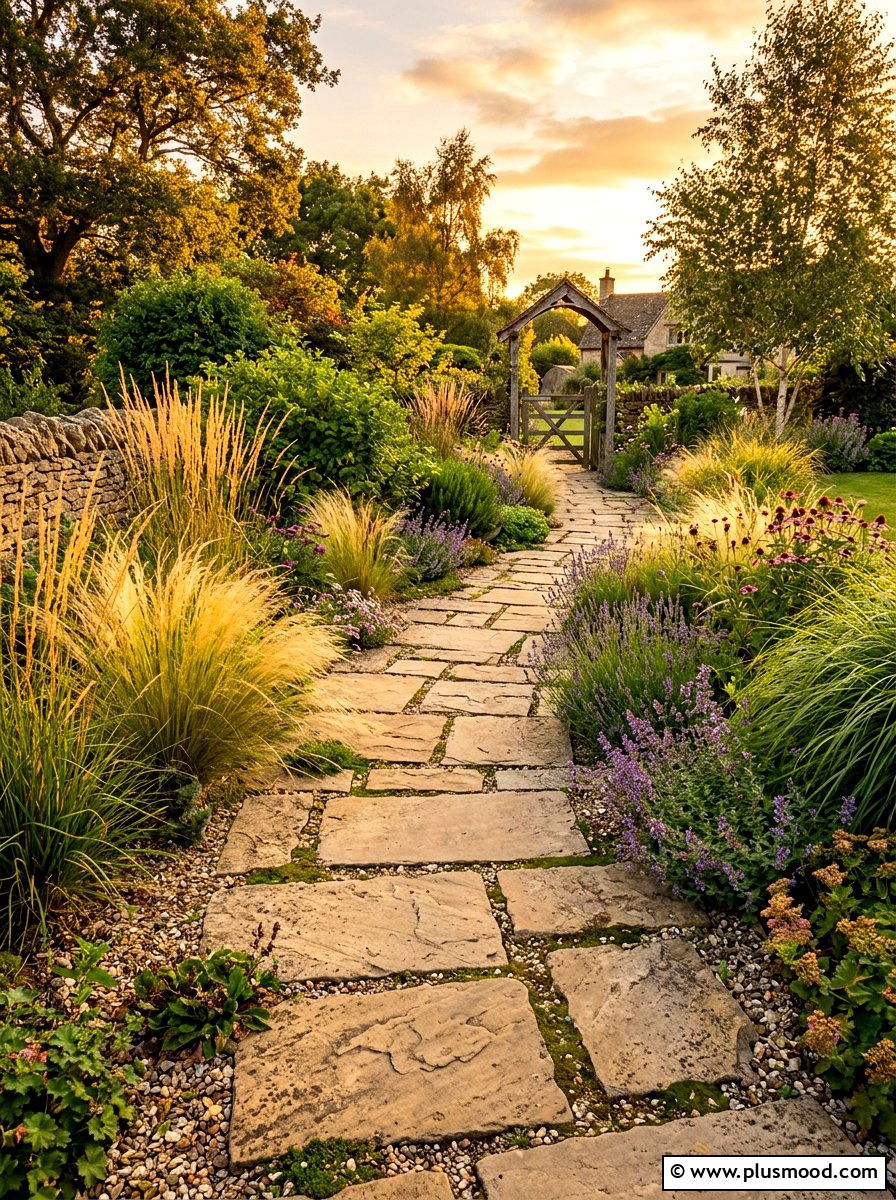
A textured sandstone garden path offers a warm and inviting look with its natural variations in color and grain. Sandstone is available in a wide array of shades, including buff, tan, and sunset orange, allowing you to match it to your home's exterior. The naturally riven surface provides excellent grip, which is important for garden safety during rainy periods. You can use irregular pieces for a rustic feel or sawn-edge slabs for a more polished and modern appearance. This versatile stone looks stunning when bordered by ornamental grasses and brightly colored summer flowers, providing a durable and timeless walkway that blends into the natural environment.
19. Structured Bluestone Stepping Stones
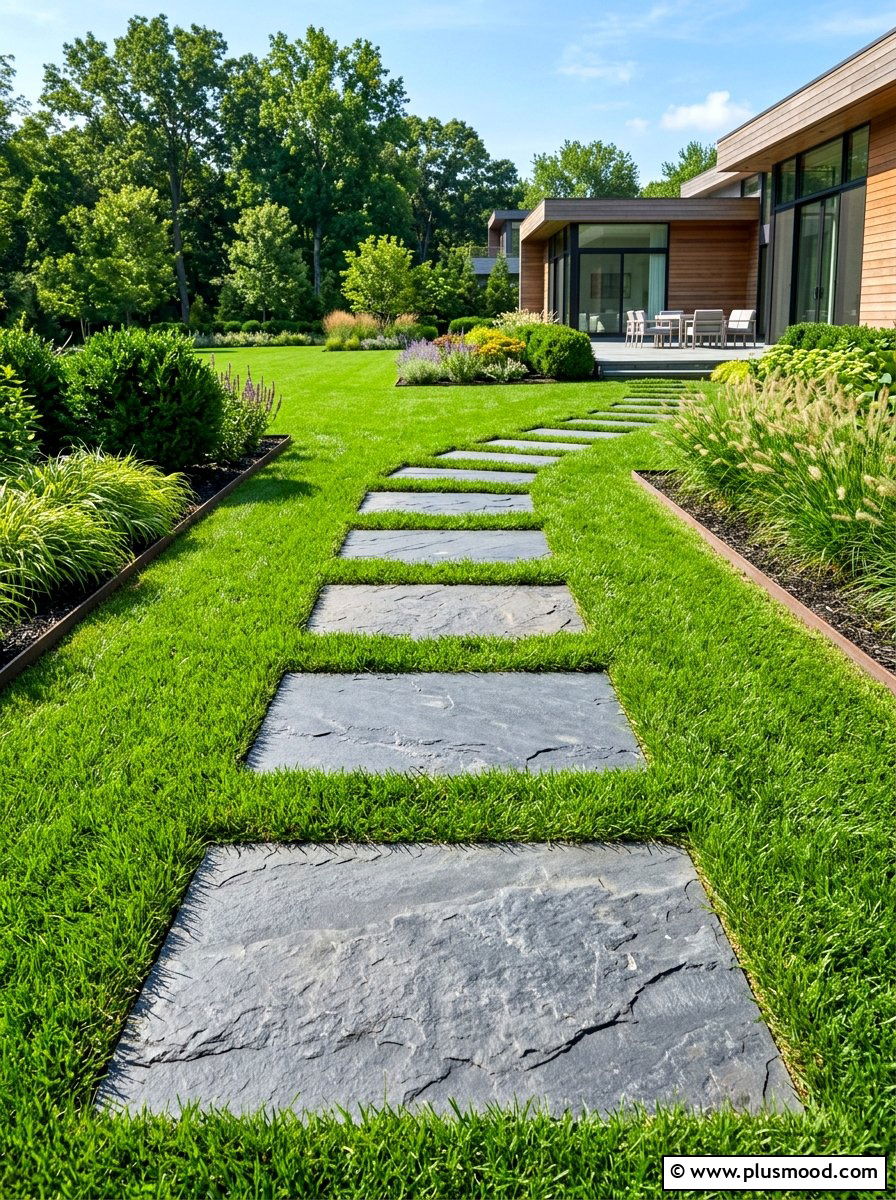
Structured bluestone stepping stones provide a clean and rhythmic way to navigate across a lush lawn or through a garden bed. Bluestone is a dense and durable sandstone with a beautiful blue-gray color that looks very sophisticated in a green landscape. By placing large, rectangular slabs at even intervals, you create a modern and intentional path that protects your grass from wear. You can plant low-profile ground covers like dichondra or dwarf mondo grass around the stones to soften the look and fill the gaps. This design offers a perfect balance between hardscaping and greenery, creating a clean and functional path that feels integrated.
20. Coastal Crushed Shell Path
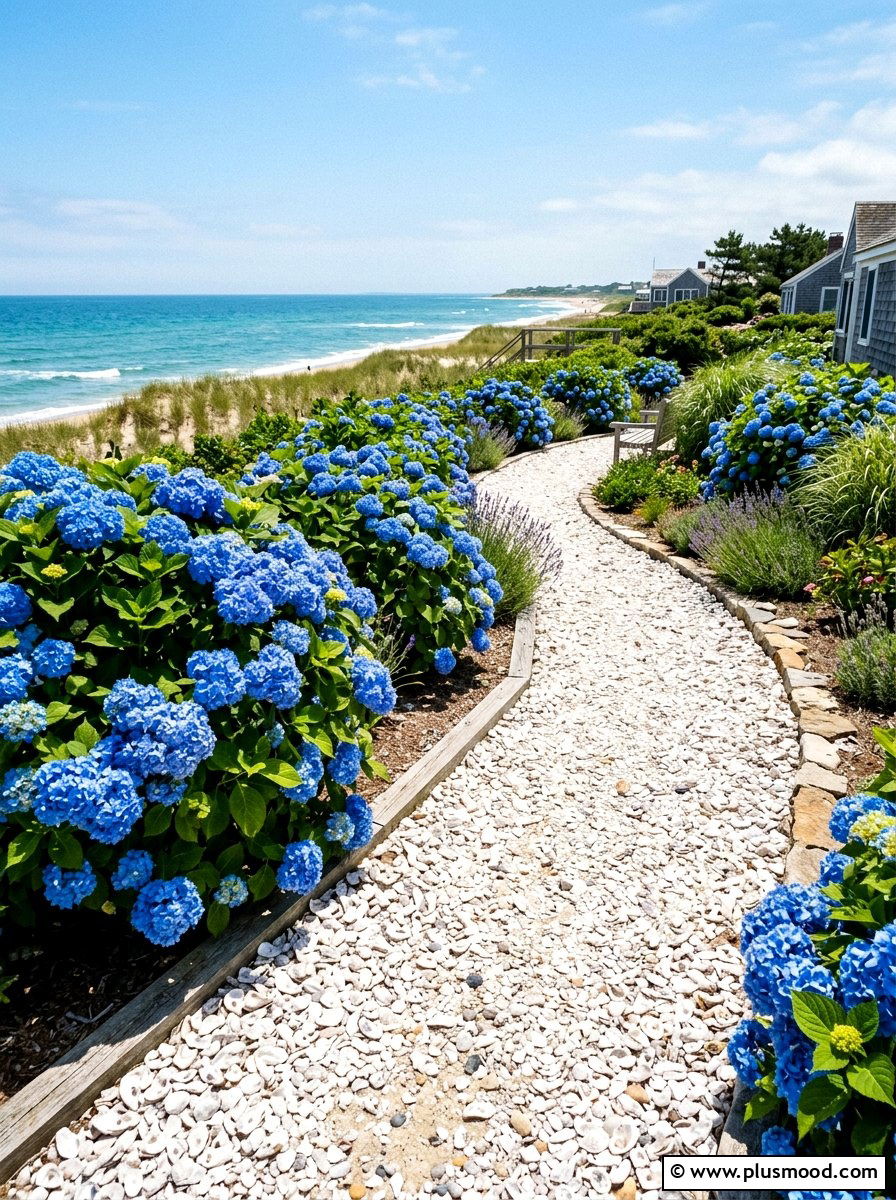
A coastal crushed shell path is a unique and charming way to bring the feeling of the beach to your summer garden. Often made from crushed oyster or clam shells, this material provides a bright, white surface that reflects the light and sparkles in the sun. As the shells are walked upon, they break down into smaller pieces, creating a stable and well-draining walkway. This style is perfect for seaside homes or any garden where you want a relaxed, coastal aesthetic. The shells provide a beautiful contrast to blue-flowering plants and ornamental grasses, offering a sustainable and eco-friendly paving option that feels very special.
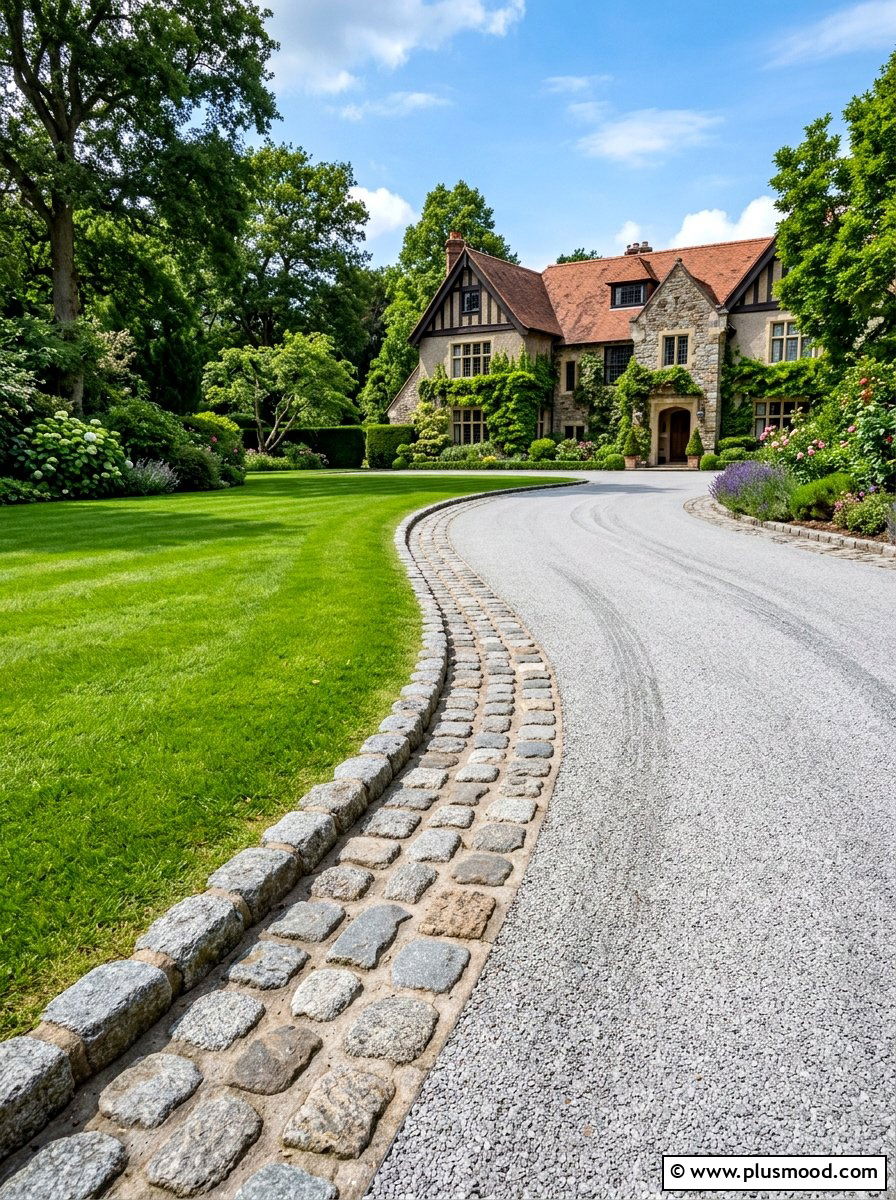
21. Geometric Paver Garden Walkway
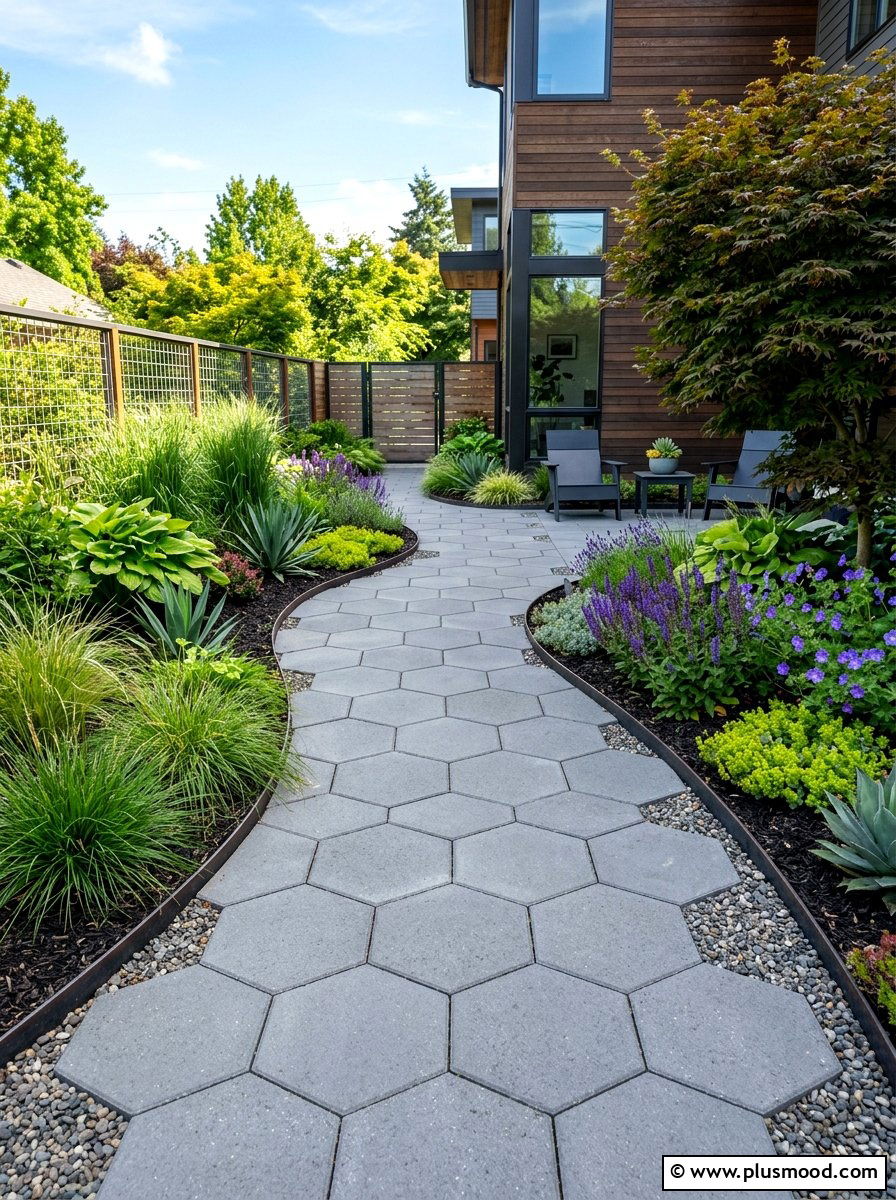
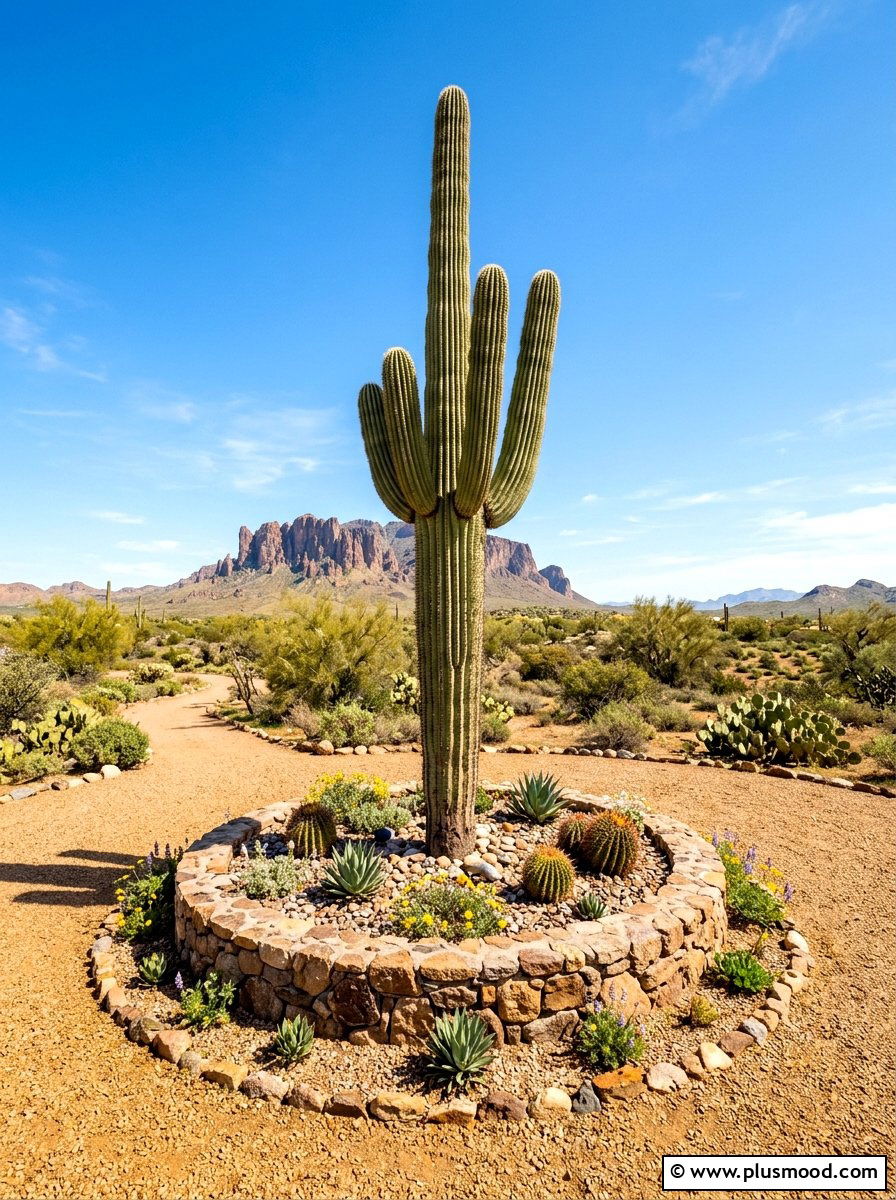
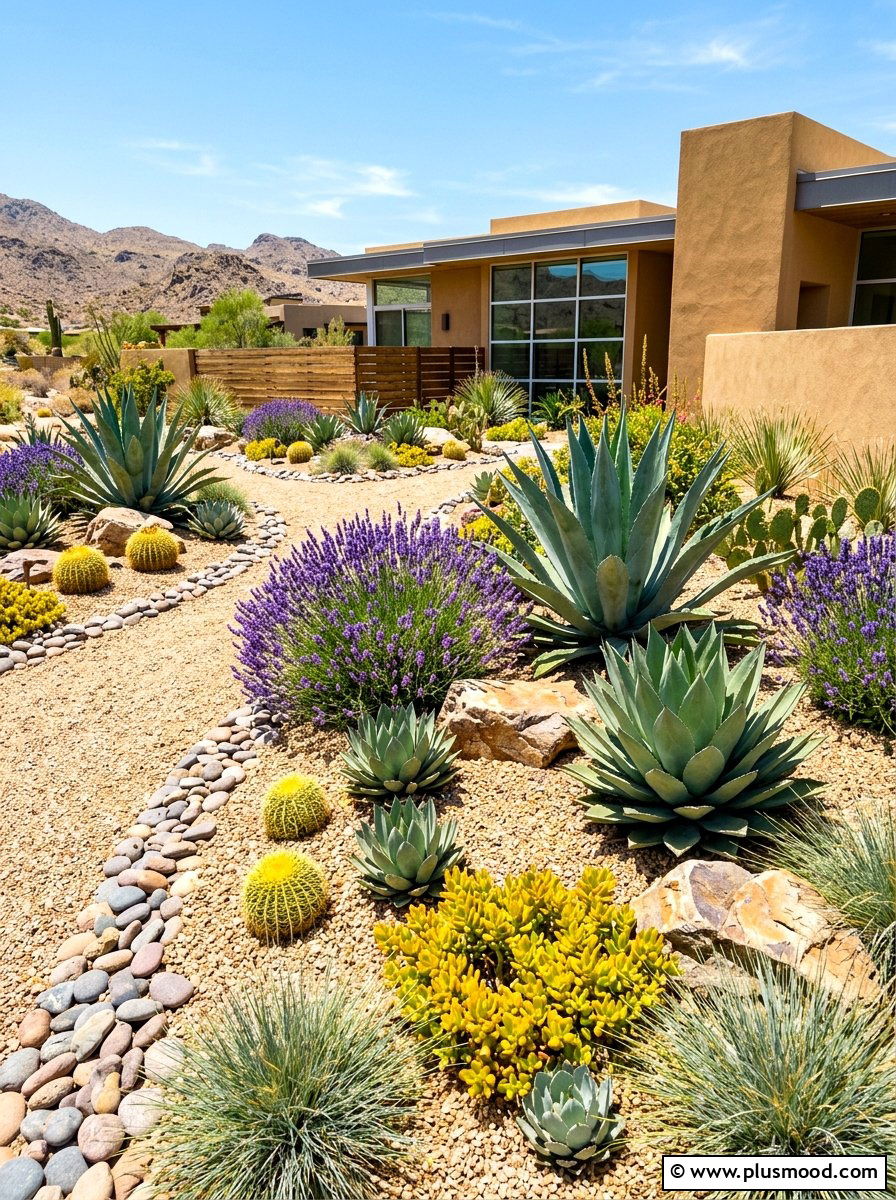
A geometric paver garden walkway allows for endless creativity and precision in your landscape design. Modern concrete pavers come in a variety of shapes, from hexagons to long planks, enabling you to create intricate patterns that reflect your personal style. Using contrasting colors can highlight the geometric shapes and add a bold, graphic element to your yard. This type of pathway is extremely durable and easy to maintain, as individual pavers can be replaced if they become damaged. When laid over a properly prepared base, these paths remain level and stable for years, providing a high-quality and functional surface that enhances your home's architecture.
22. Forest Log Round Path
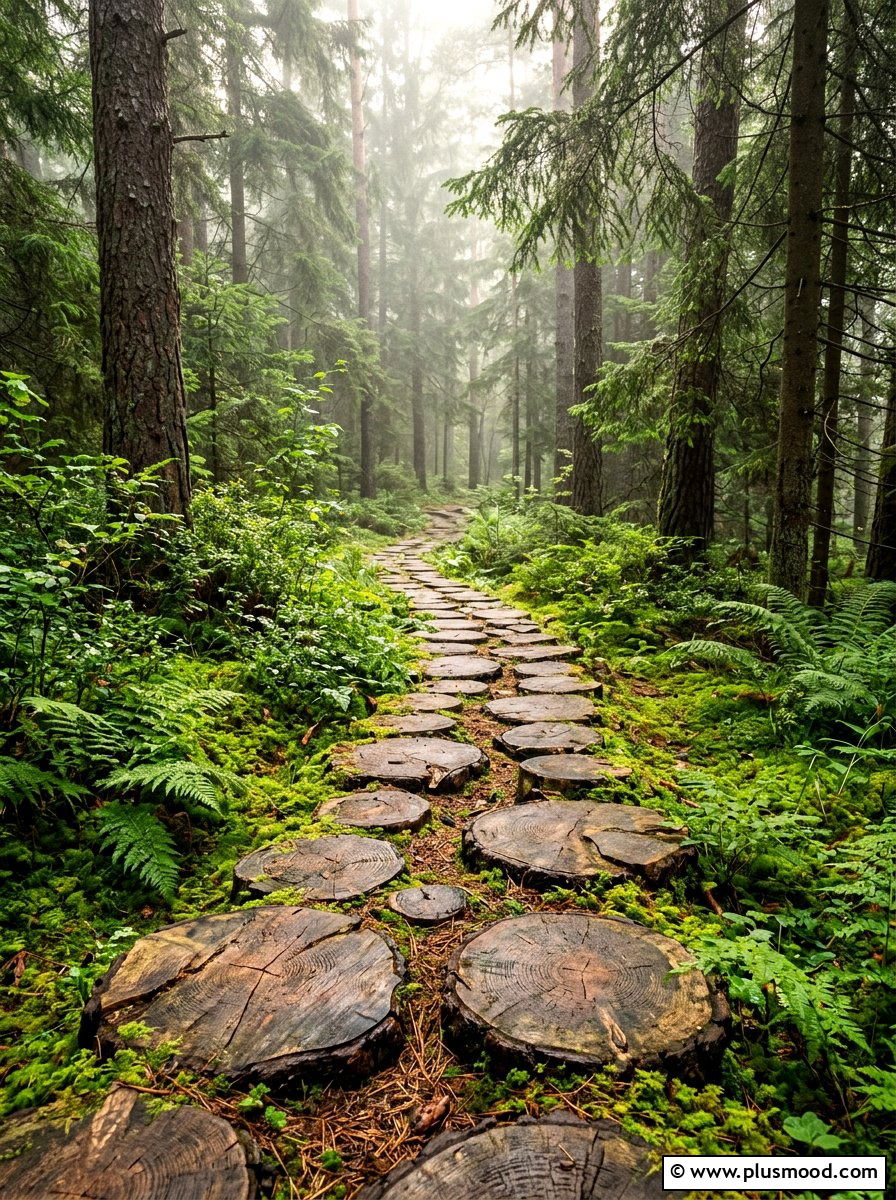
A forest log round path is the ultimate DIY project for those who want a truly rustic and natural garden walkway. By slicing fallen trees into thick discs, you can create a charming trail that looks like it grew right out of the earth. These log rounds are perfect for informal areas or children's play gardens, offering a sense of adventure and discovery. It is best to set them into a bed of gravel or sand to provide stability and drainage. The varying rings and textures of the wood add a lot of visual interest and a tactile quality to the garden, making every step a unique experience.
23. Rugged Granite Cobblestone Walkway
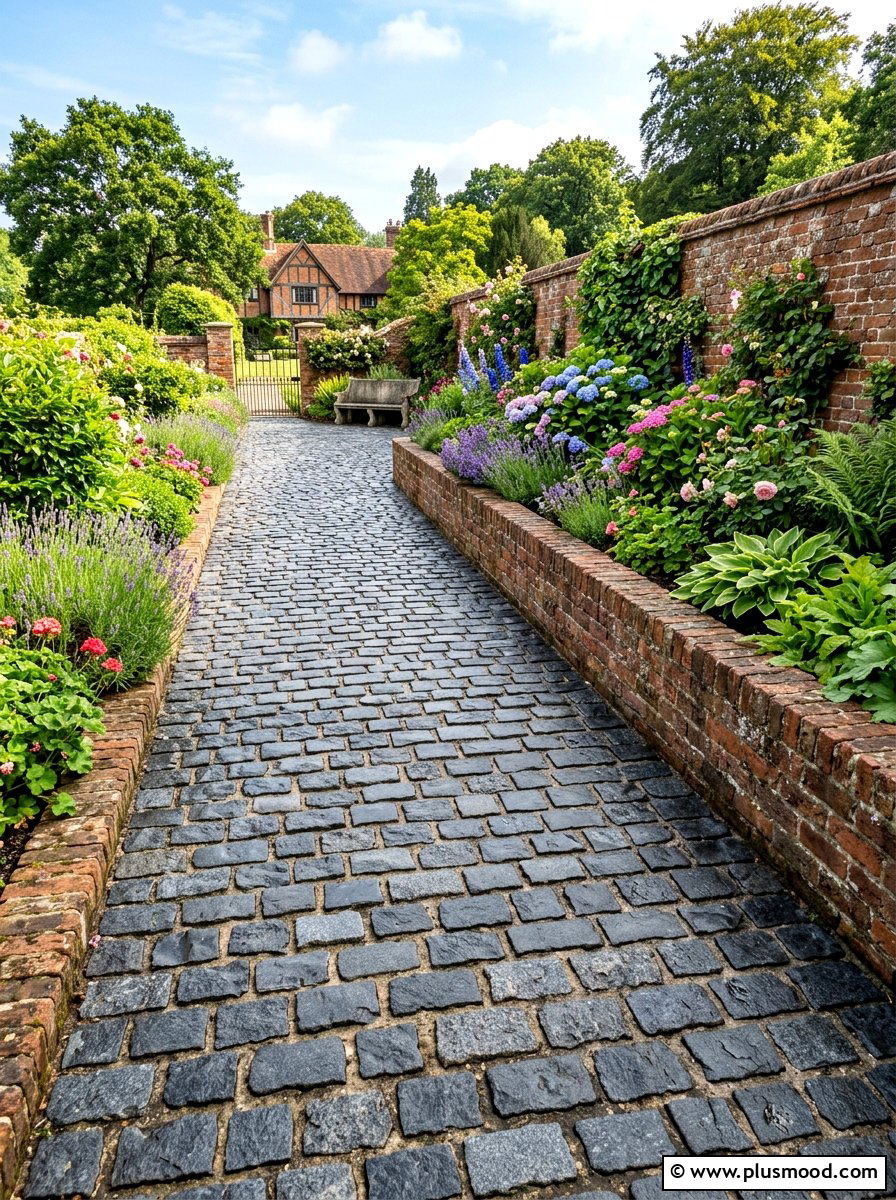
A rugged granite cobblestone walkway provides unmatched durability and a strong, masculine aesthetic for your outdoor space. Granite is one of the hardest natural stones available, meaning it will not crack or wear down even after decades of heavy use. The small, square blocks can be arranged in straight rows or circular patterns to create a sense of structure and scale. The salt-and-pepper gray tones of granite provide a neutral backdrop that makes colorful summer blooms truly pop. This style is ideal for traditional or formal gardens where you want a walkway that feels substantial and permanent, offering a high-end finish that never goes out of style.
24. Mediterranean Terracotta Tile Path
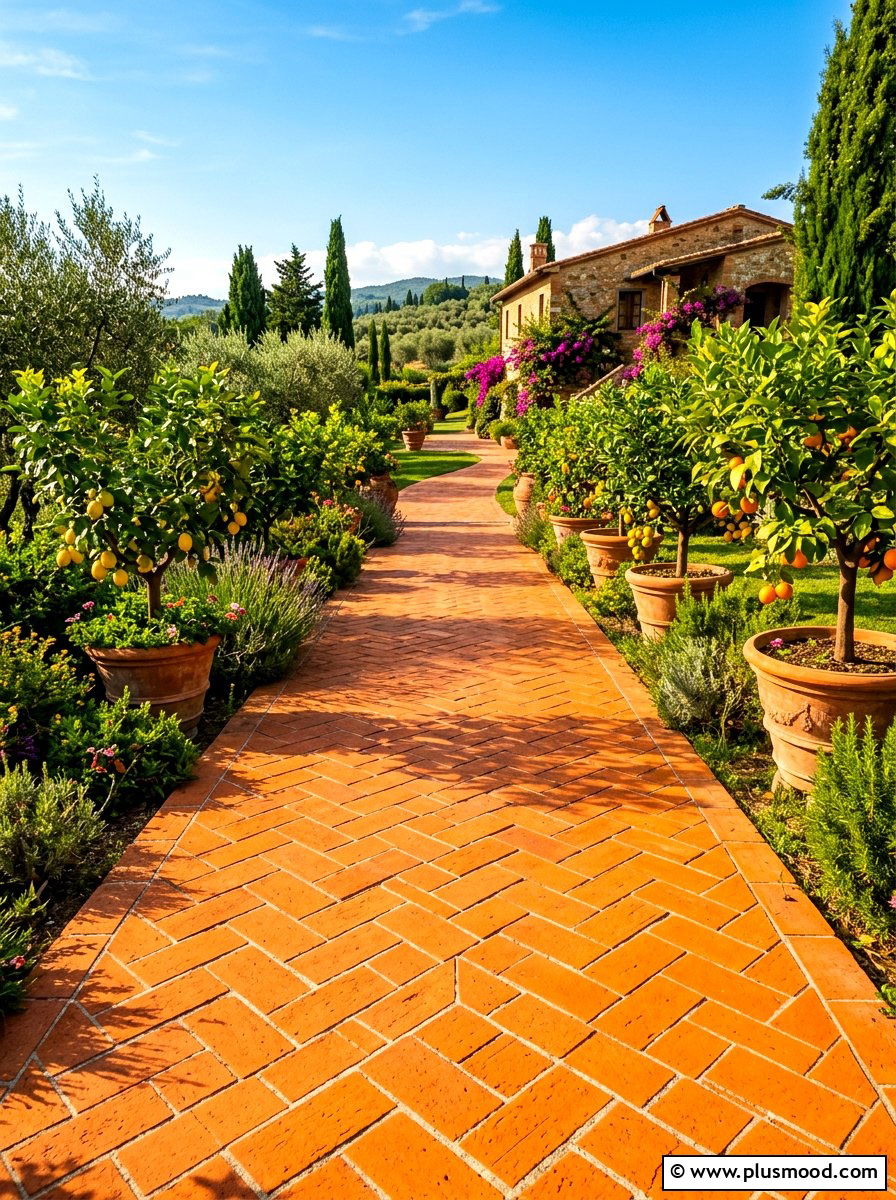
A Mediterranean terracotta tile path brings instant warmth and a sunny, southern European vibe to your garden design. These clay tiles are known for their deep orange and red hues, which create a beautiful contrast with green foliage and blue skies. You can arrange them in a classic grid or a diagonal pattern to add visual interest to a small courtyard or patio. To maintain the look, it is important to choose frost-resistant tiles and seal them to prevent staining. When surrounded by terracotta pots filled with citrus trees and bright geraniums, this pathway creates a cohesive and inviting atmosphere that feels like a sun-drenched getaway.
25. Contemporary Composite Timber Boardwalk
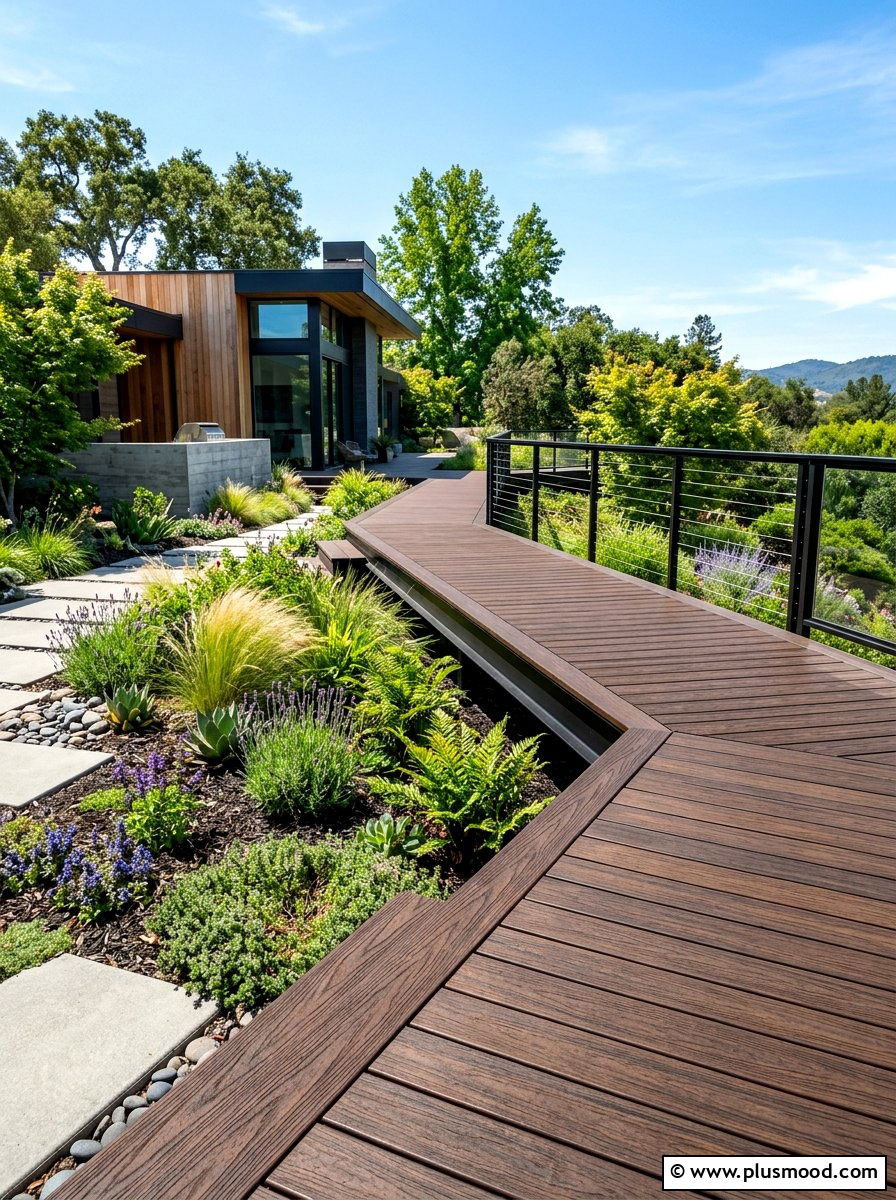
A contemporary composite timber boardwalk offers the look of real wood with virtually no maintenance, making it a perfect choice for busy homeowners. Composite materials are made from recycled plastics and wood fibers, meaning they won't rot, warp, or splinter over time. You can create a sleek, elevated walkway that floats over garden beds or water features, providing a modern and architectural feel. This design is excellent for creating clean lines and a smooth walking surface that stays beautiful season after season. The wide range of available colors allows you to perfectly match the boardwalk to your existing deck or home siding for a unified look.
Conclusion:
Investing in a well-designed garden pathway is a transformative decision that enhances both the utility and beauty of your outdoor living area. By carefully selecting materials that complement your home's architecture and the natural surroundings, you create a cohesive environment that invites exploration and relaxation. Whether you choose the rugged durability of granite or the soft, organic feel of bark mulch, each path tells a story about your personal style. As the summer sun illuminates these walkways, they become the backbone of your garden, guiding you through seasons of growth and joy. A thoughtful path ensures your garden remains a functional, enchanting retreat for years.
Related posts:
Leave a Reply