
Summer gardens are incomplete without the lush, billowing blooms of hydrangeas that define the warm season. These versatile shrubs offer a spectacular range of colors, from soft pastels to vibrant bolds, making them a favorite for homeowners looking to elevate their outdoor aesthetic. Whether you are dealing with a shady corner or a sun-drenched patio, there is a variety perfectly suited to your specific climate and soil conditions. Planning a hydrangea garden requires a thoughtful approach to color, height, and bloom time to ensure a continuous display of floral beauty throughout the warmest months of the year. Investing in these hardy perennials provides long-lasting rewards for years to come.
1. Blue Hydrangea Garden Border
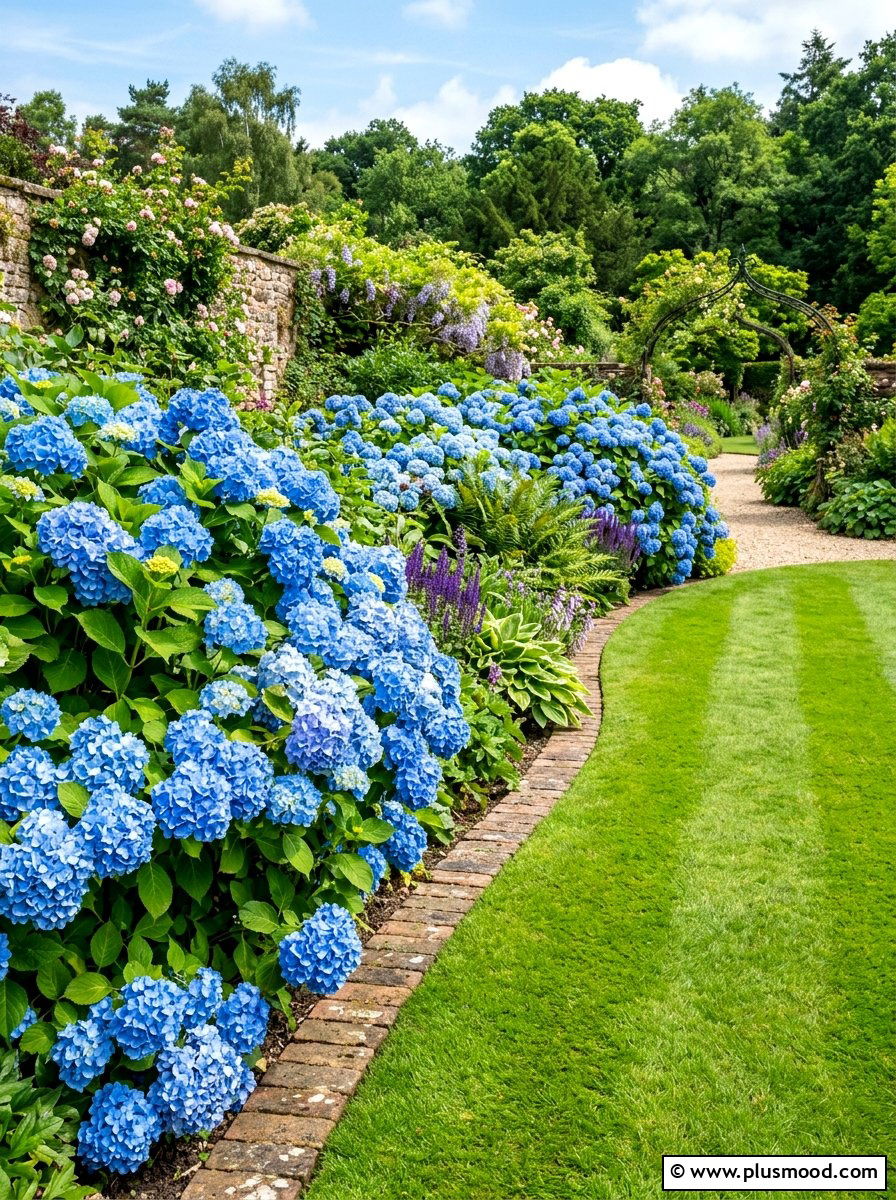
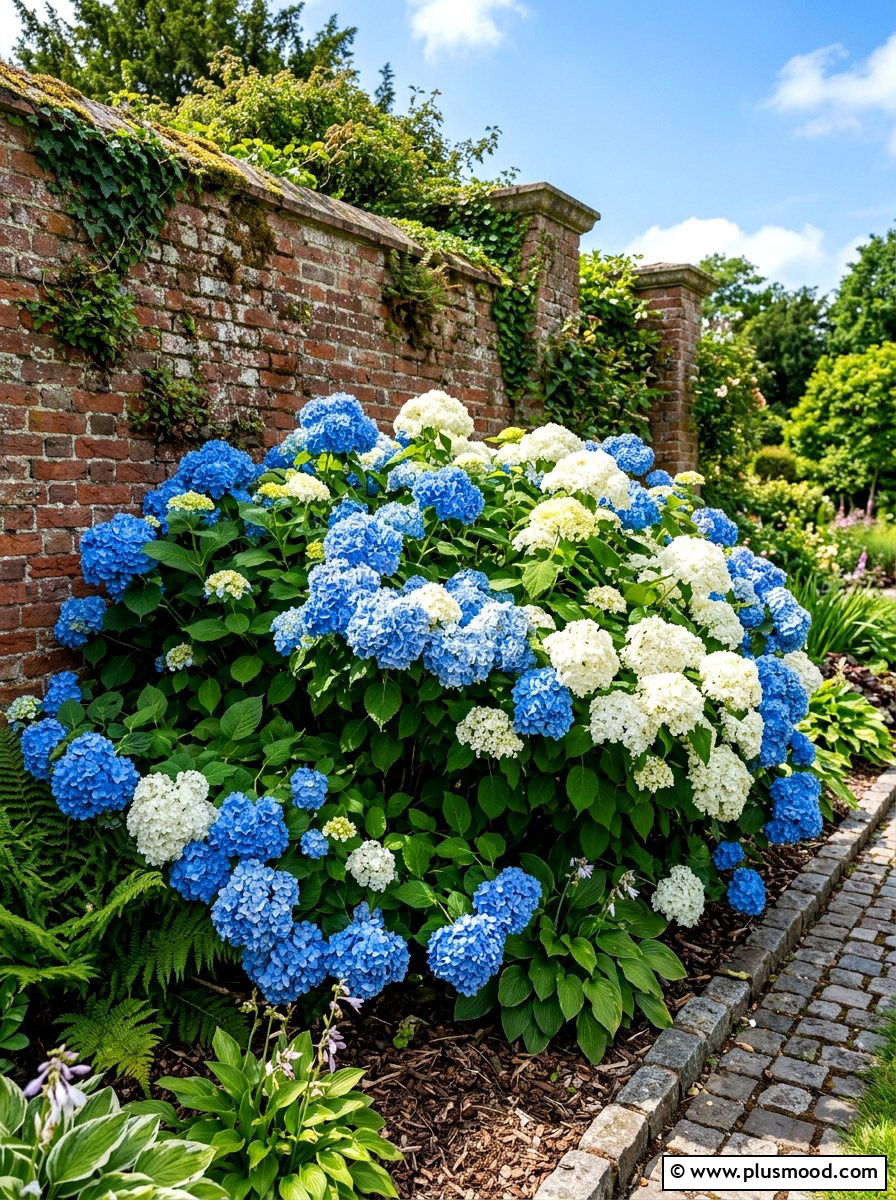
Imagine walking alongside a vibrant border filled with deep azure blooms that feel like a piece of the sky has fallen into your yard. Blue hydrangeas are often the stars of acidic soils, providing a cool and refreshing visual break during the intense heat of mid-July. Creating a dedicated border with these stunning shrubs helps define the edges of your lawn while adding significant vertical interest and texture. You should ensure they receive plenty of morning sun followed by dappled afternoon shade to keep those massive flower heads from wilting too quickly. Strategic spacing allows each plant to breathe and expand into its natural, rounded shape over time.
2. White Hydrangea Walkway
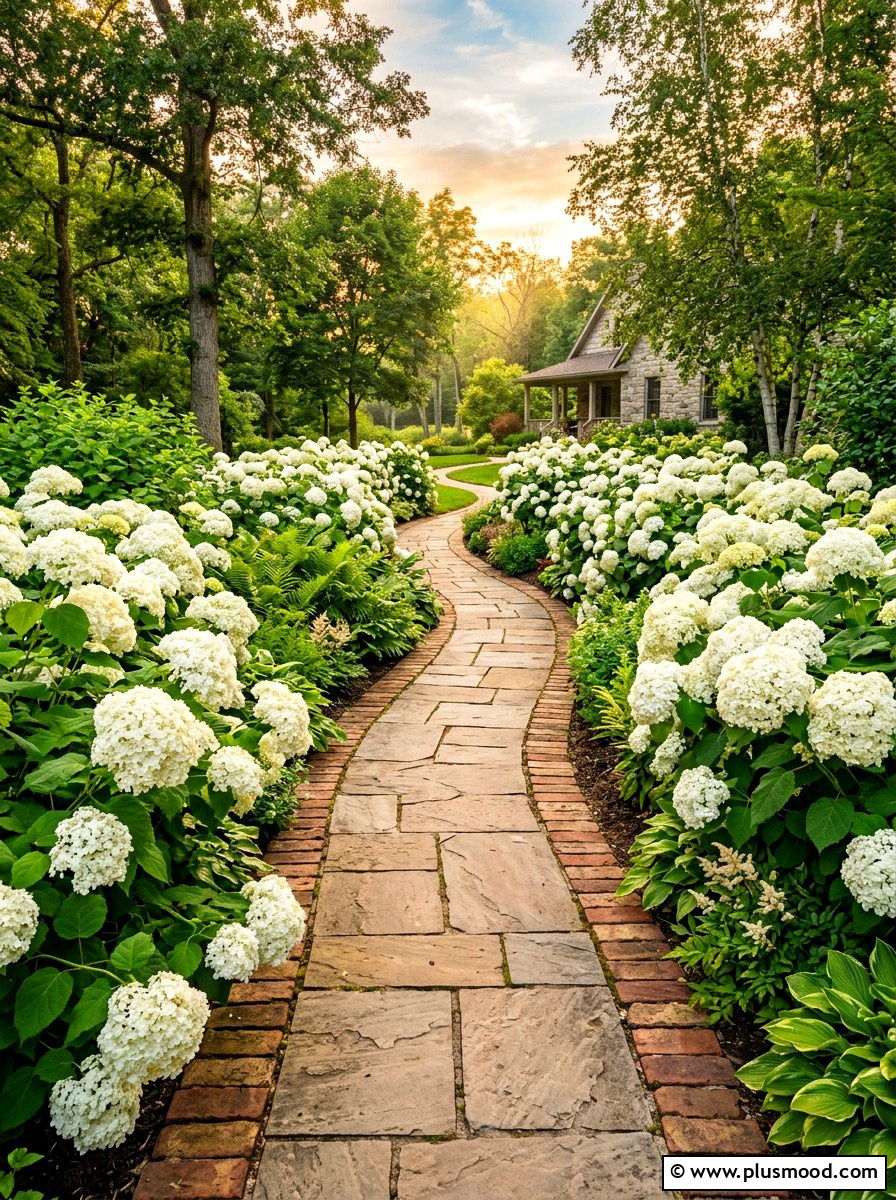
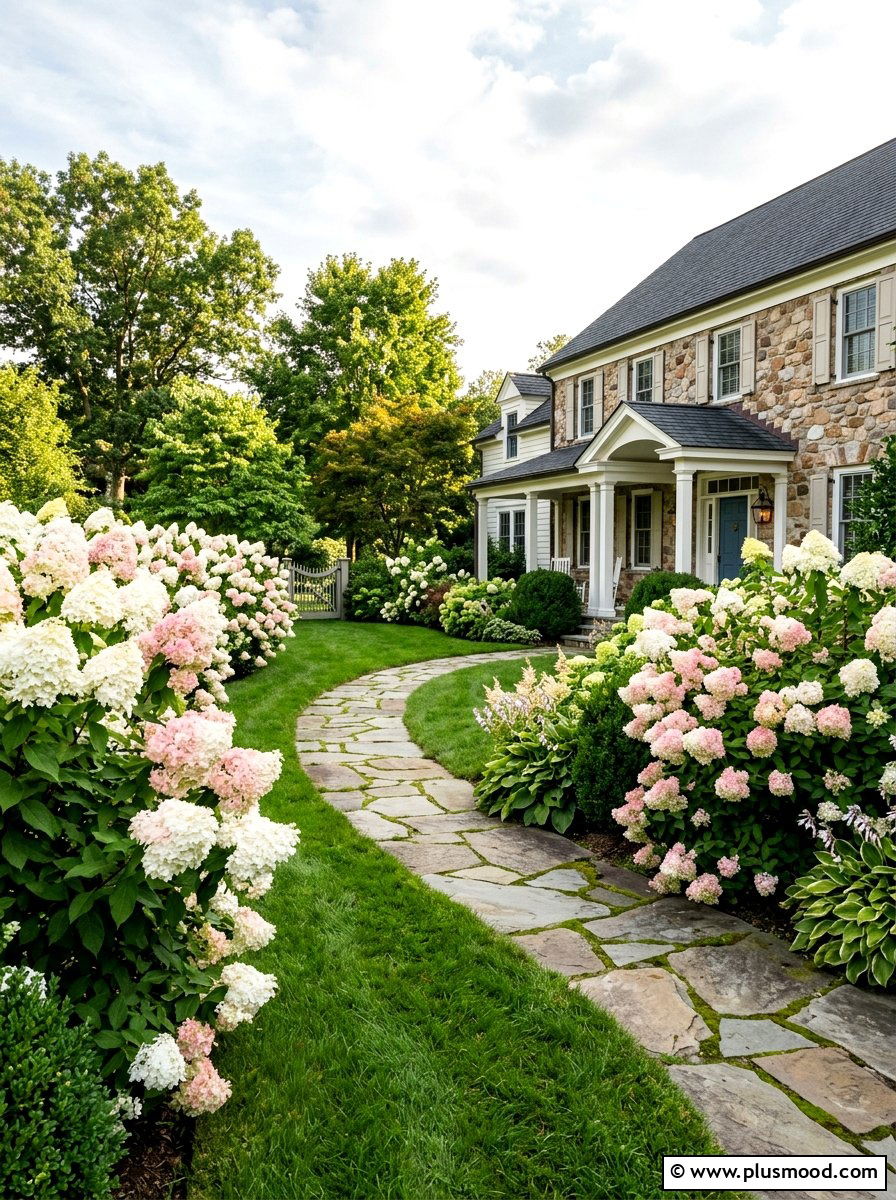
Do you want your home's entrance to feel like a high-end resort with a classic and timeless appeal? Lining a stone or brick walkway with pure white hydrangea varieties creates an elegant transition from the street to your front door. The crisp white petals pop beautifully against dark green foliage and provide a luminous glow even as the sun begins to set in the evening. These plants act as a soft architectural element that guides guests along the path with their voluminous and pillowy presence. Using consistent varieties along the entire stretch provides a sense of cohesion and deliberate design that looks professionally curated and maintained.
3. Pink Hydrangea Flower Bed
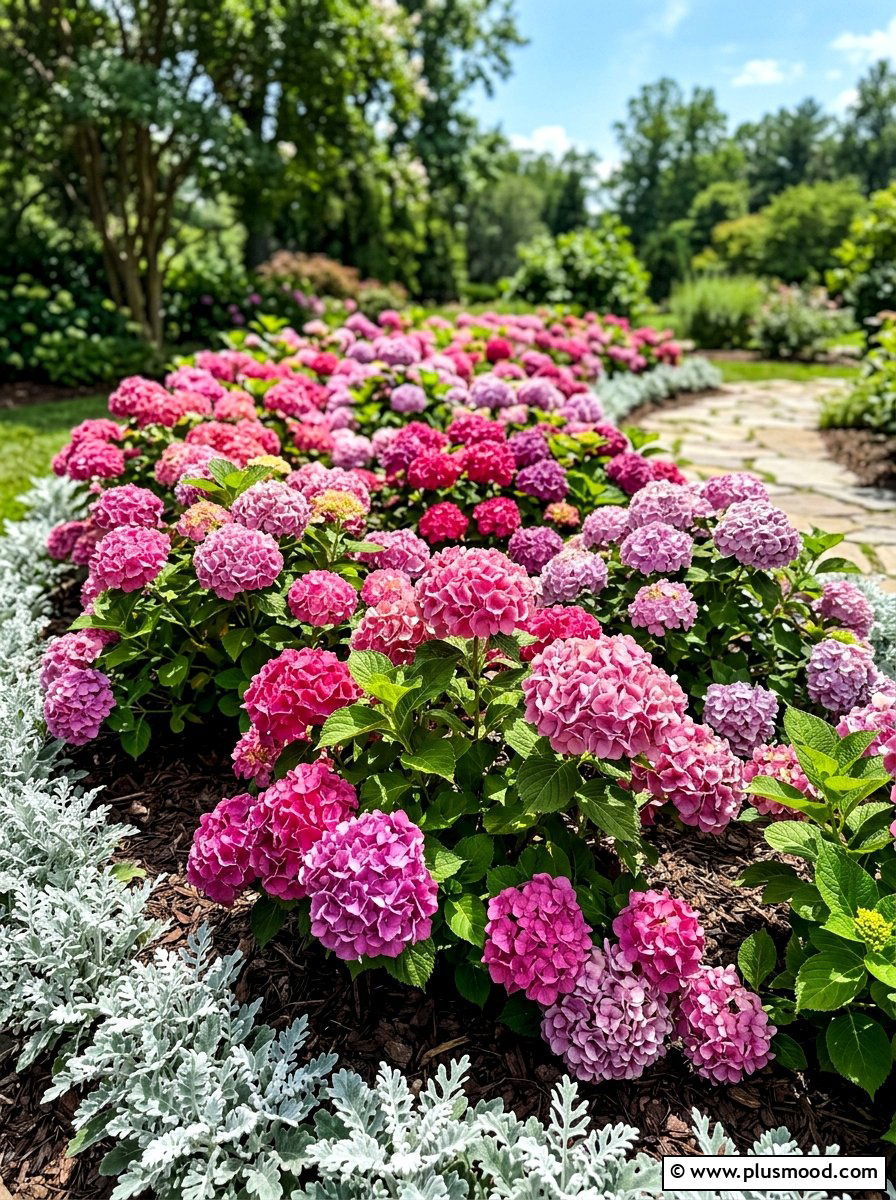
Warm summer afternoons feel much more inviting when your backyard is filled with the soft glow of rosy pink hydrangea blossoms. These varieties thrive in more alkaline soils, producing clusters of flowers that range from delicate blush to deep magenta. A dedicated flower bed featuring these beauties can serve as a romantic focal point in any suburban landscape or rural garden setting. Pairing them with silver-toned groundcovers or dark purple perennials helps the pink hues stand out even more vividly against the surrounding greenery. Maintenance is relatively simple once they are established, requiring regular watering and occasional pruning to encourage healthy new growth.
4. Hydrangea Container Garden
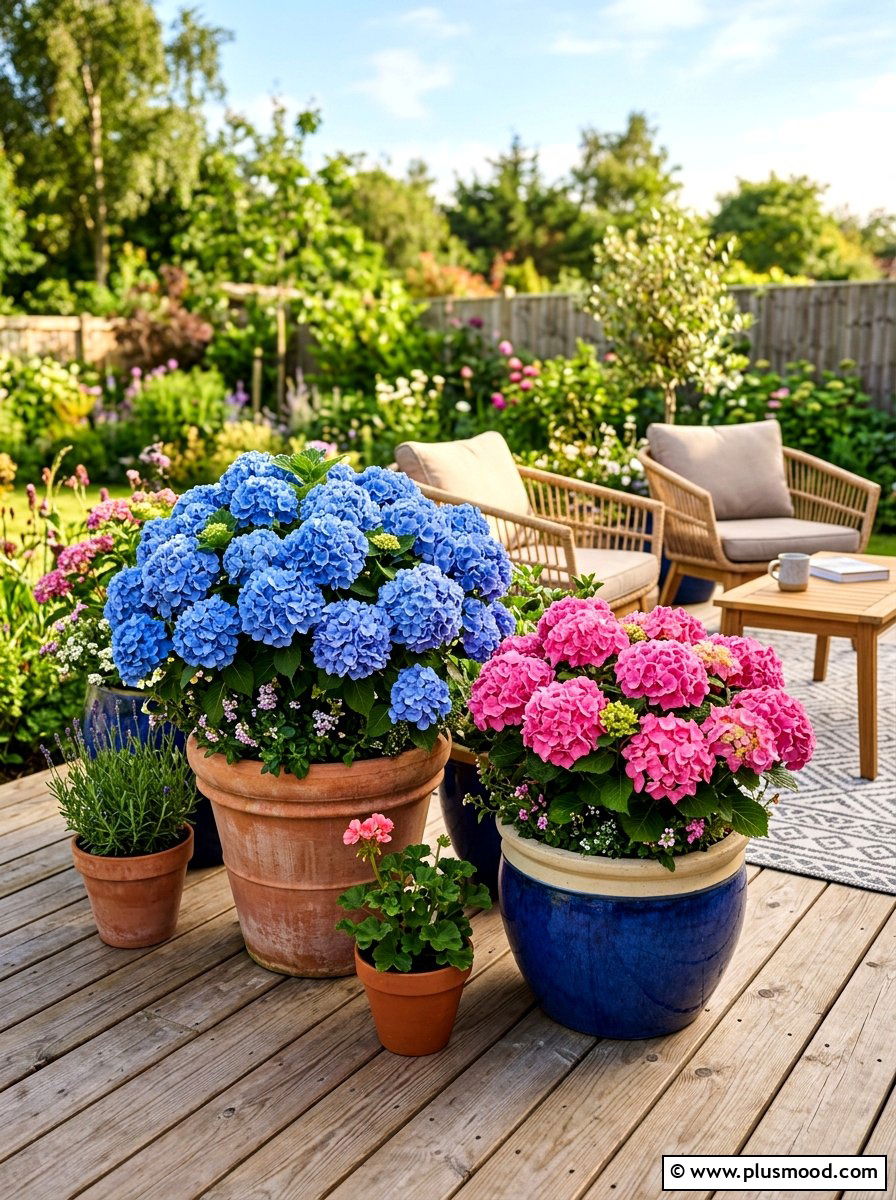
Even if you have limited ground space, you can still enjoy the beauty of these shrubs by creating a lush hydrangea container garden on your porch or patio. Many compact and dwarf varieties are specifically bred to thrive in large pots, offering the same dramatic floral impact in a much smaller footprint. Choosing decorative ceramic or wooden planters adds an extra layer of style and personality to your outdoor living area. You can easily move these containers around to find the perfect light or to refresh your decor throughout the season. Remember that potted plants require more frequent watering and a quality slow-release fertilizer to stay healthy.
5. Oakleaf Hydrangea Shade Garden
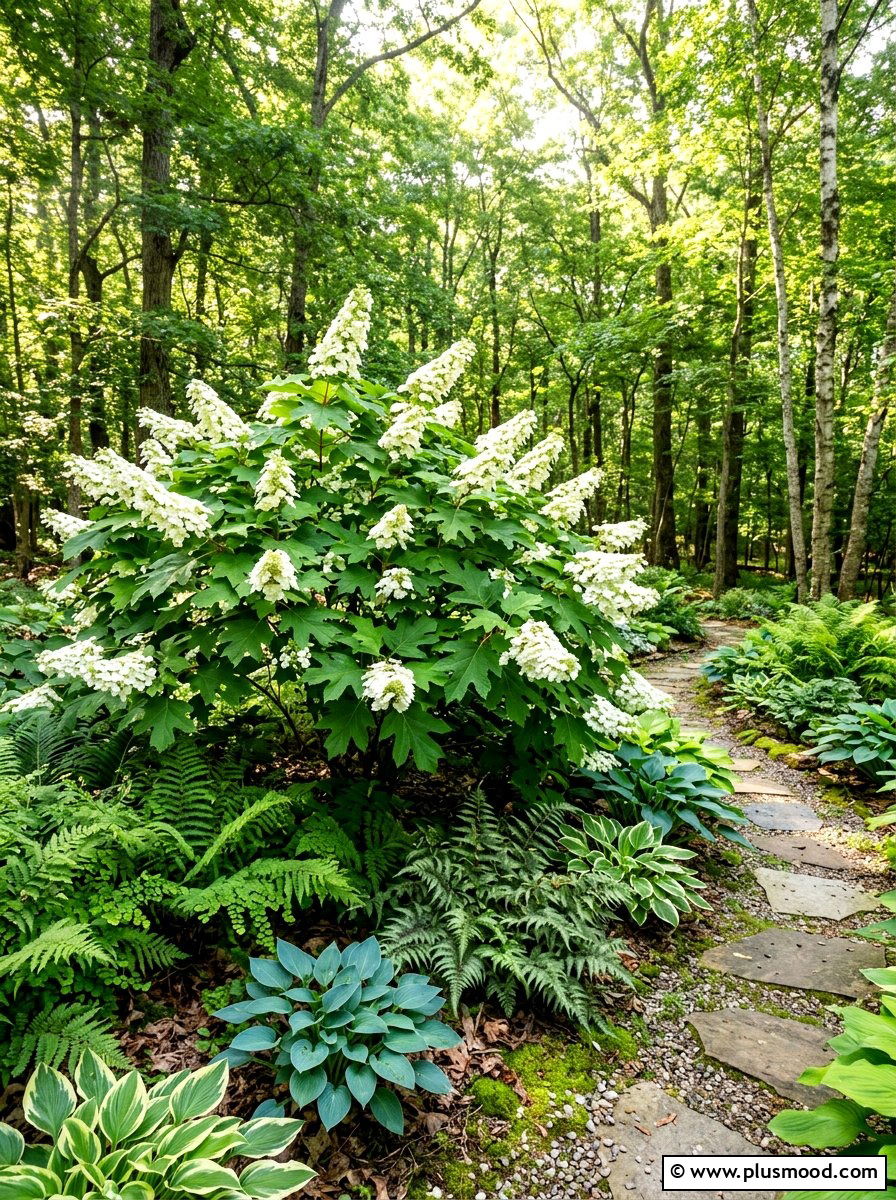
Creating a tranquil woodland retreat is easy when you incorporate the unique texture and structural beauty of oakleaf hydrangeas into your shade garden. These native shrubs are prized for their deeply lobed leaves that resemble oak foliage and their elongated, cone-shaped flower clusters. They thrive in dappled light under the canopy of mature trees, where other flowering plants might struggle to perform. In addition to their summer blooms, these plants offer incredible fall interest as their leaves turn brilliant shades of mahogany and crimson. Layering them with ferns and hostas creates a rich, multi-dimensional landscape that feels like a natural escape from the world.
6. Panicle Hydrangea Privacy Screen
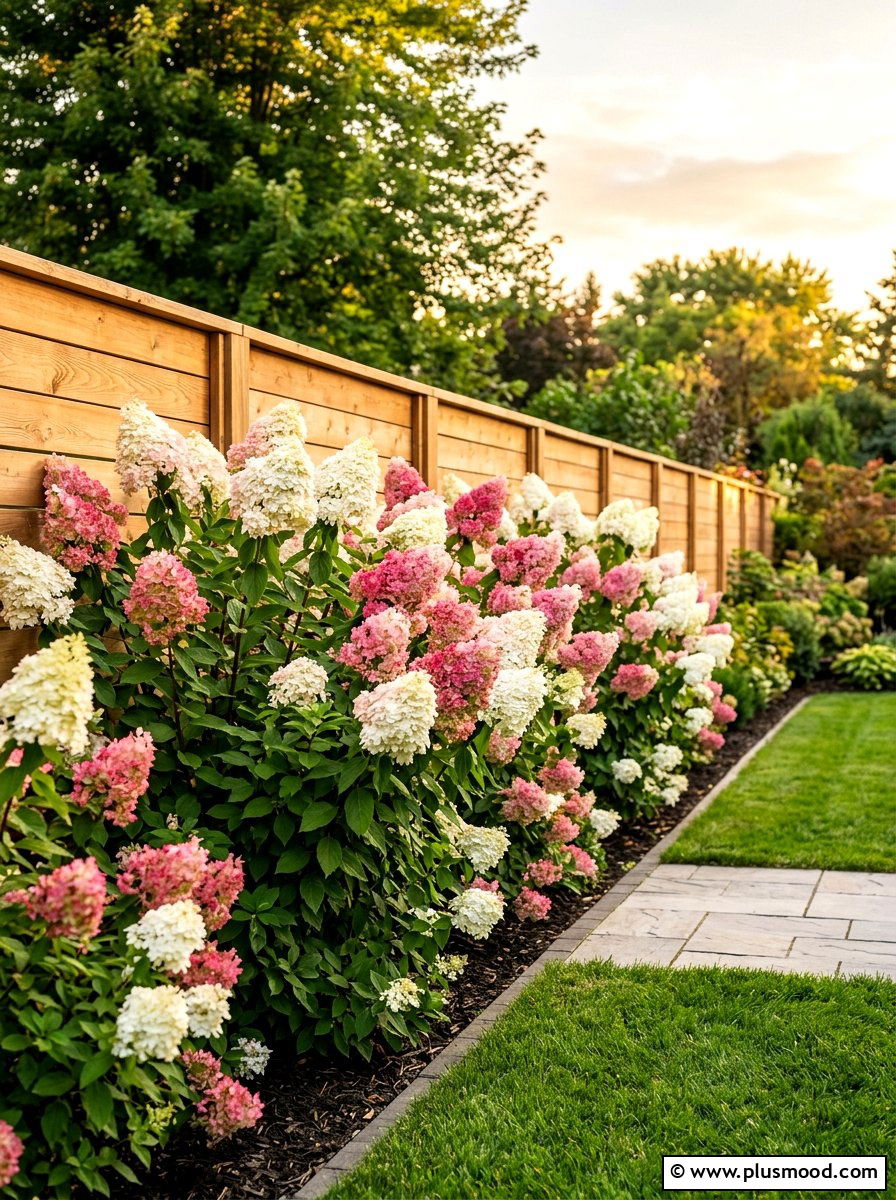
If you are looking for a natural way to block out the neighbors or hide an unsightly fence, a panicle hydrangea privacy screen is an excellent choice. These hardy shrubs can grow quite tall and dense, creating a living wall of flowers that lasts from mid-summer through the first frost. Most varieties feature large, pyramidal flower heads that start out white or lime green and eventually fade to soft pink or dusty rose. Their upright growth habit and sturdy stems make them perfect for hedging along property lines or around private seating areas. They love full sun and are generally more drought-tolerant than their bigleaf cousins.
7. Hydrangea And Rose Garden
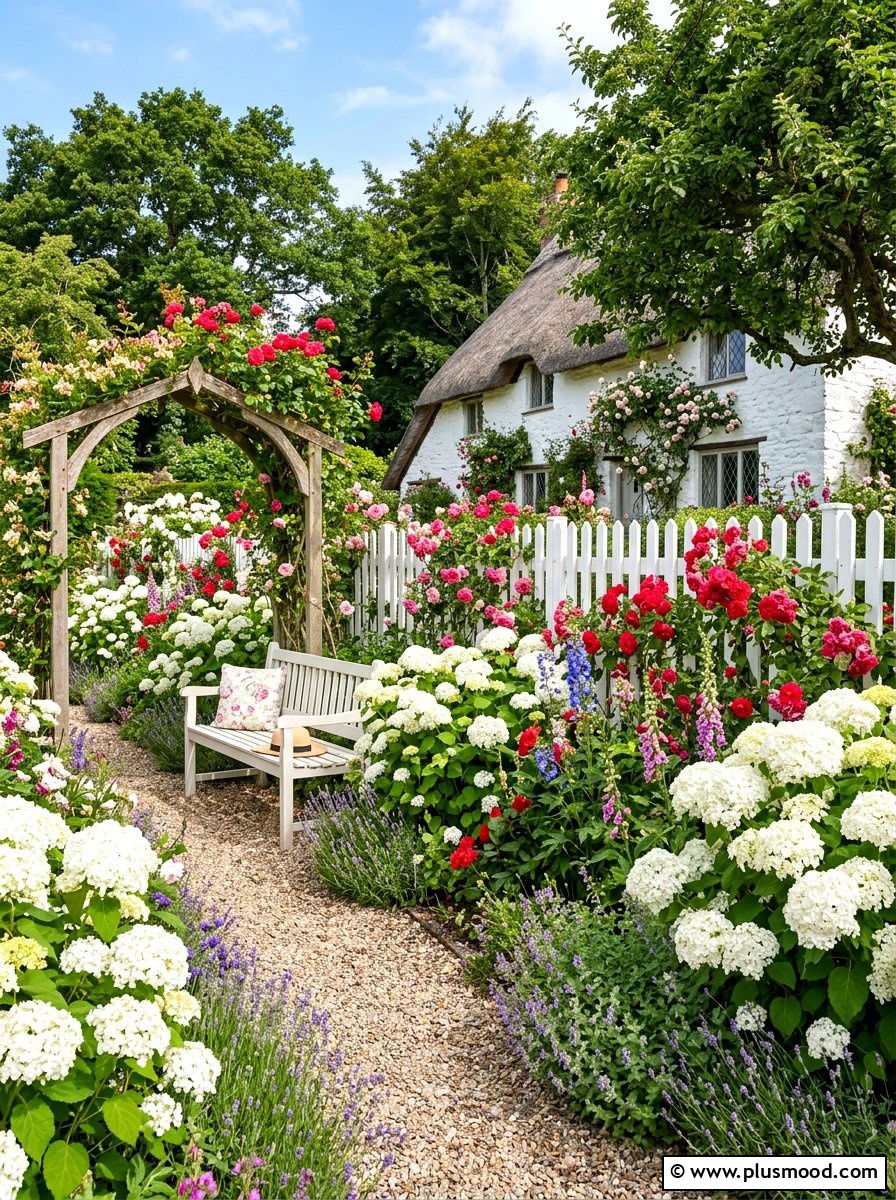
Nothing says classic elegance quite like the combination of lush hydrangeas and fragrant roses in a traditional garden setting. These two timeless plants complement each other perfectly, with the large hydrangea blooms providing a soft backdrop for the intricate petals of the roses. You can layer different heights and colors to create a romantic tapestry that appeals to all the senses. Using white hydrangeas as a neutral base allows the vibrant colors of the roses to truly shine and take center stage. This pairing works exceptionally well along a white picket fence or surrounding a garden gazebo for a truly picturesque and cozy look.
8. Mountain Hydrangea Sloped Garden
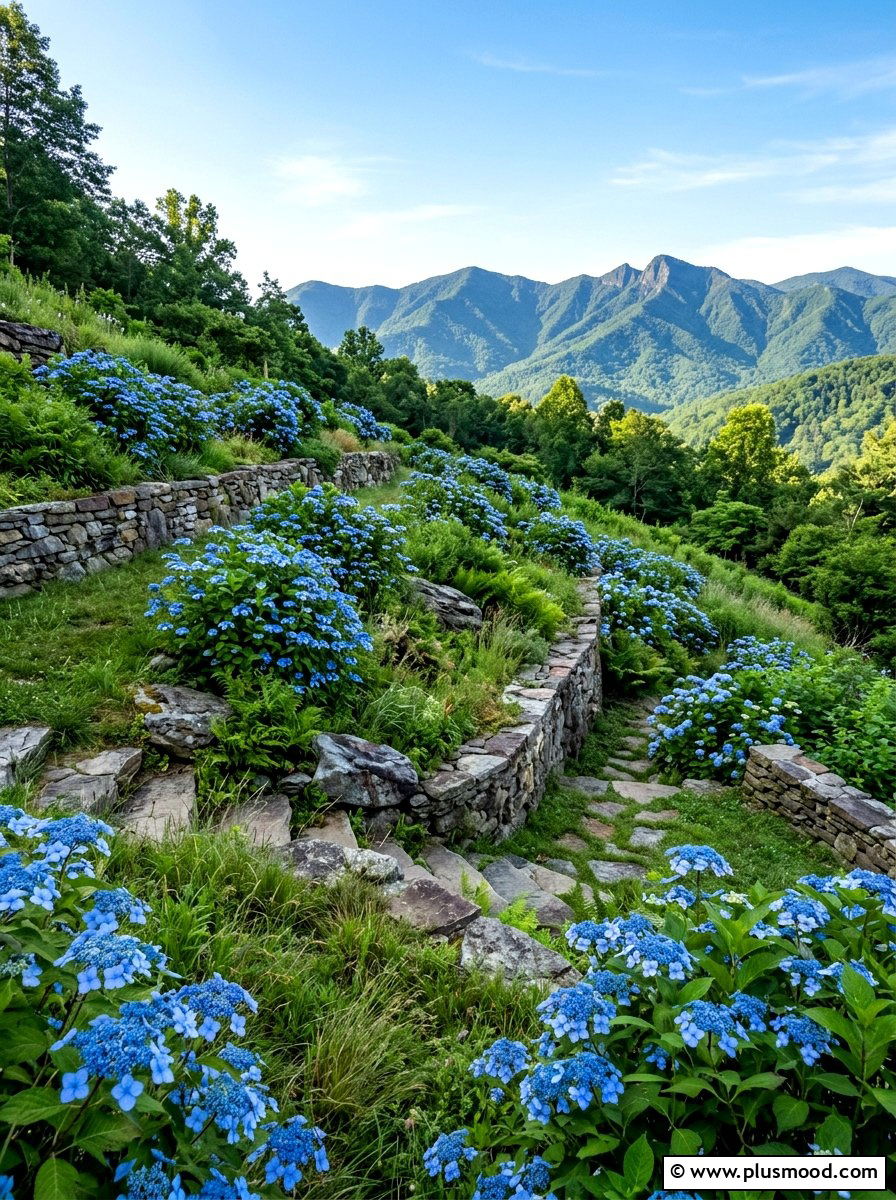
Landscaping a difficult slope or hillside can be a challenge, but mountain hydrangeas offer a beautiful and functional solution. These tough plants are native to high-altitude regions and are generally more cold-hardy and resilient than other varieties. Their lacecap blooms provide a delicate and airy appearance that looks stunning when planted in large groups across a gradient. Using them to stabilize a slope not only prevents erosion but also transforms a problematic area into a sea of blue or pink blossoms. They prefer well-draining soil and can handle a bit more moisture than other types, making them ideal for naturally damp inclines.
9. Smooth Hydrangea Mass Planting
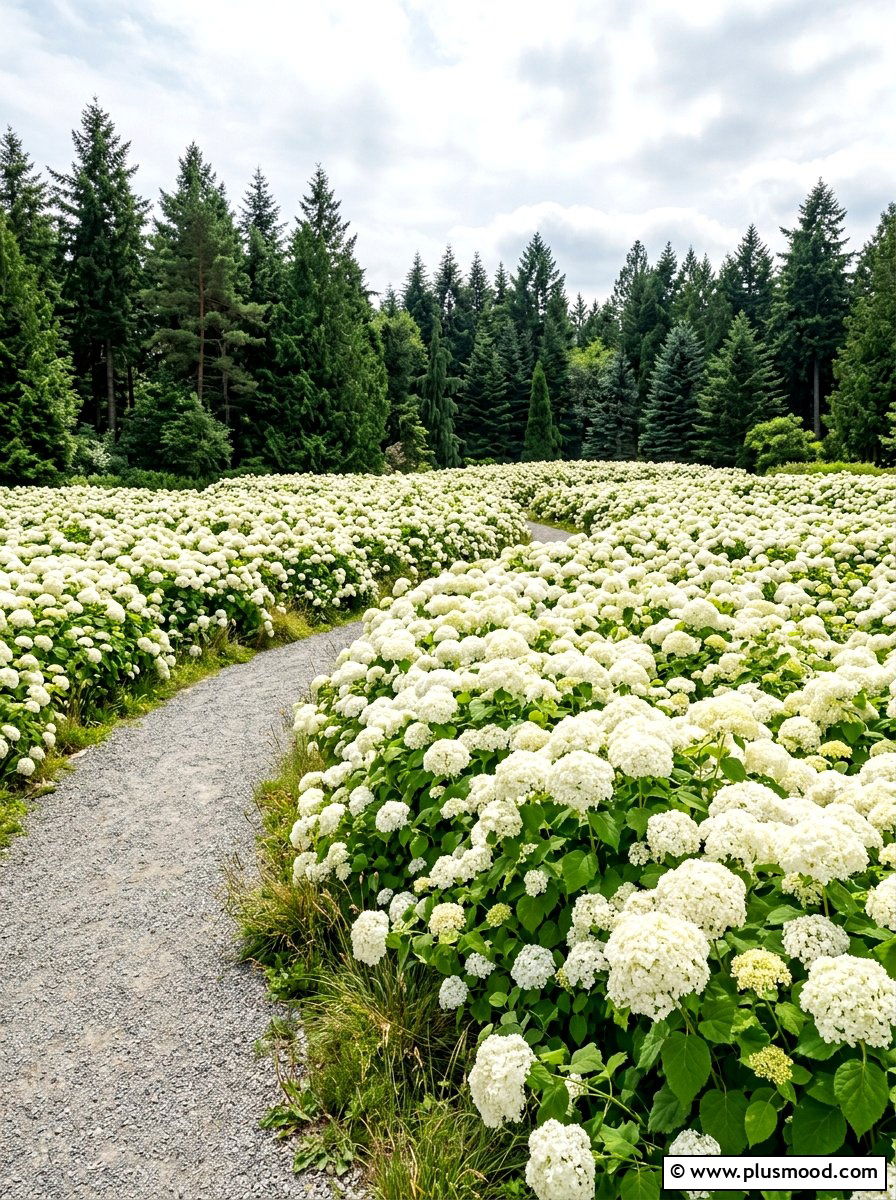
For a truly high-impact visual statement, consider a mass planting of smooth hydrangeas like the famous Annabelle or Incrediball varieties. When planted in large clusters, these shrubs create a cloud-like effect with their massive, spherical white flower heads that can reach over ten inches in diameter. This approach works best in large open spaces or along wide garden borders where the sheer volume of blooms can be fully appreciated. The repetition of the same plant creates a sense of calm and order in the landscape while providing a spectacular show for several weeks. Their reliability and ease of care make them a top choice.
10. Climbing Hydrangea Wall
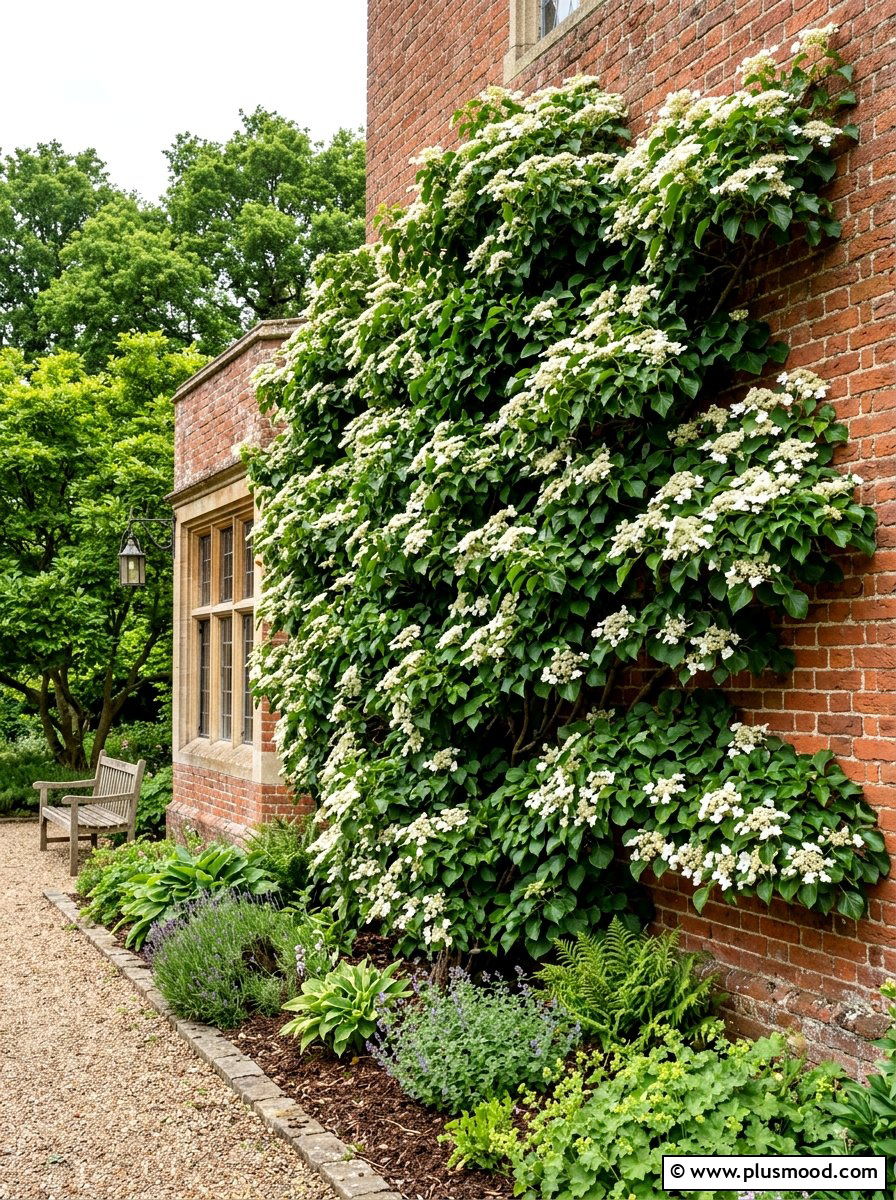
Transform a bare brick wall or a sturdy wooden trellis into a vertical masterpiece by planting a climbing hydrangea. Unlike many other vines that can be invasive, this slow-growing beauty uses small aerial rootlets to cling to surfaces without causing damage. It features lush, heart-shaped leaves and delicate, lacy white flower clusters that appear in early summer. A mature climbing hydrangea can cover a large area, providing a sense of age and permanence to your home’s architecture. It is particularly effective in shaded areas where other flowering vines might fail to bloom, adding life and greenery to the dark corners of your yard.
11. Hydrangea Cottage Garden
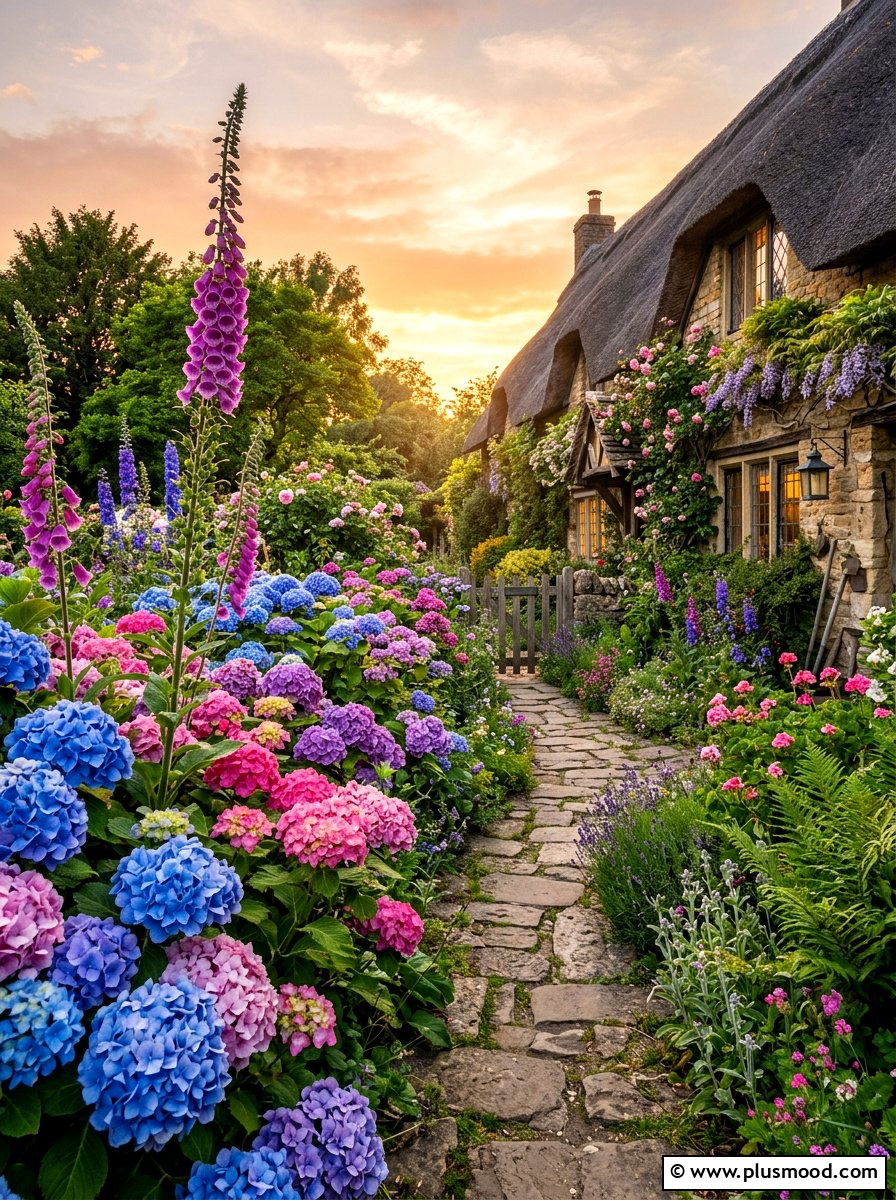
Embrace the charming and informal look of a traditional cottage garden by letting your hydrangeas grow in soft, overlapping clusters. This style is all about abundance and a lack of rigid structure, allowing different colors and textures to mingle freely. Mix mophead hydrangeas with tall foxgloves, delphiniums, and swaying ornamental grasses to create a whimsical and inviting atmosphere. The goal is to make the garden feel like it has evolved naturally over time, with flowers spilling over walkways and bees buzzing between the blooms. Adding a weathered wooden bench nearby provides the perfect spot to sit and enjoy the simple beauty of the outdoors.
12. Dwarf Hydrangea Small Space
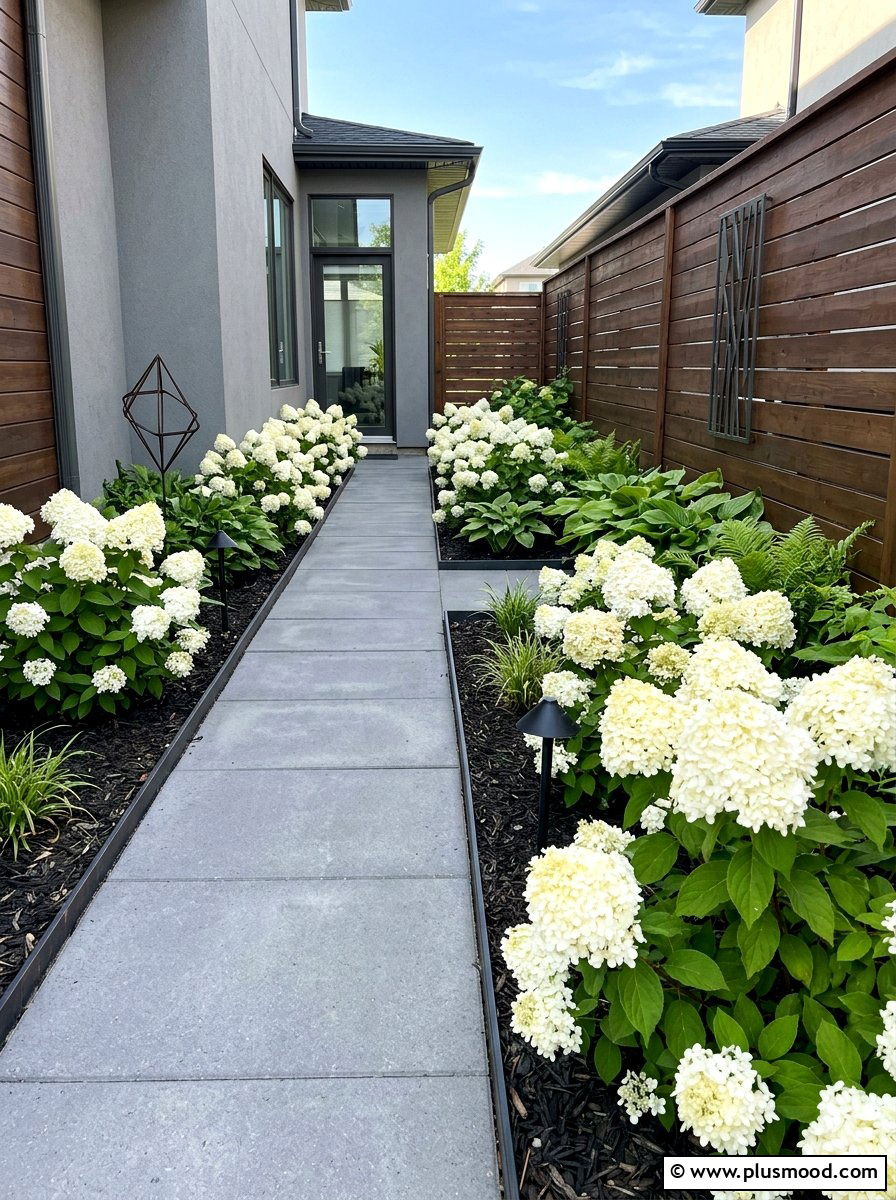
You do not need a massive backyard to enjoy the beauty of hydrangeas if you choose the right dwarf varieties. These pint-sized shrubs stay compact, usually reaching only two to three feet in height and width, making them perfect for urban gardens or narrow side yards. Despite their small stature, they produce an impressive number of full-sized blooms that pack a major punch of color. They are ideal for tucking into small gaps in existing flower beds or for creating a low-growing border along a patio edge. Their controlled growth habit means very little pruning is required to keep them looking neat.
13. Hydrangea Cut Flower Garden
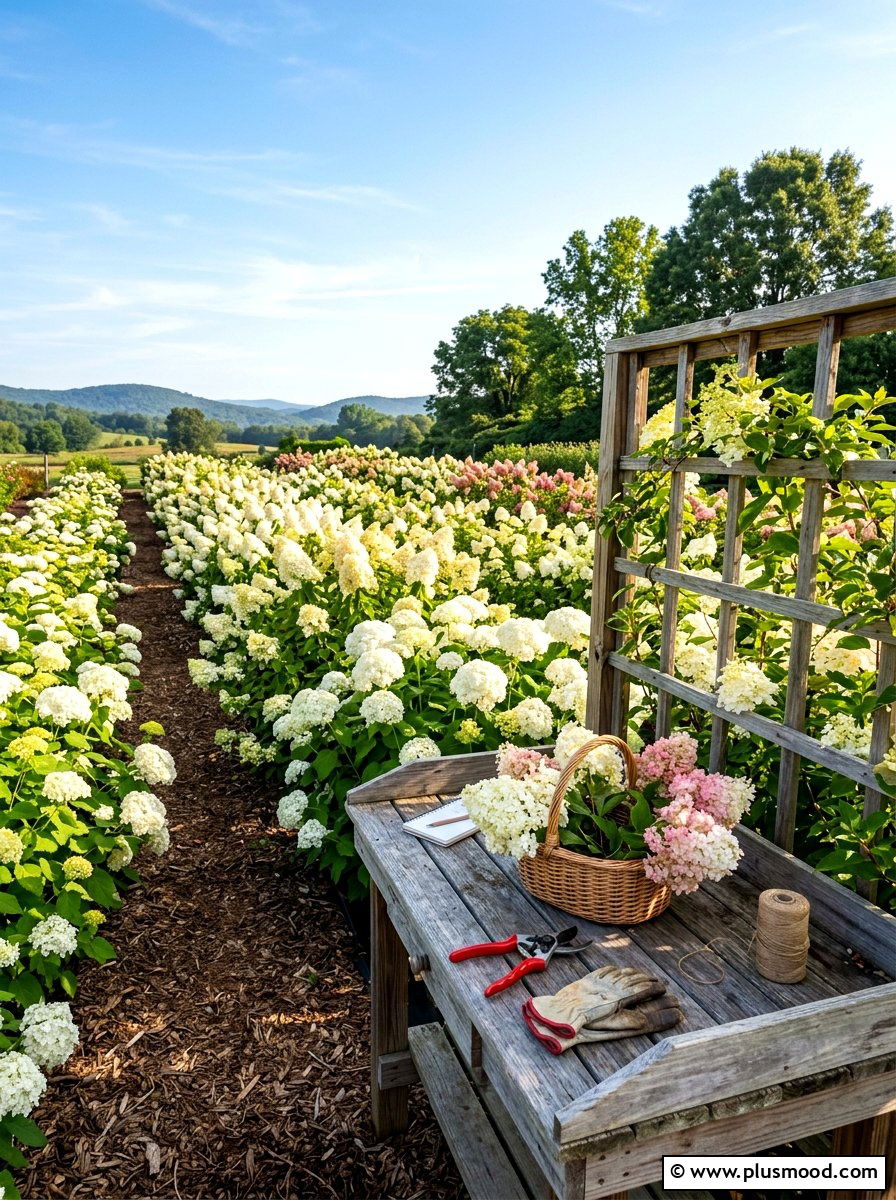
One of the best parts of growing hydrangeas is the ability to bring their spectacular blooms indoors for fresh floral arrangements. If you love decorating your home with flowers, designate a specific area of your garden as a cutting patch. Choose varieties known for their long, sturdy stems and exceptional vase life, such as panicle or smooth hydrangeas. Harvesting the blooms actually encourages the plant to produce more flowers, ensuring you have a steady supply throughout the summer. You can experiment with different color combinations and textures to create professional-looking bouquets that will brighten up any room in your house for many days.
14. Pee Gee Hydrangea Tree
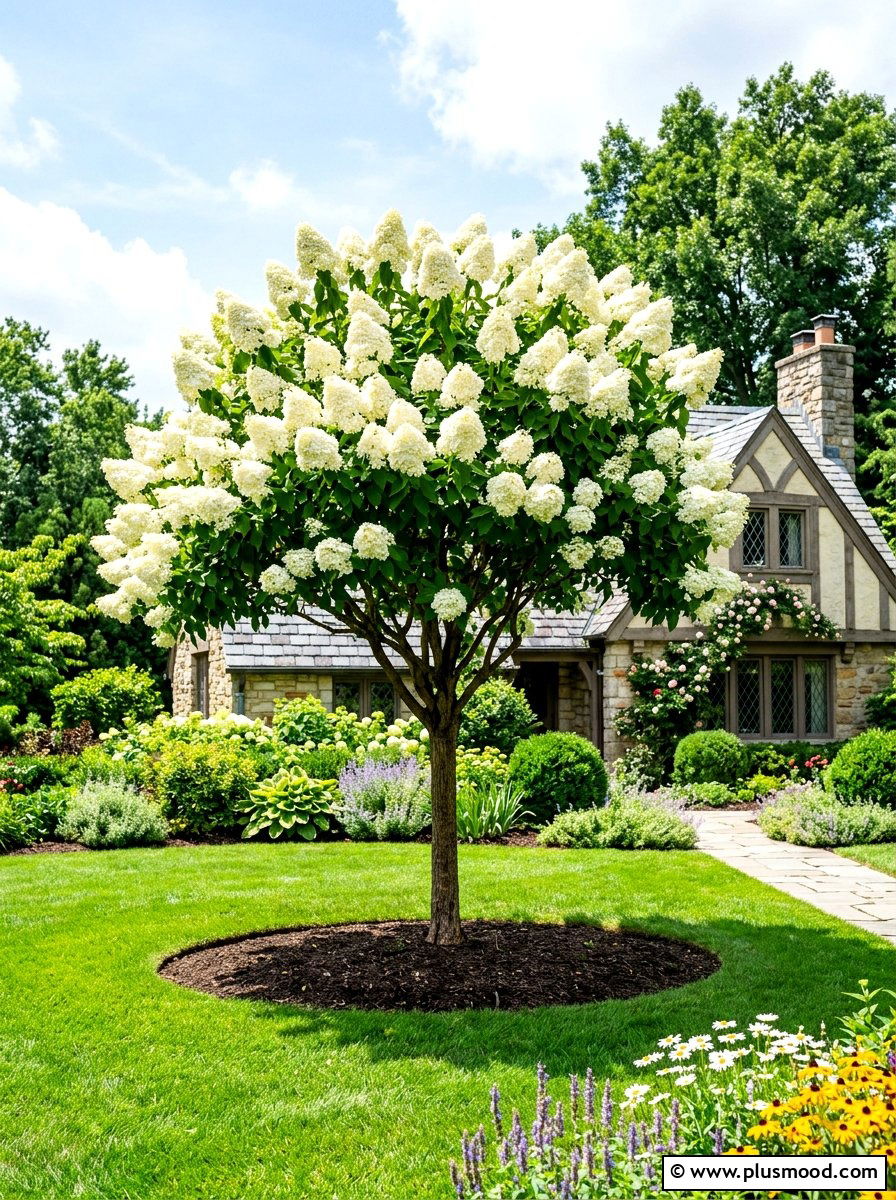
If you want to add a unique architectural element to your landscape, consider a Pee Gee hydrangea that has been trained into a tree form. These spectacular specimens feature a single woody trunk topped with a rounded canopy of lush foliage and massive, cone-shaped white flowers. They serve as an incredible focal point in the middle of a circular garden bed or as a graceful accent near a patio or deck. As the summer progresses, the flowers often take on a beautiful pink or bronze tint, extending the visual interest into the fall. They are surprisingly hardy and can withstand more sun than many other hydrangea types.
15. Incrediball Hydrangea Hedge
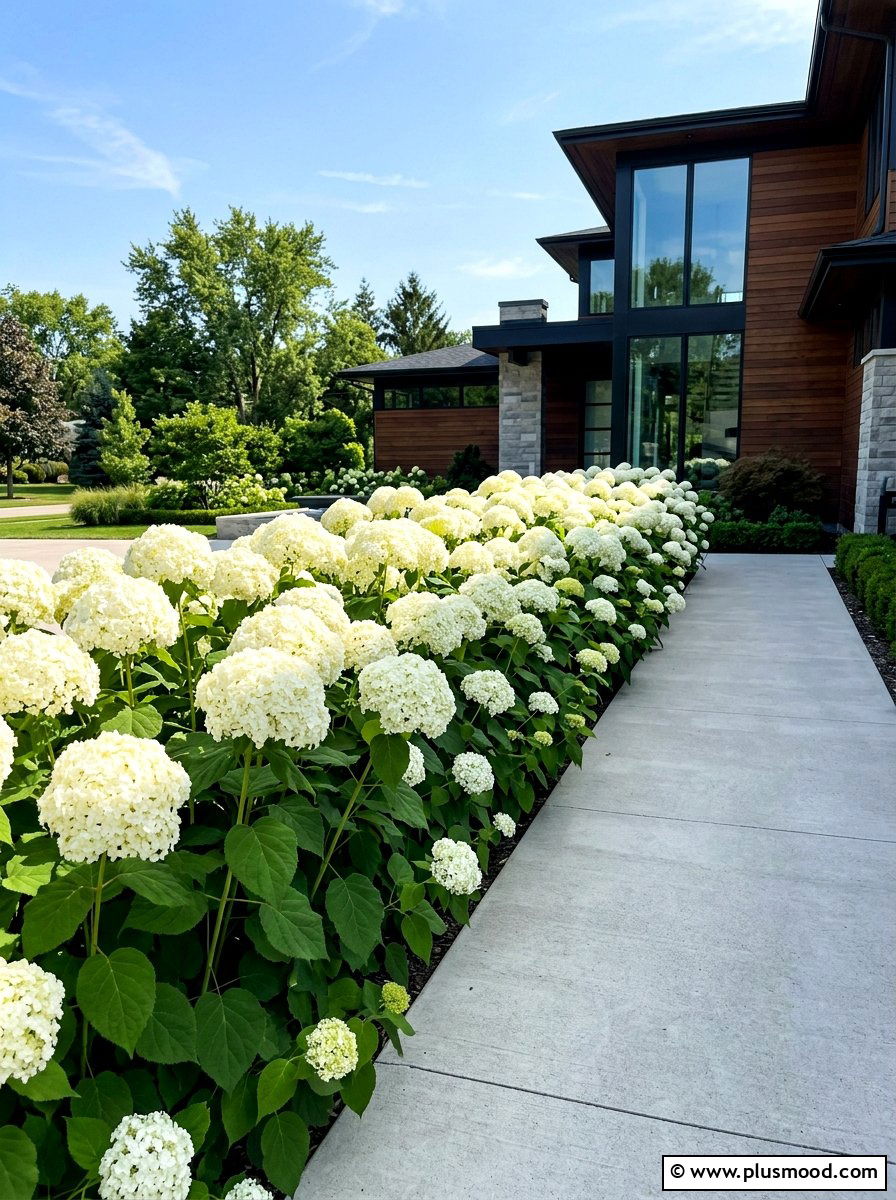
Create a bold and modern boundary for your property by planting a long, straight hedge of Incrediball hydrangeas. This variety is an improved version of the classic Annabelle, featuring much stronger stems that won't flop over even after a heavy summer rain. The massive white flower heads create a clean and sophisticated look that pairs beautifully with contemporary home designs. Spacing the plants closely together ensures a dense and continuous wall of green and white that provides both beauty and a sense of enclosure. This type of hedge is particularly effective for defining different zones within a larger backyard, such as separating a lawn from a pool.
16. Endless Summer Hydrangea Bed
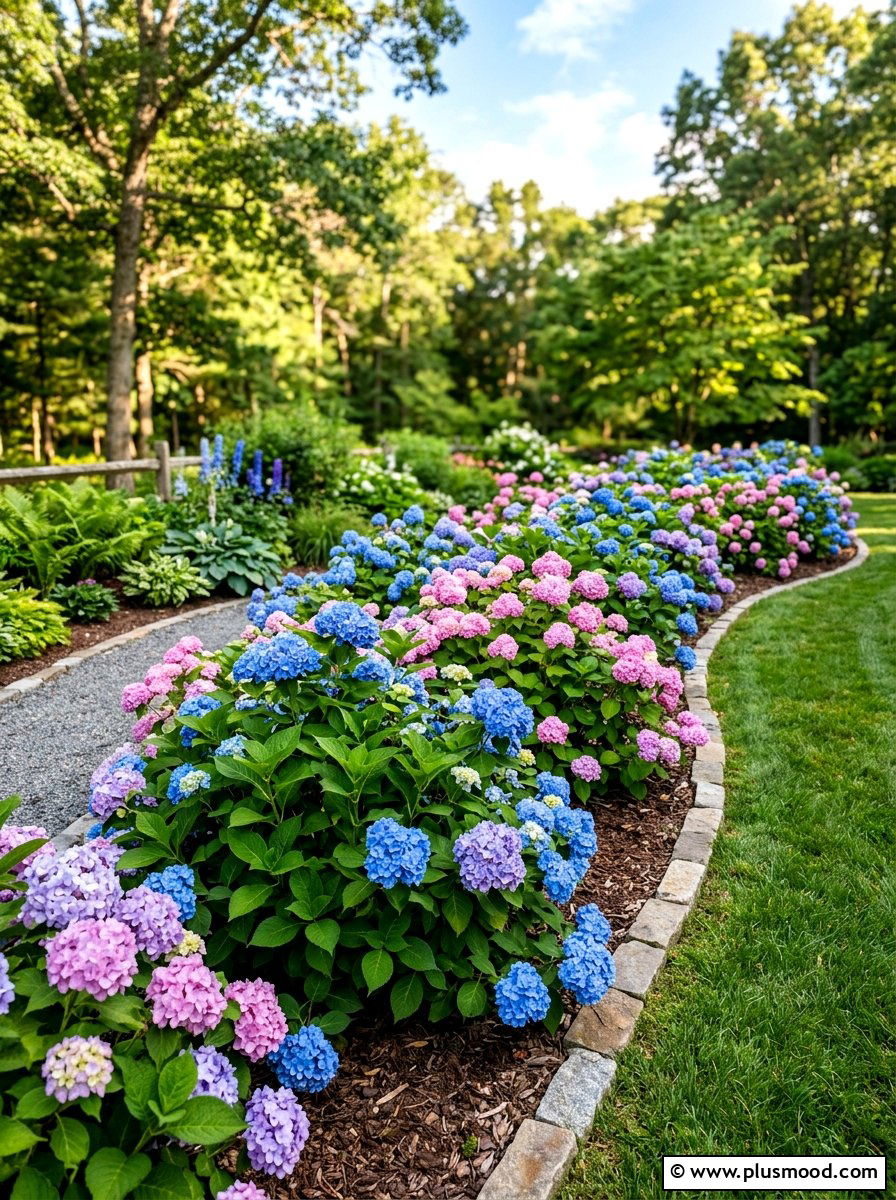
For those who want flowers all season long, an Endless Summer hydrangea bed is the ultimate solution. This specific series of hydrangeas is famous for its ability to bloom on both old and new wood, which means they will continue to produce fresh flower heads from early summer through the first frost. Planting a large bed of these reblooming varieties ensures you are never without color, even if a late spring frost damages the initial buds. They are available in a range of shades including blue, pink, and purple, allowing you to create a vibrant and dynamic display that evolves beautifully as the weeks go by.
17. Limelight Hydrangea Backyard
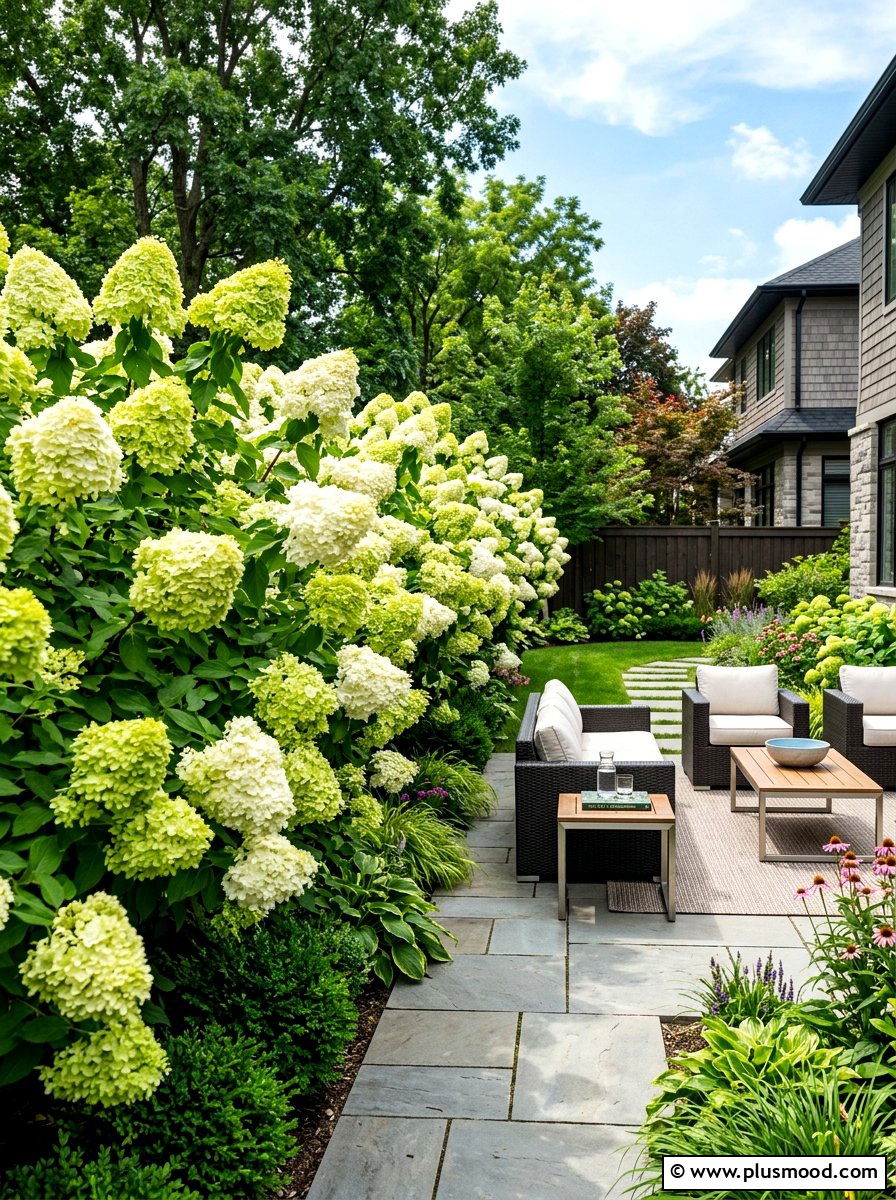
The Limelight hydrangea is a legendary variety that has become a staple in modern backyard design for its sheer reliability and stunning appearance. These shrubs are known for their unique lime-green flower heads that eventually turn a brilliant, crisp white before fading to a sophisticated dusty rose in the fall. They are incredibly vigorous and can easily reach six to eight feet in height, making them perfect for filling large spaces or creating a lush backdrop for a patio. Because they bloom on new wood, you can prune them back hard in late winter to maintain a specific size and encourage even larger, more impressive blooms.
18. Hydrangea Foundation Planting
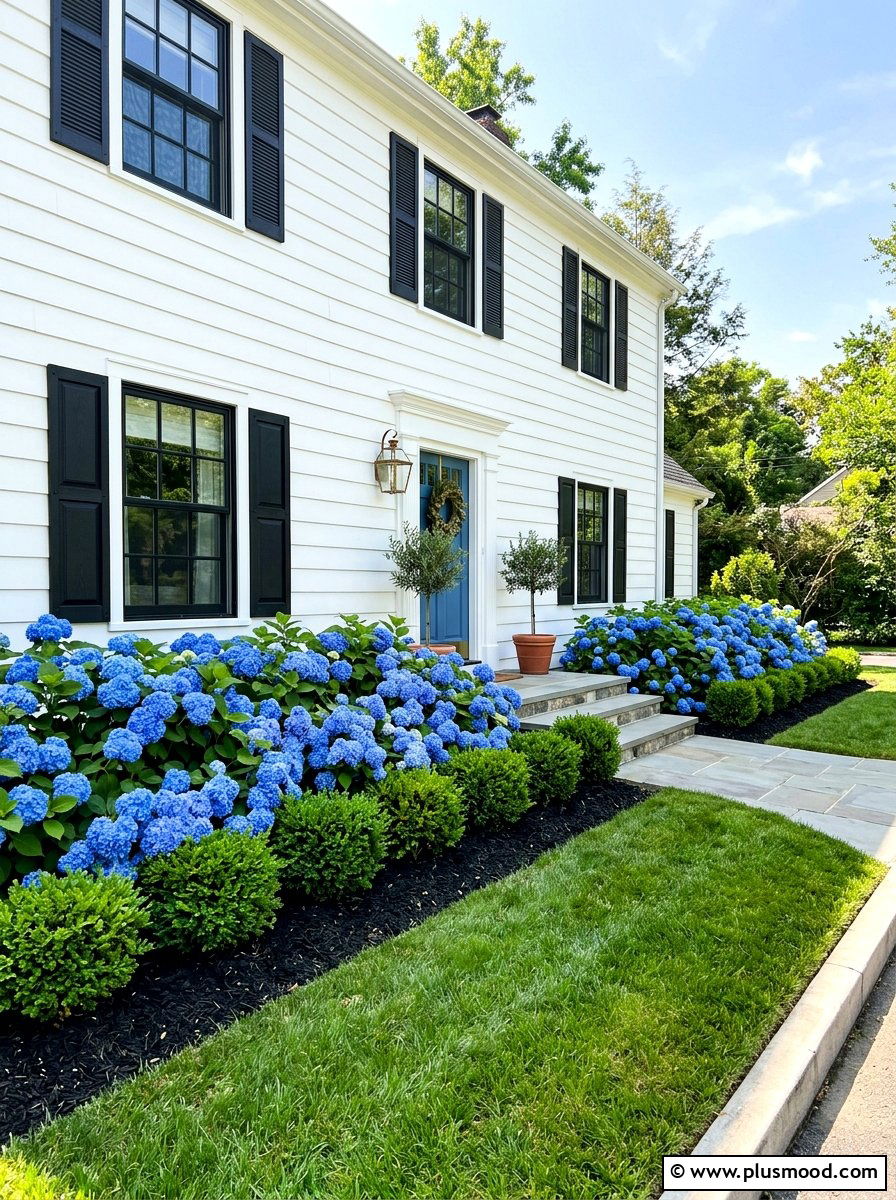
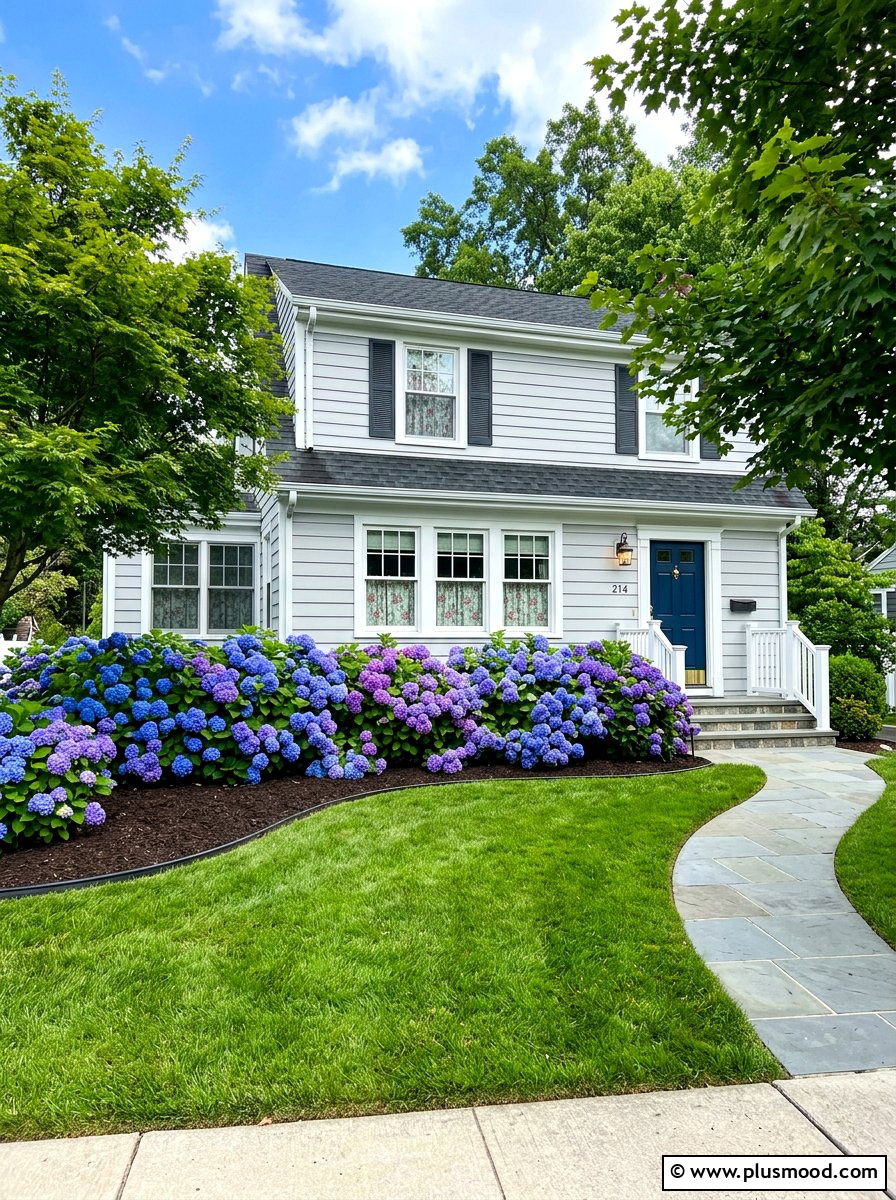
Using hydrangeas as foundation plants is a brilliant way to soften the harsh lines where your house meets the ground. Their rounded, voluminous shapes help ground the architecture and add curb appeal that lasts for months. Planting a row of consistent hydrangeas along the front of your home creates a welcoming and polished look that passersby will certainly notice. They work well under windows because they can be easily maintained at a height that doesn't block your view from the inside. Pairing them with evergreen shrubs like boxwoods ensures that your foundation beds look structured and attractive even during the dormant winter months.
19. Annabelle Hydrangea Woodland Garden
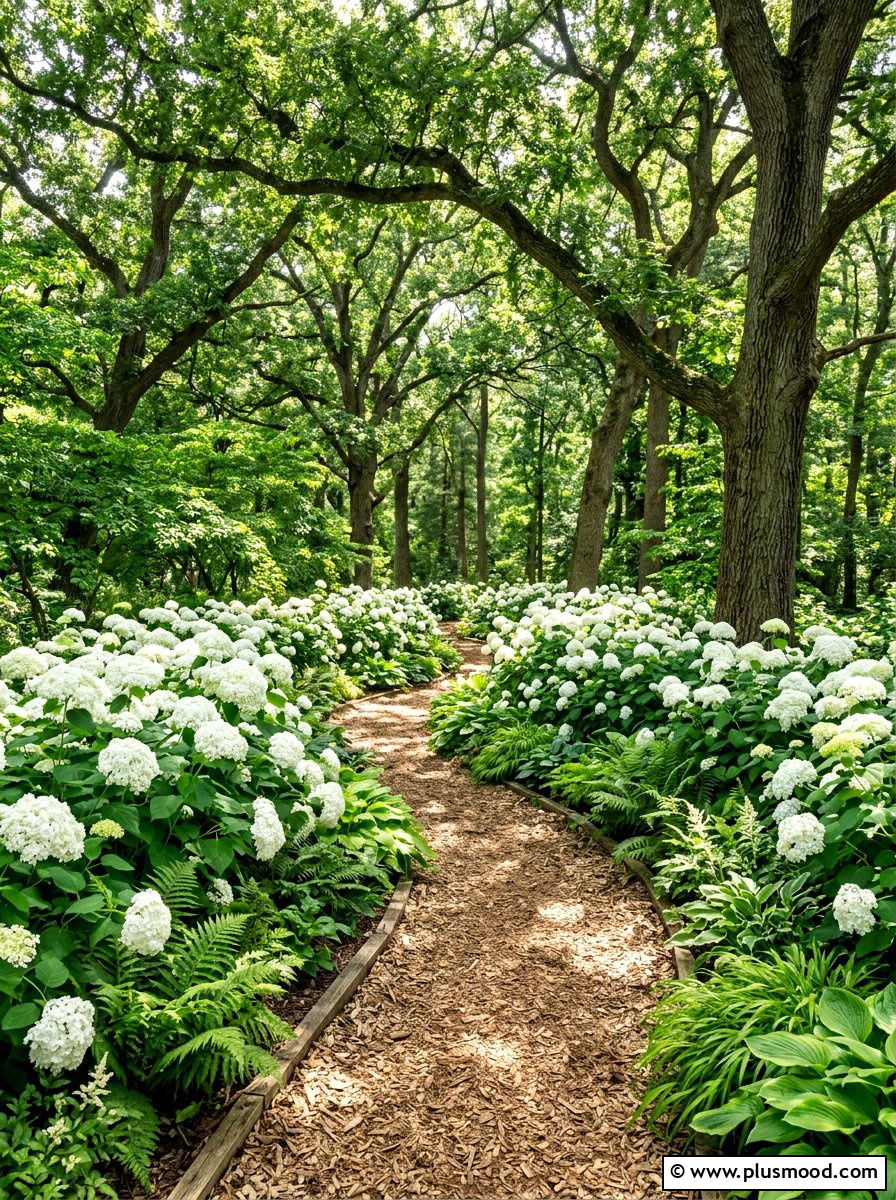
There is something magical about the way Annabelle hydrangeas glow in the soft light of a woodland garden. These classic shrubs feature huge, snowy white blooms that stand out beautifully against the dark, shady backdrop of a forest edge. They are perfectly suited for the dappled light found under tall oak or maple trees, where they can spread out and create a lush understory. Layering them with other shade-lovers like hostas, bleeding hearts, and ferns creates a multi-textured environment that feels cool and refreshing even on the hottest summer days. Their timeless beauty adds a sense of grace and tranquility to any naturalized area.
20. Multi Color Hydrangea Display
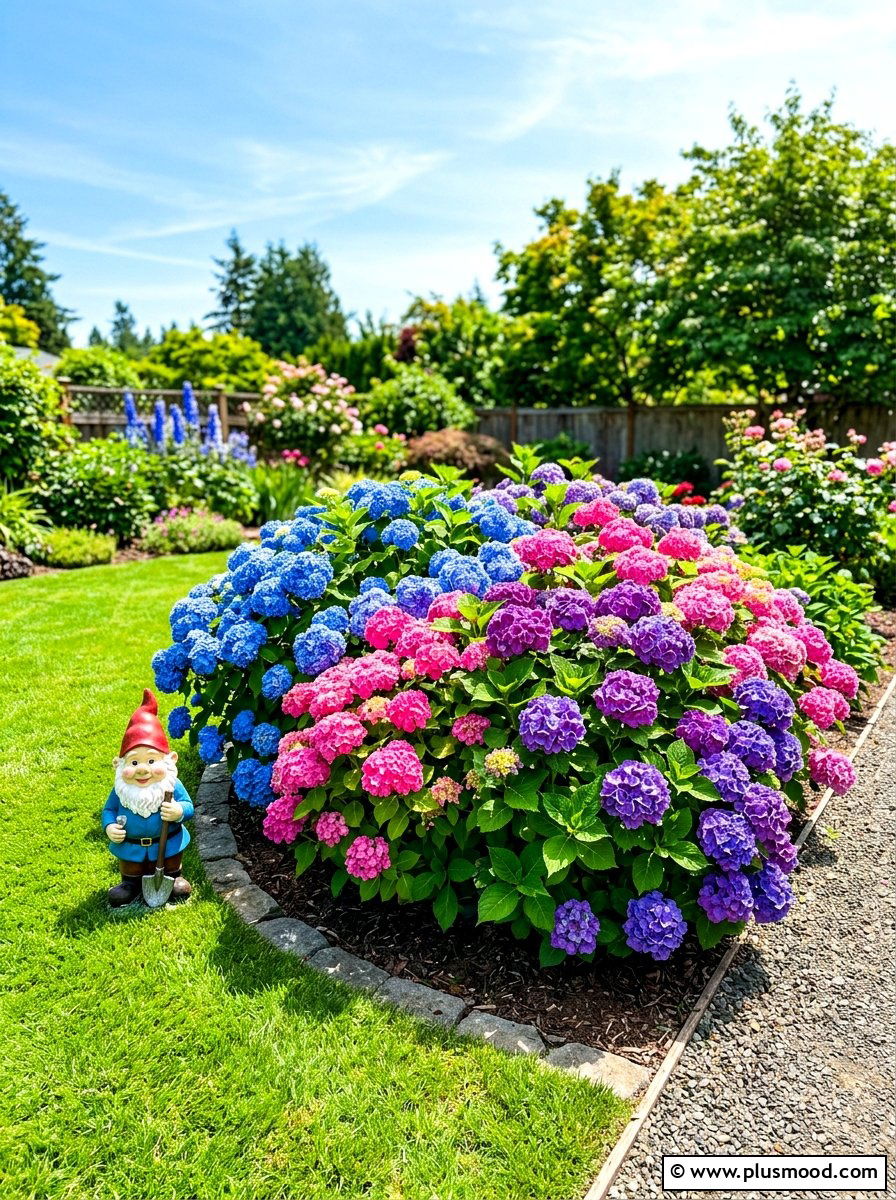
If you can't decide on just one color, why not create a vibrant multi-color hydrangea display in your garden? By carefully managing the pH of your soil in different sections of a large bed, you can encourage various shrubs to produce different hues, from deep blue to bright pink and soft purple. This creates a kaleidoscope effect that is both playful and visually arresting. You can also mix in varieties that are naturally bi-color or those that change color as the blooms age. This approach is perfect for gardeners who want a high-energy landscape that celebrates the full diversity of this amazing plant species.
21. Hydrangea Patio Privacy
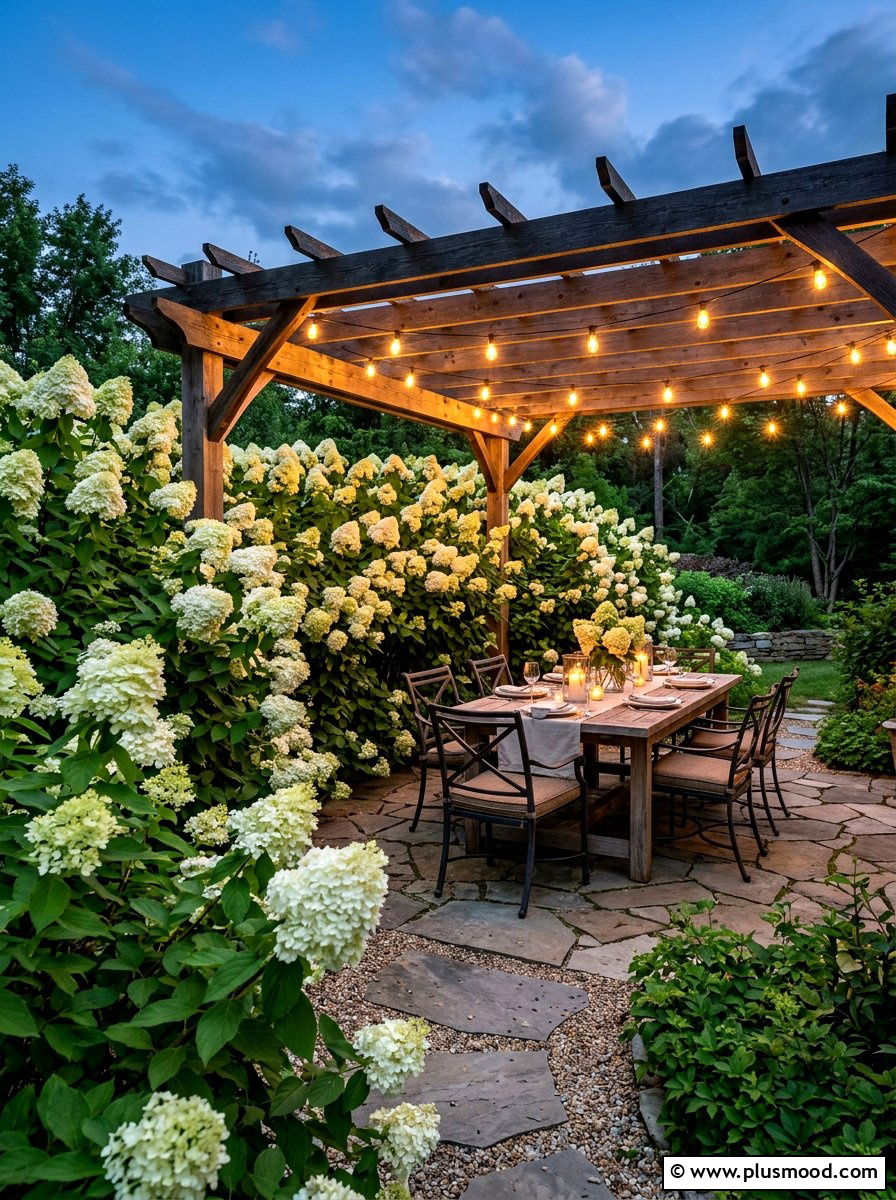
Turn your outdoor dining area into a secluded sanctuary by surrounding it with a tall border of hydrangeas. The dense foliage and large blooms act as a natural sound barrier and visual screen, protecting your patio from the eyes of neighbors and the noise of the street. This creates an intimate and cozy atmosphere that is perfect for hosting summer dinner parties or simply relaxing with a book. Using tall panicle varieties ensures the screening effect is tall enough to provide true privacy even when you are standing. The added bonus of beautiful flowers within arm's reach makes your outdoor living room feel like a luxurious garden retreat.
22. French Hydrangea Formal Garden
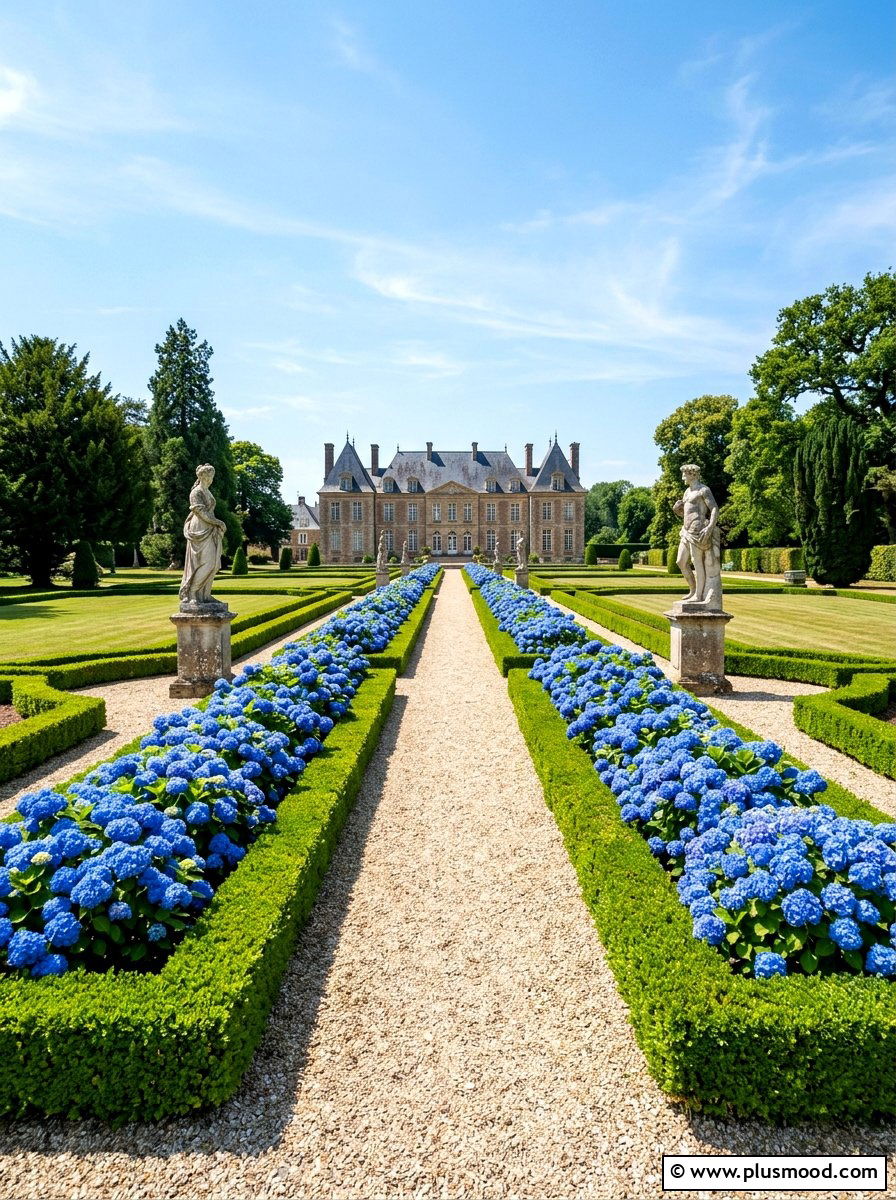
For a more structured and sophisticated look, incorporate French hydrangeas into a formal garden design featuring symmetrical layouts and clean lines. These classic mophead varieties look stunning when planted in perfectly aligned rows or as part of a traditional parterre. The key to this style is maintaining a sense of order and balance, which can be achieved through regular pruning and consistent spacing. Use stone pavers, boxwood hedges, and classical garden ornaments like urns or statues to complement the lushness of the hydrangea blooms. This approach creates a high-end, estate-like feel that is both impressive and timelessly beautiful for any large suburban property.
23. Hydrangea Poolside Landscape
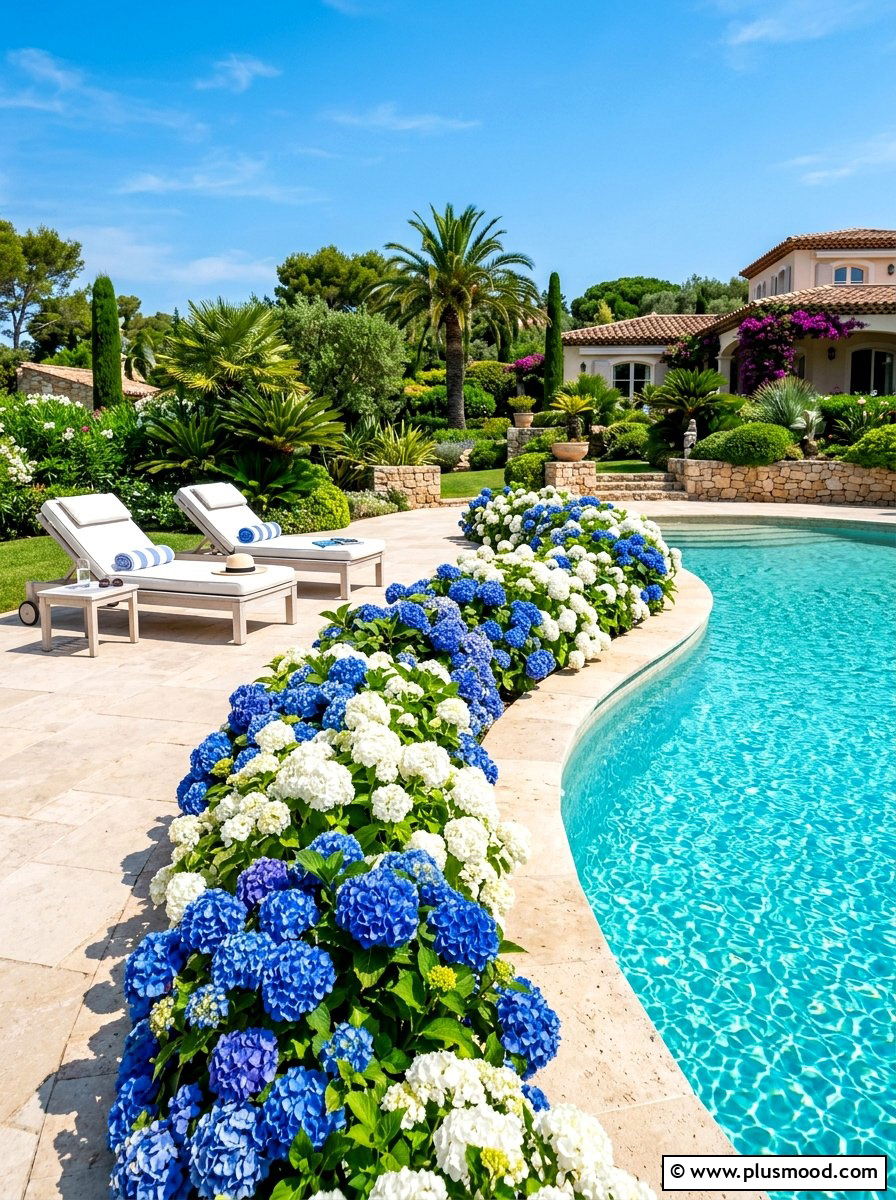
Enhance your swimming pool area by planting hydrangeas that provide a tropical and lush feeling without the mess of falling needles or invasive roots. These shrubs are excellent for poolside landscaping because they offer large pops of color that reflect beautifully in the water. Choosing varieties with sturdy stems ensures that the blooms won't droop over the edge of the pool deck or get in the way of swimmers. The vibrant blues and whites create a cool and refreshing color palette that perfectly complements the sparkling blue of the water. Make sure to plant them far enough away to avoid getting pool chemicals on the delicate foliage.
24. Lavender Hydrangea Backyard
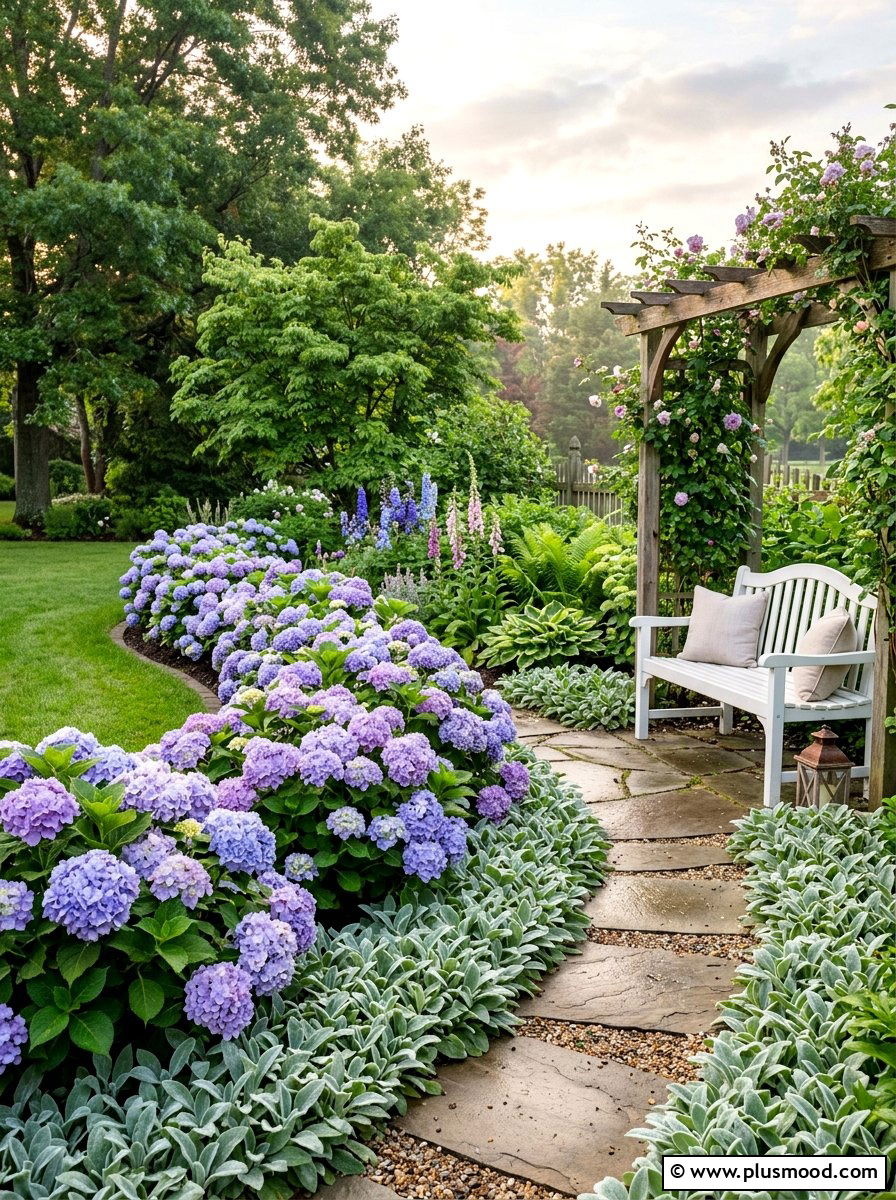
Lavender and purple hydrangeas offer a sophisticated and dreamy color palette that can make any backyard feel like a tranquil escape. These unique hues are often the result of soil that is slightly acidic, falling right between the levels needed for blue and pink flowers. Creating a dedicated garden space filled with these soft purple tones creates a soothing and ethereal atmosphere that is particularly beautiful in the soft light of dawn or dusk. You can enhance this look by underplanting with silver foliage plants like lamb's ear or lavender to create a cohesive and calming environment that invites relaxation and quiet reflection.
25. Hydrangea Rock Garden
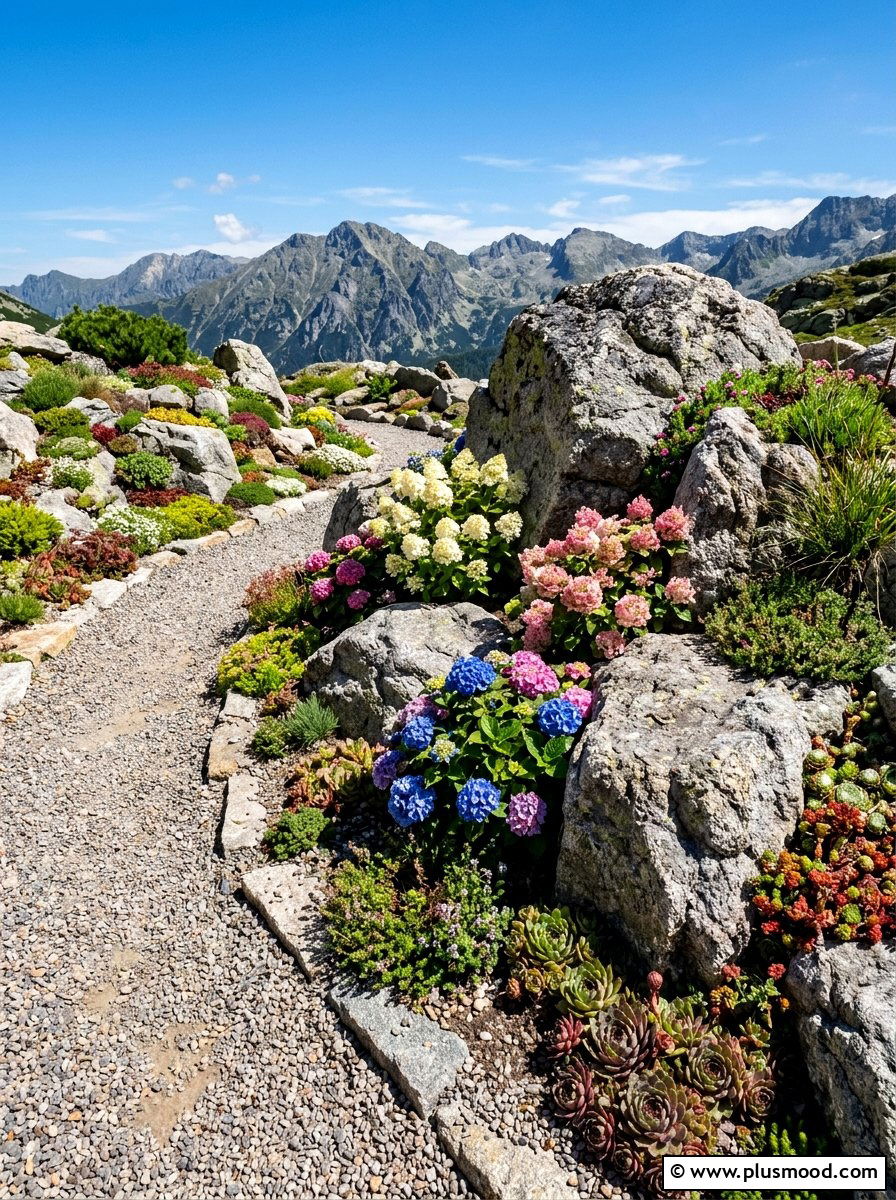
Unexpectedly, certain smaller hydrangea varieties can be successfully integrated into a large rock garden to provide a soft contrast to the hard, jagged lines of the stones. Using these shrubs near large boulders or along a rocky path adds a touch of lushness and color to what might otherwise be a stark landscape. The key is to ensure they have enough pockets of rich, moisture-retentive soil and proper drainage to thrive among the rocks. This combination of textures creates a rugged yet refined look that feels both natural and professionally designed. It is a great way to bring unexpected beauty to sun-drenched, stony areas.
Conclusion:
Designing a summer garden around hydrangeas is a rewarding journey that brings incredible beauty and value to your outdoor living space. These plants are more than just flowers; they are versatile landscape workhorses that can provide privacy, structure, and a deep sense of nostalgia. By selecting the right varieties for your specific sun exposure and soil conditions, you can create a thriving environment that yields spectacular results year after year. From the classic charm of a cottage border to the sophisticated elegance of a formal garden, hydrangeas offer endless possibilities for creative expression. Embrace the lushness of the season and enjoy the enduring magic of these garden favorites.
Related posts:
Leave a Reply